




RyoCity
Suspended between Sky and Peaks
Ronda, Spain
RyoCity
Suspended between Sky and Peaks
Ronda, Spain
2.6 km
Distance
1h15
Durée
27
Audios
Boucle
Parcours
Shutterstock
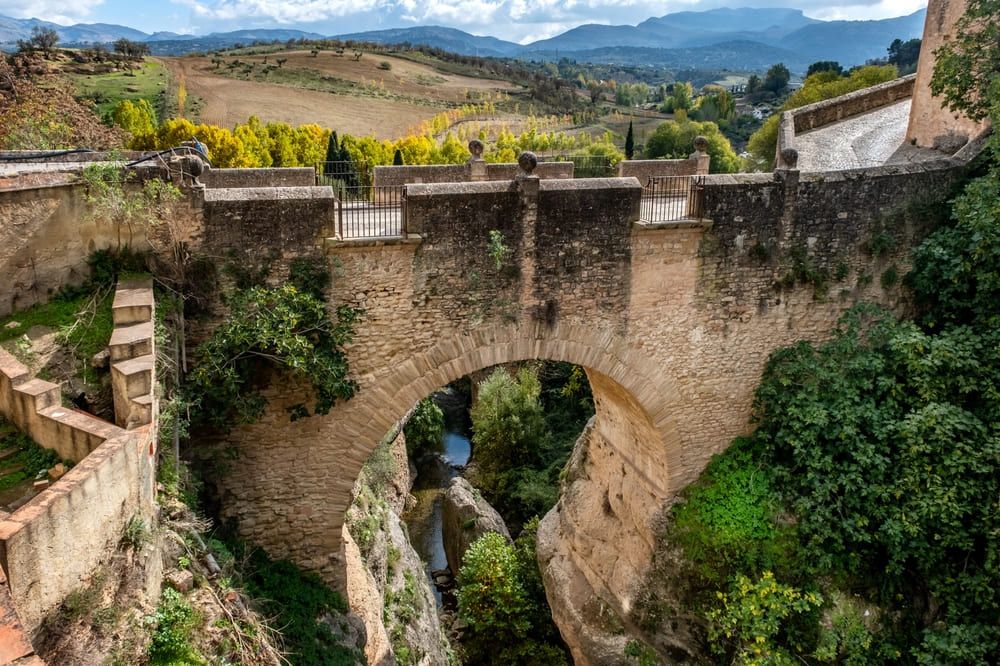
You are now standing on the Puente Viejo, Ronda’s “quiet bridge”—the one you reach after the Puente Nuevo and often end up preferring, because it’s calmer, more intimate and reveals another side of the city’s history. Look around: on one side is the Padre Jesús district, with its small church and simple streets; on the other, the old town of La Ciudad, perched on the rock, which for centuries was the fortified heart of Ronda. For generations, this modest bridge was one of the essential crossings between these two worlds, long before the grand Puente Nuevo stole the spotlight. Today, the Puente Viejo is pedestrian-only: no cars, just the sound of footsteps on cobblestones, the wind in the gorge and the murmur of the Guadalevín River below. Walk carefully toward the small side balconies—they were added during a recent restoration so you could enjoy the view. To the right, you’ll see the river thirty-one metres below and, further downstream, the small Puente Árabe, the oldest of Ronda’s three bridges, almost hidden in the gorge. Just beside it are the perfectly preserved Arab Baths from the Nasrid period, which cleverly used river water to feed their hot and cold rooms. On the opposite side, you’ll see the stone giant with its immense arches towering over the whole valley. Seeing it from here is the best way to understand how the city was built layer by layer: first the old passage below, then this bridge in the seventeenth century and finally the great bridge in the eighteenth, like three chapters stacked on top of each other. The Puente Viejo you’re crossing dates from 1616; it was rebuilt after a flood destroyed the previous bridge, itself built on an even older crossing—probably Arab, and perhaps even on the site of a Roman bridge. Historians don’t fully agree, and that uncertainty adds a touch of mystery. For a long time, this bridge was actually called “the new bridge”. Only after the Puente Nuevo was built did it become… the old bridge. And if you take a moment to look at it, you’ll see it hasn’t lost any of its charm.
