Walk
From Byzantium to Constantinople, an empire on two continents
Fatih, Türkiye
Walk
From Byzantium to Constantinople, an empire on two continents
Fatih, Türkiye
7.4 km
Distance
3h00
Durée
23
Audios
Loop
Parcours
Straddling Europe and Asia, Turkey unfolds like an endless story, where every stone tells of a civilization, every scent evokes a silk road, and every horizon beckons you to go further. From the minarets of Istanbul to the lunar landscapes of Cappadocia, and along the turquoise shores of the Aegean coast, visiting Turkey means embracing centuries of intertwined histories at the pace of your own curiosity. To accompany this journey — as much inward as geographical — Ryo's audio-guided tours invite you to explore this country through carefully woven narratives that give voice to the stones and meaning to the landscapes.
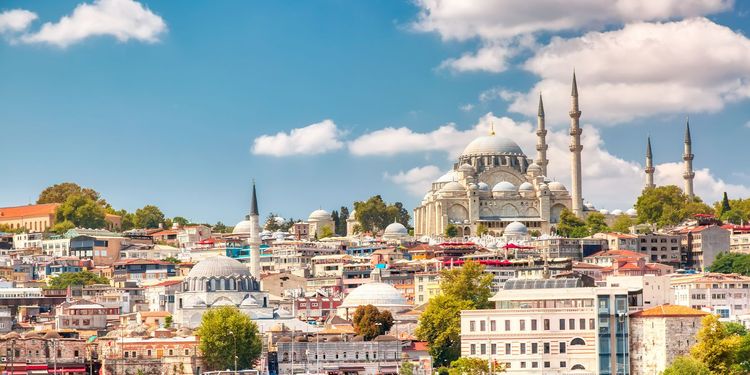
There is no other city in the world that carries such a weight of history alongside such a vibrant present. Istanbul, straddling two continents, is a journey within a journey. In the heart of its cobbled streets, behind the facades of its mosques and beneath the vaulted ceilings of its bazaars, lies a dual empire — Byzantine and Ottoman — whose layers can be read with every step. The Ryo audio-guided tour From Byzantium to Constantinople, an Empire Across Two Continents guides you through this millennia-old story, from the splendour of ancient Greece to the grandeur of the Sublime Porte, for a deep immersion into the soul of this incomparable city.
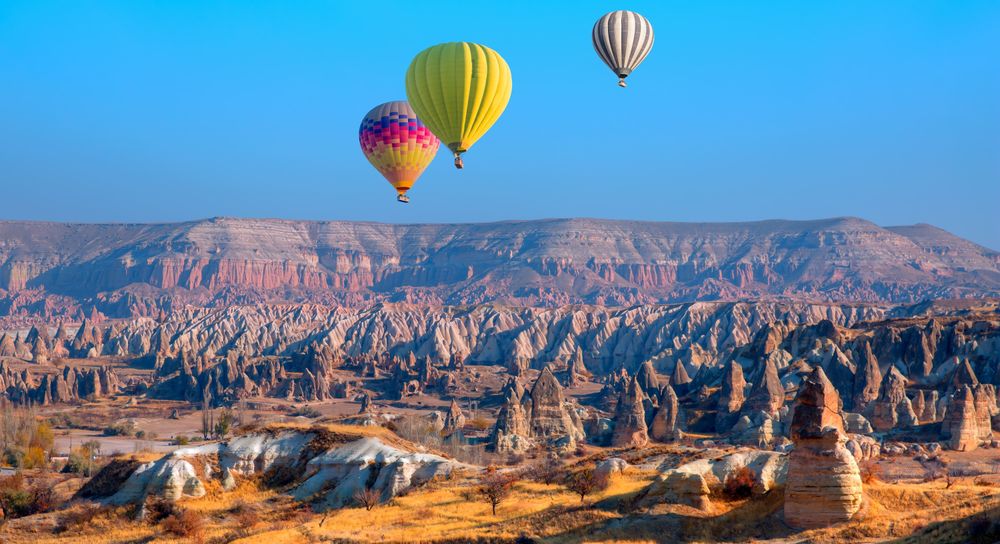
Beyond Istanbul, Turkey offers horizons of striking diversity. The Aegean coast is home to the majestic ruins of Ephesus, one of the best-preserved ancient cities in the Mediterranean world, where amphitheatres, colonnades and mosaics emerge from the ochre hillsides. Further east, Cappadocia unfurls its wind-sculpted landscapes, fairy chimneys and cave villages carved into volcanic tuff. To the south, the Lycian coast offers crystal-clear coves lined with Greek and Lycian ruins, sometimes accessible only by sea. Inland Turkey reveals the Anatolian plateaus swept by a quiet wind, dotted with caravanserai cities and Seljuk mosques that speak to the importance of exchange between East and West. Every region deserves to be explored slowly, with the curiosity of a traveller who knows that richness is not measured by speed.
Turkey can be visited year-round, but the seasons naturally shape the rhythm of any stay. Spring, from April to June, is generally considered the ideal time: temperatures are mild, vegetation blooms along the coasts, and archaeological sites can be explored without the heat of summer. Autumn, from September to mid-November, offers golden light and similar conditions, often with smaller crowds. Summer is particularly well-suited for those who wish to swim along the Mediterranean coast, while winter has its own charm in Istanbul, sometimes wrapped in a mysterious drizzle that deepens its romantic character.
Turkey's transport network is extensive and varied. Major cities are connected by frequent domestic flights, allowing travellers to cross this vast country without losing precious time. Long-distance buses offer a comfortable and affordable alternative for reaching intermediate regions. In Istanbul, the metro, tram and ferry services form an efficient network for navigating between the two shores of the Bosphorus and the city's different neighbourhoods. For exploring coastal or rural areas, renting a vehicle offers welcome freedom, particularly for road trips along the Aegean or Lycian coast.
Spring and autumn are generally the most pleasant seasons for visiting Turkey. Temperatures are mild, the landscapes are lush in spring and rich with colour in autumn. Summer remains popular for the coastline, but the heat can be intense inland and in major cities.
Turkey is a vast country, and a stay of at least ten days is recommended to get a sense of its diversity. Istanbul alone is worth several days of exploration. To add Cappadocia, the Aegean coast or the Lycian coast, it is better to allow more time, or to choose one region and explore it in depth rather than skimming across everything.
Among the places that leave a lasting impression on travellers are Istanbul with its Byzantine and Ottoman monuments, the ruins of Ephesus on the Aegean coast, the unique geological formations of Cappadocia, the turquoise Mediterranean coast, and the Lycian sites accessible from Antalya. Each of these places carries a distinct story, one that deserves to be listened to as much as observed.
For long distances, flying is the fastest option thanks to a well-developed domestic network. Long-distance buses, comfortable and frequent, serve virtually the entire country. The train is an interesting alternative on certain routes, particularly for taking in the Anatolian landscapes. At a local level, taxis, shared minibuses known as dolmuş and urban public transport make everyday travel straightforward.
Yes, Turkey lends itself very well to independent travel. Tourist infrastructure is well developed, transport is accessible, and locals are renowned for their hospitality. Audio-guided tours such as those offered by Ryo also allow travellers to explore history-rich cities like Istanbul without relying on a physical guide, following their own pace and enjoying the story as they go.
Turkish cuisine is one of the great treasures of any trip. The Turkish breakfast alone — generous and varied — is an experience in itself. Mezze, kebabs prepared according to regional traditions, honey-and-pistachio baklava, lokum and black tea served in small tulip-shaped glasses punctuate every stop and every encounter. Each region has its own specialities, reflecting a land at the crossroads of many culinary influences.






