




RyoCity
From a Historic Pueblo to Contemporary Art
Los Angeles, United States
RyoCity
From a Historic Pueblo to Contemporary Art
Los Angeles, United States
4.5 km
Distance
2h00
Durée
29
Audios
Boucle
Parcours
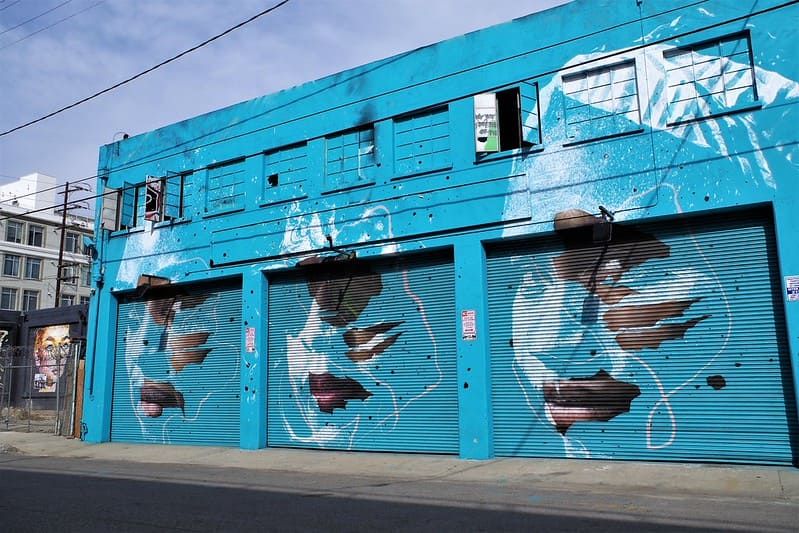
©joey zanotti CC BY 2.0.
From here, we’ll cross over and continue to the right, but it’s worth noting that the neighborhood starting on this side and stretching ahead and to your left is called the Arts District. In just a few streets, you’ll move from industrial brick buildings to massive murals, from train tracks and warehouses to cafés, breweries, and galleries. For a long time, this area was mainly a workspace. In the nineteenth century, it was farmland and orchards, before the arrival of railroads and early twentieth-century industry transformed the landscape with depots, warehouses, and utility buildings surrounding major transport companies. By the 50s, parts of the district emptied as some industries declined, leaving huge spaces with low rents—a perfect opportunity for artists. Starting in the late 60s and especially in the 70s, they began converting industrial spaces into studios and lofts, often informally at first. The turning point came with the legalization of “live/work” spaces under the Artist-In-Residence ordinance, finally providing an official framework supporting how people live and work there. Soon after, an underground scene emerged, alive with alternative venues, clubs, and exhibition spaces. Today, the Arts District is a creative hub in the heart of the city: people come for the street art, the architectural landmarks of repurposed buildings, the galleries, and a dense food scene—from craft breweries to renowned restaurants. Explore it at your own pace and take in everything it has to offer!
