
RyoCity
Hollywood, Where Stars Are Born
Los Angeles, United States
RyoCity
Hollywood, Where Stars Are Born
Los Angeles, United States
1 km
Distance
45 min
Durée
16
Audios
Boucle
Parcours
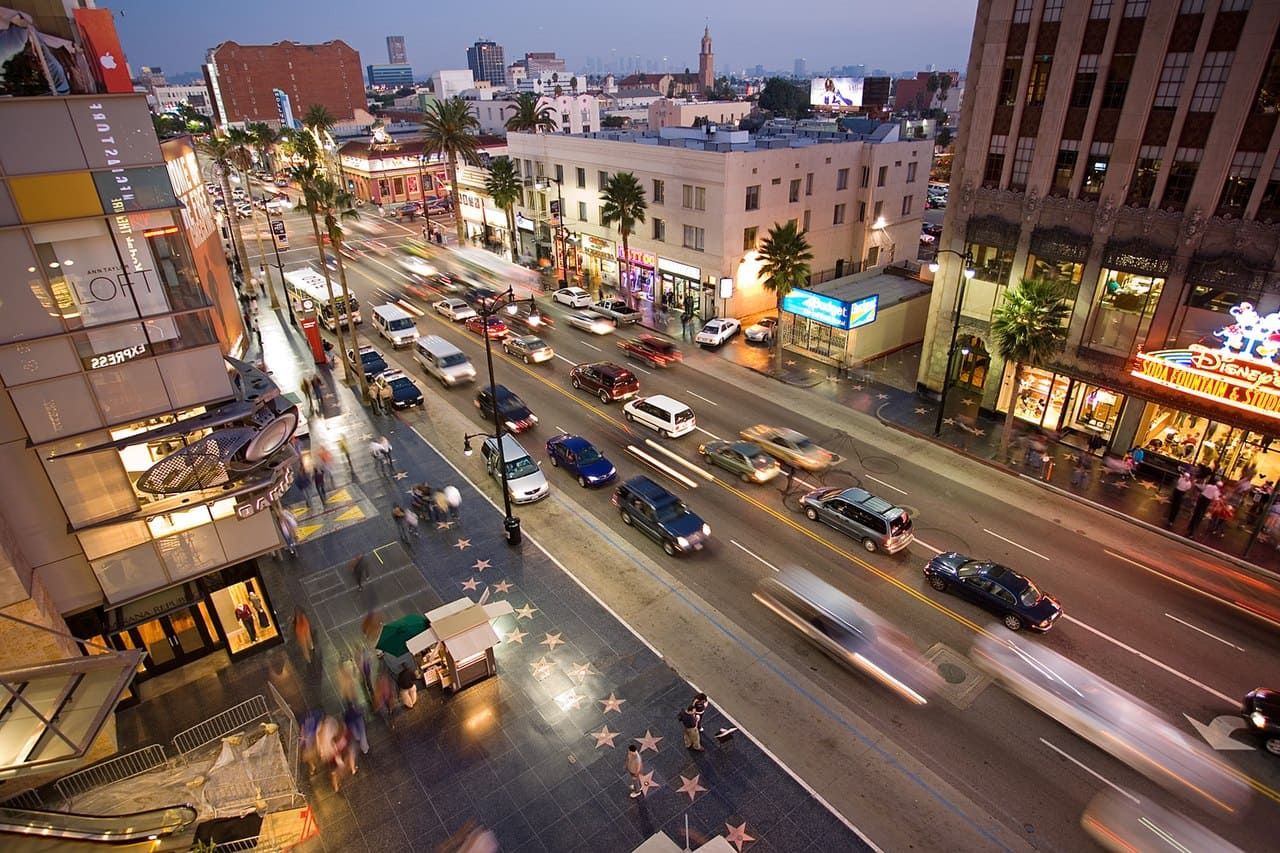
©Diliff CC BY-SA 3.0.
Hollywood Boulevard is much more than just a tourist street—it’s a living timeline of the city’s cinematic history. Back in 1887, it was just a rural path called Prospect Avenue. When Hollywood was annexed to Los Angeles in 1910, the street was renamed Hollywood Boulevard and quickly became the main artery of a transforming neighborhood. In the 20s, as silent films gave way to talkies, the boulevard was designed as a showcase of the American dream: people came to see the stars, attend premieres, stroll past luxury storefronts, and soak up the energy of the new global film capital. It was also during this era that the idea of an organized entertainment district emerged, with monumental theaters, iconic restaurants, and urban staging designed to impress both locals and visitors. In 1958, a new milestone was reached with the creation of the Walk of Fame: for the first time, the street itself became a monument, an open-air museum honoring celebrities. Hollywood Boulevard had evolved from a mere street into a brand, a worldwide symbol of entertainment. But it hasn’t always been glamorous. Starting in the 70s, the boulevard went through a period of decline: stores closed, foot traffic dropped, and its image suffered. As Los Angeles expanded, people and activities shifted to other neighborhoods like Beverly Hills, West Hollywood, and suburban shopping centers, leaving Hollywood Boulevard less central to the city’s entertainment scene. Fortunately, major revitalization efforts began in the 80s: historic designation, public-space renovations, the creation of large commercial and cultural complexes, and the return of premieres and events. More recently, urban projects have reshaped traffic, widened sidewalks, and improved public transport and pedestrian access, adapting the boulevard to its role as one of the world’s most famous promenades. Today, strolling along Hollywood Boulevard is a chance to walk through the history—and the magic—of Hollywood itself.