





RyoCity
Hollywood, Where Stars Are Born
Los Angeles, United States
RyoCity
Hollywood, Where Stars Are Born
Los Angeles, United States
1 km
Distance
45 min
Durée
16
Audios
Boucle
Parcours
Shutterstock
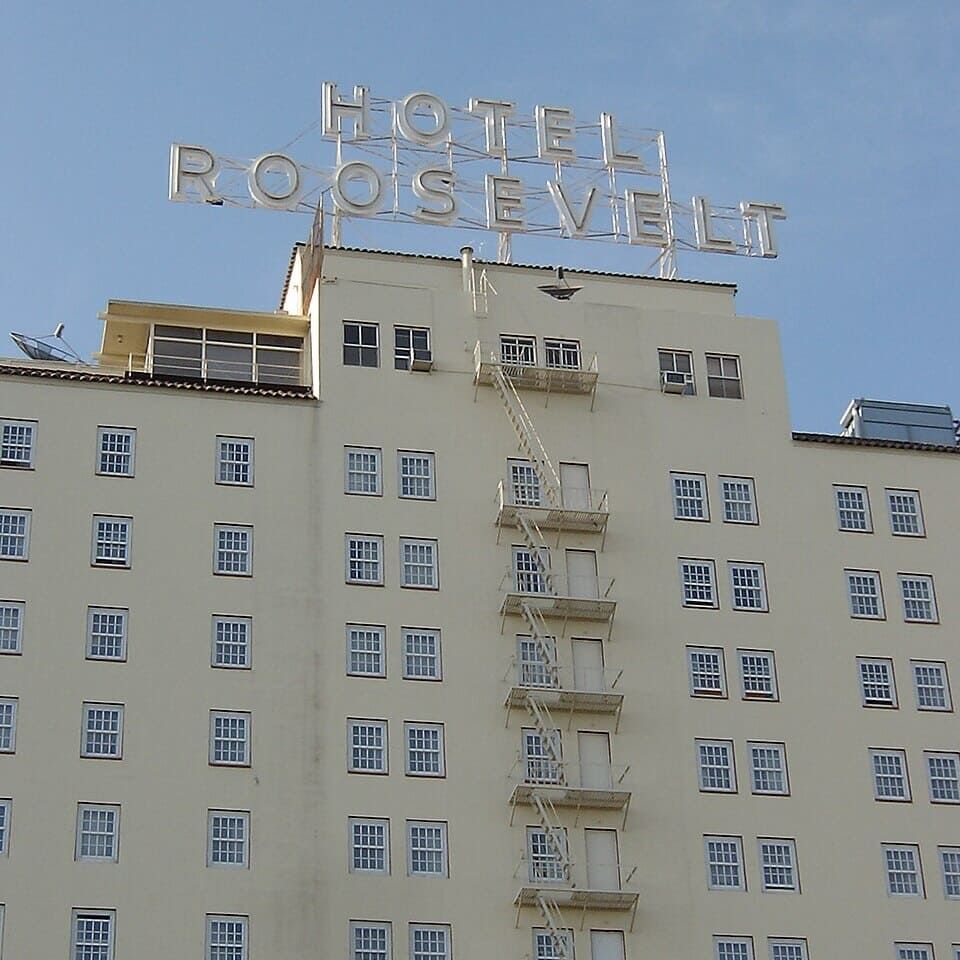
Look to your right, and you’ll see a legendary hotel that opened in 1927, right in Hollywood’s golden era: the Hollywood Roosevelt Hotel. Funded by cinema icons like Douglas Fairbanks, Mary Pickford, Sid Grauman, and Louis B. Mayer, it was designed from the start as a gathering place for Hollywood’s elite. It was here, on May 16, 1929, that the very first Academy Awards—what we now call the Oscars—took place. Back then, the term “Oscar” didn’t even exist. It wasn’t a global spectacle but a private, low-key dinner for industry insiders. About 270 guests attended, all actors, directors, producers, and studio executives. The ceremony lasted just fifteen minutes—no red carpet, no long speeches, no suspense, since winners had been announced three months earlier in the press. Only twelve categories were awarded, compared with twenty-four today. The first-ever winner was Janet Gaynor, who received Best Actress for three silent films in a single award, something unimaginable now. The ceremony wasn’t filmed, broadcast on radio, or televised—no one imagined it would grow into the world’s biggest night in cinema, watched by hundreds of millions. The hotel instantly became a piece of Hollywood history, even if only one ceremony was held there. In the years that followed, many stars lived or stayed here regularly, including Marilyn Monroe, who rented a cabana by the pool and did her first professional photo shoot on-site. The Roosevelt went through a period of decline in the 50s before being saved by major renovations that restored its original Spanish Colonial style. In 1987, artist David Hockney painted a now-famous mural at the far end of the outdoor pool, called the Tropicana Pool. Today, the hotel has around 300 rooms, multiple bars and restaurants, and remains one of the most vibrant spots on the boulevard—a luxury hotel, a film set, and a historic landmark all in one.
