
RyoCity
Meeting its cultural identity
Washington, United States
RyoCity
Meeting its cultural identity
Washington, United States
8 km
Distance
3h15
Durée
23
Audios
Boucle
Parcours
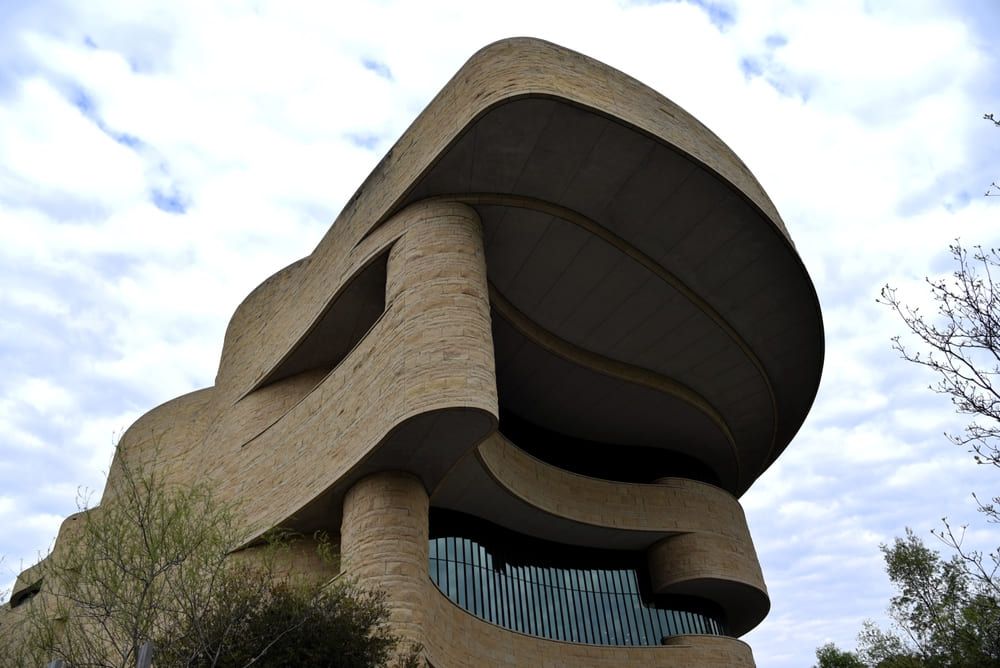
Shutterstock
This museum shows the history, culture, and arts of Native American people, with branches in New York and Maryland. Opened in 2004, it gives visitors a chance to learn about Indigenous tribes, Native Americans, and populations of Alaska and Hawaii. The exhibitions were chosen in consultation with Native American communities to provide better understanding of these populations and more accurate information. Today, more than 5.5 million Native Americans live in the United States, representing roughly 1.7% of the population. When the Europeans arrived in the 15th and 16th centuries, there were about 10 million. While some Europeans peacefully traded with tribes, others forcibly displaced or attacked them to take over their lands. In addition, the many unknown diseases brought from Europe and unknown to the natives decimated a large part of these populations. As you can tell, Europeans and Native Americans had a complicated relationship. In the 19th century, settlers wanted to confine Indigenous tribes to specific territories, called reservations. More than 320 of these reservations still exist today, occupied by Native communities. Each is ruled by a tribal government, creating and enforcing its own laws within the reservation. Other territories called Trust Lands were given to tribes. These lands belong to the State but are managed by tribal groups. Some Indigenous groups continue to live in their own governed lands, while others have moved to large American cities. Despite progressively integrating themselves into society, Native Americans are still discriminated, facing higher rates of unemployment and poverty compared to the rest of the population. This museum is the perfect place to discover the fascinating history of these tribes! Also, it’s free.