



Walk
From Gold Rush to Coffee Culture
Seattle, Estados Unidos
Walk
From Gold Rush to Coffee Culture
Seattle, Estados Unidos
Distance
4.9 kmDurée
2h20Audios
22Parcours
Loop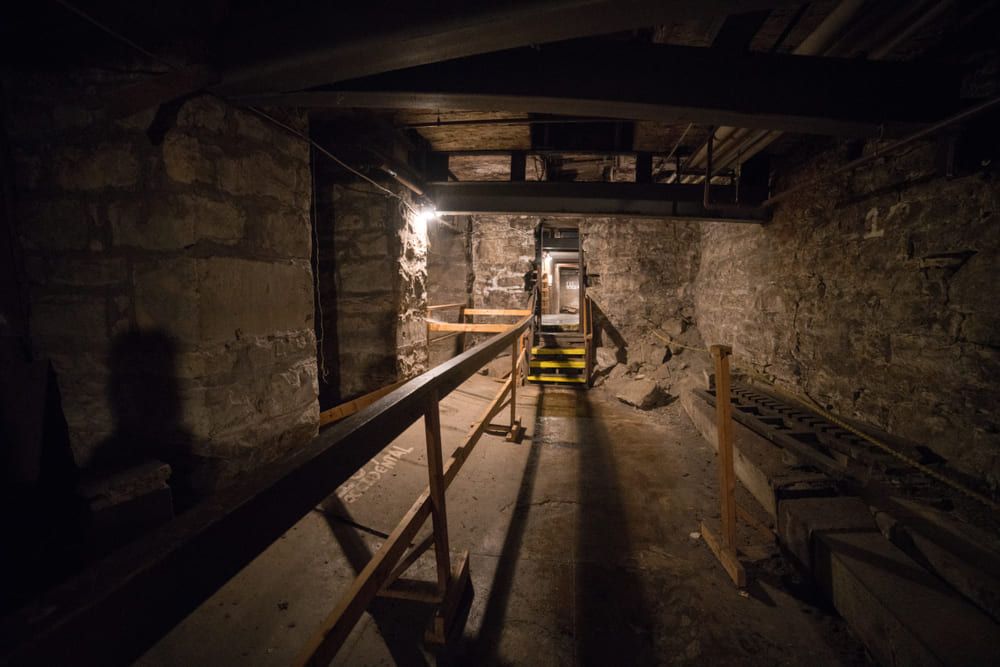
Shutterstock
Pioneer Square still has a few surprises up its sleeve! Before we leave, there's something you should know: beneath your feet lies an entire ghost town, a forgotten network of streets, storefronts, and sidewalks buried as much as 20 feet (6 meters) below modern Seattle. How did a whole piece of the city end up underground? Well, it all started with a disaster. On June 6, 1889, a carpenter's apprentice was heating a pot of glue in a woodworking shop when it caught fire. Within hours, the flames had swept through Seattle's downtown, devouring wooden buildings, sidewalks, and entire blocks of the business district. It was a catastrophe, but amid the devastation, city officials saw a chance to solve a rather unpleasant problem. You see, much of early Seattle had been built barely above sea level. And whenever the tide came in, seawater would push back through the sewers, sending sewage bubbling up into the streets and even into people's toilets! Hardly ideal for a growing city. So, determined to make a fresh start, Seattle introduced two major changes. First, new buildings would have to be constructed with more fire-resistant materials, particularly brick and stone. That's why so many of the beautiful red-brick façades you see around Pioneer Square date from this period. The second decision was even more ambitious: raise the streets, in some places by as much as 20 feet (6 meters)! There was just one problem. Property owners rebuilt their buildings faster than the city could raise the roads. And for a while, the whole neighborhood became a rather extraordinary construction site. Imagine stepping out onto the street and finding yourself level with the first floor of the buildings around you! To reach the shops below, customers had to make their way down stairways to the original street level, where sidewalks gradually became covered passages beneath the new city. But how do you bring daylight into a sidewalk that's now underground? Seattle came up with a clever solution: small glass prisms embedded in the pavement above, allowing sunlight to filter into the passages below. And here's a curious little detail: some of these glass panels have turned purple over the years! That's because the manganese used in the glass reacts to sunlight, gradually changing its color. Keep an eye on the sidewalks as you explore Pioneer Square, and you might still spot a few of these unusual purple patches beneath your feet. Eventually, in the early 20th century, the underground passages were largely sealed off for health and safety reasons. And there they remained, forgotten by most of the city, until a history-loving journalist named Bill Speidel came along. In the early 1960s, Speidel began exploring the buried storefronts and tunnels, determined to bring this extraordinary piece of Seattle's past back into the spotlight. His newspaper articles sparked so much curiosity that, in 1964, he decided to organize a public tour. He expected a modest turnout. Instead, around 500 people showed up! At a dollar a head, that was quite a promising start. By 1965, Speidel had turned the idea into a regular attraction, and the famous Underground Tour was born. And the good news is that you can still explore part of this hidden world today! Join one of the guided tours, and you'll find yourself walking beneath modern Seattle, past old storefronts and remnants of 19th-century streets, in a place where the city quite literally built a new life on top of its old one.
Aucun avis pour le moment
