



Walk
From Gold Rush to Coffee Culture
Seattle, Estados Unidos
Walk
From Gold Rush to Coffee Culture
Seattle, Estados Unidos
Distance
4.9 kmDurée
2h20Audios
22Parcours
Loop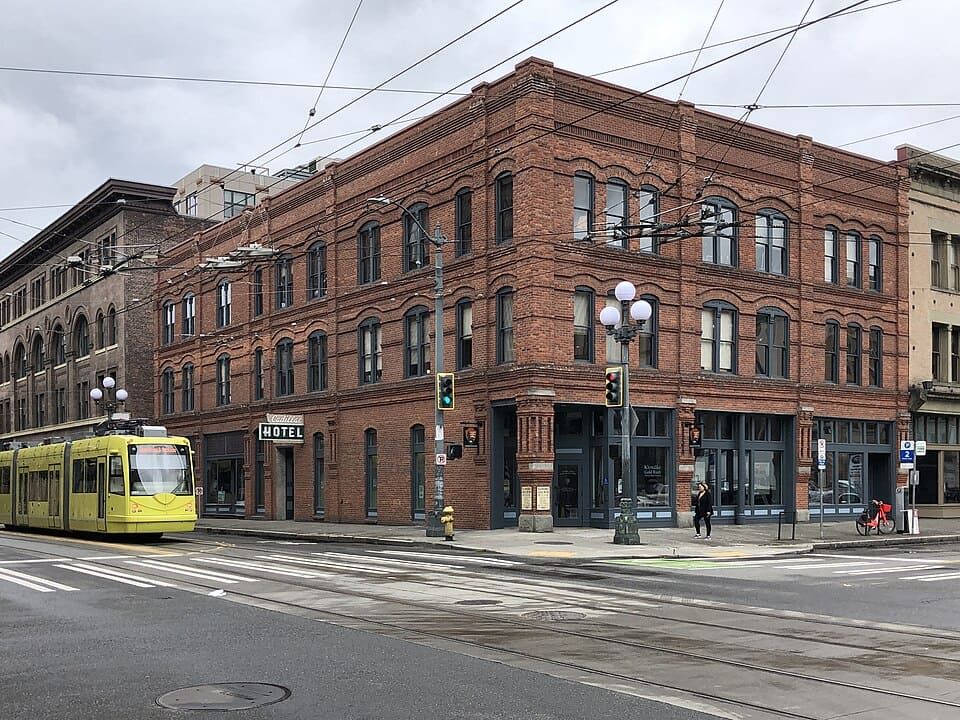
©NPS Photo, Public domain, via Wikimedia Commons
The red-brick building on your right is home to the Klondike Gold Rush National Historical Park, a free museum housed in the former Cadillac Hotel, built around 1889. And behind these walls lies the extraordinary story of how a modest Pacific Northwest port transformed into a thriving American metropolis. It all began with a discovery in the Canadian Yukon in August 1896. A group of four prospectors, including three Indigenous people, struck gold along a creek that would soon become known as Bonanza Creek. Among them was Keish, better known as Skookum Jim Mason, a member of the Tagish First Nation, who is widely credited with making the discovery. He was accompanied by his sister Kate, his nephew Dawson Charlie, and Kate's husband, American prospector George Carmack. The discovery would change the region forever, but it took almost a year for the news to really set the world on fire. In July 1897, a steamship called the Portland arrived at Seattle's docks carrying 68 passengers and more than two tons of gold from the Yukon. The local newspaper went wild, splashing four enormous words across its front page: "GOLD! GOLD! GOLD! GOLD!" Within days, gold fever had swept across the country. Seattle was still recovering from a devastating economic depression, but its businessmen quickly spotted a golden opportunity. Why go digging for gold yourself when you could make a fortune selling shovels, pickaxes, and bacon to the people chasing it? With an aggressive and brilliantly successful advertising campaign, Seattle positioned itself as the place to stock up before heading into the frozen north. Of the 100,000 hopeful adventurers who set out from around the world, some 70,000 passed through the very streets you're walking today. Even Seattle's mayor caught gold fever. He actually resigned from office to try his luck in the Klondike! But while the dream of striking it rich was irresistible, the reality was brutal. To enter Canada, prospectors had to meet a strict requirement enforced by the North-West Mounted Police: they needed enough food and equipment to survive for an entire year. That meant hauling close to a ton of supplies, roughly 2,000 pounds, into the wilderness. The reason was simple. Authorities wanted to prevent mass starvation in a remote region where ice and snow could cut people off for more than eight months of the year. Now imagine having to carry all that equipment over a mountain pass! With each load weighing around 90 pounds (40 kilograms), prospectors had to make trip after trip, climbing and descending treacherous, snow-covered slopes, sometimes dozens of times, just to get everything across. And reaching the other side was only half the battle. At Lake Bennett, many had to build their own boats or rafts before setting off on another 550 miles (885 kilometers) of lakes and icy rivers, navigating dangerous rapids on their way to the promised land of the Klondike goldfields. After all that suffering, how many actually struck it rich? Very few. Plenty returned home completely broke. The real winners were the merchants of Seattle! Money poured into local businesses, the population soared, magnificent brick buildings rose across the city, and major investors began taking notice. The Gold Rush helped turn Seattle into the metropolis we know today, even though most of the people chasing their fortunes never found them. And if you'd like to experience a little of that gold fever for yourself, step inside the museum! Its interactive exhibits bring the adventure to life, and you may even catch a demonstration of how prospectors panned for gold.
Aucun avis pour le moment
