© Shutterstock
 Votre guide Ryo
Going to Rio Carnival in 2026: Complete Guide to Living the Festival
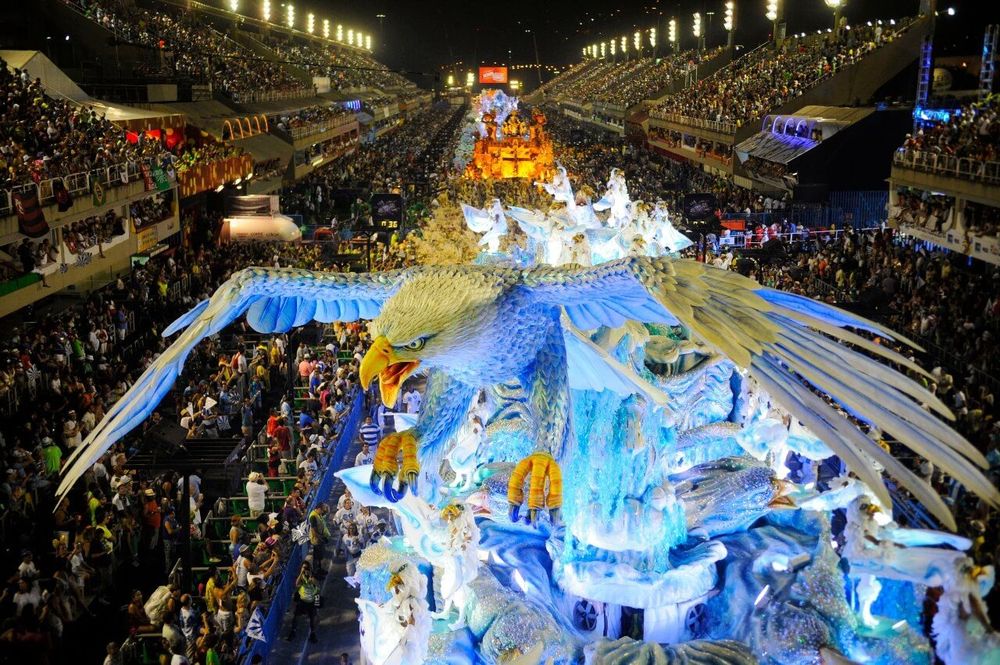
The Rio de Janeiro Carnival is one of those experiences that defies description. From the Sambódromo stands, you'll watch 20-meter-high floats go by, wings of 300 dancers in costumes prepared over an entire year, and samba schools that have been rehearsing their theme since August. In the streets, simultaneously, millions of Cariocas are celebrating in neighborhood blocos that are every bit as impressive as the official spectacle.
Going to Rio Carnival in 2026 means making a choice: the paid parade at the Sambódromo, the free blocos, or both — which is what most savvy visitors do. This guide covers the exact dates, Sambódromo tickets (seat types, prices, where to buy without getting scammed), the best street blocos, accommodation logistics, the real budget, and safety. To discover Rio beyond the festivities, the Ryo audio guide La Cité des Merveilles traces the history of the city's historic neighborhoods at your own pace.
Dates, Schedule, and Duration of Rio Carnival 2026
Rio Carnival 2026 officially runs from February 13 to 17, 2026, from the Friday before Ash Wednesday (February 18) through Mardi Gras. In practice, the festivities begin well before: the pre-carnival brings blocos together every weekend from late January, and the first Sambódromo parades — those of the Série Ouro — begin as early as Friday, February 13.
The most sought-after nights are Sunday the 15th, Monday the 16th, and Tuesday the 17th of February, when the 12 best samba schools of the Grupo Especial compete for the title, now spread across three parade nights. The Desfile das Campeãs, the champions' parade, closes the festive week on Saturday, February 21, 2026: a second chance to attend the Sambódromo, often at more accessible prices.
To enjoy both the official parades and the street blocos without exhausting yourself, plan for a stay of at least 7 to 10 days. Rio is not a city to be visited at a rushed pace during carnival.
The Sambódromo: Heart of the Official Carnival
The Sambódromo Marquês de Sapucaí (Rua Marquês de Sapucaí s/n, Rio de Janeiro - RJ, 20211-340, rated 4.5/5 on Google across 28,819 reviews) is a 700-meter avenue built in 1984 by architect Oscar Niemeyer, flanked by stands that can accommodate 72,000 spectators. This is where the official samba school competition has taken place for over forty years.
Each school has 65 to 80 minutes to parade all of its allegorical floats, its percussionists (the bateria, sometimes 300 musicians), and its thematic wings made up of hundreds of dancers in identical costumes. The Grupo Especial parade generally begins around 9:30 PM and continues until dawn — the last school often passes between 5 and 6 in the morning.
This is not a show you watch passively. The stands vibrate, spectators sing the samba-enredo (each school's theme song), and the emotion in the bleachers rises a notch with every pass of the bateria. The first time 300 percussionists cross the entrance bridge at full power, the physical impact is real: you feel it in your chest before you even hear it clearly.
Each school is judged on ten criteria established by LIESA: harmony, enredo (theme), bateria, mestre-sala and porta-bandeira (the flag-bearing dancers), alegorias (floats), fantasias (costumes), evolução (overall movement), comissão de frente (the opening group), concentração, and samba-enredo. Results are compiled and published several days after the parades end.
If you're considering marching in a samba school — possible through certain specialized organizers who offer costumes for purchase — you'll join a wing reserved for tourists in the middle of the procession. The experience is physically demanding, involving around 70 minutes of rhythmic marching at a sustained pace, but it remains one of the most immersive things Rio can offer a foreign visitor.
Who Parades at the Sambódromo?

The carioca carnival is structured into divisions, much like a sports championship with promotions and relegations.
The Grupo Especial brings together the 12 most prestigious schools: Mangueira, Beija-Flor, Portela, Salgueiro, Vila Isabel, Imperatriz Leopoldinense, Grande Rio, Mocidade Independente, Unidos da Tijuca, São Clemente, Viradouro, and a twelfth school that varies based on the previous season's results. These 12 schools parade over three nights, from Sunday to Tuesday — the most spectacular in terms of production.
The Grupo de Ouro (formerly Grupo A) includes the second-division schools competing for promotion to the Especial. Their parades take place on Friday and Saturday evenings — more modest production budgets, but often a more spontaneous and authentic atmosphere. Many Cariocas actually prefer these nights to the Grupo Especial.
The Grupo de Acesso (Série B) parades on Thursday and Sunday during the day, in a more intimate atmosphere. It's a good introduction for a first encounter with the Sambódromo, at lower cost.
Choosing Your Seat: Stands, Camarotes, and Frisas
The seating structure at the Sambódromo is more complex than it appears, and this choice strongly affects your evening experience.
The numbered stands (Setores 2 to 13) make up the standard offering — concrete bleachers with assigned seating in some sectors and open seating in others. Prices vary depending on the sector's position along the avenue and the category (popular or special). The special stands in Setor 9, positioned at mid-course, are considered by regulars to offer the best balance between views of the wings and clarity of the floats.
Camarotes are VIP boxes privatized by brands or tour operators, located at height on the sides of the stands. The ticket generally includes open bar, catering, and comfortable seating. Expect to pay between €600 and €2,000 per person depending on the box and the night chosen. The experience is festive, but sometimes disconnected from the carnival itself — people come as much for the social gathering as for watching the parade.
Frisas are ground-level spaces directly bordering the avenue, originally reserved for the families of parade participants. They are rarely accessible to visitors without a direct connection to a samba school.
Standing-room spots (Setor 13, odd side) represent the cheapest option, at around R$200 to R$400 (approximately €30 to €65). Conditions are more basic, but the atmosphere there is often the most electric in the entire Sambódromo. Best suited to those who genuinely enjoy being in the thick of a crowd.
Understanding the Sambódromo Sectors
The Sambódromo stretches 700 meters. Schools enter from the Rua Marquês de Sapucaí on the north side and exit on the south toward Rua Salvador de Sá. Each school takes about 5 to 10 minutes for a complete wing to pass in front of you — you'll watch the parade unfold continuously for a full hour.
The sector numbering follows both sides of the avenue:
- Sectors 2, 4, 6, 8: even side, special stands, slightly angled view of the floats from the side.
- Sectors 3, 5, 7, 9, 11: odd side, special stands. Setor 9 offers the best frontal view of the wings. This is where press photographers and carnival enthusiasts position themselves.
- Setor 13: standing room, odd side, accessible to budget-conscious visitors with a guaranteed lively atmosphere.
For a first carnival, sectors 7, 9, or 11 (odd side) offer the best compromise between view and immersion. Even-side sectors are perfectly fine but slightly less favored by connoisseurs.
Even or Odd Side: Which Side Should You Choose?
The short answer: regulars prefer the odd side. The comissões de frente — the opening groups that perform precise choreographies intended for the judges — present themselves primarily on the odd side, where the official evaluation committee is seated.
That said, the difference is not decisive for someone attending carnival for the first time. If the tickets available when you search are only on the even side, take them without hesitation. You won't miss anything essential.
Sambódromo Ticket Prices for 2026
The official prices published by LIGA (Rio's samba school organization) for 2025 provide a solid reference point. The 2026 prices should be close, with the usual 5 to 10% increase.
Grupo Especial (nights of Sunday the 15th, Monday the 16th, and Tuesday the 17th of February):
- Popular spots, Setor 13: R$200 to R$400 (approximately €30 to €65)
- Special stands, odd side (Setores 7, 9, 11): R$600 to R$1,200 (approximately €95 to €195)
- Even-side stands: R$400 to R$900 (approximately €65 to €145)
Grupo de Ouro (Friday the 13th and Saturday the 14th of February):
- Popular spots: R$80 to R$150 (€13 to €24)
- Special stands: R$200 to R$450 (€32 to €72)
Desfile das Campeãs (Saturday, February 21):
- Between R$100 and R$250 for the majority of seats — the best value-for-experience option to see the Grupo Especial parade a second time.
Prices in euros depend on the Brazilian real/euro exchange rate at the time of purchase. In 2025, €1 was worth approximately R$6.20.
Where and When to Buy Your Tickets
The official ticketing is managed by LIGA RJ (ligario.com.br). Sales for the Grupo Especial generally open between August and October of the preceding year. For the most in-demand sectors — Setores 9 and 11 in particular — tickets sell out within days of going on sale. Buy as soon as the ticketing opens if you've targeted these seats.
Authorized resellers — major hotels in Copacabana, Brazil-specialized agencies — offer ticketing packages with transportation from the tourist neighborhoods. More convenient, but with a 20 to 40% markup over LIGA prices.
Alternative platforms: Eventim Brazil and certain specialized agencies are a fallback if LIGA is sold out for the category you're targeting.
What you should absolutely avoid: street touts outside the Sambódromo on parade day. Scams are common there — fake tickets, tickets for the wrong night, sectors that don't exist. Keep your tickets in digital form and as a paper copy. A photo ID is required at the Sambódromo entrance.
Entering the Sambódromo: Practical Tips
Gates open around 7 PM, about two hours before the parades begin. Arrive early: queues at popular sectors can be long, and you'll want to be settled well before the first school enters the avenue around 9:30 PM.
What to leave at the hotel: glass bottles, large backpacks, cameras with interchangeable lenses. Security checks are conducted at all entrances.
What to bring: a plastic water bottle, a few snacks (interior stands charge high prices), a light jacket for the early morning hours when the concrete stands cool down, cash in reais, and your tickets.
Rio's metro serves the Praça Onze station (Praça Onze, Centro, Rio de Janeiro - RJ, 20220-000, rated 4.2/5 on Google across 196 reviews), a five-minute walk from the Sambódromo.
During this week, the metro runs 24 hours a day from Friday through Ash Wednesday — an exceptional measure activated only for this period. Prioritize it on the way out, around 5–6 AM, when ride-hailing apps show prices multiplied by five or six.
Street Blocos: The Popular Side of Rio Carnival

Alongside the Sambódromo, the street blocos represent the other face of carioca carnival. No tickets, no stands, no assigned seat: neighborhood brass bands accompanied by a costumed crowd that takes over the streets along a route registered with city hall — free and open to everyone.
In 2025, the city of Rio officially registered more than 600 official blocos across the entire carnival period. The largest draw hundreds of thousands of participants — Cordão do Bola Preta brought together 2 million people on one carnival Saturday, making it one of the largest festive gatherings in the world. That number seems unbelievable until you find yourself in the middle of the crowd and can no longer see the end of the street in any direction.
The format is timeless: a group of percussionists and brass players at the head of the procession, sometimes sound trucks for the largest events, a street route announced on social media and official websites, and a costumed crowd — from elaborate outfits to a simple colorful wig. Drinks circulate from street vendors, cold beer in a can costing between R$5 and R$10 depending on the neighborhood and time of day.
The blocos start during pre-carnival, as early as late January for some, with one or two events per weekend. During the official week in February, the schedule is packed: several dozen blocos per day across different neighborhoods. The official calendar is published on the Rio city hall website (rio.rj.gov.br) around mid-January, with times and routes for each event. Between two blocos, our Rio audio-guided tour puts the historic centre back into perspective across 25 stops.
The Must-See Blocos in 2026

A few highlights to help you build your street carnival schedule:
Cordão do Bola Preta (Centro): Rio's oldest bloco, founded in 1918. It floods the historic center every first Saturday of carnival and regularly gathers over a million participants. Traditional costume: white with black polka dots. The atmosphere is extraordinary, but arrive an hour before the start to find a decent spot.
Simpatia é Quase Amor (Ipanema): one of the iconic blocos of the Ipanema neighborhood, created in 1985. At once family-friendly and festive, it perfectly embodies the carioca spirit of neighborhood carnival.
Monobloco: one of the major pre-carnival blocos, with an eclectic repertoire mixing samba and MPB. It draws hundreds of thousands of people to the city center every year.
Bangalafumenga (Lapa/Santa Teresa): a samba bloco in Rio's historic neighborhoods. The atmosphere is less touristy, more popular, and the musical level often surpasses that of the large street gatherings. A favorite among connoisseurs.
Bloco da Favorita (Copacabana): reserved for women in costume for those marching in the procession, welcoming spectators of all genders on the sidelines. A colorful bloco that takes over the Copacabana avenue.
For families, many blocos infantis parade in the morning with child-friendly themes — a way to introduce the youngest to this tradition without the sound saturation of large nighttime events.
Pre-Carnival and Post-Carnival in Rio
The pre-carnival officially kicks off in early February, but some blocos head out as early as mid-January. These early weekends are worth your attention: Rio is less crowded with tourists, accommodation prices remain reasonable, and the bloco atmosphere is often more relaxed than during the official week.
The Desfile das Campeãs, on the following Saturday (February 21, 2026), brings the top Grupo Especial schools back to parade again — this time without the pressure of competition, in a more festive and liberated atmosphere. Tickets are cheaper than for the official nights, and the visual experience remains spectacular. It's the ideal option for those arriving in the second week or who didn't manage to get tickets for the Sunday and Monday nights.
Once the festivities are over, Rio returns to its normal rhythm within a few days. It's a great window to explore the city differently. Our Ryo guide to activities in Rio de Janeiro and surroundings covers the best things to do beyond the festivities: neighborhoods, beaches, excursions, and museums.
Where to Stay in Rio During Carnival

This is the point most often overlooked in planning: booking 6 to 12 months in advance is not an excessive precaution. Accommodation in Rio during this period is snapped up as early as the preceding summer, and prices rise by 200 to 400% compared to the quieter times of year.
Copacabana and Ipanema remain the best-positioned neighborhoods, with a dense hotel offering across all price ranges and direct access to the Linha 1 metro. Expect to pay between €150 and €300 per night for a 3-star hotel during this period, double that for a 4 or 5-star. Both neighborhoods are also crossed by several major blocos, allowing you to join in the festivities without additional transport.
Santa Teresa offers an authentic alternative in this bohemian neighborhood perched on the heights of Rio. Local boutique hotels (pousadas) there provide a more intimate atmosphere, often at lower prices than the seafront. A real drawback: getting to the Sambódromo or the main bloco areas by public transport is less convenient from this neighborhood.
Lapa, the neighborhood of traditional samba and nightlife, is within walking distance of the Sambódromo. Convenient for parade nights, but permanently noisy throughout carnival — best suited to night owls who have no need for silence.
Short-term rental platforms offer entire apartments, often more economical for groups of 3 or more. Check reviews carefully, confirm the property is located in one of the safe neighborhoods listed, and never pay outside the official interfaces of the booking platforms.
Getting Around Rio During Carnival
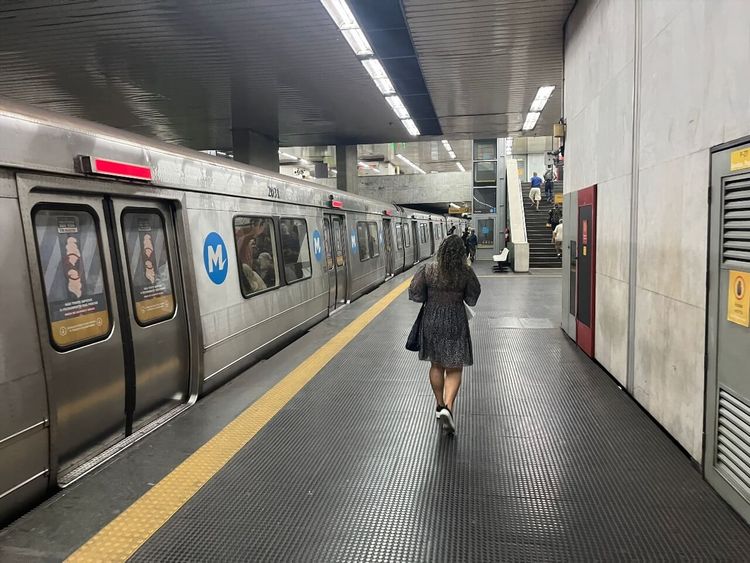
The Rio metro is your best logistical ally throughout the entire period. During this week, it runs 24 hours a day from Friday through Ash Wednesday — Linha 1 (orange) connects Copacabana and Ipanema to the Praça Onze station, the closest to the Sambódromo, in about 15 minutes. Pick up a rechargeable Rio Card as soon as you arrive, available at all stations.
Ride-hailing apps (Uber, 99, InDriver) work throughout the city, but prices surge when leaving the Sambódromo between 5 and 7 AM. Plan on the metro as a systematic alternative for these time slots — it will be packed, but available and affordable.
On foot, Ipanema and Copacabana are easily reachable from each other and from most of the major blocos in the southern zone. The walk from these neighborhoods to the Sambódromo (located in the Cidade Nova neighborhood, downtown) is not feasible at night — 7 km through a city in full festive mode with thousands of people in the streets.
Avoid unlicensed street taxis during this period. Some charge exploitative rates to tourists, and the situation is difficult to dispute once you're in the car.
Rio Carnival Budget: How Much to Plan For?
Building a realistic budget depends above all on your choices: Sambódromo or blocos only, camarote or stand, hotel or shared apartment.
Paris–Rio flight (round trip, 10 to 12 days): between €600 and €1,200 depending on when you book. Flights reserved from September onward for February offer the best price options.
Accommodation (7 nights, Copacabana, 3-star): from €1,000 to €1,500 per room. Sharing an apartment among three or four people brings this down to €250 to €400 per person.
Sambódromo tickets (2 Grupo Especial nights, mid-range sector): approximately €200 to €400 for two nights in a special stand.
Blocos and street life: entry is free. Budget R$50 to R$150 per day for drinks and snacks on-site, that's €8 to €24 depending on consumption.
Estimated total budget (7 to 10 days, full program): between €2,000 and €3,500 per person depending on the level of comfort chosen. A group trip with a shared apartment can come down to €1,500 all included.
Outfits, Costumes, and Dress Code
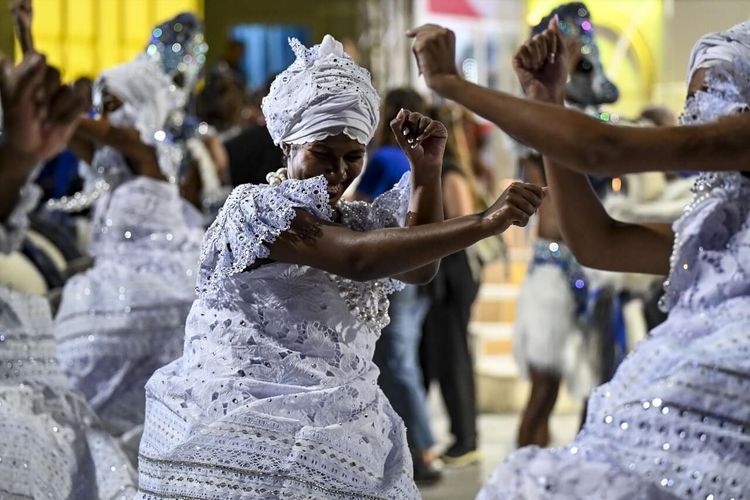
Carnival imposes no official dress code, but a few practical rules naturally apply.
For the blocos: comfort above all. Closed-toe shoes (streets are covered in wet confetti and sometimes broken glass), light shorts or a dress, and a costume if you're feeling festive. Even a colorful wig or a simple accessory is enough to fit in. Avoid visible jewelry and large bags that will slow you down in the crowd.
For the Sambódromo: you'll see everything in the stands, from bermuda shorts to elaborate costumes. Opt for light clothing to handle the heat in the early evening, and bring a small jacket for the early morning hours when the concrete stands gradually cool down.
If you're marching in a samba school, the costume provided by the school is mandatory for the wing you're joining. No improvisation in dress is accepted.
Safety: Essential Tips for Rio Carnival

Rio in full festive mode draws millions of people into the streets, and pickpocketing in large gatherings is common. That's not a reason to stay away — it's a reason to prepare your stay intelligently.
Minimize what you carry: leave your passport, main bank card, and valuables at the hotel. Bring only the essentials — a secondary debit card, the equivalent of R$100 to R$200 in cash for the day, and your phone in a front pocket or a flat pouch worn under your clothing.
At-risk areas do exist. Some neighborhoods between the center and the Zona Norte are not recommended at night outside the corridors marked by official blocos. Stay in the gathering areas identified by city hall and avoid poorly lit side streets once the party winds down.
Stay in groups as much as possible, especially when leaving the Sambódromo between 5 and 7 AM and in the large, heavily attended blocos. Ride-hailing apps make it easy to share a trip among several people.
In case of emergency: save in your phone the number of the Brazilian police (190) and SAMU (192), as well as the address of your embassy or consulate. Some major hotels in Copacabana offer a 24-hour medical service throughout the duration of the festivities.




FAQ
Are the dates for Rio Carnival 2026 confirmed?
Yes. Rio Carnival 2026 runs from February 13 to 17, 2026. The Grupo Especial parades at the Sambódromo take place over three nights: Sunday the 15th, Monday the 16th, and Tuesday the 17th of February. The Desfile das Campeãs is scheduled for Saturday, February 21, 2026. These dates are determined by the Catholic calendar (Ash Wednesday falls on February 18, 2026) and do not change.
Can You Experience Rio Carnival Without Going to the Sambódromo?
Yes, and many visitors actually prefer this option. The street blocos are entirely free, require no reservation, and can gather more people than the Sambódromo itself. Events like Cordão do Bola Preta or Simpatia é Quase Amor offer an authentic popular carnival experience. You simply need to show up at the right time and place, in costume if you wish.
How Far in Advance Should You Book Accommodation in Rio?
For the best options and rates: 6 to 12 months in advance. Three- and four-star hotels in Copacabana and Ipanema often fill up as early as the preceding spring for the carnival period. If you search after November, remaining options will either be very far from the center or significantly more expensive.
Is Rio Carnival Dangerous for Tourists?
The main risk is pickpocketing in large crowds, not direct violence. Millions of tourists attend carnival every year without serious incident. Basic precautions are sufficient: don't wear visible valuables, stay in designated areas, move in groups at night, and prefer the metro or official ride-hailing apps over walking through low-traffic areas.
What Else Is There to See in Rio Beyond Carnival During Your Stay?
The Cristo Redentor on Corcovado, the Ipanema beach, the historic Santa Teresa neighborhood, and the Tijuca forest are absolutely worth a visit, even during carnival week, especially in the morning before the blocos start. Our Ryo article on visiting Corcovado and Cristo Redentor provides all the practical advice for accessing this unmissable site.
Conclusion
Going to Rio Carnival means joining one of the most impressive collective gatherings on the planet. Between nights at the Sambódromo and afternoons in the neighborhood blocos, the intensity never lets up — it simply shifts register, from the spectacular to the popular.
Preparation is the key: tickets bought months in advance, accommodation booked early, a realistic budget, and a few simple safety rules. With these foundations in place, the celebration lives up to every promise. And to explore the city beyond the festivities, the Ryo audio guide La Cité des Merveilles guides you through Rio's historic streets at your own pace, before or after carnival.