© Shutterstock
 Votre guide Ryo
21 Activities in Rio de Janeiro and Surroundings in 2026
Planning your activities in Rio de Janeiro and surroundings can quickly become overwhelming given how much is on offer. Rio de Janeiro delivers on its promises from the very first hours: a tropical forest of nearly 4,000 hectares sweeps down to the beaches, colourful favelas cling to the hillsides between upscale neighbourhoods, and Guanabara Bay provides a setting that geographers consistently rank among the most beautiful in the world. To navigate this dense and often bewildering city, the Ryo La Cité des Merveilles audio-guided tour offers a structured overview of the essential sights, from the Sugarloaf to the alleyways of Santa Teresa.
But Rio is not alone in its beauty. Two hours away, the island of Ilha Grande hides more than a hundred beaches accessible only on foot or by boat, Petrópolis preserves the golden throne and diamond crown of the Brazilian Empire, and Paraty lines its white colonial façades along a grid of cobbled streets where cars have not been allowed for decades. This overview covers 21 experiences, in the cidade maravilhosa and beyond, to help you put together a stay that goes well off the beaten path.
1. Christ the Redeemer and the Corcovado
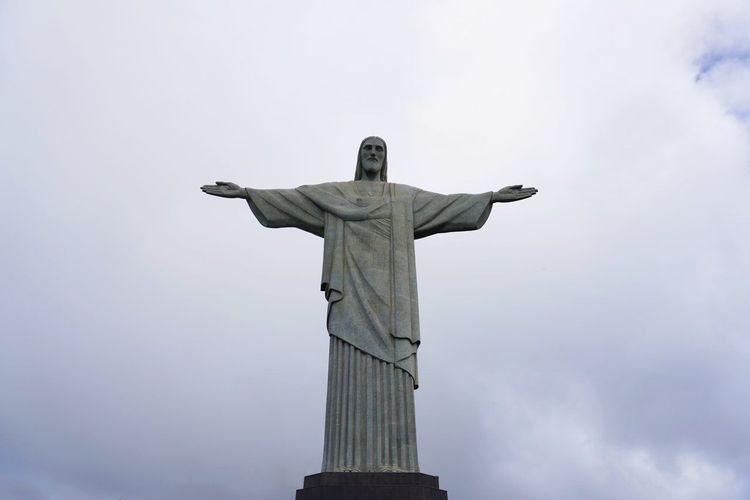
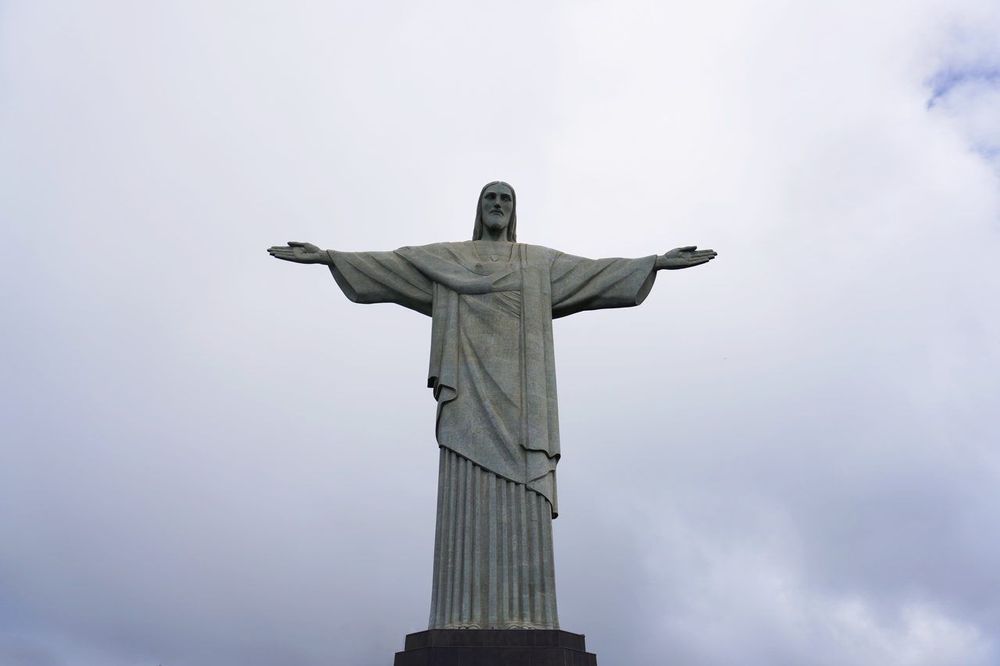
The Christ the Redeemer (Parque Nacional da Tijuca, 22250-040 Rio de Janeiro, rated 4.8/5 on Google from 131,744 reviews) overlooks Guanabara Bay from the summit of the Corcovado at 710 metres above sea level. Inaugurated in 1931 after nine years of construction, the statue stands 38 metres tall including its pedestal and weighs 635 tonnes. It was designed by French sculptor Paul Landowski in collaboration with Brazilian engineer Heitor da Silva Costa. Named one of the New Seven Wonders of the World in 2007 by an international vote, it remains the most reproduced image in South America.
Two options for the ascent: the rack railway from Cosme Velho station, departing every 30 minutes from 8am to 7pm, a 20-minute ride through the forest, or an official van from Largo do Machado. On weekends between 10am and 3pm, queues for the train easily reach 90 minutes. On weekdays, before 9am or after 4pm, you avoid the majority of organised groups. The late-afternoon light, raking across the granite, also produces better photographs than the midday sun, which flattens the statue's relief.
Tickets are purchased on the official Parque Nacional da Tijuca website, in a combined transport and entry package. Budget 80 to 110 BRL per person depending on the package (2026 rates), with a 50% student discount on presentation of valid ID. Avoid touts near Cosme Velho station who offer "express tickets" with no official value.
The panorama takes in Copacabana, Ipanema, the Tijuca forest and the Rodrigo de Freitas lagoon all at once. On a clear day, typically between June and August, you can make out the ridges of Angra dos Reis on the southern horizon. From October to March, however, mornings are often veiled in mist: plan the visit for the afternoon. Also worth knowing: the Mirante Dona Marta, accessible from Santa Teresa by mototaxi, offers a striking night-time view of the illuminated statue, without the crowds of the official site and without an entrance ticket.
2. The Sugarloaf
The Pão de Açúcar (Av. Pasteur 520 Urca, 22290-240 Rio de Janeiro, rated 4.8/5 on Google from 19,365 reviews) is Rio's second defining silhouette: this granite block rises 396 metres above the sea at the entrance to Guanabara Bay. Its name comes from the conical shape formed by Precambrian rocks that resisted erosion over millions of years.
The cable car operates in two stages: first stop at Morro da Urca (224 m), then on to the Pão de Açúcar. The modern cabins hold 65 people and depart every 20 to 30 minutes between 8am and 9:20pm. From Morro da Urca, the view over Copacabana and Christ the Redeemer is already spectacular. The more adventurous can descend to the sea on foot via the Caminho Cláudio Coutinho trail (90 minutes from Praia Vermelha, moderate level, free of charge). Budget around 130 BRL for the full cable-car round trip.
A lesser-known tip: the Mureta da Urca, the low wall of the Morro da Urca terrace, has become a sunset gathering spot. Access to this first plateau is included in the full ticket, but some Cariocas simply settle in here with a beer bought at the kiosk below, without going up to the summit. The best moment is 30 minutes before sunset: the light shifts from gold to orange on the rock, and the bay takes on a colour that no photograph truly captures.
The site's history dates back to 1912, when the first cable funicular in the Southern Hemisphere was inaugurated here. The current cables, renewed in 2008, bear a tension of several tonnes. If you are travelling with children, Morro da Urca has an open-air concert stage and a restaurant with a direct view over the bay.
3. The Beaches of Copacabana and Ipanema
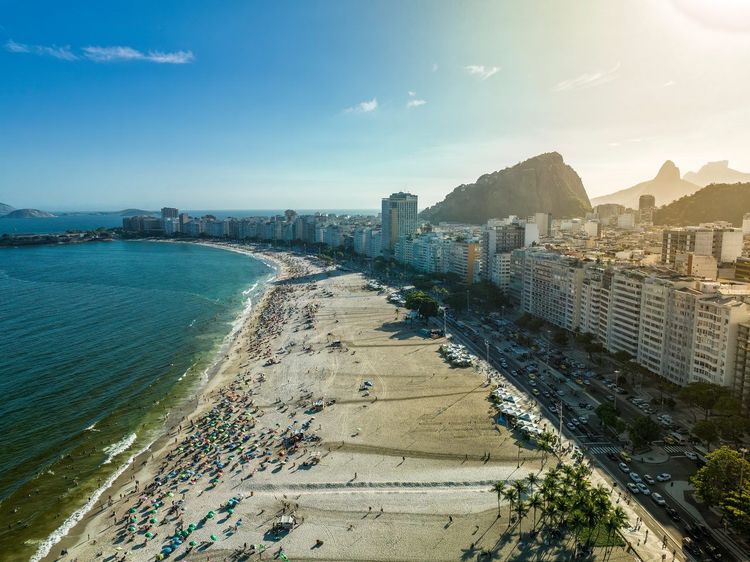
Copacabana and Ipanema are two distinct beaches in terms of atmosphere, separated by the Arpoador rock, and this difference is worth understanding before you lay down your towel.
Copacabana stretches for 4 kilometres between the two military forts that flank it. It is the quintessential popular beach, frequented by all social strata of Rio: street vendors selling caipirinhas, frescobol players, families on holiday and Cariocas who come here after work. Copacabana New Year's Eve, with its concerts and fireworks over the bay, regularly draws 2.5 million people on 31 December.
The calçadão (promenade) running along Avenida Atlântica was redesigned by Roberto Burle Marx with its black-and-white wave mosaic paving — a detail often noticed by passers-by who rarely know its author. The Fort of Copacabana, at the southern end of the beach, houses a military museum and a restaurant with a direct view over the Atlantic breakers. Open Tuesday to Sunday, entry around 10 BRL.
Ipanema is smaller (2.8 kilometres) and socially more selective. It was here in 1962 that Tom Jobim and Vinícius de Moraes composed "Garota de Ipanema" while watching Helô Pinheiro from a bar on Rua Francisco Otaviano, now called "A Garota de Ipanema". Posto 9 (the ninth lifeguard station) remains the historic landmark of the Carioca LGBT+ community. The waves at Ipanema can sometimes be rough for inexperienced swimmers — check the safety flags and stay within the supervised zones.
Between December and March, both beaches can suffer from treacherous currents and less clear water after tropical rains. July and August generally offer the best water quality, even if sea temperatures drop to 20–22°C. Whatever the month, the kiosks (barracos) dotted along the beaches serve beer, fresh coconut, tapioca and queijo coalho sandwiches — a Carioca institution that many visitors end up returning to several times a day.
4. The Tijuca Forest
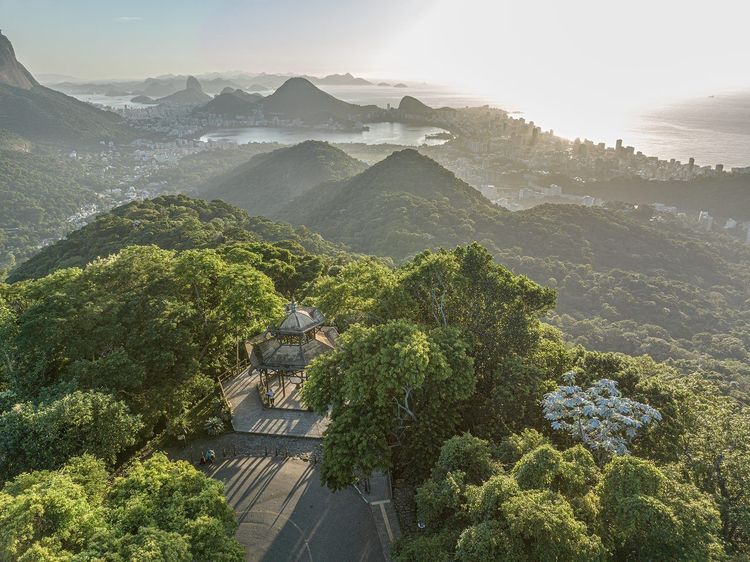
The Floresta da Tijuca (Alto da Boa Vista, 20531-590 Rio de Janeiro, rated 4.8/5 on Google from 212 reviews) is the world's largest primary urban forest: 3,953 hectares of Mata Atlântica right in the heart of Rio de Janeiro. A remarkable fact: this forest was almost entirely cleared in the 19th century to make way for coffee plantations, then replanted from 1861 on the orders of Dom Pedro II, who feared that deforestation would deprive the city of drinking water. It is one of the first large-scale reforestation operations in modern history.
Today, its trails are home to more than 200 bird species, capuchin monkeys, sloths and toucans. The Alto da Boa Vista sector is the most visited: waterfalls (the Cascatinha Taunay drops 35 metres into the middle of the forest), viewpoints (Vista Chinesa, Mesa do Imperador) and Parque Lage, a popular starting point for hiking up to the Corcovado on foot (3 to 4 hours one way, moderate to difficult level). Access to most areas is free; a few paid sectors remain below 30 BRL.
5. The Santa Teresa Neighbourhood
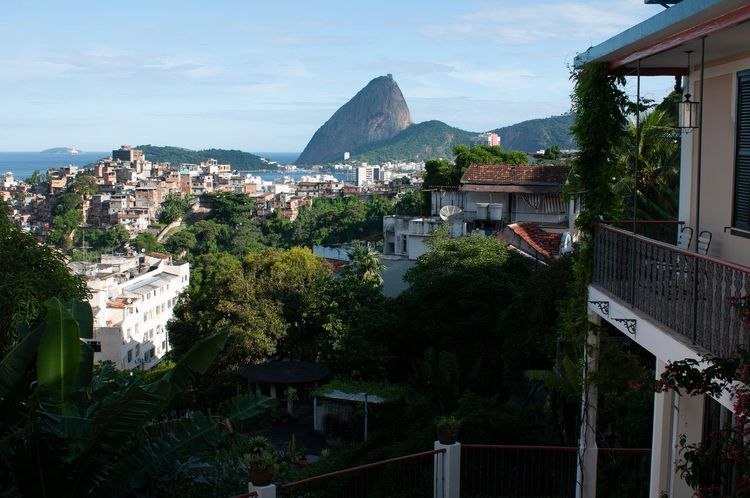
Santa Teresa combines two things that are rare in Rio: a preserved neighbourhood identity and colonial-era houses still standing. Perched on a hill between the city centre and the south zone, it looks out over the bay to the east and the favelas to the west — a position that explains its distinctive character, protected by its topography from the bulldozers of property speculation.
The bonde (tram) is the soul of the neighbourhood. Inaugurated in 1896 and long fallen into disuse after a fatal accident in 2011, it was rebuilt and reopened in 2015 on a reduced section of its original route. Riding the bonde from Paula Matos station to Largo dos Guimarães remains the most authentically Carioca experience in the neighbourhood: the yellow car sways on its tracks, crosses over the Arcos da Lapa and winds its way down the steep alleyways.
The main artery is Rua Almirante Alexandrino, lined with restaurants, art galleries and bars. The Museu Chácara do Céu, a former villa with a modern art collection (Matisse, Picasso, Di Cavalcanti) and a terrace overlooking the bay, is an affordable cultural stop (around 15 BRL, free on Wednesdays). Nearby, the Centro Cultural Laurinda Santos Lobo regularly hosts free concerts at weekends.
For dining, Bar do Mineiro (Rua Paschoal Carlos Magno) is a classic: acarajé, feijoada on Saturday lunchtimes and a warm atmosphere in an unpretentious dining room. You can also stroll down to the Selarón Steps, 215 steps covered in glazed tiles that Jorge Selarón spent 23 years decorating until his death in 2013, connecting Santa Teresa to the Lapa neighbourhood.
To explore Santa Teresa with historical context at every step, the Ryo audio guide to Rio de Janeiro covers this neighbourhood among its key stops, tracing the links between the upper city and Carioca cultural life.
6. The Maracanã Stadium
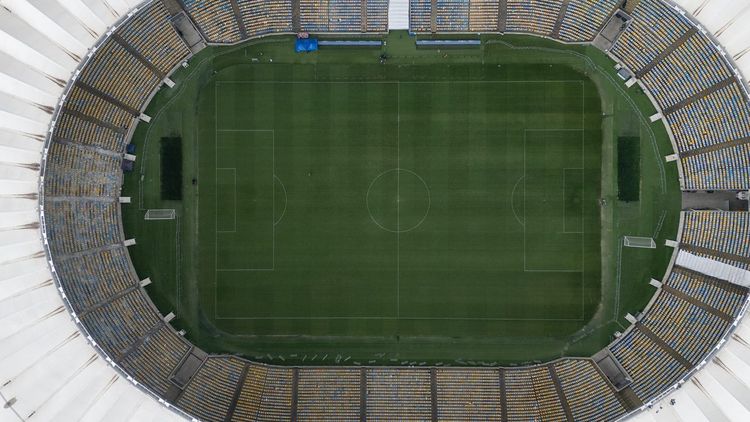
The Maracanã is far more than a stadium: it is a sanctuary where the history of Brazilian football was written in concrete. Built for the 1950 World Cup, it could then hold 200,000 standing spectators, a world record. The final of that same World Cup, lost by Brazil to Uruguay (2–1), is still known as the Maracanazo, the defining sporting trauma of Carioca identity.
Renovated for the 2014 World Cup and the 2016 Olympic Games, the stadium today holds 78,838 seated spectators. Guided tours are offered on non-match days (around 60 BRL, from 9am to 5pm), including the integrated museum, the trophy room and the pitch — you walk on the same turf as Pelé, Ronaldo and Neymar.
7. Samba in the Heart of Lapa
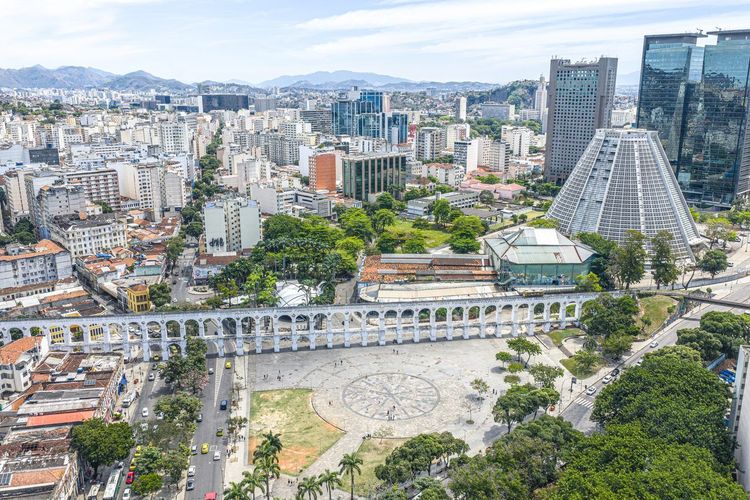
The Lapa neighbourhood, framed by the Arcos da Lapa, an 18th-century colonial aqueduct with 42 stone arches, is the centre of Rio's musical nightlife. On Friday and Saturday evenings, the streets around the aqueduct transform into an open-air party: hundreds of people dance in the street, bars spill onto the pavements and samba clubs play until dawn.
Two flagship addresses in the neighbourhood: Rio Scenarium (Rua do Lavradio 20, Lapa, 20230-070 Rio de Janeiro, rated 4.6/5 on Google from 8,388 reviews) (Rua do Lavradio, 20), a three-storey samba house decorated with thousands of antique objects, where live music starts around 8pm, booking recommended at weekends, an evening around 60 to 80 BRL with first drink included. And Carioca da Gema (Rua Mem de Sá), more intimate and frequented more by Cariocas than by tourists.
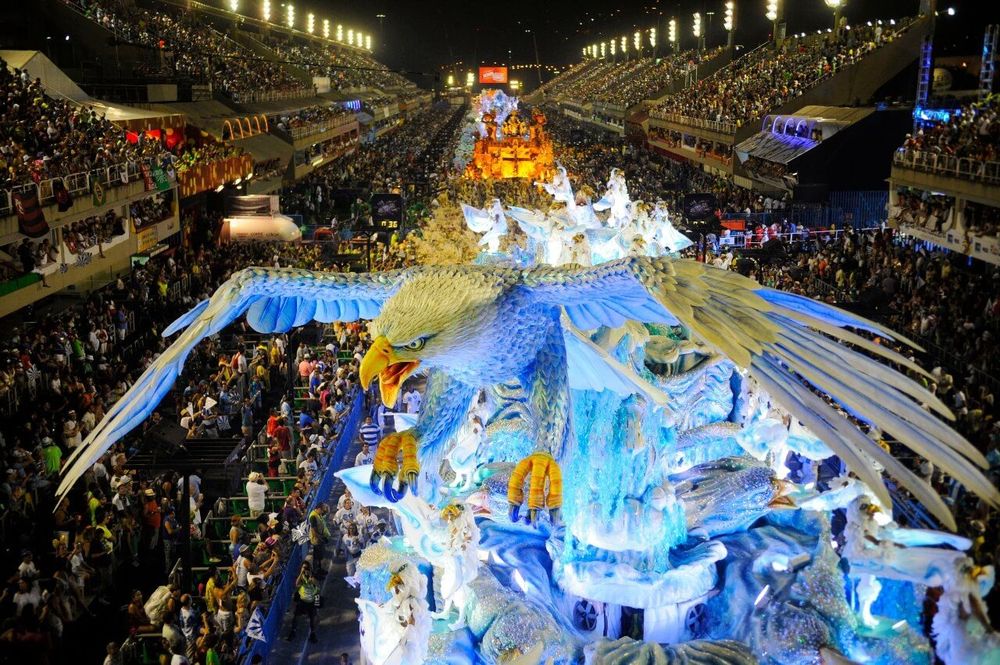
Arrive after 10pm: before that, the neighbourhood is nearly empty. Samba is in full swing between midnight and 4am. If you want to understand how samba fits into the city's festive calendar, our article on Rio Carnival gives a complete overview of the sambas-enredos and the schools that parade at the Sambódromo every February.
8. Pedra do Sal and Little Africa
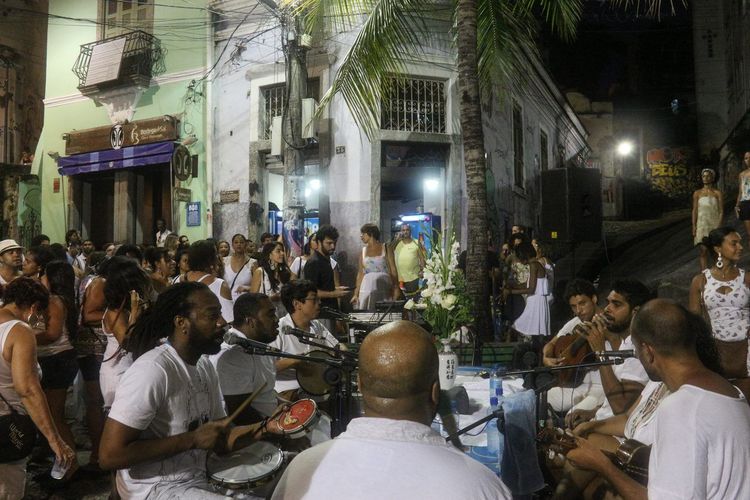
On the port quays, in the Saúde neighbourhood, stands the Pedra do Sal (Largo João da Baiana, Saúde, 20220-560 Rio de Janeiro, rated 4.6/5 on Google from 19,833 reviews), a black volcanic rock where African slaves arrived in Brazil between the 16th and 19th centuries. Brazil imported around 4.5 million enslaved people — the largest transatlantic slave trade in history — and this port was one of its main points of arrival.
The rock has become a place of memory and resistance. On Friday evenings, Largo João da Baiana hosts an open-air samba session, a tradition dating back to the 1830s when freed enslaved people would gather here to play music. Amateur and professional musicians mingle, beer flows freely, and the atmosphere is the polar opposite of organised tourism.
The neighbourhood is part of the Pequena África (Little Africa) project, which brings together several sites linked to African heritage: the Cemitério dos Pretos Novos (cemetery of enslaved people who died on arrival), the Museu de Arte do Rio (MAR) and the recently redesigned Praça Mauá. A half-day walking circuit connects these sites from the port.
9. The Rocinha Favela
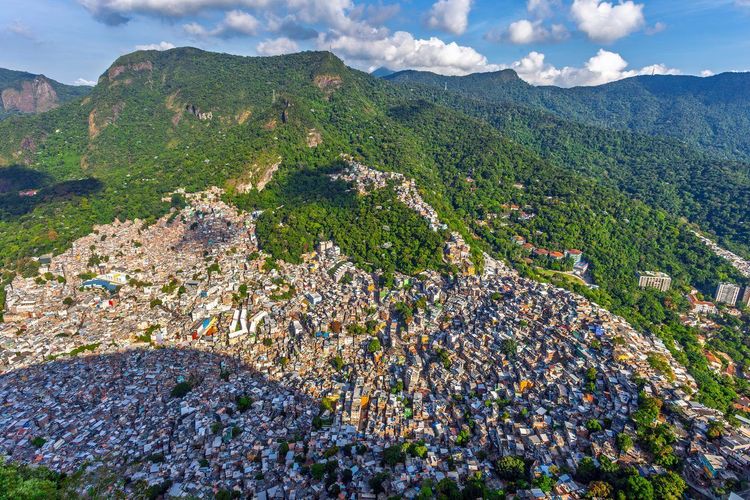
The Rocinha is Brazil's largest favela: estimates range between 70,000 and 180,000 inhabitants depending on the source and counting method, concentrated on the hillside overlooking the São Conrado neighbourhood, between the upscale districts of Gávea and Leblon.
Visiting a favela raises a legitimate question of tourism ethics. The answer depends largely on how you go. Organised tours with resident guides, who channel a portion of the income back to local community organisations, are a very different proposition from air-conditioned bus excursions that stop to photograph poverty through the window. Several local operators offer visits led by Rocinha residents: this is one of Rio's most fully realised examples of genuine community tourism.
On the ground, Rua Um (the main street) is a dense commercial artery: pharmacies, hairdressers, grocery stores, internet cafés — a city within the city, with its own codes. The murals covering the façades tell the neighbourhood's story. The view from the highest point of Rocinha over the sea and São Conrado is, paradoxically, one of the finest vantage points in Rio, and it is accessible on foot with a guide.
Do not go there alone without knowing the neighbourhood. Unspoken safety rules exist, and ignoring them can create difficult situations.
10. Niterói and the Museum of Contemporary Art
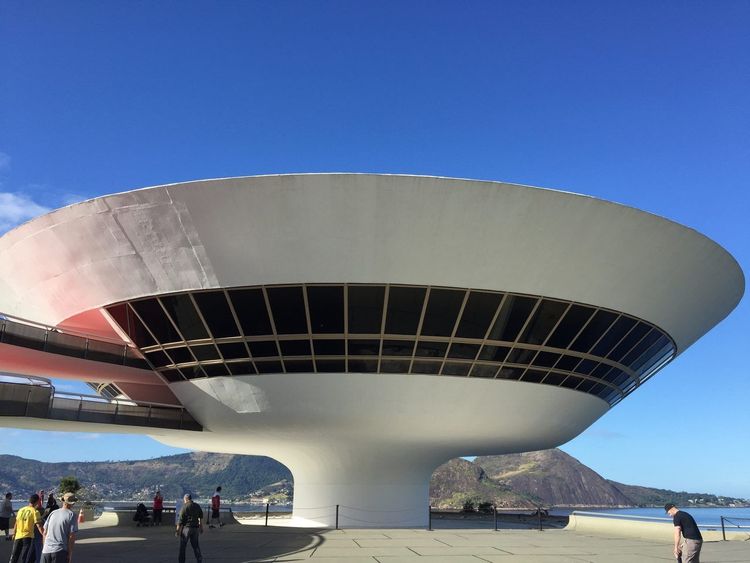
Niterói, the city across the bay from Rio on the other side of Guanabara Bay, is reached in 20 minutes by ferry from the Praça XV terminal, 8 to 10 BRL one way. The Rio-Niterói bridge is 13 km long and is often congested during peak hours: take the ferry, which also offers a magnificent view of the Rio skyline.
The main reason to cross the bay is the Museum of Contemporary Art (MAC), designed by Oscar Niemeyer and inaugurated in 1996. The saucer-shaped building balanced on a central stem has become as famous as its contents: Niemeyer himself described it as "the flower of the bay". The circular platform with a 360° view over Rio, Christ the Redeemer and the bay is worth the trip even outside the temporary exhibitions. Admission: around 20 BRL.
Along the waterfront extends the Caminho Niemeyer, an architectural ensemble of several buildings designed by the same architect: the Popular Theatre, the Palace of the Arts and the Roberto Silveira memorial. Allow half a day to walk between these buildings along the waterfront. Before returning to Rio, the Fortaleza de Santa Cruz da Barra, a 16th-century Portuguese colonial fortress at the entrance to the bay, offers a unique perspective of Rio seen from the east.
To explore these sites with architectural and historical context, our Rio de Janeiro audio-guided tour includes information on the ferry crossing and the points of interest visible from the bay.
11. The Jardim Botânico
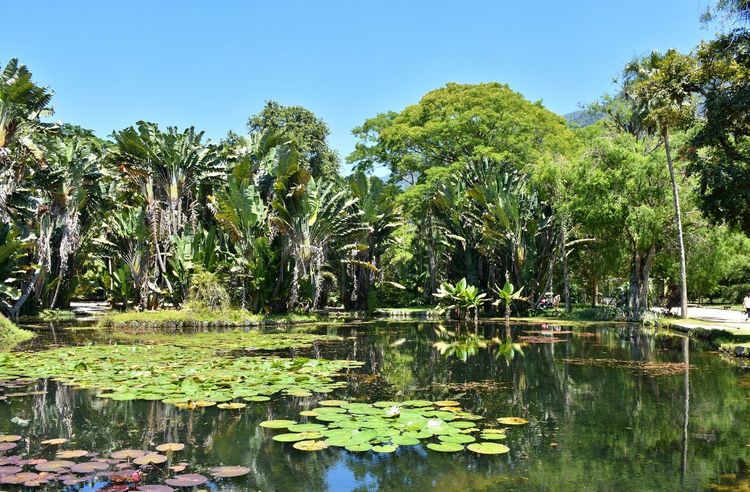
Rio's Jardim Botânico is one of the richest in the world: founded in 1808 by Dom João VI shortly after the arrival of the Portuguese court in Brazil, it covers 54 hectares and catalogues more than 8,000 plant species. Its main avenue, lined with century-old royal palms reaching 30 metres in height, is the most photographed image of the site.
The orchid greenhouse and the bromeliad garden are home to extremely rare species. More than 350 bird species have been recorded in the park, including the Amazon parrot, which you will hear before you see it. Open daily from 8am to 5pm, admission 40 BRL (free for children under 7). Located in the eponymous neighbourhood, a 5-minute walk from the Rodrigo de Freitas lagoon.
12. The Museum of Tomorrow
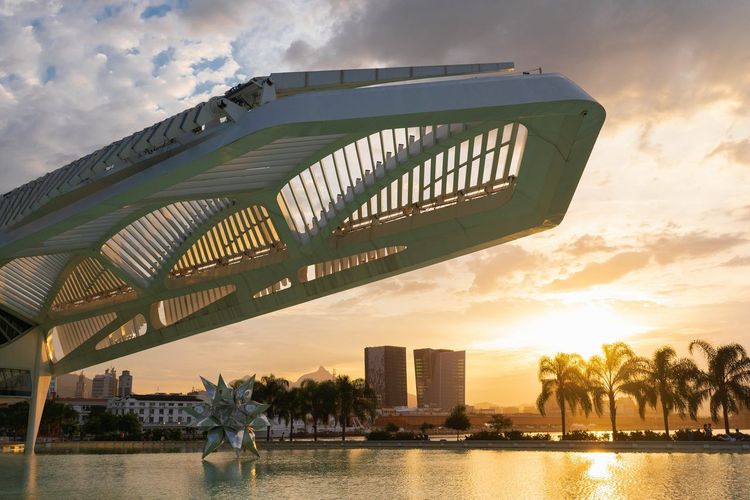
The Museu do Amanhã (Museum of Tomorrow) is one of Rio's most photographed new buildings. Designed by Spanish architect Santiago Calatrava and inaugurated in 2015 in the renovated Port district, it spreads its white wings over Praça Mauá like a manta ray skeleton. Inside, the permanent exhibition poses questions about the planet's future through five major themes — Cosmos, Earth, Anthropocene, Now, Tomorrow — with interactive installations in Portuguese and English.
Admission: 44 BRL (2026), open Tuesday to Sunday from 10am to 6pm. The outdoor terrace overlooks the bay and the Rio-Niterói bridge, a panoramic view accessible without an entrance ticket. The historic centre, a few streets away, is best covered on foot with our Rio audio-guided tour.
13. Paraty, the Colonial Town
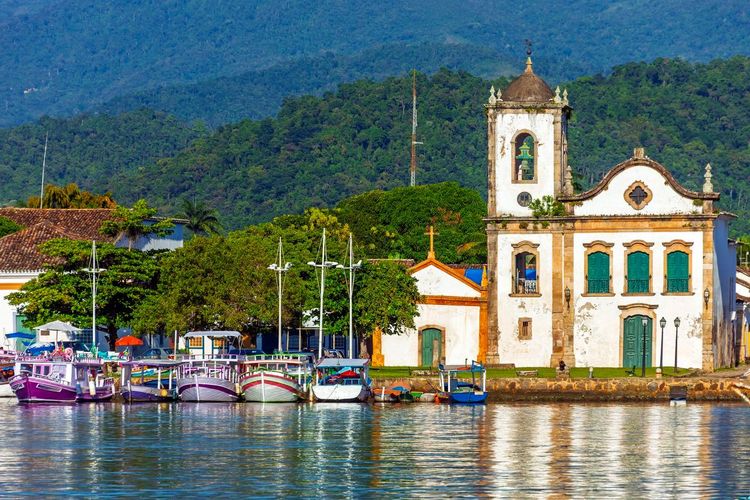
Paraty is located 250 km south of Rio, about 4 hours by road or bus from the Rodoviária Novo Rio (Costa Verde company). The journey follows the Serra da Bocaina along a stretch of the BR-101 that ranks among the most beautiful in Brazil: the road winds between the Atlantic forest and the Atlantic Ocean, with possible stops at a few wild beaches.
Founded in 1667 as an export port for gold from Minas Gerais, Paraty later served as an outlet for coffee from the Vale do Paraíba in the 19th century. This dual prosperity left behind an almost intact historic centre, listed as a UNESCO World Heritage Site in 2019 as part of a natural and cultural ensemble that also includes Ilha Grande. The grey granite-paved streets have been closed to cars since the 1970s (except for residents): the only sound that echoes through the alleyways in the evening is that of shoes on the cobblestones and voices drifting from the terrace restaurants.
The colonial houses all share the same structure: whitewashed façades with door and window frames painted in blue, yellow, red or green according to Portuguese colonial tradition. The white walls reflect the light in such a way that Paraty literally glows at sunset.
The Festival Literário Internacional de Paraty (FLIP), held every year in July, is one of the most important literary festivals in Latin America: five days of talks and meetings with authors from around the world, in tents set up on the squares of the historic centre. Outside the festival, the Paraty cachaça distilleries — a local aguardente distilled since the 17th century in the stills of surrounding fazendas — offer guided tours and tastings starting from a few dozen BRL.
Boat excursions from the port of Paraty allow you to reach the beaches of the bay's islands: Ilha do Araújo, Ilha Comprida and coves accessible only by sea. If you have time, the village of Trindade (45 minutes by bus) is one of the starting points for the hike to Praia do Sono, a 4-km wild beach with no road access.
14. Ilha Grande
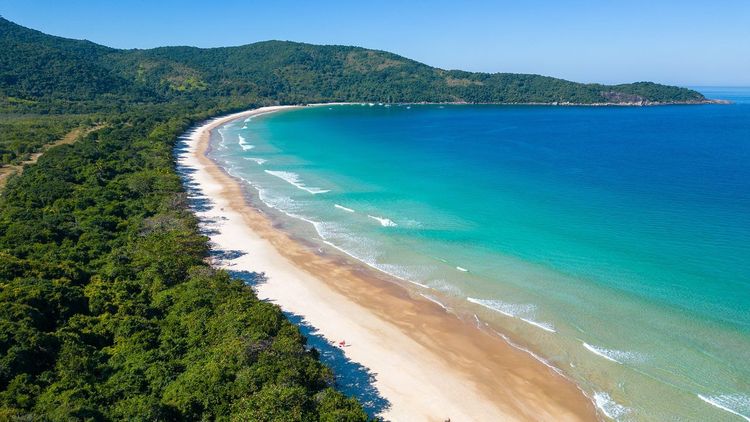
Ilha Grande (23968-000 Angra dos Reis, rated 4.9/5 on Google from 28K reviews) is one of the most preserved islands in the state of Rio de Janeiro: 119 km² of primary Atlantic forest, more than 100 beaches and not a single car. This last characteristic is no trivial detail — it is the direct consequence of the island's past, which housed a maximum-security prison until 1994. The penitentiary, which held political opponents of the military dictatorship and later drug traffickers, was demolished after its closure. The forest reclaimed the land within the space of a generation.
How to get there: ferries and speedboats from Angra dos Reis (1 hour) or Mangaratiba (1.5 hours). Buses connect Rio to both ferry terminals from the Rodoviária Novo Rio. The village of Abraão is the island's only settlement, with its restaurants, pousadas and arrival jetty — from there, everything is done on foot or by collective boat.
The beach of Lopes Mendes is regularly listed among the ten most beautiful beaches in South America: 3 km of extra-fine white sand, turquoise water and virtually no commercial infrastructure (a single kiosk in season), accessible only on foot in 2.5 hours from Abraão or by collective boat. Snorkelling at Lagoa Azul and Lagoa Verde reveals exceptional tropical marine life. For hikers, the trail to the ruins of the former prison (Abraão → Dois Rios) takes 5 hours return, moderate level, with views over the Atlantic from the forest ridges.
Stay at least one night on the island. Tourists who make the day trip from Rio only reach the beaches near Abraão. The secluded coves and forest trails can only be discovered by staying overnight. Mid-range pousadas offer rooms between 150 and 300 BRL, with a tropical breakfast included.
15. Búzios
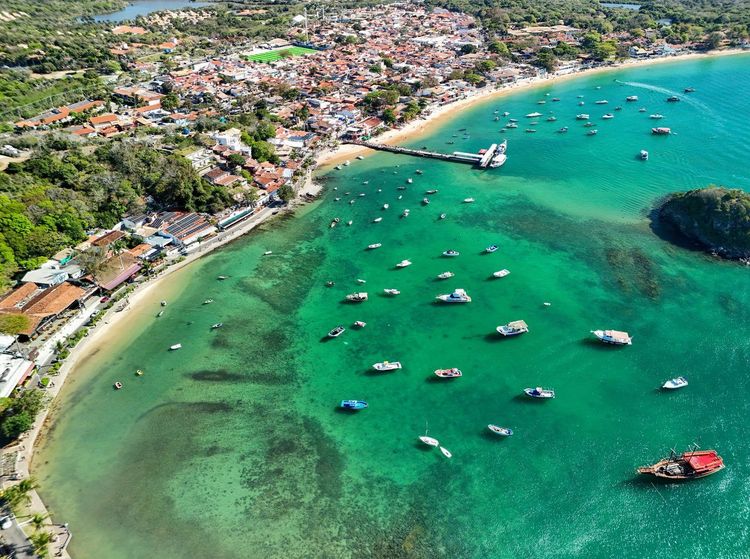
The Búzios peninsula (Orla Bardot, 28950-000 Armação dos Búzios, rated 4.8/5 on Google from 3,711 reviews) (officially Armação dos Búzios) lies 165 km east of Rio, about 2.5 to 3 hours by road. A fishing village turned international beach resort, it owes its fame to the summer of 1964 when Brigitte Bardot stayed there and posed for photographers on the quays. The images went around the world and transformed this Brazilian village into a European destination.
The peninsula has 23 beaches with radically different characteristics: Praia de Geribá to the south, facing the Atlantic, with its regular waves attracting surfers; Praia Brava, more secluded, reached via a 30-minute trail; Praia João Fernandes, with calm waters and a sandy bottom ideal for snorkelling; and the Orla Bardot (Rua das Pedras waterfront), with its boutiques, restaurants and bars open until 3am.
A bronze statue of Brigitte Bardot stands on the quay, an unavoidable landmark and also a kitsch symbol that the people of Búzios themselves view with a certain irony. The craft night market held on Rua das Pedras on weekend evenings sells semi-precious stone jewellery and local crafts at reasonable prices.
Búzios rewards an overnight stay: tourists who attempt the return to Rio in a single day spend more time in traffic on the RJ-106 than on the beaches. Allow at least 2 nights to cover the beaches on both sides of the peninsula.
16. Petrópolis, the Imperial City
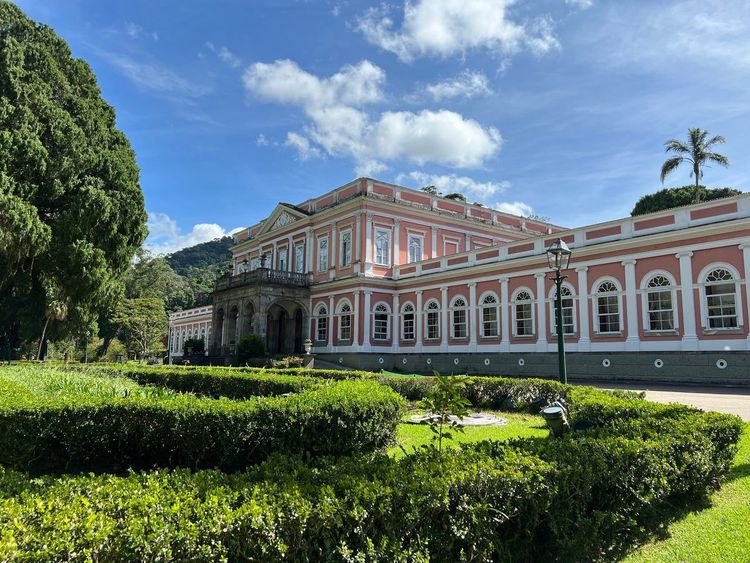
Just 68 km north of Rio and at 809 metres altitude, Petrópolis is one of the rare places where Brazilian temperatures drop enough to justify a jumper in July. The city was founded in 1843 by Emperor Dom Pedro II, who had his summer residence built here to escape the heat of the capital.
The Museu Imperial occupies Dom Pedro II's summer palace. Inside are preserved unique artefacts of the Brazilian Empire: the imperial crown set with 639 diamonds and 77 pearls (displayed under glass in the throne room), the sceptre and the Emperor's ceremonial costumes. Open Tuesday to Sunday from 11am to 5:30pm, admission 30 BRL.
Nearby, the Catedral de São Pedro de Alcântara houses the tombs of Dom Pedro II and Empress Teresa Cristina. The Palácio de Cristal, an iron-and-glass structure inspired by London's Crystal Palace, manufactured in Belgium and assembled in Petrópolis in 1884, served as an orchid greenhouse for the Empress's exhibitions. Finally, the Casa Santos Dumont, former home of aviation pioneer Alberto Santos-Dumont, reveals the tinkering genius of the inventor: he had designed his own dumbwaiter, his own furniture and a fireplace heated by alcohol.
The journey from Rio is by bus from the Rodoviária Novo Rio (Único-Fácil, around 1h30, 30 BRL one way) or by car via the BR-040.
17. Angra dos Reis
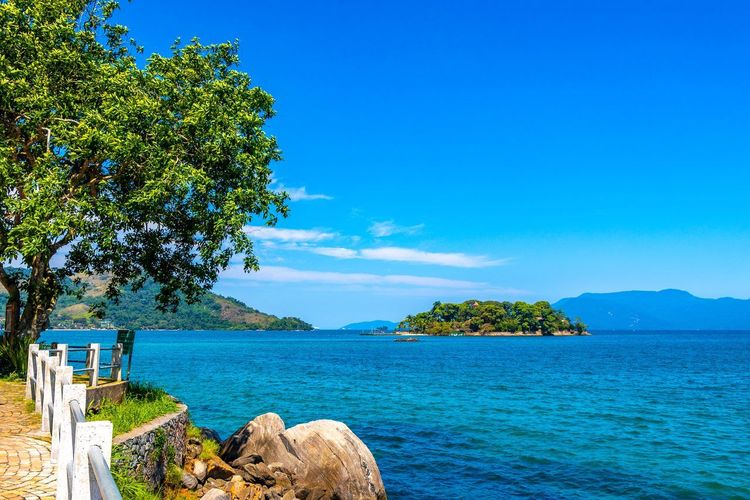
Angra dos Reis (Centro, 23900-000 Angra dos Reis, rated 4.5/5 on Google from 7K reviews) is 170 km west of Rio via the BR-101 (around 2.5 hours by road). Angra Bay is one of the most sheltered on the Brazilian coastline: 365 islands and 2,000 islets form an archipelago of coves, mangroves and semi-private beaches. Nearly all of the beaches are accessible only by boat.
Schooner departures (flat-bottomed sailing vessels) from the main port tour the bay with snorkelling stops, lunch on board and a stop on a few island beaches. Budget 100 to 200 BRL per person depending on the package (half-day or full day). The most popular islands are Ilha do Francês (Angra's main beach, accessible in 20 minutes) and Ilha das Palmas (palm trees, calm waters). Most ferries and speedboats to Ilha Grande also depart from Angra's port, making it a practical base for combining both destinations in a single trip.
18. Cabo Frio
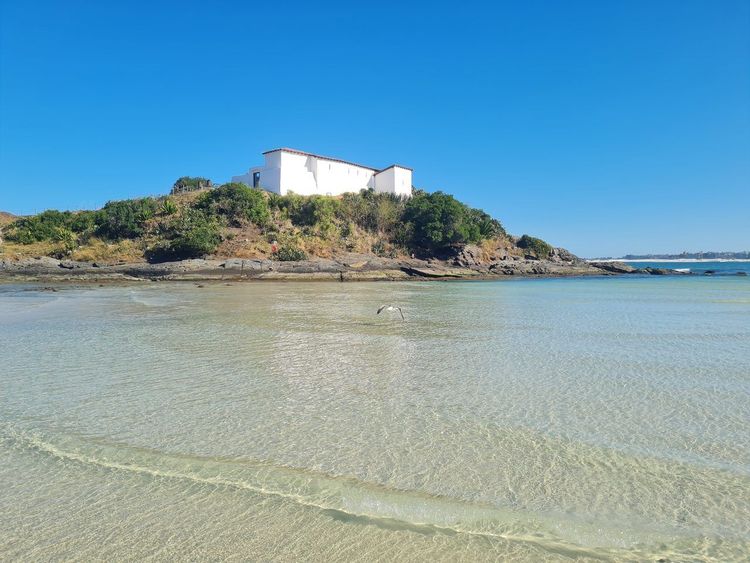
Cabo Frio (Centro, 28905-000 Cabo Frio, rated 4.4/5 on Google from 5K reviews) is 160 km east of Rio, at the tip of the Lakes Region, a coastline of lagoons and dunes that few European travellers spontaneously include in their itinerary. The town owes its name to the cold current that rises from the depths of the Atlantic offshore, keeping the water at 20–22°C even in summer, several degrees cooler than Copacabana.
The Praia do Peró stretches for 7 kilometres of white sand bordered by natural dunes: it is one of Brazil's most sought-after kitesurfing spots, with consistent winds between May and November. The Lagoa de Araruama, a few kilometres to the west, is the largest hypersaline lagoon in the world — the water is so salt-rich that swimmers float effortlessly, and windsurfing can be practised year-round.
19. The Metropolitan Cathedral
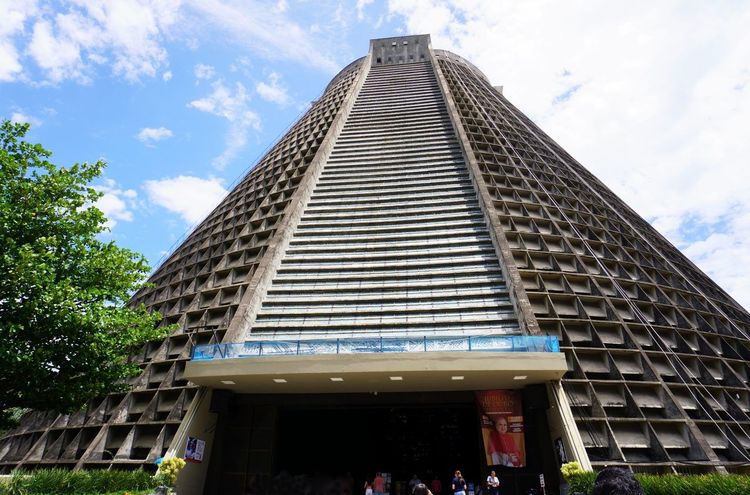
The Catedral Metropolitana de São Sebastião (Campo de Santana, 20051-150 Rio de Janeiro, rated 4.7/5 on Google from 28,995 reviews) surprises with its shape: a conical concrete tent 96 metres in diameter and 96 metres tall, inaugurated in 1979 to designs by Edgar de Oliveira da Fonseca. Four immense stained-glass windows 64 metres tall run through the structure from bottom to top — red, green, blue and yellow — flooding the interior with an almost mystical coloured light on sunny days.
Capacity: 20,000 standing worshippers. Free admission, open daily from 7am to 5pm. Located in the historic city centre, a short walk from Cinelândia metro station.
20. The Feira de São Cristóvão
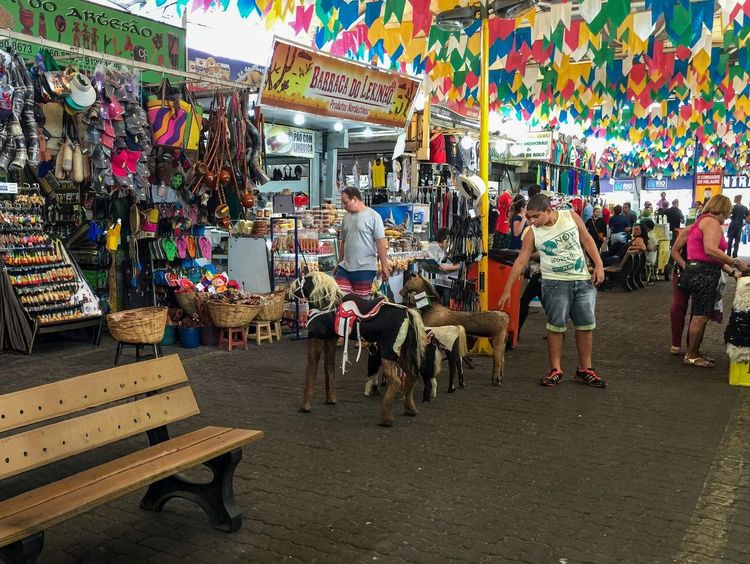
The Feira de São Cristóvão (Campo de São Cristóvão, 20921-440 Rio de Janeiro, rated 4.6/5 on Google from 24,825 reviews) is not a market in the ordinary sense: it is a concentrate of the Brazilian Northeast in the very heart of Rio. Founded in 1945 by northeastern migrants settling in the São Cristóvão neighbourhood, it now brings together 700 stalls inside the Pavilhão São Cristóvão in a constant soundtrack of forró, baião and xaxado.
You will find carne de sol (sun-dried meat), grilled queijo coalho, fresh tapioca and dozens of regional specialities absent from the tourist-area restaurants. Music plays non-stop, forró dancers improvise between the stalls. Open mainly at weekends (Friday evening to Sunday evening).
21. Parque Lage
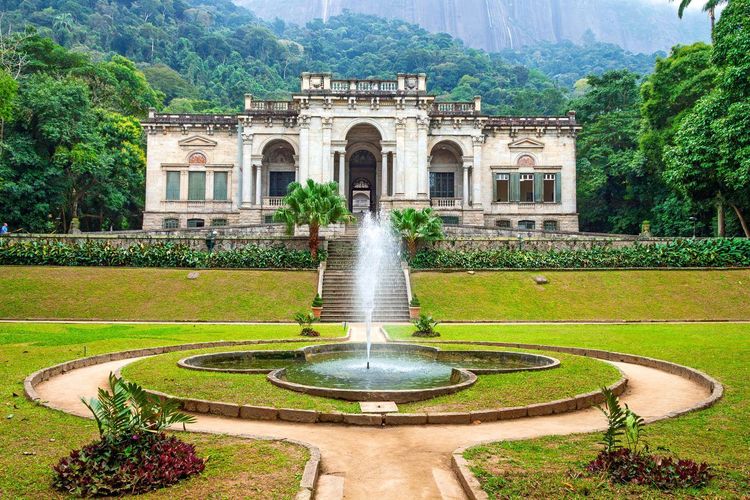
The Parque Lage (Rua Jardim Botânico 414, 22461-000 Rio de Janeiro, rated 4.6/5 on Google from 51,178 reviews) is one of the most photogenic gateways into the Tijuca forest: a garden with a contemporary art school housed in an early 20th-century neoclassical palace, surrounded by dense vegetation. The palace café, set in the former open-air courtyard with its fountain, is a favourite meeting spot for Cariocas, with prices that remain reasonable.
This is the starting point for the trail to the Corcovado (a 3 to 4-hour hike to Christ the Redeemer, moderate to difficult level). Park entrance is free. The art school hosts temporary exhibitions, often free or at a nominal charge. Located on Rua Jardim Botânico, a five-minute walk from the Botanical Garden.
FAQ
What is the best time to visit Rio de Janeiro?
The months of June through August offer the best compromise: clear skies, temperatures of 25–28°C and seawater at 22°C, without the oppressive heat or tropical rains of the Brazilian summer (December–March). Avoid February unless you have come specifically for Carnival — the city is packed and accommodation prices skyrocket.
How do you get around between Rio and the surrounding sights?
For Petrópolis, Angra dos Reis, Paraty and Cabo Frio, comfortable buses depart from the Rodoviária Novo Rio (Centro). For Ilha Grande, you first need to reach Angra dos Reis or Mangaratiba by bus, then take a ferry. For Búzios, direct buses from Novo Rio are available, but a rental car is more practical for exploring the peninsula's various beaches.
Is it dangerous to visit Rio de Janeiro?
Rio has a reputation that sometimes exceeds reality for tourists, but the risk of pickpocketing does exist in tourist areas and on public transport. Basic rules: avoid carrying large amounts of cash, do not display cameras in crowded areas, and use official taxis or Uber rather than unmarked cars. The tourist neighbourhoods (Ipanema, Leblon, Santa Teresa, Barra da Tijuca) are generally safe during the day for those who follow these precautions.
How far is Ilha Grande from Rio de Janeiro?
Ilha Grande is about 150 km south-west of Rio. The bus journey to Angra dos Reis or Mangaratiba takes 2 to 2.5 hours, then the ferry to the village of Abraão lasts 60 to 90 minutes depending on the vessel. There are no cars on the island — getting around is done on foot or by collective boat.
Should you buy Christ the Redeemer tickets in advance?
Yes, highly recommended, especially in high season (July, Christmas holidays, Carnival). Tickets are available on the official Parque Nacional da Tijuca website, with transport included. Buying on-site costs slightly more and does not guarantee immediate access on the day. Improvised queues on weekends can exceed two hours.
The cidade maravilhosa earns its nickname for a simple reason: few cities in the world combine such spectacular nature and such vibrant culture within such a compact area. Make the most of your stay by going beyond the must-sees — the surroundings of Rio hide preserved islands, imperial towns and wild coastlines that every extra day turns into lasting memories.
To explore the cidade maravilhosa with historical and cultural context at every step, the Ryo audio walking tour, The City of Wonders guides you through the city's streets, from the Sugarloaf to the staircases of Santa Teresa, with audio stories designed for French-speaking travellers.