© Shutterstock
 Votre guide Ryo
7 Islands to Discover on Your Trip to Croatia (2026)
Choosing which islands to discover in Croatia is almost overwhelming: the country officially has 1,246 islands, 69 reefs, and 389 exposed rocks along its 1,777 km of coastline, making it the most complex shoreline in the Mediterranean. Of all these islands, only 47 are inhabited, and most travelers visit just two or three before heading home. They leave without ever discovering that Vis was closed to foreigners until 1989 for military reasons, that Mljet is home to a saltwater lake reaching 30°C in August where you can swim out to a 12th-century Benedictine monastery, or that the Elaphiti archipelago sits just twenty minutes by ferry from Dubrovnik and can be explored in a full day without any organized excursion. Most travelers actually set off from Split, where the Ryo audio guide between marble and the Mediterranean makes an ideal preamble before setting sail.
The islands to discover in Croatia are plentiful, but they don't all share the same character. The Kvarner Gulf in the north differs markedly from central Dalmatia, with slightly cooler waters, karst landscapes, and different vegetation. Further south, Dalmatia concentrates the most visited and most photographed islands, with crossings of one to three hours from Split or Dubrovnik. This guide selects seven essential islands, each with its own identity, and gives you the practical information you need to plan each stop from abroad: crossing times, best periods, and highlights that genuinely deserve the detour.
Some of these islands fit easily into a stay along the Dalmatian coast. Others require adapting your itinerary. All of them deserve at least one night on the island rather than a day-trip: it's in the evening, when the tourist boats have headed back to sea and the local restaurants open their terraces, that the Croatian islands reveal what keeps travelers returning year after year.
Hvar: The Sunniest Island in the Mediterranean
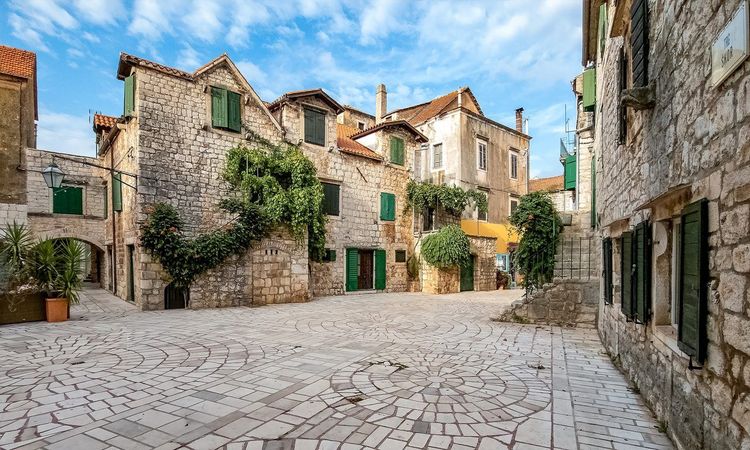
No Croatian island divides opinion quite like Hvar. Some find it overrated, too upscale, too noisy in summer. They're not entirely wrong, and it's precisely this contrast that makes it a destination unlike any other.
The town of Hvar, framed by 16th-century Venetian palaces and a central square entirely paved in white limestone, is one of the most beautiful medieval towns on the Adriatic. The Španjola Fortress, perched 100 metres above the red rooftops, offers a panorama over the Pakleni islands that stops any conversation in its tracks. The fortress dates from the 16th century, but its walls rest on far older Illyrian foundations, and archaeological excavations are carried out there every summer. In peak season, the crowds concentrate mainly along the waterfront and in the port bars. Ten minutes on foot into the island's interior, and the atmosphere changes completely.
The interior of Hvar is lavender country. The locals have been cultivating it since the 16th century, and the fields in bloom from early June to mid-July transform the central hills into a patchwork of purple and silver. The villages of Vrisnik, Svirče, and Vrbanj in the centre of the island still live largely off farming and local wine. A day cycling through these hamlets — rental available in Hvar town for around 15 euros — is worth as much as any evening on the waterfront.
Hvar's real secret is the Pakleni archipelago (Paklinski otoci). These uninhabited islets opposite the town are reachable by water taxi in fifteen minutes. Palmižana has a pebble beach surrounded by maritime pines and a seafood restaurant that has been running since the 1960s. Stipanska is quieter, almost deserted outside July and August. If you're staying two nights on Hvar, dedicate a full day to the Pakleni islands: set off with a picnic and a snorkel mask.
The crossing from Split takes between 1 hour (catamaran to Hvar town) and 1 hour 50 minutes (car ferry to Stari Grad). For those who want to stay on the island without paying Hvar town's sky-high rates, Stari Grad is a genuine alternative: quieter, more authentic, with taverns whose prices have not yet followed the tourist inflation. Jelsa, halfway along the island, offers a similar profile.
If you're planning your itinerary from Split, take the time to explore the city before boarding for Hvar. Diocletian's Palace alone justifies a full afternoon, and the alleyways of the old palace are home to grilled octopus restaurants absent from the waterfront tourist menus.
For accommodation, book Hvar town at least three months in advance for a July–August stay. Prices easily exceed 200 euros per night for a standard apartment. Stari Grad and Jelsa are 30 to 40% cheaper for equivalent quality.
Korčula: Wine, Stone, and the Legend of Marco Polo
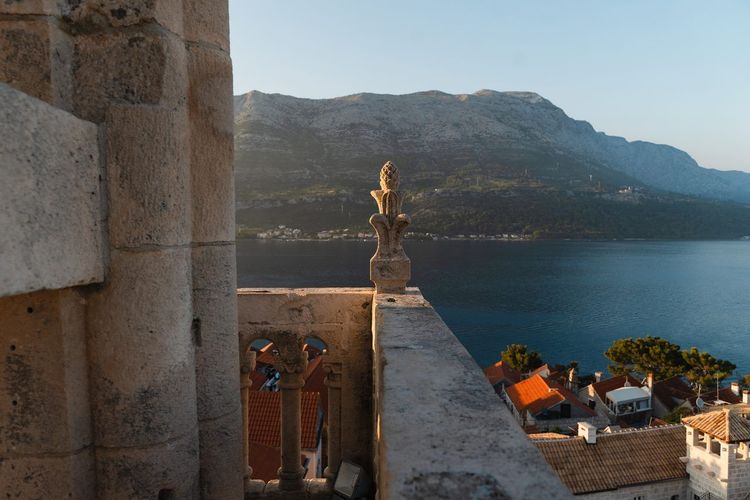
They say Marco Polo was born in Korčula. Historians have debated the matter for centuries, but the locals settled the question long ago. This claimed connection draws visitors from around the world, and Korčula welcomes them with other assets that deserve to be mentioned from the outset.
The old town of Korčula is built in a herringbone pattern, a layout that medieval town planners had calculated to channel the northern wind while blocking the heat of the southern winds. The effect is striking when seen from the ramparts: the alleyways answer each other diagonally, all oriented towards the sea. It is one of the best-preserved examples of medieval Dalmatian urban planning, comparable to Dubrovnik in terms of architectural coherence but on a far more human scale, without the corresponding tourist pressure.
The other compelling reason to stop on Korčula is wine. The island produces two endemic grape varieties: Pošip, a fresh, slightly mineral white, and Grk, grown exclusively in the Lumbarda area, whose name literally means 'Greek' in reference to the colonists who are said to have introduced it more than two thousand years ago. The Grk from Lumbarda is one of the rare Croatian dry whites that can age for several years. It can be found directly from producers in Lumbarda (Lumbarda, 20263 Korčula, rated 4.5/5 on Google based on 480 reviews), 6 km east of Korčula town, in a landscape of reddish sand and low-growing vines that is particularly photogenic.
The Moreška dance, a choreographed warrior tradition in which two kings fight over a queen, is performed every Thursday evening in July and August in front of the entrance to the old town. It is one of the few popular Dalmatian traditions still practised without artificial folkloric reconstruction. The 500 seats sell out quickly in season: book in advance through your accommodation or directly at the box office.
Korčula is accessible by catamaran from Split (2h30) or from Dubrovnik via the Jadrolinija coastal line. If you're coming from the south, a stopover in Dubrovnik before boarding makes sense: the Venetian heritage that shaped the old town can be found all along this stretch of coast, from Dubrovnik to the herringbone alleyways of Korčula.
Brač: The Iconic Beach and the Island of White Stone
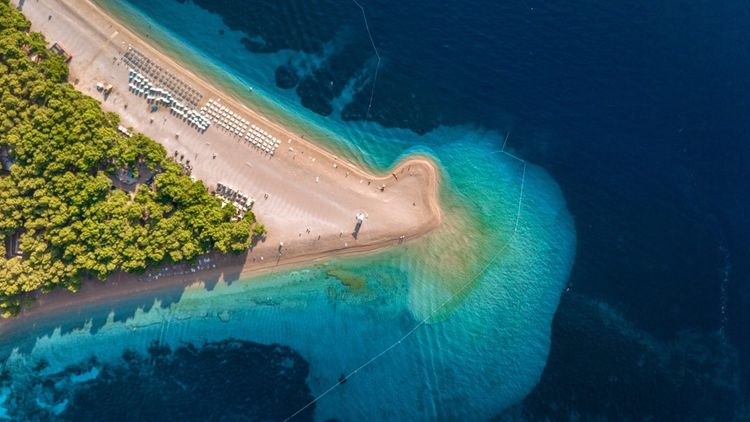
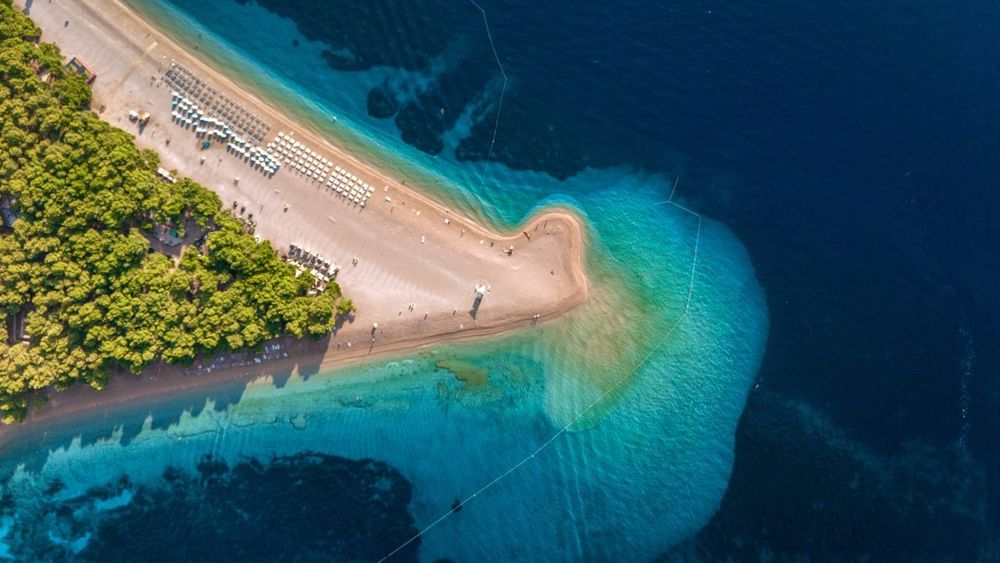
Zlatni Rat. This photograph has circulated so widely on social media and in tourist brochures that it has become the unofficial symbol of Croatia. The white limestone cape jutting into turquoise water, shifting shape with the currents and the wind — it's right here, at Bol on the southern shore of Brač. In reality, Zlatni Rat does not disappoint, provided you arrive before 9am or after 5pm to still find space on the beach.
Brač is well worth the trip beyond this single beach. Brač stone has been one of Croatia's most exported raw materials since antiquity. It was used to build Diocletian's Palace in Split, the fortifications of Dubrovnik, several palaces in Venice, and public buildings in Vienna and Budapest — all well-documented attributions. A persistent legend also credits it with part of the White House in Washington, but no serious evidence supports this claim: it is a story repeated from guide to guide, not an established fact. The Pučišća quarries in the north of the island still supply blocks today for the restoration of European monuments. Stonemasons there perpetuate a thousand-year-old craft: the Pučišća school of sculpture has been training restorers from around the world since the 1970s.
Further east on the island, the Blaca Monastery (Blaca Monastery, 21420 Brač, rated 4.7/5 on Google based on 1,491 reviews) is only accessible on foot (45 minutes from the nearest car park) or by boat. Founded in the 16th century by Franciscan monks fleeing the Ottomans, it was inhabited until 1963, when its last resident died there. The interior, preserved as it was in the 1960s, is surprisingly modern for a hermitage: Brother Nikola Miličević was an amateur astronomer and his telescope is still on display in the library, alongside a collection of 19th-century scientific books. It is one of the most unusual visits on the entire Dalmatian coast.
Supetar, the island's main town, is connected to Split by a car ferry that takes 50 minutes and runs approximately every hour. For those who want to enrich their mainland stopover before boarding, the town of Trogir, 30 km from Split along the coast, is an excellent complement. Its old town is a UNESCO World Heritage Site, and the Ryo audio guide to Trogir, the museum city lets you independently decode the Romanesque and Gothic architecture of this compact city before or after your crossing to Brač.
Vis: The Island the Military Kept Closed
Vis is an anomaly in the Croatian island landscape. Until 1989, the island was a Yugoslav military base and strictly off-limits to foreigners. This forty-year closure had a paradoxical effect: when the island finally opened to tourism, the bulk of its architectural fabric, agricultural and winemaking traditions, and village life had remained intact.
The result is still visible today in the island's two harbours. Vis town to the east and Komiža to the west function as genuine fishing villages. Restaurants serve fish bought that same morning at the market. Houses have not been systematically converted into rental apartments. The local population remains in the majority even in the height of summer, which has become rare in the central Adriatic.
The Blue Cave (Modra špilja), on the island of Biševo a few kilometres offshore from Komiža, is the region's main attraction. Sunlight enters through an underwater opening from around 11am to noon and turns the interior water an electric blue that photographs only partially capture. The excursion from Komiža takes around 3 hours return and should be booked the evening before or early in the morning. In July and August, spots are gone within hours.
The beach of Stiniva, wedged between two limestone cliffs that almost close into an arch above the water, is one of the most photogenic in the Mediterranean. You can reach it on foot from the island's central plateau (a 45-minute steep descent on a well-marked path) or by water taxi from Vis town. Walking allows you to avoid the groups of day-trippers arriving by sea, but proper footwear is essential.
The cuisine of Vis deserves a special mention. Dried octopus (hobotnica na brudet) and the Komiža pogača, a focaccia filled with anchovies and black olives, are local specialities you won't find in quite the same form anywhere else along the coast. Several restaurants in Komiža still offer them in artisanal versions at reasonable prices even in season.
Mljet: Forests, Lakes, and a Monastery on an Islet
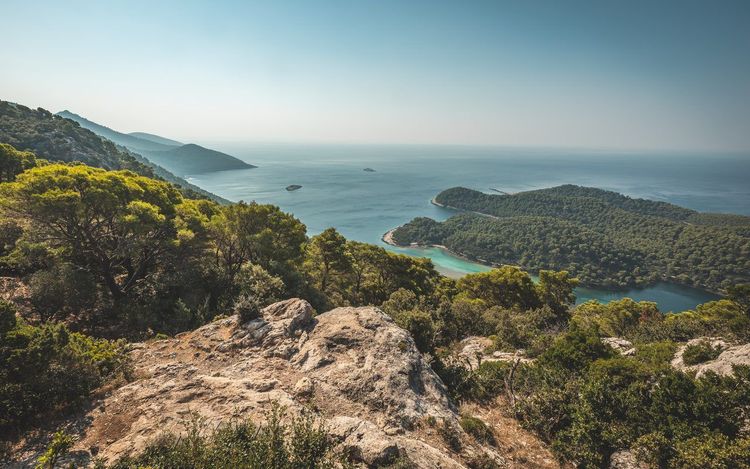
Mljet rivals any Mediterranean nature reserve. Sixty-five percent of its surface is covered in pine and pubescent oak forest. The western part of the island has been a national park since 1960 and car access is regulated.
The Mljet National Park (Goveđari, 20222 Mljet, rated 4.7/5 on Google based on 4,514 reviews) contains two saltwater lakes connected to each other and to the sea by natural channels: Malo jezero (the small lake) and Veliko jezero (the large lake). The temperature of these lakes regularly exceeds 28 to 30°C in August, with remarkable clarity and not a single wave. Swimming here is an improbable experience: you are swimming inside an island, in a saltwater lake surrounded by forest, with nothing but pedal boats and a few kayaks for company.
On the islet of Saint Mary in the centre of the large lake, a Benedictine monastery founded in the 12th century now serves as a café-restaurant with a terrace over the water. You reach it by rowing boat from the park's jetty, or by swimming if the distance is no issue (around 300 metres). The building was occupied by Benedictine monks and then Ragusan nobles until the 19th century, and its Romanesque façade is surprisingly well preserved.
Mljet is best explored by bicycle. The park road follows both lakes for around ten kilometres: flat, shaded, and almost car-free early in the morning. Bikes can be hired at the ports of Polače and Pomena, the two entrances to the national park. Allow 8 to 12 euros per day.
The island is accessible from Dubrovnik in 2h30 by catamaran or from Split in 5 hours by ferry. Most travelers based in Dubrovnik combine Mljet with a day on Korčula, as both islands are on the same Jadrolinija line. Check the return schedules before you leave: late-afternoon departures from Mljet fill up quickly in high season.
The Elaphiti Islands: Three Islands in One Day
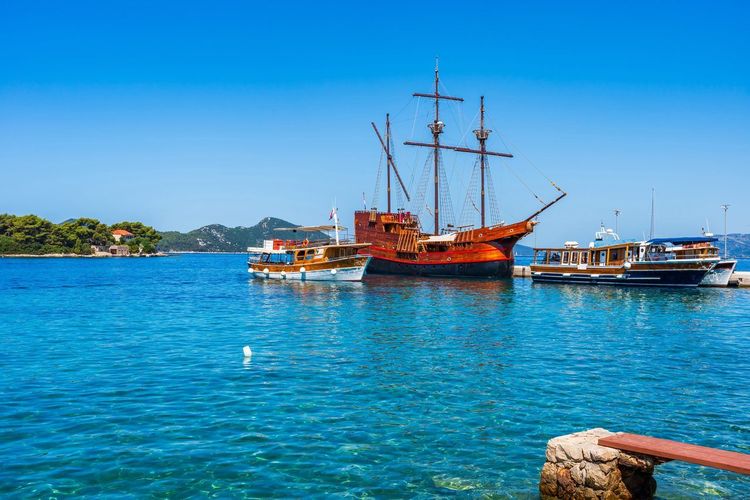
The Elaphiti Islands are twenty minutes by boat from Dubrovnik harbour, and the majority of tourists visiting the old city only see them from a distance, from the ramparts. It's a common planning mistake.
The archipelago has three inhabited islands: Koločep, the smallest, covered in pine forests and crossable entirely on foot in two hours; Lopud, home to the Šunj beach, one of the few white sandy beaches in the Dalmatian region; and Šipan, the largest and most agricultural of the three. Šipan stands out for its two villages connected by a country road lined with centuries-old olive trees: Šipanska Luka (Šipanska Luka, 20223 Šipan, rated 4.4/5 on Google based on 280 reviews) to the west, a fishing village with a Renaissance fortress, and Suđurađ to the east, even quieter.
The strategy for covering all three islands in a single day from Dubrovnik: take the morning ferry, disembark successively at Koločep, then Lopud, then Šipan, and return from Šipan on the last afternoon ferry. The regular Jadrolinija services connect the islands to each other for a few euros. Fast catamaran excursions from Dubrovnik cost two to three times as much and allow less time on each island.
If your base is Dubrovnik, prepare your visit to the old town with the Ryo audio guide to Dubrovnik. The 18 listening points on the route include the harbour from which ferries depart to the Elaphiti Islands and the history of the Ragusan fleet that once controlled the entire archipelago.
Krk: Croatia's Largest Island, Accessible by Road
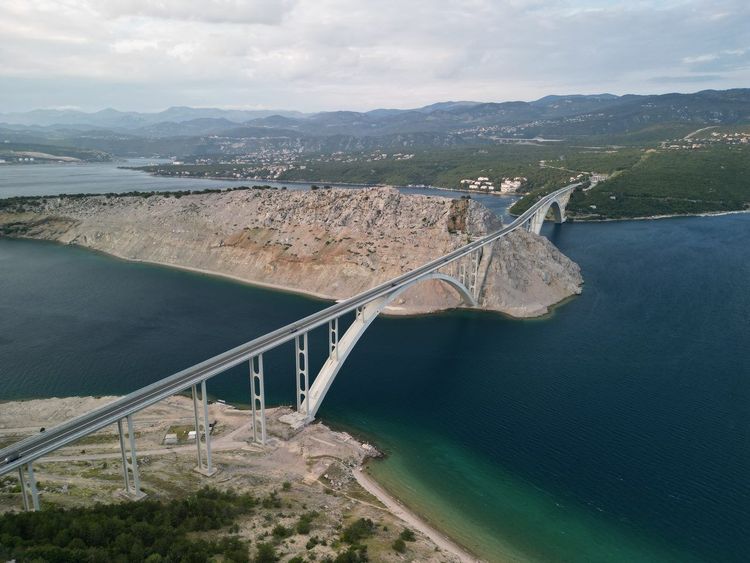
Krk is the only large Croatian island connected to the mainland by a bridge. This 1,430-metre bridge, inaugurated in 1980, profoundly transformed the island's economy and made it the most accessible weekend destination on the northern coast. In summer, this easy access generates sometimes significant visitor numbers. Outside the season, Krk reveals a very different face.
The town of Krk, enclosed within Roman and medieval ramparts, is one of the most complete historic centres in the Kvarner Gulf. It was successively Roman, Byzantine, Venetian, and Austrian, and each period left overlapping traces in a confined space: Roman columns reused in the cathedral, a Baroque tower abutting a Romanesque gateway, medieval graffiti on the enclosure walls. The whole fits within a 400-metre perimeter, making it one of the most architecturally dense historic urban cores on the entire coast.
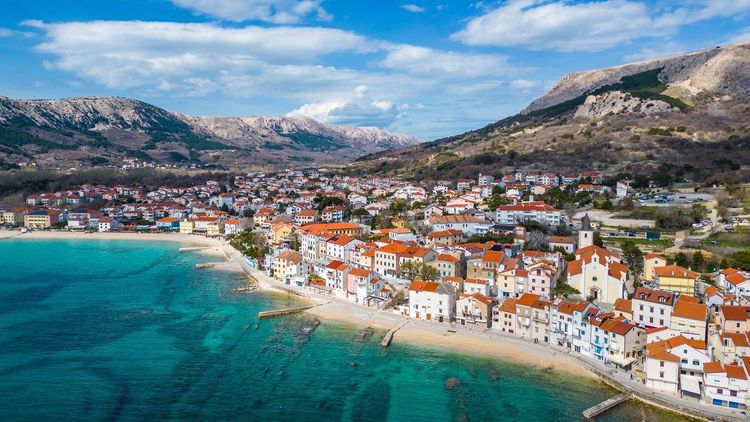
The Baška beach (Emila Geistlicha, 51523 Baška, rated 4.6/5 on Google based on 578 reviews), in the south of the island, is Krk's most popular. This pebble strip at the head of a bay framed by karst hills stretches for over 1 kilometre. The contrast between the white limestone backdrop and the blue water is striking. In September, the crowds thin and the beach regains a serenity that makes the journey worthwhile from Zagreb or Rijeka.
Krk is also the gateway to the Kvarner Gulf, whose marine ecosystem differs noticeably from Dalmatia: cooler water, different underwater wildlife, and an active diving tradition dating back to the 1970s. The wrecks around the island, including a cargo ship sunk off Punat, attract divers from across Europe.
Pag and Šolta: Two Islands Swimming Against the Tide
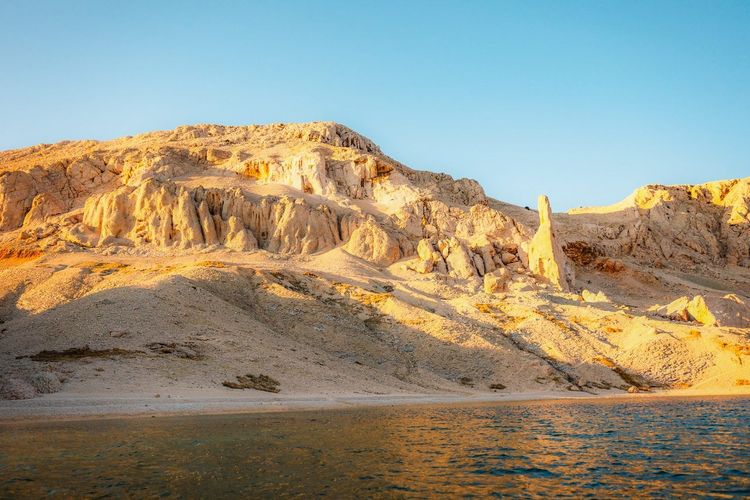
Pag: The Lunar Island with a PDO Cheese
Pag is the island that least resembles the idea most people have of Croatia. Its karst landscapes, stripped of vegetation over wide stretches, evoke a desert of white stones more than a Mediterranean island. This bareness is not entirely natural: the gradual deforestation of the hills by the inhabitants to recover timber, combined with the violent and salty Bora winds blowing from the north, created over the centuries this so-called 'lunar' landscape that defines the island.
Pag produces two remarkable specialities. Paški sir is an open-air-aged sheep's milk cheese: the sheep graze on wild aromatic herbs (sage, rosemary, fennel) growing on the karst and give the cheese its intense, salty flavour, unmatched anywhere along the Adriatic coast. Paška čipka, a bobbin lace with geometric patterns of extreme fineness, has been inscribed since 2009 on UNESCO's Intangible Cultural Heritage list. The old town of Pag, built from scratch in the 15th century according to a regular grid plan designed by the Venetian architect Giorgio da Sebenico, is itself remarkably well preserved.
Šolta: The Island Split Keeps to Itself
Šolta is 50 minutes by ferry from Split. The people of Split know it well. Foreign travelers, far less so. The island has no famous beach, no iconic attraction, no structured tourist programme. It has olive groves among the oldest in Croatia, a fishing village at Maslinica (Maslinica, 21430 Šolta, rated 4.5/5 on Google based on 390 reviews) that seems frozen in the 1980s, and a tranquillity that Hvar definitively lost long ago.
If you're based in Split and looking for a day at sea without crowds, Šolta is the most obvious answer. The ferry from Split reaches the island in 50 minutes for a few euros. Hire a bicycle on arrival and explore the inland villages: Grohote, the main village, hosts a morning market where producers sell their olive oil and rosemary honey directly, with no middleman.
Which Island to Choose Based on Your Travel Style?
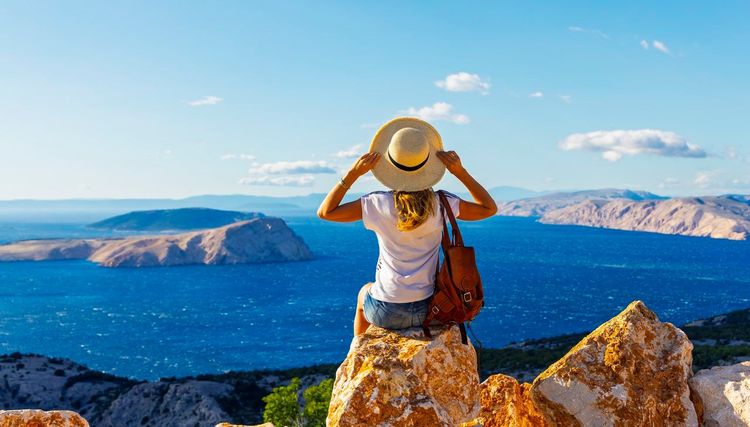
No island suits every traveler. Among the islands to discover in Croatia, each one answers a different desire: here is how to guide your choice based on your priorities.
For beaches. Brač (Zlatni Rat at Bol) and Lopud (Šunj beach in the Elaphiti Islands) offer genuine sand, which is rare on Croatia's predominantly rocky coast. Hvar is better for rocky coves accessible by boat from Hvar town. Vis has the wildest and least crowded beaches in central Dalmatia. The Baška beach on Krk is the longest in the Kvarner Gulf.
For nature. Mljet stands out with its national park featuring lakes, forests, and an island monastery. Vis is the alternative for lightly marked trails through an intact vineyard landscape. Šipan offers a 3 to 4-hour walk between its two villages through centuries-old olive groves.
For history. Korčula (medieval old town, endemic vineyards, and living folk traditions) and Krk (overlapping civilizations within a compact perimeter) are the culturally richest destinations. Pag adds an ethnological dimension with its UNESCO-listed lace and its PDO cheese. Brač lets you touch the white stone that built Diocletian's Palace and the fortifications of Dubrovnik.
For nightlife. Hvar town concentrates almost all the open-air bars and clubs in the Dalmatian region, with evenings that start in the late afternoon. The Zrće beach on Pag hosts internationally recognised electronic music festivals in July.
For authenticity. Šolta, Šipan, and Vis are the three islands where local life still takes precedence over mass tourism. These destinations are almost too quiet for some travelers — which is precisely the point for others.
For a week of discovery from Split, the classic programme: Split (1 arrival night) + Hvar (2 nights) + Vis (1 night) + Korčula (2 nights) + Dubrovnik (1 departure night). Seven days with no car needed, and well-connected catamaran transfers in season.
How to Reach the Croatian Islands: Ferries and Catamarans
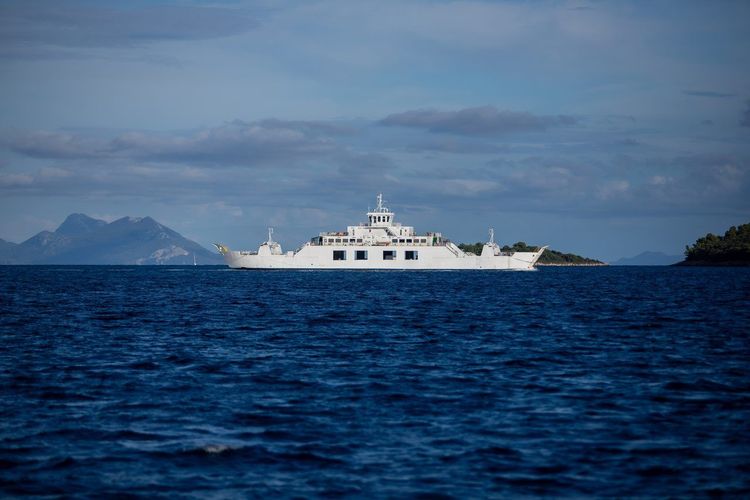
The company Jadrolinija operates virtually all inter-island and mainland-to-island services. Its network covers the entire Dalmatian coast and the Kvarner Gulf, with two distinct types of service that you should choose between depending on your situation.
Car ferries allow you to bring your vehicle on board. They are slower but generally cheaper, and they run more frequently on the shorter routes (Brač from Split, for example). In July and August, car queues easily reach 2 to 3 hours on the busiest lines. If you don't need a vehicle on the island — and on Hvar, Korčula, Vis, and Mljet you won't — take the passenger catamaran. Faster, slightly more expensive, and with no waiting.
Main connections from Split:
- Hvar town: catamaran, around 1 hour, several departures per day in season
- Hvar/Stari Grad: car ferry, 1h50, frequent departures
- Brač/Supetar: car ferry, 50 min, departures approximately every hour
- Vis: catamaran 2h15 or car ferry 2h40
- Korčula: catamaran, 2h30
- Mljet/Pomena: catamaran, 3h30 from Split
From Dubrovnik, regular services run to the Elaphiti Islands, Mljet, and Korčula. To plan which excursions are possible from the old town depending on the length of your stay, our Ryo guide on what to visit around Dubrovnik details the options and the key schedules to keep in mind.
For Krk, no ferry is needed. The Krk Bridge has been free for light vehicles since 2020. From Rijeka or the A6 motorway coming from Zagreb, you reach the island directly by road in under 30 minutes from Rijeka.
Booking. For car ferries in July and August, book your vehicle crossing at least 48 to 72 hours in advance on the Jadrolinija website or via the mobile app. For passenger catamarans, tickets are sold at the embarkation point on the day, but some popular lines have a limited number of seats in peak season.
Transport budget. A catamaran journey from Split ranges from 5 to 15 euros per person depending on the destination. The car ferry adds the vehicle tariff, around 30 to 50 euros return depending on the size of the vehicle. For a week of island-hopping without a car, budget 30 to 60 euros per person for sea transport.
When to Visit the Croatian Islands?
The tourist season on the Croatian islands runs from June to September, but conditions vary noticeably depending on the month you choose.
July and August represent the peak of visitor numbers. Ferries are packed, accommodation on the most popular islands must be booked 3 to 6 months in advance, and prices climb by 40 to 80% compared to June. The heat is intense on Hvar and Brač (35 to 38°C during the day), the sea exceeds 26 to 27°C, and nightlife is in full swing. For families with children, or for those who enjoy the buzz, this is the period. For everyone else, it is often the season to avoid.
June and September offer the best balance of enjoyment and crowds. The sea is already warm (24 to 27°C in September, 22°C at the end of June), ferries run at full capacity, restaurants are open, but tourist pressure is markedly lower than in August. Prices drop by 25 to 35%.
May and October suit hikers and heritage enthusiasts perfectly. Few tourists, lush green vegetation in May, golden light in October. Note: some accommodation and restaurants close from mid-October onwards, and ferry schedules are reduced. Check connections before booking.
Between November and April, the islands run at a slow pace. Hvar town and Vis are almost deserted out of season. Mljet, Korčula, and Krk maintain local life, but travelers venturing there in winter must plan ahead to find open establishments and available ferries.
FAQ
Which is the most beautiful island in Croatia?
The answer depends on what you value, and opinions vary widely among travelers. Hvar consistently tops international rankings for its combination of a medieval old town, lavender landscapes, and turquoise waters with the Pakleni islands in the background. Korčula is often preferred by those seeking the same architectural quality with more manageable crowds and an authentic local life. Vis is the choice for travelers who prioritize authenticity and unspoiled nature over tourist infrastructure. In terms of pure natural scenery, the Blue Cave of Biševo and the saltwater lakes of Mljet offer experiences that are hard to match anywhere in the Mediterranean.
Which island should I choose for beaches in Croatia?
The Croatian coast is mostly rocky, and sandy beaches are far rarer than most travelers expect before they arrive. The most remarkable are Zlatni Rat at Bol on Brač, the Šunj beach at Lopud in the Elaphiti Islands, and the Baška beach on Krk. For secluded rocky coves with exceptionally clear water, Vis (Stiniva, Srebrena) and the Pakleni islands opposite Hvar are the best options. If you want sand without compromise and easy access from Dubrovnik, Šunj at Lopud remains the most accessible reference point in the entire Dalmatian area, just 45 minutes by ferry.
How do I get to Croatia from France?
Most travelers fly to Split, with direct connections from Paris, Lyon, Bordeaux, and several other French cities, mainly with Volotea, easyJet, and Croatia Airlines, or to Dubrovnik for the southern islands. Rijeka airport serves the Kvarner Gulf and provides access to Krk. By car, the Lyon–Split journey takes around 14 hours via Italy. For families who want to bring their vehicle on ferries and travel freely between several islands, driving remains a worthwhile option, especially since Croatian motorways are in excellent condition.
Can you visit several Croatian islands in one week?
Yes, provided you have a realistic itinerary and travel without a car. Setting out from Split for a week, a solid program is: Split (1 night) + Hvar (2 nights) + Vis (1 night) + Korčula (2 nights) + Dubrovnik (1 night). Catamaran connections are well-linked in season and schedules allow you to manage crossings without losing too much time. To include Mljet or the Elaphiti Islands, allow at least 10 days. Krk, located in the Kvarner Gulf in the north, combines less naturally with central Dalmatia and deserves a dedicated trip.
Do ferries to the Croatian islands run all year round?
The main lines to Brač, Hvar/Stari Grad, and Korčula run year-round, with reduced frequencies outside the season. Vis and Mljet maintain regular but less frequent connections in winter. The Elaphiti Islands are served daily from Dubrovnik, even in January. Krk, connected to the mainland by bridge since 1980, is the most accessible destination year-round regardless of ferry schedules. Most accommodation and restaurants on tourist islands close between November and March: check before booking.
What budget should I plan for a week on the Croatian islands?
In low season (June or September), budget between 80 and 120 euros per person per day all-inclusive — accommodation, meals, and inter-island transport — for a decent level of comfort. In high season (July–August), this budget rises to 130 to 200 euros per day, especially if you stay in Hvar town, where accommodation ranks among the most expensive on the Adriatic. Less-visited islands such as Šolta, Šipan, or Lastovo allow you to cut costs by 30 to 40% for an equivalent level of comfort.
Which island should I choose for an authentic stay away from mass tourism?
Vis is the most consistent choice if authenticity is your absolute priority. Its military closure until 1989 preserved an architecture and culinary traditions that other islands have gradually lost under tourist pressure. Šipan in the Elaphiti Islands and Šolta near Split are excellent alternatives for experiencing local life without the crowds. Bear in mind that even Vis fills up in peak July: for a truly different experience, opt for these destinations in May, June, or September, when island life reclaims its place over tourism.
Conclusion
The islands to discover in Croatia offer radically different faces depending on where you put down your bags: Hvar for beauty and nightlife, Vis for the authenticity restored after decades of military closure, Mljet for nature in a national park setting, Korčula for history and endemic vineyards, Brač for Zlatni Rat and the white stone that built Diocletian's Palace and many Adriatic monuments, the Elaphiti Islands for peace and quiet within ferry range of Dubrovnik, and Krk for an island accessible year-round without depending on a boat schedule.
To prepare your stay, the Ryo audio guides available for the two natural mainland bases of Dalmatian Croatia cover in detail the cities from which you will set sail. The Ryo audio guide to Split between marble and the Mediterranean is the logical preamble before taking the ferry to Hvar or Brač. The audio walking tour of Dubrovnik, with its ramparts and 19 listening points in the UNESCO-listed old town, is the ideal prologue before heading to the Elaphiti Islands or Korčula. The rest is ferries to catch and coves to find for yourself.