© Shutterstock
 Votre guide Ryo
Visit Croatia: 10 Must-Sees to Plan Your Trip (2026)
Croatia is one of those destinations where reality far exceeds the reputation. Beyond the postcard image of Dubrovnik's white walls and Plitvice's turquoise lakes lies a country of many speeds: Roman cities still inhabited today, national parks that are nearly deserted outside of July, and islands that magnificently ignore travel agencies. Visiting Croatia means precisely accepting this dual identity, and this guide is designed to prepare you for it. Even before you book, discover the Dubrovnik audio-guided tour, the Pearl of the Adriatic to appreciate the historical depth of the country's most iconic city. This guide covers ten essential Croatian destinations, from Dalmatian ramparts to Istrian vineyards, with distances, visit durations, up-to-date prices, and pitfalls to avoid. You will also find concrete answers to the real questions: how many days to allow depending on your starting point, how to plan a road-trip itinerary, what budget to expect by season, and when to go to avoid the crowds without sacrificing the sunshine. A little-known capital worth two days, an island that served as a military base until 1989 and remains the least visited, a waterfall where swimming was legendary before being banned to protect the ecosystem — Croatia surprises at every step as soon as you venture off the tour-operator trail.
1. Dubrovnik, the Medieval City of the Adriatic
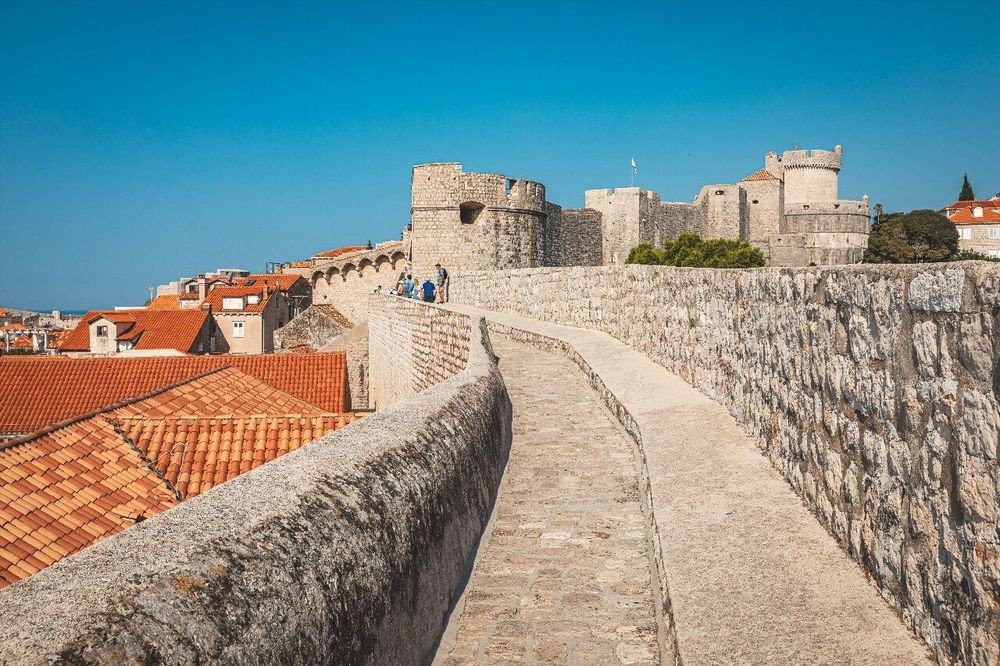
Dubrovnik is often described as the most beautiful city in the Mediterranean, and for once, the hyperbole holds up. The Dubrovnik city walls encircle a fully pedestrianised old town along 1.9 km of continuous ramparts, some sections of which date back to the 14th century. Walking the walls takes between 1.5 and 2 hours, depending on how long you spend photographing. The entrance ticket costs €40 per adult in high season (2025) and €15 at reduced rate (children aged 7 to 18, free for younger children), and also grants access to Fort Lovrijenac.
The Stradun (or Placa) is the main artery of the old town, paved with white limestone polished by centuries of footsteps. Every morning, municipal workers clean each slab at 6 a.m., a tradition inherited from the Republic of Ragusa. The strategy for enjoying it without the crowds: arrive before 8 a.m. or after 7 p.m., when cruise passengers have returned to their ships. In July and August, Dubrovnik welcomes up to 8,000 cruise passengers per day, all converging on the same 300 metres.
Fort Lovrijenac, nicknamed the 'Gibraltar of Dubrovnik', rises from an isolated rock to the west of the old town. Above the entrance: 'Non bene pro toto libertas venditur auro' (Liberty cannot be sold for all the gold in the world), a perfect summary of the spirit of this independent Republic that held out for five centuries between Venice and the Ottoman Empire.
Dubrovnik is also the main setting of Game of Thrones, and fans of the series will immediately recognise the Pile Gate, the Jesuit Stairs (scene of the 'walk of shame'), and several alleyways in the old town. A comprehensive guide lists all the Game of Thrones filming locations in Dubrovnik to help you track down every scene.
To explore the city independently, the Ryo audio guide for Dubrovnik offers 18 listening points over 2.5 km, approximately 1 hour of walking between the Stradun, the walls, and the old harbour. Ideal for a first morning, before the heat sets in.
Practically speaking: parking is very limited in the Old Town. Park at the Gruž or Ilijina Glavica car parks (10–15 minutes on foot from the walls) or take the bus from the cruise terminal. Allow at least 2 days to see the city without rushing, or 3 if you want to include a boat trip to the Elaphiti Islands or Lokrum.
2. Split and Diocletian's Palace
Split is Croatia's second largest city with 170,000 inhabitants and one of the rare cities in the world where a Roman imperial palace still constitutes the inhabited city centre. Built between 295 and 305 AD as a retirement residence for Emperor Diocletian, Diocletian's Palace covers 38,000 m² and its enclosure walls measure 2 to 2.5 metres thick. Since then, the city has grown directly onto these walls: shops, apartments, restaurants, and hotels now occupy the space once reserved for the imperial quarters.
The palace cellars (Diocletian's Cellars (Dioklecijanova ul., 21000 Split, rated 4.7/5 on Google with 90,285 reviews)) can be visited from the esplanade facing the sea. These vaulted spaces measuring 220 metres by 180 are the hollow negative of the imperial apartments above. Entry costs €10; explanations are provided in Croatian and English. It is a good introduction before getting lost in the alleyways above.
The Cathedral of Saint Domnius, built within Diocletian's own mausoleum, is one of the oldest Catholic cathedrals in the world still in use. The historical irony is total: the emperor who orchestrated one of the most violent persecutions of Christians now rests within a building dedicated to one of his martyrs. The adjacent Romanesque bell tower offers a sweeping view from its summit over the palace rooftops and the sea.
The Riva, Split's waterfront promenade, is the city's social hub. Locals gather there in the evening for the ritual evening stroll that stretches on until midnight in summer. Split is also the main transport hub of the Dalmatian coast: ferries to Hvar, Brač, Vis, and Korčula, buses to Dubrovnik (3h30) and Zagreb (5h30), and trains to Zagreb (5h30 with remarkable scenery through the Cetina gorges). Plan at least one night on site to enjoy the city in the evening, when day-trippers have left.
The Ryo audio-guided tour of Split, Between Marble and the Mediterranean guides you through the various historical layers of the palace — Roman, Byzantine, medieval — with a particular focus on the layered architecture that makes this place so unique.
3. Plitvice Lakes, an Extraordinary UNESCO Site
The Plitvice Lakes make up Croatia's most visited national park with 1.3 million visitors per year, a figure that has continued to rise since the return of European tourist flows. For many travellers who come to visit Croatia, it is the image that stays with them long after returning home. The site comprises 16 cascading lakes connected by waterfalls, spanning 8 km in length, and has been a UNESCO World Heritage Site since 1979. The turquoise colour of the water, due to the concentration of calcium and magnesium in the karst springs, varies with the time of day and the light: emerald green in the morning, blue-grey on overcast days.
The park is organised around two zones. The lower zone (Donja Jezera) concentrates the most spectacular waterfalls, including the Veliki Slap great waterfall, standing 78 metres tall, the highest in Croatia. The upper zone (Gornja Jezera) is less crowded and offers panoramic views from the limestone cliffs that plunge down to the lakes.
Essential practical tips:
- Online booking is mandatory in July and August: the park limits daily entries and sells out weeks in advance.
- Adult ticket: €23.50 to €40 depending on the season (high season = June to September).
- The wooden boardwalk paths are slippery after rain; closed-toe shoes are essential.
- Recommended arrival at opening time (7 a.m.) to avoid crowds on the floating walkways in the lower zone.
- Route 'C' (6 km, 4–6 hours) covers both zones and offers the best balance between thoroughness and effort.
Plitvice is located halfway between Zagreb (2 hours) and Split (2h30). It is therefore the natural stopover for a road trip linking the north and south of the country. Outside of June to September, the park is far less crowded and prices drop by around 40%.
4. Zadar and Its Sea Organ
Zadar is the surprise that many travellers mention after returning from Croatia. A coastal city of 75,000 inhabitants, less famous than Dubrovnik or Split, yet blessed with an Old Town surrounded by sea on three sides and a remarkable architectural heritage. Alfred Hitchcock once called it the place with "the most beautiful sunset in the world" — a subjective judgement, but photos taken from the promenade in the evening give the filmmaker his due.
The artistic installation of the Sea Organ, created by architect Nikola Bašić in 2005, transforms wave energy into music via 35 pipes installed beneath the granite steps of the quay. The sound changes constantly depending on the swell: deep and resonant in rough seas, light and whistling on days with a gentle breeze. It is free, permanent, and utterly unique.
Right next to it, the installation Greeting to the Sun is a disc 22 metres in diameter made up of 300 solar panels embedded in the ground. At nightfall, it lights up in coloured sequences. The effect is spectacular at sunset, when the reflections of the water blend with the light projections.
In the Old Town, the Church of Saint Donatus is a Byzantine gem from the 9th century, one of the best-preserved centrally planned rotundas in continental Europe. The adjacent Roman Forum, a remnant of a city founded in the 1st century BC, displays its columns and paving stones underfoot. Zadar is also the departure point for ferries to the Kornati Islands, 89 almost uninhabited islands and islets whose bare limestone shapes resemble a lunar landscape set upon the sea.
Practically speaking, allow 1 day for Zadar if you are travelling between Zagreb and Split. The city is connected to Split via the A1 motorway in 1h30 and to Zagreb in 3h15.
5. Trogir, the Dalmatian Museum City
Just 27 km from Split, Trogir is a small island-city connected to the mainland by two bridges, one on the mainland side and one on the Čiovo island side. The entire historic centre has been a UNESCO World Heritage Site since 1997. Unlike Dubrovnik or Split, Trogir has neither the grandeur nor the crowds: that is precisely what makes it such a rewarding stop for travellers seeking a human-scale Dalmatian medieval town.
The jewel of Trogir is the Cathedral of Saint Lawrence, whose Romanesque portal sculpted by master Radovan in 1240 is considered one of the masterpieces of Romanesque art in the Mediterranean. The bas-reliefs depict the Annunciation, the Nativity, and the Apostles in a style blending Byzantine and Western Romanesque influences. The adjacent bell tower offers a view over the old town rooftops and the boats moored in the harbour. Entry to the cathedral is free; climbing the campanile costs a few euros.
The city was successively Greek, Roman, Venetian, and Austro-Hungarian, with each layer leaving its mark in the architecture of the alleyways. The Ryo audio-guided tour The Museum City details these overlapping layers with a particular focus on medieval sculpture and Trogir's role in Adriatic trade routes. Allow 2 to 3 hours for the Old Town, plus 1 hour for the bell tower. Trogir combines naturally with Split in a single day's programme: by local bus (line 37 from Split bus station, 30 minutes, under €3) or by car.
6. Zagreb, the Underrated Capital
Zagreb is arguably the least-known European capital relative to its quality of life and heritage. With 800,000 inhabitants, it is a vibrant metropolis endowed with a remarkably well-preserved upper old town and a cultural scene that surprises travellers accustomed to coastal cities.
The Gornji Grad (Upper Town) concentrates the oldest monuments. Zagreb Cathedral, with its two Neo-Gothic spires rising 108 metres and visible from afar, is the country's most photographed monument after the Dubrovnik walls. The Lotrščak Tower fires its cannon every day at noon since 1877, a tradition few European cities maintain with such regularity. The Church of Saint Mark, with its glazed tiles depicting the coats of arms of Zagreb and Croatia on the roof, is the most reproduced image of the city on postcards.
Below, the Donji Grad (Lower Town) is a 19th-century Austro-Hungarian city laid out around a series of parks and squares designed according to architect Lenuci's U-shaped plan, nicknamed the 'Green Horseshoe'. The Dolac Market, held every morning since 1930, is the ideal place to buy local produce: prgica cheese, herb brandy, and seasonal vegetables.
The Museum of Broken Relationships (Ćirilometodska ul. 2, 10000 Zagreb, rated 4.3/5 on Google with 8,767 reviews) is the city's most singular creation. Hundreds of donors from around the world have sent an object linked to a ended relationship, accompanied by a short text. The result is a permanent exhibition that is funny, sad, and universal, awarded the Kenneth Hudson Prize for the most innovative museum in Europe in 2011.
Zagreb deserves at least 2 days. The city is also the most practical gateway for those flying from Paris or Lyon before heading down to the coast. Direct connections from Paris CDG exist with Croatia Airlines, Air France, and EasyJet. And if you travel in winter, Zagreb's Christmas market is regularly ranked among the best in central Europe.
7. Krka National Park
The Krka National Park is often presented as an accessible version of Plitvice. Its terraced karst waterfalls on the Krka river are comparable in beauty, but the park is closer to Split (80 km) and its logistical organisation is simpler. The famous Skradinski Buk falls, 17 terraced drops over 800 metres, are the undisputed highlight.
Since 2021, swimming in the park has been permanently banned to protect the fragile ecosystem and the travertine, a living limestone rock. This decision slightly dampened the enthusiasm of some visitors, but it has made the experience far more serene: the walkways are less congested and the aquatic wildlife (trout, otters, herons) is much more visible. The entrance ticket is aligned with Plitvice: €40 per adult in high season (June–September), with a reduced afternoon rate (around €30 after 3 p.m.) and significantly cheaper outside the season. The ticket includes the river shuttle from Skradin.
The town of Šibenik, 15 km downstream, is worth an extra half-day for its Cathedral of Saint James, a UNESCO-listed site. Built entirely from cut stone between the 15th and 16th centuries, without mortar or timber framing, it features a construction technique unique in the world: the nave vault is formed from column shafts laid horizontally. Saint Nicholas' Fortress, UNESCO-listed since 2017, stands at the entrance to the channel and can be visited by ferry from the harbour.
Combining Plitvice + Krka + Šibenik makes for a realistic two-day circuit from Split, with a possible overnight stay in Skradin (a small village at the foot of the park, much cheaper than coastal accommodation).
8. The Adriatic Islands: Hvar, Korčula, Brač
Croatia has 1,244 islands, islets, and rocks along its coast. The vast majority are uninhabited; around thirty are accessible by regular ferry. Three of them stand out for very different reasons.
Hvar is Croatia's sunniest island with 2,726 hours of sunshine per year according to the local tourist board. The town of Hvar concentrates Venetian palaces, beach bars, and yachts in summer, with daily ferries from Split (1h10 by standard ferry, 55 minutes by catamaran). The Španola Fortress dominates the bay from a hilltop and offers the best view over the Paklinski archipelago. But the island is more than its town: the interior is covered with vineyards and lavender fields in bloom in June, and the village of Stari Grad, a UNESCO site, is far more peaceful.
Korčula is often presented as the birthplace of Marco Polo (a historically disputed claim). Whatever the truth, the Old Town of Korčula is remarkable: a herringbone street plan designed to channel the bora wind, Venetian Gothic palaces, and medieval watchtowers. Less crowded than Hvar, it attracts more travellers looking for a cultured rather than a party island.
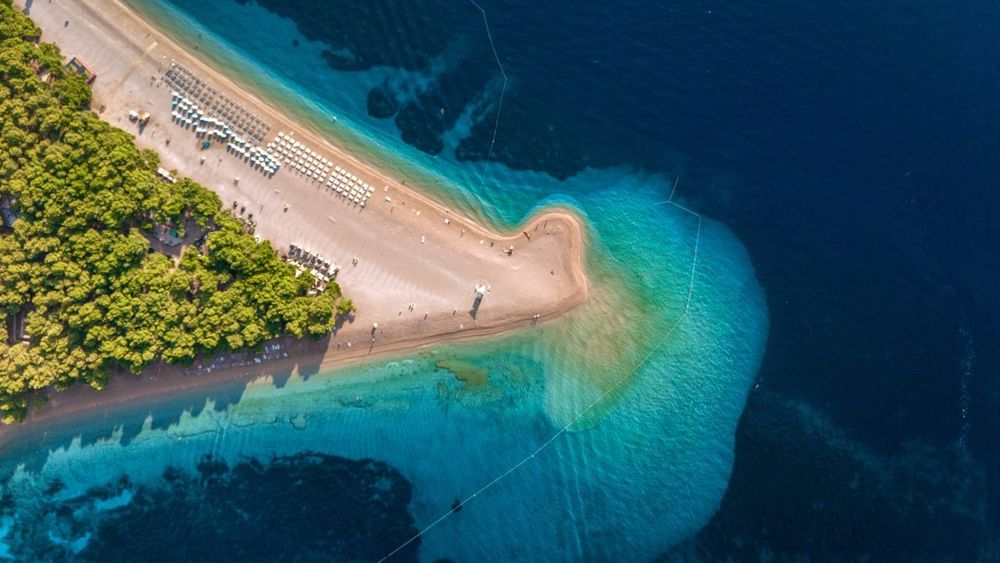
Brač is the largest Dalmatian island (394 km²) and the closest to Split (50 minutes by ferry). Its white limestone quarry supplied the stone for Diocletian's Palace and, it is said, part of the White House in Washington. The beach of Zlatni Rat (Zlatni rat, 21420 Bol, Brač, rated 4.4/5 on Google with 28,513 reviews) ('Golden Cape'), whose tongue-like shape changes with the currents, is the most photographed beach in Croatia.
Ferry tips: the Split–Hvar, Split–Brač, and Korčula–Orebić crossings are operated by the Jadrolinija company. Book your car spaces well in advance in July and August, sometimes several weeks ahead. For foot passengers, spaces are generally available on the day outside of the 15th of August.
9. Istria: Rovinj, Pula, and Truffles
Istria is the triangular peninsula in north-western Croatia, bordering Slovenia and just a few kilometres from Italy. It is a region apart within the country: ubiquitous Venetian architecture, strong Italian influences (Italian is co-official in several municipalities), sophisticated cuisine, and active viticulture. It is also one of the least visited regions by French travellers, despite its outstanding quality.
Rovinj is the most beautiful town in Istria. Built on a rocky peninsula, formerly an island connected to the mainland in 1763, it spreads its colourful houses in concentric rings around the Church of Saint Euphemia, whose Baroque bell tower is visible from the sea. The alleyways of the Old Town climb towards the church over worn cobblestones; artists' studios have been multiplying there since the 1960s.
Pula is Istria's largest city with 57,000 inhabitants and an exceptional ancient site: the Roman amphitheatre (the Arena), built in the 1st century AD, is the 6th largest Roman amphitheatre in the world with an original capacity of 23,000 spectators. It is still used for open-air concerts and the Pula International Film Festival every summer.
Istria is also the land of Croatian truffles: the Motovun area (52424 Motovun, rated 4.7/5 on Google with 5K reviews), in the centre of the peninsula, produces black and white truffles harvested in oak forests. Istrian whites rival those of Piedmont in reputation. Many restaurants in Motovun, Buzet, and Grožnjan feature them as their speciality from October to January. The Euphrasian Basilica of Poreč (6th century, Byzantine mosaics comparable to those of Ravenna) completes the peninsula's UNESCO picture.
Allow 2 to 3 days to explore Istria. Rovinj, Pula, Motovun, and Poreč form an easy 150 km circuit by car. Access from Zagreb takes 2h30 via the A8 and A9 motorways.
10. Vis, the Forgotten Island
Vis is the least well-known island on this list, and probably the most interesting for travellers who have already exhausted the classics. At 60 km from the Dalmatian coast, it is the most remote inhabited island from the Croatian mainland. It served as a Yugoslav military base until 1989 and only opened to tourism very recently, which explains the absence of large hotel complexes and the preservation of its fishing villages.
The two main villages are Vis in the east and Komiža (21485 Komiža, Vis, rated 4.7/5 on Google with 3K reviews) in the west. The latter is the departure point for reaching the island of Biševo by boat (20 minutes), where the Blue Cave (Modra Špilja) is located: at low tide in late morning, sunlight enters through an underwater opening and illuminates the interior of the cave in a spectacular silver-blue. Excursions leave from Komiža every morning in season and cost approximately €30 to €40 per person.
The island produces vugava, a dry white wine made from a local grape variety almost unique in the world, grown on terraces of black pebbles. Vis winemakers sell directly from the cellar at very reasonable prices. If you cross the island by rental car, the road through the interior hills passes by the remains of Yugoslav military bunkers, a sinister yet fascinating testament to recent history.
Vis is accessible from Split by ferry in 2h20 or by fast catamaran in 1h15 (in season only). Allow at least 2 nights to enjoy the island without feeling rushed.
Itinerary: How Many Days to Visit Croatia?
The question that comes up most often when planning a trip, and the answer depends on what you are looking for.
4 to 5 days: Essential Dalmatia
If you only have a short week, focus on the coast. Fly into Split, devote the first half-day to Diocletian's Palace, and the next day to an excursion to Trogir (30 minutes) or the island of Brač (50 minutes by ferry). Then head to Dubrovnik along the coast (230 km, 3 hours by car), with a possible lunch stop in Makarska and a view of the Biokovo cliffs. Two days in Dubrovnik are enough for the walls and the old town. Return to Split by plane or bus.
7 to 8 days: Extended Dalmatian Coast
Add the Plitvice Lakes (an overnight stop is recommended to arrive at opening time), one night on the island of Hvar, and the city of Zadar. A north-to-south itinerary from Zagreb (arrival flight) to Dubrovnik (departure flight) works very well: Zagreb → Plitvice → Zadar → Šibenik → Split → Hvar → Dubrovnik.
10 to 12 days: Complete Croatia
Add 2 days for Istria (Rovinj + Pula), 1 to 2 days for Krka National Park, and an extra night on the island of Korčula or Vis (wilder, less touristy). The full itinerary loops around the peninsula clockwise from Zagreb.
15 days and more: Off the Beaten Track
Once you have exhausted the classics, plenty of options remain: the Velebit Nature Park (long-distance hiking), the Slavonia region in the east (vineyards, Pannonian plains, radically different cuisine), the island of Mljet with its two saltwater lakes transformed into a national park, or indeed Vis, mentioned above.
Whatever your length of stay, key driving distances:
- Zagreb → Plitvice: 135 km, 2 hours
- Plitvice → Split: 230 km, 2h40
- Split → Dubrovnik: 230 km, 3 hours (the route through Bosnia via Neum requires a valid passport or national ID card)
- Zagreb → Rijeka (Istria): 160 km, 1h45
- Split → Pula: 380 km, 4 hours by motorway
Visiting Croatia by Car: What You Need to Know
The car remains the most efficient mode of transport for visiting Croatia, particularly because the national parks (Plitvice, Paklenica, Krka) are not accessible by public transport without multiple connections.
Car Rental
The cheapest agencies are often local (Oryx, Budget Croatia) rather than international. A critical point: if you plan to cross through Bosnia via the Neum corridor (unavoidable on the coastal Split–Dubrovnik route), check that the rental contract explicitly authorises entry into Bosnia and Herzegovina; otherwise you risk a fine at the border or an insurance refusal. The detour via Ploče–Bjelovar avoids Bosnia but adds 40 minutes to the journey. Average cost: €35–55 per day for a small car in summer, booked 3 weeks in advance.
Motorways and Tolls
Croatia has a modern motorway network. The motorways are toll roads; expect approximately €20 for Zagreb–Split on the A1. The coastal roads (D8, the old Adriatic Highway) are free but heavily congested in season and much slower. If you transit through Slovenia (route to Rijeka and Istria), the Slovenian electronic vignette (e-vignette) is mandatory: €16.50 for 7 days, purchasable online.
Parking
In historic old towns, access is often restricted to non-resident vehicles. In Dubrovnik, car parks close to the centre fill up by 9 a.m. in July and August. Always plan to park outside the historic centres (signposted paid car parks) and continue on foot.
When to Go to Croatia?
The ideal window falls between mid-May and late June, then again from mid-August to late September.
July–August is the absolute high season. Beaches are packed, hotel prices can double or triple, queues at Plitvice are interminable, and ferries to the islands are fully booked. Best avoided if you seek peace and quiet; unavoidable if you are travelling with children who want to swim in 26 °C water.
May, June, September offer the best compromise: pleasant temperatures (22–28 °C), swimmable sea, and accessible sites without the crowds. This is the recommended period for Plitvice and the national parks. Hotels are 20–40% cheaper than in August.
October–November suits lovers of hiking, architecture, and gastronomy (truffle season in Istria). Most coastal tourist infrastructure closes after mid-October, but cities (Dubrovnik, Split, Zagreb) remain active year-round.
Winter is not recommended for the islands (reduced ferry services), but Zagreb has a particular charm with its Christmas markets, regularly ranked among the best in central Europe.
Budget and Accommodation in Croatia
Since adopting the euro in 2023, Croatia has shifted from an 'affordable' destination to a mid-range European one, even expensive in high season on the coast.
Indicative daily budget (per person)
- Budget (hostel + local food): €50–70 per day
- Mid-range (3-star hotel + restaurants): €90–130 per day
- Comfort (4-star hotel, islands, terraces): €180–250 per day
Accommodation
Rental apartments often offer the best value for money, especially for 2 or more people. 'Sobe' (rooms in private homes), advertised by blue signs in coastal villages, are an economical and authentic option (€20–50 per night). Campsites are numerous and well equipped; Croatia is one of the favourite destinations for European motorhome travellers, with pitches that are often spectacularly located by the sea.
Dubrovnik is the most expensive city: a decent 3-star hotel in the old town or near the walls easily exceeds €200 per night in July. Staying in Cavtat or Mlini (20 minutes by bus) and visiting Dubrovnik as a day trip allows significant savings.
Food and Drink
Croatian coastal cuisine is dominated by grilled fish, seafood, and risottos. A meal at a good Dalmatian restaurant costs €15–30 per person excluding drinks. Konobas (village taverns) offer authentic cooking at €12–18 for a main course. Bakeries (pekara) are the best option for a quick, budget-friendly meal (sandwiches and pastries for under €5).
FAQ
Do I Need a Visa to Visit Croatia?
No. Croatia has been a member of the European Union since 2013 and part of the Schengen Area since January 1, 2023. French, Belgian, Swiss, and Canadian citizens may enter freely with their passport or national ID card. No visa is required for tourist stays of less than 90 days. Since joining Schengen, there are no longer border checks with Slovenia and Hungary.
What Currency Is Used in Croatia?
Since January 1, 2023, Croatia has adopted the euro as its official currency, replacing the kuna. You no longer need to exchange money if you are coming from the eurozone. Bank cards are accepted in the vast majority of shops, restaurants, and hotels. Keep some cash for markets, village konobas, and certain car parks.
How Many Days Do You Need to Visit Croatia?
For a first trip focused on the Dalmatian coast (Split, Plitvice, Zadar, Dubrovnik), 7 to 8 days allow you to see the essentials without rushing. To cover the entire country (coast + Zagreb + Istria + islands), 12 to 15 days are needed. Croatia stretches over 700 km from north to south; rushing from one end to the other in a week means spending more time in the car than in front of the monuments.
Is Croatia Suitable for a Family Trip with Young Children?
Absolutely. The Dalmatian coast is particularly well suited: shallow waters in many bays, pebble beaches with full facilities, and varied food options. The national parks (Plitvice, Krka) offer short routes accessible to pushchairs on the main sections. The main constraint is the heat in July and August (35–38 °C at midday): plan visits early in the morning and a rest in the early afternoon.
Can You Visit Bosnia or Montenegro from Croatia?
Yes, easily. Mostar (Bosnia) is 3 hours from Dubrovnik and works very well as a day trip from the coast. Montenegro (Kotor, Perast, Budva) is 2 hours from Dubrovnik via the Debeli Brijeg border crossing. Since Croatia joined Schengen, crossing these borders again requires a valid passport; check the rules in force for your nationality before departing.
Visiting Croatia in 2026 means embracing a country at the crossroads of several worlds: Split's Roman heritage, the medieval calm of Trogir and Korčula, the spectacular nature of the national parks, the easy pace of island life, and the unexpected sophistication of a capital like Zagreb. To begin your exploration with historical context straight in your ears, the Dubrovnik audio-guided tour guides you through 18 centuries of urban life in a 1-hour route, and the Split audio walking tour, Between Marble and the Mediterranean decodes the layered architecture of Diocletian's Palace. Have a great journey along the Adriatic coast.