
Créé par Emilie, le 20 juin 2026
Votre guide Ryo
Corsican Waterfalls for Swimming: The Most Beautiful Natural Pools on the Island (2026)
© Shutterstock
Water springs from granite, tumbles down five or ten ledges, then settles in a basin of blue you've never seen before. Corsican waterfalls are unlike anything else in France: they nestle at the bottom of gorges carved into the maquis, two hours' walk or twenty minutes from a forest parking lot. Some exceed 60 meters in height, others only reach 5 meters but form pools where you can stay for hours. Between Purcaraccia in the Bavella massif, the Voile de la Mariée above Bocognano and the discreet Ucelluline waterfall in Upper Corsica, the island concentrates a dozen natural swimming sites among the most beautiful in Europe. This guide lists the nine most accessible waterfalls, with the hiking level, best period and practical details to organize your day for each. Before diving into the basins, consider stopping by Bastia's Ryocity if you're arriving from the north, the city deserves a morning before taking the gorge road.
Purcaraccia Waterfalls (Bavella)
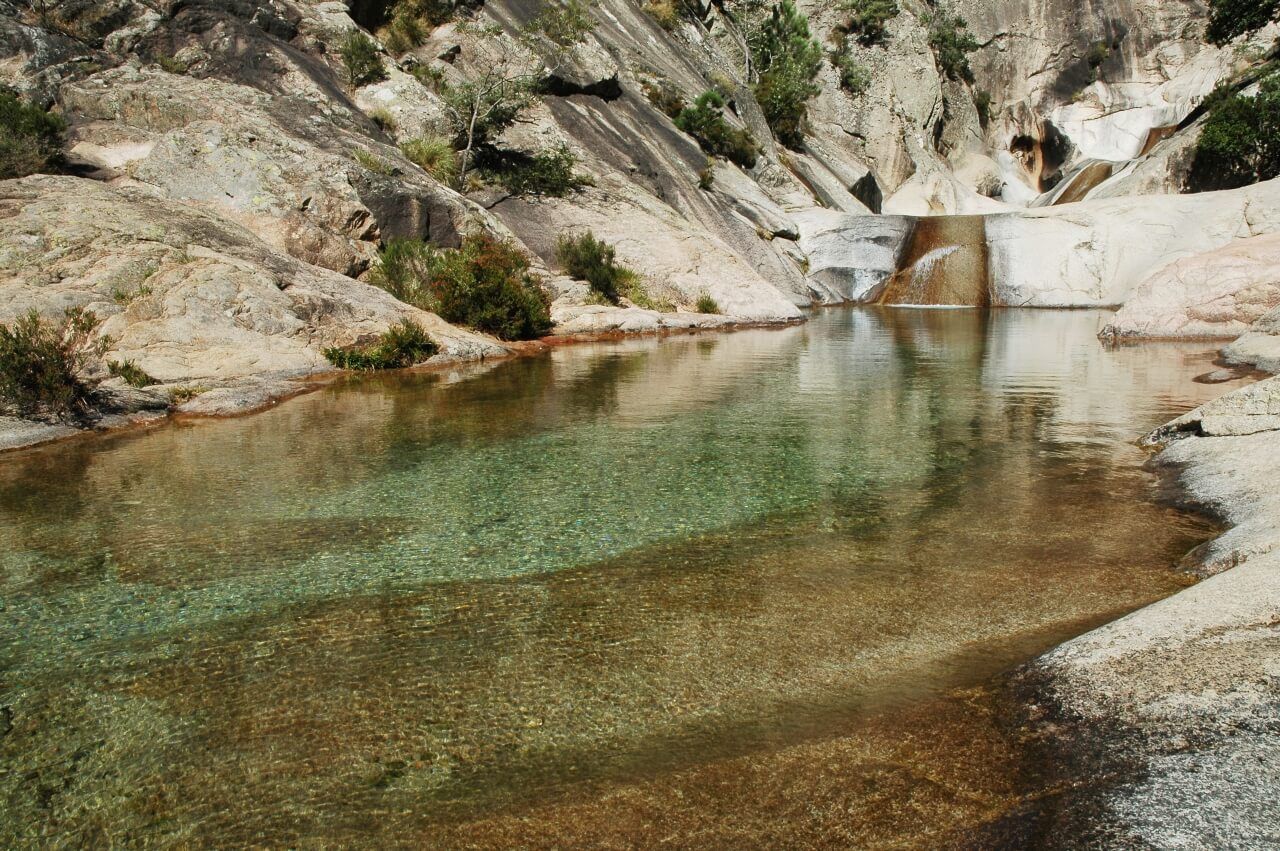
The Purcaraccia waterfalls (D268, 20124 Zonza, rated 4.3/5 on Google for 451 reviews) are undoubtedly the island's most famous. Located in the Bavella massif, in the heart of Southern Corsica, they attract thousands of hikers each summer who come to slide on the natural toboggans carved into the polished rock. The white granite, sculpted by centuries of erosion, forms a series of intertwined pools where the water ranges from transparent to turquoise depending on the hour and sky.
The departure point is from the Bavella pass (1,218 m), on the D268 road between Solenzara and Zonza. Count between 2h and 3h round trip, about 6 km with 350 m of positive elevation. The trail is well marked, but some rocky passages require being comfortable using your hands. Hiking shoes mandatory, no flip-flops.
The most spectacular natural pools follow one another over a hundred meters: the main large pool measures about ten meters wide and is suitable for swimming from July to late September. The water remains cool even in midsummer, around 17-18°C, making the bath invigorating after the effort. Natural slides between the rocks add a playful dimension that children love, but adults too.
The site belongs to the municipality of Zonza. In high season (July-August), it is strongly advised to arrive before 8:30 AM to find a parking spot. Local guides offer supervised trips from the pass, with canyoning options to descend the pools by rappelling, count between €40 and €75 depending on the service. If you prefer to explore alone, the trail remains accessible without a guide but respect the marked areas and never engage in the upper part of the canyon without supervision.
Voile de la Mariée (Bocognano)
If you're on the Ajaccio side and looking for an easily accessible waterfall, the Voile de la Mariée is your first option. Close to the village of Bocognano, about 40 km northeast of Ajaccio via National Route 193, this fall of about 70 meters high is often presented as Corsica's highest, and probably the most photographed. It has borne its name since the 19th century: seen from afar, the sheet of water cascading down the wall recalls a bride's veil.
Access is short but not quite flat: from the roundabout at the entrance to Bocognano, follow the D27 towards Bastelica for about 3.5 km to the Saliciu bridge, the trail's starting point. From there, count on a walk of about 20 minutes (sometimes steep climb on the last meters) to the viewpoint. The waterfall is visible from the road in clear weather, but it's up close that it reveals all its power. Warning: swimming and access to the base of the fall are prohibited for safety reasons, due to rockfall risks. We come here for the spectacle, not for bathing. The site remains suitable for families, provided you stay on the marked trail.
Ideal period: April to June, when the melting snow from Corsican high mountains feeds the maximum flow. In summer and autumn, the waterfall can be reduced to a thin trickle, or even dry up. If you extend the day on the Ajaccio side, the Ryo audio guide of Ajaccio covers the imperial city in 2h30 on foot from the port.
Anglais Waterfalls (Vivario)
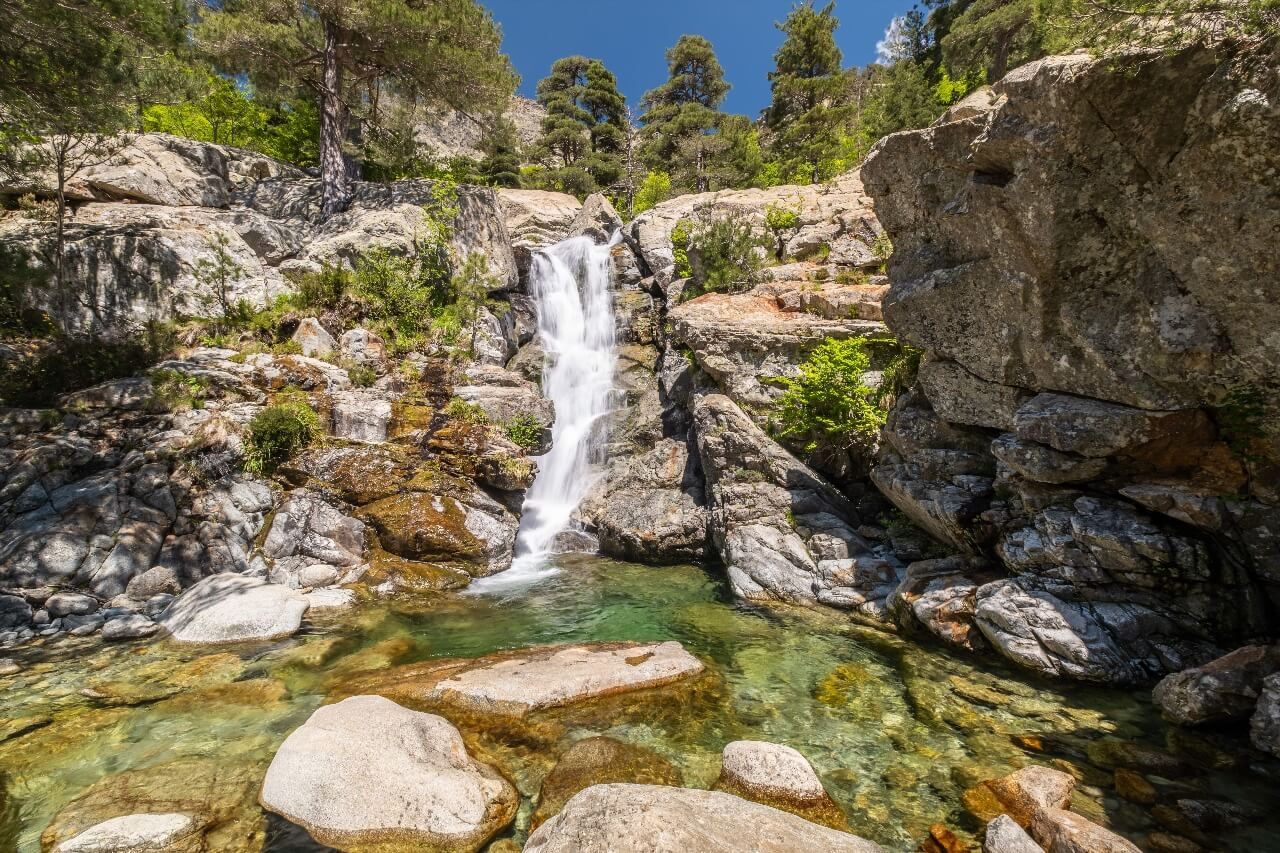
The Anglais waterfalls (Vizzavona Forest, 20219 Vivario, rated 4.6/5 on Google for 524 reviews) owe their name to 19th-century British travelers who came to bathe there during their stays on the island. They are located in the municipality of Vivario, 80 km northeast of Ajaccio, accessible from Vivario station on the Ajaccio-Corte line, one of the rare swimming sites in Corsica reachable without a car.
From the station, the marked trail climbs through the Vizzavona forest (beech and laricio pines) for about 45 minutes to reach the first pools. The elevation is moderate (180 m), the path rocky but well traced. Several pools are tiered along the torrent: the lowest are the most crowded, the highest often remain deserted on weekdays.
The water at the Anglais waterfalls is significantly colder than that at seaside sites, 13 to 15°C even in midsummer. Extended bathing enthusiasts will prefer Purcaraccia or Polischellu. However, it's an excellent starting or ending point for a section of the GR20: long-distance hikers know this refreshing stop well.
Radule Waterfall (Upper Corsica)
The Radule waterfall (D84, 20224 Calacuccia, rated 4.7/5 on Google for 366 reviews) is located in Niolo, in Upper Corsica, 20 km west of Corte via the D84. It's among the waterfalls least known to tourists but most appreciated by locals: short access, generous pools, preserved forest setting. The site is on the GR20 route, near the Radule shepherd's hut.
From the Fer à Cheval parking by the road, the trail takes 30 minutes one way (about 1.5 km, slight elevation). The waterfall drops 8 meters into a pool several meters wide, ideal for swimming and shallow on the edges, so suitable with children. This site remains outside classic tourist circuits and stays accessible even in August, provided you arrive mid-morning.
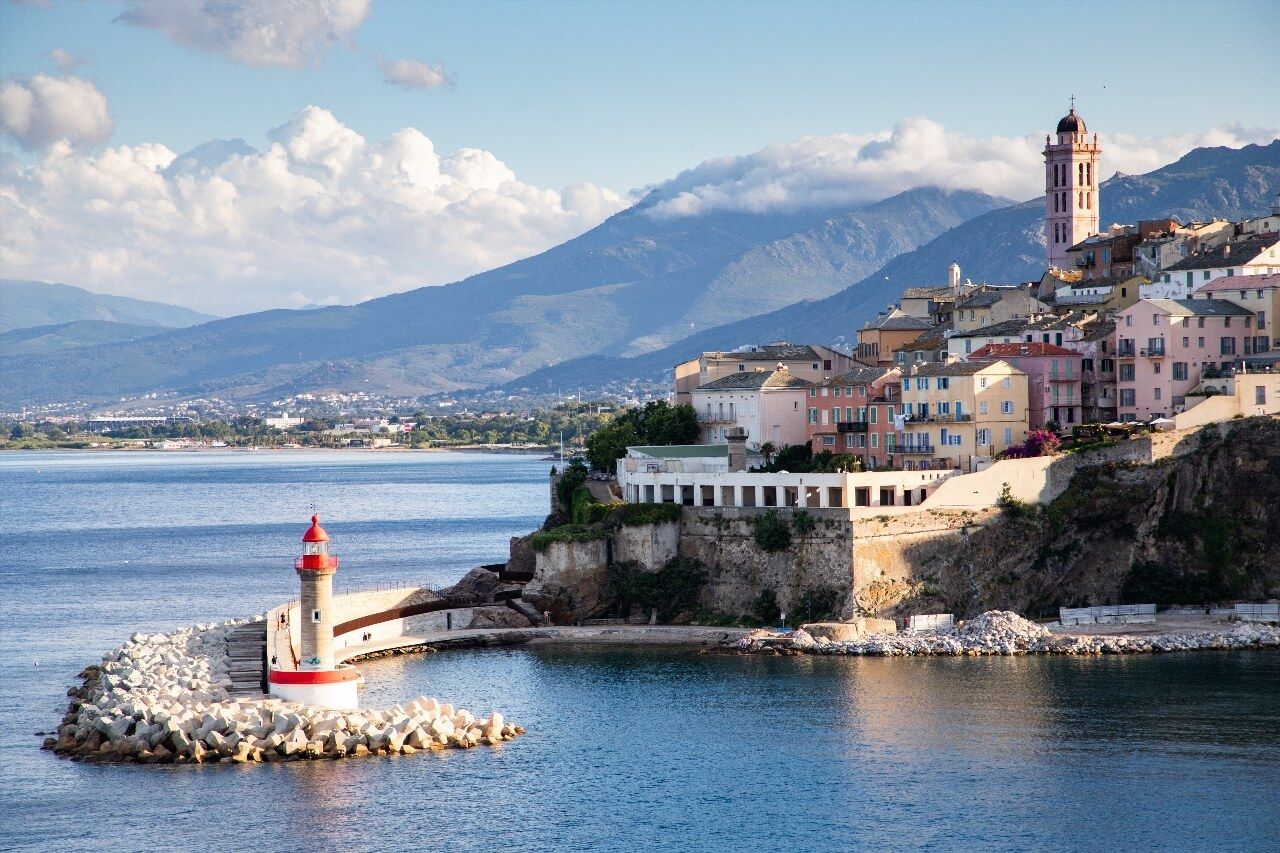
The Niolo area is covered by the guides of Bastia and Upper Corsica: if you're heading up to Cap Corse after your swim, plan a stop in Bastia at the end of the day. The Ryo audio-guided tour of the city lasts 1h30 and covers 21 key points of the old port and citadel.
Polischellu Waterfalls (Southern Corsica)
Less publicized than Purcaraccia, the Polischellu waterfalls (Fium'Orbu Valley, 20240 Solaro, rated 4.6/5 on Google for 1,409 reviews) are nevertheless among Southern Corsica's most beautiful for swimming. Also located in the Bavella massif, on the Solenzara basin, they stand out for their tiered natural pools, a succession of turquoise water pools.
The parking is on the D268, about 9 km after Solenzara towards Zonza, just after the Polischellu bridge. Good news: the first pools are accessible in a few minutes' walk (barely 250 m), making it a very family-friendly site. To reach the most photogenic upper pools, count 1h to 1h30 of ascent along the canyon, and don't go beyond the third waterfall without a guide, the terrain becomes technical. The water, milder than at altitude, turns around 18-20°C in August: extended swimming is pleasant. The site is poorly marked, an IGN map or hiking app is recommended.
Piscia di Gallu Waterfall (Porto-Vecchio)
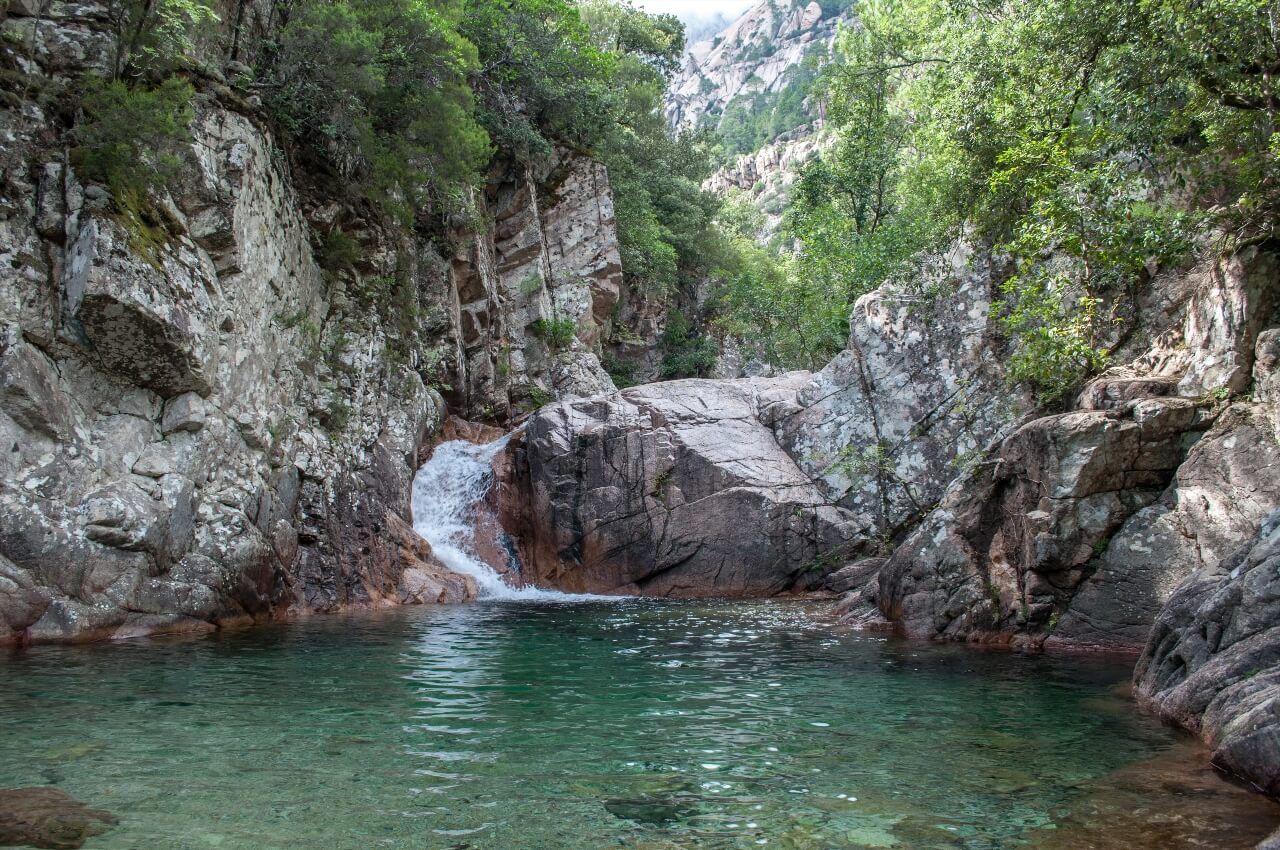
The Piscia di Gallu waterfall (Ospédale Forest, 20137 Porto-Vecchio, rated 4.6/5 on Google for 2,453 reviews) ("rooster's piss" in Corsican) is located in the Ospédale state forest, about 45 minutes' drive northwest of Porto-Vecchio. It plunges about sixty meters into a rocky cirque below a granite plateau, it's one of the island's most vertiginous falls, and certainly the most impressive to contemplate from the developed viewpoints.
The trail start is on the D368, a few kilometers after the Ospédale dam towards Zonza (paid parking, about €5). The hike lasts 1h30 to 2h round trip (about 4.6 km, just over 100 m elevation gain). The first part crosses a beautiful laricio pine forest; the last descent to the viewpoint is however steep and slippery, caution with children. Swimming at the waterfall base is not feasible due to flow and rocks, but intermediate pools allow for cooling off. Check the trail's opening status before leaving: it has already been temporarily closed for safety work. This site naturally fits into a stay in the far south: the Southern Corsica must-sees are numerous within an hour's drive.
The Ospédale plateau offers a panorama of the Porto-Vecchio gulf and the Lavezzi islands on clear days. Bring provisions, there are no services on site.
Ucelluline Waterfall (Upper Corsica)
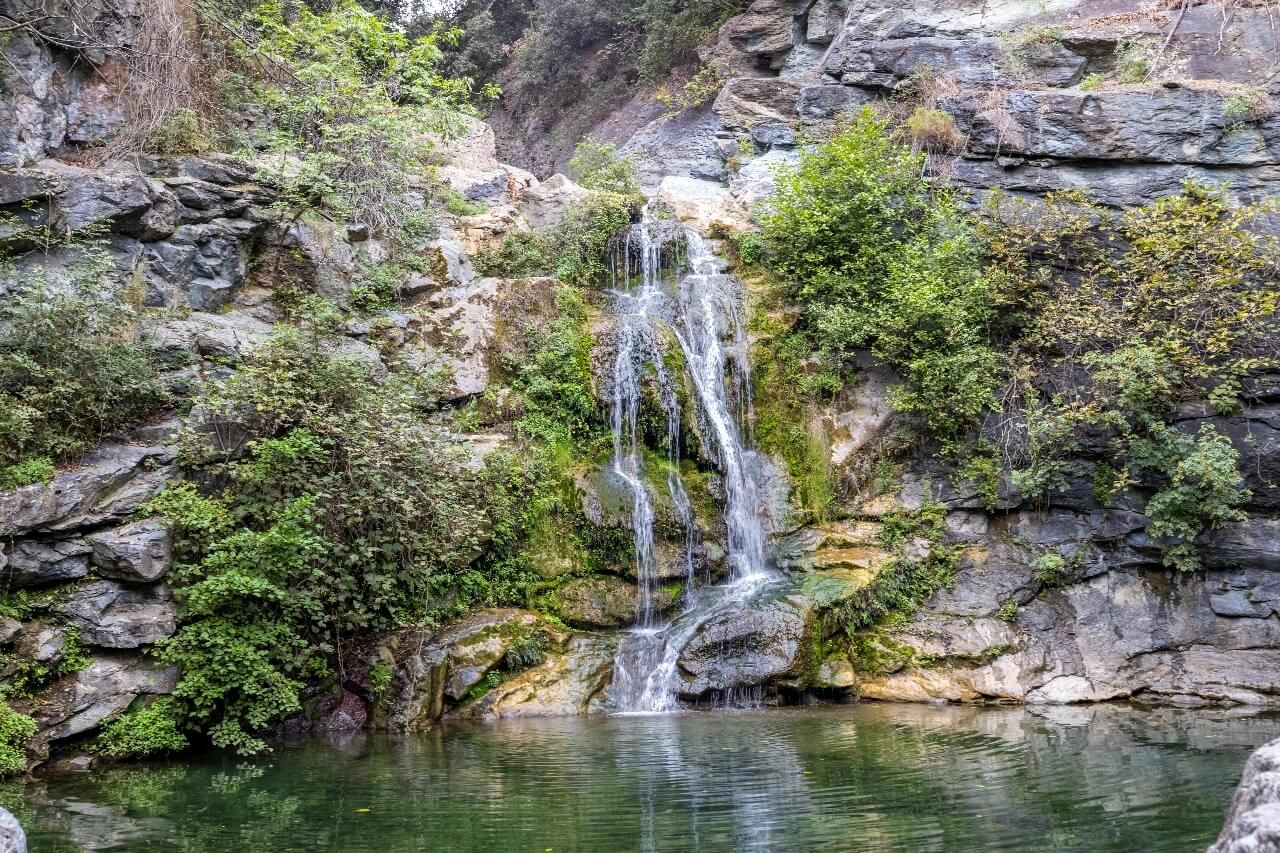
The Ucelluline waterfall (Castagniccia, 20213 Orezza, rated 4.4/5 on Google for 1,752 reviews) is located in Castagniccia, this Upper Corsica region covered with century-old chestnut trees. Little known, it rewards the curious with a green water basin surrounded by ferns and moss, an almost tropical setting that contrasts with the mineral landscapes of other sites.
Access from the village of Piazzali in Castagniccia, unmarked path of about 40 minutes one way. It's advised to ask for directions at the Castagniccia tourist office or from Piazzali residents, the trail is not listed on common maps. The main pool allows swimming from May to September. This site particularly suits travelers seeking isolation: even in July, you have good chances of finding yourself alone there.
Méli Waterfall (Upper Corsica)
The Méli waterfall (Asco Valley, 20218 Moltifao, rated 4.8/5 on Google for 47 reviews) is located near the village of Moltifao, in the Asco valley, southwest of Bastia. It's accessible by a short walk of about 30 minutes from the D147, in a spectacular mineral setting dominated by the Asco peaks. The water is crystal clear and the pool allows comfortable swimming when flow permits.
It's a good stopover if you're crossing Upper Corsica from Balagne to Corte. Flow drops significantly in late summer, favor spring and early summer. Little-frequented site, ideal for a break on a loop from Bastia.
Carnevale Waterfall (Northern Corsica)
The Carnevale waterfall (Balagne, 20226 Speloncato, rated 4.4/5 on Google for 377 reviews) is one of the most discreet in this guide, but worth the detour if you're in the Speloncato area, in Balagne. It falls about twelve meters into a basin surrounded by myrtles and strawberry trees, 25 minutes walk from the hamlet of San Colombano.
Access is unmarked, bring a map or inquire at the village. Swimming is possible from June to September, depending on flow. It's a niche site, mainly frequented by Balagne residents and hikers exploring the region between Île-Rousse and Calvi.
Practical Tips: Access, Safety and Best Seasons
Which Season for Swimming in Corsican Waterfalls?
The ideal window extends from mid-June to late September. Before mid-June, the water is often too cold for extended swimming (less than 14°C at altitude sites) and some trails may still be snowy above 1,000 m. After late September, flows drop significantly and some waterfalls reduce to a trickle.
July and August offer the most pleasant swimming conditions, but crowds explode. In September, you benefit from still warm waters (16-19°C depending on sites), less crowded trails and easier parking access.
Safety: Rules to Know Before Leaving
Waterfall accidents are recurrent in Corsica each summer, often related to jumps from overestimated heights or sudden floods after storms. Some basic rules:
- Never jump without knowing the exact depth of the pool, levels vary by season and rocks sometimes surface underwater.
- Monitor weather: a mountain storm can cause a flood an hour later downstream, even under clear skies at your level. This is the number one danger in canyons.
- Always bring drinking water, pools seem clear but may be contaminated by upstream herds.
- Hiking shoes with grip soles: wet rocks are slippery everywhere.
- Respect swimming prohibitions (Voile de la Mariée, Piscia di Gallu base): they're not decorative.
- For guided canyoning, verify the provider has professional liability insurance and a state diploma (state certificate or DEJEPS canyon).
Access and Parking
Most Corsican waterfalls are only accessible by tourist car (some tracks however require a raised vehicle). Parking is often free outside July-August, but some sites like Piscia di Gallu practice paid parking. In high season, better to arrive early morning for Purcaraccia and Polischellu, where spaces go quickly. To plan your stops between sites, also consult the guide to hikes around Ajaccio which lists access from the regional capital.
How to Get There and Where to Stay
Corsica doesn't have a public transport network suitable for natural sites, a car is essential to visit more than two waterfalls during a stay. From Ajaccio, you reach the Voile de la Mariée in 40 minutes, Purcaraccia in 1h30 and Polischellu in 1h45. From Bastia, the Radule waterfall is about 1h30, Ucelluline 1h15 and the Anglais waterfalls (via Vivario) 1h.
For accommodation, the most practical options for reaching several waterfalls are:
- Corte: central position, 50-70 km from most sites, with many rentals and hostels. It's the base - Zonza / Bavella: small mountain village ten minutes from Purcaraccia, full in July-August, book very early.
- Porto-Vecchio: comfortable base for Piscia di Gallu and Polischellu, with wide choice of hotels and campsites.
- Bocognano: for the Voile de la Mariée, a gîte on site avoids round trips from Ajaccio.
If you're organizing your stay from Ajaccio or Bastia, the island's two main cities offer all amenities (car rental, supermarkets, pharmacies) before joining the valleys. Bastia, in particular, is a good base for northern waterfalls: discover the city with the Ryo audio-guided tour of Bastia, 21 audios over 3.5 km through the old port streets and Terra Nova.
FAQ
What is the Most Easily Accessible Waterfall in Corsica?
The Voile de la Mariée in Bocognano is one of the most accessible: about twenty minutes of walking from the Saliciu bridge, with some uphill sections. We come here for the viewpoint, as swimming is prohibited. For an easily accessible site where you can actually swim, the Radule waterfall in Niolo (30 minutes, short trail) or the first pools of Polischellu (250 m from parking) are the best options.
Can You Swim in All Corsican Waterfalls?
No. Some, like the Voile de la Mariée and the base of Piscia di Gallu, are prohibited for swimming for safety reasons (rockfalls, flow, rocks). The recommended swimming sites in this guide are: Purcaraccia, the Anglais pools, Radule, Polischellu and Ucelluline. Always check conditions on site before entering the water.
Which Waterfall to Choose in Southern Corsica?
For pool beauty and atmosphere, Purcaraccia (Bavella) is the obvious choice for a memorable day, despite the crowds. If you're seeking tranquility or a child-friendly site, Polischellu, right next door on the Solenzara basin, offers tiered natural pools accessible from the parking. For a panoramic stop near Ajaccio, the Voile de la Mariée remains the safe bet.
Which Waterfall to Visit in Upper Corsica?
The Radule waterfall, in Niolo, is most recommended for swimming: wide pool, short access from the D84, and moderate crowds even in summer. For solitude lovers, Ucelluline in Castagniccia is a discovery in its own right. The Anglais waterfalls, in Vizzavona, are remarkable for their train accessibility from Ajaccio or Corte.
Are There Corsican Waterfalls Accessible Without a Car?
Yes: the Anglais waterfalls in Vizzavona are the only ones truly reachable by public transport, as Vivario-Vizzavona station is on the Ajaccio-Corte line, served several times daily. For all other waterfalls mentioned in this guide, a car is essential.
When are Corsican Waterfalls at Their Best Level?
Flow is maximum in May and June, thanks to snow melt. This is the best period to admire waterfalls at full power, but swimming remains cool (14-16°C). To combine pleasant swimming and good flow, early July represents the best compromise, before crowds reach their peak from mid-July to mid-August.
Conclusion
From Bavella granites to Castagniccia chestnuts, Corsican waterfalls form a network of natural pools that no other French region can boast. Purcaraccia for spectacle, Radule for serenity, Voile de la Mariée for the view, Polischellu for family swimming, each site has its own character and merits the detour, provided safety guidelines are respected.
To complete your stay beyond valleys and gorges, explore the island's cities with the Ryo audio guide: the Ajaccio Ryocity offers 18 audios to discover the imperial city in 2h30, from Napoleon's birthplace to the cours Napoléon market.