© Shutterstock
 Votre guide Ryo
The Most Beautiful Villages around Amiens: Our 2026 Selection
There is something unexpected in the surroundings of Amiens: less than an hour's drive away, Picardy and Hauts-de-France conceal villages that would have their place on any postcard. From the rose-lined lanes of Gerberoy to the misty quaysides of Saint-Valery-sur-Somme, the beautiful villages around Amiens make up a territory of a richness that is often underestimated. Some carry the official label of the Plus Beaux Villages de France, others owe their charm to a medieval castle, an exceptional bay or a steam railway that children adore. Before hitting the road, you can also explore the audio-guided tour of Amiens in audio to immerse yourself in the historical context of the region. In this guide, we have selected seven villages and towns that are truly worth the trip, with practical information for each stop.
Gerberoy, the Smallest of France's Most Beautiful Villages
Gerberoy (60380 Gerberoy, rated 4.7/5 on Google from 1.2K reviews) is one of those rare villages that fully deserves its reputation. Listed among the Plus Beaux Villages de France, this village of fewer than 100 inhabitants perched in the Pays de Bray is famous for its half-timbered façades entirely covered in rose bushes, a tradition that the painter Henri Le Sidaner helped elevate into an art of living after settling here in 1901. From Amiens, allow around 50 minutes by car along the D930 towards Beauvais.
The collegiate church of Saint-Pierre has dominated the main square since the 15th century. Its interior houses carved choir stalls and stained-glass windows that filter a particularly beautiful golden light in the morning. Take time to walk around the village on foot: it takes no more than twenty minutes to wander its cobbled lanes, but every turn reveals a new detail — a nail-studded wooden door, a stone well, a walled garden with wisteria spilling out onto the street.
The ideal time to visit Gerberoy is June, during the Festival des roses (usually the third Sunday of the month). The façades burst with white, pink and red, and local craftspeople exhibit in the gardens. If you come out of season, the village retains a more intimate charm: fewer visitors, and the homeowners are often outside tending their gardens.
Plan a stop at the village café-tearoom before heading off. Gerberoy is best visited in the morning, leaving the afternoon free to move on to another stop on your itinerary. A small word of warning: parking is limited on festival days, so aim to arrive before 10am.
Saint-Valery-sur-Somme, between Marshes and Railway Heritage
If only one village on this list deserves an overnight stay, it is probably Saint-Valery-sur-Somme. Located 80 km from Amiens along the bay, this medieval town stretches between its 12th-century ramparts and the calm waters of the Somme. It was from Saint-Valery that William the Conqueror set sail in September 1066 to conquer England — a historical detail the locals mention with quiet pride.
The upper town concentrates the architectural heritage: the Porte Guillaume, the Chapelle des Marins (Rue de la Chapelle, 80230 Saint-Valery-sur-Somme, rated 4.5/5 on Google from 838 reviews) and the church of Saint-Martin form a coherent ensemble that can be explored in under an hour. But it is the lower town and its quaysides that give the place its true rhythm. Fishermen's houses with colourful shutters line the bay, and at high tide the landscape takes on an almost Flemish quality.
The attraction that draws families most is the Chemin de Fer de la Baie de Somme: a tourist steam railway opened in 1887 that links Saint-Valery to Cayeux-sur-Mer and Le Crotoy via Noyelles-sur-Mer. Vintage locomotives puff white steam over the marshes, and the journey is one of the most picturesque rail experiences in northern France. Book in advance in summer — seats go quickly.
For nature lovers, the Baie de Somme is a bird-watching site of the first order. Between August and November, thousands of waders and ducks congregate here. Hides allow visitors to observe seals and migratory birds without disturbing them. The local tourist office organises guided outings at rising tide, which are particularly spectacular at the equinox.
Montreuil-sur-Mer, the Carcassonne of the North
The comparison with Carcassonne is well earned: Montreuil-sur-Mer boasts remarkably well-preserved ramparts, and the walk along its 3 km of fortifications, partly remodelled by Vauban, is one of the most impressive panoramas in Hauts-de-France. On a clear day, the towers offer views of the meanders of the Canche and the hinterland countryside. From Amiens, allow 1h15 by car via the A16.
The citadel concentrates several centuries of military history, from the medieval period to Vauban's alterations. Victor Hugo only stayed a few hours in 1837, but he set part of Les Misérables here: it is in Montreuil-sur-Mer that Jean Valjean, having become Monsieur Madeleine, rebuilds his life. Every summer since 1996, a son-et-lumière show performed by hundreds of volunteers celebrates the novel within the citadel. The collegiate church of Saint-Saulve is also worth a visit for its ancient nave and its silent cloister.
The pedestrian town centre is pleasant for lunch: several restaurants offer local specialities, including Channel fish prepared simply and honestly. The Thursday morning market is an opportunity to meet local producers and buy maroilles cheese and artisan charcuterie. Montreuil also makes an ideal base for exploring the Canche valley, which winds through bocage scenery and little-visited wet meadows. If you enjoy walking, the ramparts trail takes around 1h30 and offers ever-changing views at each bastion.
Le Crotoy, the Pearl of the Baie de Somme
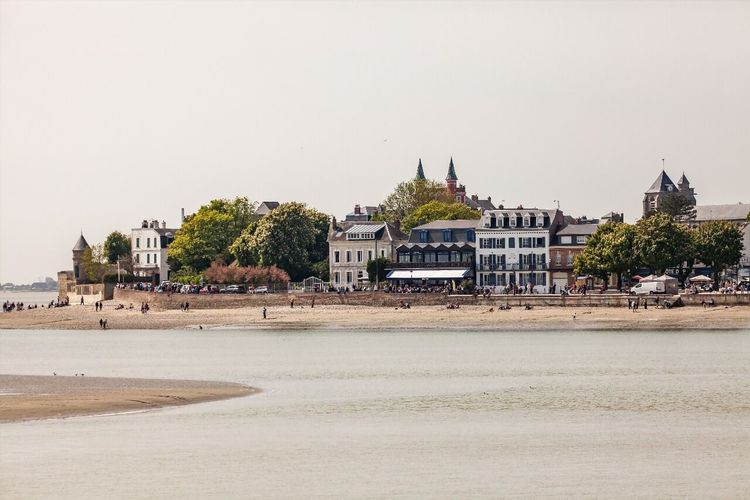
Le Crotoy (80550 Le Crotoy, rated 4.4/5 on Google from 1.5K reviews) occupies a unique position: it is the only village in France situated on the north bank of a south-facing bay. As a result, the beach enjoys exceptional sunshine for the region, and the water warms up enough in summer for swimming to be pleasant. Jules Verne spent several summers here from 1865 and wrote some of his most celebrated novels, including Twenty Thousand Leagues Under the Sea and The Mysterious Island.
The village itself is compact and lively in season. The fishing port remains active, and the stalls of the local fish auction supply a handful of restaurants that serve mussels, cockles and smoked eels with unpretentious simplicity. Rue de la Mer is home to most of the shops and terraces. For a view to linger over, settle on the seafront and watch the ballet of boats on the bay as the tide comes in.
Le Crotoy is also one of the stops on the Chemin de Fer de la Baie de Somme, making it possible to organise a loop combining the train and the ferry between the two shores. Crossing the bay on foot at low tide, guided by a licensed guide, is an experience in its own right — but never attempt this crossing without a professional guide, as the sands are shifting and conditions change rapidly.
Allow around 1h05 from Amiens via the D32 along the marshes.
Hesdin, a Lively Hub in the Heart of the Canche Valley
Hesdin is not strictly speaking a village — with 2,400 inhabitants, it is a small town — but it earns its place in this selection for its market, its architecture and its ideal position in the heart of the Canche valley. At 1h10 from Amiens, it lends itself perfectly to a half-day excursion.
The Flemish-inspired town hall, whose oldest sections date back to the 16th century, is the most photographed building: its colonnaded façade and red-brick turrets bear witness to the influence of Flanders over this part of the territory. The collegiate church of Notre-Dame faces it, with its sculpted portal and generous proportions for such a small town. Between the two, the main square transforms every Thursday morning into a lively market where producers from the Ternois offer vegetables, cheeses and poultry.
Hesdin is also a base for fishing enthusiasts: the Canche, which runs through the town, is renowned for its trout, and waymarked routes follow the river to the surrounding villages. The Canche trail, walkable by bike or on foot, links Hesdin to Montreuil-sur-Mer over around 35 km through bocage and meadows.
Picquigny and the Somme Valley
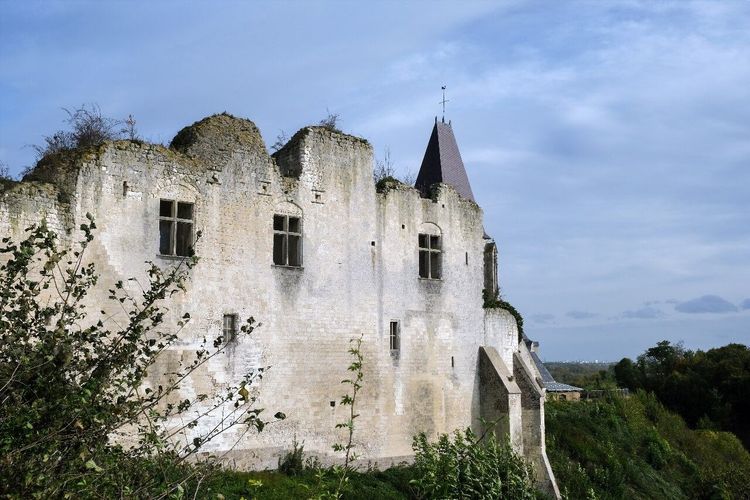
Picquigny is hidden just 15 km from Amiens, making it the most accessible destination in this selection. This Somme village owes its renown to its medieval castle, whose ruins have crowned the hill since the 11th century, and to a memorable historical event: it was here that Louis XI and Edward IV of England signed, on 29 August 1475, the treaty that sealed the end of the Hundred Years' War between the two kingdoms.
The Abbaye Saint-Martin, founded in the 7th century and rebuilt over the centuries, is worth a detour for its cloister and terraced gardens. The view from the castle ruins over the Somme valley and its peaty marshes is breathtaking, especially in the late afternoon when the raking light gilds the reeds. Hikers will appreciate the towpath that follows the canalised Somme to the neighbouring villages of Ailly-sur-Somme and Dreuil-lès-Amiens. Twenty-eight audio stops then carry the walk on into Amiens itself, from the Tour Perret to the Musée de Picardie.
Vignacourt, a Village Woven into History
Vignacourt is less well known than its neighbours, but it carries a particularly moving story. During the First World War, this village 20 km from Amiens served as a rear base for Allied soldiers passing through the region on their way to the front. A local farming couple, Louis and Antoinette Thuillier, photographed these men between 1916 and 1918: their nearly 4,000 glass plates were rediscovered in 2011 and now constitute one of the most important photographic archives of the Great War, popularised under the name of the 'Lost Diggers'.
The Centre d'interprétation Vignacourt 14-18 (1 Rue Louis Thuillier, 80270 Vignacourt, rated 4.7/5 on Google from 141 reviews) displays a selection of these photographs in the former family farmhouse. The emotion is genuine when faced with these young men's faces, often smiling, who paused for a photograph before heading back to the trenches. Entry costs around €5 for adults; the centre is open Tuesday to Sunday in season (April–October) and closed on Mondays — it is best to check opening times before you visit. Before heading out to explore the surroundings of Amiens, also consider discovering the Ryo audio guide for Amiens, which traces the city's history across 27 audio stops over 7.4 km.
How to Organise Your Getaway from Amiens

Most of these villages can be reached by car in under an hour from Amiens. Two natural approaches suggest themselves:
Option 1 — The Baie de Somme loop (1 to 2 days): Saint-Valery-sur-Somme, Le Crotoy and Hesdin form a coherent triangle in the Ponthieu area and around the bay. Allow a full day for the first two, and add Hesdin if you are staying overnight.
Option 2 — The medieval loop (1 day): Picquigny in the morning (15 km from Amiens), then Montreuil-sur-Mer in the afternoon (1h15 by road). Two stops with very different atmospheres, but a common historical thread running through their fortifications and ramparts.
Option 3 — The Gerberoy + Vignacourt day: Gerberoy is in the direction of Beauvais (50 min), and Vignacourt slots in naturally on the return journey (20 km from Amiens). This combination suits art and history enthusiasts particularly well.
If you are not travelling by car, coach links exist from Amiens train station to Saint-Valery and Le Crotoy, but frequencies are limited out of season. The regional train connects Amiens to Abbeville, from where coaches serve the coast.
For cyclists, the Vélomaritime (EuroVelo 4) runs through the region and passes several coastal villages, offering a gentle and spectacular alternative.
When to Go to See the Villages at Their Best
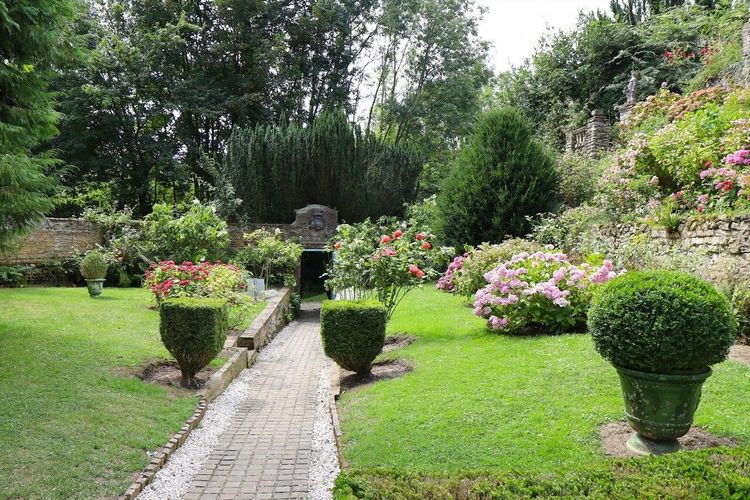
Spring (April–May) and summer (June–August) are the busiest periods: markets are in full swing, restaurants are open, and the gardens of Gerberoy are in bloom. The downside: the Baie de Somme draws crowds in July and August, and the coastal villages can be very busy at weekends.
Autumn offers an interesting compromise: the raking light of September and October sets off the ramparts and marsh landscapes to great effect, crowds thin out, and some hotels offer reduced rates. Bird-watching outings on the Baie de Somme are particularly rewarding between August and November.
Winter is more stripped back but not without charm, especially for photography enthusiasts. Gerberoy in December, under frost, has an almost magical quality. Do check museum and site opening hours before visiting, however: many operate on reduced hours or close on weekdays out of season.
FAQ
What are the most beautiful villages around Amiens?
The region is full of characterful villages within a 80 km radius of the city. Gerberoy (labelled as one of France's Most Beautiful Villages), Saint-Valery-sur-Somme, Montreuil-sur-Mer with its partly Vauban-designed ramparts, Le Crotoy on the bay, Hesdin in the Canche valley, Picquigny just 15 km away, and Vignacourt with its centre dedicated to the Great War form a particularly representative selection. Each has its own identity: a village of roses, a fortified medieval town, a fishing port, a historic site.
What to do around Amiens in one day?
In one day, the most satisfying combination depends on your interests. For nature and the coast: Saint-Valery-sur-Somme in the morning, Le Crotoy in the afternoon. For medieval heritage: Picquigny (15 km) then Montreuil-sur-Mer. For something unexpected: Vignacourt and its First World War photography centre, just 20 km away. Also check out our article on activities around Amiens for more ideas.
Which villages are less than 20 km from Amiens?
Within this immediate radius, Picquigny (15 km) and Vignacourt (20 km) are the most accessible. Picquigny has a medieval castle and an abbey; Vignacourt is home to the 14-18 interpretation centre with its some 4,000 photographic glass plates. Further but still accessible as a day trip: Airaines (28 km), Long (30 km) with its listed château, and Abbeville (50 km) with its Saint-Vulfran collegiate church.
Are the most beautiful villages of Picardy easy to reach from Amiens?
Yes, Amiens is an ideal base. The region is well served by the road network, and most of the villages mentioned are between 15 minutes and 1h30 by road. Amiens train station allows you to reach Abbeville by train in 30 minutes, from where coaches serve the coast and the Baie de Somme. For cyclists, the Vélomaritime runs through the area.
What is the medieval village you absolutely must see in the Somme?
Montreuil-sur-Mer stands out as the most spectacular medieval town in the region. Its 3 km of ramparts largely redesigned by Vauban, its citadel and its preserved historic centre often earn it comparison with Carcassonne. Saint-Valery-sur-Somme, with its Porte Guillaume and its 12th-century ramparts, is a more intimate alternative and perhaps even more steeped in history, as William the Conqueror set sail from there for England in 1066.
Is Gerberoy really worth the trip from Amiens?
Yes, especially if you come in June for the Festival des roses or in spring when the rose bushes begin to bloom. Gerberoy is tiny — fewer than 100 inhabitants — but the concentration of charm per square metre is rare. Allow half a day on site: a visit to the collegiate church, a stroll through the cobbled lanes, a stop at the local café. Combining Gerberoy with Vignacourt on the way back makes for a day rich in history.
Are there villages worth seeing to the north of Amiens?
Heading north, a few villages in the Pas-de-Calais fall within range. Hesdin (1h10 from Amiens) and Montreuil-sur-Mer (1h15) offer a natural transition towards the rest of Hauts-de-France. For the most beautiful villages around Lille, you need to travel further, but some travellers turn this territory into a grand loop, setting out from Amiens, heading up to the Côte d'Opale and finishing in Lille.
Conclusion
These characterful villages make up a surprisingly diverse territory around Amiens: the roses of Gerberoy, the ramparts of Montreuil, the marshes of the Somme, steam trains, wartime portraits. Each getaway can be tailored to your mood — half a day for the closer destinations, a weekend for the more distant ones. And if you would like to start by exploring Amiens itself before venturing out into the surroundings, the Ryo audio tour of Amiens offers 28 audio stops across 2h30 of walking, from the Gothic cathedral to the hortillonnages. A walk to listen to through headphones to whet your appetite before setting off on the roads of Picardy.