© Shutterstock
 Votre guide Ryo
The Most Beautiful Villages to Visit Around Avignon in 2026 (15 Must-Sees)
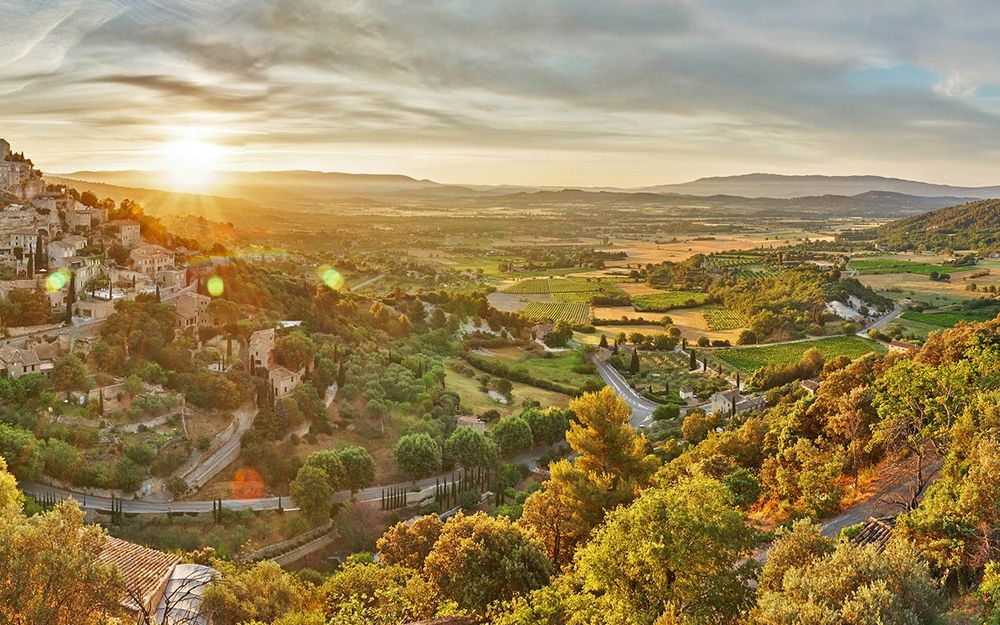
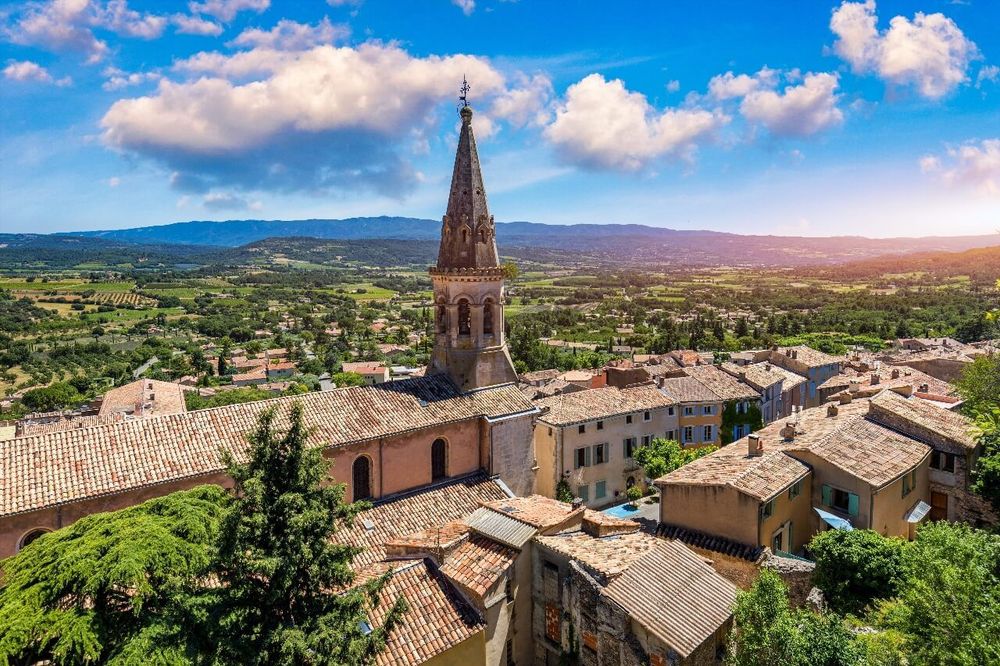
Choosing a village to visit around Avignon means stepping outside the ramparts to let Provence reveal another dimension: hilltop villages perched on ochre cliffs, medieval lanes where thyme grows between the cobblestones, dry-stone bories that no one has moved since the 17th century. Within less than an hour's drive, you will find some of the most photographed villages in Europe, and others, almost secret, that mainstream travel guides have yet to discover. Before even leaving the city of the Popes, start by immersing yourself in the spirit of the area with the Ryo audio guide of Avignon, 27 audio tracks for 2h10 of discovery through the city's streets.
This guide takes you to 15 villages around Avignon, spread across the Luberon, the Dentelles de Montmirail, the Ventoux, and the banks of the Rhône. You will find cliffs carved deep into the russet sandstone of Roussillon, a chasm where an underground spring ranks among the most powerful in Europe at Fontaine-de-Vaucluse, Romanesque cellars that produced the wine of the popes at Châteauneuf-du-Pape, and the particular evening light over Gordes that Cézanne would have wanted to paint. From 15 to 55 km from Avignon, every detour is worth a full tank of petrol.
How to Organize Your Village Exploration
The villages presented here fall into three main axes from Avignon. The Luberon (Gordes, Roussillon, Ménerbes, Lourmarin, Ansouis, Saignon) is best explored over two separate outings — allow 45 minutes to 1 hour of driving for the most distant villages. The Dentelles de Montmirail and the Ventoux (Séguret, Beaumes-de-Venise, Le Barroux, Vaison-la-Romaine) form a loop to the north of Avignon, manageable in a single day. Central Vaucluse (L'Isle-sur-la-Sorgue, Fontaine-de-Vaucluse, Venasque, Châteauneuf-du-Pape) makes up a third axis to the east and north-east.
A car remains essential for most of these destinations. Spring (April–May) and autumn (September–October) offer the best conditions: golden light, moderate crowds, and colourful vines. In July and August, set out early in the morning — Gordes and Roussillon can welcome several thousand visitors in a single summer day.
Gordes: The Suspended Jewel of the Luberon
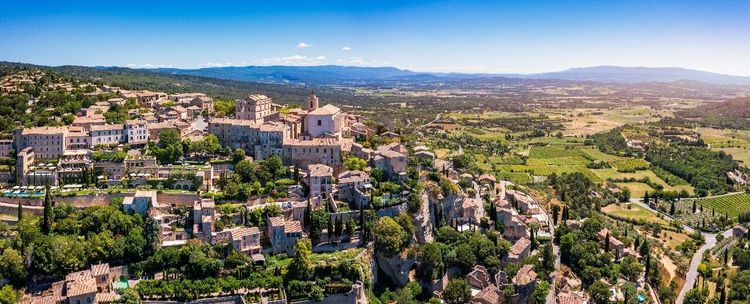
Gordes earns its reputation. The village clings to a limestone cliff 39 km from Avignon, and the first view from the D2 road — a gilded Renaissance château towering over a tightly packed cluster of white houses stacked like scales — is enough to justify the journey. This is no marketing exaggeration: Gordes regularly features among the "Most Beautiful Villages in France" (an official label), and the global photography community has made it one of the most widely published subjects in Provence.
The Château de Gordes, built in the 16th century on medieval foundations, now houses a contemporary art collection open to the public. From the terraces, the view stretches across the Luberon plateau and, on clear days, all the way to the Ventoux. But Gordes's real secret lies 3 km from the village: the Village des Bories, a group of 20 dry-stone huts dating from the 17th to 19th centuries, most likely used for agriculture or livestock. The site has been listed as a historic monument since 1977 and is open to visitors for an admission fee.
Allow at least 2 hours on site: 45 minutes for the village and its steep-sloped lanes, 30 minutes for the château, and the rest for the Bories and the lavender road if you visit between mid-June and mid-July. The Abbaye de Sénanque (Abbaye Notre-Dame de Sénanque, 84220 Gordes, rated 4.5/5 on Google based on 8,714 reviews), 4 km from Gordes, is often included in this circuit — its lavender fields in bloom in front of the Romanesque church are one of the most iconic images of Provence.
Roussillon: The Cliff of a Thousand Shades of Ochre
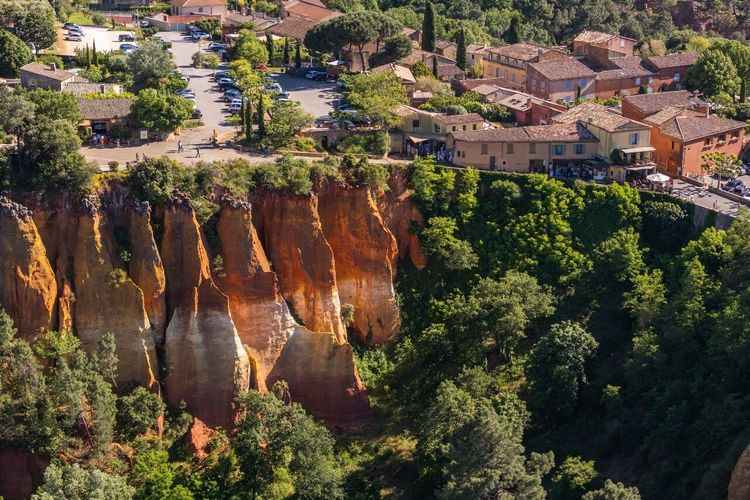
At 48 km from Avignon, Roussillon owes its unique appearance to an exceptional geological phenomenon: the subsoil of the commune contains one of the largest concentrations of ochre in Europe. The facades of the houses — saffron yellow, brick red, burnt orange — are not painted at the whim of residents, but simply coated with the local material. The result is striking, almost surreal in the late-afternoon light.
Do not miss the Sentier des Ocres (Sentier des Ocres, 84220 Roussillon, rated 4.6/5 on Google based on 20,436 reviews), a walking trail lasting 35 minutes to 1h30 (two lengths depending on the route) that winds through the former extraction quarries. The sandstone formations carved by erosion — needles, fairy chimneys, vermilion cliffs — make up a landscape with no equivalent in France. Wear closed shoes: the ground will permanently stain light soles orange. Entry is paid (around €3.50 for adults in 2025), but the site is exemplarily managed with marked trails and a shop selling products made from natural ochre.
The village itself, smaller than Gordes, can be explored in 30 minutes. The village square offers an open view over the vineyards and cherry orchards below — a striking contrast with the red cliffs behind you.
L'Isle-sur-la-Sorgue: The Venice of the Vaucluse
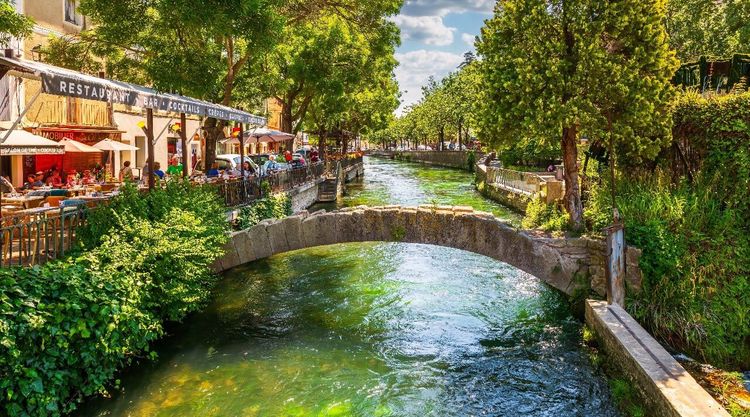
L'Isle-sur-la-Sorgue is not really a hilltop village — it is a lowland town, 23 km from Avignon, threaded through by the arms of the Sorgue. This crystal-clear river, whose waters remain permanently cool thanks to the underground springs of the Vaucluse plateau, has been turning waterwheels since the Middle Ages. The comparison with Venice is flattering, but the character of the town is thoroughly Provençal: giant antique fairs, centuries-old plane trees, and cafés along the quays.
The town is one of the world capitals of antiques and second-hand dealing, with around a hundred permanent dealers and weekly markets every Sunday (and Thursday for the Provençal market). Sunday mornings in particular draw collectors and curious visitors from across the region, and sometimes from as far as Paris. The Collégiale Notre-Dame-des-Anges (Place de la Liberté, 84800 L'Isle-sur-la-Sorgue, rated 4.5/5 on Google based on 511 reviews), with its lavishly gilded and stucco-decorated Baroque interior, is worth a quick detour. The historic waterwheels along the quays are freely accessible and wonderfully photogenic at golden hour.
If you are planning a getaway to the secret villages of the Luberon, L'Isle-sur-la-Sorgue makes a convenient base, halfway between Avignon and the plateau.
Fontaine-de-Vaucluse: The Mystery of the Spring
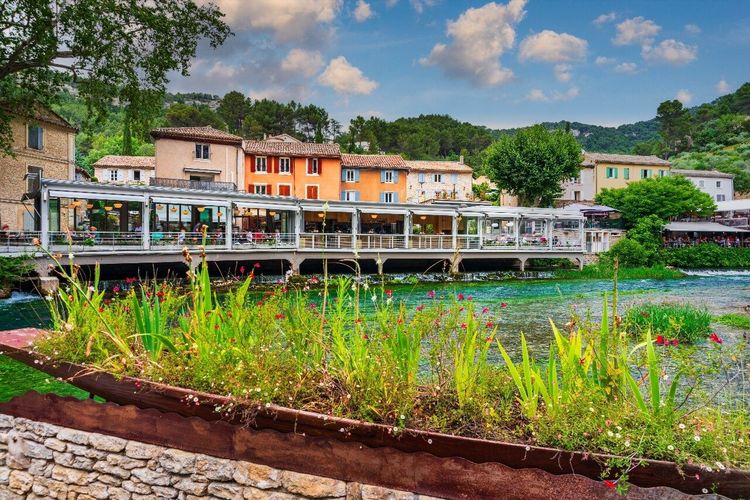
Fontaine-de-Vaucluse is the kind of place that defies expectations. You expect a picturesque village — and that is true, the 32 km from Avignon pass through beautiful scenery. But the real star is the underground spring that gives the commune its name: the Fontaine de Vaucluse is one of the most powerful karst springs in the world. Its average flow rate is around 18 to 20 m³/second, but it can exceed 80 m³/second during the great spring and autumn floods, and its annual volume ranks it fifth in the world. The blue-green chasm, ringed by sheer limestone cliffs, is accessible on foot from the village (15 minutes' walk).
The poet Petrarch stayed here in the 14th century, drawn, it is said, by the beauty of the site and his platonic love for Laura. The Musée Pétrarque, set beside the Sorgue, traces this literary history. The town also houses a Speleology Museum (Chemin de la Fontaine, 84800 Fontaine-de-Vaucluse, rated 4.3/5 on Google based on 126 reviews) dedicated to explorations of the chasm, whose bottom, at more than 300 m depth, was only reached in 1985 by an underwater robot — never by divers.
Come preferably in spring to see the spring in full flood — an impressive spectacle. In summer, the flow diminishes and the site is very busy; arrive before 9 a.m.
Ménerbes: The Village of Winemakers and Painters
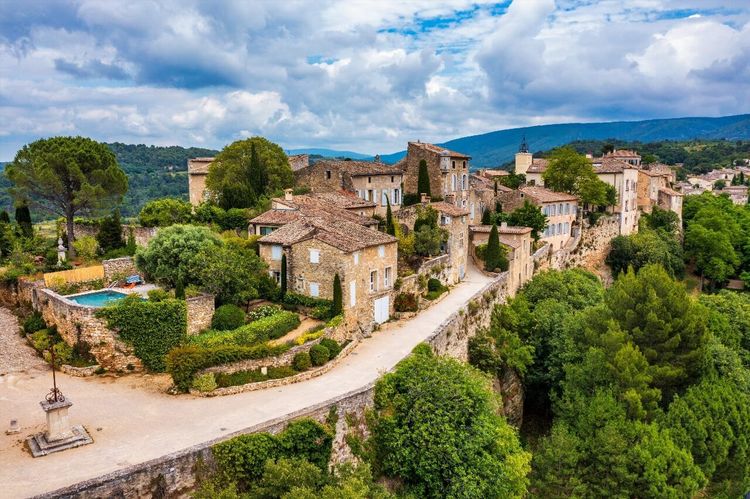
Ménerbes is only 38 km from Avignon, yet its atmosphere is that of a village with nothing to prove. Long inhabited by the painter Nicolas de Staël (who acquired the house known as "Le Castelet" in 1953) and a summer refuge for Dora Maar — photographer and companion of Picasso, whose former home is now an artists' residence — it owes part of its contemporary fame to Peter Mayle's novel "A Year in Provence", which put it on the map for English-speaking visitors from 1989. The medieval château that dominates the village is not open to the public, but a stroll around the ramparts is worth it for the views.
The Musée du Tire-Bouchon (Domaine de la Citadelle, 84560 Ménerbes, rated 4.5/5 on Google based on 141 reviews), housed in the Citadelle estate, is a quirky and charming attraction: over 1,200 corkscrew collectibles from the 17th century to the present day, all gathered in one place. The visit includes a tasting of the estate's wines, including a remarkable white Luberon. Wine lovers will be spoilt for choice: the Luberon wine route passes through Ménerbes, with several cellars open for direct tastings.
Séguret: The Pearl of the Dentelles de Montmirail
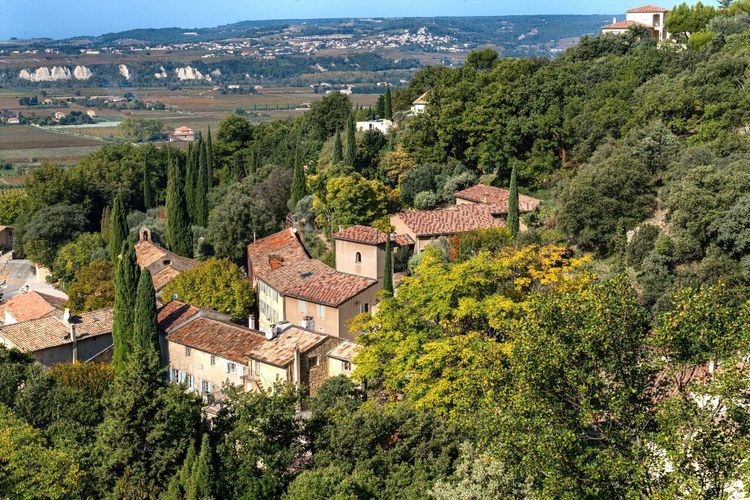
Séguret (Village de Séguret, 84110 Séguret, rated 4.6/5 on Google based on 2.3K reviews) is less well known than Gordes but equally spectacular in its own way. Perched 37 km north of Avignon, this medieval village clings to a rocky spur at the foot of the Dentelles de Montmirail, the jagged limestone ridges that form one of the most highly regarded climbing areas in France. The view from the top of the village over the vineyards of Gigondas and Beaumes-de-Venise is breathtaking.
The village has a few hundred permanent residents. You will find a beautiful 15th-century medieval fountain, a 12th-century Romanesque church, and lanes paved with calade (pebblestone) characteristic of the Vaucluse. Séguret also has its own vineyard under the Côtes-du-Rhône Villages appellation, and local estates offer tastings in an idyllic setting. Allow 1 to 1.5 hours on site, then continue to Gigondas or Beaumes-de-Venise to complete a lovely loop.
Venasque: The Village of Baptisteries
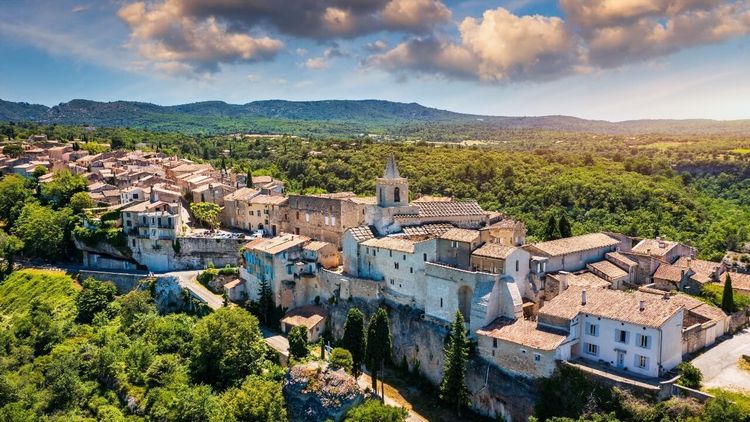
Less visited than its neighbours, Venasque (Village de Venasque, 84210 Venasque, rated 4.5/5 on Google based on 1.4K reviews) is worth the detour for one specific historical reason: its baptistery is one of the oldest Christian buildings in France, dating from the 6th or 7th century (historians are still debating). At 33 km from Avignon, this village labelled as a "Most Beautiful Village in France" is built around narrow lanes and offers a magnificent view over the Comtat plain.
The baptistery is open to visitors (modest admission fee). The interior preserves reused antique columns, giving it an atmosphere of great antiquity. Venasque's cherry trees are celebrated throughout the region — if you visit at the end of May, you will find cherries direct from local growers. It is one of the most unusual spots around Avignon and among the least crowded with tourists, even in peak season.
Vaison-la-Romaine: Two Millennia in One Place
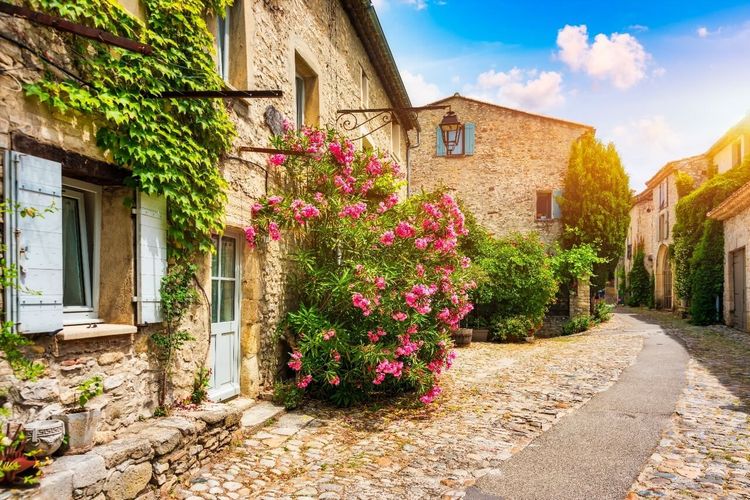
Vaison-la-Romaine (Place du Chanoine Sautel, 84110 Vaison-la-Romaine, rated 4.6/5 on Google based on 3.7K reviews), 47 km north-east of Avignon, is one of the most remarkable archaeological curiosities in Provence. The town is not strictly a "village" — it has around 6,000 inhabitants — but it absolutely deserves a place in any circuit around Avignon for one simple reason: it is home to one of the largest Gallo-Roman archaeological sites in France, featuring baths, colonnaded walkways, a mosaic house, and an ancient theatre still used for performances in summer.
The town naturally divides into three distinct parts that you will move through on foot. The medieval Haute-Ville, on a rocky outcrop on the far side of the Ouvèze, is linked to the lower town by an ancient Roman bridge — this bridge withstood the catastrophic floods of 1992 that swept away several modern structures. The lanes of the Haute-Ville are among the best-preserved in the region. The lower town houses the museum and the entrance to the archaeological excavations, where Roman houses have been uncovered along with their original gardens and pools.
Allow at least half a day. Tuesday morning is market day — one of the most authentic Provençal markets in the Vaucluse, with local producers selling direct. The pass giving access to all the ancient sites and the museum costs around €9 for adults (2025), valid for 24 hours.
Châteauneuf-du-Pape: Among the Vineyards of the Pontiffs
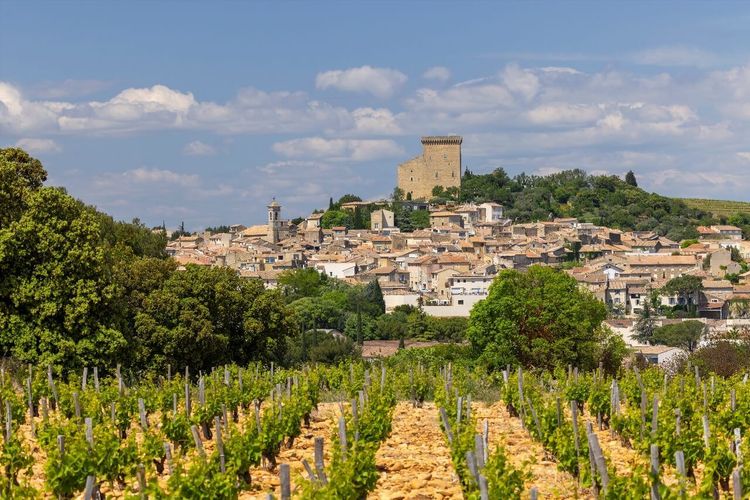
Châteauneuf-du-Pape is just 19 km from Avignon, making it the shortest and easiest excursion in this guide. The village takes its name from the summer château that the Avignon popes had built here in the 14th century; the ruins of the château still stand at the top of the village and offer a 360° panorama over the Rhône, the Alpilles, and the Ventoux.
But what draws the world here is the wine. The Châteauneuf-du-Pape appellation is one of the most prestigious in the Rhône Valley, with some of the strictest production rules in France (13 permitted grape varieties, mandatory hand-harvesting, limited yields). The famous rounded galets — large stones covering the vineyards — absorb the heat of the day and release it at night, a feature that contributes to the power of the local wines.
Around twenty estates offer direct tastings, often free of charge. The Musée du Vin Baron Patrick de Ladoucette (Avenue Saint-Joseph, 84230 Châteauneuf-du-Pape, rated 4.7/5 on Google based on 749 reviews) traces the history of the appellation from the 14th century. If you enjoy wine, allow half a day between cellar visits and tastings — some estates require an appointment, others welcome walk-in visitors. Back in Avignon, our audio-guided tour On y danse, on y danse! picks up the thread through the ramparts and the papal quarter.
Beaumes-de-Venise: Muscat and the Dentelles
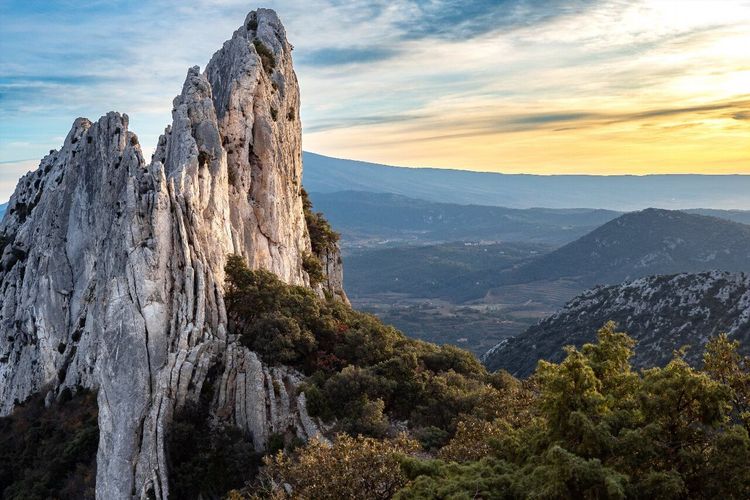
Beaumes-de-Venise is known for one thing: its Muscat, a naturally sweet wine produced on the slopes of the Dentelles de Montmirail, 38 km from Avignon. This amber, slightly honeyed wine is served chilled as an aperitif or alongside desserts — a typically Provençal treat that deserves to be tasted on the spot.
The village itself is pleasant without being spectacular, but its geographical position is ideal for setting off to explore the Dentelles de Montmirail on foot or by mountain bike. Several marked trails leave from the village to reach the ridgelines in 1 to 1.5 hours of walking. The Cave des Vignerons de Beaumes-de-Venise (Route de Carpentras, 84190 Beaumes-de-Venise, rated 4.6/5 on Google based on 949 reviews), a local cooperative, offers tastings in a modern and welcoming space — a great introduction to the appellation without having to visit multiple private estates.
Le Barroux: The Forgotten Fortress
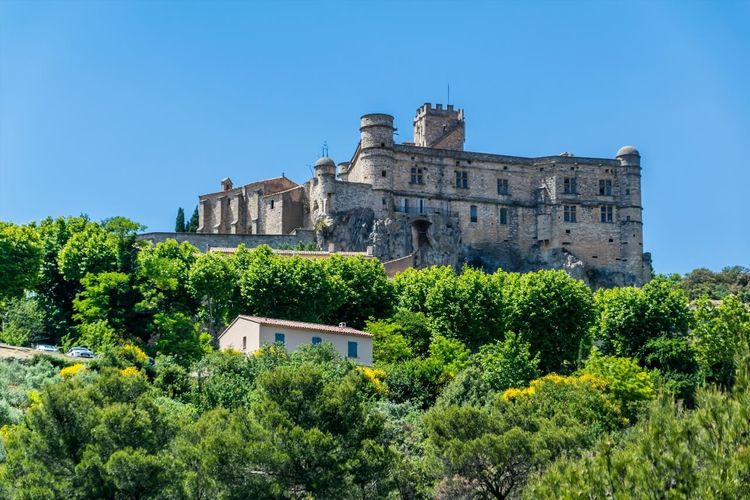
Le Barroux is one of those villages that few guides mention — wrongly so. This medieval hilltop village, 37 km north of Avignon, has a remarkably well-preserved 12th-century château, whose restoration (begun in the 1960s by a private individual) has restored the monument's full silhouette. The interior can be visited from Easter to All Saints' Day.
The village is quiet, authentic, and little visited by tourists. The lanes descend in terraces to a small square shaded by plane trees. A summer market is held on Sunday mornings. From the heights of the château, the unobstructed view of the Ventoux — less than 20 km away — is among the most direct and unspoilt in the entire area. Le Barroux pairs naturally with a loop taking in Séguret and Beaumes-de-Venise for a full day in the Dentelles.
Ansouis: The Renaissance Château and Its Cicadas
Ansouis is one of the most secret villages of the Luberon, 53 km from Avignon. Labelled a "Most Beautiful Village in France", it has an inhabited château that has been occupied for centuries — one of the few noble residences in Provence never to have been abandoned. The château is open to visitors, generally through guided tours that provide access to the furnished apartments, the historic kitchens, and the terraced gardens.
The village itself, with its cobbled lanes and shaded fountains, is perfect for a midday break. At lunchtime, when the tourist coaches head for Gordes or Roussillon, Ansouis returns to an almost total calm. Check the château's opening hours and visiting conditions before your visit, as they vary by season.
Lourmarin: The Spirit of the Luberon
Lourmarin is often presented as the liveliest village in the Luberon — a reputation built on its bustling market, its concentration of restaurants and art galleries, and the historic presence of Albert Camus, who lived and is buried here. At 55 km from Avignon (the furthest in this guide), it merits a full day's visit.
The Château de Lourmarin (Rue du Temple, 84160 Lourmarin, rated 4.5/5 on Google based on 4,650 reviews), a Renaissance château, is one of the finest in the Luberon and is regularly open for visits. Concerts and exhibitions are held there throughout the summer. Albert Camus's grave in the municipal cemetery is a discreet place of pilgrimage for literature lovers — a simple slab bearing his name and dates. The Friday morning market is particularly well stocked with local produce: olive oils, sheep's milk cheeses, lavender.
If you are visiting in autumn, read our article on the secret villages of the Luberon to explore in autumn to round out your itinerary with lesser-known stops.
Villeneuve lez Avignon: The Forgotten Riverbank
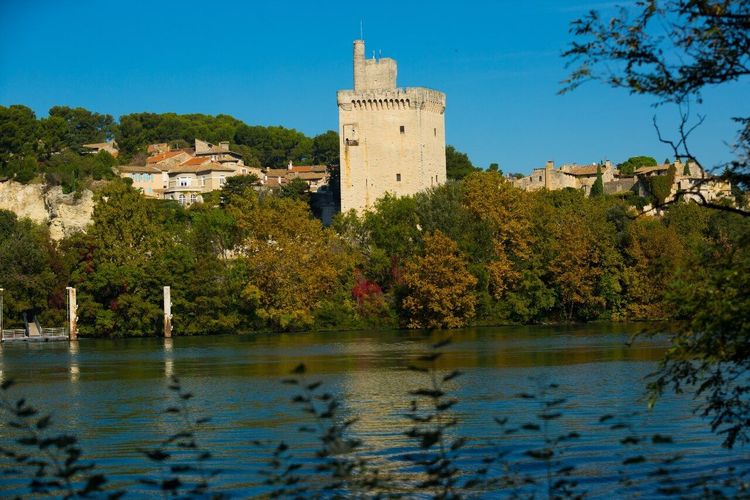
It is often overlooked simply because it is right across the water: Villeneuve lez Avignon, just 3 km from Avignon (on the Gard side, technically in a different administrative region), offers a unique perspective on the papal ramparts from the right bank of the Rhône. The Tour Philippe-le-Bel, built in the early 14th century to watch over the crossing at the Pont Saint-Bénézet, dominates the plain.
The Fort Saint-André (Montée du Fort Saint-André, 30400 Villeneuve-lès-Avignon, rated 4.4/5 on Google based on 2,520 reviews), perched on the Mont Andaon, is an underrated yet exceptional monument: its 14th-century ramparts enclose a medieval garden and the ruins of a Benedictine convent. The visit takes around 1 hour and the views over Avignon from the ramparts are among the finest you will find. The Chartreuse du Val de Bénédiction, one of the largest charterhouses in France, completes the picture with its monastic corridors and frescoes by Matteo Giovanetti.
Saignon: The Unsung Viewpoint of the Luberon
Saignon (Village de Saignon, 84400 Saignon, rated 4.5/5 on Google based on 890 reviews) perches on a rocky spur above Apt, 52 km from Avignon. Almost unknown on the mainstream tourist circuit, it possesses an authentic charm that its more celebrated neighbours have sometimes lost. The Roche Percée, a natural rock formation at the top of the village, offers a 360° view over the grand Luberon.
The calade-paved lanes climb up to a remarkably well-preserved 12th-century Romanesque church. Few tourist shops, a handful of genuine restaurants, and an atmosphere of deep Provence. If you are looking for a village around Avignon for a lunch stop away from the crowds, Saignon is the address to remember. Combine it with a visit to Apt (Saturday morning market) for a full morning in the eastern Luberon.
Practical Tips for Exploring These Villages
Distances and Logistics
All the villages in this guide are accessible from Avignon by car. Distances range from 3 km (Villeneuve lez Avignon) to 55 km (Lourmarin). There is no satisfactory bus network connecting these villages to one another — the Zou! coach serves a few destinations from Avignon (Apt, L'Isle-sur-la-Sorgue, Vaison-la-Romaine), but frequencies are limited at weekends. A car remains the most flexible mode of transport.
When to Come
Spring (April–May): Few crowds on weekdays. Autumn (September–October): Harvest time in Châteauneuf-du-Pape and the Dentelles, golden light, mild temperatures. Winter (December–February): Villages return to complete calm, some restaurants close, but authenticity is at its peak. Summer (July–August): Plan to leave very early (before 9 a.m.) for Gordes, Roussillon, and Fontaine-de-Vaucluse — car parks fill up by mid-morning.
Budget
Most villages are free to visit; châteaux and archaeological sites charge admission. Allow around €9 for Vaison-la-Romaine (archaeological sites + museum pass), around €3.50 for the Sentier des Ocres in Roussillon, €8–10 for the châteaux at Gordes or Lourmarin. Wine tastings are often free at producers. A budget of €20–30 per person is sufficient for a day trip, excluding meals.
Parking
Gordes and Roussillon have paid car parks on the outskirts of the village (€2–4/hour or all-day rates in season). Arrive before 9:30 a.m. in summer to find a space. In Vaison-la-Romaine, the lower town car park is free and spacious. In L'Isle-sur-la-Sorgue on Sundays (market day), allow 30–45 minutes of extra time for parking.
Starting Point: Avignon
Avignon is the ideal base. The city of the Popes itself deserves a full day — its Palais des Papes, its medieval ramparts, and the famous Pont Saint-Bénézet make for a packed itinerary. The Ryo audio guide of Avignon lets you explore the city at your own pace with 27 audio commentaries, before heading out to discover the surrounding countryside. To plan further stops, the Ryo app also offers routes for other cities in Provence. For more on what Avignon itself has to offer, see our top 5 things to do in Avignon.



FAQ
Which villages can you visit around Avignon in one day?
For a day trip, the best approach is to choose a single geographical axis and explore it thoroughly rather than trying to cover multiple destinations. The western Luberon axis (Gordes + Roussillon) makes for a full day with 2 hours in Gordes, 1.5 hours in Roussillon, and the country roads in between. The Dentelles axis (Séguret + Beaumes-de-Venise + Le Barroux) is doable in a day at a Provençal pace. If you only have half a day, Châteauneuf-du-Pape (19 km) or Villeneuve lez Avignon (3 km) are the closest options.
Which villages are within 20 km of Avignon?
Within 20 km of Avignon, you will mainly find Villeneuve lez Avignon (3 km, on the right bank of the Rhône) and Châteauneuf-du-Pape (19 km to the north); L'Isle-sur-la-Sorgue (23 km to the east) is just beyond that. The most picturesque villages of the Luberon (Gordes, Roussillon, Ménerbes) are more in the 35–55 km range, meaning 40–60 minutes by road.
What is the most beautiful village around Avignon?
The answer depends on what you are looking for. For immediate visual impact and the most spectacular scenery, Gordes is most often cited first. For something truly unique in the world, Roussillon and its ochre cliffs have no equal. For the liveliest atmosphere and the best restaurants, Lourmarin and L'Isle-sur-la-Sorgue come out on top. For authenticity and tranquility, Séguret, Ansouis, or Saignon are the choices of those who know the region well.
How can you visit the villages of the Luberon without a car from Avignon?
It is possible but restrictive. The Zou! company (regional network) serves L'Isle-sur-la-Sorgue and Apt (with connections to Lourmarin) from Avignon's bus station. Seasonal tourist shuttles sometimes connect Gordes and Roussillon in summer — check with the Office de Tourisme du Grand Avignon. Agencies also offer guided minibus day tours that allow you to see 2–3 villages without worrying about logistics. Cycling is feasible for Villeneuve lez Avignon and Châteauneuf-du-Pape, but the Luberon terrain is demanding.
Are the villages around Avignon open in winter?
Yes, the villages themselves are of course always accessible, and some sites such as Fort Saint-André in Villeneuve or the archaeological sites of Vaison-la-Romaine remain open year-round (with reduced hours in the low season). However, several restaurants, hotels, and shops close from November to March in the Luberon villages. Gordes and Roussillon are noticeably quieter and more pleasant to visit outside peak season. The Fontaine de Vaucluse is particularly impressive in winter and spring thanks to the strong flow of the spring.
What is the best time to see lavender near Avignon?
Lavender blooms in the Luberon and around the Ventoux generally between mid-June and mid-July, with variations of one to two weeks depending on weather conditions and altitude. The most photogenic fields are located on the Valensole plateau (1 hour's drive from Avignon), but the surroundings of the Abbaye de Sénanque (4 km from Gordes) offer the classic image of Provence. The harvest usually begins in mid-July, marking the end of the purple flowers.
Conclusion
From the ochre cliffs of Roussillon to the papal vineyards of Châteauneuf-du-Pape, by way of the bories of Gordes and the waterwheels of L'Isle-sur-la-Sorgue, the villages around Avignon represent one of the finest concentrations of heritage in France within such a small area. Every excursion from the city of the Popes holds its own surprises — all it takes is a car, a good map, and the curiosity to stop wherever the road turns.
Before you leave or when you return, let yourself be guided by the Ryo audio-guided tour of Avignon to discover the hidden treasures of the city itself — 27 audio tracks, 5.4 km, and 2h10 of exploration through the ramparts, palaces, and lively squares of this medieval city.
À lire également