© Shutterstock
 Votre guide Ryo
Bastia and Its Surroundings: Activities, Excursions, and Discoveries in 2026
Bastia isn't the postcard version of Corsica. Yet there's no shortage of activities in Bastia and its surroundings once you take the time to slow down: a Genoese old town, a wild Cap Corse, the vineyards of Patrimonio, and protected lagoons. No white sandy beach in the city center, no organized tourism on air-conditioned buses — just an authentic, compact, and lively port city, with a hinterland that begins ten minutes on foot. This is where hundreds of thousands of travelers arrive each year before rushing off to Porto-Vecchio or Ajaccio. Those who stay a little longer discover something else: an old town sculpted by the Genoese over two centuries, an Old Port where fishermen sell their catch in the morning, and all around, a territory that brings together Cap Corse, the vineyards of Patrimonio, hilltop villages, and protected natural lagoons.
To explore Bastia at your own pace with the historical context of every street and neighborhood, the Ryo audio guide of Bastia offers 21 audio stops over 3.5 km — an hour and a half to understand the city before venturing into its surroundings. In this guide, we take you from Terra Vecchia to the ridges of Cap Corse, from Marana beach to the wine cellars of Patrimonio.
Terra Vecchia and Terra Nova: The Genoese Heart of Bastia
This is where everything begins. Bastia was founded in the 14th century by the Genoese, who were looking for a foothold on the island — the name comes from "bastiglia," meaning fortress. Two distinct historic quarters stand out: Terra Vecchia to the north and Terra Nova to the south, separated by the Old Port.
In Terra Vecchia, start from place Saint-Nicolas, one of the longest squares in France at 300 meters, lined with plane trees and open to the sea. It serves as the city's living room: the cafés on the western side see sailors, retirees, and high school students file past from morning to evening, each at their usual table. A few kiosks sell Corsican newspapers and baskets of citrus fruits in winter.
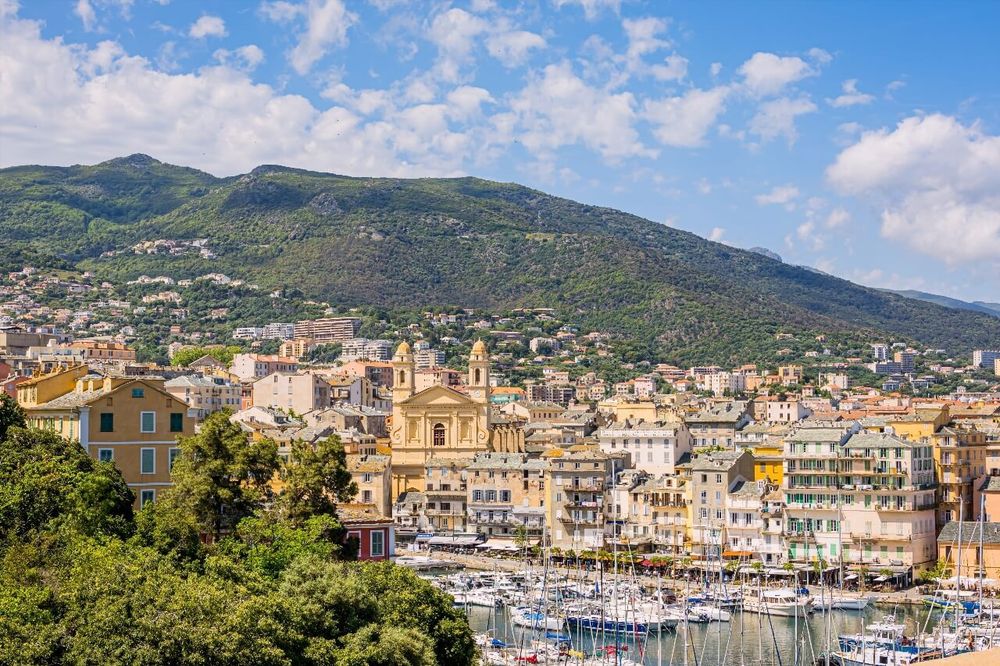
From there, head up into the lanes of Terra Vecchia to the église Saint-Jean-Baptiste, built between 1636 and 1666. Its twin bell towers dominate the Old Port and form the iconic silhouette of Bastia as seen from the sea. The interior conceals Neapolitan paintings and a baroque façade that contrasts sharply with the sobriety of the surrounding houses — a complete surprise for those not expecting it.
On the other side of the port, Terra Nova climbs toward the Genoese citadel. The cobbled lanes wind steeply upward, and the ochre and yellow façades reflect in the basins when the light is right. At the top, the Musée de Bastia (Place du Donjon, 20200 Bastia, rated 4.4/5 on Google based on 151 reviews) occupies the former palace of the Genoese governors: archaeological, ethnographic, and natural history collections spread across three floors, providing solid context before exploring the rest of Haute-Corse. Allow between 1.5 and 2 hours for the visit.
The Old Port: Bastia as the Locals Know It
The Old Port of Bastia is a welcome anomaly in the Corsican tourism landscape: restaurant terraces look directly onto fishing boats, and prices remain reasonable because the locals do their shopping here in the morning. Enclosed between two cliffs, the port owes its charm to this vertical architecture — four- and five-story buildings stacking up toward Terra Nova above.
Arrive early if you want to see the fish market: on some days, from 7:30 a.m., fishermen offer grouper, scorpionfish, and lobster straight off the boat. The rest of the morning is best spent on a terrace, with a view of the église Saint-Charles, whose yellow and pink baroque façade has faced the port since 1644. In the afternoon, boat trips offer excursions to the northern calanques or Cap Corse depending on the season — several local operators set up along the quayside between June and September.
Cap Corse: The Wild Peninsula 30 km from Bastia
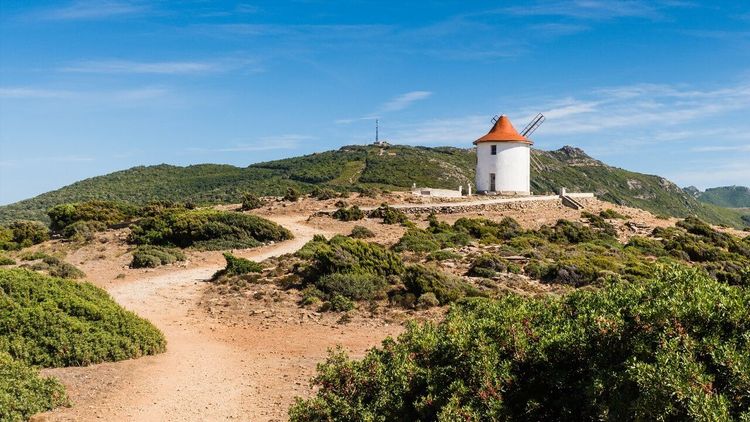
Thirty kilometers north of Bastia, Cap Corse (Route nationale 198, 20253 Cap Corse) juts 40 kilometers into the Tyrrhenian Sea like a mountain spine. Technically a peninsula, the locals treat it like an island within the island: narrow roads, suspended villages, no mass tourism, a world unto itself.
The road that loops around the peninsula (the D80) covers approximately 120 km and can be driven in a full day with stops. Going counterclockwise, with the west coast first, you immediately tackle the most spectacular stretches: the road hangs above the sea at 200 meters, hairpin bends follow one another without guardrails for several kilometers, and every turn reveals a village or a Genoese tower.
Nonza is the first unmissable stop. Perched on a black rocky spur above a beach of slate-grey pebbles, this village is one of the most photographed in Corsica. The tour de Nonza, also known as the Paoline tower, was built in 1760 on the orders of Pascal Paoli to watch over the gulf of San-Florent, on a promontory that already bore a medieval castle; from the top, the beach below looks like a graphite brushstroke drawn across the sea.
Further north, Centuri is a tiny fishing port specializing in lobster — the "Centuri lobster" is an appellation that appears on menus all over the island. The port can be explored on foot in ten minutes; the restaurants around the quayside are open in season and well worth a stop.
At the northern tip, Macinaggio has a marina and access to the coastal trails of the Capandula nature reserve, where Eleonora's falcons nest in summer. The coastal path between Macinaggio and Barcaggio (7 km one way) follows a succession of small coves with no road access, some reachable only on foot or from the sea.
For those who don't want to drive the D80, several boat excursions departing from Bastia allow you to cruise along the eastern coast of Cap Corse as far as Macinaggio. It's not the cheapest option, but it is often the most memorable for anyone who has never seen these cliffs from the sea.
Hilltop Villages and Balconies Over the Sea
The immediate hinterland of Bastia is shaped by a series of high-altitude villages that overlook the city at elevations of 300 to 600 meters. Most are accessible within 20 to 40 minutes from the center.
San-Martino-di-Lota (San-Martino-di-Lota, 20200 San-Martino-di-Lota, rated 4.3/5 on Google based on 420 reviews), 15 km to the north, offers a sweeping view over the gulf of Bastia and the island of Elba on a clear day. The village has a few hundred inhabitants; the local café serves Corsican coffee and maquis products for sale direct from the producer.
Inland, Murato is home to one of the most original architectural curiosities in Haute-Corse: the église San Michele (San Michele), a Pisan Romanesque church built in a checkerboard pattern alternating green serpentinite and white limestone, standing alone in the countryside. This church from the mid-12th century, which Prosper Mérimée considered "the most elegant and prettiest" in Corsica, holds its own against the Tuscan buildings across the sea.
Further on, Pietranera and the road toward San-Florent (23 km via the mountain) open access to the Agriates desert, a wild massif of 16,000 hectares with no roads or villages — only trails, maquis scrubland, and two beaches at the end of the paths: Loto and Saleccia, regularly cited among the finest in the Mediterranean.
For a complete overview of the stops not to be missed, the article the most beautiful villages in Corsica around Bastia lists the villages with practical access tips.
Beaches and Water Activities Around Bastia
The coast south of Bastia offers several kilometers of beaches easily accessible by car or bus. Arinella beach is the closest to the center (3 km): a beach of fine pebbles along the N193, convenient and unpretentious, with a direct view over the gulf.
Further south, Marana beach (Lieu-dit Marana, 20290 Borgo, rated 4.4/5 on Google based on 1,093 reviews) stretches for several kilometers between the Biguglia lagoon and the sea. The sand is finer there, the waters shallow — ideal for families with children. In season, several beach clubs offer paddleboarding, kayaking, and snorkeling trips in the posidonia seagrass beds.
For diving, the floor of the gulf of Bastia hides World War II wrecks, including the Beaufighter, a British fighter aircraft lying at 35 meters depth. Several dive centers based in Bastia offer supervised outings for divers from level 1 upward. Boat rentals without a license are available from the Old Port for independent trips to the northern calanques.
The Biguglia Lagoon: Nature and Birdwatching
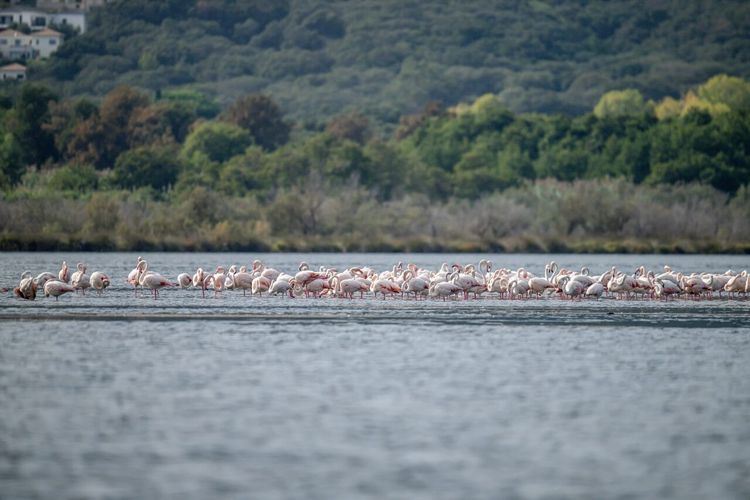
Located 8 km south of Bastia, the Biguglia lagoon (Étang de Biguglia, 20290 Borgo, rated 3.9/5 on Google based on 49 reviews) is the largest lagoon in Corsica: 1,450 hectares of fresh and brackish water classified as a nature reserve since 1994. The site sees few passing tourists, but naturalists and birdwatchers gather here from dawn.
Over 120 bird species can be recorded in a single spring day: flamingos passing through, egrets, grey herons, grebes, and diving ducks in winter. The sandbar between the lagoon and the sea can be walked for several kilometers, with interpretation panels on the local flora.
The nature reserve's visitor center is open to the public; guided outings and bird counts are organized from March to October. Entry to the trails is free; no cars beyond the main car park.
Hiking and Nature in Haute-Corse
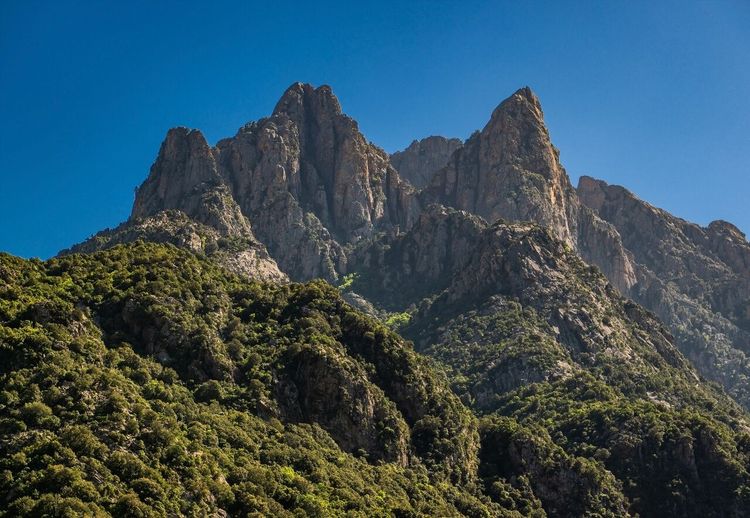
The hinterland around Bastia offers hiking trails for all levels, without any need to tackle the GR20.
The Lancone gorges begin 15 km from Bastia in the direction of Bigorno: a rocky defile carved by the Bevinco river, with narrow passages between 200-meter cliff faces. The round trip is approximately 6 km and takes 3.5 hours, accessible from mid-March, and not recommended in the height of summer due to the heat.
On the western slope, Monte San Angelo (1,218 m) dominates Cap Corse and is reached from Serra-di-Capicorsi: a 4-hour walk each way, rewarded with a panoramic view over both sides of the peninsula. Less frequented than the central summits of the island, yet far more accessible from Bastia.
For less experienced walkers, the Serra di Pigno ridge trail starts directly from the col de Teghime (D81, 20200 Poggio-d'Oletta, rated 4.7/5 on Google based on 1.3K reviews) (car access via the D81 from Bastia): 2 hours round trip, with a 360° panorama over the gulf of Bastia, Cap Corse, and the eastern plain. It is one of the finest viewpoints in all of Haute-Corse for minimal effort.
The Patrimonio Wine Route
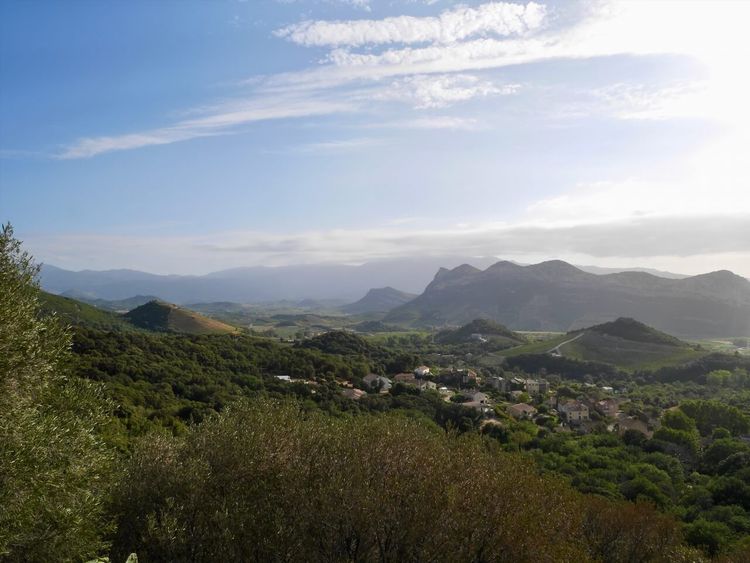
Patrimonio lies 18 km from Bastia, just beyond the col de San Stefano. It holds the distinction of being Corsica's first viticultural AOC, awarded in 1968, on a terroir of black schist and calcareous clay that produces nielluccio (a full-bodied red), vermentinu (a mineral white), and muscats of surprising roundness.
The village itself has a few hundred inhabitants gathered around a baroque church and a vine-covered hill. Most estates offer free or appointment-based tastings from May to September. Domaine Orenga de Gaffory (Lieu-dit Morta Maia, 20253 Patrimonio, rated 4.6/5 on Google based on 325 reviews) and Domaine Leccia are among the most visited cellars, with cuvées regularly recognized at the national level.
August brings the Nuits de la Guitare de Patrimonio: an international festival held outdoors under the stars in the vineyard since 1991. Over the years, names as varied as Paco de Lucía, Caetano Veloso, and Rodrigo y Gabriela have performed in this unlikely setting. It is one of the most distinctive music events in Corsica, open to all audiences. Bastia, a short drive south, makes the obvious base, and our audio walking tour covers its Genoese quarters.
Culture and Museums in Bastia
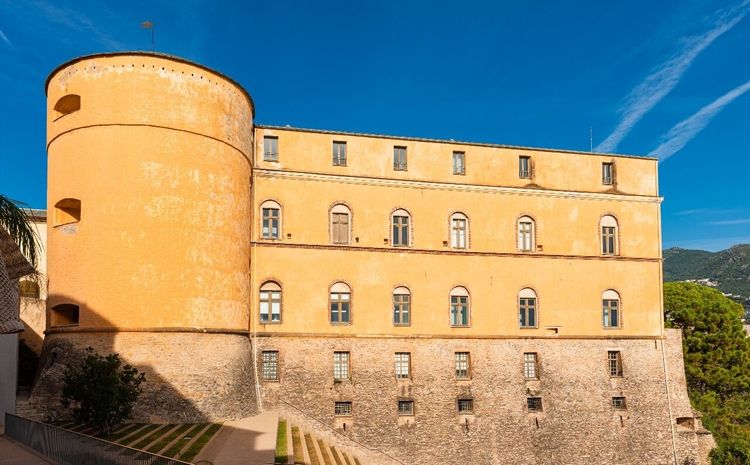
The city has a modest but coherent network of museums, centered on Genoese history and Corsican identity.
The Musée de Bastia (governors' palace, Terra Nova) brings together archaeological, ethnographic, and local history collections across three floors. A full visit takes between 1.5 and 2 hours.
The Oratoire de l'Immaculée Conception (Rue Napoléon, 20200 Bastia, rated 4.5/5 on Google based on 61 reviews) in Terra Vecchia is often overlooked in favor of the neighboring église Saint-Jean-Baptiste — wrongly so. Its trompe-l'œil façade conceals a lavish interior with gilded 18th-century woodwork and a painted ceiling that makes the craned neck entirely worthwhile.
The chapelle Sainte-Croix in Terra Nova houses the Christ des Miracles, a black driftwood statue that fishermen are said to have found at sea in 1428 — one of the most venerated relics in all of Corsica.
To explore these neighborhoods with the context that printed guides often lack, the audio-guided tour of Bastia available in the Ryo app covers 25 commented stops between Terra Vecchia, Terra Nova, and the quays of the Old Port — useful for understanding each building without hunting for the scattered information panels on the façades.
Bastia's Gastronomy: What You Should Try
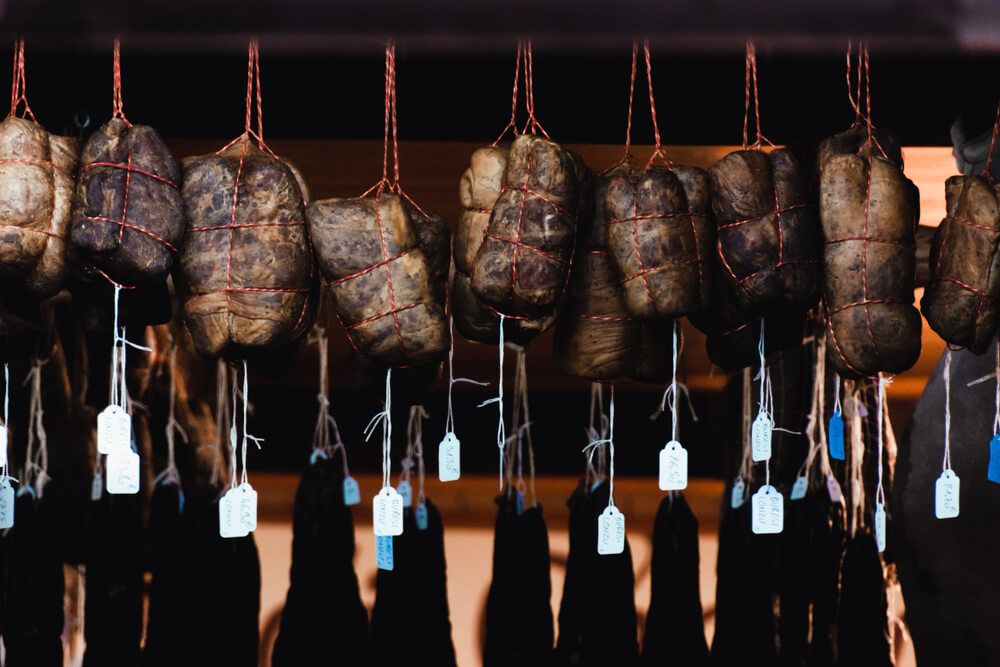
Bastia probably concentrates the best food scene in Haute-Corse, between the covered market at place de la République, the butcher-charcuterie shops specializing in Corsican products (figatelli, lonzu, coppa, prisuttu), and the Old Port restaurants that work directly with local fishermen.
The charcuteries of Terra Vecchia are the best place to find them.
On the seafood side, the Old Port restaurants serve aziminu (Bastia fish soup, the local take on bouillabaisse) and Corsican-style stuffed vegetables. Prices remain reasonable outside July and August.
For a complete overview of iconic dishes and recommended addresses, the article culinary specialties of Bastia covers everything you absolutely must try during your stay.
Bastia with Children
The city is well suited to families if you avoid the July–August heat. Outside peak season, temperatures remain mild and the beaches are accessible without the crowds.
The Marana beach is the most family-friendly seaside option: shallow waters, fine sand, gentle waves. Beach clubs set up inflatable structures during high season.
The Musée de Bastia offers educational workshops for children aged 6 to 12 on certain weekends — check the city's website for schedules before you go.
For older children, snorkeling trips in the posidonia seagrass beds south of Bastia require no special equipment: mask and snorkel are enough to spot cuttlefish, octopus, and rock fish in crystal-clear water. The octopuses under the rocks of the Old Port never fail to impress the younger ones.
Practical Information for Visiting Bastia
Getting there: Bastia-Poretta airport is located 24 km to the south of the center. By ferry, several companies connect Bastia to Marseille, Nice, Genoa, and Livorno year-round. The port is a five-minute walk from the historic center.
Car: essential for exploring the surrounding area (Cap Corse, Patrimonio, inland villages). Rentals are available at the airport and in town. Allow a full day for the complete loop of Cap Corse.
Public transport: regular buses serve Patrimonio, San-Florent, and nearby villages. For Cap Corse, there is no truly practical option without a car — a few seasonal shuttles exist but the schedules are restrictive.
Best time to visit: May–June and September–October for outdoor activities (bearable heat, sea already warm, limited crowds). July–August remains peak season with maximum prices and visitor numbers.
Budget: Bastia itself is more affordable than Ajaccio or Porto-Vecchio. Allow €5–7 for the Musée de Bastia; beaches are free and hiking trails have no entry fee. The Cap Corse loop by car comes to €30–40 in fuel depending on your starting point.



FAQ
How many days do you need to visit Bastia and its surroundings?
A minimum of two days allows you to cover the old town and one nearby excursion (Cap Corse or Patrimonio). Three days leave time to add a hike, a boat trip, and the Biguglia lagoon. To complete the full loop of Cap Corse and the inland villages, plan on four to five days on the ground.
Are there beaches near Bastia?
Yes, several beaches are easily accessible from Bastia. Arinella beach (3 km to the south) is the closest to the center. Marana beach (8–10 km), longer and more family-friendly, stretches its fine sand between the Biguglia lagoon and the sea. Less accessible coves exist along Cap Corse, but they require a boat or long hikes.
Can you visit Cap Corse without a car?
Technically yes, but it's restrictive. Seasonal shuttles (June–September) serve a few villages, but schedules limit your options. The most practical solution remains a car or scooter. Boat excursions departing from Bastia allow you to see the coastline without driving, with the added benefit of viewpoints inaccessible from the road.
What are the must-see events in Bastia and the surrounding area?
The Nuits de la Guitare de Patrimonio in August (an international open-air festival in the vineyards) are among the most anticipated. In June, the Midsummer festival brings the Old Port to life. Summer night markets are held on place Saint-Nicolas in July and August. In October, the Settimana di a Lingua Corsa celebrates Corsican culture and language.
Is Bastia suitable for families with children?
Yes, especially outside July and August. Marana beach is well suited to young children (calm, shallow waters). The Musée de Bastia offers educational workshops on certain weekends. The Biguglia lagoon is perfect for birdwatching at any age. The old town is easily walkable without a pushchair, though watch out for the cobblestones in Terra Nova.
Are guided tours of Bastia available?
Several options exist: guided walking tours organized by the tourist office, boat trips from the Old Port, excursions to Cap Corse or Patrimonio through local agencies. For a self-guided approach, the Ryo audio guide of Bastia lets you discover the city at your own pace with 21 commented stops over 3.5 km, with no schedule or group constraints.
Bastia: Setting Course for Haute-Corse
Bastia takes a little effort to appreciate. It doesn't reveal itself at first glance, and it favors travelers who take the time to miss their ferry over those who pass through at a sprint. But those who stop discover a city of character, a Cap Corse that ranks among the wildest landscapes in the Mediterranean, vineyards that guidebooks often overlook, and villages that still live at their own pace.
To start with the city before venturing into its surroundings, the Ryo audio guide of Bastia unlocks the old town in 1.5 hours of walking — the ideal warm-up before tackling Cap Corse.
À lire également