© Shutterstock
 Votre guide Ryo
What to Visit in Haute-Corse: the Must-Sees of the Northern Half of the Island (2026)
Haute-Corse begins where the island turns vertical. North of Corte, the massifs exceed 2,700 meters, the maquis scents the air all the way to the sea, and the villages clinging to the hillsides seem to ignore the 21st century. If you're wondering what to visit in Haute-Corse, the answer goes far beyond postcards: a baroque port city, a wild, wind-battered cape, laricio pine forests centuries old, and beaches of turquoise water said to be among the purest in Europe all coexist here. The Ryo audio-guided tour of Bastia is the ideal gateway for beginning to decode this dense and little-known city.
This guide covers the essentials of department 2B: Bastia and its Genoese alleyways, Cap Corse with its Saracen towers, Corte at the heart of the Tavignano gorges, Calvi and its sun-drenched Balagne, the Agriates Desert, 160 square kilometers with not a single paved road, and summits snow-capped until June. You'll also find a ready-made one-week itinerary, the best beaches ranked by accessibility, the Patrimonio wine route, and practical tips for planning your stay.
Bastia, Capital of the North
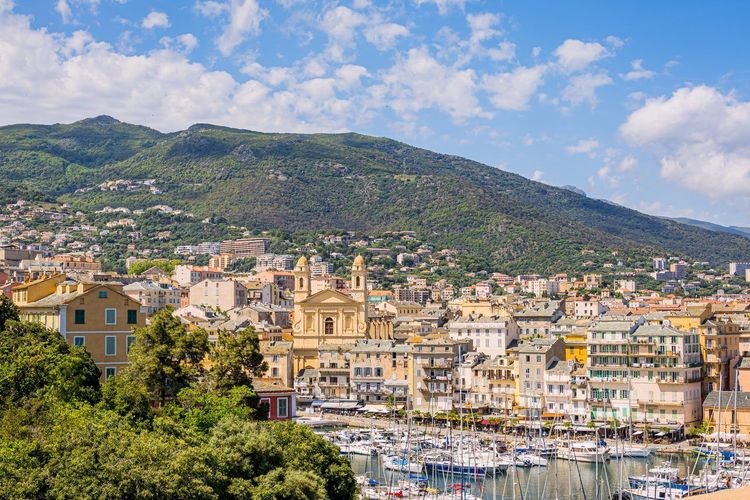
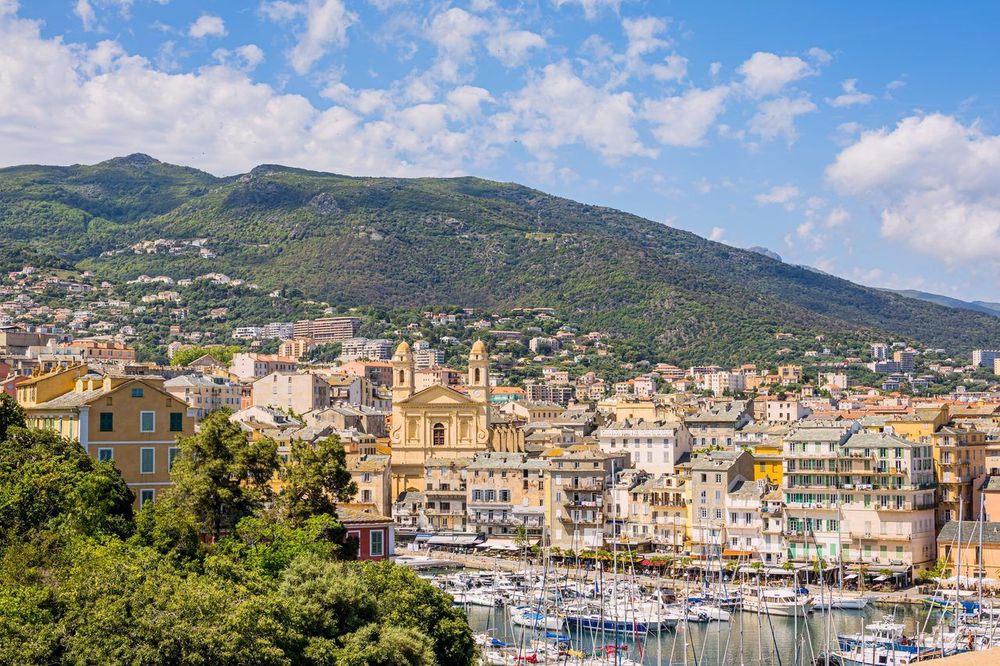
Bastia is the first shock. Not a gradual discovery: the city reveals itself all at once, from the ferry maneuvering into the old port. The ochre and gray façades stack up several stories to the citadel, the bells of the Saint-Jean-Baptiste church ring from across the Terra Vecchia, and the smell of coffee and brocciu drifts from the bars on the place du Marché. It's a city of 45,000 inhabitants that lives for itself, not for tourists — which makes it one of the most authentic in the entire Mediterranean.
The Old Port (Terra Vecchia) is the centerpiece. Its baroque chapels are among the richest in Corsica: the Oratory of Saint-Roch houses 18th-century woodwork and an organ still played during religious festivals. The church of Saint-Jean-Baptiste, with its double campanile visible far out to sea, was built between 1636 and 1666 and contains an Assumption of the Virgin attributed to a pupil of Rubens. The visit takes a good hour for the Terra Vecchia alone.
The Citadel (Terra Nova) occupies the promontory overlooking the city. Built by the Genoese from the 15th century onward, it enclosed the governors within a protected enclosure while Bastia traded below. Today, the Bastia Museum traces the history of Corsica from Antiquity to the modern era, with a remarkable collection of sacred art. The belvedere terrace offers the most complete panorama over the gulf. Admission is 5 euros for adults.
For food lovers, the covered market at the place de l'Hôtel de Ville, every morning except Monday, is unmissable: Corsican charcuterie (coppa, lonzu, figatellu), cave-aged cheeses, citron jam, maquis honey. The producers often come from fewer than 40 kilometers away. Breakfast at the market beats any hotel buffet.
The Toga district and the new marina offer a more contemporary stroll, with fish restaurants open well into the week. To explore the city without losing time getting your bearings, the Ryo audio guide covers 21 essential points of Bastia over 3.5 kilometers, including Genoese architecture, Genoese history, and anecdotes from the Corsican resistance. Our activities in Bastia and surroundings extend the visit with possible excursions from the city.
Cap Corse, a Finger Pointing toward the Mediterranean
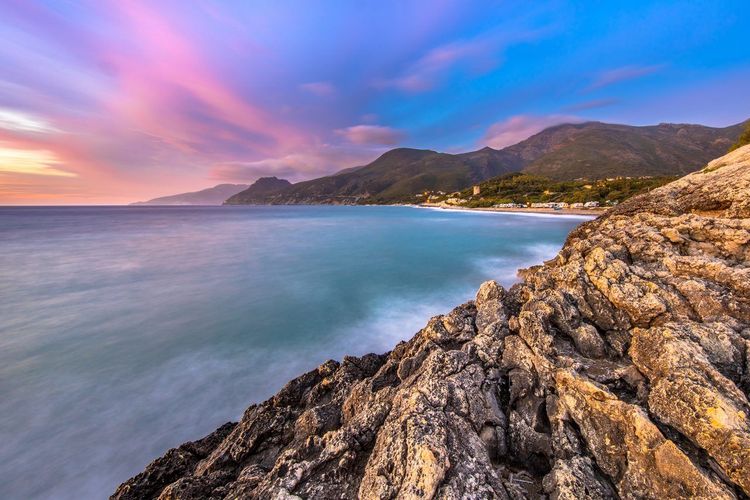
Cap Corse is a peninsula 40 kilometers long and 15 wide, wedged between the Tyrrhenian Sea to the east and the Ligurian Sea to the west. You can drive around it in a packed day, but it would be a shame. The D80, the single road circling the cape, winds through fishing villages, some thirty Genoese towers still standing, south-facing vineyards, and tiny marinas where colorful boats dry in the sun.
Nonza (Village de Nonza, 20217 Nonza, rated 4.7/5 on Google with 830 reviews) is the most spectacular village on the western slope. Perched atop a black cliff dropping straight into the sea, it is guarded by a 16th-century Genoese tower and the church of Sainte-Julie. The beach below is covered in black pebbles, a phenomenon caused by past asbestos mining in the nearby mountain. Strange and beautiful at once — hard to find in a standard guidebook.
Ersa and its surroundings offer panoramic views of both seas simultaneously, a rarity on the island. Centuri is the most active fishing port on the cape: its crayfish are served in the three port restaurants, caught the previous night. Don't pass through without stopping. Genoese towers dot the entire route; the Tower of Seneca, in Luri, is said to have sheltered the Roman historian during his exile in Corsica, though contemporary historians are skeptical.
For swimming, Marine de Giottani on the eastern side and Marine d'Albo on the western side offer very uncrowded waters until July. The water reaches 28°C in August. The full circuit of the cape from Bastia takes one day with stops, or two if you really want to linger in the marinas.
Corte and the High Interior Valley
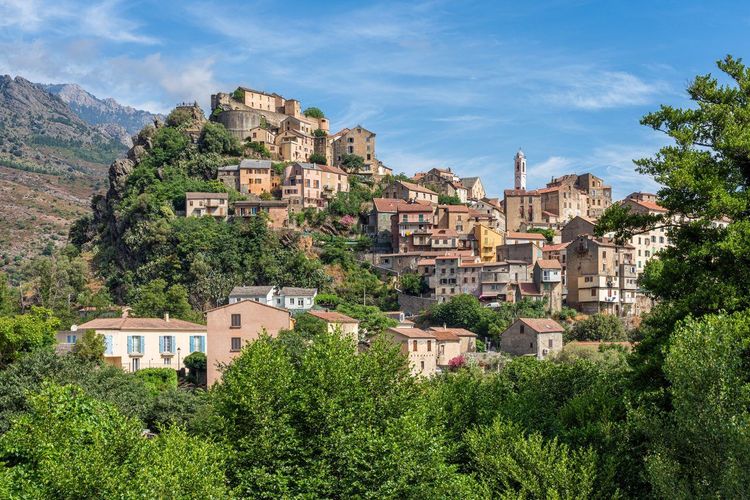
Corte is the soul of the island. Perched at 396 meters altitude at the confluence of the Tavignano and the Restonica, it is the only truly inland city in Corsica, 45 kilometers from the coast on either side. Pascal Paoli established his capital here during the Corsican Republic (1755–1769), and the university bearing his name still fills the terraces of the place Gaffori in the evenings.
The Citadel of Corte rises 100 meters above the city. The Museum of Corsica it houses is the only regional museum on the island: its ethnographic collections cover traditional Corsican life from the 18th to the 20th century with a scholarly rigor you wouldn't expect in such a small space. The belvedere terrace, 15 minutes on foot from the entrance, looks out over the gorges below.
The Restonica Gorges (Route des Gorges de la Restonica, 20250 Corte, rated 4.7/5 on Google with 224 reviews) begin 2 kilometers from the town center. The road climbs 15 kilometers to the Bergeries de Grotelle (1,375 m), the starting point for hikers heading to the lakes of Melo and Capitello. Car access is regulated in July–August: shuttles from Corte avoid the unpleasant traffic jams of previous years. Allow 2h30 round-trip from the shepherds' huts to Lac de Capitello.
The Tavignano offers a lesser-known alternative: the trail climbing the right bank from Corte is longer — 6 hours round-trip to reach Lac de Nino — but far less crowded. You'll encounter mouflons, griffon vultures reintroduced in the 1980s, and shepherds' huts still active in summer. This is the Haute-Corse interior at its most raw.
Calvi and the Balagne, between Citadel and Olive Trees
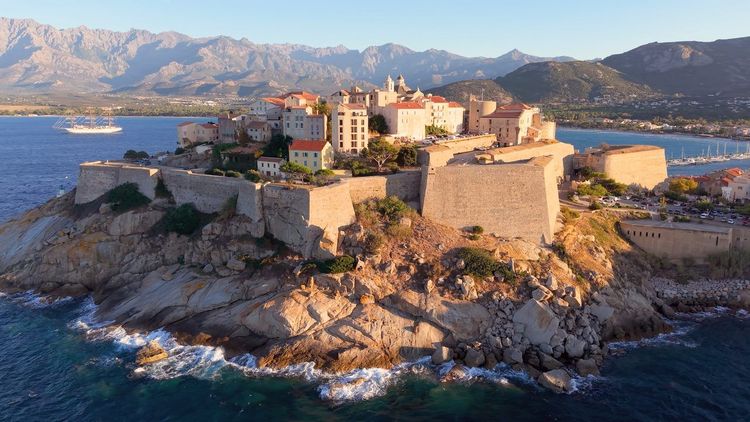
The Balagne occupies the northwestern corner of Haute-Corse. It is a gentler region than the rest of the island — the slopes are covered with olive trees, almond trees, and vines, the villages are accessible, and the light is particularly warm in the afternoons. Calvi, its main town, is also the most touristic in Haute-Corse, but it deserves it fully.
The Citadel of Calvi stands on a rocky promontory between the sea and the mountains. Built by the Genoese in the 15th century, it was defended against the Turks, the French, and the British — Nelson lost the use of his right eye here during the siege of 1794. The cathedral of Saint-Jean-Baptiste inside the walls preserves a Christ of Miracles venerated since the 15th century.
The beach of Calvi (Plage de Calvi, 20260 Calvi, rated 5/5 on Google with 2 reviews) stretches in an arc over 6 kilometers facing the city. The water is clean, the sand white, and the pine-grove campsite allows you to stay there for less than the price of a hotel. Inland, the village of Pigna is home to an incredible concentration of artisans: lute makers, weavers, potters, makers of Corsican musical instruments. The Strada di l'Artighiani (Artisans' Route) connects about fifteen villages in the Balagne and can be explored by bike or on foot over several days.
The Petit Train de Balagne ("U Trinighellu"), linking Calvi to L'Île-Rousse, runs along the sea for 23 kilometers with on-demand stops at beaches — a ride worth taking even without a specific destination, especially late in the day when the raking light illuminates the vines.
Saint-Florent and the Agriates Desert
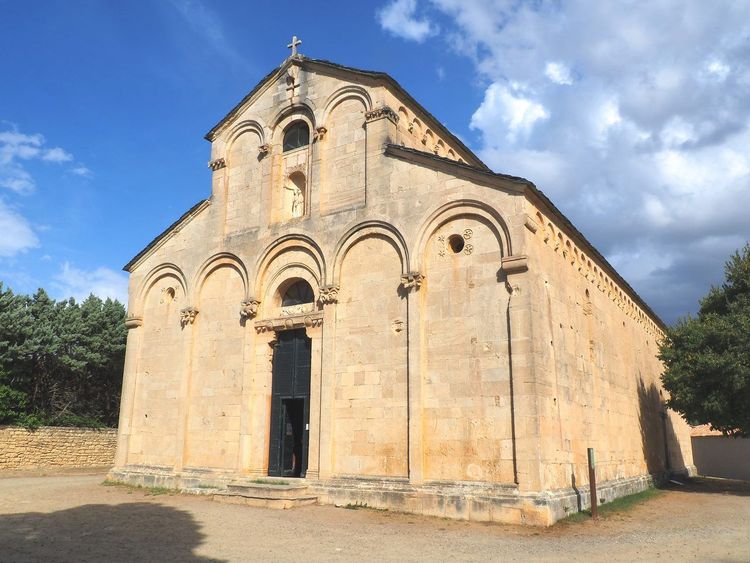
Saint-Florent is another kind of success: a fishing village turned seaside resort without losing its character. The marina welcomes sailboats from across the Mediterranean in summer, but the lanes behind remain animated by locals until November. The Nebbiu Cathedral, 200 meters from the last houses, dates from the 12th century — one of the rare examples of Pisan Romanesque architecture still standing in Corsica.
The Agriates Desert stretches west of Saint-Florent: 160 square kilometers of maquis, schist, and sand, with no road or permanent dwelling. The northern coast holds some of the most beautiful beaches in the Mediterranean — Saleccia and Loto — accessible only by boat (shuttles from Saint-Florent, 20 minutes) or on foot via the Agriates trail (3h30 from Saint-Florent). Both beaches are supervised in season, but attendance remains reasonable thanks to the absence of roads.
In winter and spring, the Agriates Desert is a playground for hikers: the coastal trail can be done in 2 days with authorized bivouacking. Wild almond trees bloom in February, orchids in April — an unexpected palette of colors in a landscape that its name unjustly calls barren.
The Most Beautiful Villages of Haute-Corse
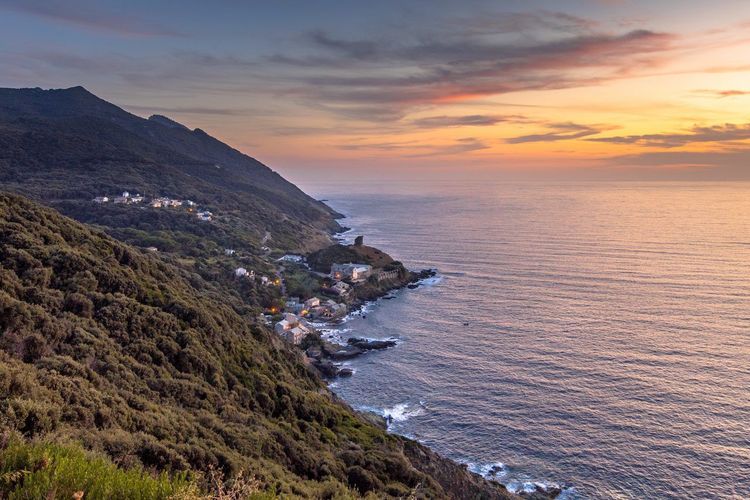
Haute-Corse has around a hundred villages, many of which have lost half their population since the 1950s. This depopulation has a paradoxical effect: it has preserved an intact architectural heritage that no one has had the means to destroy or over-renovate.
In the Balagne, Sant'Antonino (Village de Sant'Antonino, 20220 Sant'Antonino, rated 4.7/5 on Google with 490 reviews) perches at 485 meters with a 360-degree view of the sea and mountains. Speloncato has a pharmacy, a café, a church, and a sunset light well known to photographers. Belgodère, Pigna, and Corbara complete this triangle of villages accessible in a single day from Calvi.
In the Castagniccia, the chestnut region between Corte and Bastia, the villages of Piedicroce, La Porta, and Morosaglia (Pascal Paoli's birthplace) are less visited but offer a deeper immersion into rural Haute-Corse. The chestnut forest covering the hillsides fed the population for centuries: chestnut flour is still used for canistrelli (dry almond biscuits) and local polenta.
Our most beautiful villages in Corsica near Bastia details the best addresses village by village, with driving times from the northern capital.
Monte Cinto and High-Altitude Hikes
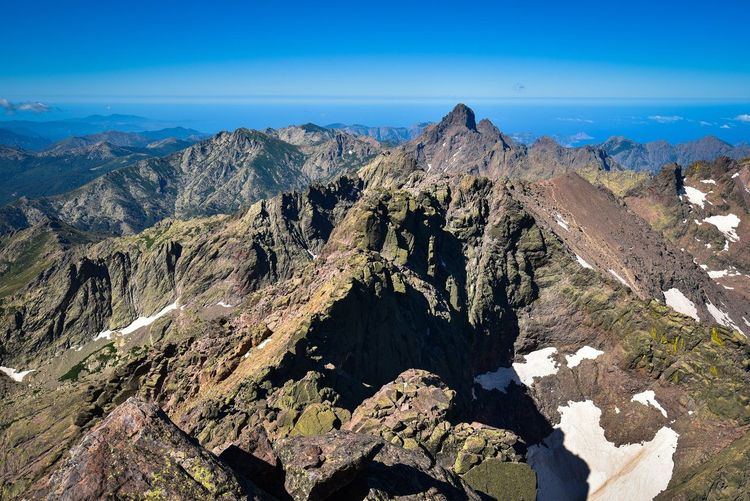
Monte Cinto peaks at 2,706 meters — the highest summit in Corsica. The ascent from the Erco refuge (1,670 m) takes 5 to 6 hours round-trip and requires no technical equipment outside the winter months. The trail runs alongside scree fields, crosses a zone of granite blocks, and opens onto a panorama encompassing the entire island on a clear day — on the clearest days, Sardinia can be seen to the south and the Alps to the northeast.
The GR20 crosses Haute-Corse from north to south. The northern section (Calenzana to Vizzavona) is the most demanding: significant elevation changes, several passages requiring fixed handrails, and weather that can turn quickly even in midsummer. Allow 9 days for this section with nights in FFCAM refuges. If you only have a few days, the stages around Haut-Asco and the Pointe des Éboulis are among the most spectacular on the trail.
For more accessible hikes, the trails around the Vizzavona Forest (Forêt de Vizzavona, 20219 Vivario, rated 4.9/5 on Google with 15 reviews) are suitable for children aged 7 and up: laricio pines 40 meters tall, the Cascades des Anglais 30 minutes on foot from the station, and a welcome coolness in the height of August. Vizzavona station is served by the Bastia–Ajaccio train. Back in town, Ryo's Pearl of the Island of Beauty audio walk covers 25 stops over 3.5 km along the old harbour and citadel.
Our article on hiking the GR20 in Corsica details the most accessible stages of the trail as well as alternatives for less experienced hikers.
The Mountain Lakes
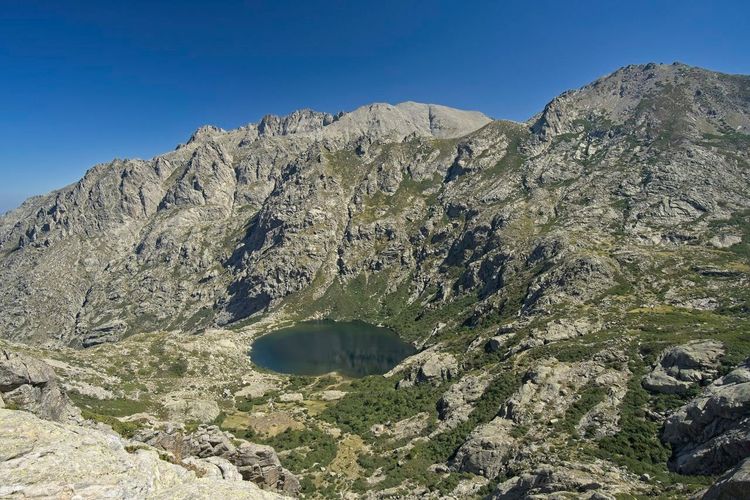
Haute-Corse has around twenty high-altitude lakes, all formed by the action of Quaternary glaciers. The most famous are accessible from Corte.
Lac de Melo (Gorges de la Restonica, 20250 Corte, rated 4.7/5 on Google with 224 reviews) (1,711 m) is reached in 1h30 from the Bergeries de Grotelle — a short, popular hike that can be done with physically fit children. The lake is fed by snowmelt until June, giving it an intense emerald color in spring. Some years, 30 to 40 centimeters of snow remain around the lake until May.
Lac de Capitello (1,930 m), 45 minutes higher, is wilder: its near-black waters contrast with the grey walls of the cirque. In July–August, expect to encounter 200 to 300 people per day on this trail. For solitude, Lac de Nino (1,743 m), in the Tavignano valley, is the answer: surrounded by pozzines — spongy meadows dotted with small pools — and frequented by free-roaming horses and mouflons, it is reached in 3h30 from the Pont de Sidossi. An extra effort, a very different reward.
The Beaches of Haute-Corse
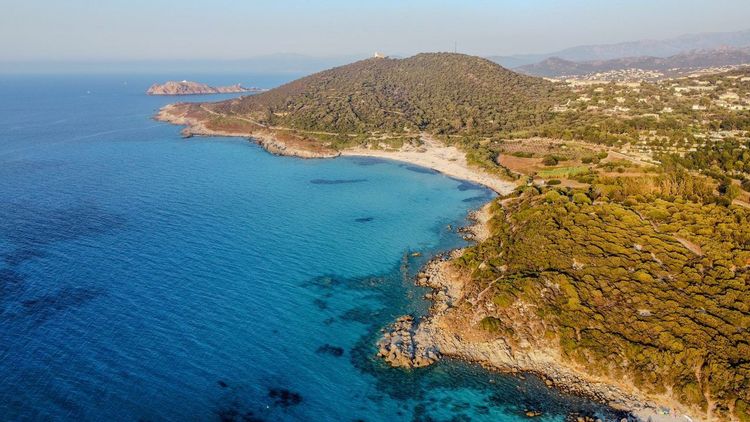
It's impossible to answer the question "what to visit in Haute-Corse" without mentioning its beaches: the department concentrates some of the island's finest, but their accessibility varies considerably.
Plage de Saleccia (Désert des Agriates, 20217 Casta, rated 4.6/5 on Google with 177 reviews) is regularly cited among the ten most beautiful beaches in France: 1.5 kilometers of immaculate white sand in the Agriates Desert, turquoise water 0 to 3 meters deep, and no construction visible from the beach. It has served as a backdrop for landing scenes in several film productions — its resemblance to the Norman beaches owes more to the purity of its sand than to geography.
On the eastern side of the island, the coast between Moriani-Plage and Ghisonaccia is less visually dramatic but easier to reach by car. The Plage de Prunete, near Cervione, is popular with families for its shallow waters stretching 100 meters out.
North of Bastia, the beaches of Pietranera and l'Arinella are the capital's urban beaches: reachable on foot in 10 minutes from the city center, ideal for a swim after a morning of sightseeing.
On Cap Corse, the beaches are smaller and wilder. Marine de Giottani on the eastern side and Marine d'Albo on the western side remain uncrowded even in the height of summer. For river swimming — a Corsican specialty — our guide to waterfalls in Corsica lists the most accessible from the north of the island.
The Patrimonio Wine Route
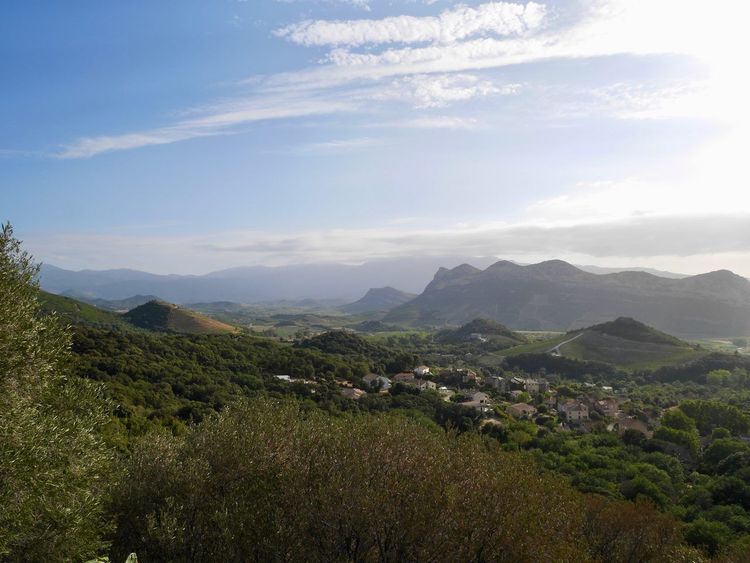
Patrimonio is one of Corsica's oldest vineyards and the first to receive an AOC designation in 1968. The village itself, 12 kilometers northwest of Saint-Florent, has only 800 inhabitants, but the 400 hectares of vines planted on the blue schist of the Nebbiu valley produce wines unlike any other.
The main grape varieties are nielluccio (red), related to Tuscan sangiovese, and vermentino (white), a spicy variety producing dry wines with aromas of exotic fruit and white flowers. About ten estates are open for visits: Domaine Orenga de Gaffory, Domaine Leccia, and Domaine Antoine Arena are the most renowned outside Corsica. Expect to pay 15 to 25 euros per bottle directly at the estate.
Every summer the village hosts the Estivales de Patrimonio, a music festival blending jazz and Corsican polyphony in the last days of July. The pairing of local wine and the human voice in this setting is an experience hard to match anywhere on the island.
One-Week Itinerary in Haute-Corse
Wondering what to visit in Haute-Corse in one week? Here is a 7-day circuit from Bastia-Poretta airport, organized to minimize unnecessary driving.
Days 1–2: Bastia. Arrive the first evening, dinner in the Old Port. Second day: Terra Vecchia in the morning, Citadel in the afternoon, market if you arrive on a weekday. The Ryo guide to Bastia structures these two days efficiently: 21 audio tracks, 3.5 kilometers, a city revealed layer by layer from the quaysides to the Genoese ramparts.
Day 3: Cap Corse. Rent a car first thing in the morning, full circuit on the D80. Lunch in Centuri (seafood is mandatory), stop at Nonza, return via the eastern slope at sunset.
Day 4: Corte. Early departure from Bastia (1h15 by road), morning at the citadel and Museum of Corsica, afternoon in the Restonica Gorges up to the Bergeries de Grotelle. Overnight in Corte.
Day 5: Calvi and the Balagne. East-to-west crossing via Ponte-Leccia (1h45 from Corte to Calvi). Free afternoon between the citadel and the beach. Overnight in Calvi.
Day 6: Balagne and Saint-Florent. Morning on the Artisans' Route (Sant'Antonino, Pigna), lunch, then head to Saint-Florent (1h). Evening at the port. Book the boat to Saleccia in the morning if weather conditions are favorable.
Day 7: Agriates Desert and Return to Bastia. Early boat to Saleccia or Loto, swimming, return by shuttle in the afternoon, drive to Bastia (1h15). Evening flight.
Outside of July–August, add Patrimonio between Saint-Florent and Bastia on the last day without rushing. For those wishing to stay longer, the Castagniccia and the mountain lakes are worth two extra days.
Planning Your Trip to Haute-Corse
How to Get There
Bastia-Poretta airport (BIA) receives direct flights from Paris (1h45), Lyon (1h15), Marseille (55 minutes), and about ten other French cities. Air Corsica operates the majority of domestic routes with regulated fares (public service routes). Ferries from Nice (5h), Marseille (12h), and Toulon (7h) are an attractive alternative for those traveling with their own vehicle, which is strongly recommended for exploring Cap Corse and the interior.
Car Rental
A car is essential as soon as you leave Bastia. Corsican roads are narrow, winding, often without a center line, and frequented by delivery trucks. Always allow 20 to 25% more time than GPS app estimates. Book ahead if arriving in July–August: airport agencies sell out as early as mid-June in some years.
When to Visit
May–June is the best period: green vegetation, rushing waterfalls, accessible beaches, and reasonable prices. September–October offers ideal hiking temperatures (15–25°C at altitude) and a sea still warm (24–26°C). July–August is busy and expensive, but the weather is at its best. Winter makes the island deserted and intoxicating, but many accommodations and restaurants close between November and March.
Where to Stay
Bastia has a full range of hotel options, including 3- and 4-star properties in the center. For Cap Corse, opt for bed-and-breakfasts in marinas or mountain villages. Calvi has many pine-grove campsites. Corte is well suited to hikers with its gîtes d'étape. Check our selection of the best campsites in Corsica for outdoor options.
Indicative Budget
Allow 80 to 120 euros per person per day (transport, mid-range accommodation, local restaurants). Corsica is more expensive than the mainland in tourist areas, but local markets, roadside pizzerias, and campsites can significantly reduce the bill. Patrimonio wine bought directly at the estate, sheep's cheese from the shepherd, charcuterie at the Bastia market — these direct purchases offer the island's best value for money.
FAQ
What distinguishes Haute-Corse from Corse-du-Sud?
Haute-Corse (department 2B) occupies the northern half of the island, with Bastia as its prefecture. Corse-du-Sud (2A), to the south, has Ajaccio as its capital. Haute-Corse is generally wilder and less touristy, with a flatter eastern coastline but a higher mountainous interior (Monte Cinto, 2,706 m). Both departments share the same Corsican culture but with distinct regional accents and slightly different culinary specialties.
How much time do you need to visit Haute-Corse?
One week is the minimum to see the essentials: Bastia, Cap Corse, Corte, Calvi, and the Agriates Desert. Two weeks allow you to add the mountain lakes, the Castagniccia, the villages of the Balagne, and high-altitude hikes. If you only have a long weekend (4–5 days), focus on Bastia, Cap Corse, and Saint-Florent — it's a compact and very cohesive triangle.
Is a car essential in Haute-Corse?
Bastia can be visited without a car. But for Cap Corse, Corte, Calvi, and the beaches of the Agriates Desert, a car is practically indispensable. The Bastia–Ajaccio train via Corte and the Petit Train de Balagne (Calvi–L'Île-Rousse) offer partial alternatives, but schedules are limited and stations are rarely located close to the sites worth visiting.
What are the specialties to taste in Haute-Corse?
Corsican charcuterie (coppa, lonzu, prisuttu, figatellu) is produced locally using pigs raised free-range in the maquis. Cheeses — fresh brocciu AOP, sheep's milk tomme, niolo — vary by season. Patrimonio wines (nielluccio red and vermentino white AOC) ideally accompany a charcuterie board. Bastia cuisine also incorporates Genoese influences: brocciu fritters, suppa corsa (winter vegetable soup), and almond canistrelli.
Is it possible to combine Haute-Corse and Corse-du-Sud in a single trip?
Yes, and it is even recommended for stays longer than a week. The Bastia–Ajaccio road via Corte takes 2h15 on the T20. Ajaccio, Napoleon's birthplace with its national museum and lively old town, perfectly complements Haute-Corse for a full island tour. To discover the Corsican capital at your own pace, the Ajaccio audio-guided tour offers 18 audio tracks over 6 kilometers — ideal for the two days the city deserves.
Knowing what to visit in Haute-Corse means first accepting that the island does not give itself up easily. You have to accept the winding roads, the villages closed out of season, the distances that look short on the map and take twice as long as expected. In return, you gain access to an inner island that few visitors take the trouble to truly explore: gorges where the water stays at 12°C in midsummer, snow-capped peaks in June, villages scented with maquis and woodsmoke.
To begin this exploration with the best possible grounding, the Ryo audio-guided tour of Bastia remains the most effective gateway: 21 stops, 1h30 of walking, a city revealed layer by layer from the Old Port quaysides to the Genoese ramparts of the Citadel.
À lire également