Créé par Emilie, le 17 nov. 2026
Votre guide Ryo
Ajaccio, France
Imperial City
Parcours audioguidé pour visiter Ajaccio en 1 jour
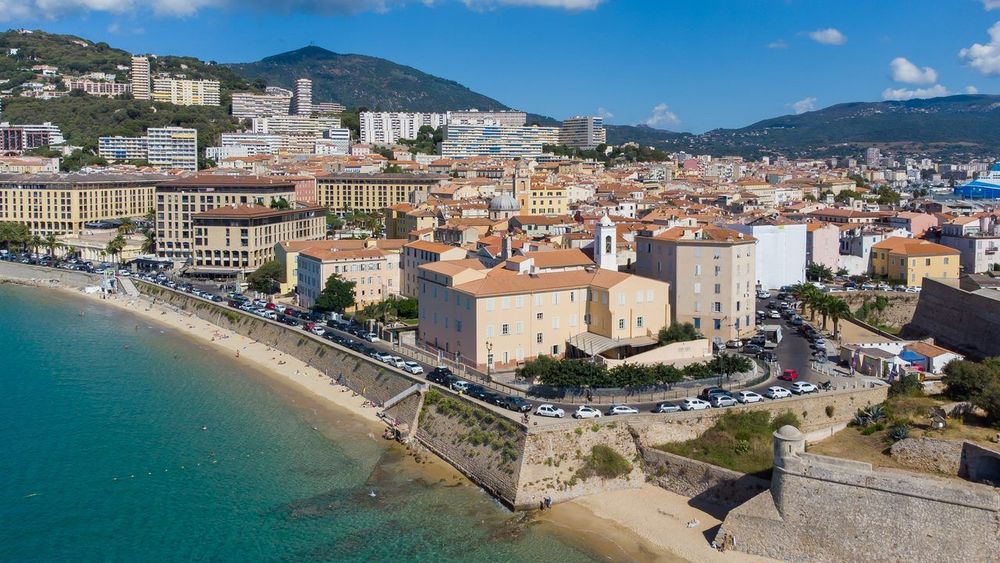
This tour of Ajaccio invites you into a sun-soaked immersion at the heart of this Genoese city, where the story of Napoleon Bonaparte lingers in every ochre-toned street. Let yourself be drawn in by the gentle charm of its seafront and the lively atmosphere of its market, rich with Corsican flavors, before pausing in shaded squares lined with palm trees. Between the strength of its ramparts and the radiant light of its gulf, the city reveals a proud, distinctly Mediterranean character. It’s a walk that weaves together imperial heritage and the scent of citrus, offering a vivid way to experience the beauty of the capital of the Isle of Beauty.
Quand partir à Ajaccio ?
Jan.
9°
9
Feb.
9°
7
March
11°
7
April
13°
8
May
17°
6
June
21°
3
July
23°
1
Aug.
24°
2
Sept.
21°
5
Oct.
18°
9
Nov.
13°
10
Dec.
10°
9
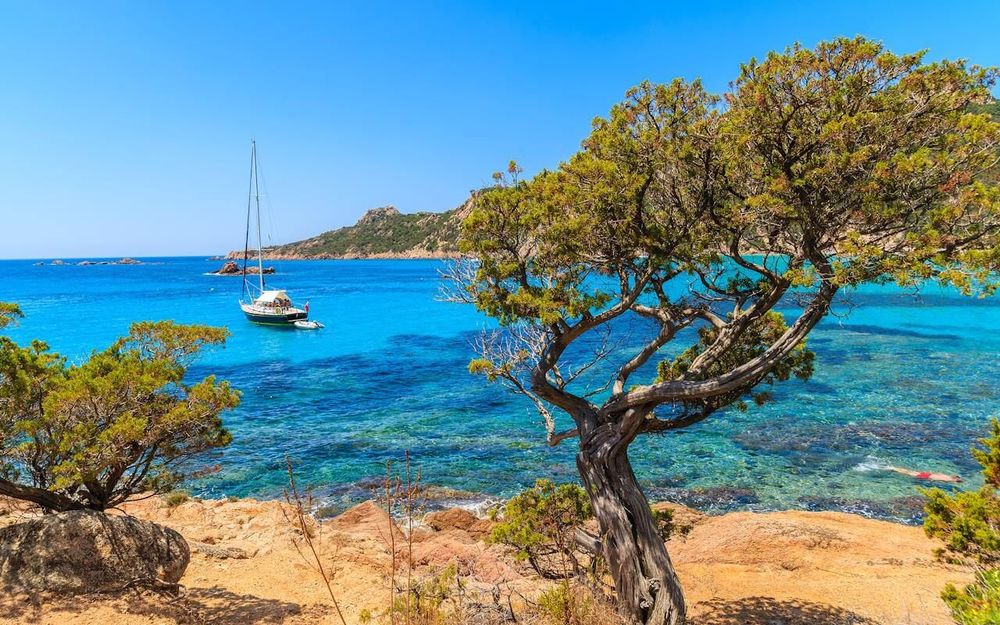
Ajaccio enjoys a privileged Mediterranean climate, offering hot, dry summers with average highs around 28°C and exceptionally mild winters where the mercury rarely drops below 4°C. The ideal periods to discover the "Imperial City" are spring (May and June) and early autumn (September and October), allowing you to enjoy the turquoise waters and the trails of the Sanguinaires Islands without the crowds or the scorching heat of the peak season. September is particularly recommended for swimming in a sea that is still warm, while August remains a must for those wishing to celebrate the Napoleonic festivities under a radiant sun.
Départ conseillé
No need to worry about where to begin! Our tours are designed as a loop, so you can jump in wherever you are. The navigation system and audioguide will automatically adjust to your location. However, if you happen to be nearby, we do have a preferred starting point : Général de Gaulle Square.
Parking à proximité
Parking Q-Park Diamant : 2 Av. Eugène Macchini Parking CCI Jetée de la citadelle : Port Tino Rossi
Découvrez 19 lieux d'intérêt pour visiter Ajaccio







What to see in Ajaccio on your 2h30 tour?
This 6 km loop, done in about 2 hours 30 minutes, links 18 sights across Ajaccio. From General De Gaulle Square, it follows Napoléon Avenue toward the Imperial Chapel, crosses the old town near the house where the emperor was born, skirts the harbour and the citadel to Saint-François beach, then climbs to Austerlitz Square before returning through the foreigners' district to the start. With the Ryo app in your ears, every façade tells the city's imperial and Corsican story.
Information checked in November 2026 and subject to change.
1 - General De Gaulle Square
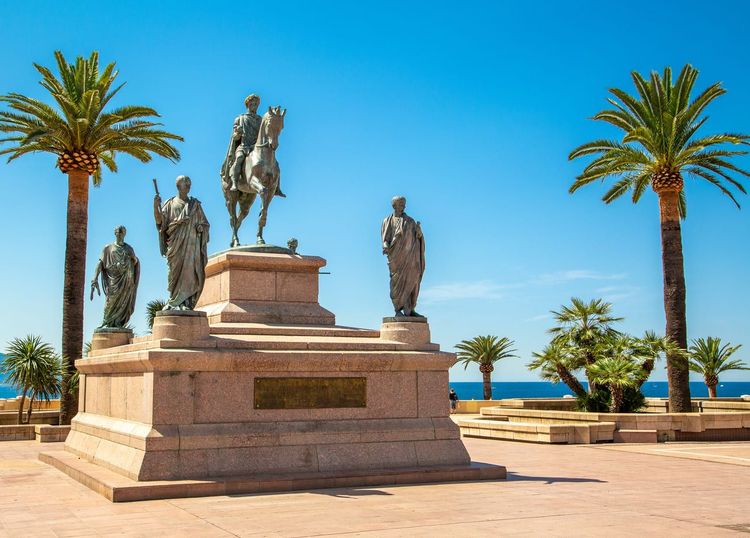
This vast esplanade between the old town and newer districts once hosted military drills, which gave it its original name. Legend has it that the young Napoleon, captivated by the maneuvers, staged his own mock battles with local children. Renamed in 1943 to honour the general who came to mark Ajaccio's liberation, the first French town freed in the war, it is dominated by a monument nicknamed the inkwell: the emperor enthroned among his four brothers, all dressed as Roman nobles.
Free entry
2 - Lantivy Palace
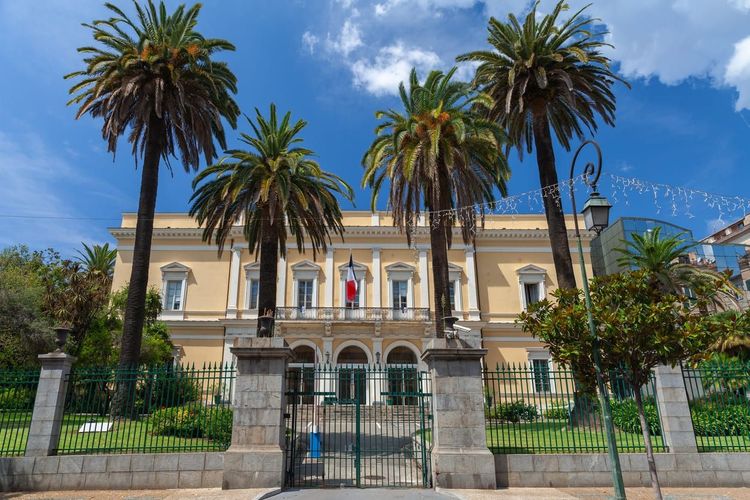
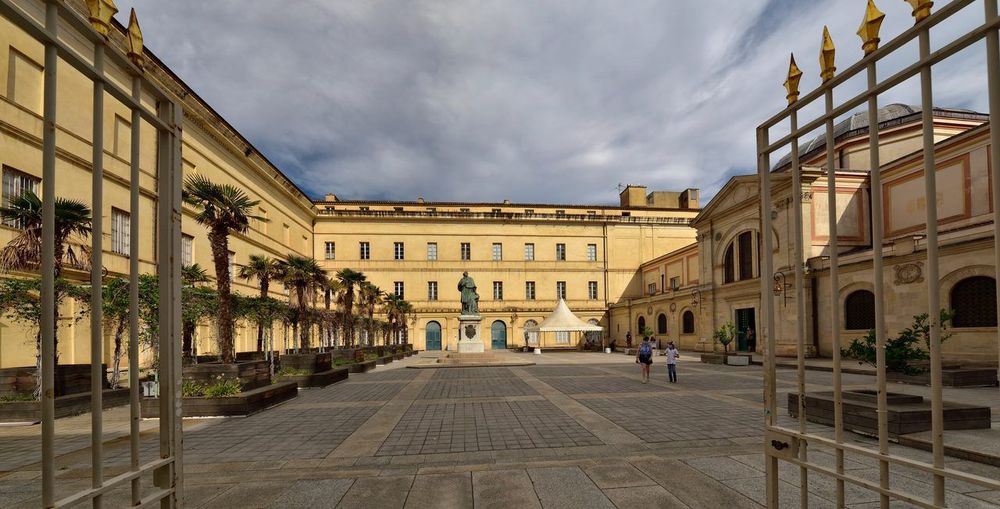
This yellow building set in an exotic garden houses the regional government offices. Commissioned by royal order in the early 19th century, it bears the name of the governor then in post. Only the central section dates from that time, the two wings having been added later. Its entrance hall keeps an ancient marble sarcophagus, found by chance in another part of town and later donated to Corsican archaeologists. Sadly it cannot be visited inside: admire the façade and garden from the street.
Free to see from outside
3 - Napoléon Avenue
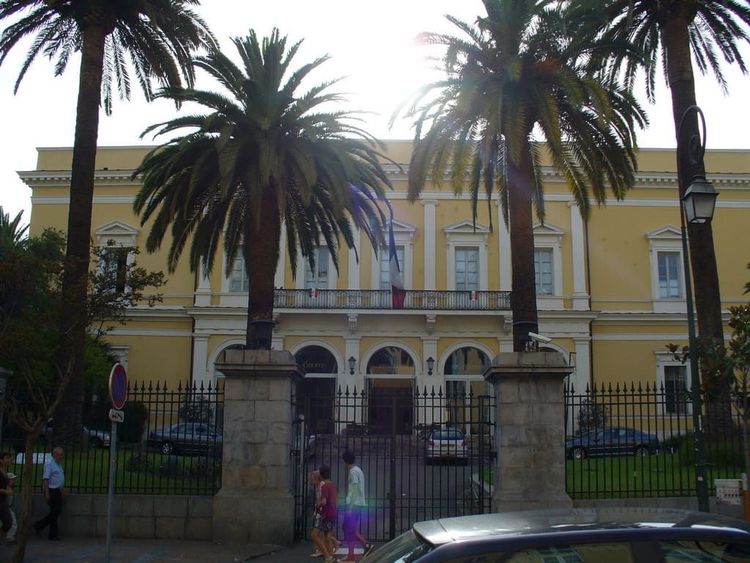
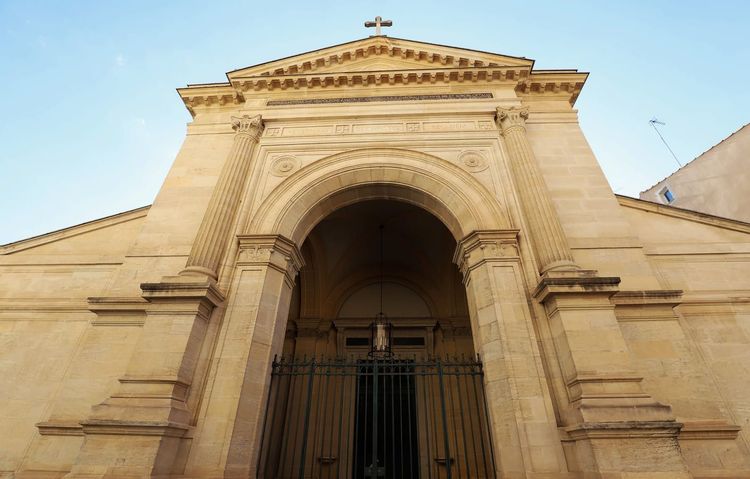
Laid out on the emperor's orders to beautify his home town, this broad avenue became the must-do gathering spot for locals, who made a habit of strolling here at the end of the day. A local historian links this custom to military bulletins once posted nearby. Along the way, a yellow-and-white church surprises with its classical look: a rounded doorway, antique-style columns and trompe-l'oeil decor inside, raised to serve a growing population at the close of the 19th century.
Free entry
4 - Imperial chapel and Fesch Palace
A cardinal born in Ajaccio, uncle to the emperor and a passionate art collector, lies behind this ensemble. To honour his wishes, a sanctuary was raised to gather the imperial family's tombs under one roof, beneath a dome covered in trompe-l'oeil frescoes. Napoleon's own parents rest here. Next door, the cardinal's former residence now houses a fine-arts museum: its Italian collection ranks among France's richest, second only to the Louvre's.
Paid entry (about €10)
5 - Maréchal Foch Square
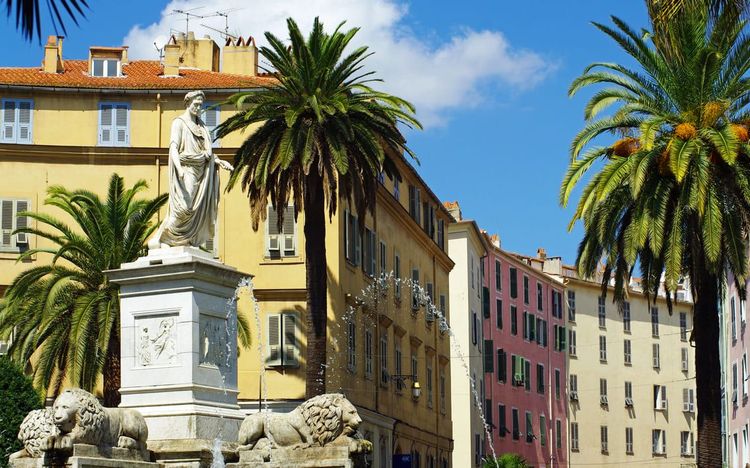
Shaded by palm trees and facing the harbour, this square carries the nickname everyone uses for it. At its centre stands a marble statue of the future emperor as a plain consul, once owned by Cardinal Fesch before passing to the town. A lion-guarded fountain stands at its feet. Nearby, the town hall hides a lavish hall covered in frescoes devoted to the Bonaparte family, later enriched with family portraits and, for his bicentenary, a chandelier sent from Eastern Europe.
Free entry
6 - Bonaparte House

Tucked away on a lively lane of the old town stands the family home where the future emperor came into the world one August evening in the late 18th century. Now a museum, it brings his childhood to life through period furniture and tapestries, for an entrance fee. Right next door, a small shaded garden can be visited freely. A little further on, a private venue stages an original show: a film screened while you sit at a table, retelling the great man's life.
Paid entry
7 - Ajaccio’s harbor
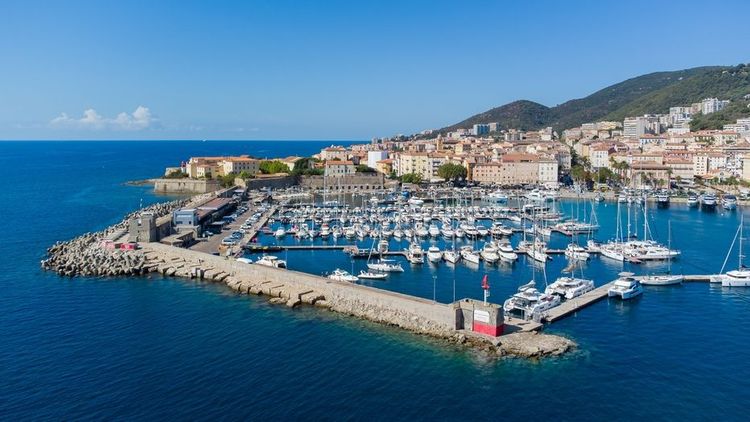
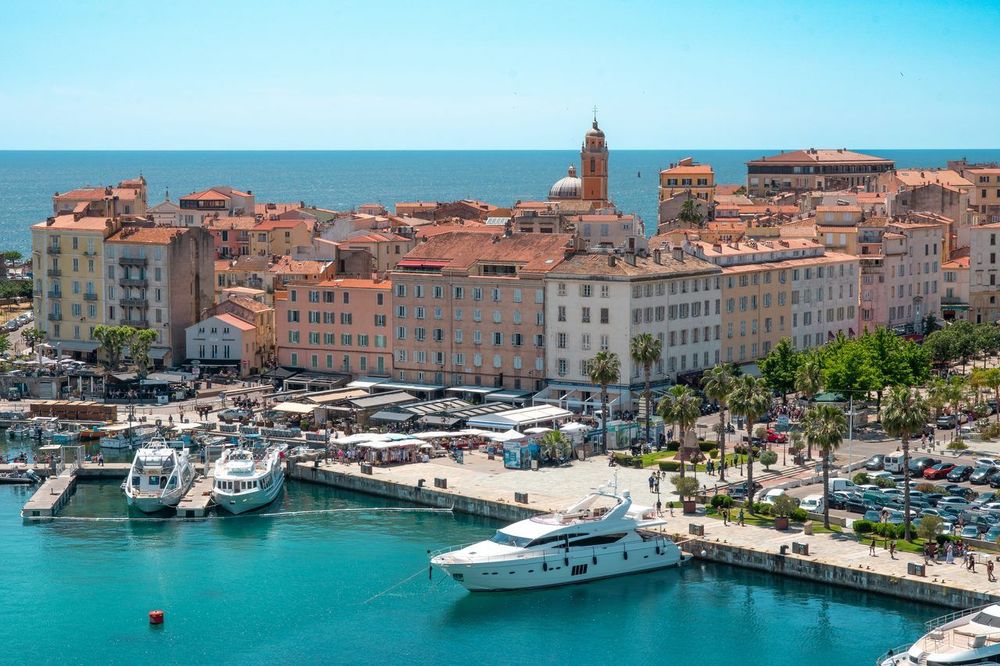
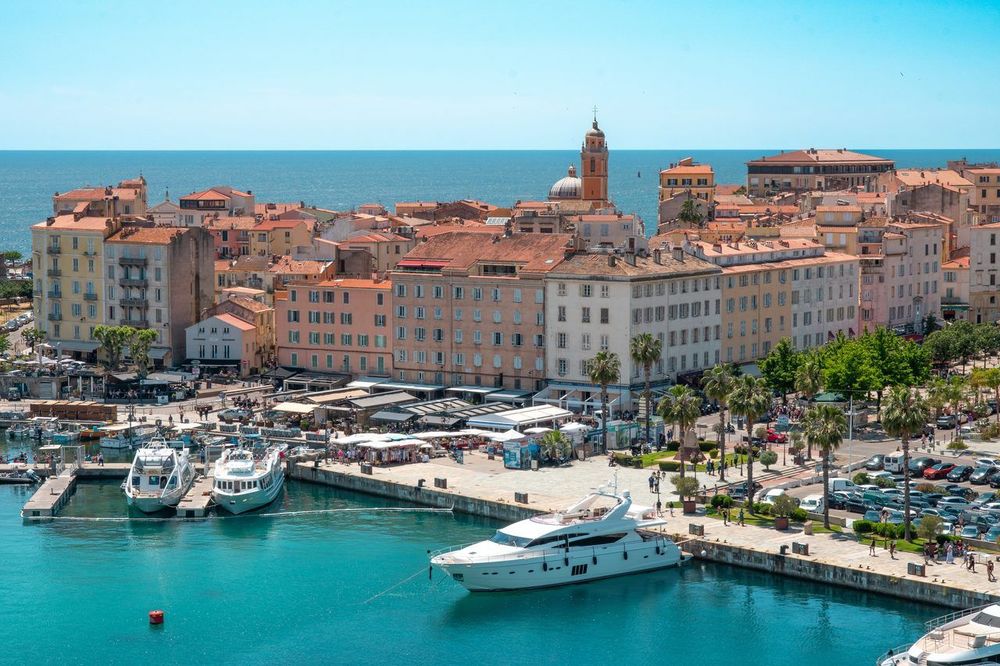
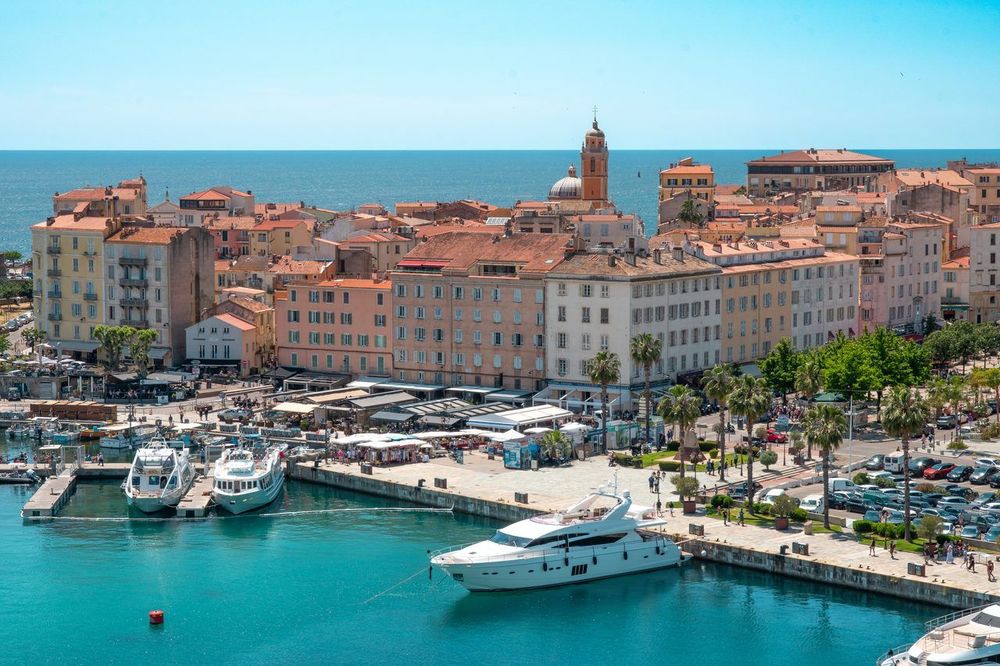
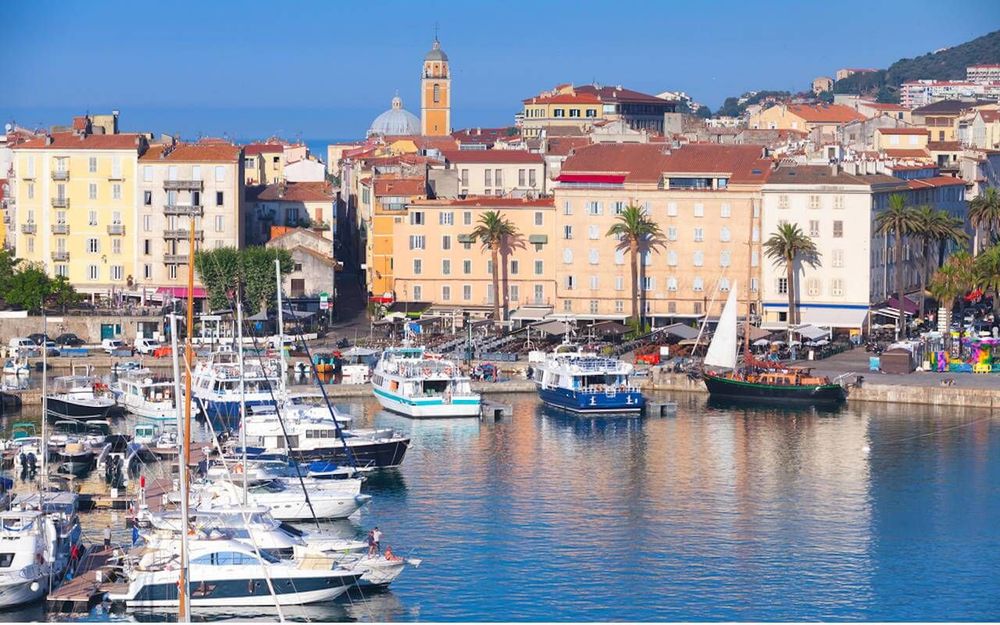
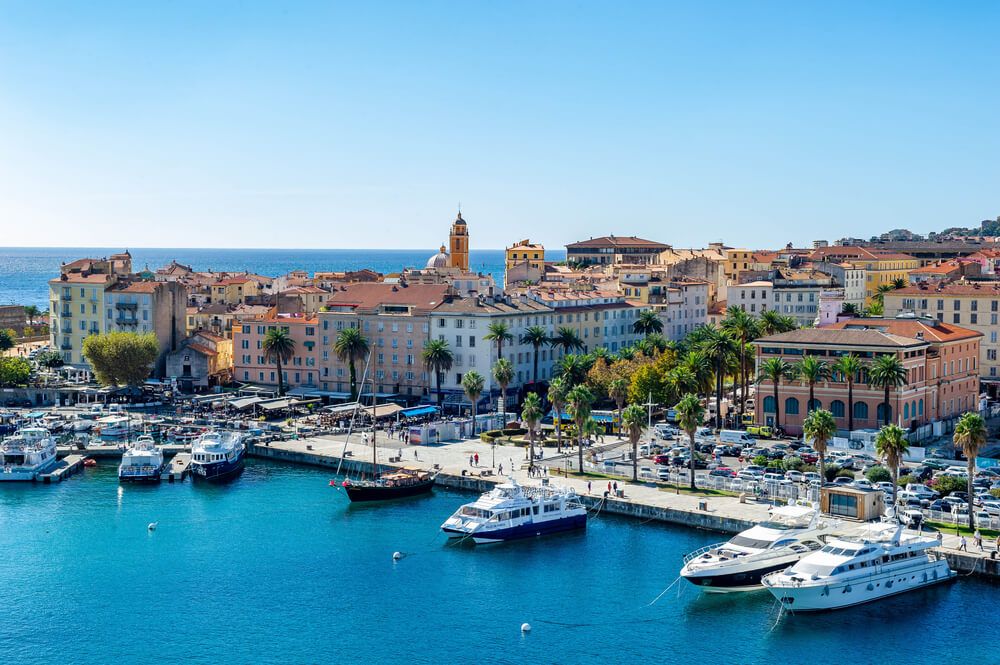
Named after a singer born in this very town, this old harbour mixes fishing boats with sailboats against a backdrop of sea and mountains. Simple, unpretentious eateries line busy jetties, and most boat trips offered to visitors set off from here. Cruises, sailing outings, diving towards a protected nature reserve, or swimming in spectacular coves further south all feature among the excursions, often rated among the highlights of a Corsican stay.
Free entry
8 - View over the harbor
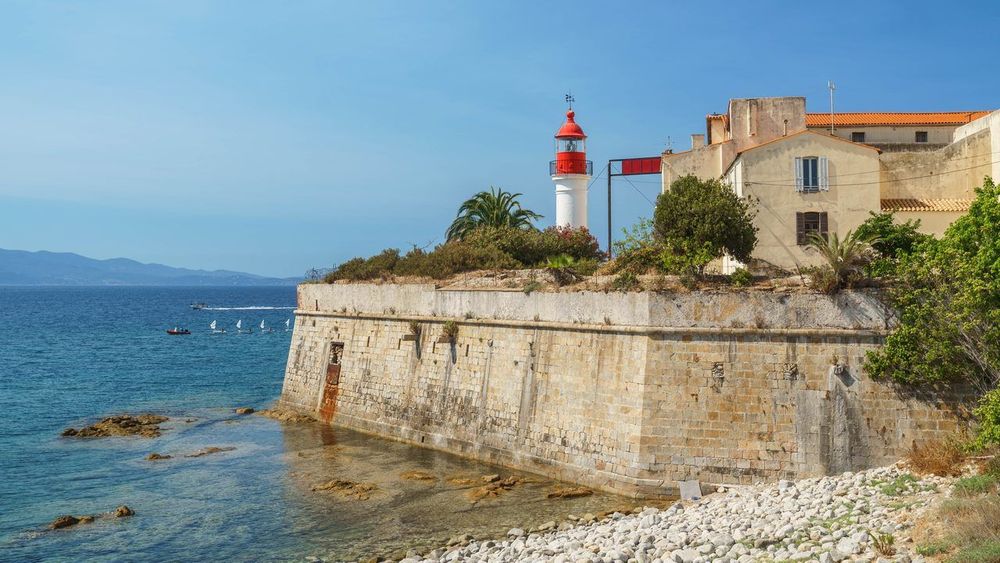
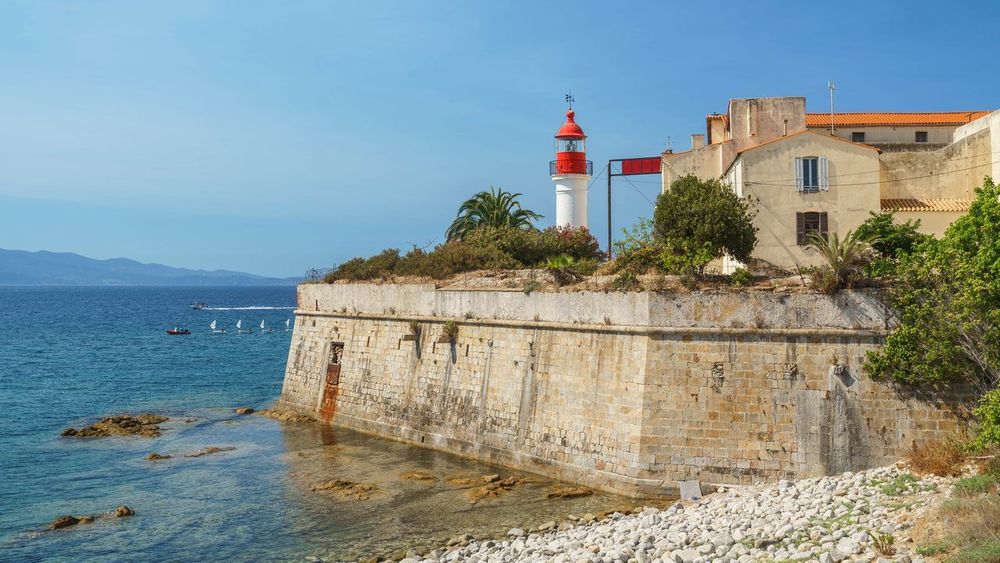
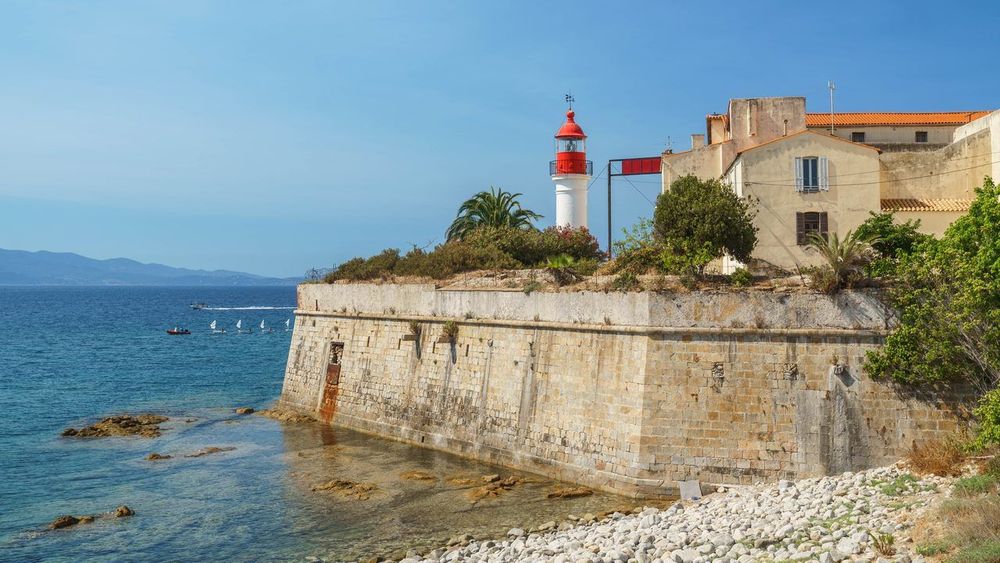
From this pier, the view stretches far across the horizon and takes in the whole gulf, split into several basins separated by a breakwater reserved for liners. On one side lies the harbour you have just left, on the other a second marina, and in the middle a basin given over to trade. A two-toned lighthouse, thirteen metres tall and built in the mid-19th century, marks the edge of the citadel; walking past it leads on to the ramparts for a different view.
Free entry · Best late in the day
9 - Cathedral of Santa-Maria Assunta
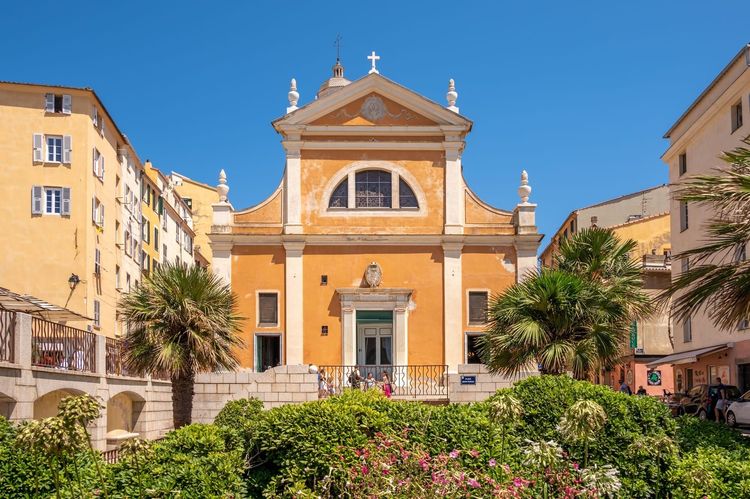
Despite its modest size, this ochre building topped with a blue-grey dome replaced two older cathedrals at the close of the 16th century, amid religious turmoil across Europe. Its cross-shaped plan and wide central nave, built for preaching rather than procession, reflect the emerging style of the age. A Latin inscription above the door recalls the petitions sent to Genoa and the Pope to get it built, and a juicy tale survives about a dishonest captain entrusted with its marble.
Free entry
10 - Saint-Erasme Church
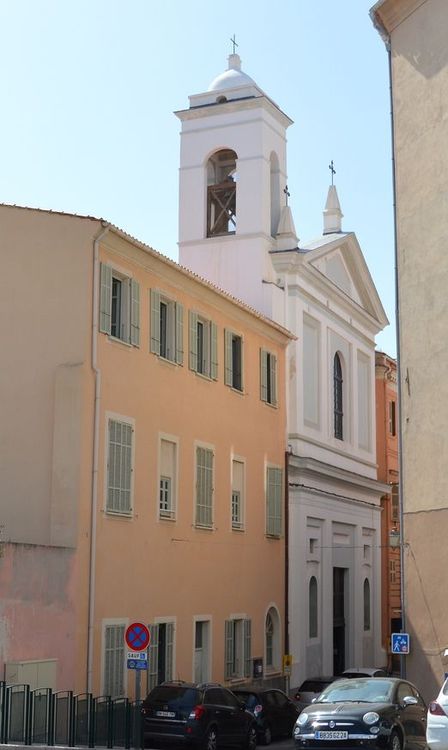
This small chapel, raised by the Jesuits, switched patron saints after the Revolution in favour of the protector of seafarers. Inside, numerous model ships hanging from the chandeliers or set near the altars testify to the devotion of sailors, who came here to give thanks or make a wish. Right outside, an unusual museum tells, through tiny figures, the whole saga of the town's most famous son, a treat for curious visitors young and old.
Free entry
11 - Ajaccio citadel
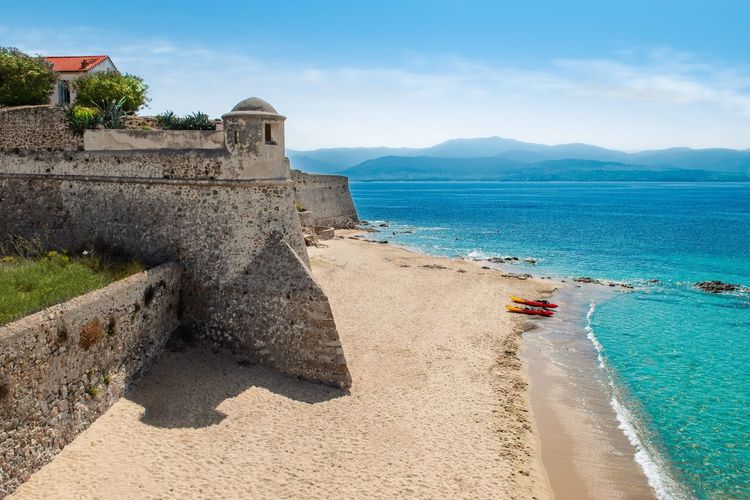
Closed to the public for five centuries, the citadel has only recently opened its gates, revealing guided tours, exhibitions and shops behind its walls. Raised when the town was founded to watch over the bay, it first belonged to a powerful Italian trading republic before passing under French rule at the close of the 18th century, following local uprisings. Turned into barracks and greatly enlarged, it later served as a prison under Italian occupation during the Second World War.
12 - Saint-François Beach
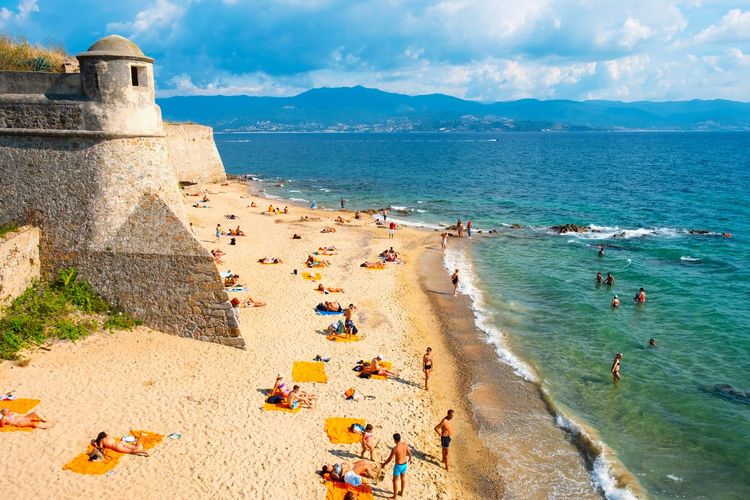
Lined with palm trees, this fine sand beach owes its popularity to sitting right in the town centre, a rare treat for swimming steps from the shops. Fishermen once used a now-forgotten encircling-net technique here. The shoreline has narrowed over the years, reviving talk of bringing sand back. On the horizon, the mountains are a reminder that the island rewards hikers just as generously as swimmers.
Free entry
13 - Casino of Ajaccio
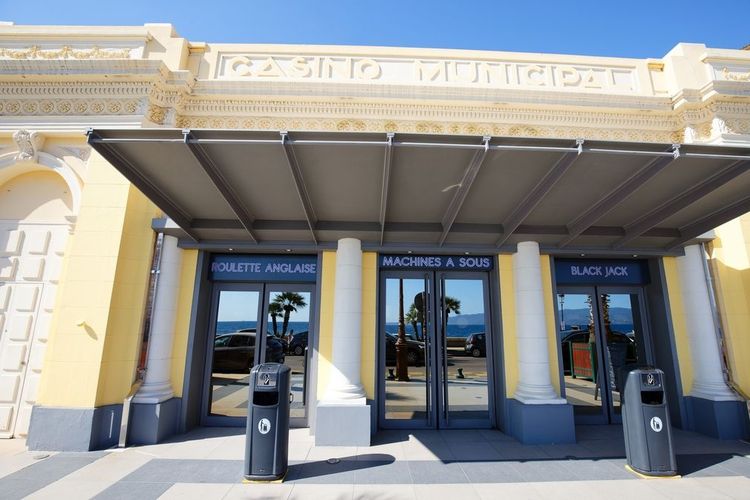
The island's only establishment of its kind, this harbour-facing venue brings together slot machines, gaming tables, a fine restaurant and a lively evening scene. It was here that the singer who lent his name to the old port took his very first steps on stage, long before writing one of the best-selling Christmas songs in French music history. A spot that blends gambling, music and the memory of a local boy turned star.
14 - Panorama from Miot Square
This broad esplanade facing the Mediterranean offers an ideal spot for panoramic shots and also serves as the favourite pitch for pétanque players, an almost national pastime on the island. A promenade dedicated to a painter who honeymooned nearby at the close of the 19th century sets off from here, dazzled by a light he had never seen before. That revelation would reshape his art, pushing him toward purer, bolder colours at the dawn of a movement yet to come.
Free entry · Best late in the day
15 - Austerlitz Square and Napoléon Cave
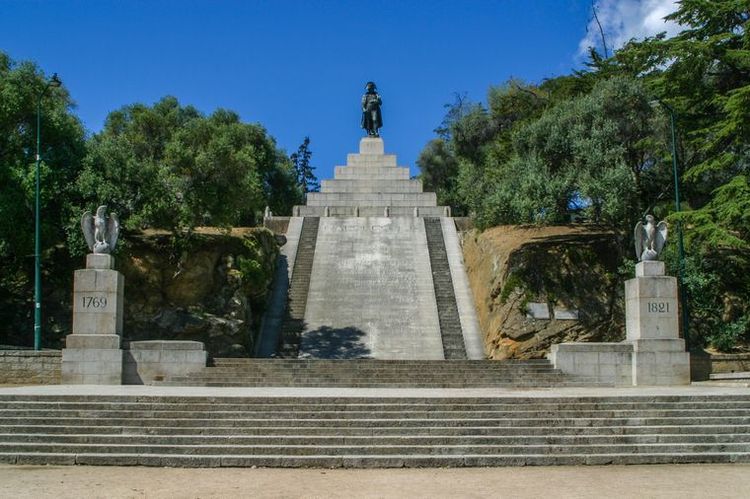
A ramp here leads up to an equestrian statue modelled on the one at Les Invalides, tracing the military campaigns of the town's most famous son. A hiking trail sets off just behind, and beneath a nearby jumble of rocks, legend says a boy once dreamed of conquest. Born to a noble but modest family, sent to study on the mainland on a scholarship, he entered a Paris military academy before choosing his side in the Revolution and revealing his strategic genius in Italy.
Free entry
16 - Cyrnos Palace
This extravagant façade owes its existence to a wealthy Scottish traveller, so taken with the town at the close of the 19th century that she bought land here to build herself a mansion. She even wrote a book praising its charms, helping draw fellow countrymen to winter on the island. The building was raised entirely from materials shipped across the Channel, and the nearby street now bears her name. Its balconies rank among the finest features of the whole ensemble, a quiet witness to an age of elegant wintering.
Free to see from outside
17 - Sacred Heart Church
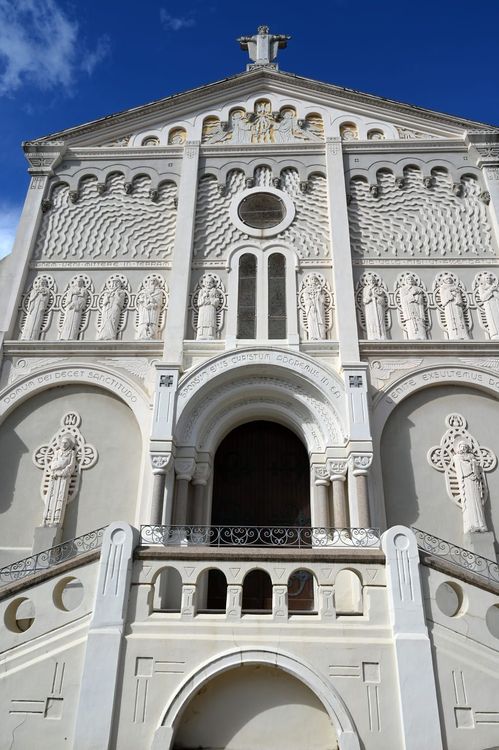
All in white and neo-Byzantine in style, this church was consecrated on a feast day in the early 1920s, in memory of townsfolk who fell during the First World War. Its richly carved façade contrasts with a deliberately bare interior, suited to quiet reflection. A register keeps, engraved, the names of more than 350 locals who died for their country, a silent reminder of the heavy toll paid by the island during that war.
Free entry
18 - Lycée Fesch
This imposing yellow building once housed Jesuits, handed to the town by imperial decree in the early 19th century before becoming, much later, a school. Pupils study there surrounded by mosaics and period furniture inherited from its long history. It marks the entrance to the district where, from the mid-19th century, numerous foreign visitors settled for the gentle climate, some of whose former homes now house regional institutions.
Free to see from outside
What to do in Ajaccio in 2 or 3 days?
The walking tour links the 18 sights of the imperial city in a single morning, between General De Gaulle Square, Napoleon's birthplace and the citadel, over 6 km and about 2 hours 30 minutes. With 2 or 3 days on the island, the rest of the stay opens toward the sea and then toward the hinterland.
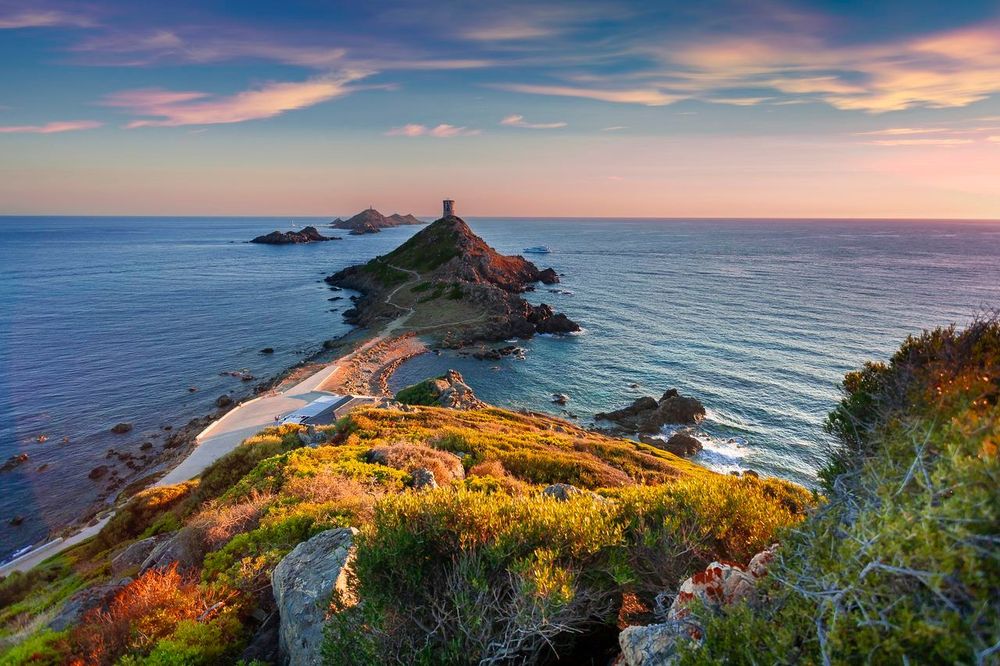
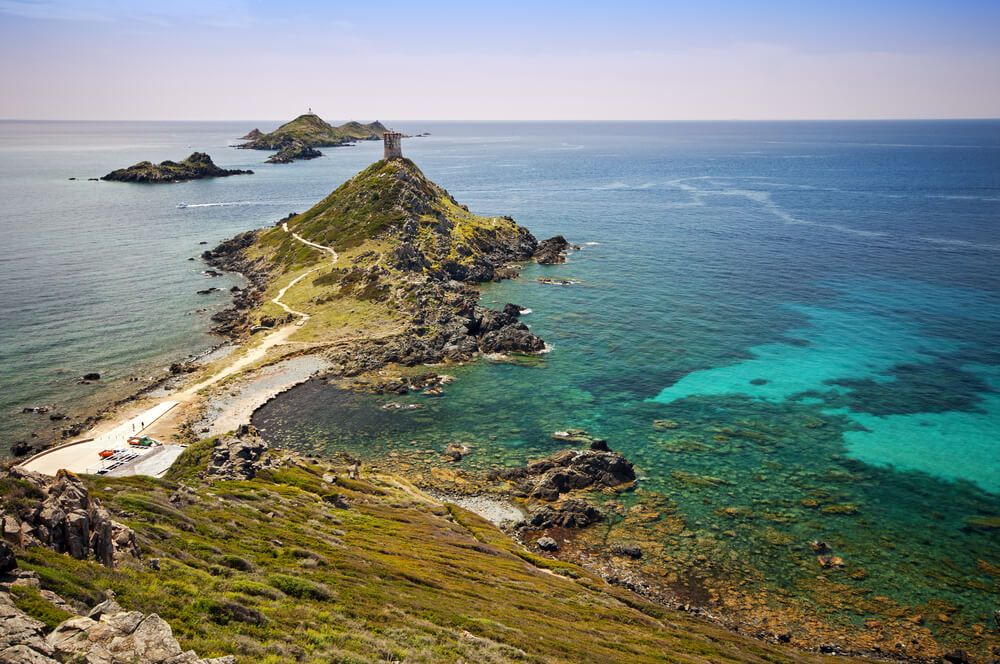
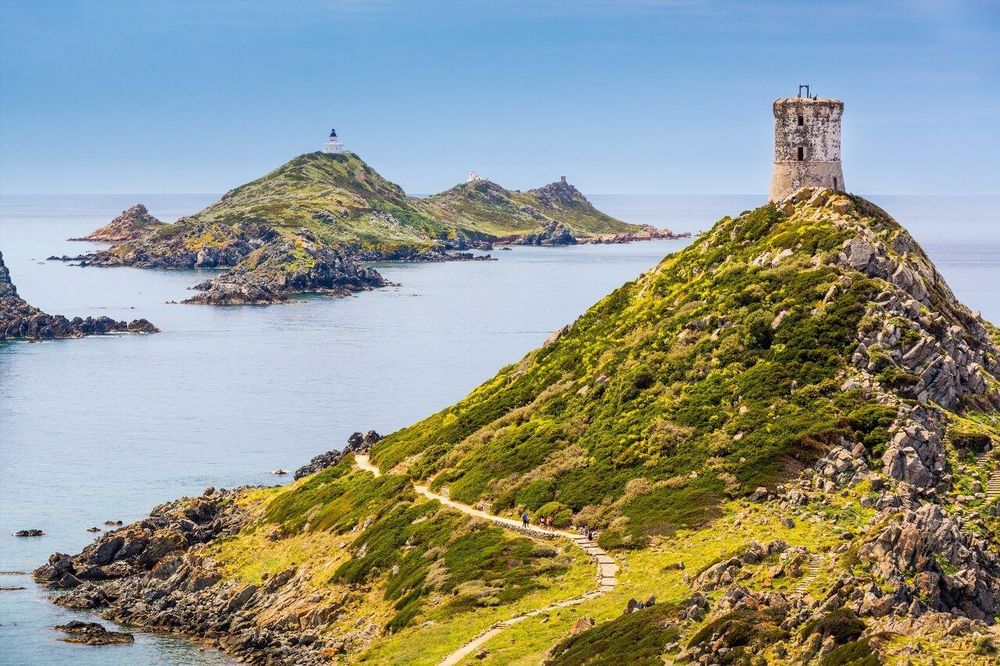
The next day, follow the Sanguinaires road, a coastal drive of a dozen kilometres: the Trottel and then Barbicaja beaches line the way to the Parata point and its Genoese tower, facing the archipelago's four red granite islets. Stay on for sunset, when the light sets the islands aglow; our guide to visiting Ajaccio in 3 days also covers the boat trips leaving from the harbour.
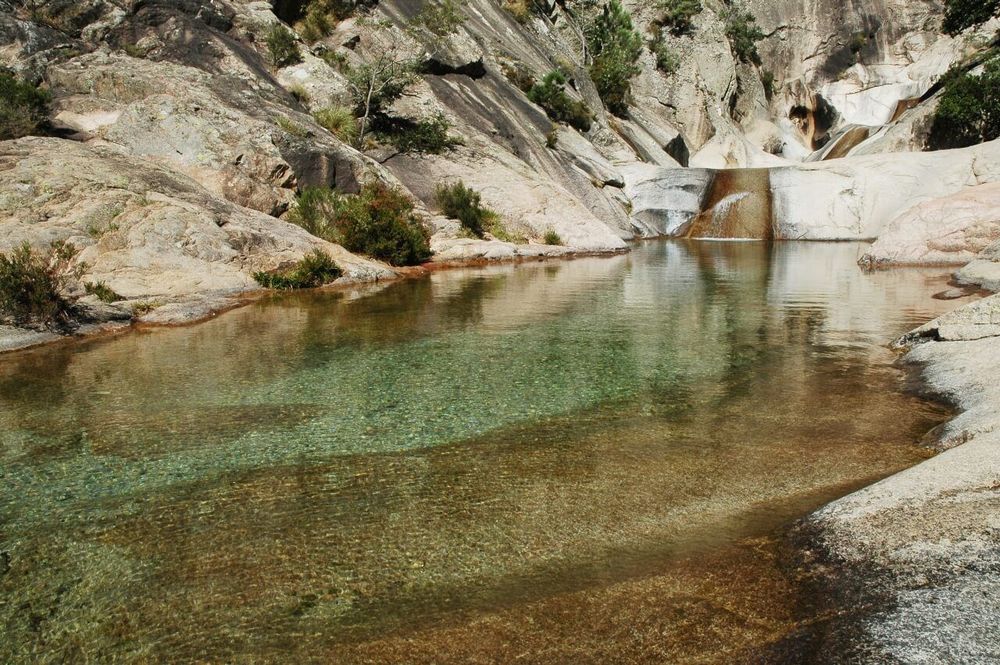
On the third day, the hinterland takes over, with the waterfalls of the Vizzavona forest less than an hour's drive away. Our itinerary for a weekend in Ajaccio suggests more hikes and villages around the city, plus a beach restaurant for lunch with your feet almost in the water.
Which neighbourhoods does the tour cross?
In a loop, the walking tour links the imperial centre, the old town's seafront and the fashionable Étrangers district.
It starts from General De Gaulle Square and climbs Napoléon Avenue, laid out by the emperor to beautify his home town, up to the chapel where several Bonapartes rest. It comes back down past Maréchal Foch Square, shaded with palm trees, to Napoleon's birthplace and the old fishing harbour (stops 1 to 7).
The second stretch stays by the water, between the citadel and the old town: a view over the harbour comes before the cathedral where Napoleon was baptised, Saint-Erasme church, the citadel's ramparts and Saint-François beach, before skirting the seafront casino (stops 8 to 13).
The last stretch climbs toward the Étrangers district, built for visitors who came to enjoy Ajaccio's climate: the panorama from Miot Square, Austerlitz Square at the start of the Crêtes trail, then the villas around Cyrnos Palace, the Sacred Heart church and the Lycée Fesch, before returning to the starting point (stops 14 to 18).
How much does it cost to visit Ajaccio?
Of the 18 stops on the walking tour, 11 can be visited freely, from the imperial squares to Saint-Erasme church, and 3 more, Lantivy Palace and Cyrnos Palace along with the Lycée Fesch, are admired from the street with no ticket to buy.
Among the others, two stops charge admission: the Fesch Palace ticket, which also opens the Imperial Chapel, costs about €10, and Napoleon's birthplace has its own ticket, around €7 for an adult. The City Pass Pays d'Ajaccio, about €24 for 24 hours, covers both museums as well as the tourist train and buses. To keep going without spending anything, our pick of free activities in Ajaccio rounds out the list.
Information checked in November 2026 and subject to change.
Where to stop for a bite along the tour?
The walking tour passes two spots to sit down without a detour: Maréchal Foch Square (stop 5), lined with small restaurants in the shade of palm trees, and Ajaccio's harbour (stop 7), where unpretentious places look out over the moored fishing boats.
For specialities, try figatellu and coppa, brocciu made from ewe's or goat's milk, a slow-cooked wild boar stew, a winter classic, or aziminu, a fish soup flavoured with saffron and fennel; for something sweet, crunchy canistrelli go well with a cup of tea; our top 10 culinary specialities in Ajaccio lists the other Corsican classics.
What to do in Ajaccio with children?
In the old town, several treasure hunts guide children and parents alike past carved coats of arms and clues tucked into the shop windows of Rue Fesch, with a final stage usually set on Place Foch. The game takes about an hour, a bit longer with young children who want every single clue.
Admission to Napoleon's birthplace is free up to age 18, and up to age 26 for European Union residents; budget about €7 past that age, for a visit of a little under half an hour. On General De Gaulle Square, the equestrian statue surrounded by the emperor's 4 brothers lends itself to a counting game, before an ice cream stop at the foot of the old town; our guide to Ajaccio with kids offers more ideas by age group.
What should you know before visiting Ajaccio?
Several stops on the walking tour keep their own opening times, worth checking before you plan to stop there.
Ajaccio citadel only opens intermittently, depending on scheduled guided tours and exhibitions: better to check with the tourist office before counting on getting in.
The two paid-entry museums on the walking tour, Fesch Palace and Bonaparte House, change their hours between low and high season, with occasional late openings in summer, and Bonaparte House closes one day a week. In summer, book your ticket online the day before to avoid the queue when the cruise ships land their passengers.
What to see around Ajaccio?
The nearest walking tour is in Bastia, 105 km away as the crow flies.
Bastia clings to its rock facing the Italian horizon: its tour leads from Baroque churches to the narrow lanes climbing toward the citadel, past ochre façades worn by salt and sun.
What's on in Ajaccio right now?
This late in the year, Ajaccio's cultural highlight is at Fesch Palace, one of the stops on the walking tour.
Until 14 February 2027, the exhibition "Affundà l’expédition" pairs classic works from the museum’s collection with contemporary pieces by Jean-Marie Appriou and Jenna Kaës, all devoted to the ocean.
Information checked in November 2026 and subject to change.
Le plein d'inspirations
Explorez le monde en totale liberté, à pied au cœur des villes ou au fil des routes. Nos guides audios transforment chaque destination en une découverte culturelle immersive et unique.










FAQ for visiting Ajaccio
When is the best time to visit Ajaccio?
Ajaccio is pleasant to visit all year round thanks to its privileged Mediterranean climate. The best periods remain May-June and September-October, when temperatures are mild and tourist crowds moderate. You'll then fully enjoy walks around town and swims in water that is still warm. Summer offers maximum sunshine and a festive atmosphere, notably in August with the Napoleonic celebrations, but expect more people. Winter stays very mild for exploring the town on foot, even if swimming is no longer on the agenda. Spring reveals a flower-filled landscape that is particularly photogenic.
How many days do you need to visit Ajaccio?
Two to three days are generally enough to discover the essentials of Ajaccio and its immediate surroundings. In one full day, you can cover the historic centre, visit the Bonaparte house and stroll around the market. A second day lets you explore the beaches and take the excursion to the Sanguinaires Islands. With an extra day, you can deepen your discovery of the museums, enjoy more of the coastline or set off on an excursion into the hinterland. If you really want to take your time and range across the region, four to five days will give you a more relaxed and complete stay.
How do you get around Ajaccio?
Ajaccio's town centre is easily covered on foot, which remains the best way to discover its historic lanes and squares. To reach the more distant beaches or outlying sites, the urban bus network serves the conurbation well. Bike rental is perfectly suited to following the coastline along the dedicated lanes. If you wish to explore the surroundings or have more independence, the car remains practical, even if parking in the town centre can be complicated in high season. Sea shuttles also allow you to reach certain beaches from the port. Taxis and private hire vehicles round out the offer for occasional trips.
What are the must-sees in Ajaccio?
Ajaccio reveals its treasures over the course of a walk that takes you from Napoleon's birthplace to the Genoese citadel, by way of the baroque cathedral and the colourful market of Place Campinchi. The Fesch Museum houses one of the finest collections of Italian paintings in France. The ramparts offer splendid views over the gulf, while Place d'Austerlitz and its Napoleon grotto tell of the emperor's childhood. The Ryo audioguide accompanies you on this discovery with a narrated route that reveals the secrets of the imperial city. Don't forget to stroll around the marina and through the ochre lanes of the Genoese district.
Where are the most beautiful beaches in Ajaccio?
Ajaccio's beaches stretch along the gulf, offering varied moods to suit your desires. Right in the centre, Saint-François beach remains very accessible on foot from the old town. Further west, the Route des Sanguinaires reveals a succession of coves and fine-sand beaches, including the popular Ariadne and Marinella beaches. The wilder Capo di Feno beach draws wave lovers. On the southern side, past the airport, the long beaches of Porticcio and Agosta appeal to families with their shallow waters and their many amenities. Each beach has its charm, between the intimacy of rocky coves and vast stretches of golden sand.
How do you visit the Sanguinaires Islands from Ajaccio?
The Sanguinaires Islands, a natural jewel of the Gulf of Ajaccio, can be discovered in several ways. Boat excursions leave regularly from the Tino Rossi port, generally from April to October, for a narrated cruise with a stop on the Grande Sanguinaire. You can also reach the Pointe de la Parata by car or bus, then take the footpath that offers spectacular views over the archipelago, particularly magical at sunset. The more sporty will enjoy the bike ride along the Route des Sanguinaires. Allow half a day to fully enjoy this listed site, between walking, swimming in the coves and contemplating the landscape.
What can you visit in Ajaccio as a family with children?
Ajaccio lends itself perfectly to family visits with its beaches of calm, shallow water, ideal for young bathers. The little tourist train allows a fun, effortless discovery of the town. Children generally enjoy visiting the Bonaparte house with its period reconstructions and the Parata aquarium, which showcases Mediterranean marine life. The covered market awakens the senses with its colourful stalls and its tastings. For a nature break, Berthault park offers play areas and shaded spaces. Boat trips to the Sanguinaires Islands remain a highlight, combining maritime adventure and dolphin-watching with a little luck.
Which are the best districts to stay in Ajaccio?
The choice of your district depends on your priorities for your stay. The historic centre places you at the heart of the activity, close to the Napoleonic sites and the market, ideal for exploring the town on foot. The port district appeals with its nightlife and its restaurants, but can be noisy in season. To combine the beach and proximity to the centre, the western districts towards the Route des Sanguinaires offer a good compromise with a sea view. The town's heights guarantee more quiet and often lovely panoramic views, but require a vehicle. Porticcio, on the other side of the gulf, suits families looking for large beaches and more spacious accommodation, provided you accept the journeys to reach the centre of Ajaccio.
How can you follow in Napoleon's footsteps in Ajaccio?
It all begins in the old town, at the Maison Bonaparte, the family home turned national museum, where you walk through the reception rooms, the furniture and the mementoes gathered over the generations. A few streets away, the cathedral still holds the font at which the child was baptised, while the Napoleonic room in the town hall displays portraits, busts and medals given to the city by the imperial family.
The trail continues towards the Imperial Chapel, next to the Palais Fesch, which holds the tombs of several Bonapartes, and then on to the large statues scattered around town, from the monument on Place du Général-de-Gaulle to the one on Place d'Austerlitz, set against the hillside. The Ryo audio guide offers a dedicated Ajaccio route that links these places and tells the story of the emperor's Corsican youth.
Where can you taste Corsican specialities in Ajaccio?
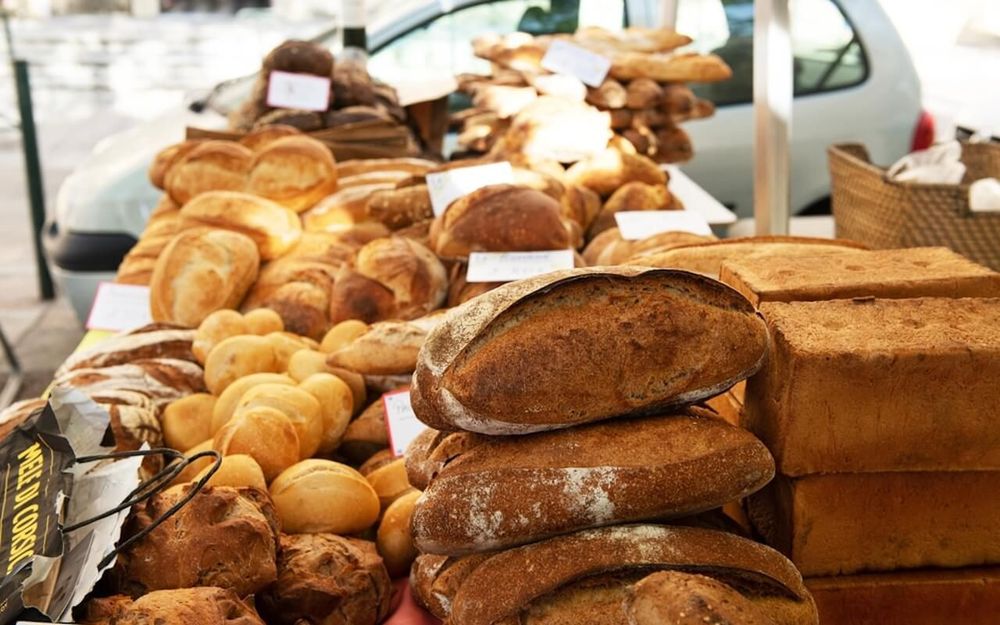
The liveliest place is the morning market set up at the foot of Place Foch, facing the harbour: you will find mountain charcuterie such as coppa, lonzu and prisuttu, sheep's and goat's cheeses, brocciu when the season allows, along with jams, honey and olive oils from the island. Producers are often there in person and are usually happy to let you taste.
On the sweet side, canistrelli flavoured with white wine or aniseed slip easily into a bag, while fiadone, a cake made with brocciu and lemon, is better enjoyed at the table. The lanes of the old town and the harbour district concentrate the restaurants where you can try Corsican soup, brocciu cannelloni and fish from the gulf, often served with wines from the Ajaccio area.
Which outdoor activities and excursions can you enjoy from Ajaccio?
For beaches, Trottel offers calm while Capo di Feno, with stronger waves, suits surfers. The Grand Parc Aventure de Corse, about forty minutes from Vero, offers monkey bridges and zip lines from 10am to 7pm. The hinterland hides stone villages, waterfalls, the A Cupulatta wildlife park and the Bocognano ecomuseum. By boat, head for the Calanques de Piana and the Scandola nature reserve, both UNESCO-listed, with a stop at Girolata. In town, the Maison Bonaparte and the Palais Fesch complete the programme.
All the ideas are gathered in our selection of the best things to do in Ajaccio.
Which Corsican dishes and produce should you taste during a stay in Ajaccio?
Charcuterie takes centre stage, with coppa, figatellu and lonzu, followed by cheeses such as brocciu made from goat's or ewe's milk. Among slow-cooked dishes, wild boar stew with onions and carrots and veal with olives simmered in red wine are mostly enjoyed in winter. The sea brings aziminu, a soup of mullet, sea bream and red mullet scented with fennel and saffron. For dessert, try frappes, lemon or orange fritters, and crunchy canistrelli, all with a red, white or rosé Patrimonio.
All ten must-tries are presented in our guide to Ajaccio's culinary specialities.
What can you do for free in Ajaccio?
Eighteen experiences cost nothing at all. Climb for about twenty minutes to the Genoese tower on the Pointe de la Parata to watch the sun sink behind the Sanguinaires islands, arriving 45 minutes early. The Route des Sanguinaires, a dozen kilometres of coastal road, takes three hours there and back on foot or an hour by bike. In the old town, Rue Bonaparte and Rue Saint-Charles lead to the cathedral where Napoleon was baptised in 1771. Add the hunt for pixel-art collages, the wild beach of Capo di Feno and the flea market.
All eighteen ideas are detailed in our selection of free things to do in Ajaccio.
How should you plan a weekend or three days in Ajaccio?
Day one is spent in the imperial city: the Place Foch market, every morning except Monday, the Tino Rossi harbour, the Maison Bonaparte where Napoleon was born on 15 August 1769, then the Palais Fesch, home to Botticelli and Titian, and the Imperial Chapel. Day two follows the Route des Sanguinaires to the Pointe de la Parata and its Genoese tower, for a sunset facing the islands.
On a weekend, keep time for a beach shack with your feet in the water; with a third day, head to the Gravona valley, where a waterfall appears after a twenty-minute walk.
Choose between our weekend itinerary for Ajaccio and our three-day Ajaccio itinerary.
Which activities should you plan in Ajaccio with children, from tortoises to treasure hunts?
The Maison Bonaparte is free for under-18s, and Place du Diamant, with its statue of Napoleon surrounded by his four brothers, lets little ones run around away from traffic. In the old town, treasure hunts, detective games and the search for pixel-art collages turn the walk into a game, and the little tourist train saves tired legs. Nearby, A Cupulatta, Europe's largest centre devoted to tortoises, houses some 3,000 of them twenty minutes from the centre, the Parc Aventure de Vero offers tree-top adventures and fine sandy beaches are close at hand.
Plan your stay with our guide to Ajaccio with children and our family itinerary for Ajaccio.
Which museums and indoor places can you visit in Ajaccio in bad weather?
Showers often pass within an hour, but thirteen ideas keep you under cover. The Maison Bonaparte, where Napoleon was born in 1769, still has the trapdoor through which the family fled in 1793. The Palais Fesch holds the second-largest collection of Italian painting in France after the Louvre; allow 1h30, plus fifteen minutes for the neighbouring Imperial Chapel. Naporama retraces the Napoleonic epic with 360-degree projections. Add an escape game, the covered market or a pool of 38-degree water less than an hour's drive away.
All thirteen ideas are gathered in our guide to rainy-day activities in Ajaccio.
How can I visit Ajaccio without a car?
Ajaccio is easy to visit without a car. From the airport, bus line 8 reaches the city centre in about twenty minutes, and ferries drop you right at the port, below the old town. The old town, the market, the cathedral and the harbour can all be covered on foot in a morning.
City buses serve the beaches and the Parata point (line 5, around 30 minutes), and a boat shuttle crosses the gulf to Porticcio in roughly twenty minutes, mainly in summer.
To plan your whole stay on foot, by bus and by boat, read our complete guide to visiting Ajaccio without a car.
Vos commentaires, idées et suggestions
Aucun avis pour le moment