© Shutterstock
 Votre guide Ryo
Ajaccio with Kids in 2026: The Complete Guide for a Successful Family Stay
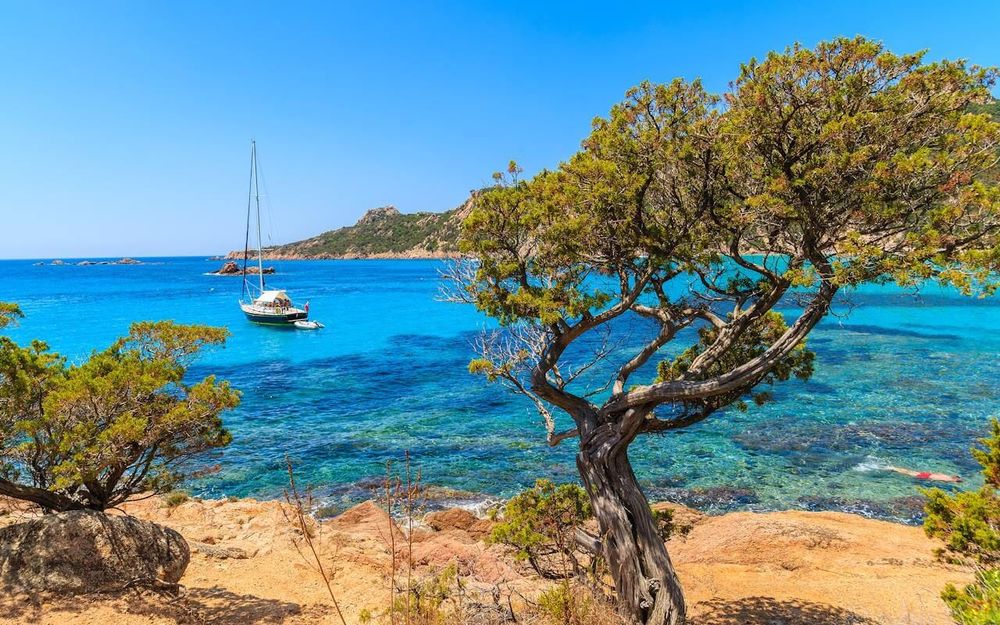
In Ajaccio with kids, the first surprise often comes before you've even unpacked: from the plane, the bay traces an arc of green hills plunging into turquoise water that even the most jaded teenagers press their face to the window to see. The birthplace of Napoleon Bonaparte is nothing like a stiff museum for the well-informed — it unfolds like a playground, between lanes to wander in treasure-hunt mode, a market where you sniff Corsican cheese before tasting it, and a Ryo audio-guided tour that turns a stroll through the historic centre into a mystery to solve.
This guide covers the must-sees — the Citadelle, the Palais Fesch, the beaches along the route des Sanguinaires — but also the hidden gems few visitors know about: pixel-art collages tucked away in the old town, a city of 3,000 tortoises twenty minutes from the centre, and an evening stargazing after a day of sand and salt. We've also included the practical details that can make or break a trip: which beach to choose with a baby, where to eat without stress when three generations are at the table, and how to fill a sweltering or rainy afternoon without anyone getting bored.
In Napoleon's Footsteps: Birthplace and Citadelle
Before visiting Corsica, most schoolchildren know Napoleon Bonaparte only as a textbook silhouette with a bicorne hat. In Ajaccio, the figure becomes a neighbourhood kid again: one who played in these very lanes, who grew up in a house you can still visit today, and whose legend is told here through objects to examine up close rather than through lectures.
The Maison Bonaparte, his birthplace, takes about half an hour to visit: short enough not to tire the youngest visitors, yet packed enough with period furniture and guide anecdotes to hold their attention. The most curious quickly spot the Bonaparte cradle and the portraits telling the story of a large family, not so different from their own. As a national museum, it has a practical budget advantage: entry is free for under-18s and for under-26s resident in the European Union, and around €7 for an adult.
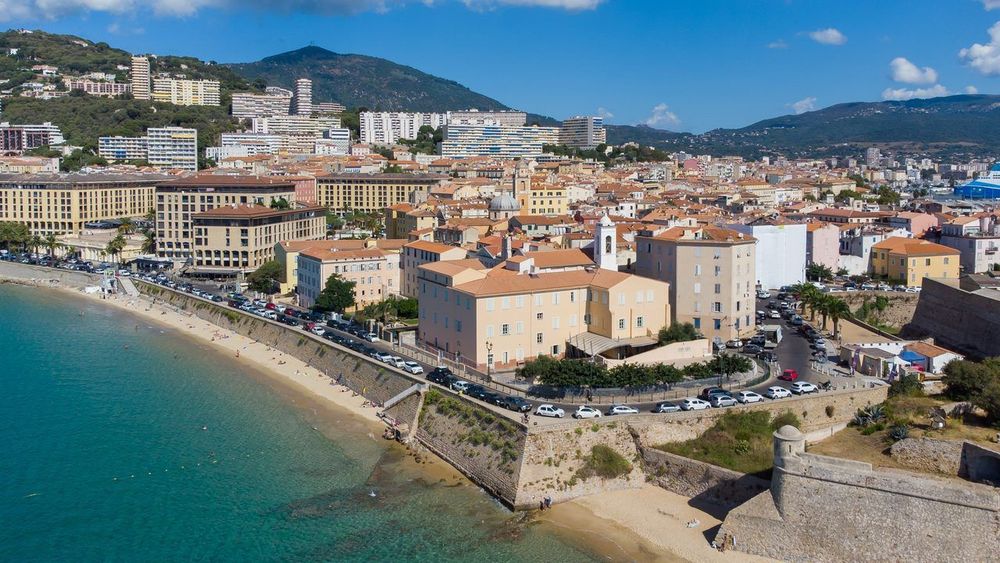
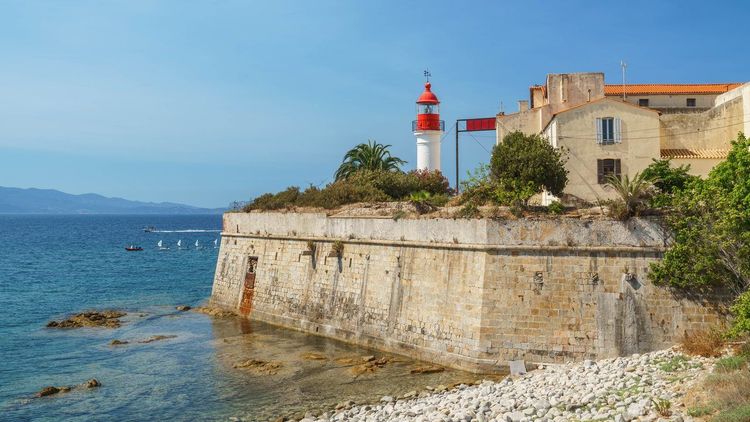
Ten minutes' walk away, the Citadelle d'Ajaccio has dominated the bay since the 16th century. Long off-limits as a military base, it has been handed back to the city and only opens intermittently for guided tours, exhibitions or seasonal events: check the programme with the tourist office before making the trip. Failing that, its outer ramparts and the viewpoint from the place du Diamant offer a panorama that younger visitors instantly recognise from the postcards sold around town.
On the place du Diamant, the equestrian statue of Napoleon surrounded by his four brothers impresses above all by its sheer size — enough to spark an impromptu counting game while the parents read the explanatory plaque. It's also the ideal spot for an ice cream before heading into the old town just below.
To extend the experience without tiring little legs, the short Ryo audio-guided tour of Ajaccio guides young and old from one point to the next through the Napoleonic historic centre, with anecdotes calibrated to hold attention for 45 minutes.
The Old Town in Adventure Mode: Treasure Hunts and Unusual Streets
Ajaccio's old town clusters into a maze of shaded lanes between the cathedral and the port — a compact format that lends itself perfectly to observation games. Rather than following a standard map, turn the walk into a mission: street names and façades stick in the memory three times better when you're hunting for a clue than when you're listening to an explanation.
Several treasure hunt formats exist around town, as paper booklets available from the tourist office or apps to download before you leave: riddles about carved coats of arms, clues hidden in shop windows along the rue Fesch, with the final stage often located on the place Foch. Allow one to one-and-a-half hours depending on the ages of the participants and their tolerance for red herrings.
Another version of the same idea, more narrative in style: solving a mystery through the streets of Ajaccio, a detective format in which players act as investigators tasked with solving a plot tied to local history. The atmosphere differs from a classic trail: here, you interpret textual clues, encounter fictional witness statements posted in shop windows, and the resolution is a team effort — well suited to teens who resist activities that feel too childish.
In recent years a third game has emerged spontaneously alongside the other two: the hunt for pixel-art collages — those small, colourful 8-bit video-game-style mosaics that local street artists conceal on walls, shutters and electricity poles throughout the old town. No official map lists them all, which makes it almost a natural treasure hunt: everyone scans the façades as they walk, and each discovery becomes a small victory to compare with a brother's or sister's.
Bring water and plan a shaded break halfway through. The old town heats up quickly in summer, and the narrow lanes trap warmth just as much as they shield from direct sunlight.
Cathedral, Market and Tourist Train: Discovering Ajaccio Differently
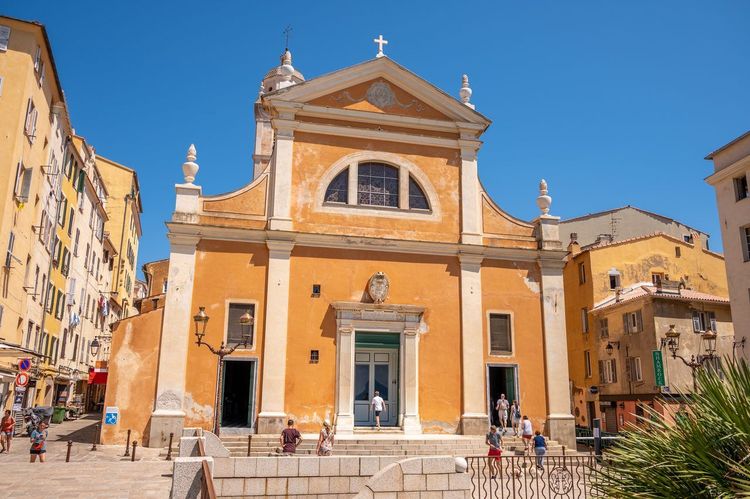
Three gentle ways to continue exploring the city centre, best saved for moments when energy is starting to flag.
The Cathédrale Notre-Dame-de-l'Assomption d'Ajaccio, where Napoleon was baptised in 1771, takes ten minutes to visit: a modest nave, a distinctive light in late morning, and enough silence for even the most restless children to pause naturally before dashing back out onto the square.
In the morning, head to the Ajaccio market on the place Campinchi, beside the port: stalls of Corsican cheeses, charcuterie, seasonal fruit and vegetables, plus a few honey and nougat stands where you can sample before deciding on the lunchtime picnic. The soundscape alone — vendors calling out and conversations in Corsican — is worth the detour, and the youngest visitors generally love heading home with a small bag of dried fruit or canistrelli. It runs in the mornings, Tuesday to Sunday: arrive before 11am, as the best producers pack up early.
For tired legs or those too small to walk several kilometres, the Ajaccio tourist train (Place Foch, 20000 Ajaccio, rated 3.5/5 on Google from 1,794 reviews) departs from the place Foch and loops around the historic centre and seafront in about 40 minutes, with a recorded commentary. It's often the moment when parents catch their breath while the little ones press their noses to the window.
These three stops flow naturally into one another within a ten-minute walking radius — a good combination for a car-free morning.
The Palais Fesch and Ajaccio's Smaller Museums
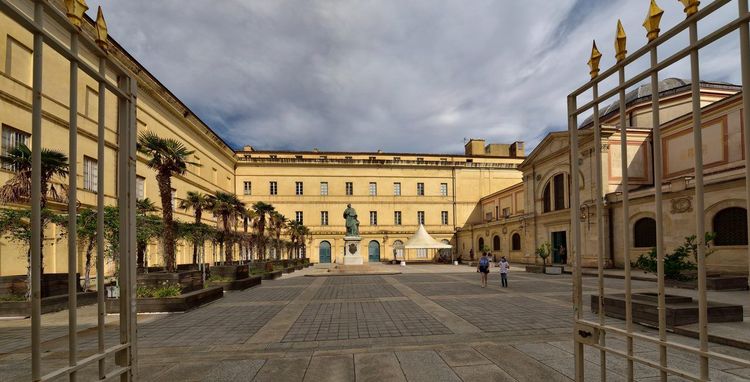
The Palais Fesch, Museum of Fine Arts of Corsica, holds the most important collection of Italian painting in France outside the Louvre — an argument that initially appeals more to parents than children. The good news: the museum offers genuinely child-focused programmes for ages 6–12, with activity booklets, spot-the-detail hunts within the paintings, and creative workshops scheduled on certain Wednesdays and during school holidays.
Allow an hour for a quick visit with young visitors, twice as long if a workshop is on the agenda, and around €10 for adult entry with free admission for younger children. The rooms devoted to Italian religious painting from the 14th to the 19th century impress first and foremost through the sheer size of the canvases, long before the subject matter interests anyone under ten.
Other smaller venues round out the cultural offering: the Musée A Bandera, dedicated to Corsican military history, and the Musée du Capitellu, housed in a former bourgeois residence facing the port, can both be visited in under an hour.
Check the workshop schedule online before you go: sessions are not guaranteed and fill up quickly during school holidays.
Cupulatta, the Tortoise City
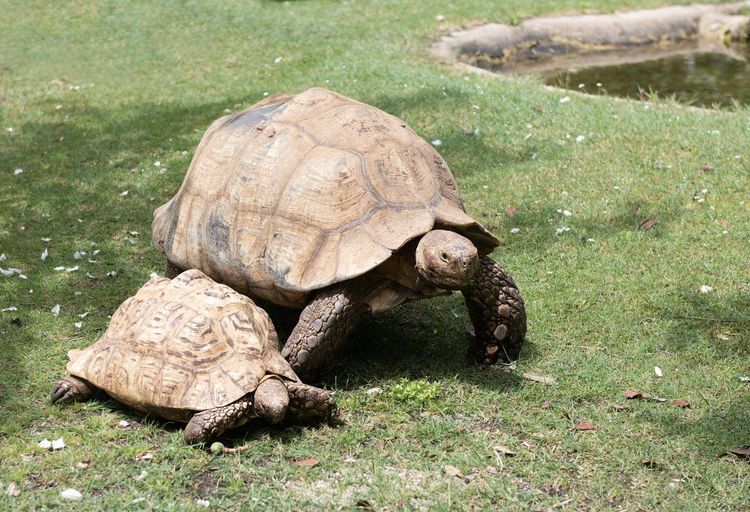
About twenty minutes from the city centre, on the road to Corte, A Cupulatta (Vignola, 20133 Ucciani, rated 4.6/5 on Google from 4,353 reviews) is probably the most frequently mentioned attraction by visitors to Ajaccio, and for good reason: this wildlife park is home to more than 3,000 tortoises belonging to around 170 different species, making it one of the largest collections in Europe.
The route winds through shaded pools and enclosures spread over several hectares, where you encounter everything from giant Seychelles tortoises to tiny Indian star tortoises. The educational panels, well thought-out for a young audience, explain the threats facing these species and the breeding work carried out on site — far removed from a simple amusement zoo.
Allow two to three hours if you stop at every pool. The site is shaded in places but largely exposed to the sun: hats and water are essential in summer, as are closed shoes for walking the gravel paths. An on-site snack bar means you can take a break without driving back into town.
Very young children particularly love the juvenile tortoise pool, where staff sometimes allow very close observation under supervision. Budget-wise, expect around €15 per adult and around €10 for younger visitors — in line with other wildlife parks on the island. The park closes in winter: the season typically runs from April to early November.
Climbing Trees and Meeting Farm Animals
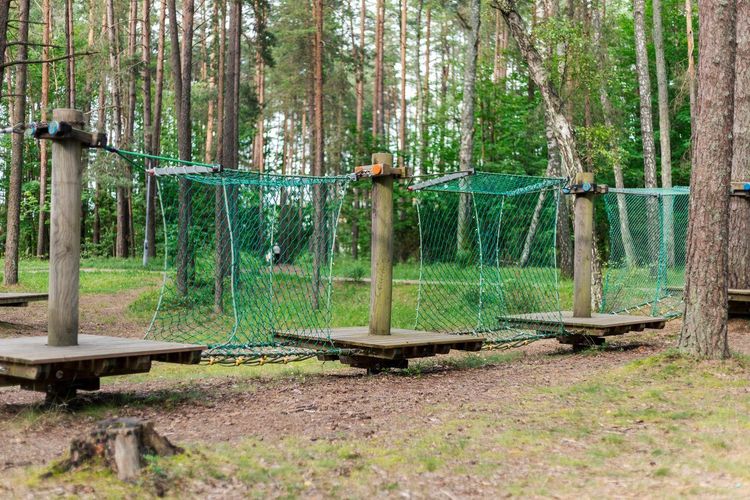
The Parc Aventure de Vero (20133 Vero, rated 4.6/5 on Google from 693 reviews), half an hour's drive from Ajaccio in the wooded heights of the Gravona valley, offers several tree-climbing courses graded by age and ability: from age 3 for the ground-level routes, from 5–6 for the first elevated zip lines, up to the thrills-and-spills courses reserved for teens and adults. Instructors kit out and brief each group before they set off — a reassuring ritual for first-timers.
A few minutes away, several educational farms open their doors to introduce city visitors to local traditions: semi-wild Corsican pig farming, sheep's cheese making, and sometimes a visit to beehives or a small orchard. You touch, smell and taste far more than you merely observe — a welcome change of pace from the morning's museum visits.
Combining both activities in a single day works well: tree climbing late in the morning to burn off energy, then the farm in the early afternoon for a calmer rhythm before heading back to Ajaccio.
Book on weekdays outside July and August if possible: weekend and peak-season slots on the most popular courses fill up by 10:30am. Allow a full half-day for both stops including travel time, and bring closed shoes — ropes and dirt paths are unforgiving on sandals.
Stargazing: the Evening Outing Not to Miss

Far from the city lights, the Corsican sky is among the clearest in the Mediterranean. Several local astronomy clubs organise, on certain summer evenings, stargazing evenings open to all, telescope included, with explanations tailored to younger visitors about the constellations visible from the northern hemisphere.
The hills above Ajaccio, particularly along the route des Sanguinaires after dark, also offer a clear enough sky for an impromptu session without any equipment: a blanket on the ground and a star-identification app are all you need to fill an evening. Aim for moonless nights, which are far better than full-moon evenings.
Ajaccio's Beaches with Kids
Ajaccio's beaches fall into two distinct zones: the urban beaches, walkable from the centre, and those along the route des Sanguinaires, wilder and generally quieter.
In town, Plage Saint-François is the most practical option with young swimmers: fine sand, a gentle slope, lifeguard cover in season and immediate access to cafés and public toilets. It is also the busiest, a point to bear in mind if you are looking for tranquillity.
Along the route des Sanguinaires, Plage du Trottel combines sand and rocks, with shallow areas ideal for snorkelling: a mask and snorkel are enough to spot fish and sea urchins between the rocks — an activity that holds attention reliably from around age 6–7. A little further on, Marinella and Barbicaja offer the same mix of sand and rocky slabs, with car parks that fill up less quickly in the middle of the day.
For very young children, the answer usually points to Plage d'Argent (Route des Sanguinaires, 20000 Ajaccio, rated 4.4/5 on Google from 4,242 reviews), which is more sheltered from the wind and has a very gradual entry into the water. It is smaller than Plage Saint-François, however, with less natural shade: bring a parasol or a beach tent.
Another reliable option to the east is the Plage du Ricanto, which everyone here calls Plage Tahiti: a long stretch of sand with a very gentle slope, five minutes from the airport, where you can wade a long way before the water reaches your waist. The only downside is aircraft noise on take-off, which younger children often find more entertaining than annoying.
For teens in search of a little more action, the successive coves along the route des Sanguinaires allow you to vary your spot from one day to the next: each inlet has its own character, from families set up for the day to small groups doing paddle boarding or snorkelling.
In high season, arrive early: parking along the route des Sanguinaires fills up by 10:30am, and the most easily accessible beaches follow suit. Bus line 5 serves the entire route des Sanguinaires from the city centre — a comfortable alternative on busy days. One last detail to plan for if your group is sensitive to cold water: temperatures rarely exceed 22°C before mid-June.
The Sanguinaires Islands and the Coastguard Path
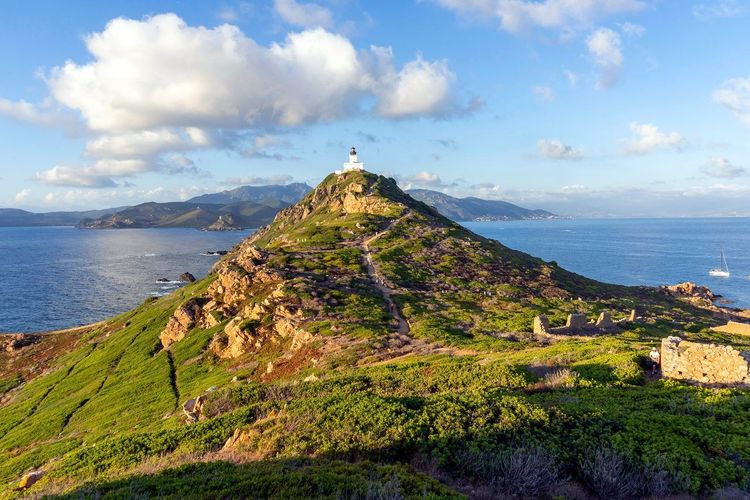
The Sanguinaires archipelago, four islets of dark rock set at the entrance to the Golfe d'Ajaccio, forms one of Corsica's most photographed images — especially at sunset when the rock seems to catch fire. Several companies offer boat trips of about an hour around the islets, a format generally well tolerated even by young passengers.
On land, the Pointe de la Parata offers the most celebrated viewpoint over the archipelago: a very short paved path leads to the foot of the Genoese tower, accessible by pushchair for the first half. For a more active approach, the coastguard path follows the shoreline all the way to Capo di Feno, a wilder beach popular with surfers. Allow about two hours' walking there and back from the nearest car park — accessible to experienced walkers from age 7–8, but impassable with a pushchair given the uneven and at times rocky terrain.
A little further south, the Genoese tower on the Isolella peninsula, near Porticcio, is reached via a shorter, shadier coastal path — a good option for a one-hour walk without too much physical commitment. The view from the tower takes in the entire Golfe d'Ajaccio, a fine excuse for a memorable photo.
Sunset is the most popular time, but also the busiest: a late-morning outing offers calmer seas and equally photogenic light, with far less queuing at the jetty. To plan this excursion in detail, including boat timetables, our Ryo article on the Sanguinaires Islands lists the companies and the best time slots to avoid the crowds. For the town itself, the Ryo audio-guided tour of Ajaccio makes a good complement to this sea excursion.
Diving, Kayaking and Boat Trips from Ajaccio
Several diving clubs based in Ajaccio offer junior taster sessions, available from age 8 in shallow water and generally from age 10–12 for a proper sea dive, run in small groups with a dedicated instructor. The sites around the gulf, shallow and rich in marine life, are well suited to a first underwater experience without strong currents.
Kayaking south of Ajaccio, along the route des Sanguinaires or around the Parata peninsula, is done in double kayaks so you can paddle together without carrying the effort alone. Some rental companies offer guided two-hour coastal trips with swimming stops in coves inaccessible on foot.
For those wanting to venture further, boat trips depart from Ajaccio for the Scandola nature reserve, a UNESCO World Heritage Site within the Golfe de Porto, or towards Bonifacio and its spectacular limestone cliffs. These full-day outings, being longer, suit children from around age 6–7 who can sit still at sea for several hours, and are best booked alongside seasickness treatment for those who are prone to it.
Child-sized life jackets and water-resistant sunscreen are provided or strongly recommended on virtually all water-based outings departing from Ajaccio's port, but it's worth confirming at the time of booking. Also compare the different packages before reserving: duration, boat size and whether swimming stops are included vary considerably from one company to another.
What to Visit around Ajaccio: Villages and Hikes
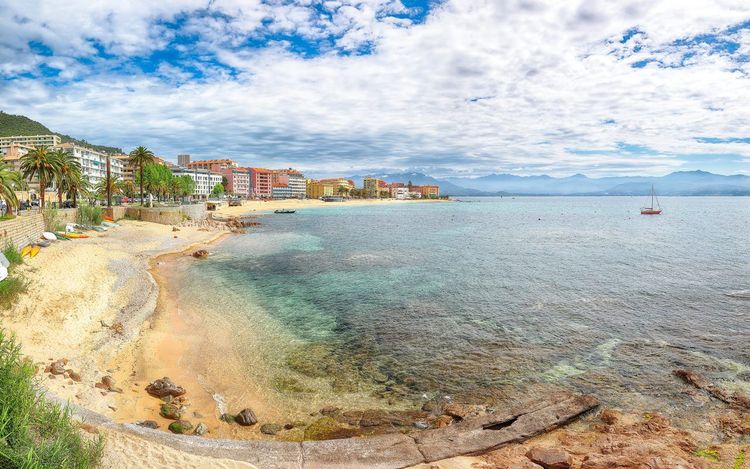
Beyond the city, the pays ajaccien and southern Corsica offer enough day trips to fill a second week of holiday without once boarding a plane. Rather than cataloguing the entire island, here are the realistic outings reachable in a day from Ajaccio, at a pace that still leaves time to breathe.
Half an hour inland, several villages of the pays d'Ajaccio such as Bocognano or Ocana offer short, shaded hikes, often along rivers where you can happily paddle at the end of the route. These walks of 1h30 to 2h30 are far more accessible than the major mountain itineraries reserved for experienced hikers.
Further north, the calanques de Piana, listed as a UNESCO World Heritage Site, rank among Corsica's most spectacular landscapes: pink granite cliffs sculpted by erosion, best admired from the road above or on a boat trip from Porto. Allow about 1h15 of driving from Ajaccio along a winding road that can cause car sickness in sensitive passengers — plan some stops.
To cool everyone down in the midday heat, the Cascade de la Struccia, in the heights of the Gravona valley near Bocognano, is reached by an easy twenty-minute walk and leads to a natural pool where swimming is straightforward. Still near Bocognano, the Voile de la Mariée waterfall, a good fifty metres high, can be admired from a viewpoint reached in just a few minutes. Further south, Piscia di Ghjaddu, in the Ospedale massif near Zonza, requires a good hour's walk on rocky terrain and a full day including the drive: best reserved for those already accustomed to mountain hiking.
The Désert des Agriates, at the far north of the island, is too far from Ajaccio for a simple day trip but is worth noting if your stay combines several bases: its wild beaches, accessible only on foot or by boat, are among Corsica's finest for swimming in complete peace, well away from the crowds of the urban beaches.
To organise these outings step by step, the Ryo guide to excursions around Ajaccio details journey times, while the Ryo article on Corsican waterfalls and swimming spots lists the safest pools for a dip. If the Ajaccio programme isn't enough, the hilltop villages of Cap Corse or Balagne can be added to a longer stay, but remain beyond the reach of a single day trip.
Where to Go Depending on the Weather: Parks, Toy Libraries and Rainy Days

A rainy day or an afternoon at 34°C in the middle of August needn't keep everyone cooped up at the hotel. Ajaccio has enough indoor or shaded options to keep the programme going without forcing it.
The Parc Berthault (Boulevard Lantivy, 20000 Ajaccio, rated 4.8/5 on Google from 4 reviews), by the sea, alternates shaded lawns and play areas with a view over the gulf: a good compromise for a late-morning break between two visits in the city centre. The Jardin du Casone, slightly further out, also offers a pleasant green space for an impromptu picnic, with fewer crowds in peak season.
As for swimming pools, Ajaccio's municipal pool opens to the public outside the time slots reserved for clubs and schools — a practical alternative on days when the sea is too rough or too cold. Check the public opening times: they change from one holiday period to the next.
For truly rainy afternoons, the city-centre media library has a children's area with a reading corner, and a community toy library where you can play on site or borrow board games for the week. Two cinemas round out the options for compromised days, with a regular children's programme during school holidays.
During the hottest hours, between 1pm and 4pm in summer, it's best to choose these indoor or shaded options rather than pressing on with outdoor visits: the heat that builds up on the cobblestones of the historic centre is hard to handle for under-10s.
Where to Eat and Take a Break without Stress
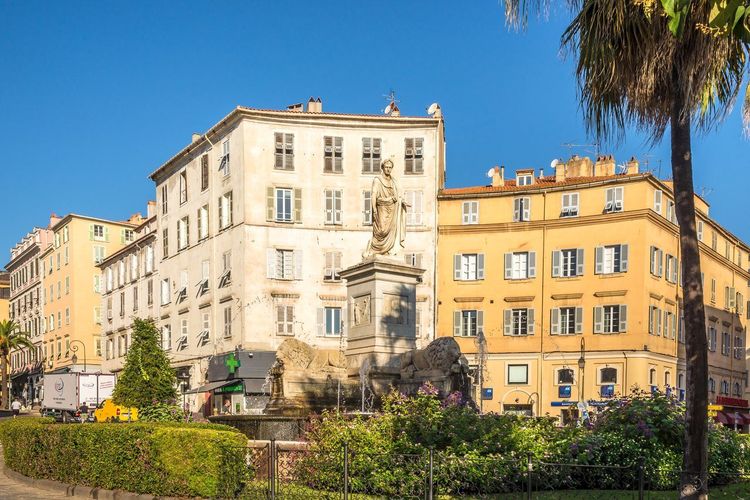
Finding a restaurant that is genuinely welcoming to young children is not guaranteed in Corsica, where traditional cuisine focuses more on local produce than on standardised children's menus. Pizzerias and seafront restaurants are generally the most flexible, with high chairs and simplified dishes available on request, particularly along the waterfront and around the place Foch. To explore local gastronomy without putting cautious palates on guard, our Ryo article on Ajaccio's culinary specialities lists addresses and dishes that are easy to introduce to younger eaters.
For a break rather than a full meal, several city-centre cafés happily tolerate pushchairs and noisy groups on their terraces. And to keep costs down, free outings are plentiful: the beaches, the outer ramparts of the Citadelle, the morning market or a simple stroll along the boulevard du roi Jérôme can easily fill an entire day without spending a euro on activities.
Ajaccio with a Baby or a Toddler
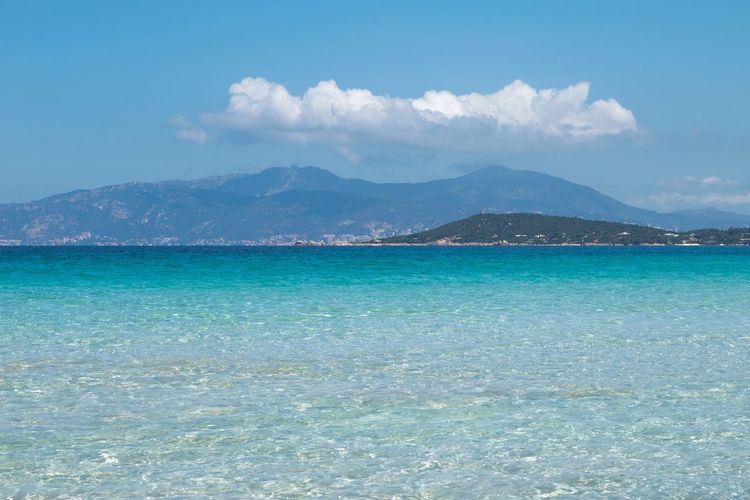
With a baby in Ajaccio, the programme naturally centres around three pillars: a sheltered beach, a nap schedule that is respected, and short distances between activities. Plage d'Argent, already mentioned for its gentle slope, is the best choice for a first dip in the sea, while the tourist train lets you explore the historic centre without carrying anyone over several kilometres.
For under-6s in general, short visits work far better than full-day excursions: Maison Bonaparte, the morning market or an hour at Cupulatta are more than enough to fill a morning without exhausting anyone. All-terrain pushchairs are useful on coastal paths but quickly become a burden in the cobbled lanes of the old town, where a baby carrier is often far more practical.
Practical Information: Where to Stay, When to Go and How to Get There
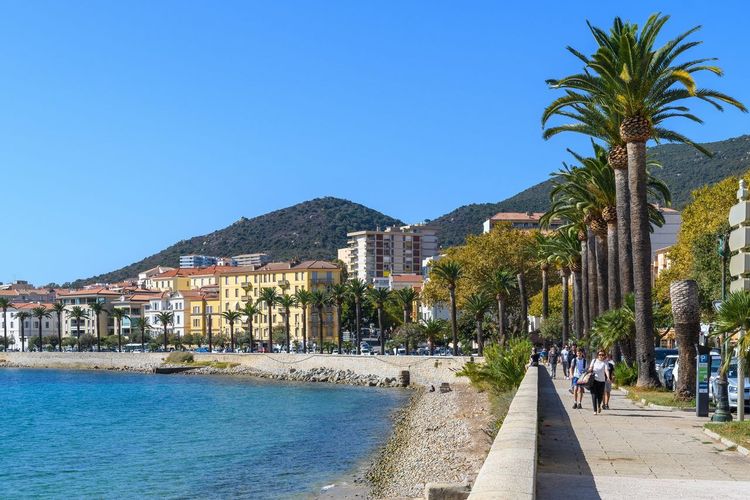
Where to stay in Ajaccio depends mainly on how you plan to get around: without a car, it's best to aim for the city centre or the seafront, within walking distance of the urban beaches and the old town. With a vehicle, self-catering properties around the gulf offer more space, gentler prices and facilities designed for younger guests, including a pool. To compare the options, the Ryo comparison of the best beachside campsites in Corsica and the Ryo ranking of Corsican holiday villages detail the best-suited addresses.
To get to Ajaccio, the Napoléon Bonaparte airport, about fifteen minutes from the city centre, receives direct flights from most major French cities — often a simpler option than a long ferry crossing from Marseille, Toulon or Nice. The ferry remains a popular alternative when you want to bring your own car for the duration of the stay, avoiding on-site car hire, which is expensive and quickly sold out in summer.
When to go depends mainly on each family's tolerance for heat and crowds: June and September offer already warm water and far fewer visitors than July and August, while spring is better if hiking takes priority over beach days. Winter remains mild but severely limits water activities, and several outdoor sites, including Cupulatta, close during this period.
As for length of stay, four to five days are enough to cover the city, a full beach day and a trip to the Sanguinaires or Cupulatta without rushing. A week leaves room to add the waterfalls or the calanques de Piana without sacrificing rest time. Booking accommodation several months in advance is strongly recommended in July and August, when the best addresses fill up as early as spring.


FAQ
What are the best activities to do with kids in Ajaccio?
The must-sees are the Maison Bonaparte, the old town in treasure-hunt mode, Cupulatta and its tortoise city, and the beaches along the route des Sanguinaires. Add the Parc Aventure de Vero for tree climbing and a boat trip to the Sanguinaires archipelago to mix heritage, nature and sea.
How many days should you plan to visit Ajaccio as a family?
Allow four to five days to cover the city centre, a full beach day and a trip to Cupulatta or the Sanguinaires at a relaxed pace. A week lets you add the calanques de Piana or the waterfalls of the pays ajaccien while still leaving time to rest.
What is the best time of year to visit Ajaccio as a family?
June and September offer already warm water and far fewer crowds than July and August. Spring is better if you prefer hiking to beach days, while summer remains the top choice for making the most of the beaches and water activities.
What can you do in Ajaccio with kids on a rainy day or during the hottest hours?
The media library and its toy library, the Palais Fesch and its workshops, or a children's cinema screening are all good ways to fill a compromised afternoon. During the hottest hours, it's better to opt for these indoor options rather than pushing on with outdoor visits.
Which Ajaccio beach is best for very young children?
Plage d'Argent, on the route des Sanguinaires, is the safest choice thanks to its very gentle slope and shelter from the wind. Plage du Ricanto, known as Tahiti, also offers a very gradual entry into the water, and Plage Saint-François, more central, reassures with its nearby shops and lifeguard presence in season.
What can you do in Ajaccio with a baby?
Stick to short visits: Maison Bonaparte, the morning market, an hour at Cupulatta, and a dip at Plage d'Argent. The tourist train lets you explore the historic centre without carrying anyone over several kilometres of cobblestones.
What free outings can you do in Ajaccio with kids?
The urban beaches, the outer ramparts of the Citadelle, a stroll along the boulevard du roi Jérôme and the morning market make up a full day without spending a euro on activities. Add the Maison Bonaparte, free for under-18s, and you have a complete day for the price of one adult ticket.
Ajaccio is particularly practical for a multi-generational stay: the city packs Napoleonic history, a compact historic centre, a lively market and walkable beaches into a tiny area, before you even get in the car to reach Cupulatta, the Sanguinaires or the waterfalls of the pays ajaccien. Few Mediterranean destinations offer such a balance between urban activities and nature escapes within so few kilometres.
To turn every stop into a game rather than a simple visit, the Ryo audio-guided tour of Ajaccio is the easiest companion to carry in your pocket: just follow the thread, neighbourhood by neighbourhood, and let the youngest members of the group guess what comes next in the Napoleonic story before it's revealed.
À lire également