© Shutterstock
 Votre guide Ryo
18 Free Activities to Do in Ajaccio in 2026
Ajaccio requires no particular budget to reveal its most beautiful sides. When it comes to free activities, Ajaccio has nothing to envy from the great cities of the continent: beaches accessible on foot from the centre, farmers' markets, coastal trails, and Napoleonic heritage can all be discovered without spending a single euro, whether in the height of August or in the depths of winter. Between the golden light that sets the pointe de la Parata ablaze at sunset and the scent of brocciu drifting above the market at place Foch, Napoleon Bonaparte's birthplace lends itself particularly well to this kind of trip. The Ryo audio-guided tour of Ajaccio connects several of these iconic spots for those who want to give structure to their stroll.
Eighteen experiences make up this selection of free activities in Ajaccio: a coastal trail running past four-century-old Genoese towers, a hunt for pixel art collages scattered through the alleyways of the historic centre, a wild beach accessible by car at Capo di Feno, and a weekend flea market where locals have been browsing for generations. From the birthplace façade of Napoleon Bonaparte to stars visible to the naked eye far from the city's light pollution, every address below asks only for a little time and, sometimes, a few extra minutes on foot.
1. Watch the Sunset at the Pointe de la Parata
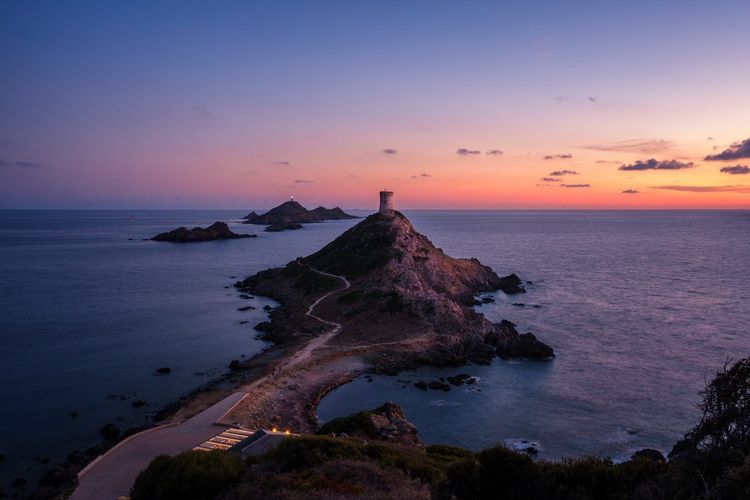
The pointe de la Parata closes the gulf of Ajaccio to the west, about fifteen minutes by car from the city centre via the route des Sanguinaires (D111). The site, protected and developed as part of the Grand Site des Îles Sanguinaires et de la Pointe de la Parata scheme (Route des Sanguinaires, 20000 Ajaccio, rated 4.7/5 on Google based on 2,400 reviews), is crowned by a Genoese tower built in the early 17th century to watch for Barbary raids. The marked access trail, open to all, climbs in about twenty minutes from the car park to the foot of the tower, with a gentle incline that can be managed just as well in flip-flops as in hiking boots.
As you climb, the fragrant maquis of myrtle and cistus gradually gives way to a 360-degree panorama over the gulf. Regulars know it is worth waiting on the flat rocks just below the tower: that is where the sun appears to literally plunge between the silhouettes of the Sanguinaires islands, setting the sea ablaze in orange then pink over the course of about fifteen minutes.
Plan to arrive at least 45 minutes before sunset to secure a good spot: in summer, several hundred visitors crowd the same place every evening. The site's car park, which is free outside peak season, fills up quickly after 7 p.m. in July and August; it is better to park further down the road and walk an extra five minutes. One last useful tip: keep a torch or a charged phone handy, as the descent takes place after dark on a rocky, unlit path.
2. Drive Along the Route des Sanguinaires and Admire the Islands
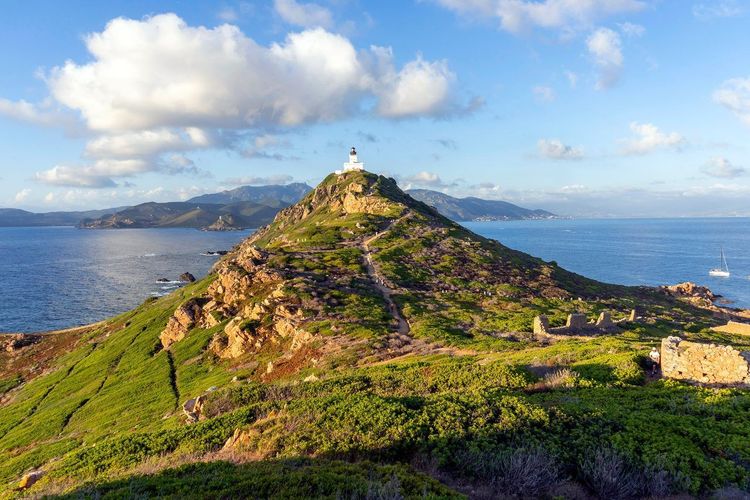
The route des Sanguinaires winds for about twelve kilometres between the centre of Ajaccio and the pointe de la Parata, hugging every cove along the rocky shoreline. On foot, by bike, or by car, it offers a completely different pace of discovery than the headland alone: the Genoese tower of la Parata, standing opposite the archipelago, and the silhouettes of the four Sanguinaires islands punctuate the horizon for almost the entire route.
Sunday-morning cyclists know it well: wide stretches of pavement and several rest areas set up facing the sea make it easy to break the walk as many times as you like. More adventurous kayakers and hikers sometimes set off from the discreet coves below, but the corniche works very well on foot using the urban bus line that links the centre to la Parata, with the option of walking one way and taking the bus back for just a few euros.
Allow about three hours for the round trip on foot from the city centre, or just under an hour by bike. Bring water: fountains are scarce along this south-facing stretch.
3. Wander Through the Old Town of Ajaccio and Its Typical Alleyways
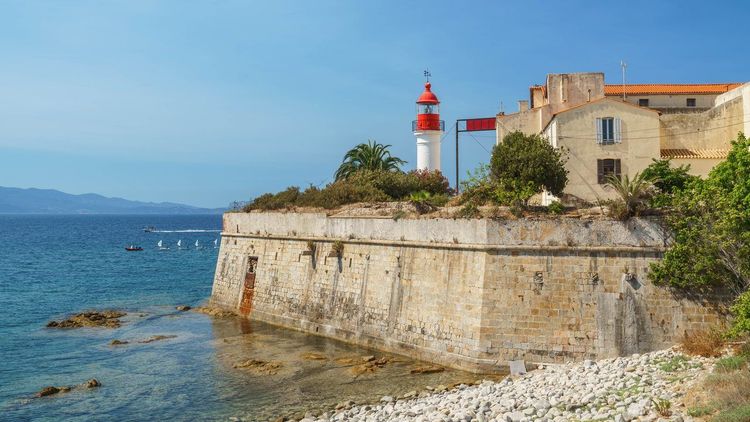
The old town of Ajaccio, tucked between the Vieux Port and the Citadelle, is best explored by deliberately straying from the main streets. Cobbled alleyways, laundry strung from one balcony to another, the scent of figatellu drifting from grocery shops: the historic centre concentrates a good share of the free activities in Ajaccio within a few hundred metres, all walkable and entirely free of charge.
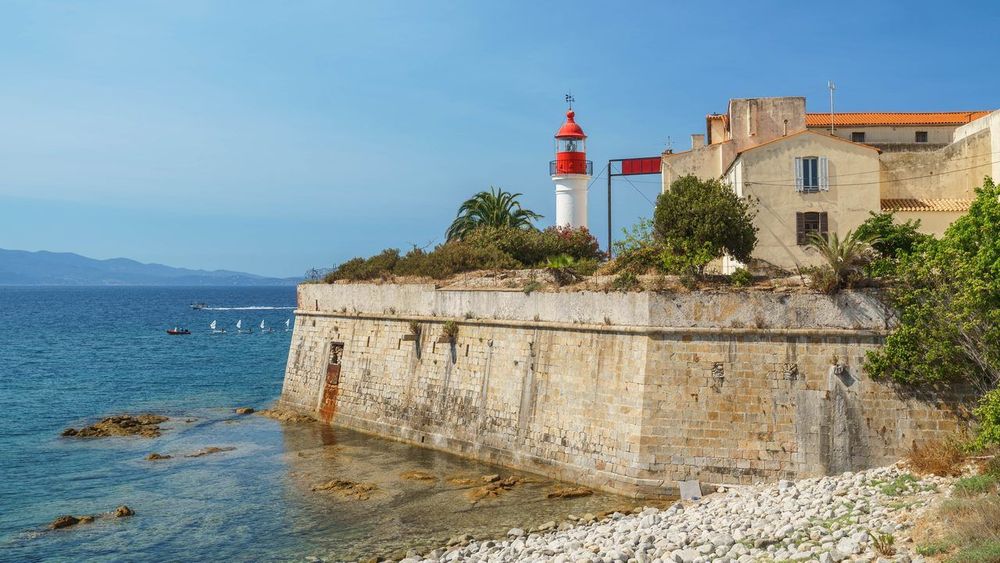
Rue Bonaparte, rue Saint-Charles, and rue du Roi-de-Rome form the backbone of this stroll, punctuated by ochre façades and 18th-century archways. The cathedral Notre-Dame-de-l'Assomption, where Napoleon was baptised in July 1771, opens its doors during the day with no admission charge: its plain exterior hides a baroque interior and the chapel where the Bonaparte family had their regular pew. At the far end, the Citadelle Miollis (Boulevard Danielle Casanova, 20000 Ajaccio, rated 3.8/5 on Google based on 703 reviews) closes off the old town on the sea side. Long occupied by the military, it has been handed over to the City of Ajaccio and is gradually opening to the public for exhibitions, visits, and cultural events; its ramparts, meanwhile, can be walked at any time from the boulevard that overlooks them.
For a narrated immersion, the short version of the Ajaccio audio-guided tour, La Cité Impériale covers exactly this area in just under an hour of walking. Aim for late morning on a weekday: the narrow alleyways struggle to absorb the crowds of cruise passengers who disembark on port-of-call days.
4. Discover the Ajaccio Market and Place Foch
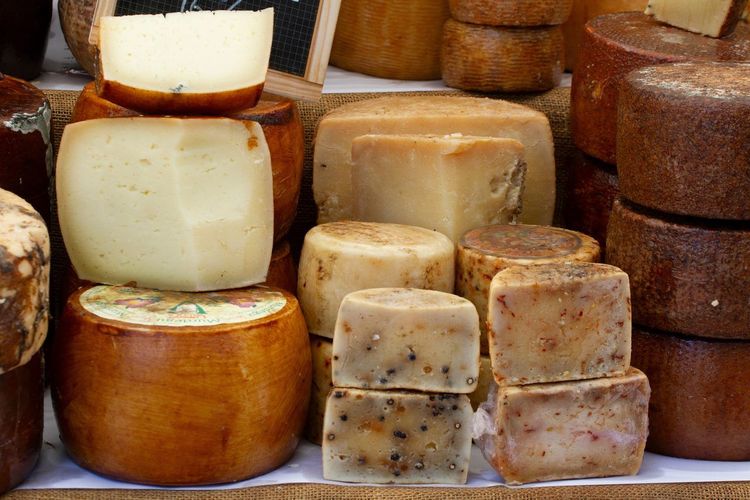
The place Foch, slightly below the Cours Napoléon, opens onto the neighbouring square Campinchi, where the Marcatu d'Aiacciu — the city's central market — is held every morning from Tuesday to Sunday, between 9 a.m. and 1 p.m. The Fontaine aux Quatre Lions topped by a statue of Napoleon stands at its centre, with palm trees and plane trees along the edges: the square itself is open at all hours, but it is during market hours that the neighbourhood truly comes alive.
At the stalls, producers from the hinterland display artisanal charcuterie, sheep's cheese, maquis honey, fresh fish, and clementines in season. Watching, chatting with vendors, or breathing in the aromas of fresh brocciu and smoked figatellu costs nothing: only tasting and buying require opening your wallet, and even then, many producers are happy to offer a sample before making a sale.
The square Campinchi also houses a covered food hall open from Tuesday to Sunday until early afternoon: it is the natural retreat on rainy days and the venue for local events, concerts, and occasional car boot sales throughout the year. The producers' market is held on Wednesday and Saturday mornings, at the same hours: these are the two slots to target if you want to meet the farmers and market gardeners from the hinterland directly. Arrive as soon as it opens, at 9 a.m., to enjoy the full range of produce before the crowds arrive.
5. Stroll Along the Quays of the Vieux Port and Port Tino Rossi
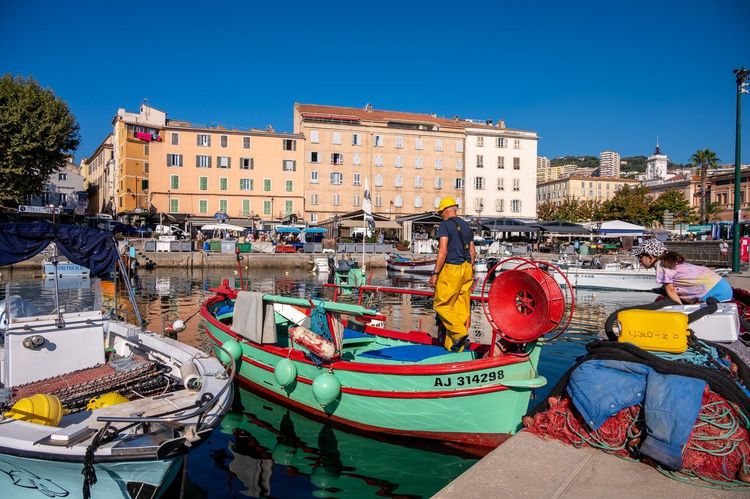
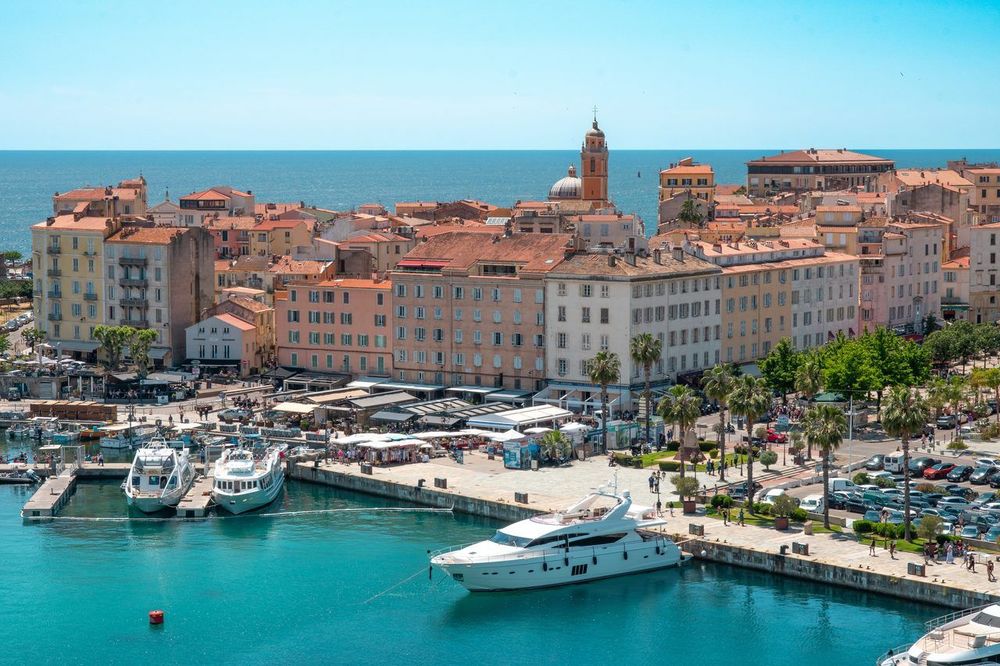
Between the Vieux Port and Port Tino Rossi, the quays of Ajaccio have told the city's maritime story for generations. The former still shelters a few fishing boats moored at the foot of the Citadelle; the latter, more recent, runs along the promenade and serves as the departure point for boats to the Sanguinaires islands.
Walking along them costs nothing and can be done at any hour, but aim for late afternoon: fishermen return to sort their catch, boats coming back from the Sanguinaires dock, and the nearby terraces gradually come to life without any need to sit down at one. The quay's name pays tribute to Tino Rossi, the local legend born in Ajaccio in 1907, whose voice still accompanies the shops of the neighbourhood.
For an alternative sunset to the one at la Parata, with no car and no approach walk, settle on one of the benches facing the sea: the view stretches across the entire gulf and over the first outlines of the Sanguinaires. And if you are an early riser, watching the nets being brought in at the Vieux Port around 8 a.m. offers a far more intimate spectacle than the evening scene.
6. See Napoleon's Birthplace and Place Letizia
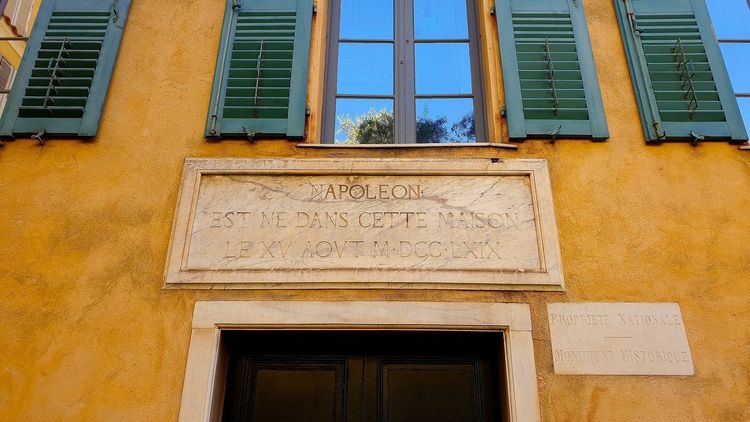
The maison Bonaparte, on rue Saint-Charles, is the birthplace of Napoleon Bonaparte, born on 15 August 1769. The façade and the small square in front of it, place Letizia, can be seen freely, without stepping inside the national museum that occupies the interior.
The building, remodelled several times since the 17th century, has modest bourgeois proportions, far from the imperial image that history has built around the figure. The interior visit, which is paid, remains a complementary option for those who want to see the period furniture and family portraits; the exterior is more than enough to absorb the atmosphere of the neighbourhood where Napoleon spent his earliest years, before leaving for the mainland and the collège d'Autun at the age of nine.
Place Letizia, tiny and often deserted outside museum opening hours, is well suited to a quiet photo stop, away from the bustle of the nearby Cours Napoléon. Continue a few metres along rue Bonaparte: the plaques and carved doorways of the neighbourhood tell the same family story, with no admission fee.
7. Admire the Place du Diamant and Its Equestrian Statue of Napoleon
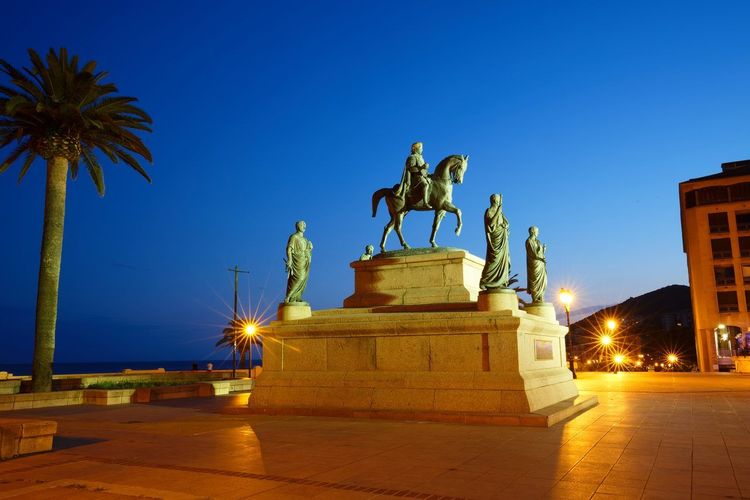
The place du Diamant (Place Général de Gaulle, 20000 Ajaccio, rated 4.2/5 on Google based on 1,830 reviews), officially place Général-de-Gaulle, opens like a balcony over the gulf of Ajaccio. At its centre stands an equestrian monument to Napoleon I surrounded by his four brothers, inaugurated in 1865.
The esplanade can be crossed at any time, and the best photographs are taken at the end of the day, when the raking light brings out the bronze and the sea in the background turns a deep shade of blue. Its very open feel is explained by the underground car park beneath your feet: the square also serves as an urban stage for concerts, gatherings, and city events, making it an excellent vantage point for observing daily life in Ajaccio.
8. Contemplate the Exterior of Palais Fesch and the Chapelle Impériale
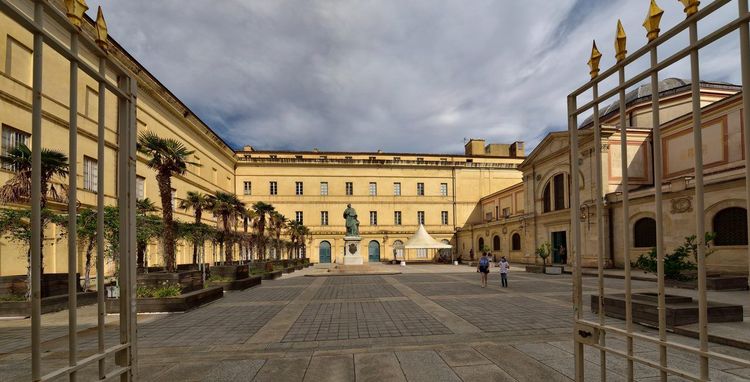
The Palais Fesch, built at the initiative of Cardinal Joseph Fesch, Napoleon's maternal great-uncle, houses one of the most important collections of Italian painting preserved in France after that of the Louvre. Its inner courtyard, its neoclassical façade on rue du Cardinal-Fesch, and the cardinal's statue can all be admired from the street, as can the exterior of the adjacent Chapelle Impériale, where several members of the Bonaparte family are interred.
Access to the collections remains paid, but the museum regularly programmes temporary exhibitions and discounted evening openings, notably during the European Night of Museums in May: a good reason to push open the door of what the city considers its cultural gem at least once a year. Check the programme before you visit, as these special openings fill up quickly.
The Fesch neighbourhood is also worth lingering in, with its pedestrianised shopping street and tall, tightly packed façades. The Ryo audio-guided tour of Ajaccio dedicates several audio tracks to this area, covering both the story of the cardinal collector and that of Ajaccio's great families.
9. Browse the Sunday Flea Market
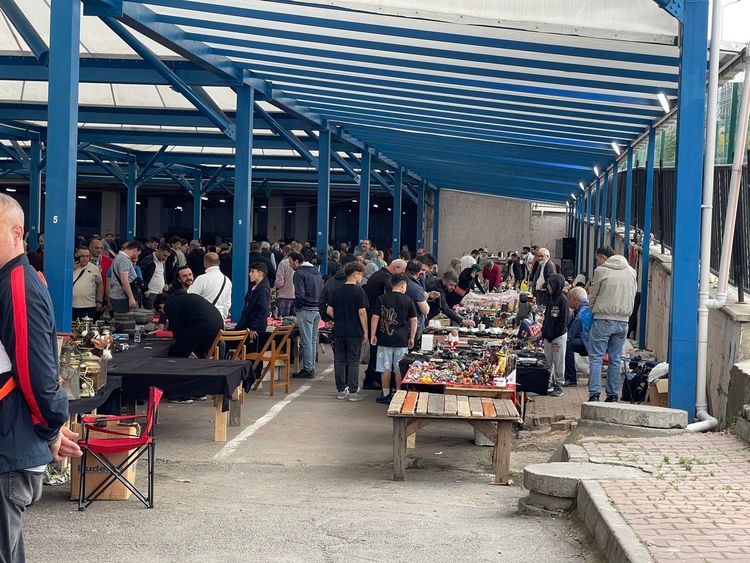
On Saturday and Sunday mornings, from 9 a.m. to 1 p.m., a flea market sets up a short distance from the Vieux Port, near square Campinchi, while the neighbouring place Abbatucci also hosts its weekend stalls. Antique crockery, Napoleonic postcards, vinyl records, clothing, jewellery, and Corsican curios change hands between private sellers and small antique dealers in an atmosphere that feels far more local than touristy. Simply wandering between the stalls is more than enough to soak up the mood, even without taking anything home: it is also one of the rare moments when you hear Corsican spoken from one stand to the next. Arrive early if you are hoping to find something — regulars do the rounds in the first hour.
10. Swim at the City-Centre Beaches
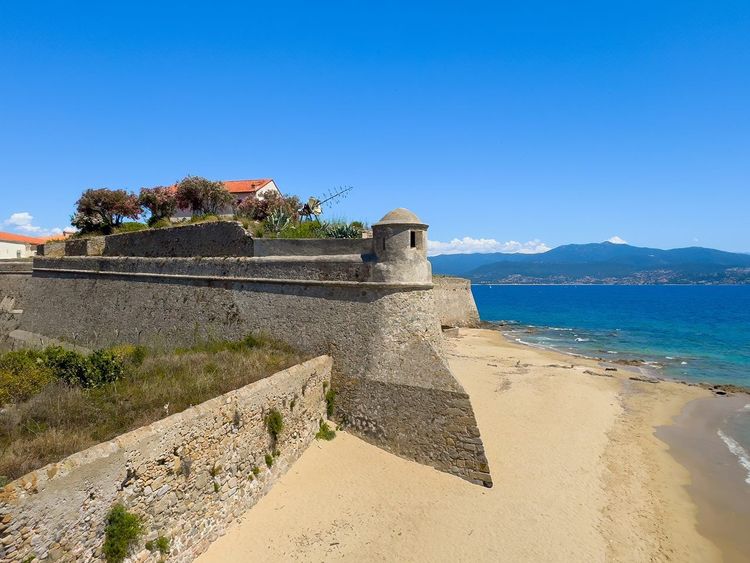
Ajaccio has the rare distinction of having several beaches accessible on foot from its city centre, making them probably the most rewarding of the free activities in Ajaccio as soon as temperatures rise. The Saint-François beach, the closest to the old town, stretches its fine sand right below boulevard Lantivy, while the Trottel beach, slightly further west along the same seafront, draws more families with its shallow waters.
Both are supervised in season, equipped with public showers and toilets, and free to access, unlike the private beach clubs that sometimes line the sand with sun lounger rentals. Heading further west along the route des Sanguinaires, the Palm Beach completes this urban offering: larger and windier, it is popular with water sports enthusiasts and served by the same bus line as the rest of the corniche.
At the height of the season, arrive before 10 a.m. to find a shaded spot under the few umbrella pines at Saint-François: crowds build quickly once the temperature exceeds 28 degrees, and natural shade is limited. Outside the season, these same beaches become walks in their own right, with the line of the Sanguinaires as a backdrop and, often, nobody else around but a few anglers. Once you are done at the beach, the Ryo audio-guided tour offers an easy way to see the rest of Ajaccio on foot.
11. Escape to the Nearby Wild Beaches (Capo di Feno and Surroundings)
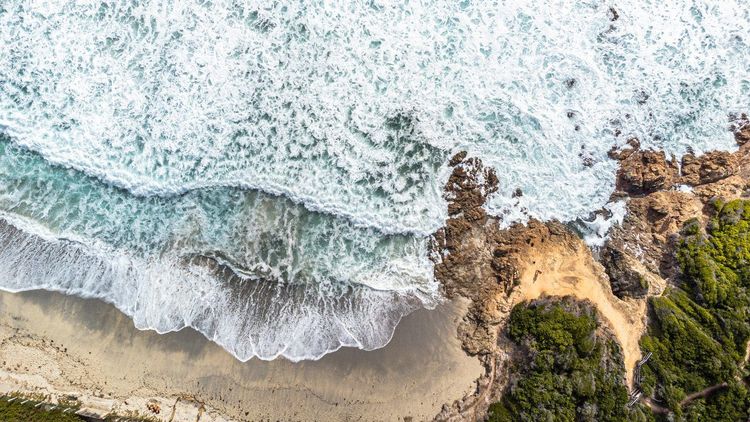
About twenty minutes by car from the centre, the Capo di Feno beach (Route de Capo di Feno, 20000 Ajaccio, rated 4.6/5 on Google based on 419 reviews) is a complete change of scene: dunes, pale sand, and an almost total absence of facilities make it one of the most sought-after wild beaches in the gulf of Ajaccio.
The wind blows more reliably here than in town, which explains the regular presence of surfers and kitesurfers on swell days. Without a car, access is difficult: no regular bus line serves the site, and the final stretch of narrow, winding road puts off some visitors, which guarantees a noticeably quieter crowd than at Saint-François in midsummer.
Other more secluded coves dot the coast beyond Capo di Feno, particularly towards the pointe de Pelusella and the baie de Saint-Antoine. To find the best wild swimming spots across the entire gulf, our Ryo article on the most beautiful swimming spots in Corsica lists several alternatives, including freshwater options, to vary the pleasures throughout your stay.
12. Hike the Sentier des Crêtes and Through the Maquis
The sentier des crêtes (Chemin des Crêtes, 20000 Ajaccio, rated 4.7/5 on Google based on 310 reviews), which overlooks the city to the north, remains one of the most spectacular free activities in Ajaccio: in an hour and a half of climbing from the Salines neighbourhood or the bois des Anglais, you shift from an urban landscape to a ridgeline from which the gulf and the Sanguinaires unfold in a single sweep. The elevation gain, sustained for the first half hour, makes itself felt, but no special equipment is needed beyond good shoes and plenty of water.
The maquis bordering the path changes scent with the season: cistus and everlasting in spring, myrtle and arbutus in autumn. Early-morning hikers sometimes encounter wild boar or hunting raptors, well before the heat silences the cicadas. Avoid the midday-to-4 p.m. slot from June to September: the trail offers almost no shade and the prefectural closure order on the maquis, issued in the event of high fire risk, can restrict access from one day to the next. Checking the current orders before you set off will save you making the trip for nothing.
In the hinterland, the Prunelli valley offers another face of hiking: shaded paths along the river, natural pools for cooling off, and easy access from Bastelicaccia or the Tolla road. Allow half a day to explore the main marked sections.
To plan a series of hikes over a weekend, our Ryo selection of the best hikes around Ajaccio details difficulty levels and the best weather windows, both in winter and summer.
13. Walk the Coastal Paths Around the Gulf
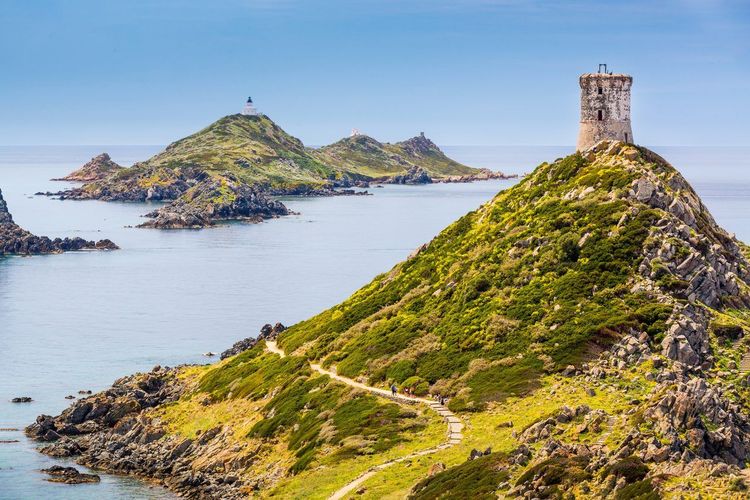
Less well known than the sentier des crêtes, the coastal paths that skirt the gulf of Ajaccio in places offer an alternative to the tarmac of the route des Sanguinaires. Between the pointe de la Parata and the Capo di Feno beach in particular, old customs officers' trails survive, once used to patrol the coastline.
The terrain, rougher and sometimes overgrown by the maquis in late summer, requires a little more attention than a simple urban walk. In return, it gives access to deserted coves, unreachable by car, where you can stop for a swim without seeing a soul.
These sections are not always officially waymarked: it is better to download an offline map before setting off, as mobile reception is unreliable along this stretch of coast. Allow extra time, as the return journey on this kind of terrain often takes longer than the outward leg.
14. Explore the Villages of the Grand Ajaccio
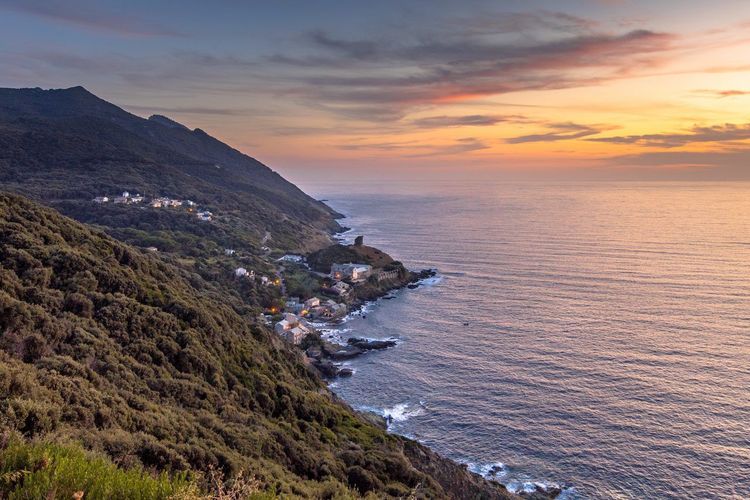
For those with a car, the Grand Ajaccio encompasses around ten communes clinging to the hinterland, less than thirty minutes from the centre. Bastelicaccia, Alata, and Villanova each offer a different perspective on the gulf, far from the bustle of the seafront.
These villages can be visited freely, at the pace of a stroll through their alleyways or a stop in the main square to watch local life: games of pétanque, a communal bread oven, chapels tucked away at the end of a track. Alata, in particular, opens up a panorama over Ajaccio and its gulf from its natural belvedere, especially photogenic at the end of the day.
To broaden the discovery beyond the Grand Ajaccio, our Ryo selection of the most beautiful villages in Corsica lists other stops reachable on a day trip, between the mountains and the sea.
15. View Ajaccio from the Southern Shore of the Gulf
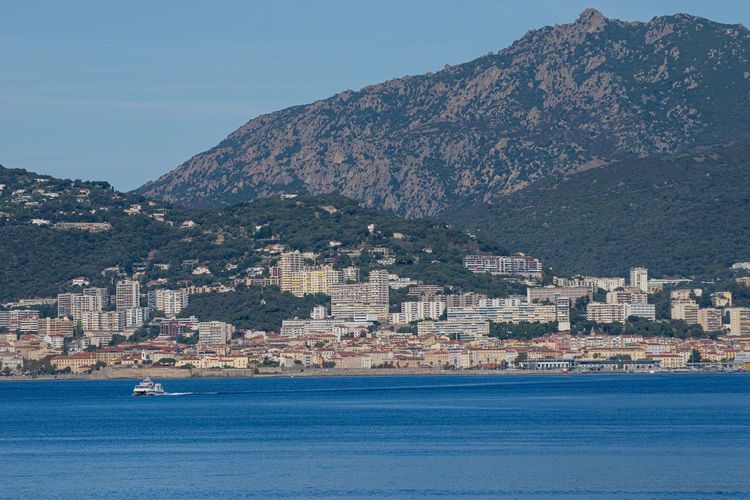
On the other side of the gulf, the commune of Porticcio and its southern shore offer a reversed viewpoint over Ajaccio, the Citadelle, and the Genoese towers lined up along the coast. The drive takes about twenty minutes around the back of the gulf; in season, a maritime shuttle links port Tino Rossi directly to Porticcio in around twenty minutes, a far more scenic option if you are travelling without a vehicle.
At the end of the day, when the sun drops behind the ridgelines that dominate the city, the silhouette of Ajaccio is cut out against a sky that is often ablaze, offering a perspective that few visitors think to seek out, busy as they are photographing the sunset from la Parata.
The beaches of Porticcio, open to all, lend themselves perfectly to this contemplative pause, with no need to swim to enjoy the view.
16. Hunt for Pixel Art Collages in the Streets

Over the past few years, pixel art collages have appeared on the walls of Ajaccio's historic centre — colourful tributes to the city's figures and symbols rendered in mosaic inspired by retro video games. Napoleon, Genoese towers, and Corsican specialities have all been pinned to the most inconspicuous façades.
This impromptu hunt, with no fixed route or admission fee, is particularly popular with children, who readily turn the walk into a treasure hunt. No official map catalogues these ephemeral works: they are discovered by chance in the alleyways, which adds to their charm and encourages you to stray from the usual paths.
Allow about an hour to explore the streets around the old town and rue Fesch, where the concentration of collages seems highest. One tip: look above shop-window level — several pieces are placed high up, on the corners of buildings.
17. Stargaze Far from Light Pollution

Once night falls, the heights around Ajaccio — towards the sentier des crêtes or the villages of the Grand Ajaccio — offer a far clearer sky than the city centre. Away from street lamps, the Milky Way becomes visible to the naked eye on a clear night, particularly between July and September.
No equipment is needed beyond a torch and warm clothing, since summer nights remain cool at altitude. Pick a moonless night using an ephemeris app, let your eyes adjust to the darkness for about twenty minutes, and the spectacle is worth any paid activity: in mid-August, the Perseids add several dozen shooting stars per hour to the scene.
18. Practical Tips for Planning Your Stay in Ajaccio
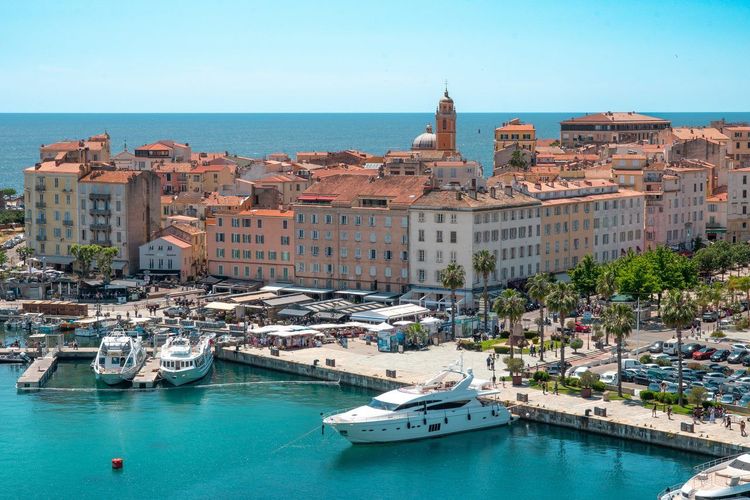
Now for the logistics. Most of the free activities in Ajaccio are concentrated within a three-kilometre radius of the Vieux Port, which means two full days are possible without a vehicle; the wild beaches, the hinterland villages, and the southern shore of the gulf, however, require a car or a bus journey.
How to get to Ajaccio? The Napoléon Bonaparte airport, a few kilometres east of the centre, is served from most major French cities, with flights of just over an hour from Marseille. The port also welcomes ferries from Marseille, Toulon, and Nice — a more economical option for those bringing a car. Once there, the city centre is entirely walkable and urban buses serve the Sanguinaires corniche as well as the beaches.
What to do in Ajaccio when it rains? Grey days are the ideal opportunity to switch to the paid visit of Palais Fesch or the maison Bonaparte, while also making the most of the covered hall at square Campinchi or a stroll under the arcades of the historic centre, which offer ample shelter from showers.
Why visit Ajaccio in winter? The weather stays mild, around 13 to 15 degrees during the day, the sites are deserted compared with the summer crowds, and accommodation rates drop significantly. For a family stay, spring and early autumn combine pleasant warmth and manageable numbers, with the added bonus of still-warm sea water in October.
One last useful reflex: the tourist office, located at 3 boulevard du Roi Jérôme just a short walk from place Foch, hands out free city maps, events calendars, and hiking sheets — everything you need to finalise your programme without spending a thing. To push the exploration beyond this selection, our Ryo article on day trips around Ajaccio usefully completes this guide with ideas for day excursions across southern Corsica.
FAQ
How many days should you plan to explore all the free activities in Ajaccio?
Two full days are enough to cover the old town, the pointe de la Parata, the central beaches, and the market at place Foch. With three days, it becomes possible to add a hike along the sentier des crêtes and an excursion to Capo di Feno or the villages of the Grand Ajaccio.
Where can you eat cheaply in Ajaccio?
Snack bars and sandwich shops around the Cours Napoléon and the market offer meal deals starting from 6 to 8 euros, often featuring Corsican charcuterie and cheese. Picnicking with products bought directly at the square Campinchi market remains the most budget-friendly option, to be enjoyed on the quayside or at the beach.
Where should you stay in Ajaccio and the surrounding area?
The city centre is home to hotels and short-term rentals, with prices rising sharply in July and August. The campsites of Grand Ajaccio and the route des Sanguinaires offer a more affordable alternative, especially off-season, with quick access by car or bus to the main sites in this selection.
What can you do in Ajaccio when it rains?
The cathedral Notre-Dame-de-l'Assomption, freely open during the day, the covered hall at square Campinchi, and the shopping arcades in the city centre let you stay dry without spending a thing. It is also the perfect time to visit the paid interiors of Palais Fesch or the maison Bonaparte, usually overlooked in favour of the outdoors.
What is the best time to visit Ajaccio with a family?
June and September offer the best compromise: pleasant swimming temperatures, more manageable crowds than in July and August, and still-moderate accommodation rates. Spring school holidays are equally suitable, with hikes that are doable without intense heat.
Which free activities in Ajaccio are best for children?
The hunt for pixel art collages in the alleyways, the supervised beaches in the city centre, and the weekend flea market are particularly popular with families. The trail at the pointe de la Parata, short and not technically demanding, is also accessible to children aged 6 or 7 and up.
Eighteen free activities in Ajaccio, zero euros spent: the imperial city proves that a successful stay does not necessarily depend on budget. Between Napoleonic heritage, beaches accessible on foot, and hikes through the maquis, the city offers enough to fill several days without ever reaching for your bank card, except for meals.
To connect these places without wasting time on planning, download the Ryo audio guide for Ajaccio: the route covers the main sites of the old town and the seafront across 19 audio tracks, over approximately 6 kilometres and 2h30 of walking, ready to take on your phone.
À lire également