© Shutterstock
 Votre guide Ryo
Weekend in Ajaccio in 2026: Complete Itinerary, Beaches, and Top Addresses
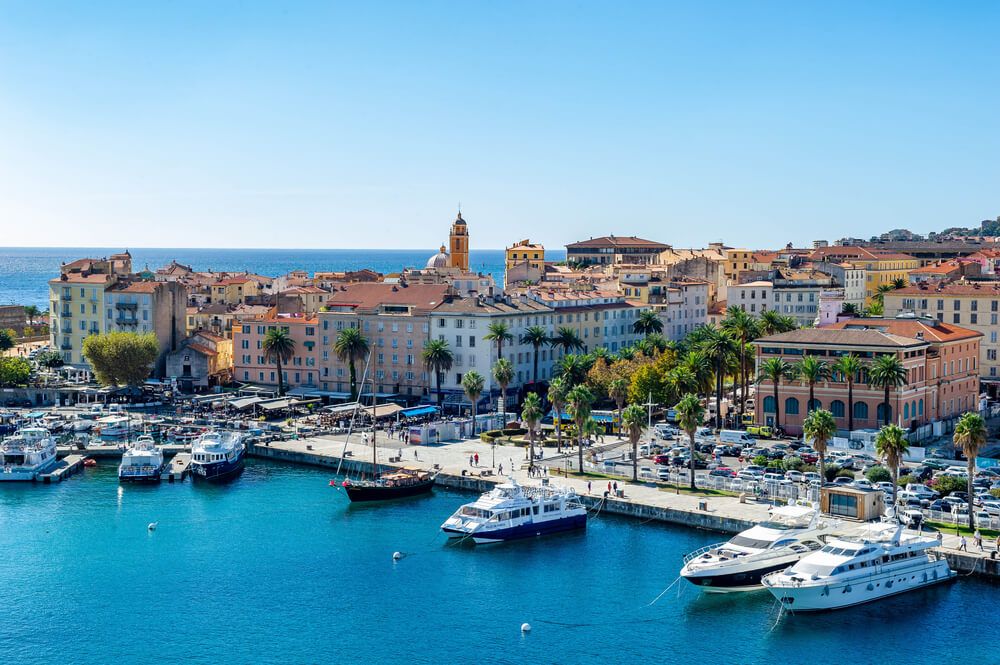
Two days are never quite enough in Ajaccio, and that's exactly what makes the city so endearing: you always leave with a list of things to do again. A weekend in Ajaccio quickly takes shape around three highlights: the old town and its imperial heritage, the Sanguinaires islands at sunset, and a paillote with your feet in the water. The capital of Corse-du-Sud, nestled at the back of a sheltered gulf, the birthplace of Napoleon Bonaparte blends ochre alleyways, a lively market, and turquoise sea less than ten minutes from the center. To get a feel for the city from the moment you arrive, the Ryo audio-guided tour of the imperial city connects the citadel, the cathedral, and the iconic squares of the historic center in just a few kilometers.
Over two days, you have time to walk the ramparts of a Genoese citadel, swim in 24°C water in front of the Sanguinaires archipelago, try a paillote where the daily menu runs around 35 euros, and push on to waterfalls in the Vizzavona forest, less than an hour's drive away. Between direct flights from around ten French cities and the overnight ferry from Marseille, the logistics are straightforward. All that's left is choosing the best time, the right budget, and the accommodation option that suits your pace — all of which this guide covers point by point.
Why Choose Ajaccio for a Weekend in Corsica
Ajaccio ticks a box that very few French cities can claim: landing on a Friday evening and being in a swimsuit by Saturday morning, all while staying in a historic city. The imperial city sits on a compact peninsula, which makes all the difference for a short stay. The citadel, the covered market, and the beaches are all within walking distance or a ten-minute drive, without the kilometers of mountain road that the rest of Corsica demands.
It is also a human-scale city: around 70,000 inhabitants, a center you can cover in a morning, and peaks above 2,000 meters visible from the seafront. For a weekend in Corsica, this immediate proximity between Napoleonic heritage, sea, and mountains is rare. Many visitors discover the city step by step with the Ryo audio-guided tour, which maps out a coherent itinerary between the main monuments without needing to check a map at every junction.
The Must-See Sights in Ajaccio over a Weekend
The classic visit to Ajaccio takes a morning if you walk quickly, or a full day if you stop at every terrace. Start with the old town, a grid of ochre and yellow alleyways clustered around the cathedral, before heading up toward the citadel and the seafront.
The Maison Bonaparte, where Napoleon was born on 15 August 1769, is arguably the most logical starting point. The façade opens onto a discreet square, but the interior recreates the furnishings of a well-off Corsican family from the 18th century, reception rooms included. Allow 45 minutes for the visit, a little more if you linger over the engravings on the upper floor.
Nearby, the musée Fesch houses one of the most important collections of Italian paintings held in France, bequeathed by Cardinal Fesch, Napoleon's uncle. Botticelli, Titian, and a hundred Italian primitives fill cool rooms that are a welcome refuge in the height of summer. The museum adjoins the imperial chapel, the necropolis of the Bonaparte family, accessible with the same ticket but only from May to October.
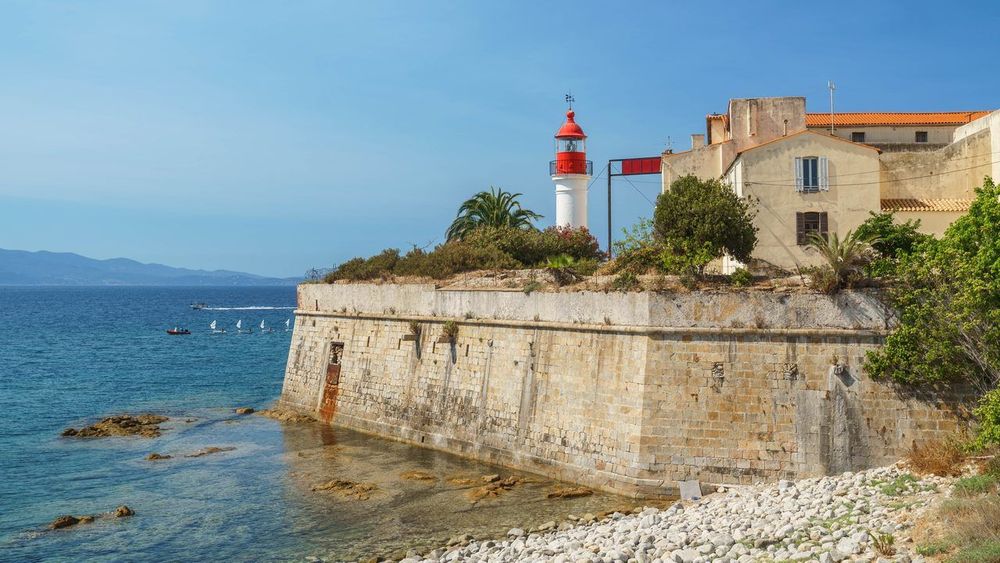
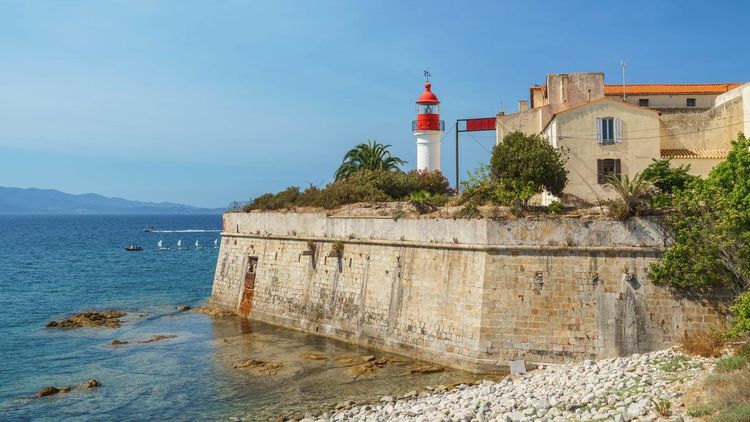
Continue to the citadel of Ajaccio, a Genoese bastion begun in the late 15th century and remodeled in the following century. Long a military property, it opens to the public only occasionally, for guided tours organized by the tourist office or for temporary exhibitions, but the view over the gulf from the boulevard that runs alongside it already makes the detour worthwhile. Visit in the late afternoon, when the light rakes the fortifications and the Plage Saint-François just below is emptying out.
On the way back down toward the port, the central market fills the Place Campinchi and the Place Foch every morning except Monday: Corsican charcuterie, brocciu, Corsican clementines, and gulf fish are sold cheek by jowl. It is also the ideal spot to put together a picnic before heading to the beaches.
Two more stops round out the loop without stretching the morning: the Cathédrale Sainte-Marie, where Napoleon was baptized in 1771, whose sober façade conceals a Baroque interior, and the Napoleonic salon of the town hall on the Place Foch, which brings together busts, medals, and portraits of the imperial family. Allow twenty minutes for each.
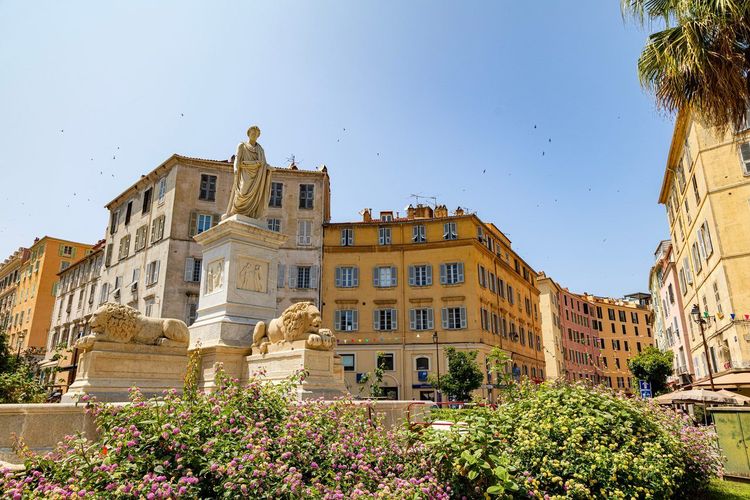
Finish along the seafront, from the Place du Général-de-Gaulle to the port Tino Rossi: palm trees, terraces, and a statue of Napoleon dressed as a Roman emperor — an aesthetic choice that never fails to surprise visitors. To make sure you miss nothing on this route, the Ryo audio-guided tour of the imperial city, a short format of around two hours, connects these stops in a logical order with historical commentary at each one. On the opening hours front, the musée Fesch is open every day, from 9:15 am to 6 pm from May to October and until 5 pm the rest of the year, for 9 euros entry, while the Maison Bonaparte closes one day a week: our Ryo app shows up-to-date opening times before you head up the street. For a fuller overview of the activities available during your stay, head to our Ryo article on the best things to do in Ajaccio.
The Beaches and the Sanguinaires Islands: the Essential Boat Trip
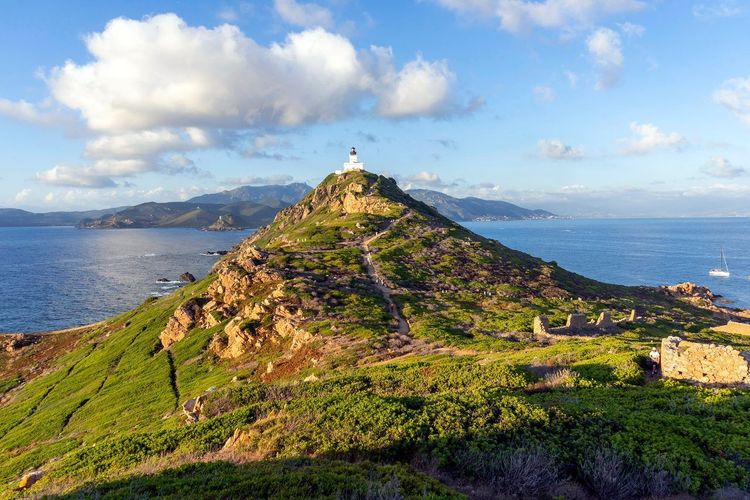
For a swim without leaving the city, Plage Saint-François is fifteen minutes on foot from the Maison Bonaparte, with fine sand and water sheltered by the port jetty. It is more of a locals' beach than a tourist one, lively on Saturday mornings.
The Route des Sanguinaires strings together the finest beaches in the gulf over about ten kilometers. Marinella offers fine sand and shallow water suited to children, while Palm Beach, broader and more open, tends to draw visitors in the late afternoon for the sunset over the islands. Both are reachable in about fifteen minutes by bus from the center, with the line running along the entire corniche.
At the end of the road, the Sanguinaires islands close off the gulf like a half-open door onto the sea. The most widely cited explanation for their name is the red tint the rock takes on at sunset, though Corsican scholars still debate the point. The Tour de la Parata, a Genoese tower perched on the final headland at the start of the 17th century, marks the departure point for the boats that reach the archipelago in about twenty minutes. Count between 20 and 30 euros for a ninety-minute boat excursion around the islands, a little more for crossings that include a swimming stop or a landing on Mezzu Mare, the largest of the islands.
You can also simply drive or take the bus to the Parata to watch the sunset from the shore, without boarding: it is free, the Sentier des Crêtes trail from the car park offers a bird's-eye view of the archipelago, and the light is not far behind what you get on the boat trip. The Ryo guide to the Sanguinaires islands details boat schedules by season.
Where to Have Lunch by the Sea: the Essential Paillote in Ajaccio
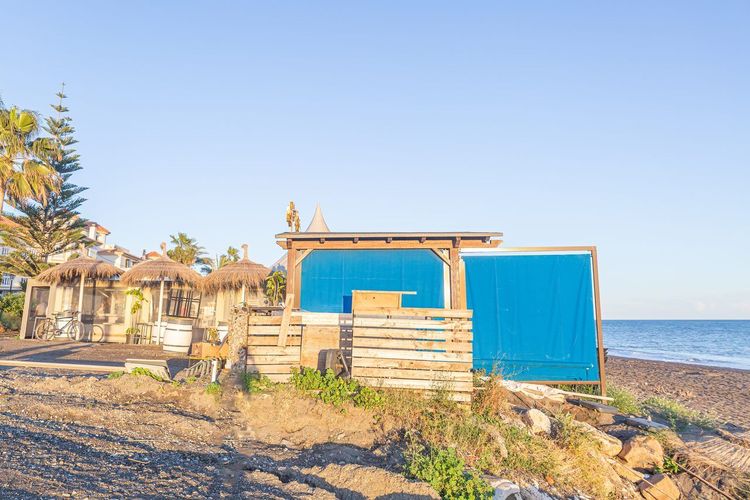
A paillote in Ajaccio is a semi-open beach restaurant, your feet practically in the water, open roughly from May to September along the Route des Sanguinaires and on the gulf beaches. The concept works differently from the rest of France: people come as much for a leisurely afternoon as for lunch, with a sun lounger included for restaurant guests.
Among the dozen or so addresses in the area, the paillote Le Week End, on the Route des Sanguinaires, has built a reputation for its grilled fish and a menu focused on produce from the gulf. Do not confuse it with the hotel of the same name, the Hôtel Le Week End, located on the same road: two separate establishments that share a catchy name, and two bookings you do not want to mix up on the phone.
On the bill front, the lunch menu generally runs between 28 and 38 euros for a starter and a main. A lobster supplement or a sea bass grilled by weight can push the evening tab to 60 euros per person with drinks. Book the day before in high season: terrace tables go quickly between 12:30 and 2 pm, and paillotes fill up on mistral days when everyone heads to the sheltered side of the gulf.
Other paillotes are worth the trip at Palm Beach or in Porticcio, on the other side of the gulf, with a livelier atmosphere in the evenings. Our Ryo article on the culinary specialties of Ajaccio lists the must-tries, from Corsican charcuterie to fiadone, beyond the paillotes.
Day Trips Around Ajaccio: Hikes, Villages, and Wild Corsica
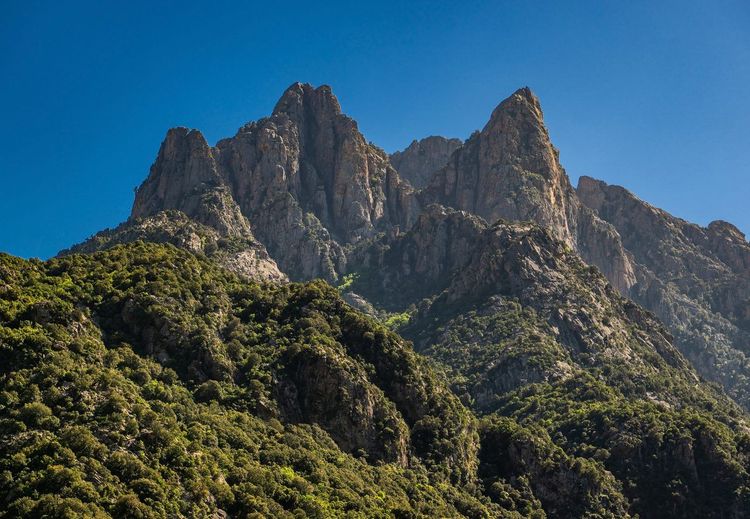
A weekend barely scratches the surface of the hinterland, but a half-day's drive already opens onto a different Corsica — mountainous and forested — less than an hour from the center.
Taking the road toward Bastia and into the interior, the village of Bocognano (20136 Bocognano) marks the gateway to the Monte d'Oro massif, 40 minutes from Ajaccio, with its Voile de la Mariée waterfall visible from the road. Higher up the valley, around Vizzavona, the Cascades des Anglais line up natural rock pools for swimming after the walk, in the shade of laricio pines: an hour's trail from the hamlet of Tattone, along a stretch of the GR20, reputed to be the most demanding long-distance hiking trail in Europe. Many people are content with this section alone without ever tackling the remaining fifteen stages.
In the opposite direction, to the south of the gulf, the village of Coti-Chiavari (20138 Coti-Chiavari) overlooks the sea from more than 600 meters altitude, amid a pine forest that sheltered an agricultural penitentiary in the 19th century. The viewpoint from the ruins of the former penitentiary takes in the entire gulf of Ajaccio all the way to the Sanguinaires — one of the finest views accessible by car from the city. On the same road, the beach at Verghia and the Genoese tower of Capo di Muro round out a half-day excursion easily.
Allow half a day for each of these excursions in a rental car, the only realistic option since public transport does not serve these villages. Our Ryo article on day trips around Ajaccio and the Ryo guide on what to do around Ajaccio in Corse-du-Sud detail longer itineraries, over a full day or more for extended weekends. For freshwater swimming enthusiasts, our Ryo guide to Corsica's waterfalls lists the most accessible rock pools from the city.
Where to Stay in Ajaccio for a Successful Weekend
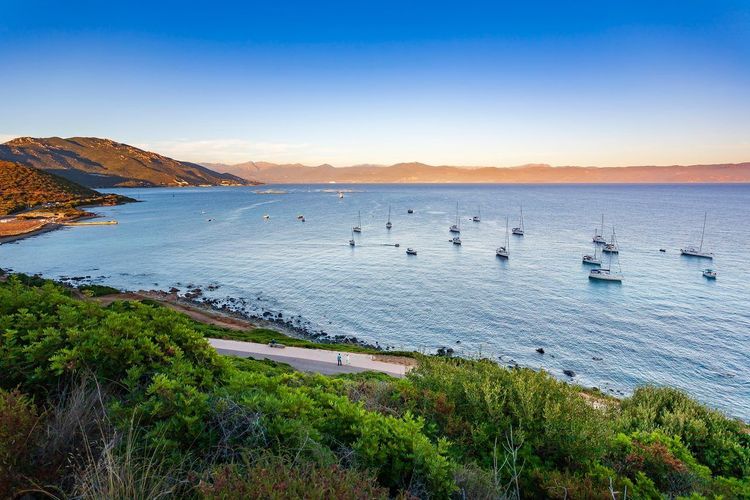
The choice of accommodation depends above all on what you want to do in the morning: breakfast on a terrace with a view of the gulf, or stepping straight out of the hotel into the old town.
Right in the center, hotels around the Place du Général-de-Gaulle and the Cours Napoléon have the advantage of putting everything within walking distance: the citadel, the musée Fesch, and the market are all less than ten minutes away. Count between 90 and 140 euros per night in a double room outside July–August for a decent 3-star hotel in Ajaccio, with breakfast rarely included in this price bracket.
Along the Route des Sanguinaires, several properties bank on sea views and a pool, with rates that climb quickly in high season, between 160 and 260 euros per night. This is the area to choose for a hotel close to the beaches without a car, as a bus line covers most of the route into the center.
Some establishments offer all-inclusive weekend packages in Ajaccio, with airport transfers, half-board, and a boat excursion to the Sanguinaires included: a convenient option if you prefer not to organize anything on the spot, generally priced between 250 and 400 euros per person for two nights. For a tighter budget or a family trip, camping remains a credible alternative around the gulf: our Ryo article on the best seaside campsites in Corsica and our Ryo selection of the best holiday villages in Corsica list the best-located options, often less than 20 minutes from the center.
Evenings in Ajaccio: Bars, Atmosphere, and Nightlife
Ajaccio's nightlife is concentrated in two areas: the seafront, between the Place du Général-de-Gaulle and the port Tino Rossi, and the alleyways of the old town around the rue Fesch.
In summer, the cocktail bars along the seafront open their terraces late, drawing a crowd of locals and holidaymakers alike. In the old town, the atmosphere is more intimate: wine bars and small terrace tables, perfect for extending the evening after dinner without needing a specific address in mind — just follow the sound of conversation.
The Ajaccio late-night events, held on certain summer evenings in the historic center, add concerts, craft markets, and shops open into the evening. The calendar changes from year to year: a quick look at the tourist office's agenda before you go avoids arriving on a quiet night. For a last drink with a view, head to the heights above the citadel on the sea side, where several terraces make the most of the sunset over the gulf.
How to Get to Ajaccio: Plane and Ferry
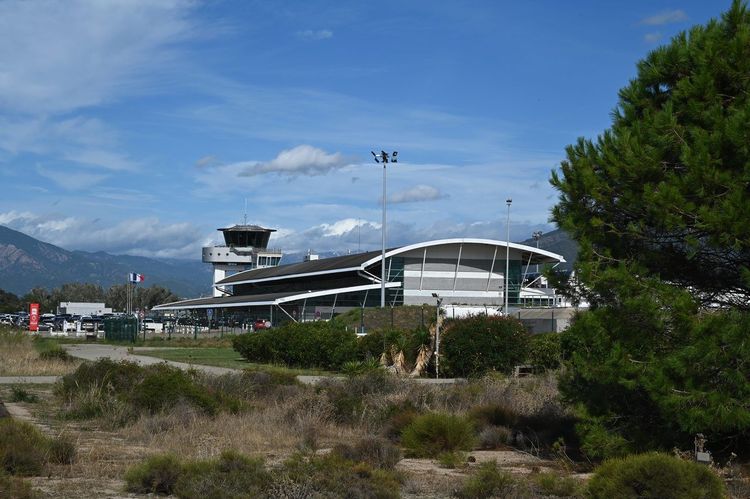
Napoléon-Bonaparte airport is around 6 kilometers from the city center, a 15-minute journey by car or shuttle. Direct flights connect Ajaccio to around ten French cities — Paris, Lyon, Marseille, Nice, and Toulouse leading the way — with a flight time of about one and a half hours from Paris. In high season, several airlines add direct routes from Lille, Nantes, and Bordeaux.
For those bringing a car, the ferry remains the most flexible option: crossings from Marseille, taking 10 to 12 hours often overnight, and from Toulon or Nice, shorter but less frequent, allow you to dock directly at Ajaccio port, a stone's throw from the center. Book early in July–August, as overnight crossings fill up quickly, cabin included.
Once there, the city is largely walkable. A rental car becomes useful as soon as you want to reach the Sanguinaires or the inland villages, but is unnecessary for a weekend focused on the historic center and the nearby beaches.
When to Go to Ajaccio for a Weekend
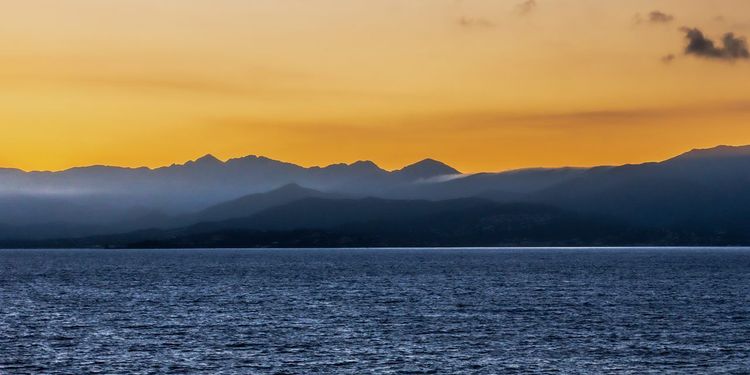
Ajaccio's Mediterranean climate makes a weekend possible almost any time of year, but not all seasons are equal depending on what you are looking for.
April–May and September–October bring temperatures around 20–24°C, a sea still feasible for swimming late in the season, and above all hotel prices noticeably softer than in summer. Paillotes generally close at the end of September or early October — worth checking if you are counting on lunch there.
July and August push temperatures above 30°C, fill the beaches by 10 am, and can double accommodation rates. It is also the only period when every paillote and boat excursion runs at full capacity — a trade-off to weigh against your tolerance for crowds.
Winter remains workable for the city itself, with museums and restaurants open, but the Sanguinaires lose much of their appeal without swimming, and boat excursions run at reduced capacity. Note also that the musée Fesch closes for its annual fortnight in early January, and the imperial chapel only opens from 1 May.
Budget and Practical Tips for a Weekend in Ajaccio
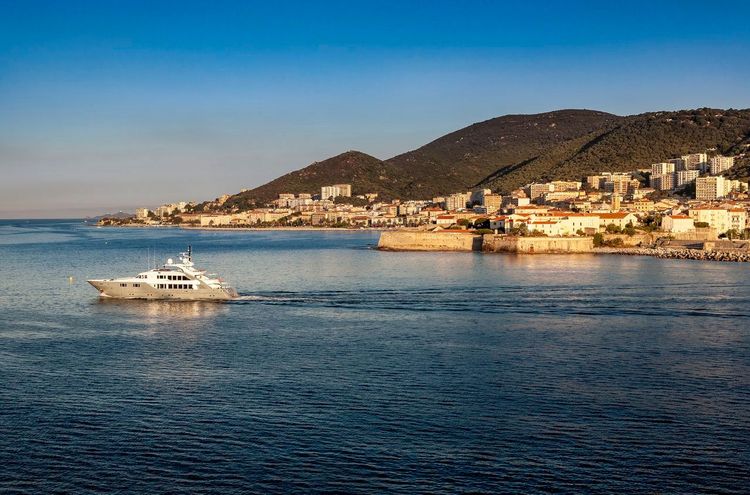
For a two-night weekend in Ajaccio for two people, count an overall budget of between 350 and 700 euros excluding flights, depending on the season and the level of accommodation chosen: around 200 to 500 euros for hotel nights, 100 to 150 euros for meals (including one paillote), and 50 to 100 euros for excursions and local transport.
Return flights from mainland France vary enormously, from 60 euros if you book three months ahead in low season to over 250 euros for a Friday evening in July booked at the last minute. The ferry, car included, often costs more than a flight for two people, but becomes worthwhile from three or four passengers.
Rent a car at the airport if you plan to go beyond the city center — rates remain reasonable outside July–August. Book the paillote and the Sanguinaires excursion before you leave in high season: these slots fill up within days. One last useful reflex: check closing days before planning your cultural morning, as the musée Fesch runs seven days a week while other sites close one day a week.
FAQ
How much time should you plan for a weekend in Ajaccio?
Two full days are enough to cover the old town, a beach, and a trip to the Sanguinaires. With three days, you can add an excursion into the hinterland, toward Bocognano or Coti-Chiavari, without coming back exhausted.
How do you get to Ajaccio from mainland France?
By plane, count about 1h30 from Paris with direct flights from around ten French cities to Napoléon-Bonaparte airport, 6 km from the center. By ferry, the crossing from Marseille takes 10 to 12 hours, often overnight.
What budget should you plan for a weekend in Ajaccio?
Count between 350 and 700 euros for two people over two nights, excluding flights, depending on the season and accommodation level. All-inclusive packages with transfers and an excursion included tend to run around 250 to 400 euros per person.
What is the best time for a weekend in Ajaccio?
April–May and September–October offer the best balance between pleasant weather, a sea still warm enough for swimming late in the season, and softer accommodation rates. July–August guarantees optimal weather but comes with crowds and high prices.
Do you need to rent a car to visit the surroundings of Ajaccio?
Not for the city itself, which is easily walkable. However, a car becomes necessary to reach inland villages such as Bocognano or Coti-Chiavari, which are not served by public transport.
Where to eat at a paillote in Ajaccio?
Paillotes are concentrated along the Route des Sanguinaires and the gulf beaches, with a lunch menu generally between 28 and 38 euros. Book the day before in high season, as terrace tables fill up quickly between 12:30 and 2 pm.
A weekend in Ajaccio follows a fairly simple thread: the old town and its Napoleonic heritage in the morning, a beach or boat excursion in the afternoon, a paillote or terrace bar in the evening. The city lends itself just as well to a quick getaway as to a three- or four-day extension into the hinterland, between waterfalls and hilltop villages.
Before you go, the Ryo audio-guided tour of Ajaccio remains the easiest way to connect the citadel, Maison Bonaparte, and musée Fesch without wasting time finding your way through the alleyways. Download it on our Ryo app and let yourself be guided from the moment you leave the airport.
À lire également