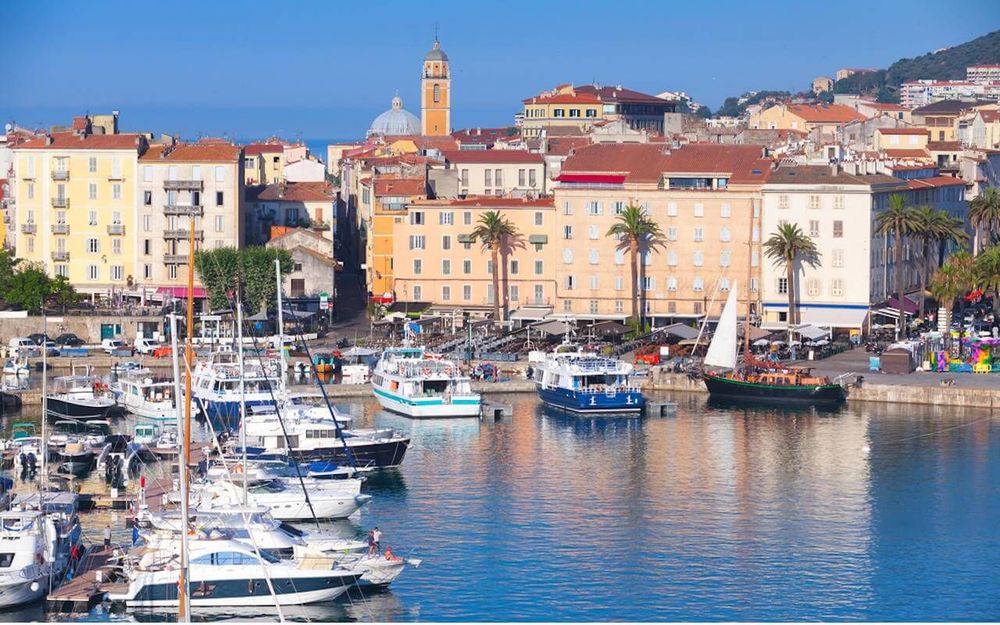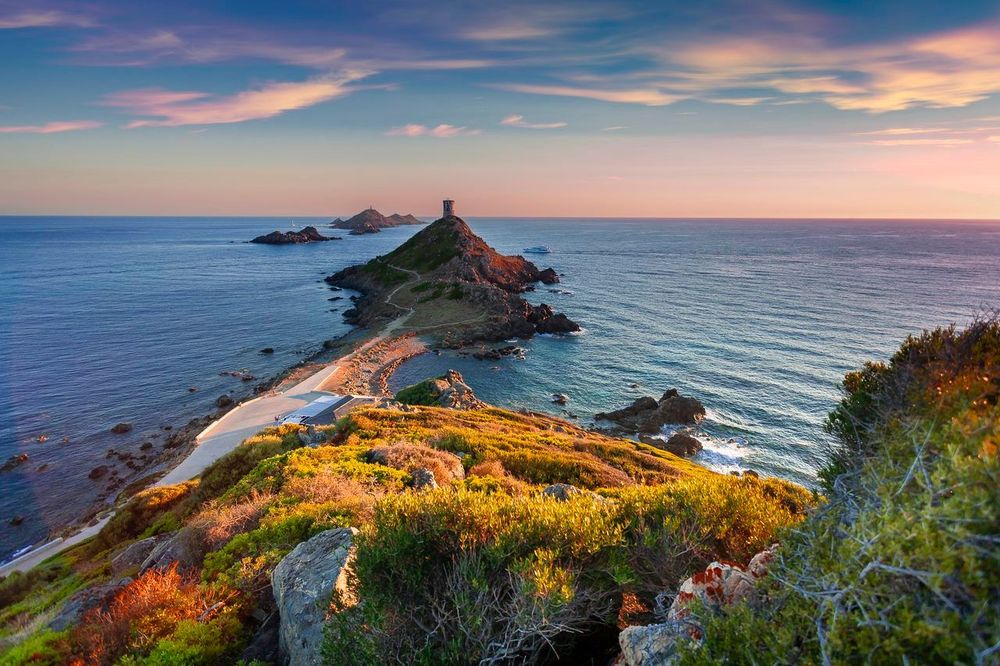
© Shutterstock
 Votre guide Ryo
Ajaccio Beaches in 2026: From the Citadel to the Sanguinaires and the Southern Shore
In Ajaccio, you only need to step off the Cours Napoléon to feel sand under your sandals. Search "Ajaccio beach" online and you'll see around twenty names scroll past, from the city centre to the southern shore of the gulf, without knowing which one actually suits the day you have in mind. Nowhere else in Corsica does urban life cling so closely to the sea: the imperial city packs city-centre beaches, discreet coves, and a vast gulf into just a few kilometres. The Ryo audio-guided tour of Ajaccio tells the story of a city that has always faced the water, from Genoese ramparts to wooded inlets.
Some figures surprise first-time visitors to the gulf: around twenty beaches and coves follow one another along fewer than 20 kilometres of coastline, the Route des Sanguinaires is among the most photographed coastal roads in France at sunset, and one beach on the southern shore, Mare e Sole, offers a straight-on view of the ochre rooftops of the old town across the gulf. Add a beach that is almost ignored by tourist guides yet beloved by Ajaccio locals — the Trottel — and you understand why this guide takes the time to move zone by zone rather than drawing up a simple ranking.
The Urban Beaches, a Stone's Throw from the Citadel
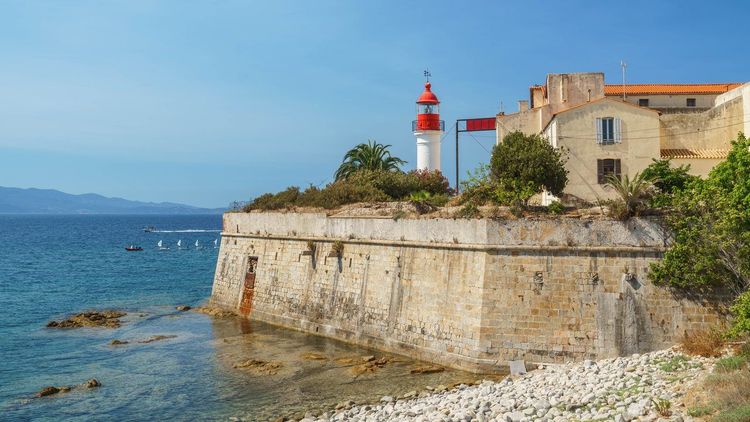
Starting with the city centre makes sense: these beaches can all be reached on foot from the Place du Diamant or the port Tino Rossi, with no car or detour required. That is the main advantage of a beach in Ajaccio compared with the classic seaside resorts on the island, where the sea always demands a drive.
Saint-François and the Trottel, the City-Centre Spots
The Saint-François beach stretches right below the ramparts of the citadel, between the Boulevard Lantivy and the waterfront. Its fine sand and shallow water make it the busiest spot in Ajaccio from the first warm days, with a direct view of boats entering the port. People come in the late afternoon for a quick swim between visits to the historic centre, rather than for peace and quiet: in summer, the density of towels rises fast from 11 a.m. onwards.
Practically speaking, Saint-François beach is reached via several stairways from the boulevard, and there is no dedicated surface parking nearby: it is better to aim for city-centre car parks and walk the rest of the way. Showers and toilets are operational in season, and lifeguard supervision is provided during the summer months.
A few minutes' walk along the waterfront, the Trottel shifts to a completely different pace. Tucked below the Boulevard Pascal Rossini, this smaller, quieter beach remains largely the preserve of neighbourhood residents, far from the high-season crowds. The sand is slightly coarser than at Saint-François, but the water is just as clear and the atmosphere much more local: families from the neighbourhood, retirees swimming their early-morning lengths, teenagers diving from the rocks at the edge of the cove.
La Terre Sacrée, the Wild Cove on the City's Doorstep
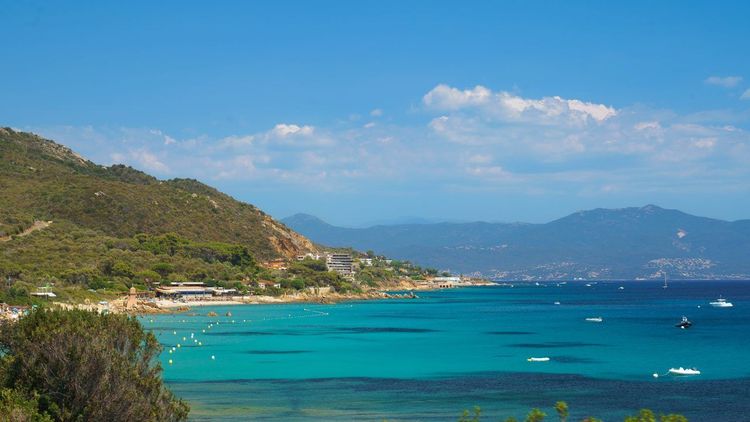
Just before the road heads towards the Sanguinaires, the Terre Sacrée beach (Route des Sanguinaires, 20000 Ajaccio, rated 4.7/5 on Google from 767 reviews) marks a clear break from the urban bustle. Its name comes from the monument above the cove, dedicated to those who died for France: the spot retains an almost contemplative character, framed by Mediterranean vegetation that runs down to the sand. The cove is smaller than the two previous ones, with rocks on either side that provide natural shade in the middle of the day — a precious detail in the height of summer.
You reach it via a stairway from the road, which naturally limits the crowds compared with the neighbouring urban beaches. It is often the choice of regulars who want to swim without really leaving the city, and one of the rare spots where a mask and snorkel are worthwhile less than ten minutes from the citadel, thanks to the rocky seabed that lines the cove.
The Route des Îles Sanguinaires: Panoramas and Fine Sand
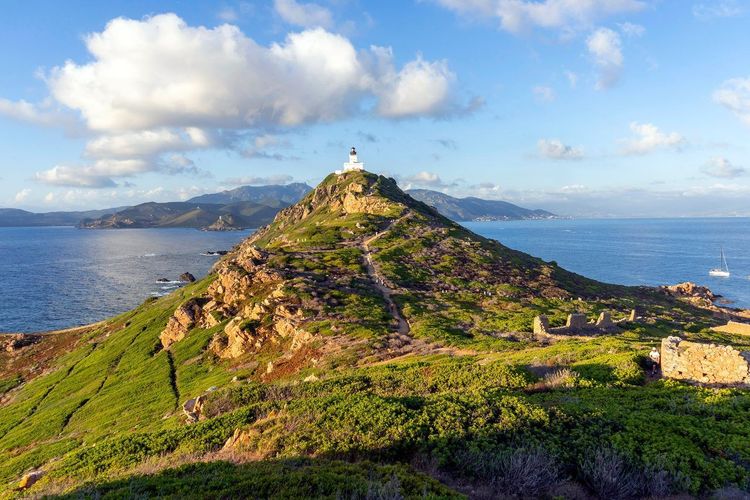
The legendary Route des Îles Sanguinaires (the D111) follows the gulf for around twelve kilometres, past pocket coves and wide stretches of sand, all the way to the Pointe de la Parata, its Genoese tower, and its panorama over the archipelago. It is the route that every visitor to Ajaccio ends up taking — on foot, by bike, or by bus — if only for the sunset that sets the islands ablaze at the end of the day. The Parata site and the Sanguinaires islands have held the Grand Site de France label since 2017, which explains the gradual improvements to access roads and car parks in recent years.
Barbicaja and Capo di Feno: Fine Sand and Surf Spots
About ten minutes from the centre, Barbicaja beach is without doubt the most popular on the Route des Sanguinaires. Its fine sand, shallow water near the shore, and roadside parking make it a safe bet for families with young children. A tennis club borders the beach on the road side, giving the place a slight air of a 1970s seaside resort that has never quite faded.
Further north, on the other side of the headland, Capo di Feno beach shifts to an entirely different register. You reach it via a small road that branches off from the western edge of Ajaccio, and you then need to walk a short distance from the parking area, which naturally filters visitor numbers. The site is divided in two: a large beach facing due west, and a smaller, more secluded beach a little further south. The wind blows stronger here than in the city, which is why surfers and stand-up paddleboarders gather as soon as the swell picks up, among dunes and low scrubland. The trade-off: no permanent lifeguard presence and rip currents that form during heavy swell, so caution is advised with children.
Marinella (Plage de l'Ariadne), the Family-Friendly Open Sea
About 5 kilometres from the centre, still on the Route des Sanguinaires and just past Barbicaja, Marinella beach (Route des Sanguinaires, 20000 Ajaccio, rated 4.8/5 on Google from 5 reviews) stretches its fine sand along a length that makes it easy to find a spot even at the height of summer. Many call it the Plage de l'Ariadne, after the beach establishment that has animated it for decades and that Ajaccio locals associate with summer evenings as much as with lunches facing the sea. The water deepens gradually — a real advantage for families — and the open view over the gulf gives a sense of space that the city-centre beaches simply cannot match.
If you are looking for both comfort (showers, toilets, on-site dining) and a beach large enough that you never feel cramped, Marinella ticks every box. Many Ajaccio residents make it their weekend beach when Saint-François is full. An added bonus: facing west, it offers one of the most unobstructed sunsets on the gulf, with your feet still in the water.
Porticcio and Agosta, the Ajaccio Riviera
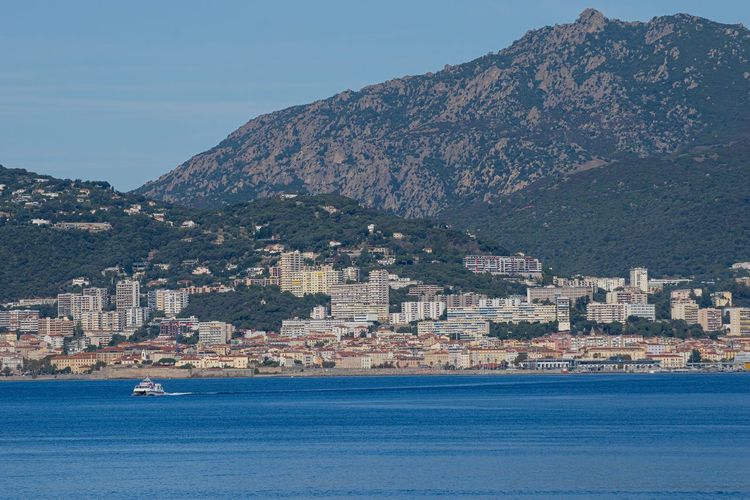
On the other side of the gulf, about twenty minutes by sea shuttle from the port of Ajaccio or thirty minutes by road around the back of the gulf, Porticcio has built its reputation on some of the finest sand in the area. Porticcio beach, whose central section is known as the Plage de la Viva, stretches out facing the city with a rather rare quality: you swim looking back at Ajaccio and its citadel from the water, which radically changes your perspective on the imperial city. The resort has invested heavily in recent years in its beachfront facilities — restaurants, watersports equipment hire, and pedestrian walkways along the seafront.
Continuing southward, Agosta beach (20166 Porticcio, rated 4.5/5 on Google from 289 reviews) extends the same stretch of fine sand, but with noticeably calmer crowds than the heart of the resort. This is where many of the gulf's second-home owners lay their towels, away from the summer bustle of the village. The sand is just as soft, the water just as clear, but without the queues for a sunlounger or the noise of neighbouring beach bars. A pine grove borders part of the site and provides natural shade in the middle of the day — a real bonus when temperatures climb in August. Allow about fifteen minutes to walk from one beach to the other along the shore.
Mare e Sole, Isolella, and Portigliolo: the Wild Southern Shore
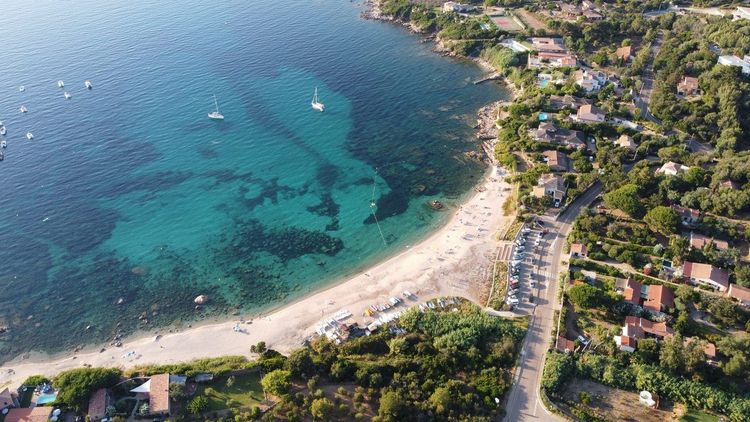
The further south you travel from Ajaccio, the wilder the coastline becomes. This part of the shore requires a little more planning (allow 35 minutes to an hour by road depending on the beach), but it holds some of the finest swimming of the entire Ajaccio area.
Mare e Sole (Plage d'Argent): Fine Sand Facing Ajaccio
Nicknamed the Plage d'Argent for the near-white colour of its sand in full sun, Mare e Sole beach, in the commune of Coti-Chiavari, offers one of the most photographed panoramas in the gulf: Ajaccio appears on the horizon, citadel included, as if floating on the water. The sand is particularly fine and the water shallow for a good distance, making it an appreciated choice even for families who have travelled some way to get there. It is also the most common answer when people search for a white-sand beach near Ajaccio: the very pale tone of the site, set against a turquoise backdrop, has a lot to do with it.
The beach is less well equipped than Porticcio or Agosta: little natural shade, only a handful of seasonal shops, and a car park that fills quickly between 11 a.m. and 4 p.m. in August. Bring a parasol and plenty of water if you plan to spend the whole day, and arrive early.
Isolella, Ruppione, and Portigliolo: Unspoilt Nature and Waves
The Isolella peninsula, in the commune of Pietrosella, marks a clear break from the previous beaches. Here, the Isolella beaches alternate between rocky coves and strips of fine sand, separated by dense maquis and pine vegetation. No road follows the shoreline along its full length, preserving a rare tranquillity less than 40 minutes from Ajaccio. This is the territory of regulars who know every access point and are careful not to share the secret too loudly.
Just to the north, Ruppione beach forms a pale sandy bay backed by a pine grove, often cited as the best compromise on the southern shore: well-equipped enough for a family day out, yet discreet enough to avoid the crowds of Porticcio. Its position set back from the road shields it from noise, and the pines reach almost to the sand, solving the shade question entirely.
Further south still, outside the gulf of Ajaccio, Portigliolo beach (20140 Serra-di-Ferro, rated 4.6/5 on Google from 957 reviews) unfurls nearly three kilometres of sand at the mouth of the Taravo river, on the gulf of Valinco. Allow about an hour by road from Ajaccio: it is a full-day excursion, not an end-of-afternoon outing. Surfers and windsurfers have made it one of their favourite playgrounds in Corse-du-Sud, taking advantage of the swell and wind that are more pronounced here than in the gulf of Ajaccio. The site remains largely wild: no beach bars squeezed side by side, just sand, dunes, and the horizon.
Wild and Hidden Beaches to Discover
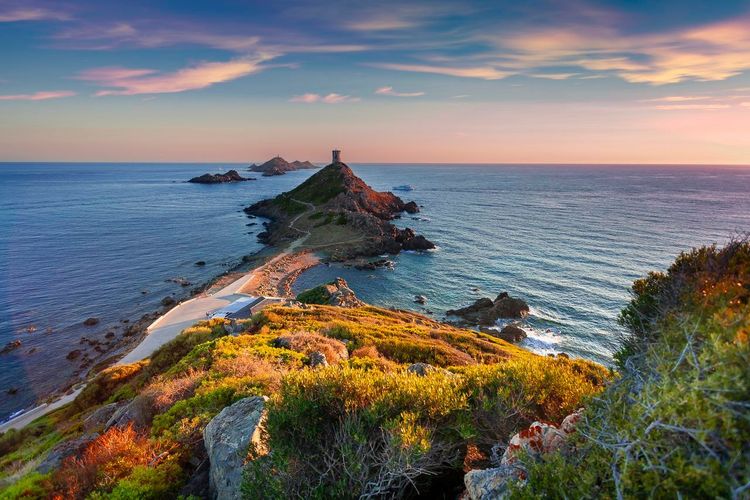
Between the best-known spots, the Ajaccio coastline hides a few corners that classic guides rarely mention. The rocky coves around the Pointe de la Parata, reachable via short coastal paths, allow you to swim alone facing the Sanguinaires islands even in the middle of August, provided you walk a little from the main car park and accept an entry into the water over rocks rather than sand.
On the city's southern approach, Ricanto beach (Route des Sables, 20090 Ajaccio, rated 4.2/5 on Google from 802 reviews) stretches close to the airport for a surprising length given how little attention it receives. Its proximity to the Campo dell'Oro runways makes it a place apart — you may occasionally hear a plane taking off in the background — but the available space and relative calm more than compensate for this sonic detail. It is also one of the rare beaches in the area where you can find a spot on a Sunday in August without arriving at dawn.
Finally, at the far end of the southern shore, the small bay of Verghia closes the gulf on a pine-lined beach, appreciated for its calm waters and very local family atmosphere. These beaches do not have the fame of Saint-François or Porticcio, and that is precisely what makes them interesting: you will find no beach club or loudspeaker, just the sound of water on sand.
Paillotes and the Best Beach Restaurants
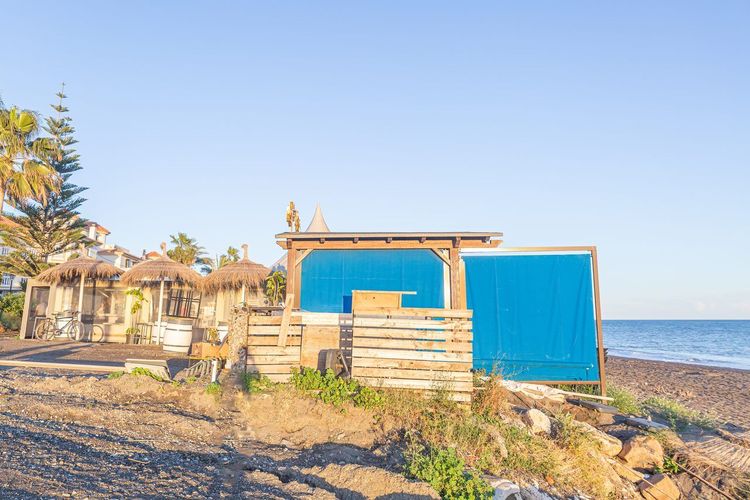
Ajaccio has developed a genuine paillote culture — the barefoot beach restaurant where you move seamlessly from swimming to lunch without ever leaving the sand. They are found mainly at Barbicaja, Marinella, and Porticcio, with menus ranging from the day's grilled fish to more elaborate dishes, often served barefoot beneath a wooden-and-thatch structure.
The most popular establishments offer sunloungers and parasols with a purchase, a formula common across the gulf that turns a simple beach outing into a full day. Book ahead in high season, especially at weekends, as the best beachside tables fill up from lunchtime. To extend the culinary experience beyond the sand, our top 10 culinary specialities in Ajaccio covers the local products you must not miss, from figatellu to brocciu.
In Porticcio as on the Route des Sanguinaires, competition between paillotes generally keeps quality high. Do not hesitate to compare the menus posted outside before sitting down: prices vary noticeably from one establishment to another for similar offerings, and the view from the terrace does not always justify the difference. After lunch, the Ryo audio-guided tour is a pleasant way to walk off the meal along the coast.
Map of the Most Beautiful Beaches in Ajaccio
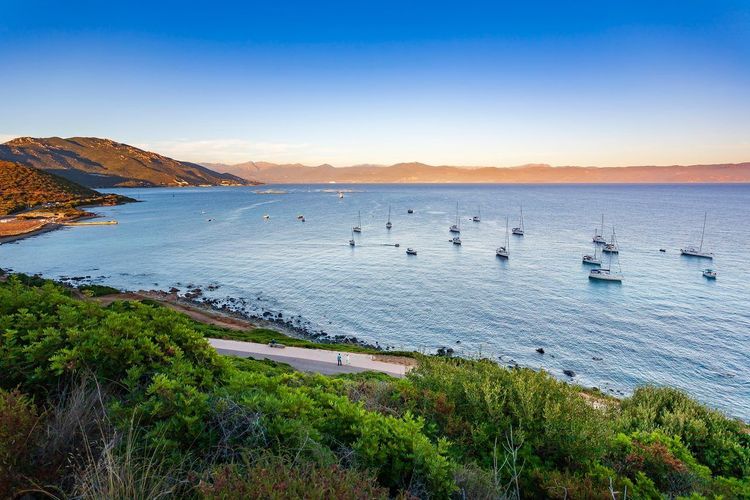
To get your bearings quickly, the gulf divides into three main zones — which also mirrors how visitors tend to search: Ajaccio city-centre beach, Ajaccio Sanguinaires beach, and Ajaccio Porticcio beach. In the centre, Saint-François, the Trottel, and the Terre Sacrée are all within walking distance of one another. To the west, the Route des Sanguinaires lines up Barbicaja, Marinella, and, slightly off the main road, Capo di Feno, within about fifteen minutes' drive. To the south, Porticcio, Agosta, Ruppione, Isolella, Mare e Sole, and Verghia stretch along nearly an hour of coastline.
If pressed to pick a single answer to the question of Ajaccio's most beautiful beach, most locals would hesitate between Mare e Sole for the view over the city and Capo di Feno for its wild character: the two vie for first place depending on whether you are after the panorama or the solitude. To visualise the full coastline before you set out, the Ryo audio-guided tour of Ajaccio offers a route that follows part of this same gulf, useful for gauging the real distances between each beach.
When to Swim and Make the Most of Ajaccio's Climate
The swimming season generally runs from May to October, with water temperatures consistently above 22 °C between June and September. July and August remain the hottest months, with the sea approaching 25 °C by late summer, but they are also the most crowded period on the city-centre beaches and at Porticcio.
To avoid the crowds without giving up pleasant water, June and September offer an excellent compromise: still summery temperatures, noticeably fewer people on the beaches, and softer evening light for photographs from the Route des Sanguinaires. Wind, which is frequent on the gulf in the afternoon, is a factor to watch if you are planning a paddle or kayak outing: the libeccio, blowing from the south-west, can quickly whip up a chop on exposed beaches such as Capo di Feno.
Out of season, some regulars continue swimming until November on sheltered beaches such as Saint-François, enjoying water that is still mild and a complete calm impossible to find in the height of summer. In spring, the reverse applies: the air is already warm in April, but the sea remains cool, around 15 to 16 °C, and swimming is more of a challenge than a pleasure.
Safety, Naturism, and Practical Information
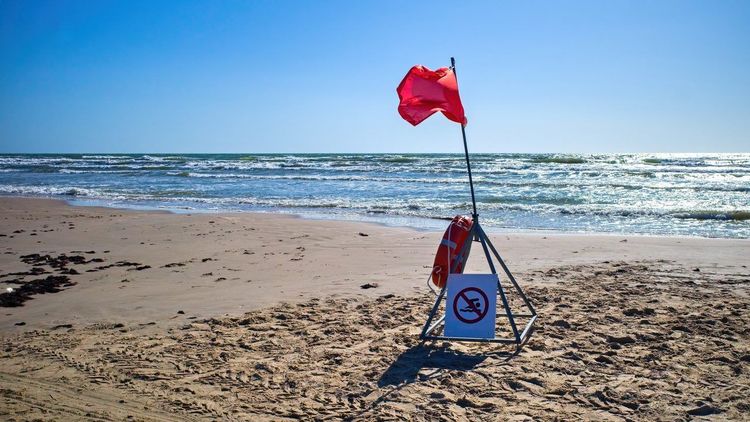
Access, Swimming Flags, and Safety
Supervised beaches in Ajaccio and the gulf use a standard flag system: green for swimming permitted, orange for heightened caution, and red for swimming prohibited. Always check the flag before entering the water, particularly on wind-exposed beaches such as Capo di Feno or Portigliolo, where swell can build quickly in the early afternoon.
Lifeguard supervision is not guaranteed year-round: it is concentrated during high season and on the busiest beaches. At other times, swimming is at your own risk, which calls for caution, especially with children. Two useful habits on the gulf: never stray far from the shore when an offshore wind is blowing, and be wary of rocky water entries after a storm, as the seabed can shift considerably from one season to the next.
Naturism and Local Regulations
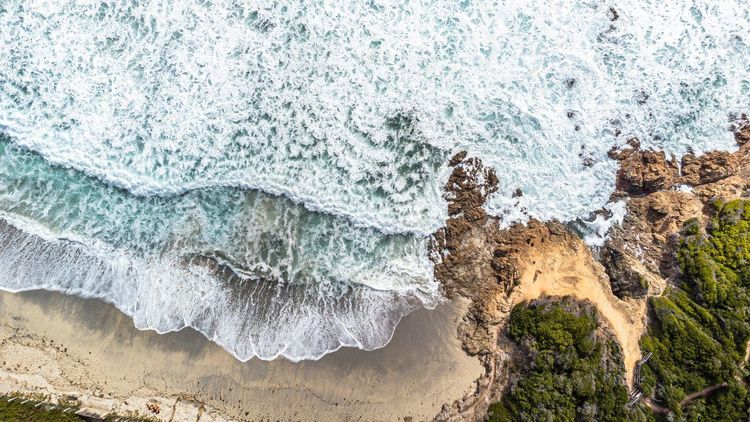
No officially designated nudist beach exists in the Ajaccio area. The practice is nonetheless found informally and discreetly on the most remote parts of Capo di Feno and on certain isolated coves on the southern shore, outside any regulated framework. In other words, nothing is organised and everything depends on discretion: ask locally if this is an important criterion for you, as the situation changes from one season to the next.
Getting Around Without a Car and Planning Your Beach Day
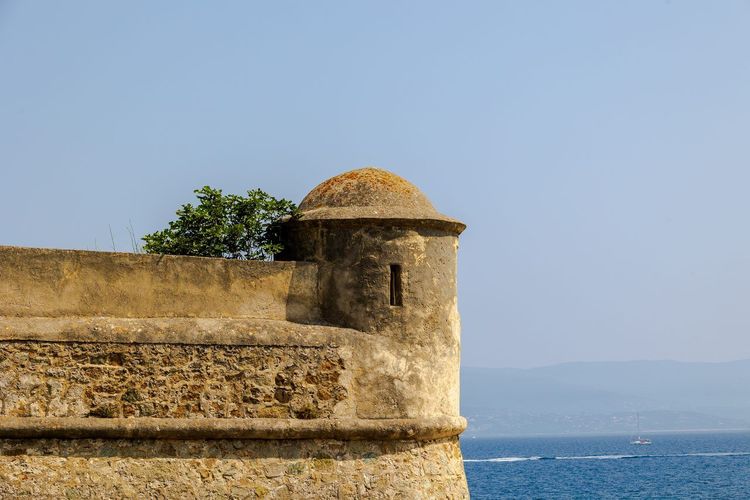
Bus, Shuttle, and Cycling Between the Beaches
Ajaccio has made most of its beaches accessible without a car. Urban bus line 5 follows the Route des Sanguinaires from the city centre and serves Barbicaja, Marinella, and the stops beyond up to the approaches of the Pointe de la Parata: it is by far the simplest way to reach an Ajaccio beach without a vehicle. To get to Porticcio, a sea shuttle crosses the gulf in about twenty minutes from the port Tino Rossi during the season — a far more pleasant option than driving around the back of the gulf, which is often congested in summer.
By bike, the distance between the city centre and Barbicaja takes 20 to 25 minutes along a broadly flat seafront road, with the drawback of heavy daytime traffic. For the southern shore beaches such as Mare e Sole, Ruppione, or Portigliolo, however, a vehicle or taxi remains the most realistic option given the lack of regular public transport.
An Ideal Day Between City and Sea
An effective approach is to keep the morning for exploring the historic centre and the citadel before temperatures peak, then head to the beach in the early afternoon. The Ryo audio-guided tour of the imperial city lends itself well to this format: about two and a half hours of sightseeing in the morning is more than enough before heading to Saint-François beach or Barbicaja for a swim.
In the late afternoon, head back towards the Route des Sanguinaires for the sunset — a ritual that few visitors to Ajaccio miss once they have heard about it. You can also read our article on the Sanguinaires islands to extend the outing to the Parata tower, and our selection of excursions around Ajaccio if you have a full day to spend away from the sand.
FAQ
Which is the most beautiful beach in Ajaccio?
There is no single answer: Mare e Sole wins for its view over the city, Capo di Feno for its wild character, and Saint-François beach for its immediate proximity to the city centre. The choice depends above all on what you are looking for — panorama, tranquillity, or convenience.
When is the best time to swim in Ajaccio?
The season runs from May to October, with comfortable water temperatures between June and September. July and August are the warmest months but also the busiest; June and September offer the best compromise between weather and crowds.
How can I reach Ajaccio's beaches without a car?
Bus line 5 serves the Route des Sanguinaires from Barbicaja to the approaches of the Parata, and a seasonal sea shuttle links the port of Ajaccio to Porticcio in about twenty minutes. Cycling works well for beaches near the centre, but the southern shore remains difficult to reach without a vehicle.
Are there nudist beaches in Ajaccio?
No officially designated nudist beach exists in the area. The practice is observed informally on the more remote parts of Capo di Feno and in a few isolated coves on the southern shore, with no official recognition or facilities.
What are the best beach restaurants in Ajaccio?
The paillotes at Barbicaja, Marinella, and Porticcio offer most of the options, with sunlounger-and-lunch packages. Book ahead in high season — the best spots fill up from lunchtime onwards.
Which Ajaccio beach is best for children?
Barbicaja and Marinella are the most suitable choices thanks to their fine sand, shallow water near the shoreline, and facilities (parking, toilets, and food nearby). On the southern shore, Ruppione plays the same role with the added bonus of pine shade.
Which Ajaccio beach has the whitest sand?
Mare e Sole, also known as the Plage d'Argent, owes its nickname precisely to the brightness of its sand, which turns almost white in full sun. Capo di Feno and Ruppione also offer very pale tones, while the city-centre beaches lean more towards golden beige.
Ultimately, the question is less about finding THE beach in Ajaccio than about choosing the right one for the time of day: the city centre for a quick dip between sightseeing, the Route des Sanguinaires for an evening panorama, and the southern shore for a real escape from the crowds. The Ryo audio-guided tour of Ajaccio remains the best starting point for combining both sides of the city — imperial heritage and the Mediterranean gulf — without ever having to choose between the two.
À lire également