© Shutterstock
 Votre guide Ryo
What to Do in Ajaccio When It Rains: 13 Indoor Activities in 2026
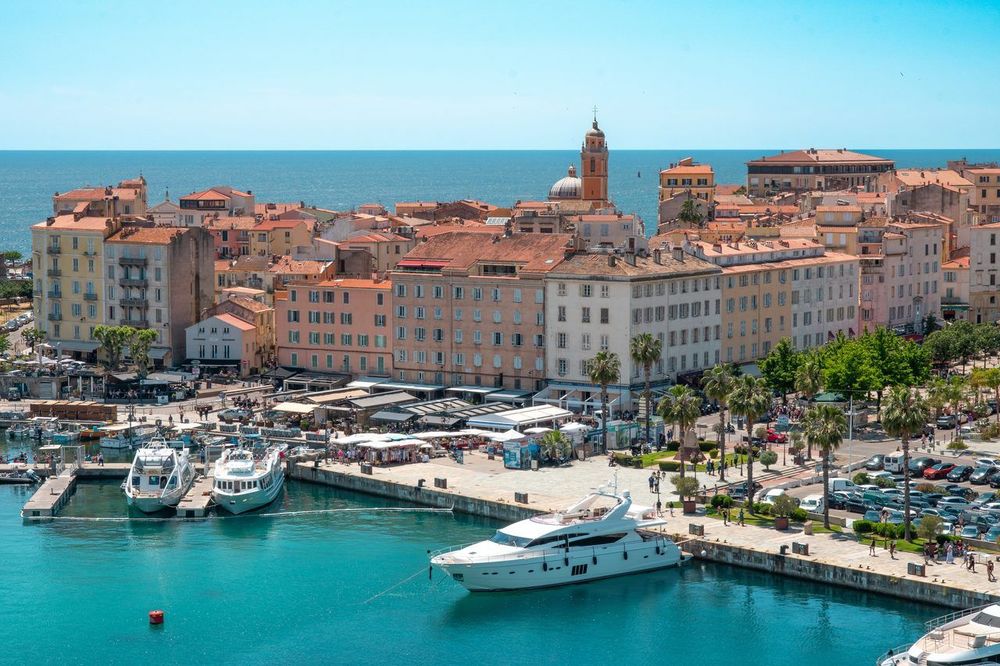
In Ajaccio, rain rarely settles in for the whole day: a shower from the gulf crosses the sky in an hour, soaks the cobblestones of cours Napoléon, then heads off toward the mountains inland. Even so, the question of what to do in Ajaccio when it rains is a very real one when the entire day was planned around the beach or the water. The Ryo Ajaccio audio guide is designed precisely to fill an entire morning under cover, moving between house museums, palaces and covered alleyways, without losing the thread of the city's history.
Here, the rain leads you straight to places the sun sometimes makes you forget: a birthplace transformed into a family sanctuary, a palace housing the second largest collection of Italian paintings in France after the Louvre, an immersive screen experience tracing twenty years of Napoleonic campaigns, and a former quarantine lazaretto converted into an exhibition venue. Between showers, there's also the option of trying an escape game, soaking in a pool of 38-degree water less than an hour's drive away, or simply strolling under the arcades of the covered market with a board of Corsican charcuterie in mind. Thirteen ideas, from museum to hot bath, so you don't miss a thing in Ajaccio even under grey skies.
1. Maison Bonaparte, in the Footsteps of Napoleon's Birth
The Maison Bonaparte is the place where Napoleon Bonaparte was born on 15 August 1769, into a family of minor Corsican nobility who had been settled in Ajaccio for several generations. Purchased by the state after the fall of the Empire, the house has preserved part of its original furnishings, including the four-poster bed in the room where Letizia Bonaparte gave birth to her second surviving son.
The visit unfolds across two floors and a short half-hour is enough to take in the yellow salon, the birth room and the family portraits hanging in the former paternal study. In the basement, a trapdoor fitted out during the Revolution is a reminder that the family had to flee the house in a hurry in 1793, during the troubles between the Bonapartes and the Paoliste clan. It's a detail few visitors notice, and one that changes how you look at the rest of the house.
The museum is open year-round, with a general weekly closure on Mondays and an entrance fee of around ten euros. Arriving at opening time is strongly recommended: cruise ship groups flood the rooms as soon as the ships dock, and on a rainy day, everyone has the same idea as you.
This is often the logical first stop in bad weather: a short walk from the port and the old town, entirely under cover, packed with information without being tiring. It's also an excellent starting point for continuing your discovery with the Ryo Ajaccio audio guide, which then connects the adjacent alleyways without needing to unfold a map in the rain.
2. Palais Fesch and Its Museum of Fine Arts
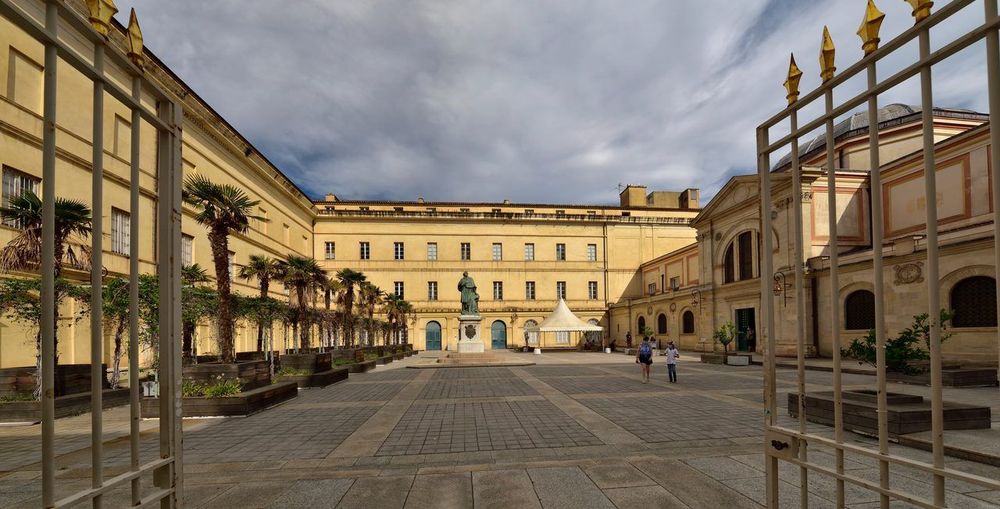
The Palais Fesch takes its name from Cardinal Joseph Fesch, Napoleon's maternal uncle and an avid collector of Italian art, who bequeathed to his home city several hundred canvases gathered across Europe during the Napoleonic campaigns. The museum that bears his name today holds the second largest collection of Italian paintings in France, just behind the Louvre, with works spanning five centuries, from late Gothic to Baroque.
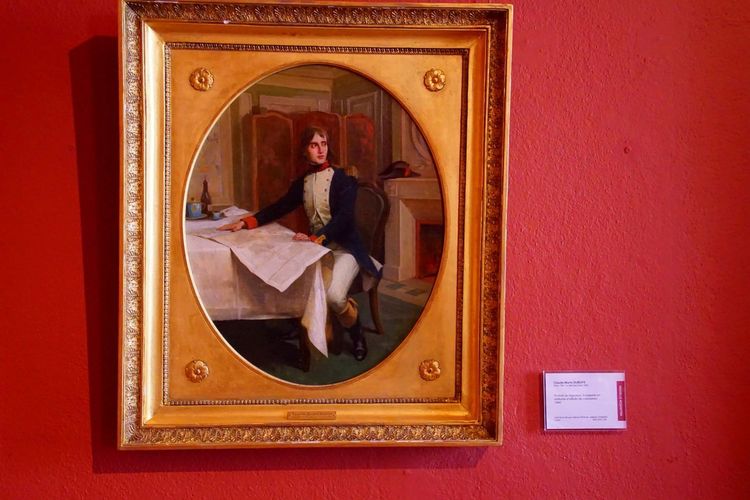
The rooms follow a fairly natural chronological order, beginning with the Sienese and Florentine primitives before moving on to the large-format Venetian works of the 16th century. Allow an hour and a half for a complete visit at a leisurely pace, somewhat less if the rain lets up and there's still a desire to head outside and enjoy a break in the clouds. The rooms on the second floor, less frequented, are worth lingering in: that is where several portraits of the Bonaparte family painted during the Emperor's lifetime are to be found.
Heritage Library and Chapelle Impériale: the Hidden Treasures of Palais Fesch
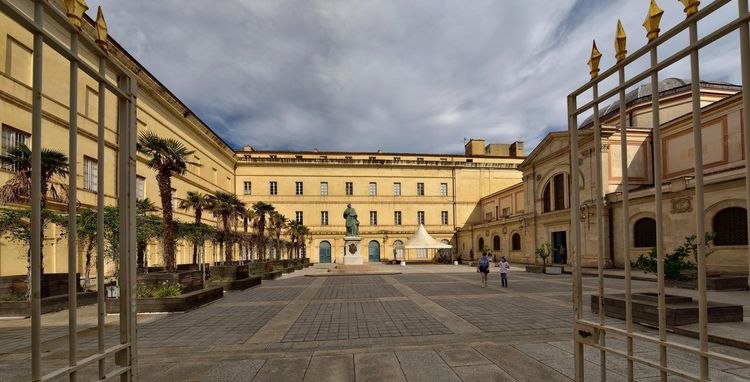
Just steps from the painting galleries, the Heritage Library holds more than 40,000 ancient volumes, a portion of which came directly from Cardinal Fesch's personal collections. Access to the reading rooms is generally restricted, but temporary exhibitions regularly display remarkable manuscripts and bindings, a good excuse to extend your visit of the complex without setting foot outside.
Just opposite, the Chapelle Impériale (50 Rue du Cardinal Fesch, 20000 Ajaccio, rated 4.3/5 on Google from 106 reviews) houses the tombs of several members of the Bonaparte family, including those of Cardinal Fesch himself and Madame Mère. The building, constructed in the 19th century on the orders of Napoleon III, is smaller than its name suggests, but the atmosphere inside, almost silent, contrasts sharply with the bustle of the neighbouring museum. The visit takes fifteen minutes and can easily be combined with a Palais Fesch ticket.
3. Naporama, the Immersive Experience Dedicated to the Napoleonic Epic
Where Maison Bonaparte tells the story of Napoleon's childhood and Palais Fesch reveals the family's artistic sensibility, Naporama (Cours Napoléon, 20000 Ajaccio, rated 4.8/5 on Google from 346 reviews) takes the opposite approach: a digital staging of 360-degree projections and immersive sound design to trace Napoleon Bonaparte's rise and fall across nearly twenty years of military and political campaigns.
The experience lasts around forty-five minutes and requires no prior knowledge of Napoleonic history: animated maps and video reconstructions are enough to follow the thread of events, from Austerlitz to Saint Helena. It's a format that particularly appeals to teenagers, who tend to be less receptive to traditional display cases of furniture and portraits.
On a rainy day, the experience has a practical advantage: it fills the entire duration of a longer shower without depending on the weather, since everything takes place indoors in air-conditioned dark rooms. Booking your time slot in advance is still advisable in peak season, as the capacity for each session is limited to preserve the quality of the projection.
4. The Cathédrale Notre-Dame-de-l'Assomption and the Religious Heritage of the Historic Centre
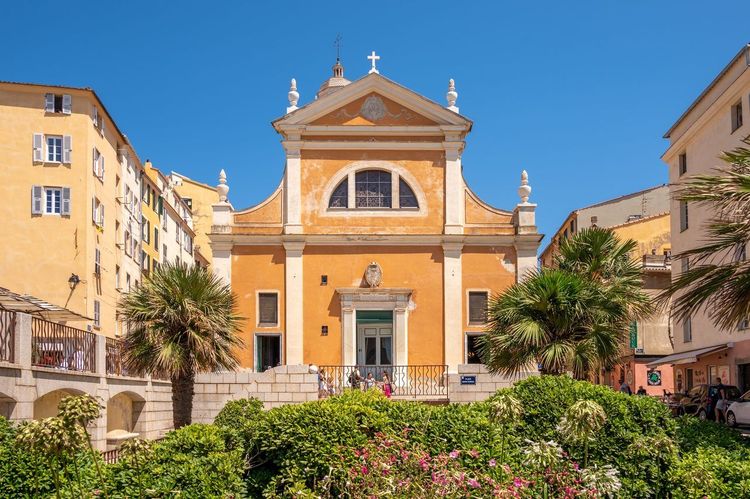
Built in the late 16th century in a fairly sober Renaissance style for the region, the Cathédrale Notre-Dame-de-l'Assomption (Rue Forcioli Conti, 20000 Ajaccio, rated 4.4/5 on Google from 1,219 reviews) is the place where Napoleon Bonaparte was baptised in 1771. The interior, richer than the façade suggests, houses a painting of the Assumption attributed to Eugène Delacroix as well as the baptismal font used for the future Emperor.
Entry is free and the visit takes around twenty minutes, making it an ideal stop to slip in between two more substantial sites. Around the cathedral, several alleyways sheltered by arcades allow you to reach other monuments of old Ajaccio on foot and under cover, such as the former Town Hall or the Chapelle Saint-Érasme. On a rainy day, this network of covered passages is almost as valuable as the monuments themselves: it allows you to string together several short visits without ever being fully exposed to the elements.
5. Lazaret Ollandini, an Unusual Cultural Venue
Few tourist guides mention Lazaret Ollandini (Route des Sanguinaires, 20000 Ajaccio, rated 4.6/5 on Google from 69 reviews), a former 19th-century sanitary quarantine site converted into an exhibition space and artist residency. The building itself, in rough stone and deliberately left with minimal restoration, contrasts with the contemporary staging regularly presented inside: installations, photography and current Corsican art follow one another through a programme renewed several times a year.
Entry is generally free or very low-cost, and a full visit rarely exceeds forty minutes. It's an interesting change of pace on a rainy day already packed with Napoleonic museums: Lazaret shifts register entirely and suits those looking for a more contemporary break in a programme heavily focused on 19th-century history.
6. Escape Games and Laser Tag: Ajaccio's Indoor Entertainment Options

When the rain sets in for good, entertainment activities take over from museums. Ajaccio has several escape game venues spread across the city centre and its immediate surroundings, with varied scenarios ranging from police investigations to western-style breakouts, designed for groups of two to six players.
Corsica Rena and the Best Escape Game Rooms in the City
Corsica Rena (Ajaccio, 20000 Ajaccio, rated 4.5/5 on Google from 492 reviews) is among the most recommended venues in the city, with several themed rooms and a displayed success rate that varies depending on the chosen difficulty level, between 30 and 60%. Booking in advance is essential on a rainy day, when demand rises noticeably compared to a sunny day when visitors prefer the beach.
Other local venues offer comparable formats, sometimes with an openly Corsican theme (bandit d'honneur, maritime smuggling) that adds a local touch to the experience. For families with young children, some rooms offer scaled-down scenarios with puzzles adapted for children aged 8 to 10.
Alongside escape games, laser tag remains a reliable option for larger groups or families with children who prefer movement to puzzles. Sessions generally last around twenty minutes, with equipment provided on site, and suit both a birthday outing and a spontaneous rainy-day activity among adults.
7. Cinema and Indoor Cultural Outings

Ajaccio has several cinemas in the city centre, showing both recent releases and screenings in their original language, a practical option for international visitors. A rainy afternoon is particularly well suited to a cinema trip, especially since daytime ticket prices are often lower than evening rates.
Beyond the big screen, the Ajaccio municipal theatre regularly programmes shows, concerts and plays that vary by season. The schedule is generally busier in autumn and winter, which coincides precisely with the period when showers are most frequent in the city. Checking the local cultural programme before your trip allows you to plan an indoor evening in advance rather than discovering it at the last minute.
8. The Ajaccio Aquarium, Discovering Corsican Marine Life Under Cover
To observe the marine life that usually populates the gulf of Ajaccio without getting wet, an aquarium presents tanks and Mediterranean species typical of the Corsican coastline: groupers, moray eels, octopuses and small crustaceans that normally hide among the rocks around the îles Sanguinaires. It's an activity that remains underexplored in standard city guides, yet it is exactly what families are looking for on a rainy day.
The full visit generally takes less than an hour, making it an easy stop to combine with a sheltered lunch or a cinema session at the end of the programme. Children particularly enjoy the touch pools where available, a hands-on way to understand the biodiversity of the gulf before, possibly, going to observe it in person on a boat trip.
9. Shopping, the Covered Market and Local Boutiques to Stay Dry
The Rue du Cardinal Fesch and the surrounding streets concentrate the majority of shops in the historic centre, beneath arcades that offer effective shelter from the rain. You'll find both national chains and independent shops selling Corsican sandals, pottery and handcrafted jewellery.
The Marché Central, housed in a covered hall, opens every morning except Monday and brings together local producers, fishmongers and charcuterie stalls. It's a useful port of call for understanding in half an hour what Corsica grows, raises and catches, without depending on the weather. The neighbourhoods around the market, some of whose layouts date back several centuries, lend themselves well to a stroll described in more detail in this Ryo article on Ajaccio's neighbourhoods, useful for identifying the most sheltered streets during a heavy downpour.
For more targeted purchases, several specialist shops sell only certified Corsican products: olive oil, maquis honey, myrtle liqueurs. Taking the time to chat with the shopkeepers, who are often producers themselves, transforms a simple shopping trip into a genuine moment of cultural discovery.
10. Tasting and Discovering Local Corsican Products
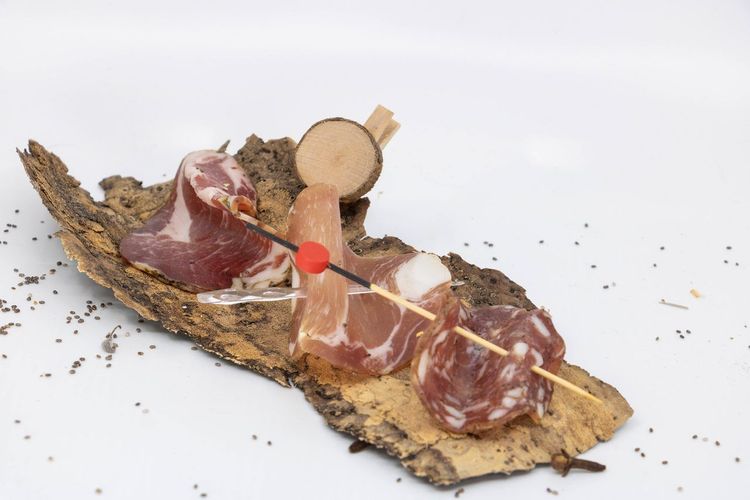
Beyond the covered market, several wine cellars and delicatessens in the city centre offer organised tastings of Corsican charcuterie: coppa, lonzu and figatellu, often accompanied by an aged sheep's cheese and a glass of Ajaccio wine, one of the island's oldest appellations.
These tastings generally last between thirty minutes and an hour depending on the number of products presented, and sometimes require advance booking in peak season. It's a stand-alone activity on a rainy day: seated under cover, you take the time to learn to distinguish the charcuterie by production zone, mountain or maquis, rather than consuming it without a second thought on the corner of a beach.
To extend this gastronomic discovery after your stay, this Ryo article on Ajaccio's culinary specialities details around ten products to bring home or order in the city's restaurants, from brocciu to Corsican clementine.
11. Relaxation and Wellness: Spas, Institutes and Thermal Baths Around Ajaccio

A rainy day lends itself particularly well to a wellness break, whether right in the city centre or on the outskirts, at natural hot springs.
Hôtel Fesch Spa and City-Centre Wellness Institutes
The Hôtel Fesch spa, open to outside guests by reservation, offers a sauna, hammam and body treatments in a contemporary setting just a few minutes' walk from the museum of the same name. It's a practical option for turning a rainy day into a recovery break rather than a logistical constraint.
Several independent institutes in the city centre complement the offer with more targeted treatments: massages, body wraps with Corsican oils or facial treatments. Booking the day before is recommended, as demand rises noticeably on days when the weather pushes visitors to rethink their beach plans.
Bains de Caldane and Baracci: Natural Thermal Baths Less than an Hour Away
Just under an hour's drive from Ajaccio, the Bains de Caldane, near Guitera-les-Bains, offer naturally warm pools at around 38 degrees, fed by a spring that flows down a mountainside. Access is free and unrestricted, making it an accessible option even at short notice if rain is forecast for the whole day.
Further south, near Propriano, the Bains de Baracci (Route de Baracci, 20110 Propriano, rated 4.1/5 on Google from 1,027 reviews) offer a similar experience in a more developed setting, sometimes with basic facilities such as showers or changing rooms depending on the season. Both sites remain weather-dependent in terms of road access, but the experience itself, submerged in warm water under light rain, is one that few visitors anticipate before their trip, and one that tends to be quietly memorable.
12. Family Activities and Solutions for Children on a Rainy Day

With children, the question of what to do in Ajaccio when it rains takes on a different dimension: it's better to alternate formats rather than visit two museums back to back. A typical morning might combine Naporama, whose immersive format easily holds younger visitors' attention, with a laser tag session or a scaled-down escape game in the afternoon.
The aquarium, mentioned above, also remains a reliable option for families, as do some of the city-centre media libraries that offer free workshops or children's reading corners, an option that is often overlooked yet allows for a peaceful break without spending a single extra cent.
To build a more complete programme, this Ryo article on visiting Ajaccio with the family and the one dedicated to children's activities in Ajaccio outline further options organised by age group, useful for putting together a trip that doesn't rely solely on sunshine.
13. Covered Boat Trips or an Excursion to the Îles Sanguinaires at the First Break in the Weather
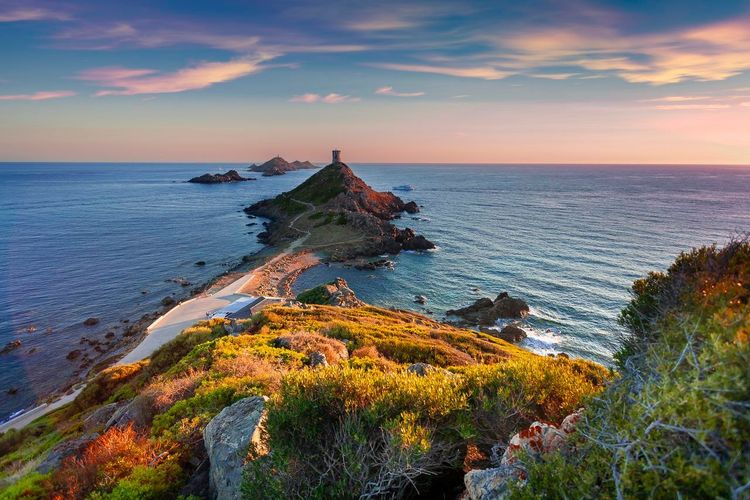
Some local companies offer boat trips with an enclosed cabin, an option that allows you to take in the gulf of Ajaccio and the reddish silhouettes of the îles Sanguinaires without being directly exposed to bad weather. These excursions are generally maintained as long as the sea remains navigable, even in moderate rain, and cancelled only in the event of strong winds or significant swell.
If a break in the clouds appears late in the day, the road that runs along the Pointe de la Parata through to sunset over the Sanguinaires remains one of the region's most anticipated spectacles, rain or not. This Ryo article on visiting the îles Sanguinaires details boat schedules and the best viewpoints accessible on foot from the Parata car park, for visitors who prefer to keep this outing as a last option, once the sky has cleared.
FAQ
Does it rain often in Ajaccio?
Ajaccio enjoys a Mediterranean climate with around 60 to 70 rainy days per year, concentrated mostly between October and March. Rainfall is generally short and intense rather than spread across an entire day, which often leaves windows of time to enjoy the city between showers.
Which museums should you visit in Ajaccio on a rainy day?
Maison Bonaparte, Palais Fesch and Naporama form the reference trio, each with a different approach: a historic house museum, an Italian painting collection and a digital immersive experience. Lazaret Ollandini usefully rounds out this itinerary for a more contemporary touch.
Are Ajaccio's museums open all year round?
Most of Ajaccio's museums remain open year-round, with a general weekly closure on Mondays and reduced hours outside the summer season. Checking exact opening times before visiting is recommended in the low season, as some sites adjust their opening days between November and March.
Can you book guided tours on the spot?
Most sites accept walk-in visitors outside peak season, but booking online in advance is preferable for Naporama and escape games, which have limited capacity per time slot. On a rainy day, demand for these fixed-schedule slots rises quickly.
Is Ajaccio a pleasant destination even when it rains?
Yes: the density of museums, palaces and covered alleyways in the historic centre makes it easy to put together a full day without relying on sunshine. The city also lends itself well to exploration at the pace of the Ryo Ajaccio audio guide, which works just as well under grey skies as on a bright sunny day.
What can you do in Corsica when it rains?
Beyond Ajaccio, the same logic applies to Bastia or Porticcio: museums, covered markets, thermal baths and indoor activities like escape games allow you to get through a rainy day without cancelling it. Those staying in winter are well advised to identify these options before leaving, as the cultural programme is often richer at that time of year than in the height of summer.
Ajaccio needs no sunshine to be worth discovering. Between Maison Bonaparte, Palais Fesch and Naporama for Napoleonic history, Lazaret Ollandini and escape games for something off the beaten track, and the thermal baths of Caldane or Baracci for a slower pace, the city offers more than enough to fill one or even two full days indoors.
To organise this programme without spending hours on it, the Ryo Ajaccio audio guide is the simplest starting point: it already brings together the key sites mentioned here in a route designed to be done on foot, rain or shine.
À lire également