© Shutterstock
 Votre guide Ryo
Visiting Ajaccio with Family in 2026: Heritage, Beaches, and Turtles on the Agenda
In Ajaccio, children grow up surrounded by statues of Napoleon without quite noticing: the old town can be crossed on foot in just under an hour, between shaded squares and alleyways that smell of coffee and maquis. Visiting Ajaccio with family is precisely that — a human-scale island capital where imperial heritage sits alongside beaches with crystal-clear water just ten minutes away by car. The Ryo audio-guided tour of Ajaccio lets you follow this historical thread at your own pace, pushchair or not, connecting the squares of the centre without getting lost.
The programme is richer than a postcard might suggest. You can encounter thousands of turtles at the A Cupulatta park — the largest European centre dedicated to these reptiles — climb through the treetops at the Parc Aventure de Vero, hop aboard the tourist train without waking the youngest one from a nap, and end almost every day on a sandy beach five minutes from the town centre. From Napoleonic monuments and the morning market to treasure hunts through the alleyways and sunsets over the Sanguinaires islands, this guide details activities that genuinely work with young travellers, broken down by age group, with timings and practical tips included.
Old Ajaccio and Its Iconic Squares
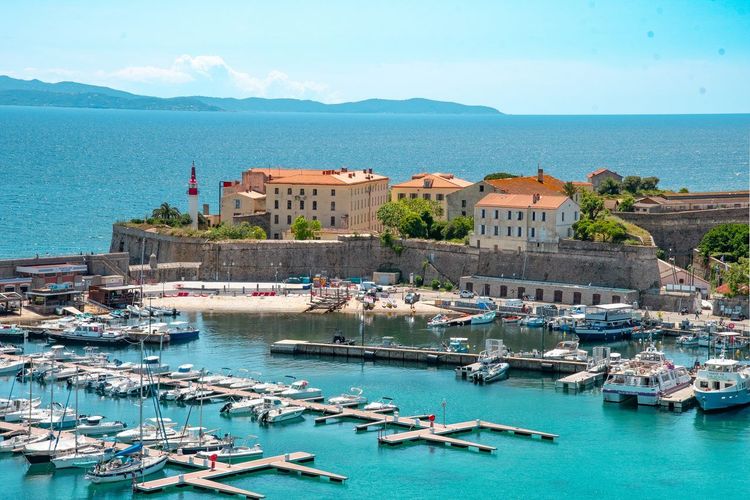
The natural starting point is the Old Port, where the pointus — small traditional Corsican fishing boats — rock in front of ochre-coloured façades. From there, the old town unfolds through a labyrinth of narrow alleyways, cool even in the height of summer, where younger children love weaving between market stalls and cats dozing on doorsteps. The Tino-Rossi marina, just next door, lines up its sailboats in front of the citadel: a ten-minute stroll is enough to move from fishing boats to yachts, and the cranes of the commercial port often fascinate small children more than any monument.
The typical alleyways of the old centre carry names steeped in history: rue Bonaparte, rue du Roi-de-Rome, rue Forcioli-Conti. Many are closed to traffic, making them a natural playground while parents look up at laundry drying from windows and colourful shutters. Take a moment to spot the street signs in Corsican alongside French: translating "carrughju" or "piazza" quickly becomes a fun vocabulary game for children aged 6 to 10.
Five minutes on foot, place de Gaulle — which locals still call place du Diamant — opens onto the sea with its palm trees and large equestrian statue of Napoleon surrounded by his four brothers. It makes an excellent meeting point, with enough space to run around without worrying about traffic. The square also hosts part of the city's summer events, including evening concerts and markets.
Heading north, place des Palmiers (Place des Palmiers, 20000 Ajaccio, rated 4.2/5 on Google based on 900 reviews) faces the 19th-century town hall, whose Napoleonic salon can be visited during opening hours for a nominal fee. The building also houses the tourist office — a practical stop to pick up a free map, check the day's opening times, and find out about summer events nearby.
The cours Napoléon, the main shopping street running through the city from north to south, and the rue Cardinal-Fesch, a pedestrian street lined with café terraces, are well suited to an ice cream break between visits. A little further west, the quartier des Étrangers reveals Belle Époque villas built at a time when British spa-goers came to nurse their lungs under the Ajaccian climate — a quieter setting to catch your breath after the bustle of the centre. The neo-Moorish façades and palm-tree gardens tell a different story of Ajaccio, cosmopolitan and worldly, far removed from the Napoleonic imagery.
Allow an hour and a half for this tour of the historic centre with young walkers, twice as long if there's a market or ice cream stop. The alleyways are cobbled: opt for a compact pushchair rather than an all-terrain model, which is harder to manoeuvre through the narrowest passages. And keep a water bottle per person in the bag — public drinking fountains are rare once you move away from the main squares.
To make the most of the stories hidden behind every façade, the short version of the audio-guided tour of Ajaccio dedicated to the imperial city covers this same route in about 1 hour and 20 minutes — a format that holds the attention of a 6-to-10-year-old quite well.
In Napoleon's Footsteps: Maison Bonaparte and Palais Fesch
Napoleon Bonaparte was born in Ajaccio on 15 August 1769, and the city has never quite turned the page. For those discovering French history at school, walking in the future emperor's footsteps here takes on a concrete dimension that neither textbooks nor films can quite replicate.
The Maison Bonaparte, his birthplace, is visited as a national museum: the birth room, period furniture, portraits, an alcove, and mementos of the Bonaparte family spread across three floors. Allow 45 minutes to an hour — a manageable duration from age 8 onwards, less straightforward with toddlers who would rather run around. Entry is free for under-18s, as in all national museums, making the visit affordable for a family. Watch out for the weekly closing day and the midday break outside peak season: check the day's opening times before walking across the old town.
A few streets away, the Palais Fesch, musée des Beaux-Arts holds the second-largest collection of Italian paintings in France after the Louvre, assembled by Napoleon's uncle, Cardinal Fesch. It can feel dense for younger visitors, but the cool rooms and educational workshops offered during school holidays make the visit more digestible. Pick two or three paintings to focus on — Botticelli's Virgin with a Garland first among them — rather than attempting all the rooms: a well-paced 45-minute visit is worth far more than a full tour endured with reluctance.
Right next door, the imperial chapel houses the tombs of several members of the Bonaparte family beneath a dome impressive enough to capture the attention of even the most restless visitors. Built in the 1850s at the request of Napoleon III, it can be visited in a quarter of an hour, often on the same ticket as the palace.
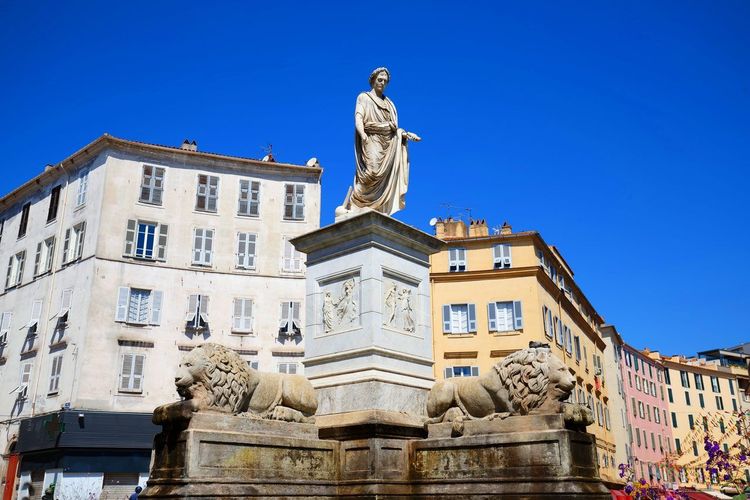
On place Foch, the statue of Napoleon in his First Consul attire has watched over the square since the mid-19th century, flanked by four stone lions that everyone clambers onto for a souvenir photo. It also makes an excellent meeting point — shaded and just steps from the port — with terraces all around for waiting for latecomers.
A little further on, the grotte Napoléon is a simple rocky outcrop where, according to local tradition, the young Napoleon used to come to dream and read in the shade. The spot is modest but freely accessible, and it often provides a cool break with a few Corsican specialities picked up along the way — from brocciu cheese to figatelli sausage.
For those who prefer immersive settings over traditional display cases, the Naporama museum traces Napoleon's life through miniature scenes and sound staging — a format that generally holds the attention of 6-to-10-year-olds far better than conventional collections. The visit lasts about half an hour, ideal for slotting in between two rain showers or before lunch.
All these Napoleonic stops are clustered within an 800-metre radius of the historic centre, making it easy to tailor a route by age: Maison Bonaparte and Naporama for younger children, Palais Fesch and the imperial chapel for teenagers with an interest in art history.
For a broader selection of activities organised by interest, the Ryo article on the best things to do in Ajaccio also covers alternatives when these year-round sites are particularly busy.
Ajaccio Market and Local Craftsmanship
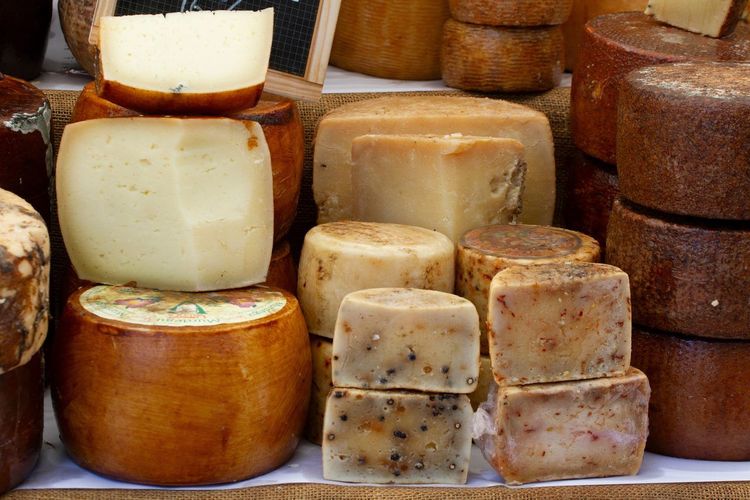
Every morning except Monday, place Campinchi hosts the Ajaccio market (Place Campinchi, 20000 Ajaccio, rated 4.2/5 on Google based on 44 reviews) — a more sensory experience than a museum visit for filling a morning. Among the stalls of cheese, Corsican charcuterie, and fruit, the sounds and scents of maquis honey are worth more than any history lesson. Arrive before 10am: the best producers pack up early, especially out of season.
It is also the place to watch local craftsmanship in action: a producer explaining the difference between fresh and aged brocciu, a beekeeper detailing why maquis honey changes flavour depending on the altitude of the hives. Many artisans are happy for visitors to touch or taste, provided you ask first.
Some knife-makers in the town centre, particularly around rue Fesch, open their workshops to visitors and spend a few minutes explaining how a blade and a mouflon-horn handle are made. The traditional Corsican knife, the vendetta, is still crafted by hand on the island: a forging demonstration speaks to younger visitors far more effectively than a lengthy talk on the history of island craftsmanship.
Set aside a few euros for a tasting of canistrelli — small dry biscuits made with white wine or anise — and fiadone, the local sweet speciality made with brocciu and lemon. This is often more convincing than any long speech when it comes to persuading an eight-year-old that Corsica has its own cuisine, quite distinct from the rest of France. The market also has everything you need to put together a complete beach picnic: bread, charcuterie, tomatoes, and seasonal fruit, considerably cheaper than eating out on a terrace.
The Ryo article on culinary specialities in Ajaccio lists further addresses for extending your culinary discoveries outside market hours.
The Citadelle Miollis and Ajaccio Cathedral
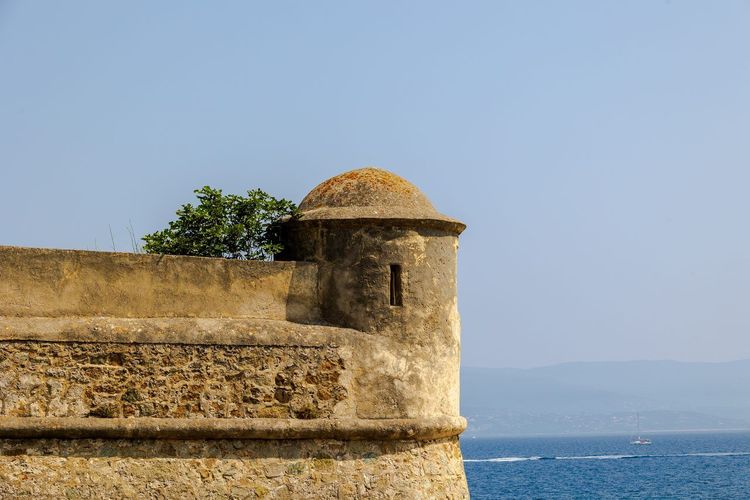
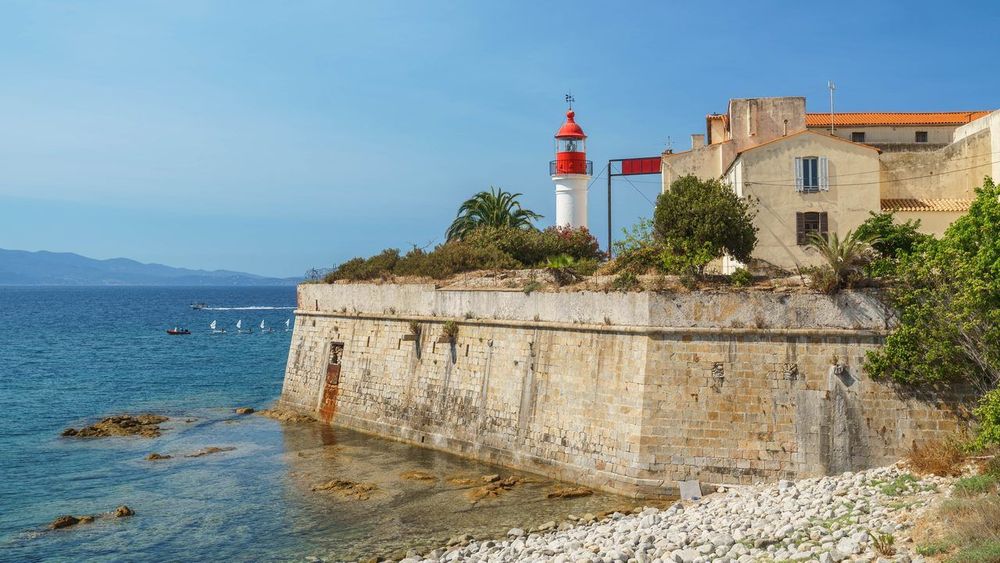
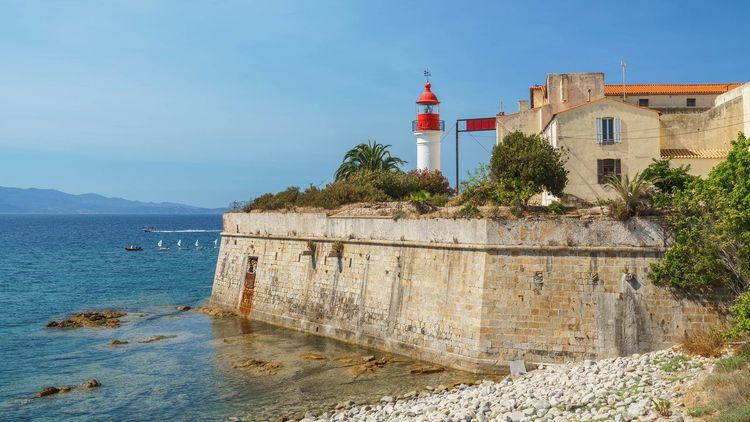
The citadelle Miollis has dominated the harbour entrance since the 16th century. Long occupied by the military, it has been handed over to the local authority and is gradually opening to the public for exhibitions, guided tours, and occasional events: check with the tourist office, as access is not permanent. In the meantime, its ramparts can be walked along the seafront and offer a fine view over the bay, especially in the late afternoon when the low light skims the fortifications.
Nearby, the cathédrale Notre-Dame-de-l'Assomption (Rue Forcioli Conti, 20000 Ajaccio, rated 4.4/5 on Google based on 1,210 reviews), built at the end of the 16th century, is where Napoleon was baptised in 1771: the baptismal font is still visible on the right as you enter, a tangible detail that leaves more of an impression than a date learned by rote. The Baroque interior, fairly dark and cool, also houses a painting by Delacroix — the Virgin of the Sacred Heart — and provides a welcome respite from the summer heat.
A little off the main routes, the église San Roccu attracts fewer visitors, making it a peaceful stop when the cathedral is crowded. Nearby, the grotte and place d'Austerlitz — also known as place du Casone — takes its name from a natural rocky outcrop transformed into a small shaded viewpoint. The sweeping staircase leading up to the statue of the emperor in his coronation robes lends itself to an impromptu race, and the flat, pine-shaded esplanade is perfectly suited to a snack break.
This neighbourhood works well as an hour-long loop without any difficult steps for a pushchair if you stick to the boulevard: most of the route follows wide, flat pavements, and a playground near the Casone provides a breather between visits.
The Ajaccio Tourist Train: History Without the Tired Legs
The Ajaccio tourist train covers the main monuments of the town centre in a loop of around forty minutes, with commentary in several languages. It is the most restful option when travelling with toddlers or a pushchair, at the point when the cobblestones of old Ajaccio start to take their toll on everyone's legs.
Departures are generally from place Foch or near the port, several times a day in season, with a reduced fare for under-12s and often free travel for toddlers sitting on a lap. Plan to take it towards the end of the morning, when the sun is already too strong to keep walking. It is also a good way to identify which monuments to explore more closely afterwards, particularly for those who prefer an overview before diving into the detail. A second, longer loop sometimes heads towards the route des Sanguinaires: check the posted route before boarding, as the two circuits differ in both duration and price.
A Cupulatta: The Turtle City

About twenty minutes' drive from the town centre, in the commune of Vero, A Cupulatta (Route de Bastelica, 20128 Vero, rated 4.6/5 on Google based on 4,354 reviews) is the largest turtle park in Europe. The site is home to several thousand individuals — around 170 species from all five continents — across nearly 2.5 hectares of pools and shaded enclosures. It is, without question, the activity that wins the most unanimous approval among under-10s across the entire Ajaccio region.
The route winds at your own pace along shaded paths between the pools, with educational panels accessible to anyone who can read independently. The giant tortoises from the Seychelles, notably placid, readily allow visitors to approach for a photo, and the nurseries offer a chance to see hatchlings the size of a coin — often the highlight of the visit.
Allow two to three hours on site, longer if you plan a picnic in the designated area. The park's natural shade makes it a good option during the hottest part of the day, unlike the beach. The terrain is generally manageable with a pushchair, though some path sections remain on bare earth.
The park is not open year-round and closes earlier outside the summer season: check the dates and opening times before you go, especially for a visit in April, October, or late afternoon. Access is via the route de Bastelica from the N193, a journey of about twenty kilometres that climbs gently into the interior.
Tree Climbing: Thrills at the Parc Aventure de Vero
Right next to A Cupulatta, the Parc Aventure de Vero (Vero, 20128 Corse-du-Sud, rated 4.6/5 on Google based on 693 reviews) offers several tree-climbing courses suspended among the oaks, from zip lines for toddlers to more demanding acrobatic routes for teenagers and adults. It is one of the few places in the region to combine multiple difficulty levels on a single site.
Junior courses typically start from around age 3–4 with ground-level activities, then move to genuine suspended routes from age 6–8 depending on height and arm span — a more reliable criterion than age for reaching the safety line. Harnessing is supervised by instructors, which is reassuring when one parent prefers to stay on the ground to take photos.
Since the park adjoins the turtle city, many visitors combine both in a single day: turtles in the morning when everyone is fresh, tree climbing in the early afternoon to burn off the remaining energy. Bring closed-toe shoes, tied-back hair, and clothes you don't mind getting tree resin on.
Allow one to two hours depending on how many courses you choose, and consider booking in high season: weekend time slots fill up quickly in July and August, especially late morning.
Treasure Hunts and Interactive Games in the Old Town
Less well known than the Napoleonic museums, the old town treasure hunt turns a heritage walk into a trail game. Several formats are available, from paper booklets at the tourist office to geolocation apps, with riddles to solve in front of each monument. Allow an hour and a half to two hours for a full circuit, ideally in the morning before the heat discourages the youngest participants.
In the same spirit, a mystery trail through the streets of Ajaccio follows a narrative thread — often centred on a Napoleonic-era mystery — giving a playful reason to traverse the entire historic centre without flagging. The format works particularly well for children aged 8 to 13, when heritage alone is no longer enough to hold their attention.
One detail that often amuses older children: pixel-art collages inspired by video game characters appear discreetly on certain walls and shutters in the old town. Spotting these street-art pieces quickly becomes a side game during the walk, and a good excuse to look up rather than at your feet.
For a more relaxed approach, a bus tour of Ajaccio covers the essentials of the town centre and seafront in about an hour, with audio commentary — a practical option in strong heat or when legs are tired. It also offers a simple way to understand the city's geography, squeezed between mountain and gulf, before heading out to explore on foot.
The Sanguinaires Islands and the Pointe de la Parata
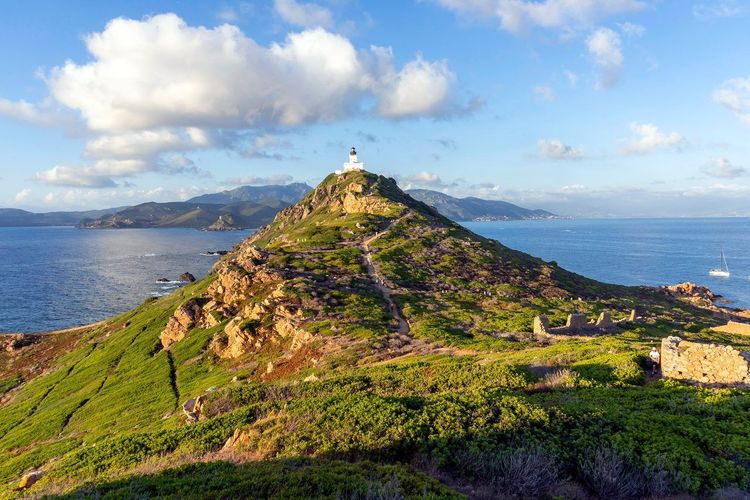
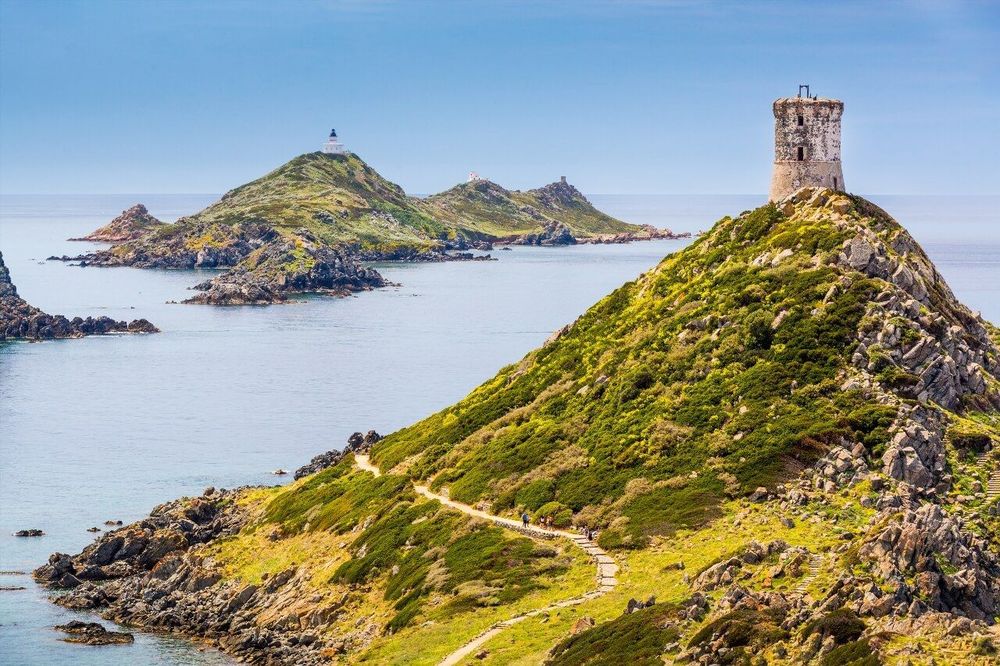
Half an hour's drive from the town centre, the route des Sanguinaires follows the sea to the pointe de la Parata (Route des Sanguinaires, 20000 Ajaccio, rated 4.7/5 on Google based on 5K reviews), where a 16th-century Genoese tower stands. It is one of the rare spots in Ajaccio where you instantly understand why Corsica is called the Island of Beauty.
Facing the headland, the Sanguinaires archipelago takes its name from the glowing red colour the rocks turn at sunset — a spectacle that many Ajacciens consider a summer evening ritual. Local legend prefers to attribute the colour to blood spilled in an ancient battle between a giant and a sea monster, a story that generally appeals far more to 6-to-10-year-olds than the geological explanation. Several companies run boat trips to the largest island, Mezu Mare, sometimes with dolphin sightings along the way.
For those who prefer to walk, the sentier des douaniers follows the coast from the pointe de la Parata along a broadly flat route, manageable from age 5–6 provided you set off early or in the evening to avoid the heat. Allow about an hour there and back to the first viewpoint. Closed shoes are essential: the ground is stony and the maquis scrub on either side of the path is thorny.
A little further north, Capo di Feno offers a wilder landscape of dunes and low maquis, with a beach still sheltered from the crowds of more central sites. Access involves a short road followed by a ten-minute walk, a good compromise when you are looking for a little peace and quiet. Note, however, that the swell here is stronger than elsewhere in the gulf, making it a popular surfing spot but one where swimming requires close supervision with beginner swimmers.
On the southern side of the gulf, the Genoese tower of the Isolella peninsula rounds off the list of defensive remains visible from the Ajaccian coast — a photogenic landmark to end a coastal walk without overtaxing the youngest legs.
The best time to visit is late afternoon, two hours before sunset, when the raking light colours the rock and the heat begins to ease. The Ryo article dedicated to the Sanguinaires islands details boat trip timetables and the best viewpoints accessible on foot. Back in town, Ryo's audio-guided tour of Ajaccio is a good way to fill the rest of the day on foot.
The Best Beaches in Ajaccio for Swimming with Children
Ajaccio has the rare advantage of several beaches reachable in under fifteen minutes from the town centre — a genuine comfort when car journeys quickly become an ordeal in the back seat.
The plage d'Argent (Route des Sanguinaires, 20000 Ajaccio, rated 4.4/5 on Google based on 4,242 reviews), on the route des Sanguinaires, takes its name from the pale, fine sand bordering shallow water stretching several metres — a decisive factor before the age of independent swimming. Beach restaurants and public facilities complete the amenities, making a full day on-site straightforward, with a pine-shaded picnic for those who prefer to avoid a restaurant bill.
Closer to the centre, the beaches of Trottel and Barbicaja offer a practical balance between accessibility and relative calm, with parking immediately adjacent and generally sheltered water protected by the shape of the gulf. Trottel has the added advantage of being served by the urban bus network, avoiding the hunt for a parking spot in the middle of August.
All along the route des Sanguinaires, several rocky coves lend themselves to snorkelling: a mask and snorkel are enough to spot sea urchins, wrasse, and sometimes starfish among the rocks, provided you stay in the shallower areas with beginners. A pair of water shoes goes a long way towards avoiding shrieks at the sight of sea urchins, which are plentiful on the rocky seabed of the gulf.
For children under 4, opt for sandy beaches with a gently sloping entry like the plage d'Argent rather than rocky coves, which are better suited from age 7–8 when a mask finally stays on a face. Supervised swimming is only available on certain beaches in July and August: outside that period, no lifeguards are on duty.
For sunsets, the pointe de la Parata and the plage d'Argent remain the two most popular spots, often crowded in high season: arriving an hour before the expected time guarantees a seat facing the sea. Capo di Feno beach, further north, offers the same light with far fewer people, at the cost of a slightly longer drive.
Water Sports and Boat Trips
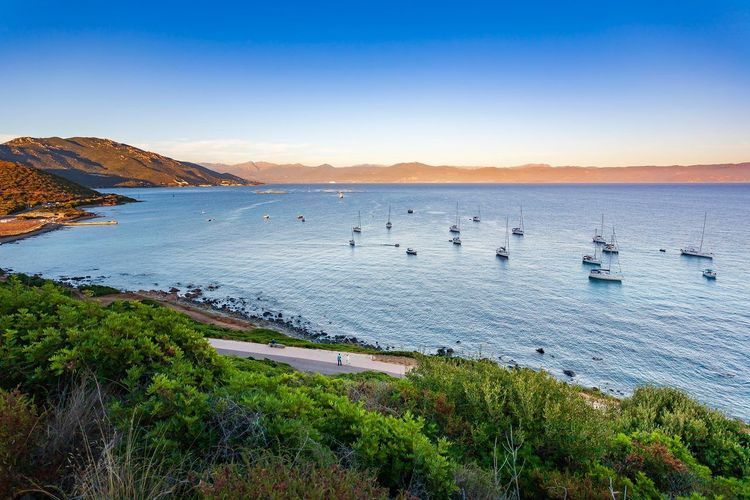
For teenagers looking for a thrill, the gulf of Ajaccio and its surroundings offer a wide range of water-based activities, from the most peaceful to the most demanding.
Several companies organise full-day boat excursions to the Scandola nature reserve, a UNESCO World Heritage Site, or to Bonifacio and its white limestone cliffs, several hours' sailing away. These are long outings, best suited to children aged 6 and above who can handle a full day at sea. Bring caps, sunscreen, and a windproof layer: it is always cooler offshore than in port, and shade on board is limited.
Diving off Ajaccio is particularly popular with teenagers who already have some experience. Several clubs offer introductory dives from age 8, in a pool or in shallow water, with individual supervision. The gulf's dive sites alternate between rocky drop-offs and wrecks accessible to qualified divers, including a B-17 lying offshore, reserved for advanced levels.
Kayaking, by contrast, is well suited to younger children: several hire operators based to the south of Ajaccio offer two- or three-seater kayaks that allow paddling alongside an adult on short routes along the rocky coastline. Set off early in the morning, when the sea is still glassy and the afternoon thermal wind has not yet picked up.
Stand-up paddleboarding, even more accessible, can be hired by the hour on most equipped beaches and makes for a great end-of-day activity when there is no wind. Jet-skiing and flyboarding, however, are reserved for older teenagers and adults, generally from age 16 depending on the operator, for a short but intense session. The Ryo article on excursions around Ajaccio lists operators and half-day formats, which are easier to fit into a shorter stay.
Hikes and Villages Around Ajaccio
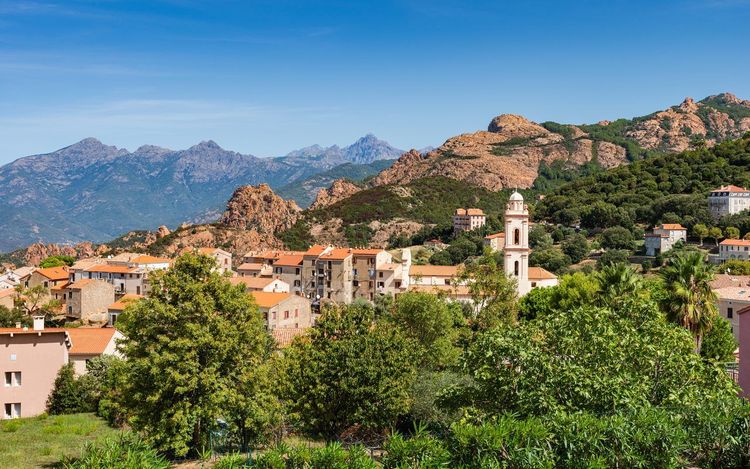
Beyond the coastline, the Ajaccio area hides mid-mountain villages less than an hour's drive away — a good option for escaping the coastal heat at the height of summer.
Bastelica, the birthplace of Sampiero Corso, sits at around 800 metres above sea level and offers open views of the surrounding mountains along with several short hiking loops, manageable from age 6–7. Cauro and Ocana, closer to Ajaccio, can easily be visited in a half-day for a high-altitude cool break. A little further afield, the Tolla reservoir spreads its green waters among the laricio pines, with picnic tables and a panoramic road that is worth the detour in its own right.
The gulf of Ajaccio as a whole lends itself to car drives punctuated by short stops — coves, viewpoints, small fishing harbours — a format that suits younger children far better than a long hike. Heading south, Porticcio and its long sandy beach close the loop in about thirty minutes from the centre.
For a proper family hike, stick to loops listed at under two and a half hours of total walking time with limited elevation gain: the more demanding paths in the Ajaccio area climb quickly and tire children out fast before the age of 10. Set off before 9am in summer, carry a litre of water per person, and do not hesitate to turn back on days of high fire risk — a common occurrence in July and August, when the massifs are sometimes closed by prefectural order.
The Ryo article on the best hikes around Ajaccio and the Ryo article on the most beautiful villages in Corsica list itineraries sorted by duration — a useful reference for planning a day trip.
Stargazing, Farm Visits, and Other Unusual Activities

Far from the town centre's light pollution, several elevated spots around Ajaccio allow you to observe the stars with the naked eye or a simple telescope — an experience that often leaves a stronger impression than a museum visit, especially on a clear, moonless night. The mountain passes in the hinterland, twenty to thirty minutes' drive away, are enough to find a dark sky: in summer, the Milky Way is visible there without any equipment.
Visiting a farm in the hinterland gives children a chance to meet goats, Corsican pigs, and sometimes Corsican donkeys, often with a cheese tasting included — a great half-day option for under-8s when animals win out over monuments by a wide margin. Some dairy farms allow visitors to watch the milking in the late afternoon, a spectacle that outshines any video.
For sports fans, catching an AC Ajaccio match at the stade François-Coty, when the fixture list allows, offers a lively and warm atmosphere very different from a large continental stadium. Prices remain reasonable and the ground can be reached on foot from the centre in about twenty minutes.
The Ajaccio golf course, near Porticcio, offers introductory lessons for beginners — including some teenagers — in a spectacular setting between sea and maquis, ideal for those who quickly tire of a conventional driving range. An hour is enough to find out whether the swing clicks or not.
Where to Stay and How to Get Around in Ajaccio
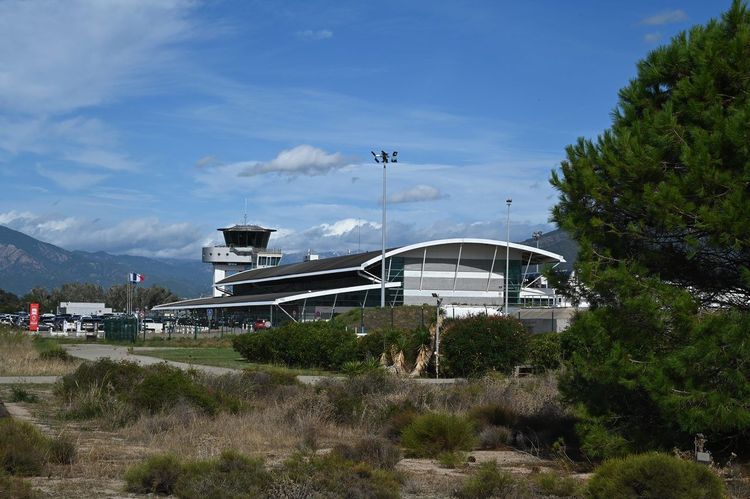
Getting to Ajaccio is mainly done by plane — the Napoléon-Bonaparte airport is less than ten minutes from the town centre — or by ferry from Marseille, Nice, or Toulon. The crossing is slower, often overnight from Marseille, but frequently cheaper once you bring a car, which avoids hiring one on the island at summer rates.
For accommodation without complications, the Sanguinaires area and the Old Port neighbourhood offer the best balance between proximity to activities and quick access to the beaches. Coastal campsites with mobile homes and swimming pools remain a comfortable and affordable option when you need beds for four or five people, and nearly all have a play area.
Holiday villages, often set slightly back from the coast, typically include a club for younger children and supervised activities — a format that also frees up a little time for parents. The Ryo article on the best seaside campsites in Corsica and the Ryo article on the best holiday villages in Corsica compare several options by budget and on-site facilities.
For getting around Ajaccio, a hire car remains the most flexible solution for combining beaches and villages, even though the historic centre can be explored entirely on foot. The urban bus network also serves the route des Sanguinaires and the nearest beaches, with increased frequency in summer: it is a practical alternative if you prefer not to drive every day, and town-centre parking, which is largely paid and metered, quickly becomes a headache in August. Book your vehicle well in advance for a summer stay — the fleet available on the island is limited and prices rise fast.
When to Go and How to Plan Your Stay in Ajaccio
The children's ages make a big difference. Under 6, it is better to focus on the tourist train, gently sloping beaches, and A Cupulatta rather than long museum visits, keeping a post-lunch nap slot free. Between 6 and 12, treasure hunts, tree climbing, and first short hikes work very well. With teenagers, water sports, diving, and boat trips to Scandola or Bonifacio take over from the historic centre, which they tend to exhaust in a single morning.
The weather in Ajaccio remains mild for much of the year, with dry, hot summers — regularly 28–30 °C in July–August — and mild winters by Mediterranean standards, around 12–14 °C during the day. Spring and early autumn offer a good compromise: pleasant warmth without heatwave peaks, and a flowering maquis in April–May that perfumes the entire coast.
Summer tourist crowds are most noticeable in July–August, on the beaches close to the centre and around the Sanguinaires islands in the evening, and also on cruise ship call days when the old town becomes saturated in the morning. June and September often allow you to enjoy the same sites with far fewer people and a sea that is already or still warm enough for swimming. Note also that 15 August — Saint Napoleon's Day — sees the city fill up, the central streets close, and celebrations in full swing: spectacular, but not ideal with a pushchair.
In case of rain, the Maison Bonaparte, Palais Fesch, the imperial chapel, and the Naporama museum remain the best indoor options, supplemented by the cinema, the indoor swimming pool, and the shops along cours Napoléon if the weather does not improve during the day. Corsican showers are often brief and intense, so an hour in a museum is sometimes all it takes to let the storm pass.
With just one day, a realistic itinerary starts with the old town and its squares in the morning, lunch near the market, then the afternoon either at the plage d'Argent or along the route des Sanguinaires to the pointe de la Parata for sunset. It is tight but doable, provided you do not linger more than an hour at each site.
To cover the essentials without rushing, allow three to four days: one for the historic centre, one for A Cupulatta and tree climbing, one for the beaches and the Sanguinaires, and a final day left open according to everyone's preferences — hike, market, or simply relaxing by the sea. Beyond five days, Ajaccio becomes a comfortable base for day trips to Porto, Bonifacio, or the aiguilles de Bavella, provided you are happy with two to three hours' driving each way.

FAQ
What are the best activities to do with children in Ajaccio?
A Cupulatta, the Parc Aventure de Vero, the Ajaccio tourist train, and the beaches along the route des Sanguinaires top the list of activities that appeal to all ages. For those curious about history, the Maison Bonaparte and the Naporama museum round out the programme nicely without overloading it.
What can families do in Ajaccio when it rains?
Head to the museums: the Maison Bonaparte, Palais Fesch, the imperial chapel, and the Naporama museum can all be visited under cover. The covered market, the swimming pool, and the shops along cours Napoléon also offer a good alternative for filling a morning without getting wet.
What activity should you choose with teenagers?
Boat trips to Scandola or Bonifacio, diving, kayaking, and the tree-climbing course at the Parc Aventure de Vero are better suited to teenagers than museum visits alone. The treasure hunt through the old town is also popular up to around age 12–13.
What can you do with a child under 6?
Opt for the Ajaccio tourist train, A Cupulatta and its shaded paths, and gently sloping beaches such as the plage d'Argent. Long museum visits and hikes with significant elevation gain are best avoided at this age, as are full-day boat trips.
What is the best time of year to visit Ajaccio?
June and September offer the best compromise: pleasant warmth, a sea that is already or still warm, and noticeably smaller crowds than in July–August on the beaches and the most popular sites. April and May work well if swimming is not the main priority.
How many days should you plan for a visit to Ajaccio?
Three to four days allow you to cover the historic centre, A Cupulatta and the tree-climbing course, the beaches, and the Sanguinaires islands at a relaxed pace, with room for a hike or a more flexible day.
How do you get around Ajaccio with young travellers?
The historic centre can be explored entirely on foot. For the beaches and surrounding area, a hire car remains the most flexible option, supplemented if needed by the urban bus network, which serves the route des Sanguinaires and the nearest beaches.
Ajaccio has the rare quality of fitting comfortably into a long weekend while easily justifying a full week: Napoleonic heritage concentrated in a walkable town centre, beaches reachable in minutes, and turtles or tree climbing less than half an hour's drive away for a change of pace. This variety makes the city easier to organise than most other Corsican destinations, where the distances between sites often discourage younger visitors.
To put together your own route through the old town without spending too long looking for your way, Ryo's audio-guided tour of Ajaccio is the simplest way to connect the Napoleonic monuments and iconic squares at your own pace, with commentary that speaks to younger visitors too. A good foundation for building the rest of your stay, between beaches and open spaces.
À lire également