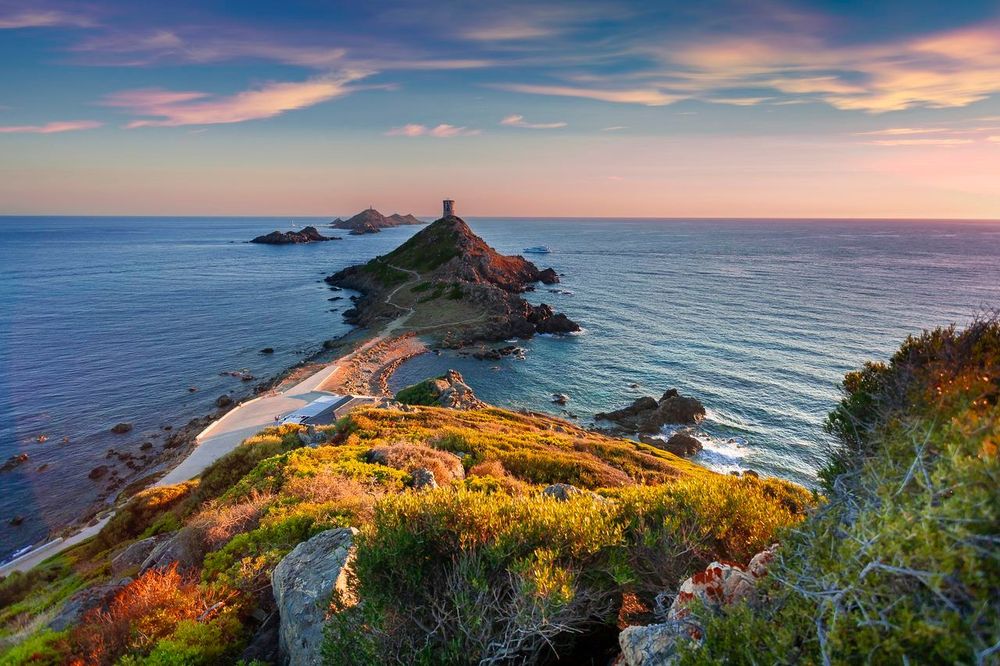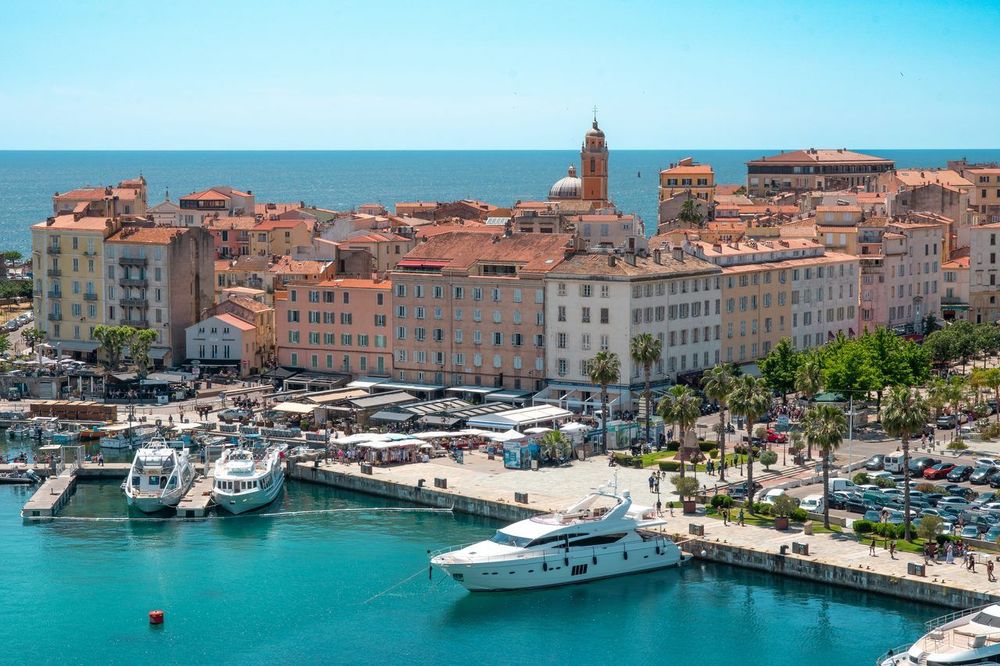
© Shutterstock
 Votre guide Ryo
Visiting Ajaccio Without a Car: The Complete Guide on Foot, by Bus and by Boat (2026)
Ajaccio is best reached by boat or plane and understood on foot, not by hunting for a parking spot. Visiting Ajaccio without a car is anything but a constraint: the city was built for pedestrians long before the automobile arrived, the old town is tiny, the harbour runs alongside the centre, and the most popular beaches are ten minutes away by bus. The scent of warm bread and coffee drifting out of the bars along the Cours Napoléon from 7am sets the tone for a city best experienced on foot. It is almost the best way to discover it, starting with the Ryo audio-guided tour of Ajaccio, designed to be done entirely on foot from the harbour.
This guide answers the questions everyone asks before booking: how to get to the centre from the airport without renting a vehicle, how the maritime shuttle across the gulf to Porticcio works, how to reach the Pointe de la Parata and its 1608 Genoese tower by city bus, and how to get to the Sanguinaires Islands, visible from almost every high point in the city. It also details the beaches within reach of a bus, the hikes that start straight from the city centre, and a train excursion into the Corsican mountains that is a complete change from the usual beach programme. Enough to plan an entire stay without ever touching a steering wheel.
How to Get to Ajaccio Without a Car
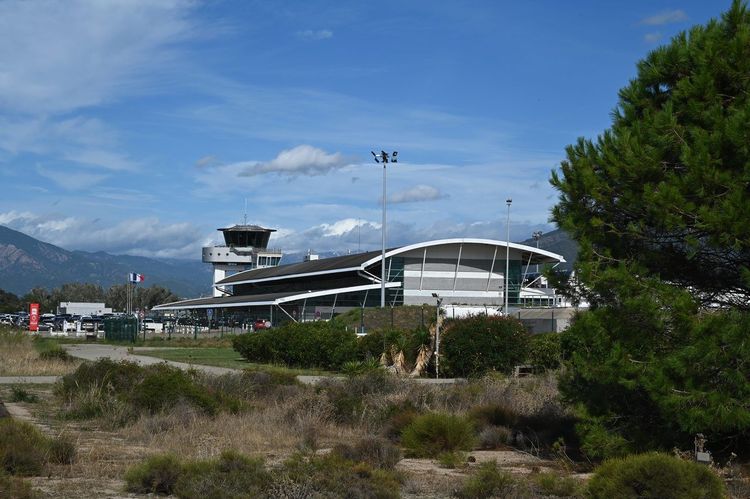
By Plane or Boat to Ajaccio
Ajaccio has its own airport, Napoléon Bonaparte, about 7 km from the city centre, served by direct flights from about ten French cities and a few European capitals in season. Paris, Marseille, Nice and Lyon are served year-round, with extra routes to London, Brussels or Geneva in summer. Allow 1h30 of flight time from Paris, and less than an hour from Marseille or Nice, which often makes it the fastest option.
The other option, slower but far more spectacular, is the ferry from Marseille, Toulon or Nice. Overnight crossings last between 10 and 12 hours, in a cabin or reclining seat, and a few shorter daytime services run in high season from Toulon or Nice. The boat drops travellers directly at the port of Ajaccio, at the foot of the old town: you step off the gangway and you are already in the historic centre, bag on shoulder, without having looked for a single parking space.
Many travellers choose to fly out and sail back, or the reverse, to enjoy both experiences without ever having to drive. If you are aiming for a reasonable fare, book for April-May or September-October: prices climb sharply in July-August, and the buses to the centre fill up quickly at peak tourist hours.
Getting to the City Centre from the Airport or Port
From the airport, the bus shuttle (line 8 of the Muvitarra urban network) links the terminal to the train station and the city centre every 30 to 60 minutes depending on the season, for a little over 4 euros per trip. Allow about twenty minutes to reach the heart of Ajaccio, luggage included, with a convenient stop at the station for those continuing with a train excursion.
The port, for its part, is already in the centre: no shuttle is needed. Ferries and cruise ships dock a few hundred metres from the Tino Rossi harbour and its pedestrian quays, often closer to your hotel than any car park would be.
Keep in mind that taxis from the airport often charge 25 to 35 euros per ride, far more than the bus. This is an option best kept for a late arrival, when the shuttles have stopped running for the evening.
Getting Around Ajaccio Without a Car: Bus, Shuttle and Tourist Train
Urban Buses and the Ajaccio-Porticcio Maritime Shuttle
The Muvitarra network has about a dozen lines serving the whole urban area, from the beaches along the Route des Sanguinaires to the residential neighbourhoods perched on the hills. A single ticket costs less than 2 euros, and booklets or short passes quickly pay off if you make several trips to the Pointe de la Parata or the beaches in the same day.
The real pleasant surprise is the Ajaccio-Porticcio maritime shuttle, which crosses the gulf to link the two shores in about twenty minutes. It runs mainly in the summer season, takes foot passengers on board at the port and avoids a long road detour around the head of the gulf, often congested in summer. Its fare remains modest, and in some seasons the local authority has offered free crossings: check the year's conditions with the tourist office. It is also one of the prettiest ways to see Ajaccio from the water without paying for an excursion.
Urban buses run from about 6:30am to 8pm, with frequencies that tighten in summer on the main lines and lengthen in the off-season. It is best to check the timetable the day before, especially for the last evening bus to the beaches or the Pointe de la Parata.
Travelling with family or a pushchair? Recent buses have a low floor, but this is not the case across the whole fleet: it is best to board through the middle door if you have a large bag or an open pushchair.
Ride-Hailing, Bikes and the Tourist Train
For a one-off trip, in the evening or in a group, ride-hailing or a taxi remains the most flexible solution: allow around fifteen euros for a ride within the urban area, to be booked by phone or via an app rather than hailing one in the street, where supply is limited outside the main hubs.
Bikes are easy to rent near the port, and the road running along the gulf to the Sanguinaires is well suited to cycling, on a mostly flat route shared with cars in summer.
The Ajaccio tourist train offers a guided loop of about 45 minutes through the historic centre, and a second circuit to the Pointe de la Parata depending on the season. It is a relaxing way to get your bearings on the first day, before exploring on foot the next day with your own stops in mind.
If you prefer to go at your own pace without depending on any timetable, note that Ajaccio's central loop, old town, market, cathedral and harbour combined, can be covered entirely on foot in one morning. This is exactly the route followed by the Ryo audio-guided tour from the harbour, with no bus or ride-hailing needed for this part of the visit: you move at your own speed, headphones on, and the guide adapts.
The Historic Centre on Foot: Old Town, Market and Cathedral
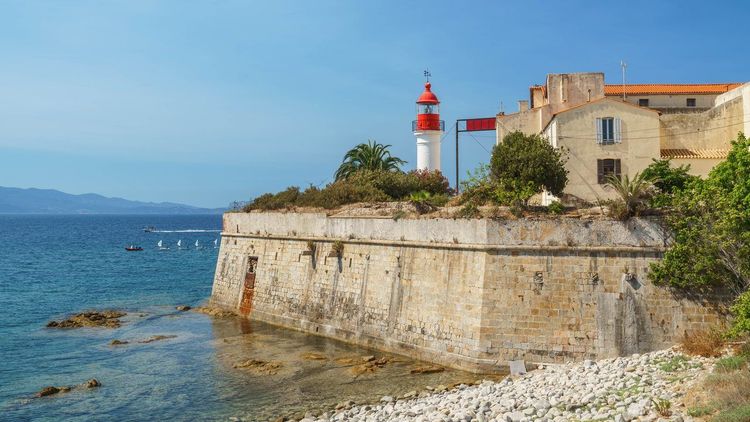
The Old Town, the Central Market and the Citadel
The lanes of Ajaccio's old town climb and descend gently, in the shade of ochre buildings packed tightly together, and open without warning onto a square, a chapel or a stall of Corsican cheeses. You can happily get lost here for an hour, with no set route, heading up towards the cathedral along a shady alley.
In the morning, head for the central market, Place Foch, where producers set out charcuterie, sheep's cheeses and maquis honey on their stalls from 7am. This is where you really discover Corsican gastronomy: figatellu, brocciu, canistrelli, long before finding touristy versions of them on the quays at the end of the day. Regulars come before 9am, when the best products have not yet gone.
On Sunday mornings, a flea market also sets up in the centre: old crockery, tools, postcards from another century. Nothing organised for tourists, which is precisely what makes it appealing for anyone who likes to browse without a goal.
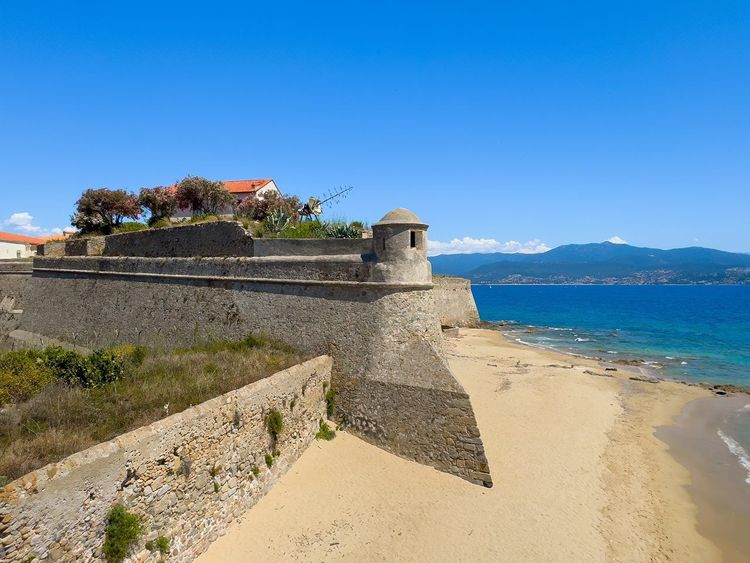
Continuing towards the seafront, the Ajaccio Citadel closes off the horizon. Occupied by the army for a long time, it only opens for occasional guided tours, but its ochre ramparts and massive silhouette can be admired very well from the quay, coffee in hand, in late morning when the light grazes the stones.
Place Foch, Santa-Maria-Assunta Cathedral and Tino Rossi Harbour
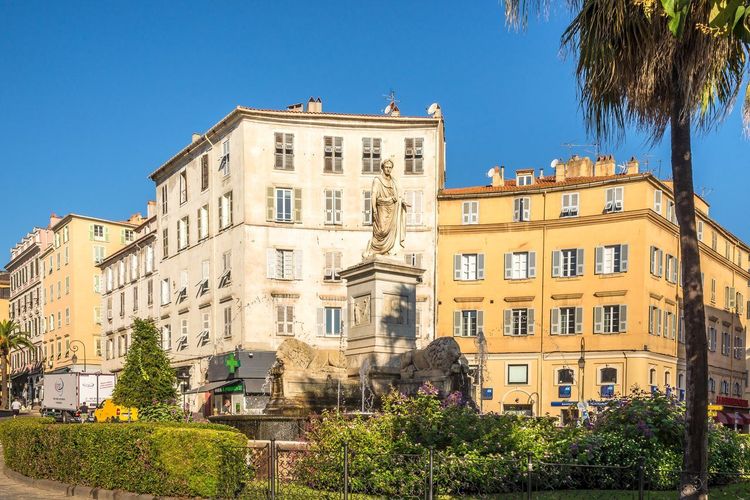
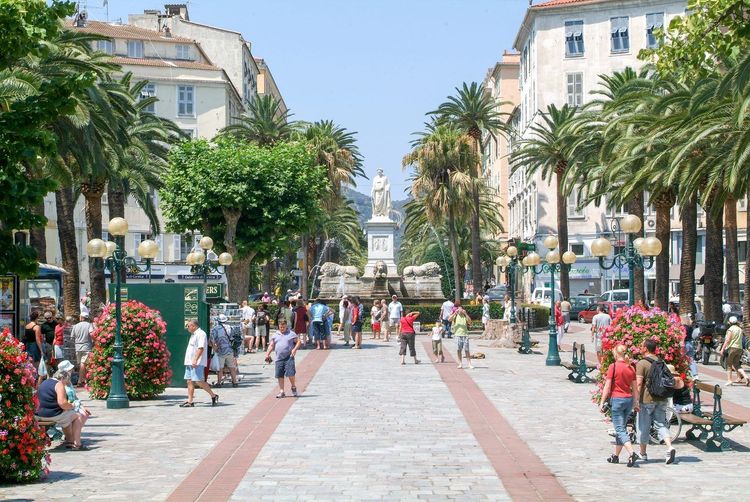
Just steps away, Place Foch brings together palm trees, a lion fountain and a statue of Napoleon in a Roman toga, a curiosity that sums up the city's relationship with its most famous son. It is also a good landmark to get your bearings if you have got a little lost in the lanes.
The Santa-Maria-Assunta Cathedral, modest from the outside, hides a Baroque interior and above all the baptismal font where Napoleon Bonaparte was baptised in 1771. It can be visited in fifteen minutes, free of charge, and naturally completes the stroll through the old town without requiring a detour.
The walk logically ends at the Tino Rossi harbour (Quai Napoléon, 20000 Ajaccio, rated 4.6/5 on Google from 1.5K reviews), where the people of Ajaccio come to stroll in the evening among the moored yachts and boats. It is also the departure point for most boat excursions to the Sanguinaires, and a lovely spot to watch the sun go down over the gulf before sitting down to dinner.
If you are short on time to string all these places together without rushing, the short version of the tour, "the imperial city", links the market, the cathedral and the harbour in a tighter loop than the full visit, ideal for a morning when the day's schedule is already packed.
Palais Fesch, Maison Bonaparte and Museums to Visit Without a Car
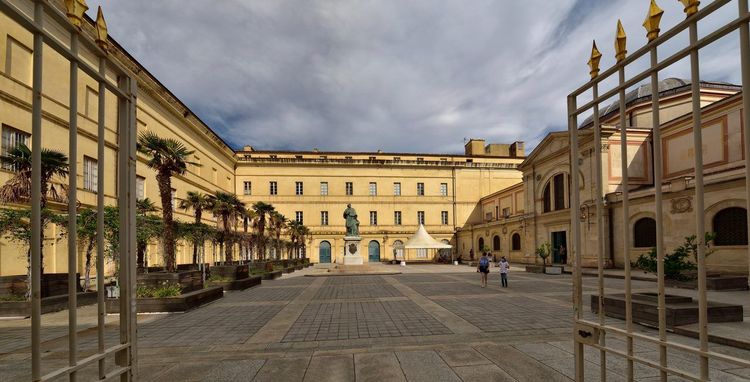
The Palais Fesch and the Imperial Chapel
The Palais Fesch, Museum of Fine Arts, houses the largest collection of Italian painting in France after the Louvre, the legacy of Cardinal Fesch, Napoleon's uncle and an insatiable collector. Allow an hour and a half for the main rooms, a little more if you linger over the primitives and the Renaissance canvases.
Right next door, the Imperial Chapel houses the tombs of the Bonaparte family, with the exception of Napoleon himself, buried at Les Invalides. The whole complex can be visited in one go with the palace, and the coolness of the marble makes a welcome break in midsummer.
Maison Bonaparte and the Naporama Museum for Rainy Days
The Maison Bonaparte, where Napoleon was born in 1769, is a family home furnished in the spirit of 18th-century Corsica. You can see the trapdoor through which, according to tradition, he escaped the supporters of Pascal Paoli in 1793, just before the family left the island.
The Naporama Museum (Avenue Antoine Serafini, 20000 Ajaccio, rated 4.8/5 on Google from 351 reviews), more recent and more playful, retraces the Napoleonic epic through dioramas filled with thousands of miniature figurines, from the Italian battles to the exile on Saint Helena. It is the ideal option for filling an afternoon when the weather does not cooperate on the coast, especially with children.
These four addresses make up Ajaccio's best plan B when it rains: they are all in the centre, a few minutes' walk from one another, with no need for motorised transport. Our selection of things to do in Ajaccio when it rains offers more.
The Pointe de la Parata and the Sanguinaires Islands Without a Car
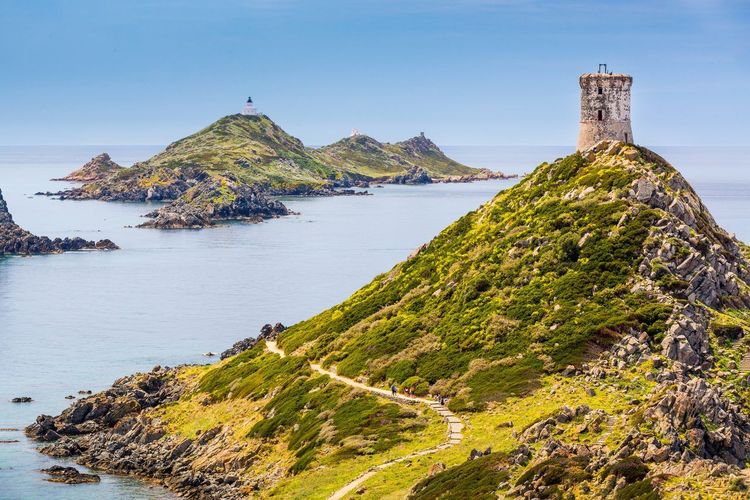
The Pointe de la Parata by Bus and Its Genoese Tower
Bus line no. 5 links the city centre to the Pointe de la Parata (Route des Sanguinaires, 20000 Ajaccio, rated 4.7/5 on Google from 2.3K reviews) in about half an hour, along the Route des Sanguinaires which follows the gulf and already offers lovely views from the window. At the terminus, you are at the foot of the trail, with no unnecessary approach walk.
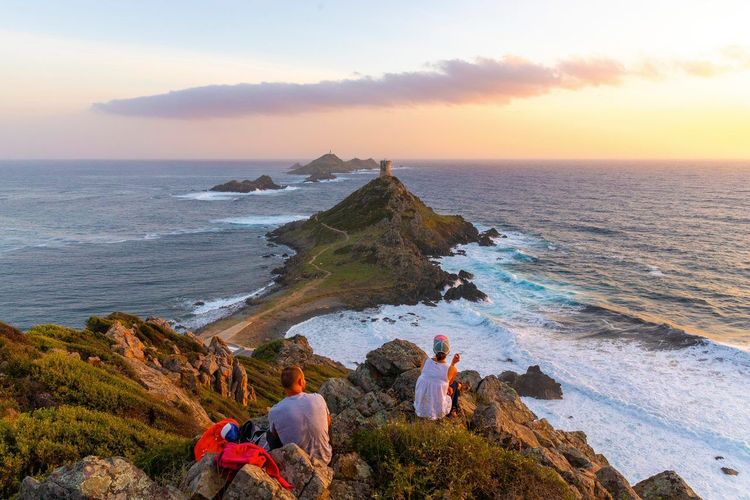
From there, a waymarked path climbs in twenty minutes to the Genoese tower, completed in 1608 to watch for the arrival of Barbary corsairs along the coast. The view over the gulf and the islands more than justifies the climb, even if good shoes are better than sandals.
Coming here to admire the sunset remains one of the most popular rituals in Ajaccio in summer: dozens of people settle on the rocks every evening in July-August. The last bus leaves fairly early in the evening, so you need to plan your timing if you do not want to take a taxi home after dark.
The Sanguinaires Islands by Boat
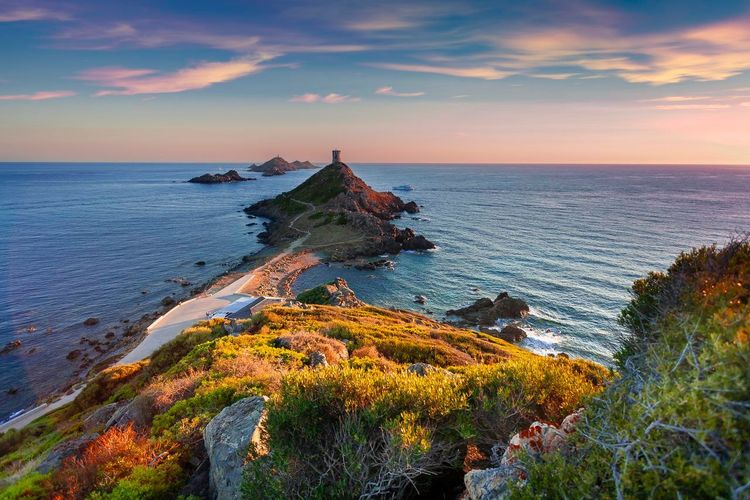
The Sanguinaires Islands, this archipelago of red rock that closes off the Gulf of Ajaccio, can only be visited by boat. Several companies offer cruises from the Tino Rossi harbour, lasting from 1h30 to half a day depending on whether or not you include a stop on Mezzu Mare, the main island, and its 19th-century lighthouse.
The classic excursion leaves in the late afternoon to enjoy the low light on the cliffs, then the sunset seen from the open sea, a maritime version of the same ritual as from the point.
Book your slot the day before in high season: evening departures fill up quickly, and schedules vary with the wind, as the gulf can pick up at the end of the day.
One stop on the Ryo audio-guided tour tells the story of the Genoese towers you can see from the bus before the boat excursion: a way to understand what you are looking at before you even board.
Beaches Accessible in Ajaccio Without a Car
City Centre Beaches (Saint-François, Trottel)
The Saint-François beach is literally in the city centre, at the foot of the citadel, five minutes on foot from Place de Gaulle. Small but handy for a quick swim between two visits, it fills up fast from 10am in summer.
A little further along the Route des Sanguinaires, the Trottel beach offers more space and fewer people, accessible by bus in about ten minutes from the centre, or on foot in half an hour along the seafront. Families often find more room there to set up their things.
Beaches a Bit Further by Bus (Barbicaghja, Capo di Feno)
The Barbicaghja beach, on the Route des Sanguinaires, is still served by bus line no. 5 and appeals to wind lovers, popular with windsurfers at the end of the day when the thermal breeze picks up.
The Capo di Feno beach (Capo di Feno, 20167 Alata, rated 4.7/5 on Google from 212 reviews), wilder and larger, is not served by any practical bus line: allow for a taxi or ride-hailing from the centre, or an organised outing. It is the most beautiful in the area according to many regulars, but also the least accessible without a personal vehicle.
To choose your beach according to your mode of transport, remember a simple rule: on foot for Saint-François, by bus for Trottel and Barbicaghja, and by taxi or organised excursion for Capo di Feno. Our guide to Ajaccio's beaches completes this overview.
Hikes and Excursions Without a Car Around Ajaccio
Hikes Accessible by Bus or on Foot from the Centre
Contrary to popular belief, several hikes around Ajaccio start without needing a car. The trail leading to the Parata tower is the most accessible, served by bus no. 5 already mentioned for the beach and the sunset.
The most beautiful remains the Chemin des Crêtes, which starts from the heights of the city, near the Bois des Anglais, and winds above the gulf through the maquis and granite blocks before coming back down to the Route des Sanguinaires. Allow three to five hours depending on the variant chosen: you set off on foot from the centre and return by bus from the seaside, without ever needing a vehicle.
For a shorter outing, the coastal promenade between the centre and Trottel beach takes half an hour to an hour to walk, with no notable elevation, and lets you go straight on to a swim.
Always carry more water than you think you need: the maquis offers little shade in the middle of the day, and fountains become scarce once you leave the city centre. To go further, our guide to hiking in Corsica lists other routes.
Train and Coach Excursions: Vizzavona, Corte, Bonifacio
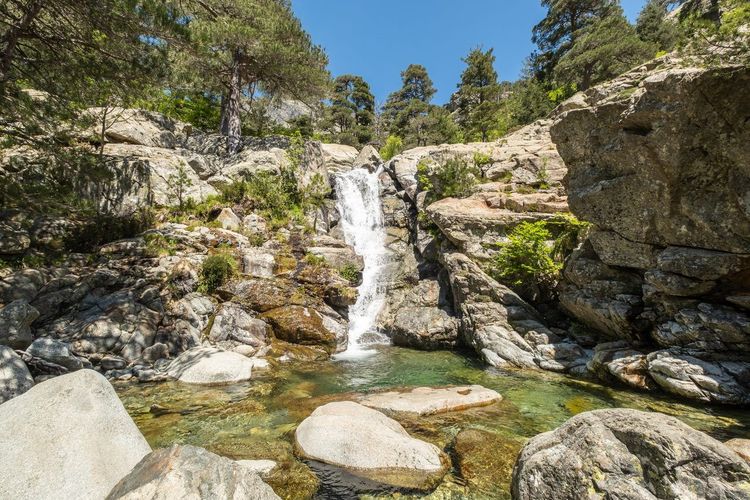
Corsica has a small rail network, and it is the most exotic excursion you can make from Ajaccio without a car. The train leaves from the station, a stone's throw from the port, and climbs towards the mountains: Bocognano, then Vizzavona and its Corsican pine forest in a little under two hours, before continuing to Corte and Bastia. At Vizzavona, the walk to the Cascade des Anglais starts directly from the station, making it an ideal day trip.
Bonifacio, at the other end of the island, cannot be reached by train: regular coaches link Ajaccio to Bonifacio via Propriano and Sartène in a little over three hours. That is long for a round trip in a day, so it is better to stay overnight.
Fans of villages with character will also find what they are looking for without a car, via organised minibus excursions from the centre to hilltop towns such as Cauro or Bastelica. Our selection of the most beautiful villages around Ajaccio will help you choose.
Where to Eat and Shop at the Market in Ajaccio
The Place Foch Market and Its Corsican Products
Even before looking for a restaurant, the Place Foch market remains the best introduction to Corsican gastronomy: nustrale pork charcuterie, matured cheeses, chestnut honey and island wines can be tasted on the spot or taken away for an impromptu picnic on the harbour quays.
The vendors know passing visitors well and are happy to offer small tastings before you buy: don't hesitate to ask, it is often the best way to leave with the right products rather than choosing at random from the labels.
A Few Restaurants Within Walking Distance
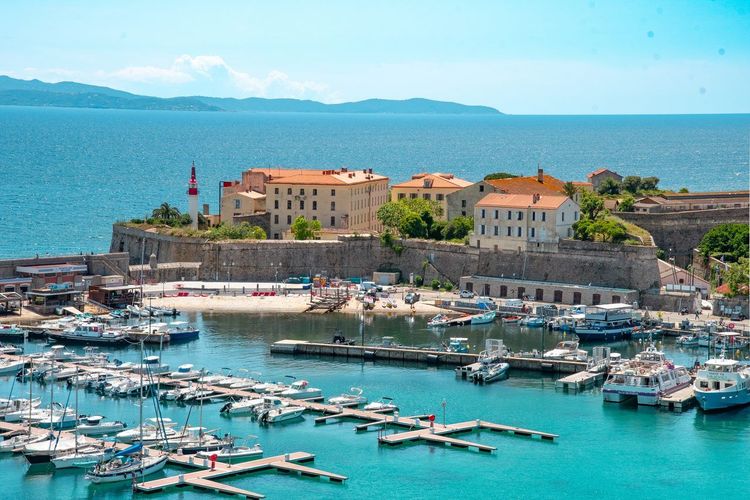
The lanes of the old town and the area around Rue du Roi-de-Rome concentrate the traditional Corsican restaurants: Corsican soup, veal with olives, wild boar stew, fiadone with brocciu for dessert. Beware of menus that are too long and translated into five languages, and favour short chalkboards that change with the market.
On the harbour side and along Boulevard Pascal-Rossini, the terraces focus more on grilled fish and seafood, with the sea as a backdrop. Everything can be reached on foot in under fifteen minutes, which saves you from booking a taxi to get home after dinner.
Our Corsican specialities to know before sitting down to eat help decode local menus and avoid tourist traps.
Where to Stay in Ajaccio to Do Everything on Foot
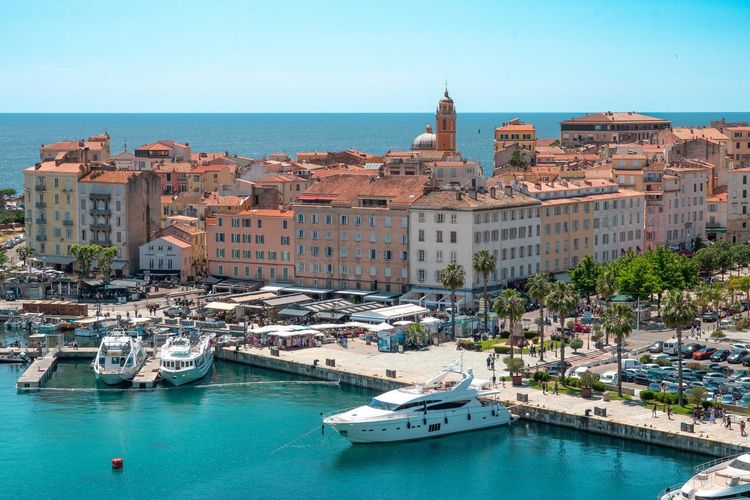
The choice of neighbourhood matters more than the hotel itself when travelling without a car. Favour accommodation between the station, the harbour and Place de Gaulle: this triangle concentrates the old town, the restaurants and the stops for most of the bus lines useful for the beaches and the Pointe de la Parata.
A hotel more than twenty minutes' walk from the centre forces you to multiply bus or taxi trips, which ends up inflating the budget of a stay meant to avoid them. The streets around the Cours Napoléon or the seafront generally tick all the boxes: walkable, well served, and close to the station for train excursions.
Three types of accommodation stand out. A charming place in an old building in the old town, to sleep a few steps from the market. A mid-range hotel near the port, practical for families combining boat excursions and strolls along the quays. Finally, a residence on the Route des Sanguinaires, more out of the way but connected by line 5, if you want the beach on waking and calm in the evening.
How Long to Visit Ajaccio Without a Car
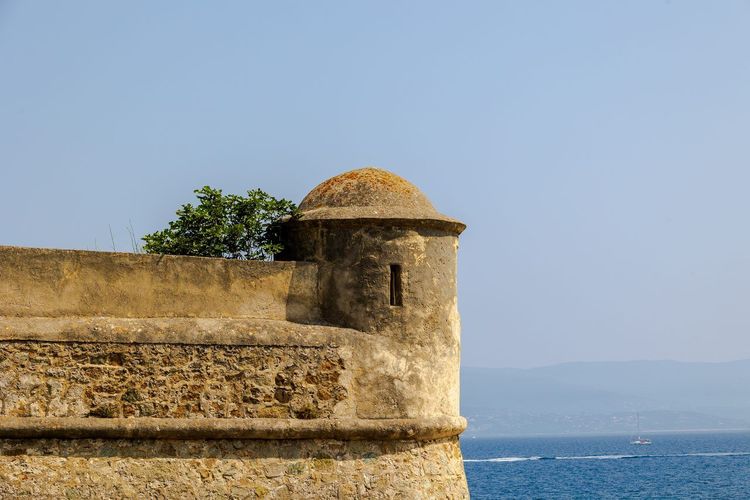
One Day or a Weekend in the Centre
To visit Ajaccio in 1 day, everything is done on foot: the Place Foch market at opening, the old town and cathedral in the morning, lunch at the port, then an hour and a half at the Palais Fesch or the Maison Bonaparte depending on your tastes. In the late afternoon, bus no. 5 drops you at the Parata for the sunset. It is tight, but realistic if you are on a cruise stopover.
Over a weekend, add a beach morning on the second day, at Saint-François if you stay close to the centre or at Trottel for more calm. This also leaves time to sit down without rushing at the market or in one of the restaurants in the centre.
Three Days to a Week with Excursions
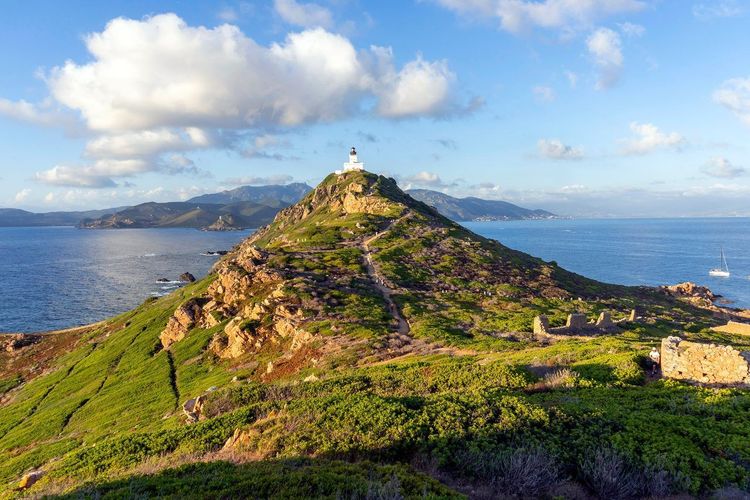
To visit Ajaccio in 3 days, include a cruise to the Sanguinaires Islands on the second day in the late afternoon, for the sunset from the open sea. The third day is well suited to the Chemin des Crêtes or an additional museum depending on the weather.
Over a week, the rhythm changes completely: two days for the city and its museums, two days of beaches between the centre and the Route des Sanguinaires, one day of hiking, a crossing to Porticcio, and a day by train to Vizzavona. That is more than enough to have no regrets, even without renting a car at any point during the stay.
To plan the first day precisely, the Ryo audio-guided tour of Ajaccio, 18 audios and 2h30 of walking over 6 km, follows exactly the loop described above between the old town, market, cathedral and harbour, to be followed right from the hotel door.
Good to Know Before Leaving Without a Car
The weather in Ajaccio remains generally mild from April to October, with hot, dry summers that make walking more pleasant early in the morning or at the end of the day. Winter, rainier and sometimes windy, reduces the appeal of hikes but leaves the museums in the centre fully available, often with no queues.
The crowds rise sharply in July-August: buses to the beaches fill up quickly and queues lengthen at the museums and at the port for excursions. June and September offer a good compromise between reliable weather and reasonable crowds, with bus frequencies still decent.
If the rain sets in, simply adapt the itinerary: switch a half-day of beach or hiking to the Palais Fesch, the Maison Bonaparte or the Naporama Museum, all grouped in the centre.
On the budget side, going car-free remains unbeatable: a week of buses, a crossing to Porticcio, a cruise to the Sanguinaires and a return train trip to Vizzavona generally cost less than two days of car rental in high season, fuel and parking included. Keep a few coins and some cash on you, as not all buses and small village shops accept bank cards. Also remember to download bus and train timetables before setting off on an excursion: the mobile network weakens quickly in the mountains, and stops in the interior do not always display real-time departures. Outside July-August, many boat excursions only leave with a minimum number of passengers: call the day before to confirm the departure.
Finally, if you do arrive with a vehicle, note that parking in the historic centre remains limited and paid almost everywhere. It is better to park on the outskirts, near a bus stop, and finish the journey on foot, exactly as travellers who came without a car do.



FAQ
How can I get around Ajaccio without a car?
On foot in the city centre, and by Muvitarra bus for the beaches and the Pointe de la Parata. A maritime shuttle also links Ajaccio to Porticcio in season, and a taxi or ride-hailing service is a useful complement for evening trips or for Capo di Feno.
How can I visit Ajaccio on foot?
The old town, the market, Santa-Maria-Assunta Cathedral and the Tino Rossi harbour can be covered in half a day's walk, never more than ten minutes between two points of interest in the historic centre.
Is Ajaccio worth visiting without a car?
Yes, and it is often more comfortable: the centre is compact, buses serve the beaches and the Pointe de la Parata, and only a few remote beaches such as Capo di Feno require a bit more planning.
What is the route of the free shuttle in Ajaccio?
The maritime shuttle crosses the gulf between the port of Ajaccio and Porticcio, mainly in the summer season, in about twenty minutes. Whether it is free depends on the arrangements in place each season: check with the tourist office before you go.
Do you need a car to visit the Sanguinaires Islands?
No: the islands can only be visited by boat, departing from the Tino Rossi harbour. The Pointe de la Parata, facing the archipelago, can be reached by bus from the city centre.
How many days should I plan to visit Ajaccio without a car?
One day for the essentials of the centre, a weekend to add the Pointe de la Parata and a beach, and three days to a week to include the Sanguinaires Islands, hikes and a train excursion into the mountains.
Which beaches in Ajaccio are accessible without a car?
Saint-François on foot, Trottel and Barbicaghja by bus along the Route des Sanguinaires, and Capo di Feno by taxi or organised excursion for the most motivated.
Ajaccio Without a Car, the Right Choice
In the end, visiting Ajaccio without a car reveals a city that has always been designed for pedestrians, with the lanes of the old town, buses speeding towards the beaches and boats gliding towards the Sanguinaires. Every step of the stay, from the airport to the port via the morning market, can be managed without ever looking for a parking space.
To lay the foundations of your stay from day one, the Ryo audio-guided tour of Ajaccio remains the simplest starting point: 18 audios, 6 km of walking, and the story of the imperial city told street by street, from the port to Napoleon's birthplace.
À lire également