© Shutterstock
 Votre guide Ryo
What to Do in Hyères: 18 Must-See Activities in 2026
Hyères is the southernmost city in the Var, yet it remains one of the most underrated destinations on the Côte d'Azur. No overwhelming coastal concrete here: a hilltop old town with medieval lanes, three wild islands classified as a UNESCO biosphere reserve, a near-pristine peninsula, and a hinterland stretching all the way to the Massif des Maures. If you're wondering what to do in Hyères, the real challenge isn't finding activities — it's choosing between them. To explore the historic city on foot, the Ryo audio-guided tour of the Cité des Palmiers features 18 audio stops over 4 km, ideal for taking in every Art Nouveau façade and terraced garden.
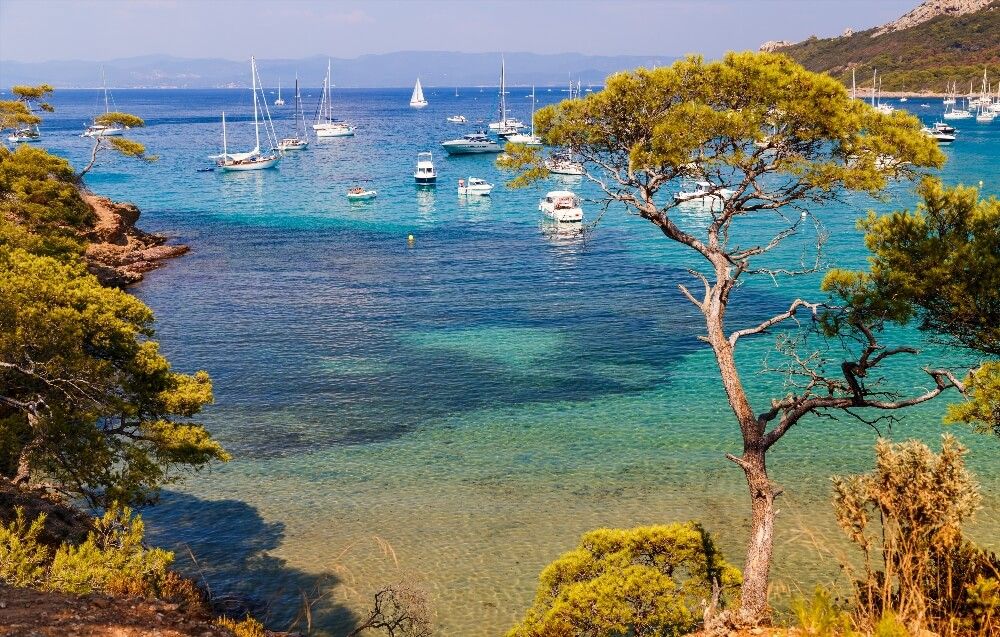
Porquerolles, a 15-minute boat ride away, ranks among the most unspoiled islands in the Mediterranean, with white sandy beaches and marine floors protected as a national park. Villa Noailles hosts free exhibitions in a masterpiece of Cubist architecture. The Roman site of Olbia, discovered by chance in 1913, reveals an entire city built in the 4th century BC. And the Giens peninsula offers a 36 km coastal path with panoramas that few hikers know about. Here are the 18 best things to do in Hyères and its surrounding area.
1. Stroll Through the Historic Center of Hyères
When wondering what to do in Hyères first, the answer almost always begins with the old town, which you climb on foot from the place de la République, following the rue Sainte-Claire between the façades of the grand townhouses. The cobblestone lanes wind up toward the porte Massillon, then toward the tour des Templiers, two medieval vestiges that set the tone. Locals still gather on shaded squares for an afternoon game of pétanque — this authentic side, far from the bustle of neighboring beach resorts, is what sets Hyères apart.
The Saint-Paul quarter, surrounding the collegiate church of the same name, is home to the most remarkable façades. The church itself contains a 12th-century Romanesque portal and interior decorations worth a twenty-minute stop. Wear good shoes: the rounded cobblestones of the medieval lanes are beautiful but treacherous.
2. Climb to the Château d'Hyères for a Panoramic View
The château d'Hyères (Montée des Terrasses, 83400 Hyères, rated 4.5/5 on Google based on 2,207 reviews) crowns the hill at 210 meters above sea level and offers one of the most sweeping panoramas in the Var. From the top of the square tower, on a clear day your gaze reaches the Îles d'Or: Porquerolles, Port-Cros, and Le Levant trace a dark line across the Mediterranean, less than 8 km offshore.
The château has been in ruins since the 17th century, but its terraced gardens have been restored and planted with aromatic Mediterranean plants. The walk up from the city center takes about 20 minutes on foot, passing through the parc Saint-Bernard. The park itself is remarkable in spring, when hundreds of flowering plant species carpet the terraces.
Practical tip: avoid climbing in full sun in July–August between 11 a.m. and 3 p.m. Early in the morning, the raking light over the old town makes for great photography.
3. Discover Villa Noailles and Its Avant-Garde Exhibitions
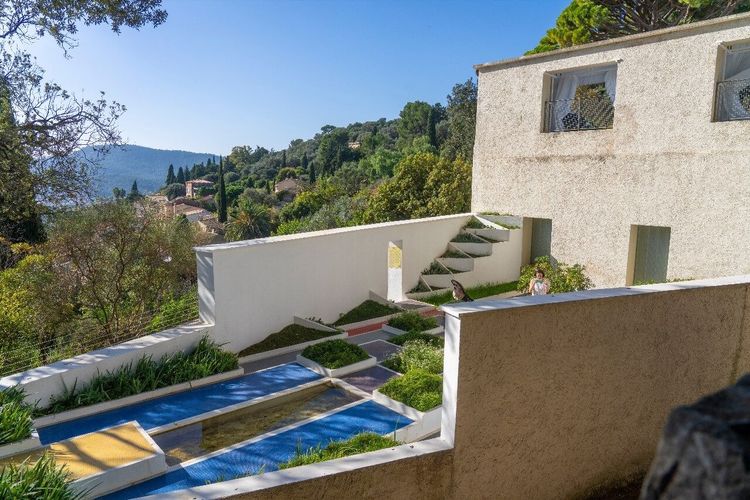
Here is a place that even regular visitors to the Var often overlook. Villa Noailles (Montée de Noailles, 83400 Hyères, rated 4.3/5 on Google based on 1,861 reviews) is a Cubist villa built between 1923 and 1933 by architect Robert Mallet-Stevens for Viscount Charles de Noailles, a patron of the arts. Man Ray shot his experimental film Les Mystères du Château de Dé here in 1929. Luis Buñuel, Salvador Dalí, and Giacometti were among the regular guests. The place has lost none of its subversive character.
Today the villa hosts contemporary exhibitions of art, design, and fashion throughout the year. The Villa Noailles Design Parade festival, held every summer, has become one of the key events on the European design calendar. Admission to the permanent exhibitions is free, and temporary exhibitions are generally very affordable (under 8 euros).
The interior is as rewarding as the exhibitions: the architecture itself is the artwork. Look for the white-tiled indoor pool, the rooftop solarium bedroom, and the series of geometric windows that frame the landscape like paintings. The villa takes 1.5 to 2 hours to visit at a leisurely pace, and the terrace offers an unobstructed view of the sea and islands.
To complement your visit with an audio tour of the neighboring old town, the Ryo audio guide of the Cité des Palmiers starts right in this historic quarter and puts the Art Nouveau architecture surrounding the villa into context.
4. Explore the Olbia Archaeological Site
Discovered by chance during construction work in 1913, Olbia is one of the best-preserved Greek towns in France. Founded in the 4th century BC by colonists from Massalia (present-day Marseille), it served as a trading post and then a Roman garrison for nearly eight centuries. Archaeologists have uncovered an almost complete town plan: right-angled streets, insulae (residential blocks), temples, baths, and a forum.
The site is set within a pleasant natural environment, just a short walk from the plage de l'Almanarre. The guided tour (available in July–August) lasts around 1.5 hours and brings to life the daily existence of the Greek and then Roman inhabitants. Outside of guided visits, the site is freely accessible and the information panels are of good quality.
Admission: free for under-18s, under 5 euros for adults. If you're visiting with family, this is one of the most educational visits in the region, with visual reconstructions that help you imagine the ancient city.
5. Spend a Day on the Island of Porquerolles
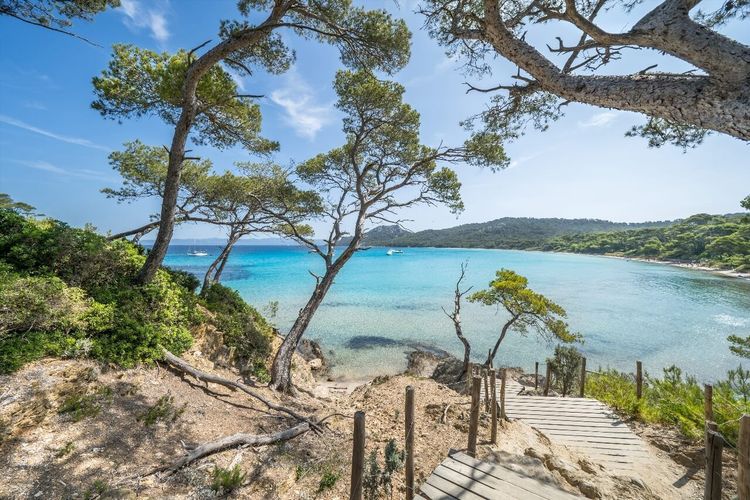
Porquerolles is probably the most beautiful island in the French Mediterranean, and one of the few to have resisted overdevelopment. The French state bought it back in 1971 and incorporated it into the Port-Cros National Park. The result: 83% of the island is classified as a national park, cars are banned, and new construction is virtually impossible. What you see today looks much the same as what Provençal fishermen saw two centuries ago.
Boats leave from La Tour Fondue, at the tip of the Giens peninsula, in a 20-minute crossing. Several companies run the service year-round, with departures every 30 to 60 minutes in season. Plan to arrive at the dock early in the morning in July–August to avoid the queues.
On the island, the available modes of transport are cycling and walking. Bike rentals are available in the village of Porquerolles, a few steps from the dock. Several rental shops offer mountain bikes and electric bikes, recommended for the hilly northern part of the island. Notre-Dame beach, reachable in 20 minutes by bike from the village, is regularly ranked among the most beautiful beaches in Europe: fine white sand, turquoise water, and umbrella pines along the shore.
For divers, the seabed around Porquerolles contains exceptional posidonia meadows, wrecks, and remarkable marine biodiversity. To find out more about the activities available on the island, check out our guide to activities on Porquerolles.
6. Hike the Giens Peninsula
The Giens peninsula (Chemin du Littoral, 83400 Hyères, rated 4.8/5 on Google based on 127 reviews) is a spectacular geographical anomaly: two parallel dune spits connect the former island of Giens to the mainland, enclosing a lagoon called the étang des Pesquiers. The coastal path circles the entire peninsula over 36 km, a route to tackle over two days with an overnight stop at Giens village, or in a long single day for experienced walkers.
The stretch between La Tour Fondue and the pointe de Giens is particularly wild. White limestone cliffs drop straight into an intensely blue sea, and the view over the Îles d'Or is constant. In spring, flamingos regularly frequent the étang des Pesquiers. For hikers who want to plan their route with practical details, our hiking guide to Hyères lists the best marked trails.
Recommended gear: hat, plenty of water (no resupply points on certain stretches), closed-toe walking shoes.
7. Stargaze at the Pic des Fées Observatory
The Observatoire du Pic des Fées (Chemin du Pic des Fées, 83400 Hyères, rated 4.5/5 on Google based on 189 reviews) is little known outside the Var, but it offers a rare experience: observing the night sky with an amateur astronomer, thanks to the telescopes of the local astronomy club, which organizes public evenings several times a month. The site sits at 291 meters above sea level, far enough from the city lights that the Milky Way is visible on moonless nights.
During the day, the tour des Fées adjoining the observatory is a medieval ruin you can reach on foot from the Bayorre neighborhood. The climb takes about 45 minutes, and the view over the Giens peninsula and the islands more than repays the effort. Evening observation sessions are free for children during events organized by the local astronomy association: check with the Hyères tourist office (Forum du Casino, 83400 Hyères, rated 4.3/5 on Google based on 1,076 reviews) for dates.
8. Discover Port-Cros, a Mediterranean Sanctuary
Port-Cros is the wildest of the three Îles d'Or. It was designated France's first marine national park in 1963 and remains to this day one of the best-protected marine areas in Europe. No motor vehicles, no camping, no new construction for sixty years. The permanent population numbers in the dozens, and the island receives fewer than 100,000 visitors a year, compared to 1.5 million for Porquerolles — a difference you feel the moment you step ashore.
Boats leave from La Tour Fondue (Giens) or from the port of Hyères, with a crossing of 35 to 50 minutes depending on the departure point. On the island, the network of marked trails covers almost the entire surface: the full loop is 19 km, but shorter circuits (4 to 8 km) allow you to see the highlights in half a day. The ridge trail offers vertiginous views over the Mediterranean from the 194-meter summit of Mont Vinaigre.
The signature activity on Port-Cros remains scuba diving and snorkeling. The marine reserve bans fishing and free diving with collection equipment in certain zones, which has allowed populations of grouper, barracuda, and sea bream to recover spectacularly. A marked underwater trail even lets you follow a snorkeling route with submerged panels identifying the species you encounter.
If you visit Port-Cros in a single day, have lunch at the island's only restaurant — a godsend given the logistical constraints, and prices are reasonable. To plan your visit, the Ryo guide to visiting Porquerolles and the Îles d'Or details transport conditions and the best times to visit each of the three islands.
9. Relax in the Olbius-Riquier Park
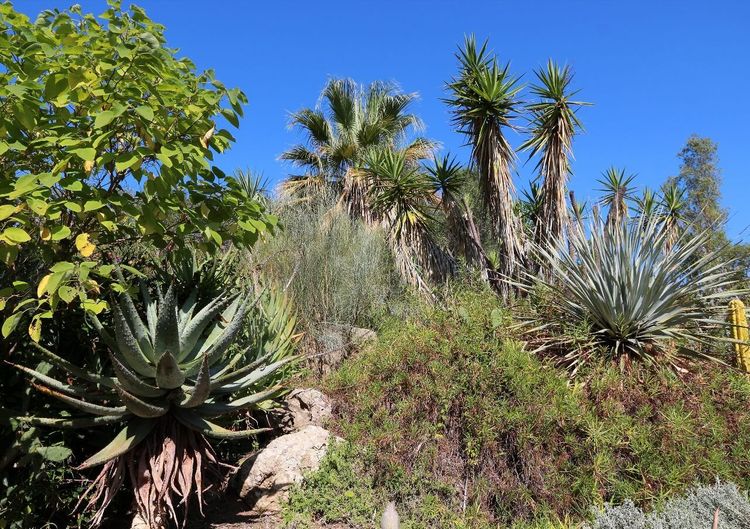
In the center of Hyères, the parc Olbius-Riquier (Avenue Ambroise Thomas, 83400 Hyères, rated 4.5/5 on Google based on 6,697 reviews) is a 7-hectare tropical garden opened in 1867, one of the oldest public parks in the Var. Its exotic character owes everything to Hyères's microclimate, one of the mildest in mainland France: palm trees, giant cacti, bamboo, and tropical plants all grow in the open air. A small tropical greenhouse shelters species even more sensitive to frost.
The park also includes a modest zoo popular with families, featuring flamingos, ibis, and several parrot species. Admission is free, making it one of the best options for a family morning on a budget. In summer it opens as early as 7:30 a.m. — the ideal time, when the paths are still cool and almost deserted.
10. Visit the Castel Sainte-Claire and Its Listed Garden
The Castel Sainte-Claire is a 19th-century château that American novelist Edith Wharton bought in 1920 and transformed into a Provençal villa. She lived there until her death in 1937, tending a terraced garden that botanists of the era considered one of the most remarkable in Provence. The château today houses the offices of the Port-Cros National Park.
The garden is freely accessible and has been listed as a remarkable garden by the French Ministry of Culture. The successive terraces descend toward the city in tiers of Mediterranean plants, old-variety roses, and rare trees. The view over the rade de Hyères from the upper terraces is splendid. The visit takes about 45 minutes and can be combined with the climb to the château d'Hyères, located a few hundred meters higher up.
11. Follow the Parcours des Arts
The Parcours des Arts is a city initiative that has installed around twenty contemporary artworks in the open air across the streets and parks of Hyères. It is not a museum — the sculptures, installations, and murals are integrated into the public spaces of the old town and neighboring districts, freely accessible and free of charge at any time.
The route map is available at the tourist office and on the city's website. The full itinerary covers around 3 km and takes 1.5 hours if you stop at each work. Several pieces engage with the historic architecture in striking ways, particularly the installations around the tour des Templiers. Ryo's audio walking tour of Hyères crosses the same streets and fills in the history behind those façades.
12. Dive in the Porquerolles Marine Reserve
Even if you don't dive, the seabed around Porquerolles is worth exploring with a mask and snorkel. But for those with the right level (or those who want to get certified), the Porquerolles marine reserve, which covers the northern face of the island, is one of the few coastal areas in France where posidonia meadows are still dense and healthy.
Several diving clubs based in Hyères and on Porquerolles offer introductory dives, courses, and guided outings. The most renowned sites include the pointe du Grand Langoustier, the Gabinière rocks (on the Port-Cros side), and the wreck of Le Grec, a cargo ship that sank in 1978. Depths range from 5 to 45 meters depending on the site, suitable for all levels.
For families with children, snorkeling off the rocky drop-offs at the plage d'Argent or the plage de la Courtade is enough to spot octopuses, cuttlefish, and shoals of colorful fish. No specialist equipment required: a mask and snorkel are sufficient, available to rent from the village sports shops.
The Ryo audio-guided tour of Hyères features an audio trail that puts the maritime history of the city and its islands into context — a great way to understand why this coastline has become one of the most popular diving destinations in the south of France. Discover this Ryo audio-guided tour of the Cité des Palmiers to prepare for your stay.
13. Explore the Beaches of the Giens Peninsula
The Giens peninsula is home to some of the best beaches in the Var, accessible on foot or by bike from the car parks at the ends of the dune spits. L'Almanarre beach (Avenue de l'Almanarre, 83400 Hyères, rated 4.6/5 on Google based on 512 reviews), on the western spit, is one of the longest sandy beaches in the area, stretching nearly 4 km. Exposed to the northeast wind, it is the favorite playground of kitesurfers and windsurfers — world-class windsurf champions train here regularly.
On the eastern spit, the plage des Salins offers a more intimate setting, with rocky coves that allow you to find solitude even in peak season. The seabed is rich and the snorkeling is excellent. Between the two spits, the étang des Pesquiers is an ornithological reserve where flamingos and grey herons coexist year-round.
Best time to visit: May–June and September–October for quieter beaches and water that is already or still warm.
14. Browse the Provençal Market in Hyères
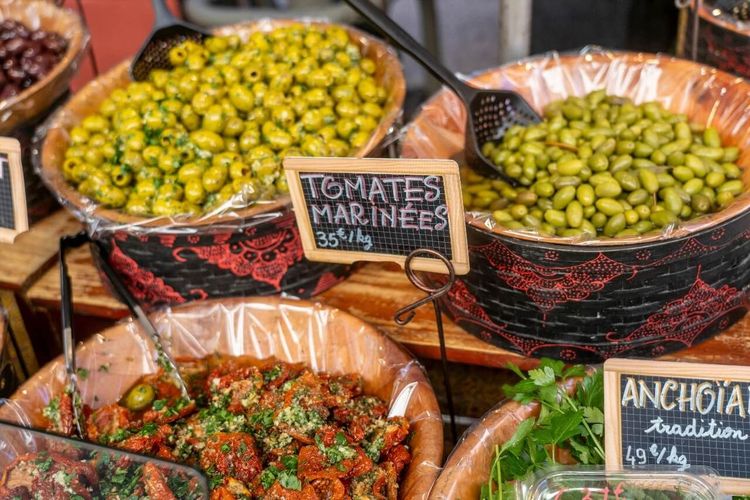
The Hyères market (Place Georges-Clemenceau, 83400 Hyères, rated 4.4/5 on Google based on 43 reviews) takes place on the place Georges-Clemenceau and the surrounding streets every Tuesday, Thursday, and Saturday morning from around 8 a.m. to 1 p.m. It is one of the largest markets in the Var by surface area, with several hundred stalls at the height of the season.
The offering is typically Provençal: tapenade, marinated olives, Var goat's cheese, garrigue honey, and fruit and vegetables from local producers. Market gardeners from the Maures plain sell tomato and courgette varieties you won't find in any supermarket. Arrive before 9:30 a.m. to avoid the summer crowds and find the best produce — locals do their shopping right at opening time.
15. Explore the Island of Le Levant
The île du Levant is the easternmost and least-known of the Îles d'Or. Its particularity is surprising: 90% of its surface is a French Navy military base, closed to the public. The village of Héliopolis, on the remaining 10%, is a naturist settlement founded in the 1930s by the Durville brothers, pioneers of naturism in France.
There is no need to be a naturist to visit: the island welcomes all visitors, and textile zones are clearly marked. What strikes you on arrival is the suspended atmosphere of the village, squeezed between the sea and the military zone, with its low houses covered in bougainvillea and its handful of shops that operate in near-total self-sufficiency.
Boats to Le Levant leave from the port of Hyères and often stop at Port-Cros. The crossing takes around 50 minutes. Hikers will find a trail that circles the accessible part of the island — around 8 km with direct views over the Mediterranean and the mainland. To explore Le Levant with more historical context on the Îles d'Or, the Ryo audio-guided tour of the Cité des Palmiers provides information on the maritime history of the rade de Hyères.
16. Kayaking and Water Sports in the Rade de Hyères
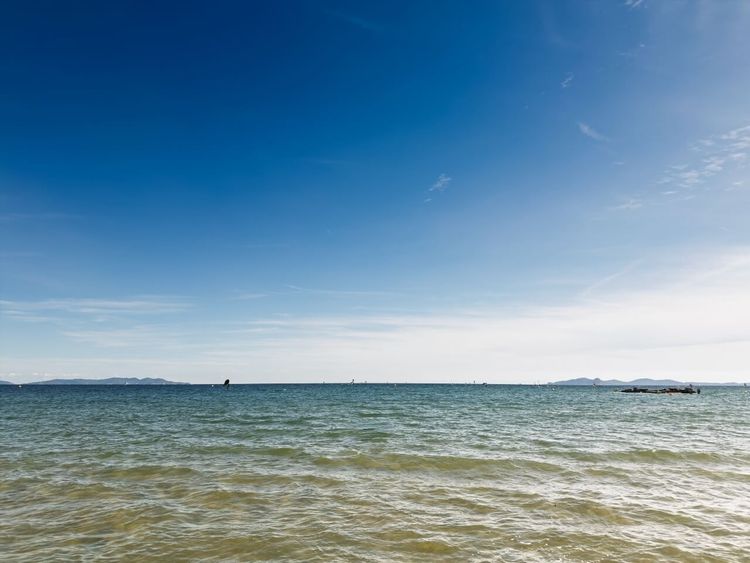
The rade de Hyères is considered by sailors to be one of the finest stretches of water in the Mediterranean: well sheltered by the Îles d'Or and the ridges of the Giens peninsula, it offers exceptional sailing conditions even in strong winds. Several nautical centers based in Hyères offer sailing lessons, sea kayak outings, stand-up paddleboarding, and kitesurfing.
Sea kayaking remains the most accessible option for exploring the calanques of the Giens peninsula without a boat licence. Guided half-day excursions regularly set off toward the sea caves at the pointe de Giens or toward the coastal islets unreachable on foot. Level required: none for guided group outings led by an instructor — beginners are welcome.
17. See the Tour Saint-Blaise
In the heart of the old town, the tour Saint-Blaise (Rue Saint-Blaise, 83400 Hyères, rated 5/5 on Google based on 1 review) is the most discreet surviving remnant of medieval Hyères. This 12th-century Templar tower now houses an exhibition space dedicated to the history of the Knights Templar in the Var. The visit takes 30 minutes, admission is modest, and the accounts of the Crusaders' passage through Hyères — an embarkation port for the Holy Land — are well documented and clearly presented.
18. Sample Var Cuisine in Hyères
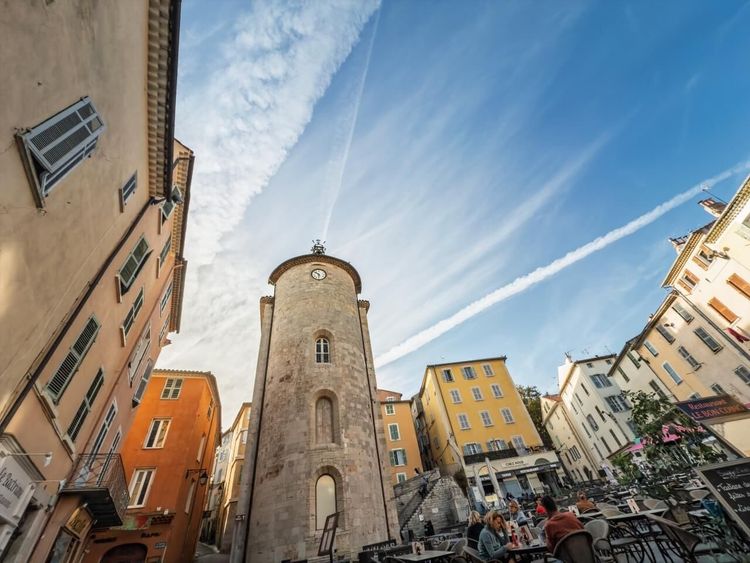
Hyères is a city where you eat well without breaking the bank, provided you know where to look. The restaurants around the place Massillon (Place Massillon, 83400 Hyères, rated 4.4/5 on Google based on 1,450 reviews) in the old town charge tourist prices; head down to the modern center to find addresses frequented by locals. Var cuisine blends Provençal and Ligurian influences: a lighter bouillabaisse, pan bagnat, socca, ratatouille, and marinated anchovies from Collioure form the backbone of a generous regional table.
Grilled fish is the undisputed local specialty. Be wary of menus listing «loup» or «daurade» in the height of summer: check the origin before ordering. The best addresses bring the whole fish out from behind the counter to show you before cooking. The Tuesday, Thursday, and Saturday markets (see section 14) are the best places to buy cheese, charcuterie, and olives to take on a picnic to one of the peninsula's beaches.
In the evening, the terraces along the rue Sainte-Claire and the surrounding lanes come alive from 7 p.m. onwards. For those wondering what to do in Hyères in the evening, the city also has a casino, cinemas, and concert venues for summer nights.

FAQ
What can families do in Hyères?
Hyères is full of family activities: the Olbius-Riquier park with its free zoo, the boat crossing to Porquerolles by bike, the Olbia archaeological site for history-curious children, and the fine sandy beaches of the Giens peninsula. The Parcours des Arts and a visit to the old town are also easy to do with children. Wear closed-toe shoes for the cobblestone lanes.
What can you do in Hyères when it rains?
On overcast days, Villa Noailles offers free exhibitions in an exceptional architectural setting. The tour Saint-Blaise and the collegiate church of Saint-Paul can be visited under shelter. The Olbia archaeological site has a covered museum space. Rainy days are rare in Hyères (around 60 rainy days per year), but it is also the perfect time to explore the city's restaurants and covered markets.
What can you do in Hyères in winter?
Winter in Hyères is one of the most pleasant seasons to visit without crowds. The Olbius-Riquier park is stunning with its tropical plants, the old town can be visited without waiting, and the crossings to the islands are less crowded. Hyères's microclimate guarantees mild temperatures (12 to 15°C in January), well above those on the Atlantic coast. The Tuesday and Thursday markets are active all year round.
How do you get to Porquerolles from Hyères?
Departures are from the port of La Tour Fondue, at the tip of the Giens peninsula. The crossing takes 20 minutes, and boats leave several times an hour in summer, every 1 to 2 hours off-season. A secondary access point exists from the port of Hyères-les-Palmiers (35-minute crossing). Book your ticket in advance in July–August for early morning departures.
What can you do in Hyères in the evening?
The old town comes alive around the rue Sainte-Claire and the place Massillon after dark. In summer, concerts and entertainment take place in the pedestrian streets several evenings a week. The Hyères casino hosts events year-round. For a quieter evening, the seafood restaurants along the waterfront at l'Almanarre serve until 10 p.m. in summer.
Is Hyères a good base for exploring the surrounding area?
Yes, Hyères is an excellent base. The Port-Cros National Park (Îles d'Or) is directly accessible from the city. Toulon is 20 km to the north. The Massif des Maures (forests, medieval villages of Bormes-les-Mimosas and Collobrières) is reachable by car in under 30 minutes. The Camargue and Marseille are 1.5 hours away. Toulon-Hyères airport serves Paris and several European cities.
Conclusion
Hyères packs a remarkable diversity of landscapes and activities into a small territory — a claim few cities in the Var can make: a medieval old town, botanical gardens, wild islands, protected marine floors, a dune peninsula, and architectural heritage. Whether you're looking for what to do in Hyères for a weekend or a full week, the 18 suggestions in this article should more than cover your interests.
To discover the old town at your own pace — with the historical anecdotes and architectural details that signboards never tell — the Ryo app offers 19 audio stops in the Cité des Palmiers quarter. Find the audio-guided tour of Hyères, the Cité des Palmiers to prepare your exploration of the city before setting off for the islands.
À lire également