© Shutterstock
 Votre guide Ryo
Fort Boyard: History, TV Show and Secrets of a Legendary Fortress (2026)
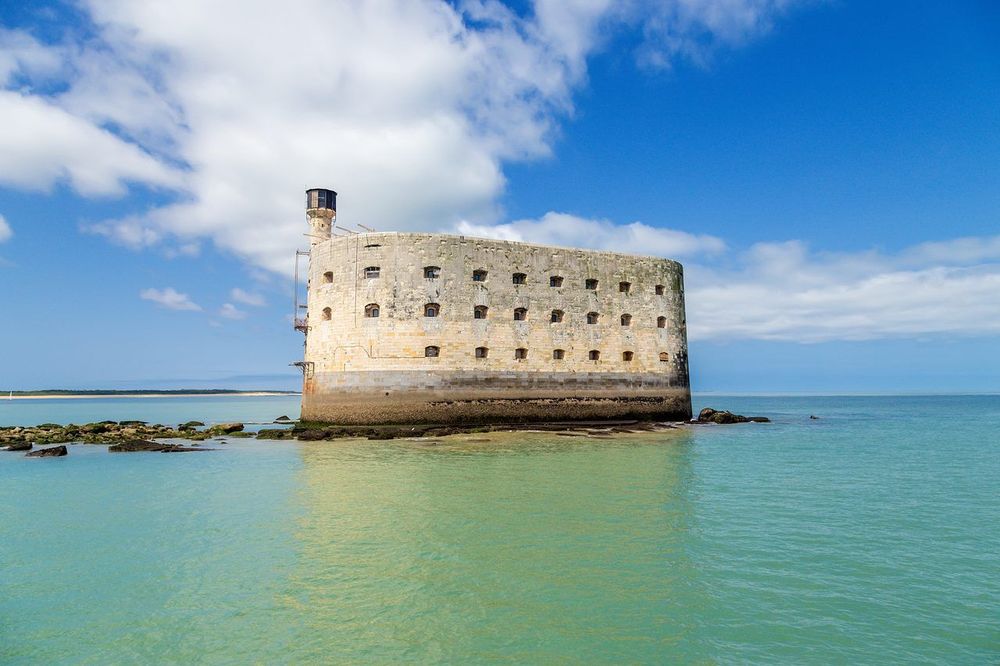
The fortress rises from the water between Fouras and Oléron island, six kilometres off the Charente-Maritime coast. Fort Boyard took more than half a century to build, came close to serving no purpose whatsoever, and became one of the most recognisable television sets in the world. It is hard to find another French monument whose fame is so entirely unrelated to what it was designed for.
Napoleon Bonaparte laid its first stones to protect Rochefort from British attacks. Two world wars later, the fort had been forgotten, half collapsed, colonised by cormorants. In 1990, a French television crew transformed this maritime ruin into a filming set, and the fort entered the history of world television — broadcast in more than 40 countries, adapted by dozens of foreign versions, and become a reference spontaneously understood from Auckland to Warsaw.
This comprehensive guide covers everything you need to know: the construction of the fortress and its two centuries of turbulent history, the rules and legendary challenges of the show, the iconic characters from Père Fouras to La Boule, the 2026 season and its new host, the beneficiary charities, and practical information for spotting the fort from the shore or by boat.
The Construction of Fort Boyard (1804–1857): Half a Century of Stubbornness
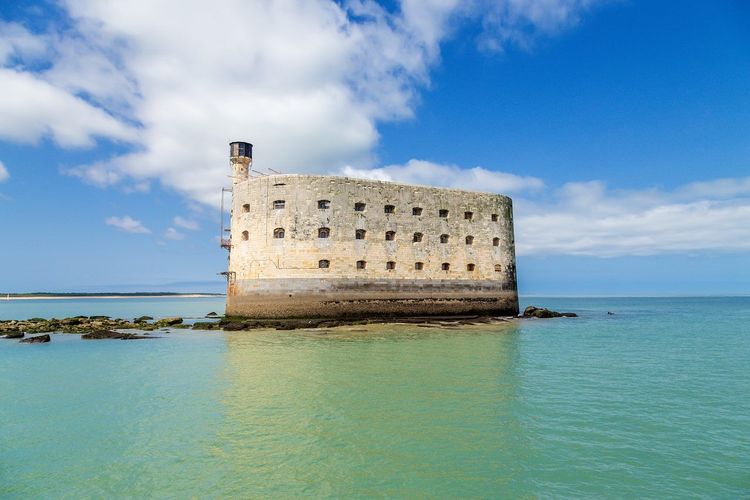
It all began with a geopolitical obsession of the First Consul. In 1804, Rochefort was one of France's most important military arsenals, but its waters were vulnerable. The British navy controlled the approaches to the Atlantic coast, and the islands of Madame, Aix and Oléron formed a defensive framework that was still incomplete. Napoleon Bonaparte ordered the construction of a fort in the open sea, in the Pertuis d'Antioche, to seal the roadstead against the enemy.
The project was pharaonic for its time. Military engineers proposed an elliptical fortress built directly on a sandbank, six kilometres off the coast of Fouras. Work began in 1804, but technical difficulties immediately mounted: the sandbank was unstable, the currents of the pertuis were violent, and the water depth exceeded what the techniques of the era could manage. The first foundations began to sink as soon as they were laid.
Work stopped, restarted, stopped again. Suspended in 1809, it only truly resumed under Louis-Philippe in the late 1830s, when tensions with the United Kingdom flared up again. Each regime brought its own engineers and methods; none truly solved the problem of foundations at sea. The solution ultimately came from an enormous circular granite dyke: the interior was backfilled to create an artificial island, and the fort was then built on top of it. It was slow and costly, but it worked.
The main structure was completed in 1857, more than half a century after the laying of the first stone. An elliptical fort measuring 68 metres long and 31 metres wide, with walls some twenty metres high, capable of housing around 250 soldiers along with their ammunition to defend the roadstead of Rochefort. The total cost vastly exceeded initial estimates.
The problem was that the fort arrived too late. By the time it was completed, modern artillery had rendered the concept of static maritime fortification obsolete. The rifled cannons of the second half of the 19th century had greater range and accuracy than stone walls could withstand. The fortress, barely finished, was already outdated. Not a single shot would ever be fired from its embrasures for actual military purposes.
The army still stationed a few garrisons there, so as not to leave the monument empty. But by the 1870s, the fort was progressively abandoned. It took less than ten years after completion for the military to consider it useless.
From Prison to Ruin: The Fort Before the Show (1871–1988)
The history between the end of construction and the arrival of the cameras is one of slow disintegration punctuated by brief repurposings. The best known is its use as a political prison during the Paris Commune in 1871. Communard prisoners were interned there under particularly harsh conditions: the cells carved into the thickness of the walls were dark and damp, and the sea surrounded the fortress on all sides, making any escape theoretically impossible.
The fort then housed common-law prisoners in the following decades. But sanitary conditions were catastrophic, and it was definitively closed as a place of detention in 1913 — too difficult to maintain, too isolated, too costly.
During both world wars, the fortress served as an observation post and storage facility, without ever seeing any fighting. Upkeep gradually ceased after 1945. Atlantic storms did their work: floors collapsed, water seeped in, vegetation reclaimed the inner courtyards. Cormorants settled there in large numbers. By the late 1970s, the fort was in an advanced state of disrepair, listed as a monument at risk but without any budget for its restoration.
It was television producer Jacques Antoine who changed everything. Spotting the exceptional visual potential of the fortress for an adventure game show, he proposed an unprecedented concept to public television. Negotiations with the Monuments Historiques and the French Navy lasted several years, but concluded at the end of 1988. The first scouting teams arrived in 1989, and restoration work began immediately. In two years, a half-collapsed fort was transformed into a filming set.
Where Is Fort Boyard? Location and Map
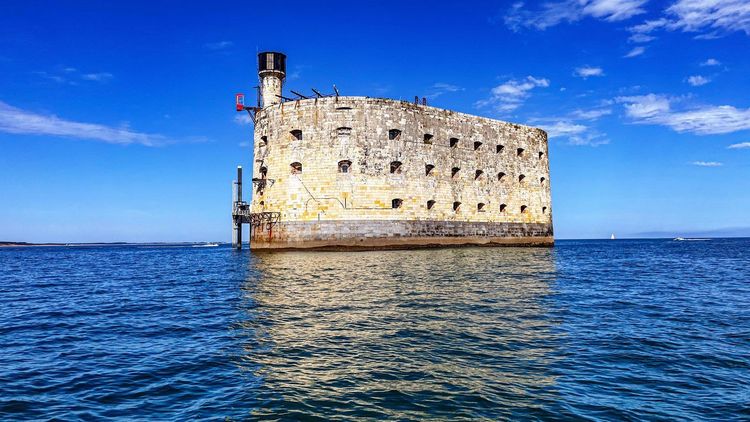
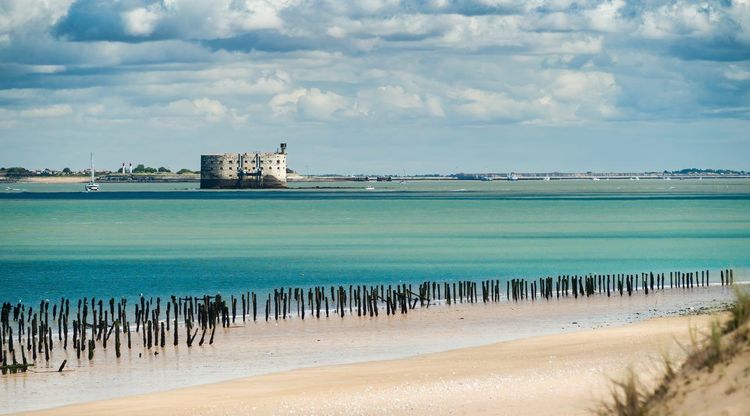
The fort is located in the Pertuis d'Antioche, a stretch of sea between Oléron island and the Fouras peninsula, in Charente-Maritime (department 17). It lies approximately 6 km from Fouras on the mainland, 3 km from the northern tip of Oléron island, and 5 km from Île d'Aix (Île d'Aix, 17123 Charente-Maritime, rated 4.6/5 on Google based on 3,800 reviews). Rochefort is about a dozen kilometres away by sea.
It is not accessible on foot — it is an artificial island. The view from the Fouras coast or from Île d'Aix is remarkable in clear weather, but the fortress remains at a distance without binoculars from the mainland beaches. The only ways to get close are by boat from the surrounding ports.
A Listed Historic Monument
The fort has been listed as a Historic Monument since 1950 (decree of 1 February 1950), in recognition of a 19th-century military structure whose architecture is among the most singular in France. Since 1989, the monument has belonged to the Charente-Maritime department, which bought it from the state for a symbolic franc, while its television exploitation was entrusted to Adventures Line Productions (ALP). Restoration work is partly funded by revenue from the show — a near-unique case in France of a monument whose upkeep is largely covered by the rights to a television programme.
Annual maintenance represents a considerable budget, as sea salt, Atlantic storms and algae constantly attack the granite walls. Maintenance teams work outside the filming season, between September and March.
The Fort Boyard Show: How It All Began
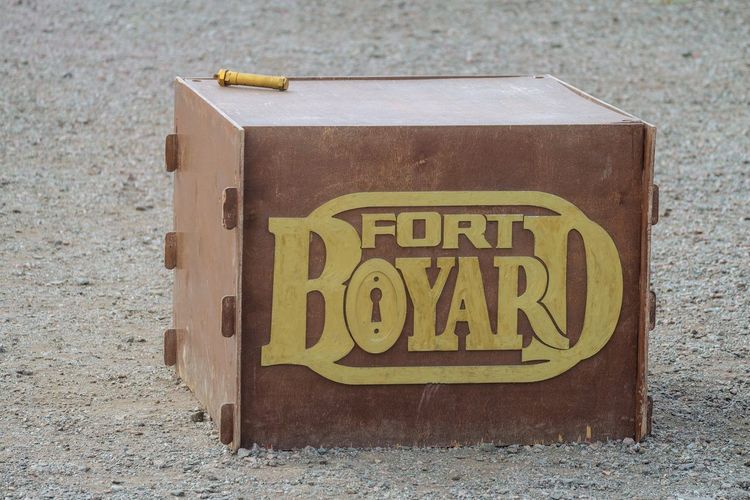
On 7 July 1990, the first episode was broadcast on Antenne 2, hosted by Patrice Laffont. The concept, devised by Jacques Antoine in partnership with ALP, was entirely new to French television: teams of adventurers would face physical and mental challenges inside a real maritime fort to reach a treasure.
The basic idea was simple but devastatingly effective. The fortress itself provided the set — no artificial studio was needed. The dark cells, towers, walkways and underground rooms all became worlds unto themselves for the challenges. Jacques Antoine had understood that the location was the show's true character.
The first seasons were an immediate success. French audiences were won over by the blend of culture (Père Fouras's riddles), physical endurance and cooperation between contestants with very different profiles. The format was flexible enough to welcome both athletes and intellectuals, broadening the potential audience well beyond what the channel had anticipated.
As early as 1992, foreign versions began to appear — first in the United Kingdom, then in Russia, Germany and Australia. International broadcast transformed what could have remained a French curiosity into a global phenomenon. At its peak in the 1990s, the programme was co-produced simultaneously by dozens of countries.
In France, the show moved from Antenne 2 to France 2 and became a permanent fixture of the television summer. Patrice Laffont handed over in 1999, and Olivier Minne took on hosting duties from 2003, for twenty-two seasons through to 2025. Each season drew an average of between 4 and 6 million viewers, with peaks exceeding 7 million for Saturday evening prime-time broadcasts in summer.
The Game Concept: Challenges, Keys and the Treasure Room
The mechanics rest on a simple logic that thirty years of the format have not fundamentally altered. A team of five to six contestants has roughly an hour to accumulate as many keys as possible in the first part of the game, obtain a Totem in the second, and then attempt to access the treasure room.
Phase 1: The Cell Challenges
Teams split up to face individual or paired challenges in the cells and rooms of the fort. Each completed challenge earns a key. The challenges cover every register: physical (strength, endurance, balance), intellectual (riddles, puzzles, memory), and sensory (challenges in the dark, in water, with animals). Failed challenges earn nothing but waste precious time — the show's scarcest resource.
Phase 2: The Père Fouras Riddle
At the midpoint, the team must solve a riddle posed by the fort's iconic character. If the team finds the answer, they win an additional Totem. This Totem is then decoded by the Council of Masters to reveal the code word needed to open the treasure room.
Phase 3: The Treasure Room
This is the most spectacular moment of the game. The remaining contestants enter the room filled with gold coins and have 100 seconds to fill their bags. The amount collectible corresponds directly to the number of keys won in Phase 1: each missing key allows part of the treasure to escape through trapdoors. The suspense is therefore twofold — neither how many keys the team managed to accumulate, nor whether the contestants will manage to fill their bags in time, is known until the final moment.
The total coins collected is converted into a donation for the charity chosen by the team at the start of the show. There is no personal financial gain for the contestants — which sets this game apart from virtually all other challenge-based game shows. You are not playing for yourself here; you are playing to win as much as possible for your cause.
The Rules of the Game from A to Z
The rules have evolved over the seasons, but the main principles have remained stable since the early 2010s. Here are the rules in force for 2026.
Team Composition
A team is made up of 5 to 6 contestants, generally celebrities from the worlds of sport, entertainment or public life who play for their chosen charity. The team selects its charity before the show begins, and the entire adventure is undertaken in that charity's name.
Duration and Format
The show lasts approximately 75 to 90 minutes on air, for a full day of filming at the fort. Contestants arrive by boat in the morning from Fouras and leave at the end of the day. Several unbroadcast sequences allow contestants to familiarise themselves with the fortress before the official start of the challenges.
Keys and Treasure Calculation
Each key won in a challenge has a direct impact on the final treasure. In 2026, the maximum potential treasure is 100,000 coins. Each missing key allows a portion of the pot to escape through a trapdoor. A team that enters the treasure room with 10 out of 20 possible keys can only recover half the potential treasure, even if the contestants fill their bags perfectly.
Imprisonment
When a contestant fails in certain specific so-called 'risky' challenges, the Masters of the fort can decide to imprison them in a cell. The team can free them by completing a rescue challenge, but this takes time. Contestants still imprisoned at the end of the game do not take part in the treasure room, which mechanically reduces the speed at which coins can be collected.
The Council of Masters
Between Phases 1 and 2, the Masters convene to assess the team's performance and decide on special rules applicable to the treasure room. This 'council' is an important dramatic sequence that builds narrative tension before the final outcome.
The Iconic Characters of Fort Boyard
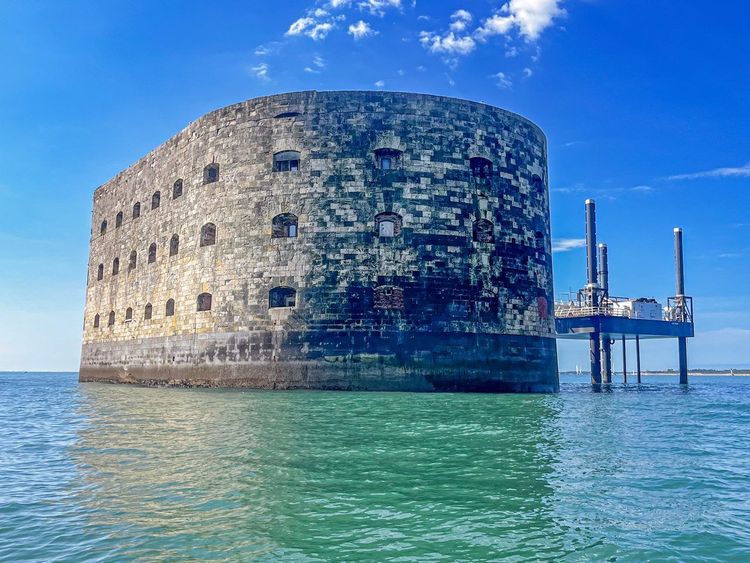
This may be what sets this game apart from all other adventure television programmes: its recurring characters — original creations portrayed by the same actors for decades — have acquired an existence almost independent of the game itself.
Père Fouras
The most iconic figure. Created for the first season in 1990, Père Fouras is an eccentric old scholar who lives in the fort's highest tower and poses riddles to contestants. His motto, "if you don't know, it's because you didn't know!", is one of the most quoted lines in the history of French television. The character has been portrayed since the very beginning by Yann Le Gac (alias Yann Beaufils), who continues to hold the role in 2026. His longevity in this part constitutes an absolute record for a character in a French television game show.
Père Fouras's riddles are built on wordplay, double meanings and carefully crafted semantic traps devised by a team of writers. Each season, several dozen brand-new riddles are prepared. Some have entered everyday language, quoted out of context by generations of viewers.
La Boule
"La Boule" is the fort's cerberus, a silent jailer created in 1990 and portrayed for sixteen years by Yves Marchesseau, whose giant tattooed frame and shaved head have remained etched in viewers' memories. He watches over the cells, captures careless contestants and takes them to prison amid laughter and protests. His silhouette is instantly recognisable. Taken over by other actors after Marchesseau's departure, the character remains one of the most popular with young audiences, and his absence from a special episode is always noted on social media.
Passe-Partout
Passe-Partout is a silent elf who helps or hinders contestants according to mysterious rules known only to himself. Portrayed since 1990 by André Bouchet, he is the only character to have appeared in every French and international edition since the show's launch, alongside his companions Passe-Temps and Passe-Muraille. In 2026, Passe-Partout remains the character who evokes the most nostalgia among first-generation viewers who grew up with him.
The Masters of the Fort
The Masters are a group of characters dressed in medieval attire who sit on the Council and decide the fate of contestants. Their composition changes from season to season — some are recurring characters dating back to the 1990s, while others are introduced or removed according to narrative needs. Their dramatic role is to embody the opposing camp, the guardians of the treasure that the contestants seek to conquer.
The Animals
Technically not characters, but treated as such by contestants: the snakes, spiders, cockroaches, rats and other animals that inhabit certain challenges have become narrative elements in their own right. The fort's reptile zone is regularly cited as the most feared. These animals are cared for and handled by specialist veterinary teams permanently on set during filming.
If you enjoy exploring fortifications steeped in history, the Ryo audio-guided tour of Fort-de-France takes you to discover the colonial bastions and fortifications of the Martinican capital — a journey into another facet of French defensive architecture.
The Hosts: From Patrice Laffont to Cyril Féraud
The hosting of the show has seen several faces since 1990, and each has left a distinct mark on the identity of the programme.
Patrice Laffont (1990–1999)
A seasoned game show host, Patrice Laffont gave the programme its credentials during the founding decade. His way of commentating on the challenges from the control room — a mix of benevolent irony and genuine enthusiasm — established the tone of the show for everything that followed. His chemistry with the fort's characters, and notably Père Fouras, created a narrative dynamic that became the game's signature. In 1999, when Patrice Laffont took his leave, many believed the show would never recapture the magic of its early years.
The Transition and the Olivier Minne Era (2003–2025)
After Patrice Laffont's departure, the show sought a new lease of life before rediscovering its winning formula. It was Olivier Minne who took the helm in 2003, initially accompanied by co-hosts such as Sarah Lelouch and then Anne-Gaëlle Riccio, before presenting alone from 2010. Over twenty-two seasons through to 2025, he became the face most associated with the contemporary version of the game. Minne adopted a more dynamic style than Laffont, physically closer to the contestants, sometimes intervening inside the fortress rather than from an external control room.
Cyril Féraud (from 2026)
At the end of the 2025 season, Olivier Minne bid farewell to the fort after twenty-two years of hosting. France Télévisions announced his successor in April 2026: Cyril Féraud, one of the channel's most recognisable hosts, who takes the reins from summer 2026. He has promised several new features for this edition, including the return of non-celebrity contestants alongside the stars.
As for co-hosts, the show has gone through various configurations over the seasons. In the 1990s, Cendrine Dominguez played a liaison role alongside Patrice Laffont. Subsequently, various personalities accompanied Olivier Minne depending on the season, with each choice drawing comment from the show's loyal audience.
The Most Famous and Most Feared Challenges
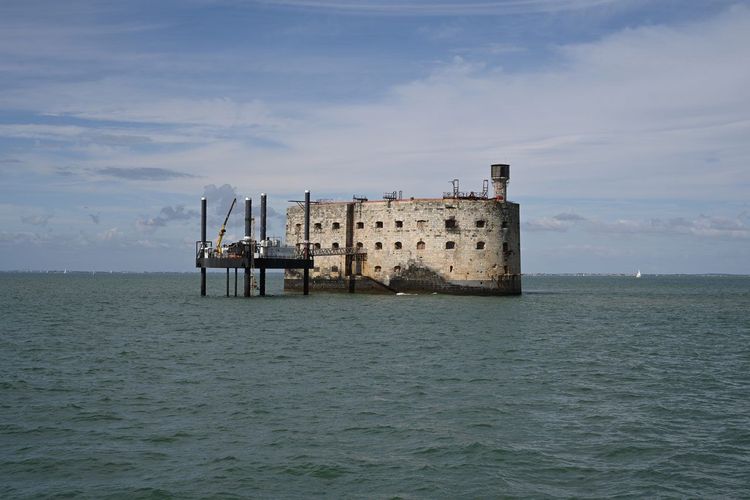
Thirty-five years of existence have generated hundreds of different challenges. Some have passed into posterity, either for their spectacle or because they are so feared that they have become cultural reference points.
The Reptile Room
Undoubtedly the best-known challenge: the contestant must cross a room filled with snakes, or retrieve a key from the bottom of an aquarium inhabited by reptiles. The failure rate is high, and contestants' reactions — ranging from total paralysis to surprising serenity — have become cult moments and among the most rewatched in the show's history.
The Sensory Tank
The contestant is locked inside a tank filled with insects (cockroaches, ants, or worms depending on the season) and must remain there for a set time or find an object by touch. The challenge tests resistance to disgust more than to pain, and often reveals unexpected reactions from personalities otherwise accustomed to public challenges.
The Zip Line and High-Altitude Challenges
The structure of the fort, with its narrow walkways and towers overlooking the sea, lends itself to balance and vertical challenges. Bridges over the void, abseiling descents from the outer walls above the waves, blindfolded rope crossings — these challenges combine vertigo and technical difficulty within a naturally awe-inspiring setting.
Water Challenges
The sea surrounding the fort is used in several configurations: swimming in the moat, diving to retrieve an object, staying afloat with additional constraints. These challenges vary according to the real weather conditions during filming — an unpredictable element that adds a dimension of authenticity no artificial set could replicate.
Père Fouras's Riddles
Not a physical challenge, but perhaps the most feared intellectually. The riddles blend wordplay, historical references and semantic traps. Teams that excel in physical challenges sometimes fail on a seemingly straightforward question, creating memorable moments of collective frustration — and plenty of discussion the next day in school playgrounds.
Fort Boyard Around the World: 40 Countries, Over 60 Versions
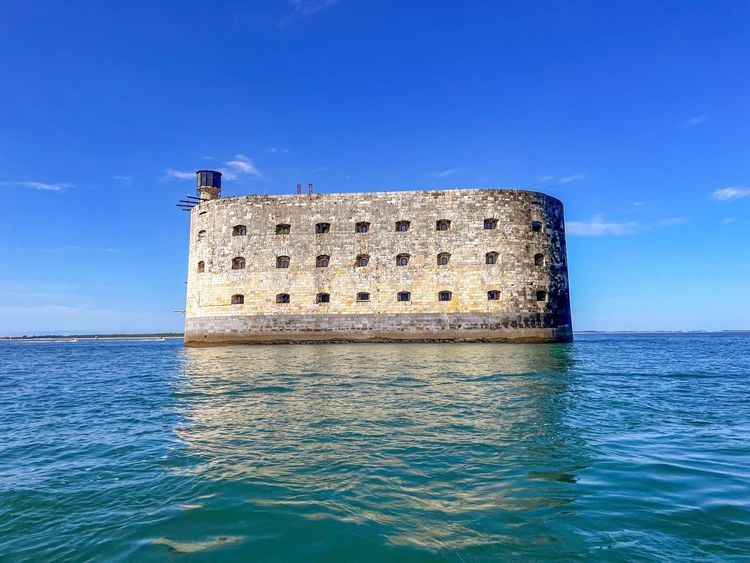
The show is one of the most exported French television formats in history. Since 1990, more than 60 versions have been produced in more than 40 different countries across every continent.
The Major International Versions
The British version, broadcast on Channel 5 from 1998 to 2001 and hosted by Melinda Messenger and Leslie Grantham, is one of the best known after the French original. The Russian version is one of the most enduring: broadcast since the late 1990s on several successive channels, it long enjoyed consistent audiences. The Belgian version is among the longest-running adaptations.
Filming Stays at the Real Fort
The international concept rests on a key element: most foreign versions are filmed in the actual fortress in Charente-Maritime. Production teams come to France, which guarantees a visual authenticity that no reconstructed set could offer. This also means that filming crews of different nationalities follow one another at the fort during the summer, sometimes within the same week.
The Versions That Did Not Work
Not all adaptations found success. American attempts never truly took off: a pilot broadcast on ABC in the 1990s led nowhere, and later cable revivals failed to find a lasting audience. The format was judged too slow for a public accustomed to the pace of reality television, and its rules too complex for first-time viewers.
For lovers of defensive architecture and historic fortifications, the Ryo audio guide of Tallinn offers a fascinating exploration of the Baltic medieval ramparts — another way to experience military history across the centuries.
Fort Boyard 2026: The New Season
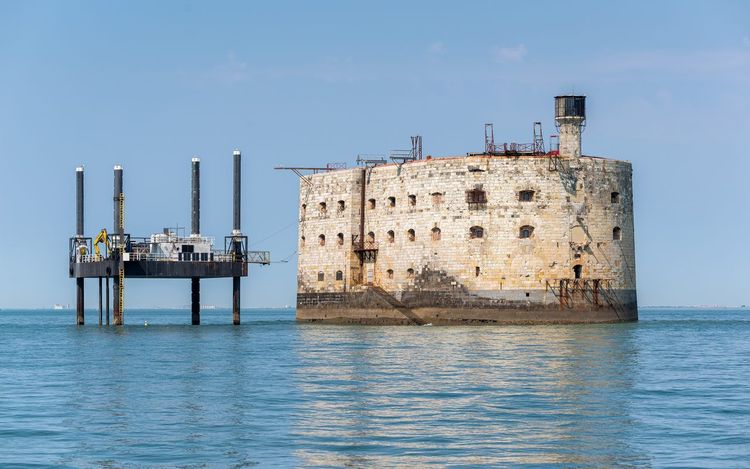
The 2026 season is broadcast on France 2 on Saturday evenings in prime time, from late June to late August — around ten episodes over the summer season. The big news of the year is the change of host: Cyril Féraud succeeds Olivier Minne, who departed after the 2025 season. The rest of the format remains unchanged: one team of celebrities per episode, one beneficiary charity, and the announced return of non-celebrity contestants.
The 2026 Season Teams
Each episode brings together a team of invited personalities around a cause. Teams generally mix top-level athletes, actors and media personalities in combinations that maximise dramatic interest. The physical and intellectual profiles of team members are carefully considered to cover the full range of challenge types — a homogeneous team of elite athletes is not necessarily more effective than a mixed team, as Père Fouras's riddles level the playing field.
New Challenges
Each season introduces brand-new challenges to refresh the experience. The 2026 season highlights several challenges using new technologies — motion sensors integrated into the sets, more precise automated mechanisms — while retaining the classic challenges that have made the fort's reputation. Animal challenges remain, with their conditions having been adjusted in recent years in line with recommendations from partner veterinarians.
Ratings and Broadcast
The programme remains one of the most-watched summer fixtures on French television. In 2025, episodes drew audiences of between 4.2 and 6.8 million viewers, with a peak of more than 7 million for the mid-August episode. The audience share is particularly strong among younger generations — an exceptional result for a show over thirty years old. Catch-up viewing on France.tv remains available for several weeks after each broadcast.
The Charities Supported by Fort Boyard
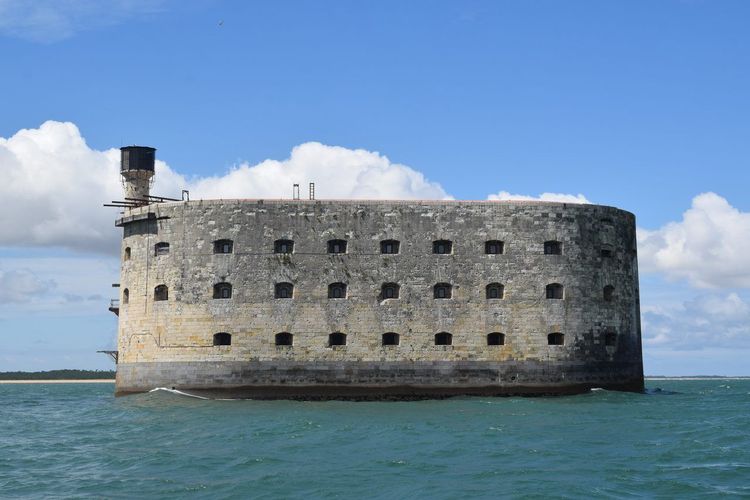
The charitable model is one of the programme's most distinctive features in the French television landscape. Since its creation, the show awards no personal winnings to contestants: the entire treasure is donated to the charity chosen by each team.
How It Works
The charity is introduced at the start of the episode, and its representative often accompanies the team from the boat. The amount won is calculated based on the keys earned and the coins collected in the treasure room. It is paid directly to the charity after the episode. The maximum achievable amount is around 30,000 to 50,000 euros depending on the season's configuration.
The 2026 Season Charities
Among the beneficiary charities in 2026: UNICEF France, the association Princesse Margot (which fights paediatric leukaemia), Les Bonnes Fées, Heat and Cœur, and Stand Speak Rise Up, which combats sexual violence in conflict zones. Other charities are linked to teams whose line-up has not yet been made public.
A Lasting Model
Some charities return regularly across multiple seasons. The Ligue contre le Cancer, Les Restaurants du Cœur, Les Pompiers Solidaires and the association Grégory Lemarchal (for cystic fibrosis) are among the most recurrent causes. The public, who follow teams throughout the season, often develops an additional connection to these charities that extends well beyond the game itself.
Can You Visit Fort Boyard? The Full Answer
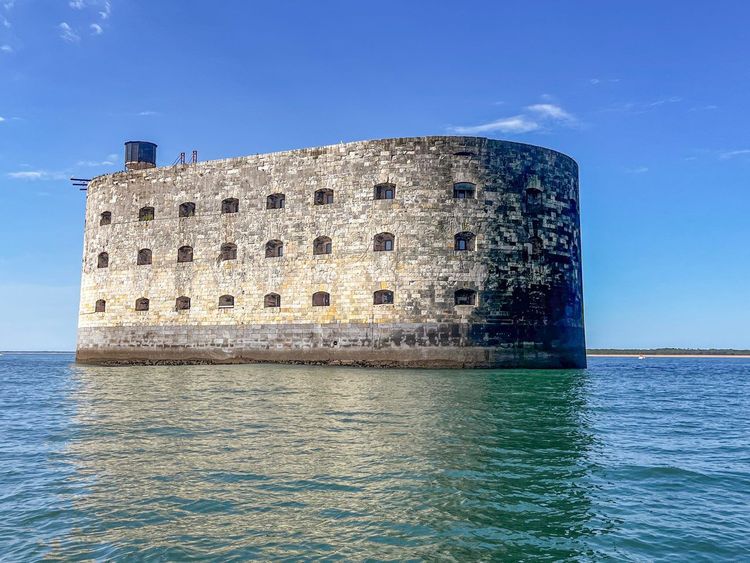
The question comes up every summer on travel forums and tourist offices across Charente-Maritime: is it possible to visit Fort Boyard (Pertuis d'Antioche, 17730 Fouras, rated 4.5/5 on Google based on 4,977 reviews)? The answer is nuanced.
No Interior Visits for the General Public
The fort is not open to the public for interior visits. The fortress is used as a filming set from April to August, and maintenance work occupies the rest of the year. Adventures Line Productions does not organise guided tours open to the public.
Exceptions exist during occasional events — heritage open days, press visits at the start of the season — but these remain extremely rare and by invitation only. No regular visits are planned for 2026.
Visiting the Fort from the Sea
However, several boat companies offer boat tours that pass as close as possible to the fort. These excursions depart from Fouras, Île d'Aix, Rochefort or Oléron, and allow visitors to circumnavigate the fortress at a distance of around a hundred metres. Some companies offer stops at Île d'Aix combined with a pass in front of the fortress.
These excursions generally last 2 to 4 hours and depart in the morning or afternoon depending on tidal schedules. The peak season (July–August) is when the most options are available. Booking in advance is strongly recommended, particularly in August.
The View from the Shore
From the Fouras headland or the northern beach of Île d'Aix, the fort is visible to the naked eye in clear weather. With binoculars, the architectural details of the fortress become appreciable. This is the most accessible way to observe the monument without taking a boat.
How to Reach Fort Boyard from the Shore
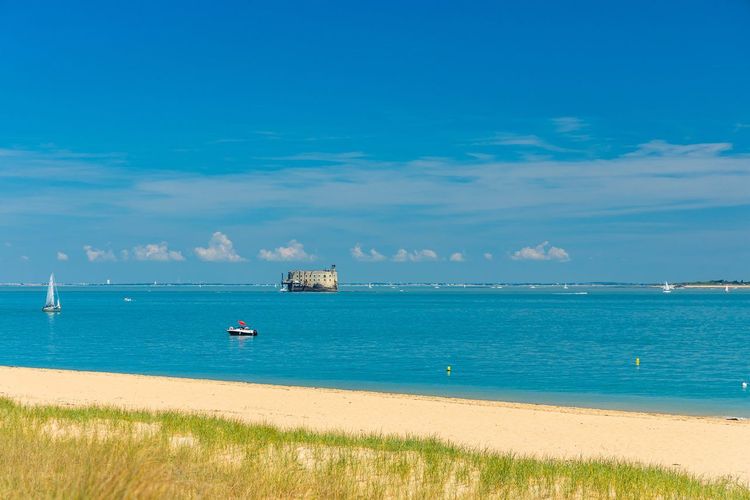
The main departure points for boat excursions around the fort are spread along the coast and the surrounding islands.
From Fouras (mainland)
The port of Fouras is the most direct departure point, approximately 6 km by sea. Several companies offer combined excursions to Île d'Aix with a pass in front of the fort. The crossing takes around 30 minutes from the port. This is also the departure point used by the show's filming crews.
From Oléron Island
The port of Saint-Denis-d'Oléron (Quai du Port, 17650 Saint-Denis-d'Oléron, rated 4.5/5 on Google based on 3,312 reviews), at the north of the island, is the closest departure point from Oléron (approximately 3 km). Excursions depart regularly in summer from the port.
From Île d'Aix
Île d'Aix, 5 km from the fort, offers short excursions around the fortress. It is the most popular option for combining a visit to Île d'Aix — the site of Napoleon's final stay in mainland France before his exile to Saint Helena — with an observation of the monument.
From Rochefort
The town of Rochefort offers maritime excursions from its port that include a pass in front of the fort. These excursions involve a longer journey time but can be combined with a visit to Rochefort and the Corderie Royale.
Fort Boyard and Charente-Maritime
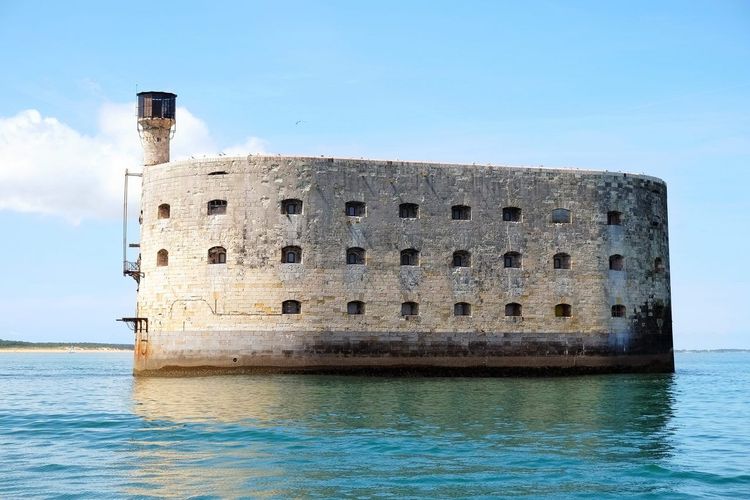
The fortress is today one of the most photographed symbols of Charente-Maritime, a department that concentrates a rare density of historical and natural heritage. The maritime fort sits within an exceptional geographical setting: the Tour de la Lanterne in La Rochelle, the fortifications of Saint-Martin-de-Ré on Île de Ré, Fort Liédot on Île d'Aix, and the oyster-farming landscapes of the Marennes basin make this department one of the richest Atlantic destinations in France.
The image of the fort at sunset, its ochre tones reflected in the waters of the pertuis, has become one of the most shared photographs of the Atlantic coast. Travellers who spend a few days in Charente-Maritime can combine a view of the fortress from a boat with the discovery of Rochefort, La Rochelle and their respective heritage.
Our Ryo app lets you plan your stay by exploring the audio-guided tours available in the major French destinations nearby — a way to turn your time in the region into a genuine cultural immersion.
Behind the Scenes of Fort Boyard
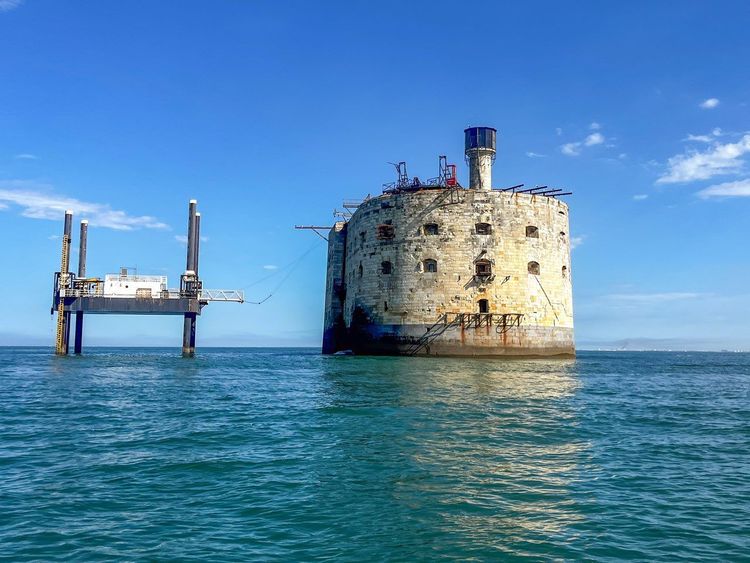
After thirty-five years of the show, the behind-the-scenes details have been recounted by hundreds of participants. Some facts remain less well known to the general public.
The Weather Conditions Are Real
Contrary to what one might think, filming takes place in the actual weather conditions of the Pertuis d'Antioche. The waves crashing against the outer walls, the wind in the walkways, the damp in the cells — all of it is authentic. Some outdoor challenges have been cancelled or modified mid-episode due to the elements. Severe storms lead to filming postponements: the safety of crew and contestants takes precedence over the production schedule.
A Full Day for 90 Minutes on Air
What viewers see in 90 minutes required a full day at the fort, typically from 7am to 7pm. Contestants arrive by boat in the morning, carry out rehearsals and walkthroughs, film sequences in an order dictated by production logistics (not necessarily the broadcast order), and leave at the end of the day exhausted. The treasure room sequences are often filmed in the late afternoon, when natural light is at its best.
Sound Is Reworked in the Studio
As with most shows filmed outdoors, some sound is recorded or reworked in post-production. This explains why the soundscape always seems perfectly clear despite wind and wave noise. The lines of certain characters and ambient sound effects are refined by a specialist post-production team.
Simultaneous Filming by Several Countries
During July and August, several crews of different nationalities follow one another at the fort within the same week. The French production goes first, then foreign versions use the same sets with their own technical teams. This is a very tight logistical operation requiring an internationally coordinated filming schedule planned several months in advance.
The Fort Changes Between Seasons
Each year, maintenance and decoration work slightly alters the appearance of certain areas. New challenges require new sets, while some older sets are removed. The most attentive viewers notice these changes between seasons, fuelling passionate discussions on forums and dedicated fan accounts.
FAQ
Is Fort Boyard Open to Visitors?
No, the fort is not accessible to the public for interior visits. The fortress is a private filming location operated by Adventures Line Productions. Boat excursions are offered from Fouras, Île d'Aix and Oléron island during the summer season, allowing visitors to admire the exterior of the fortress from the sea.
How Can I Watch Fort Boyard in 2026?
The show is broadcast on France 2 on Saturday evenings in prime time, from late June to late August 2026. Catch-up viewing is available on the France.tv platform after each broadcast. Clips are published on the show's official social media accounts.
Who Hosts Fort Boyard in 2026?
Cyril Féraud hosts the show from summer 2026. He succeeds Olivier Minne, who presented the game from 2003 to 2025, who was himself the successor of Patrice Laffont (1990–1999).
Who Is Père Fouras?
Père Fouras is the iconic character of Fort Boyard, an eccentric old scholar who poses riddles to contestants from the fort's tower. He has been portrayed since 1990 by actor Yann Le Gac (known as Yann Beaufils), who continues to hold the role in 2026 — a record for longevity for a character in a French television game show.
How Much Money Can You Win on Fort Boyard?
Contestants win no money for themselves. The entire treasure won is donated to the charity chosen by the team before the show. The maximum amount achievable in 2026 is approximately 30,000 to 50,000 euros depending on the show's configuration.
In How Many Countries Is Fort Boyard Broadcast?
The format has been adapted in more than 40 countries and has given rise to more than 60 international versions since 1990. The Russian, Belgian and British versions are among the best known after the French original. Most of these versions are filmed in the real fortress in Charente-Maritime.
When Was Fort Boyard Built?
Construction began in 1804 under Napoleon Bonaparte and was completed in 1857, after more than half a century of regularly interrupted work. The fortress was never used for actual military purposes, its obsolescence being complete at the very moment of its completion.
Conclusion
Fort Boyard is one of France's most improbable stories of the 19th and 20th centuries: a military fort built over half a century never to serve its intended purpose, which became one of the most famous television sets in the world. Between the Napoleonic fortress perched on its sandbank and the show broadcast in 40 countries, there is a strange continuity — in both cases, stubbornness, an extraordinary character, and the capacity to survive one's own initial uselessness.
For summer 2026, the adventure continues on France 2 with a new face at the helm — Cyril Féraud — but the same legendary challenges, the same iconic characters and new charities to support. For those wishing to go beyond the small screen, boat excursions from Fouras or Île d'Aix allow visitors to approach the fortress and understand what the camera does not show: the silent mass of granite set in the open sea, six kilometres from any shore. Elsewhere in France and around the world, other defensive architectures are well worth the journey — explore the colonial fortifications of Martinique with our Fort-de-France audio-guided tour for a heritage adventure off the beaten track.