© Shutterstock
 Votre guide Ryo
What to Do in Saint-Émilion: 15 Must-Have Experiences in 2026
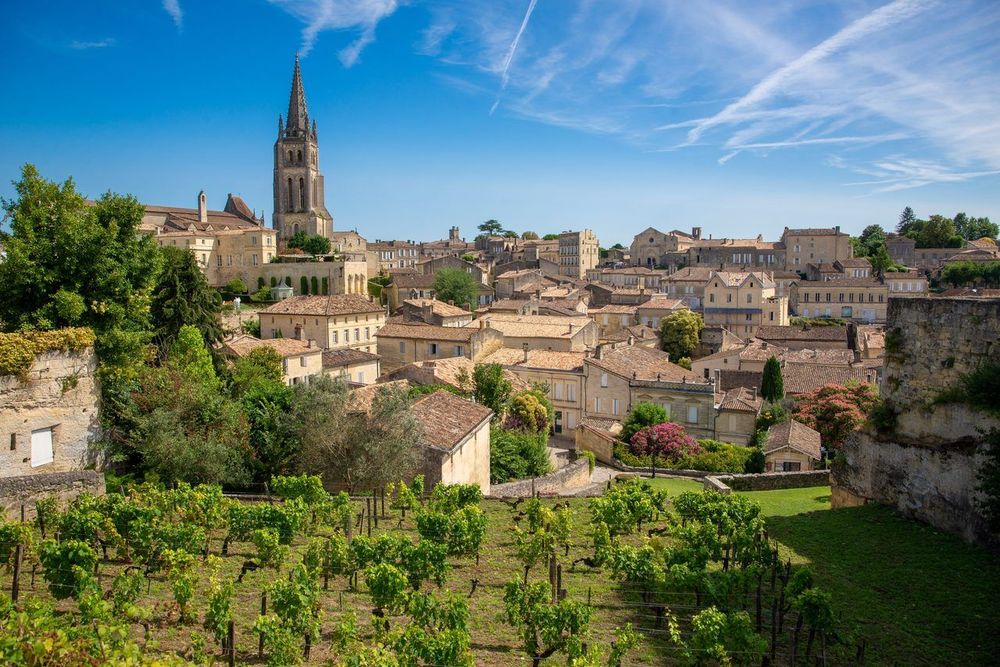
35 kilometers from Bordeaux, a golden-stone village clings to its limestone plateau, riddled with underground galleries and surrounded by endless vineyards. Wondering what to do in Saint-Émilion is almost like wondering where to begin, so much does the village pack into less than one square kilometer. Here, a church was carved directly into the rock over a thousand years ago. There, a ruined cloister shelters sparkling wines aged twenty meters underground. Elsewhere, a staircase of one hundred and forty-two steps connects the lower town to the upper town, and macarons are still made according to a recipe dating back to 1620. Many visitors arrive from Bordeaux, just 35 minutes away by train, and happily combine this wine country escape with Ryo's audio-guided tour of Bordeaux offered by Ryo. As with the other characterful cities it covers, the best way to understand Saint-Émilion is to explore it on foot, through cobbled lanes and kilometers of UNESCO-listed vineyards. Here are fifteen ways to spend a day, a weekend, or longer in this singular village.
1. Get Lost in the Medieval Town, a UNESCO World Heritage Site
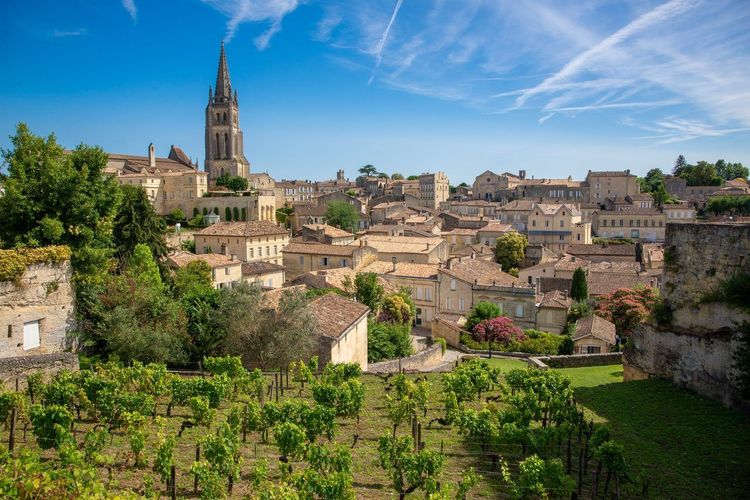
The historic center of Saint-Émilion is above all a place to explore on foot, and for good reason: the steep lanes and limestone-cut staircases leave little room for cars. The entire village, along with the wine jurisdiction surrounding it, was inscribed on the UNESCO World Heritage List in 1999, a rare recognition for a living cultural landscape rather than a single isolated monument.
Ryo often recommends starting the discovery of a historic town from its heights, and Saint-Émilion is no exception. From the Place des Créneaux (Place des Créneaux, 33330 Saint-Émilion, rated 4.4/5 on Google with 1,249 reviews), the town unfolds in layers: orange-tiled rooftops, Romanesque bell towers, and in the distance, the Dordogne valley. Allow a good hour for wandering through the center alone, not counting any indoor visits.
The staircase of the Tour du Roy, the Rue de la Cadène, and the Porte Bourgeoise each tell, in their own way, eight centuries of wine-making and religious history. Many visitors pass through the village in an hour; those who take the time to linger in the inner courtyards and vaulted passageways leave with an entirely different impression of the place. Good to know: the village is listed and almost entirely pedestrian, so sturdy footwear is advisable, as the cobblestones and limestone-cut steps can be slippery after rain.
2. Descend into the Monolithic Church and Its Catacombs
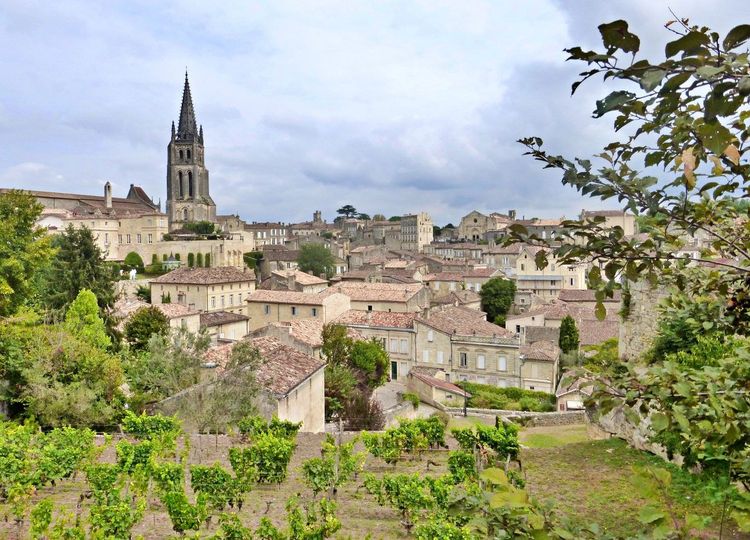
The Monolithic Church is, in itself, a reason to come to Saint-Émilion. Carved directly into the limestone cliff between the 9th and 12th centuries, it is considered the largest monolithic church in Europe, measuring 38 meters long and 20 meters high under the vault. Not a single stone was added: the entire interior volume was removed with a pickaxe, over several generations of monks.
The guided tour, which is mandatory to access the interior, also includes the neighboring catacombs, a network of funeral galleries carved into the same limestone, as well as the hermitage where the Breton monk Émilion is said to have retreated in the 8th century — the man who gave his name to the village. A cavity in the rock that local tradition associates with fertility virtues can still be seen there, a detail that always surprises the least informed visitors.
Allow around 45 minutes for the full visit; tickets must be collected at the tourist office on the Place des Créneaux, as it is the only authorized access point. Booking the day before in high season is not a luxury: groups are limited in size and morning slots fill up quickly in July and August.
The underground complex, with its walls still oozing moisture and its near-total silence once the group has entered, remains one of the most intense experiences the village has to offer, far more impressive than a simple stone church seen from the outside.
3. Discover the Cloître des Cordeliers and Its Underground Bubbles
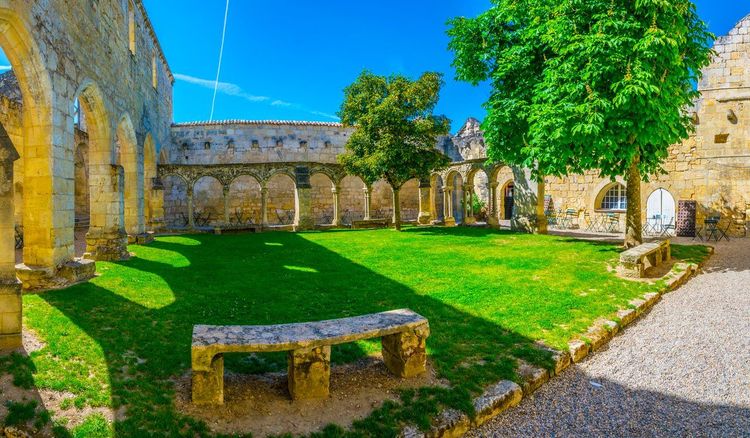
A former Franciscan convent founded in the 14th century, the Cloître des Cordeliers (Rue de la Porte Brunet, 33330 Saint-Émilion, rated 4.6/5 on Google with 2,279 reviews) has survived the centuries partly in ruin, which does not prevent it from being one of the most photographed spots in the village. Its Gothic arcades open to the sky frame a garden where, in fine weather, a glass of locally produced crémant is served.
For beneath the stones lies a sparkling wine cellar 20 meters deep, where bottles of Bordeaux crémant are aged using the traditional method. The gallery tour ends with a tasting, often on the terrace overlooking the vines when the weather allows.
You can also simply settle under the arcades for a glass, without doing the full gallery tour. The venue, popular in the late afternoon, fills up quickly on fine days: arriving early remains the best way to enjoy the calm of the cloister before the crowds arrive, tasting glass in hand.
4. Climb the Tour du Roy for a 360-Degree Panorama
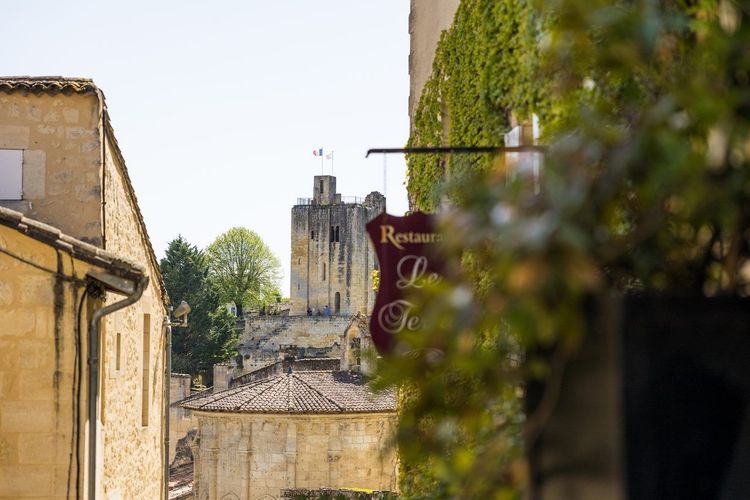
The only intact Romanesque keep in the Gironde, the Tour du Roy (Rue du Tertre de la Tente, 33330 Saint-Émilion, rated 4.4/5 on Google with 444 reviews) dates from the 13th century and rises 32 meters above the village, including its terraces. The climb, up a rather narrow spiral staircase, leads to a platform that offers the best overall view of the rooftops of Saint-Émilion and the surrounding vineyard.
It is generally climbed in late morning or late afternoon, when the raking light falls across the vines. The ascent takes around ten minutes, but the queue can grow long in July and August since access is in small groups, for safety reasons related to the narrowness of the staircase.
The tower itself, quadrangular in shape, measures approximately 14.50 meters on each side over three floors, and served as much as a symbol of communal power as a lookout post. It is still from the top of the Tour du Roy that the Jurade, a wine brotherhood dressed in red robes, proclaims the grape harvest each autumn and holds its spring ceremonies — a ritual inherited from the Middle Ages that few villages have preserved.
5. Admire the Collegiate Church and Its Romanesque Cloister
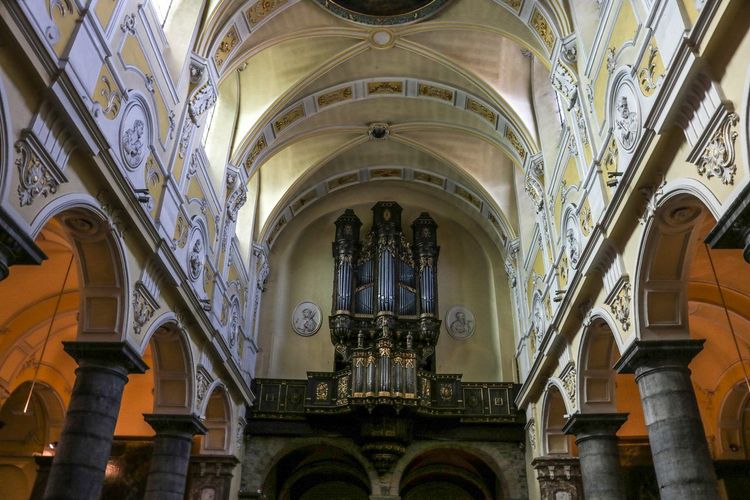
Unlike the monolithic church, the Collegiate Church is built above ground, in a style that blends Romanesque and Flamboyant Gothic depending on the century of construction. Its adjoining cloister, more discreet than that of the Cordeliers, retains 12th-century sculpted capitals that are well worth seeing.
The interior of the church, free to enter and accessible without a reservation unlike the monolithic church, houses an 18th-century organ still used for concerts in season. Architecture enthusiasts will happily spend twenty more minutes there than planned.
Look up at the portal before entering: its sculpted arches, still legible despite the erosion of the limestone, depict medieval scenes that most visitors in a hurry never even notice. Inside, a few ancient frescoes survive on the walls, often overlooked by those who head straight for the cloister.
6. Visit the Convent of the Ursulines
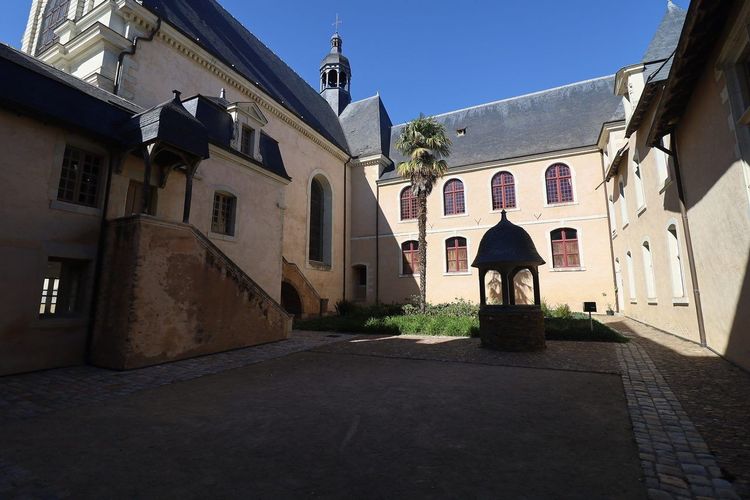
Less well known than its neighbors, the Convent of the Ursulines (Rue Guadet, 33330 Saint-Émilion) dates from the 17th century and served for a long time as a place of education for young women from the region before being partially converted to other uses. Its sober chapel contrasts with the Gothic exuberance of the rest of the village.
It is visited mainly for the view it offers over the ramparts and for the relative tranquility of the place, away from the main flow of visitors concentrated around the Place des Créneaux.
It is also to the Ursuline nuns that tradition attributes the invention of the famous Saint-Émilion macaron, developed in the convent kitchens in the 17th century according to a long-kept secret recipe. A culinary connection that gives the place an added interest for those keen on local specialties before leaving with a box tucked under their arm.
7. Explore the Remains of the Palais Cardinal
Of the Palais Cardinal (Rue du Clocher, 33330 Saint-Émilion, rated 5/5 on Google with 209 reviews), the residence of the Archbishop of Bordeaux in the 13th century, only a Gothic facade remains, pierced with elegant bays and surrounded by a private garden now planted with vines. It is easy to spot when descending from the Tour du Roy, its open-work silhouette standing out against the sky.
Access is generally limited to an exterior view from the street, as the site is not open for standard interior visits, but the postcard image it offers remains one of the most iconic in the village.
The name is misleading: the palace takes its name from Cardinal Gaillard de Lamothe, a close associate of Pope Clement V, who owned the property in the early 14th century. Its tall paired bays, still standing, bear witness to a refinement of Gothic civic architecture that is rare at this scale in such a small village, and serve as a reminder that in the Middle Ages Saint-Émilion was among the most prosperous towns in the region.
8. Take in the Grandes Murailles, Remnants of a Dominican Convent
The Grandes Murailles are the last standing sections of the church of a 13th-century Dominican convent, a 13-meter-high wall that stands alone in the middle of a vineyard plot right in the town center. The slightly ghostly image often surprises visitors who did not expect to find rows of vines within the town walls.
The site can be visited freely from the street, in a few minutes, on the path between the Porte Bourgeoise and the village center.
The name has also been adopted by one of the neighboring classified growths, Château Les Grandes Murailles (Rue Guadet, 33330 Saint-Émilion, rated 4.2/5 on Google with 160 reviews), whose vines grow at the very foot of the medieval wall. This intertwining of monument and vineyard plot sums up Saint-Émilion rather well, where history and the vine have shared every square meter for eight centuries.
9. Wander through the Market Halls and Cobbled Lanes
Every week, the Place du Marché hosts a producers' market where you can find goat's cheese from the neighboring Périgord, strawberries from the Lot-et-Garonne, and of course bottles sold directly by the winegrowers. It is also one of the few places in the village where you can sit at a terrace without climbing a single step.
Around the square, the cobbled lanes of the Cadène or the Petite Fontaine are lined with wine shops, artisan workshops, and old storefronts. Getting pleasantly lost there for half an hour, with no particular itinerary, remains one of the most relaxing activities of any stay.
Market mornings bring most of the activity, when local producers set up their stalls at the foot of the monolithic church. It is the ideal moment to put together a regional picnic — cheese, charcuterie, and strawberries — before heading out for a walk through the vineyards in the middle of the day.
10. Set off on the Wine Route and Step inside a Château
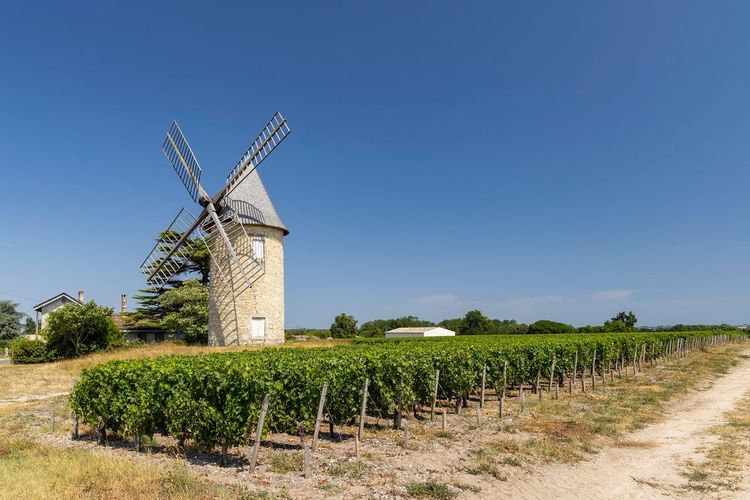
Saint-Émilion is not limited to its historic center: the appellation covers more than 5,400 hectares of vines and counts around 800 wine estates, a number that is staggering for a commune of fewer than 200 inhabited hectares. The wine classification, revised every ten years, distinguishes several levels, from a simple Saint-Émilion Grand Cru to the Premiers Grands Crus Classés A at its summit. This category was shaken up by the 2022 classification: Château Ausone (Lieu-dit Ausone, 33330 Saint-Émilion, rated 4.7/5 on Google with 46 reviews) and Château Cheval Blanc, long ranked at the very top, chose to withdraw from the process, while Château Figeac was promoted to join Château Pavie. The two estates now form the only recognized Premiers Grands Crus Classés A.
Most châteaux offer visits by reservation, often limited to around ten people, with a tour of the cellars and a tasting at the end. Some, such as Château La Dominique or Château Soutard, have invested in contemporary architecture that contrasts sharply with the traditional 19th-century winery buildings.
Booking at least two weeks in advance in high season is essential, as most estates do not accept visitors without an appointment. Prices range from a free tasting with purchase to a paid visit of around 15 to 25 euros per person at the most prestigious properties.
For visitors short on time, the tourist office also organizes minibus tours combining two or three châteaux in half a day, a practical option for those not renting a car or who prefer not to drive after a tasting.
11. Hike or Cycle through the Heart of the Vineyard
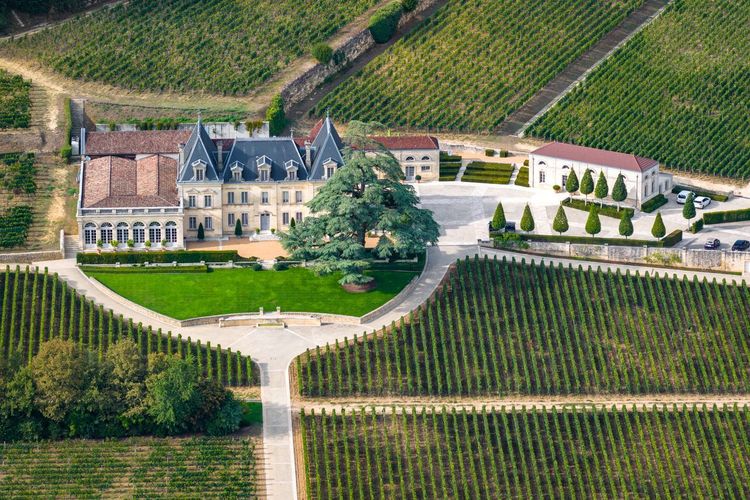
Several marked trails set off directly from the village to wind between the vine rows, offering a very different perspective on the UNESCO-listed landscape. The Sentier viticole circuit, approximately 8 kilometers long, passes through several satellite appellations and climbs to the heights of Puisseguin before descending back toward Saint-Émilion.
By bike, the former railway line converted into a greenway connects the village to Libourne along the Dordogne, a largely flat route suitable for families. Bicycle rental is available directly on the village square in season, with several providers offering standard and electric bikes.
Allow two to three hours for a full loop on foot with a few photo stops, and bring water: shade is scarce once you leave the village, especially in summer when the limestone reflects the heat. The tourist office hands out a trail map featuring several marked loops, from 5 to 14 kilometers, making it easy to tailor the outing to your fitness level and available time. Some routes pass by châteaux that welcome walkers for a quick tasting, a pleasant way to break up the walk.
12. Taste and Buy Wine in the Town-Center Cellars
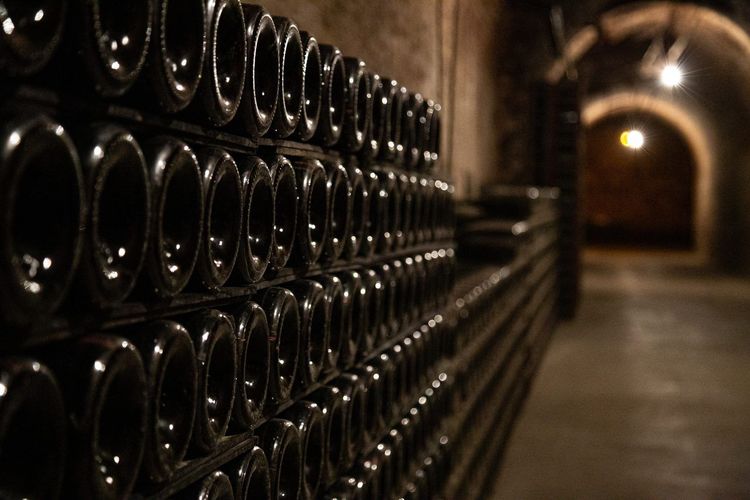
There is no need to book a château to sample the local terroir: a good dozen cellars and specialist wine shops occupy the town center, some of them set up in former cave-dwellings carved into the limestone. The Maison du Vin de Saint-Émilion (Place Pierre Meyrat, 33330 Saint-Émilion, rated 4.2/5 on Google with 532 reviews), on the main square, offers à la carte tastings with no obligation to buy, a practical format for comparing several appellations within an hour.
Some shops also run introductory tasting workshops, with explanations about the Merlot and Cabernet Franc grape varieties that dominate the local blend. Expect to pay between 10 and 20 euros for a tasting of three to five wines, often accompanied by a small board of regional cheeses or charcuterie.
Merlot, the reigning grape variety of the appellation, produces wines that tend to be round and approachable when young, which explains why many tastings end in a purchase: you quickly understand what you are drinking. The shops in the center cover all price ranges, from an entry-level Saint-Émilion at a few euros to a classified grand cru in the three figures. Those leaving with bottles will appreciate that several wine merchants offer direct home delivery, a useful service to avoid lugging cases onto the return train or plane.
13. Where to Eat in Saint-Émilion: Great Tables and Local Treats
On the restaurant front, Logis de la Cadène (Place du Marché, 33330 Saint-Émilion, rated 4.7/5 on Google with 528 reviews), one of the oldest tables in the village at the heart of the town, offers gastronomic cuisine distinguished by a Michelin star, with a menu that changes with the seasons and market arrivals. Reservations are strongly advised, even out of season, as tables are few.
For a more laid-back option, L'Envers du Décor, a wine bar tucked behind the collegiate church, serves simple dishes and good wines by the glass in a bistro atmosphere. La Terrasse Rouge, conceived by designer Philippe Starck at Château La Dominique, is worth a visit for its sweeping view over the vineyard from an all-red rooftop terrace, even just for a late-afternoon drink.
On the sweet side, it is impossible to leave without trying the Saint-Émilion macaron, a recipe kept secret since 1620 by the Ursuline sisters and perpetuated today by several makers in the village, some of whom offer a demonstration of the traditional production method. An audio-guided tour, like those our app features elsewhere in France, always gives pride of place to local tables and specialties, and Saint-Émilion is no exception with its very own sweet identity.
14. Extend the Excursion to Nearby Villages and Châteaux
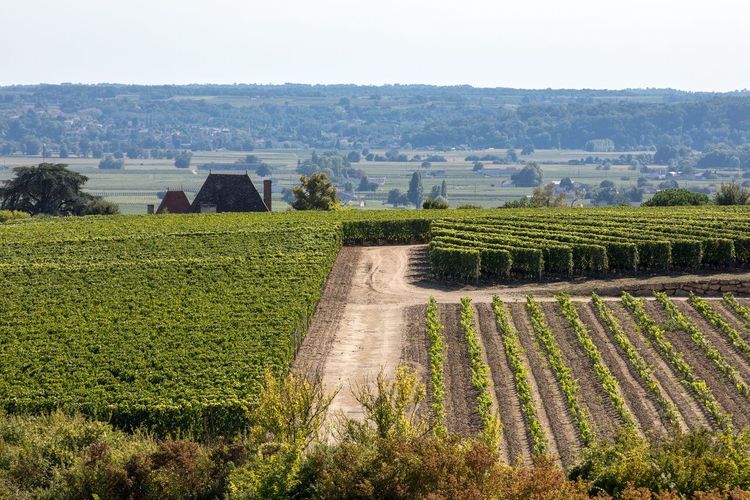
Just a few kilometers away, the satellite communes of the appellation — Montagne-Saint-Émilion, Lussac-Saint-Émilion, and Puisseguin-Saint-Émilion — offer similar wine landscapes with far fewer visitors. These villages make it possible to visit châteaux that are often less expensive and more available at short notice than the big names in the historic center.
Libourne (Place Abel Surchamp, 33500 Libourne, rated 4.3/5 on Google with 1.1K reviews), 8 kilometers away, is worth a visit for its river port on the Dordogne and its Sunday market, one of the largest in the department. A little further afield, the medieval town of Rauzan and its ruined castle round out a two-or-three-day itinerary in the region nicely.
And if you head back toward Bordeaux, 35 kilometers away, the Gironde capital lends itself particularly well to exploration on foot: its audio-guided tour connects the water mirror, the Place de la Bourse, and the old Saint-Pierre quarter in a few hours, making for an ideal urban extension after the tranquility of the vines. For those with a car, half a day is enough to combine two of these stops without rushing, particularly early in the morning when the light on the vines is at its most photogenic.
15. Enjoy Unusual Experiences: Secret Underground Passages and Workshops
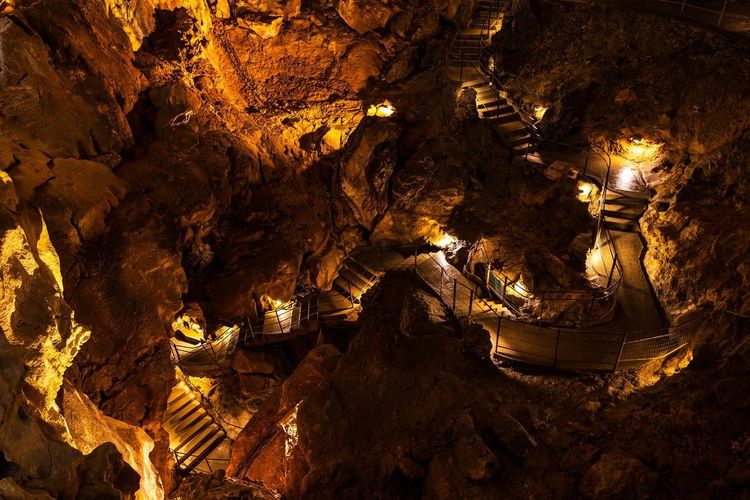
Beneath the village, a network of galleries and cellars sometimes connects one property to another, a vestige of an era when the limestone quarried to build the houses was immediately used to carve out storage spaces for wine. Certain private tour circuits make it possible to explore these little-known passages, far from the crowds on the Place des Créneaux.
In season, macaron-making workshops or wine-blending sessions — where you compose your own cuvée from several grape varieties — round out the offering for visitors who want a more hands-on activity than a standard guided tour. As with a Ryo audio-guided tour, this kind of experience works all the better when you take the time to stop rather than tick off monuments one by one.
Other formats are worth seeking out depending on the season: sunset walks through the vines followed by a tasting, or nighttime village tours on certain summer evenings, when the tourist coaches have gone and the golden stone turns ochre. It is often at these off-peak hours — early morning or at dusk — that Saint-Émilion truly lets itself be approached.
FAQ
How much time should you plan to visit Saint-Émilion?
One day is enough to see the highlights of the historic center: the monolithic church, the Tour du Roy, and a stroll through the cobbled streets. To add one or two château visits and a leisurely lunch, it is better to plan an overnight stay in the village or the surrounding area, particularly in Libourne.
Is Saint-Émilion free to visit?
The village itself can be explored freely and at no cost. Only certain monuments such as the monolithic church and its catacombs, the Tour du Roy, or château visits require a ticket, generally between 5 and 25 euros depending on the site.
Where can you park in Saint-Émilion?
Since the historic center is pedestrian-only and hilly, it is best to park in one of the car parks on the outskirts of the village, particularly the one near the tourist office, and then continue on foot. In high season, arriving before 10 a.m. avoids most of the crowds.
What is the best time of year to visit Saint-Émilion?
Spring and early autumn offer pleasant light and fewer crowds than July and August. In early October, the harvest season gives the vineyard particularly photogenic colors, even if some paths between the vines are then closed to the public.
Do you need to book château visits in advance?
Yes, almost always. The vast majority of wine estates operate by appointment only, with limited group sizes. Book one to two weeks ahead in high season, and ideally before departure for the most prestigious châteaux.
How do you get to Saint-Émilion from Bordeaux?
The direct train from Bordeaux Saint-Jean station takes approximately 35 to 40 minutes and drops passengers a few meters from the historic center. By car, allow around 40 minutes via the A10 motorway and then the D243, with parking to be found on the outskirts of the village.
What souvenirs can you bring back from Saint-Émilion?
Saint-Émilion macarons and one or two bottles of wine from the appellation remain the most obvious souvenirs. Craft lovers will also find objects made from local limestone or tasting tools sold in the specialized shops in the town center.
Saint-Émilion fits into a small area but demands more time than you might imagine before arriving: between underground monuments, a UNESCO-listed vineyard, and excellent restaurants, a single day always leaves a little frustration. Whether you explore this village with this list or the Ryo app on a future stop elsewhere in France, the approach remains the same: walk slowly, stop often, and let the limestone and the vines tell their story at their own pace. And to extend the journey without breaking that rhythm, nothing stops you from completing the loop through the city that made this vineyard famous: Ryo's audio-guided tour of Bordeaux takes over on your return, headphones on, to explore the world wine capital at the same unhurried pace.