© Shutterstock
 Votre guide Ryo
Saint-Florent in Corsica: 20 Must-Do Things in 2026
Wondering what to do in Saint-Florent, Corsica? This port defies easy definition. Too small to be considered a city, too lively to be just a village, it nestles between the Agriates Desert and the hills of the Nebbio, concentrating within a few square kilometres the very best that Haute-Corse has to offer. Cream-coloured houses stack up around a Genoese citadel, fishing boats rub shoulders with pleasure yachts, and twenty minutes away by boat stretches one of the most beautiful wild beaches in Europe. To understand northern Corsica, you must first understand Saint-Florent.
In this guide, you will find everything you need to turn your stay into a real experience rather than just another box to tick: a nine-century-old Romanesque cathedral hidden in a nearby village, beaches accessible only by boat or on foot after several hours of hiking, a Patrimonio vineyard producing Corsica's first AOC wine, and a customs officers' trail hugging a wild coastline for more than 20 kilometres. If you are also planning to explore Bastia, 25 kilometres away, the Ryo audio guide to Bastia will help you extend the adventure into the capital of Haute-Corse.
1. Strolling Through the Old Town of Saint-Florent
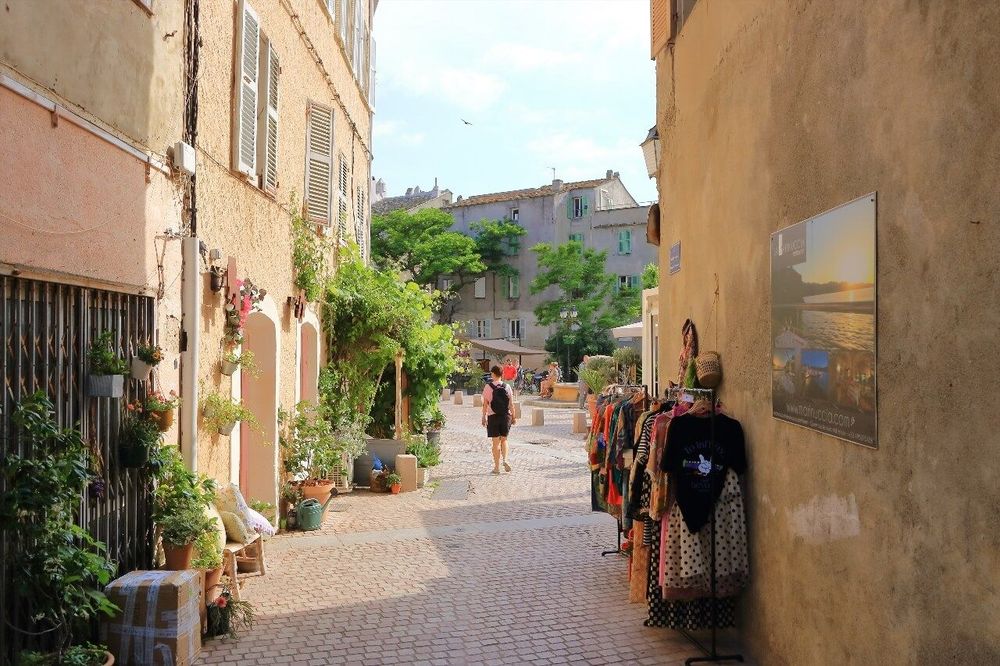
The old town of Saint-Florent is best explored on foot, without a map, without a plan. The cobbled lanes of the historic centre weave and meander between ochre facades and green shutters bleached by the salt air. There are no monuments to tick off a list here. The Genoese architecture of the 15th and 16th centuries can be read in the granite door frames and the arches that occasionally span the alleyways.
The Place des Portes is the gravitational centre of the old town. In the morning, the village elders gather here over a coffee. In the evening, restaurant terraces transform it into an open stage overlooking the harbour. The summer market is also held here, along the edges of the square. Take time to sit and watch the interplay between tourists with their cameras and locals who magnificently ignore them.
Climbing towards the upper reaches of the old centre offers a different perspective. Stone staircases lead to viewpoints over the gulf, between houses that seem to lean towards one another. Allow about an hour for a first leisurely circuit, longer if you stop into the local shops selling charcuterie, jams and brocciu. The old town is pedestrianised in summer — park outside the historic centre.
2. Visiting the Genoese Citadel
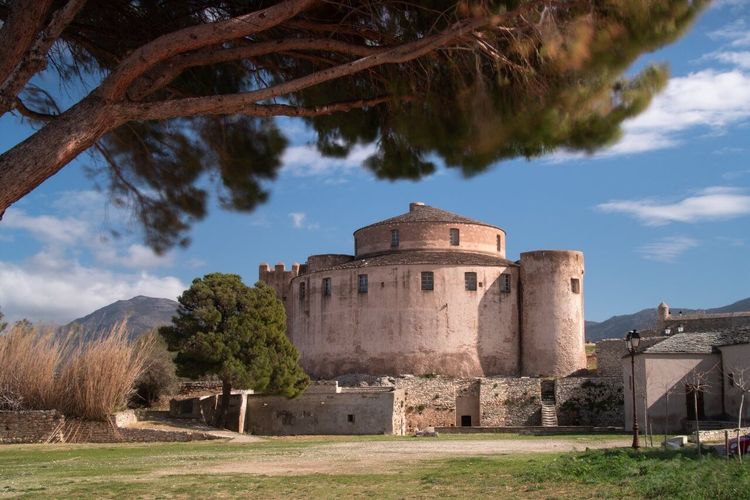
The citadel of Saint-Florent (Route de la Citadelle, 20217 Saint-Florent, rated 3.8/5 on Google from 63 reviews) has dominated the harbour since the 15th century: it was built between 1440 and 1453 by the Genoese doge Giano di Campofregoso to protect the new town. Its large round tower in grey granite remains the most iconic feature of the monument, and the whole structure gives a clear sense of the care taken to defend this strategic port that commanded access to the fertile Nebbio plain.
Corsica once had around ten such Genoese fortresses, scattered along the entire coastline to watch for Ottoman invasions. Saint-Florent was one of the island's most active military bases between the 15th and 17th centuries. The stronghold also protected the rear approaches to Bastia. It was from this very citadel that Pascal Paoli left Corsica for his exile in England in 1795. Part of the structure was destroyed in 1943, when retreating German forces blew up an ammunition depot.
Access to the esplanade is generally free, and what truly makes it worth the visit is the view from the heights. On a clear day, you can make out the islands of Tuscany to the east and the Cap Corse cutting the sky like a blade to the north. The sunset from this vantage point is one of the most photographed in Haute-Corse. Arrive an hour early to find your angle without jostling other visitors.
The citadel and its surroundings also host cultural events in season — concerts, temporary exhibitions, evening screenings. Check with the local tourist office before your visit to find out about the current programme and any access restrictions outside the summer season.
3. Walking Along the Marina
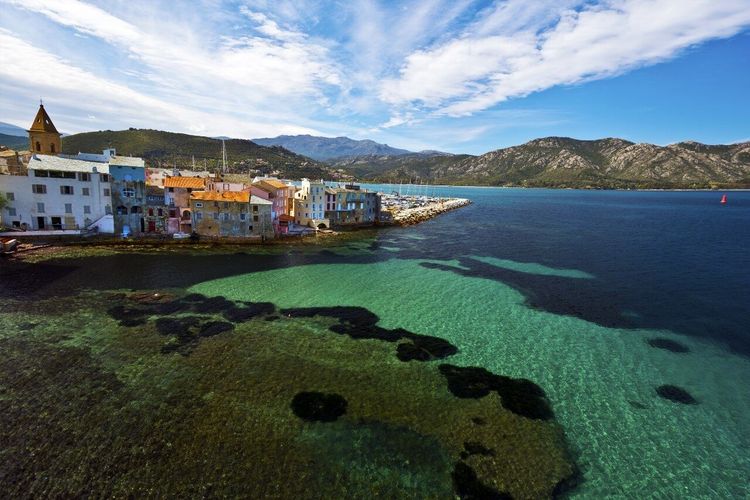
The port of Saint-Florent (Quai des Plaisanciers, 20217 Saint-Florent, rated 4.3/5 on Google from 1,922 reviews) is the nerve centre of the town, and it knows it. Pleasure boats pack it by the hundreds in July and August — sailing boats flying Breton or Swedish flags, catamarans and yachts that have nothing left to prove. The promenade running along the quay is the liveliest meeting point in Saint-Florent, from aperitif time well into the night.
In the morning, it is a different world. Professional fishermen unload their nets at dawn, before the tourist town stirs. If you arrive early, you can witness a scene unchanged for decades: plastic crates stacking up, seagulls negotiating, the salt-and-sea smell of the night. A few restaurants buy directly from the quayside — this is often where the freshest produce ends up on your plate that same evening.
The embarkation point for the shuttles to the beaches of Saleccia and Lotu is also located at the port. It is likewise the departure point for boat excursions into the Agriates Desert. During July and August, boats depart several times a day — book your seats the day before.
4. Swimming at Plage de la Roya
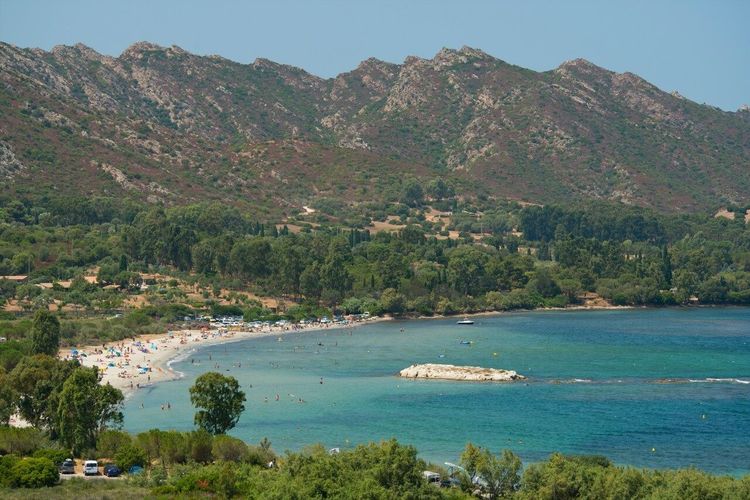
The Plage de la Roya (Plage de la Roya, 20217 Saint-Florent, rated 4.3/5 on Google from 1,456 reviews) is the most accessible beach in Saint-Florent, reachable on foot from the centre in under ten minutes, bordered by turquoise water that gives the impression of having drifted somewhere between Sardinia and Greece. The fine sandy bottom stretches for around 800 metres, with a gentle slope that makes it ideal for families with young children.
In high season, la Roya fills up quickly. The best spots are taken before 10am. If you want a little more peace, walk along the beach towards the south: the last two hundred metres, past the car park and the sunlounger rental stations, are consistently less crowded. The water colour is identical — the crowds are not.
The beach has a few restaurants and snack bars in season. Avoid parking your car there during the day between mid-July and late August — car parks overflow and fines are handed out. Come on foot or by bike, or arrive before 9am to find a space.
For snorkelling enthusiasts, the rocks to the north of la Roya conceal posidonia meadows and a few unfazed groupers. The water stays cool until mid-June, then reaches 24–26°C in midsummer. Visibility is excellent outside periods of strong wind.
5. Exploring the Agriates Desert
The Agriates Desert (Désert des Agriates, 20217 Saint-Florent, rated 4.6/5 on Google from 174 reviews) is Haute-Corse's best-kept secret — and yet its most poorly understood. It is not a desert in the geographical sense. It is a dense scrubland of cistus, myrtle, lentisk and strawberry trees spreading across roughly 15,000 hectares between Saint-Florent and the Ostriconi, with the turquoise waters of the gulf as a backdrop. No road crosses it. No village exists within it. It is precisely this emptiness that makes it one of the most preserved natural territories in France.
Historically, the Agriates were not always this expanse of wilderness. Until the 19th century, farmers from the Nebbio grew cereals here and raised goat herds. Progressive deforestation, fires and rural exodus transformed these farmlands into impenetrable scrubland. Today, a wide stretch of the coastal strip is classified as a protected natural site, acquired by the Conservatoire du Littoral since 1979.
There are three ways to explore it. The first, and most popular, is the boat shuttle from the port of Saint-Florent: craft depart several times a day in summer, dropping visitors directly onto the beaches of Saleccia and Lotu. The second is the customs officers' trail (see section 7), which crosses the scrubland on foot from Saint-Florent. The third is kayak or paddleboard, following the coastline at your own pace and landing in coves accessible only from the sea.
Even if you do not make it all the way to the beaches, a simple glance from the heights of the D81 road that skirts the desert will give you a sense of the scale of this territory. In May and June, white cistus bloom abundantly and perfume the air for kilometres around. In autumn, strawberry trees redden and wild boars appear more readily at the edge of the paths. Whatever the time of year, the Agriates commands silence.
Contrary to what many assume, the Agriates are not reserved for seasoned hikers. Boat shuttles allow families, older visitors and even those with very young children to reach the beaches directly. It is this partial accessibility that makes the Agriates unique: radical nature, within easy reach.
6. Discovering the Beaches of Saleccia and Lotu
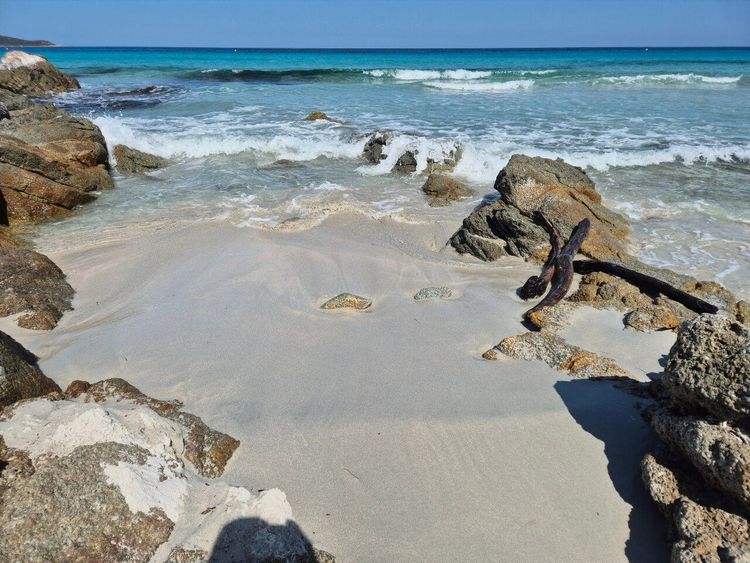
If you could take away just one image from Saint-Florent, it would probably be that of the beach of Saleccia. A kilometre of immaculate white sand, water of a milky blue that deepens into intense turquoise at two metres depth, stone pines spilling right down to the water's edge. The scene looks like a film set — and it literally is: it was on Saleccia that the Omaha Beach landing scenes were filmed for The Longest Day, the grand D-Day epic produced by Darryl F. Zanuck in 1962. Corsican sand stood in for Normandy.
Saleccia beach is accessible three ways: by boat (shuttles from the harbour, 25 to 30 euros return per adult depending on the operator), on foot via the customs officers' trail (around 3 hours from Saint-Florent), or by 4x4 along a dirt track from Casta (not recommended without a suitable vehicle). The shuttle remains the most practical solution for the majority of visitors.
The beach of Lotu (Plage de Lotu, 20217 Saint-Florent, rated 4.6/5 on Google from 1,656 reviews), roughly two kilometres east of Saleccia along the customs officers' trail, is less crowded and every bit as beautiful. Its finer sand, tighter curve and the absence of a direct shuttle service make it the preferred alternative for hikers and kayakers. If you take the shuttle to Saleccia, allow enough time to walk on to Lotu — the connecting path is short (45 minutes) and crosses a ridge with spectacular simultaneous views over both beaches.
One practical tip for both beaches: bring water in generous quantities. There is no source of drinking water anywhere in the Agriates between May and October. Most boat visitors underestimate the heat and the length of their stay. A hat and high-factor sun protection are essential — shade is scarce on these south-facing beaches.
7. Hiking the Customs Officers' Trail
The customs officers' trail from Saint-Florent is one of the most spectacular coastal routes in France, and yet it rarely features in the major lists of Corsican hikes, which are dominated by the GR20 and its devotees. That is a mistake. This trail follows the Agriates coastline for more than 22 kilometres, from Saint-Florent all the way to the Ostriconi beach, with constant sea views, the option to swim in deserted coves every hour, and the scrubland wildlife silently keeping you company.
The full trail takes two days at a moderate pace, with a night at the Saleccia refuge or under canvas. It is also possible to do a partial out-and-back from Saint-Florent: three hours of walking (around 10 km) brings you to Lotu, from where you can return by boat shuttle. This is the most popular option in summer, combining hiking and swimming without the logistics of a bivouac.
The trail officially begins at the northern edge of Saint-Florent, near the Plage de la Roya. The orange waymarking is consistent and well maintained. The first few kilometres cross private land at the edge of the scrubland before descending towards the coast. From the second hour onwards, the path follows a low, rocky cliff that drops straight into the sea. Some sections demand attention, especially in wet conditions.
A few precautions before setting out: the trail has no water source between Saint-Florent and Saleccia. Allow at least 2 litres of water per person for a one-way 10 km walk in full summer heat. Set off early, before 8am, to avoid the midday heat. Hiking shoes are recommended, even if some bold souls attempt it in sandals. And check the weather forecast: in strong wind (libecciu or maestrale), the coastal sections can be treacherous.
The full customs officers' trail is not suitable for young children, but the first two or three kilometres from Saint-Florent, which follow accessible coves, are perfectly manageable as a family outing.
8. Discovering the Cathedral of Santa-Maria-Assunta
The cathedral of Santa-Maria-Assunta du Nebbio is located in Murato, a village about ten kilometres south of Saint-Florent — not in the town itself, a detail many visitors discover too late, after searching in vain through the old town's alleyways. It is well worth the detour.
Built in the 12th century in the characteristic Pisan Romanesque style, this small checkerboard building of white limestone and green schist is one of the jewels of Corsican medieval architecture. The facade is surprisingly elaborate for a village church: bas-reliefs depicting animals and human figures frame the windows, a blend of Lombard influences and local symbols that remain only partially explained. Inside, the Romanesque austerity contrasts sharply with this exterior richness.
A frequent source of confusion: the 'cathedral of the Nebbio' can refer to two different buildings depending on the source. One is the former Romanesque cathedral of the Nebbio (now in ruins); the other is the church of San Michele de Murato (Murato, 20239 Murato, rated 4.7/5 on Google from 1,390 reviews), frequently mentioned in guidebooks. The church of San Michele is the one open to the public, in a remarkable state of preservation. It is a listed historic monument.
Arrive outside Sunday Mass times if you want to visit in peace. On weekdays, the church is often empty and open throughout the day. The village of Murato itself is worth a few minutes: its grey schist houses blend into the limestone relief, and the view over the Nebbio plain from the central square is particularly beautiful in the late afternoon.
9. Taking a Boat Trip
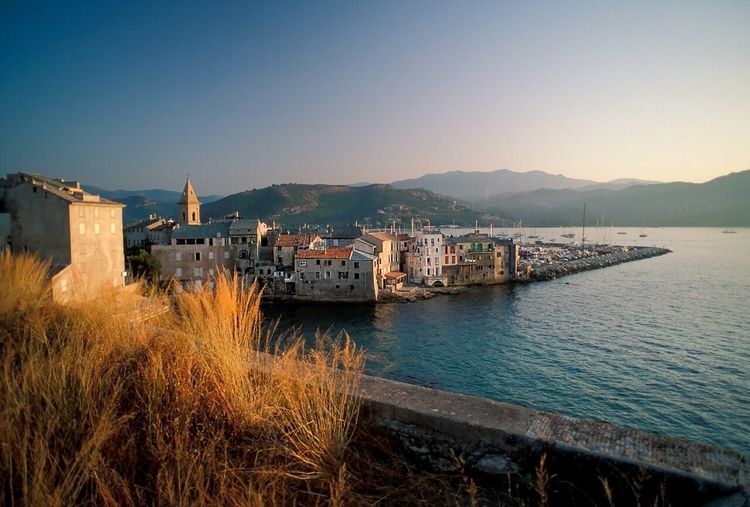
From the port of Saint-Florent, several operators offer boat excursions to the Agriates, the coves of Corsica or the secluded calanques of the gulf. It is one of the most characteristic experiences Saint-Florent has to offer, and the one that most powerfully conveys why this village draws so many visitors.
Options vary widely. Express shuttles to Saleccia (30-minute crossing) depart in the morning and return in the late afternoon — ideal if you want a beach day without any effort. Scenic cruises last two to three hours and follow the Agriates coastline without landing, with swimming stops in coves reachable only by boat. Some operators offer semi-private outings with snorkelling, a Corsican aperitif on board, and stops at two or three consecutive coves.
Outside the summer season (before June and after September), excursions are less frequent and sometimes cancelled depending on weather conditions. The libecciu wind can close the gulf for several days at a stretch. If you are visiting Saint-Florent in spring or autumn, check directly with the harbour operators the evening before your planned departure.
Indicative prices for 2026: Saleccia return shuttle between 25 and 35 euros depending on the operator. Scenic cruise of 2–3 hours between 30 and 45 euros. Private or semi-private outings from 60 euros per person. Online booking is strongly recommended in July and August, as boats sell out several days in advance.
If you are a competent mariner, hire of a rigid inflatable or a licence-free motorboat (for craft under 6 CV) is available at the harbour. This offers maximum freedom to explore coves at your own pace, but the protected zones of the Agriates impose strict anchoring rules — check the permitted areas before heading out.
10. Enjoying Water Sports
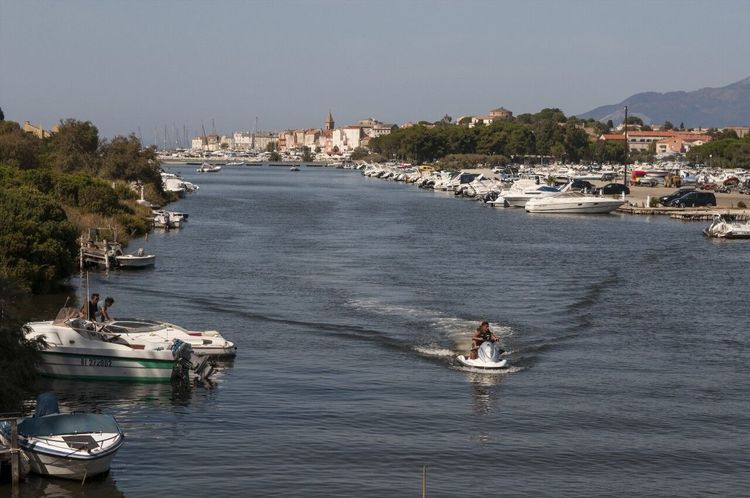
Saint-Florent is one of the best water sports spots in Haute-Corse, and not just for serious athletes. The gulf's conditions — a steady afternoon breeze, flat water in the morning and low swell in season — suit windsurfing and stand-up paddleboarding for beginners just as well as more advanced disciplines.
The rental and school centres based on the Plage de la Roya offer sea kayaking, paddleboarding, windsurfing and kitesurfing. Kitesurfing in particular benefits from the thermal breeze regime in the afternoon, which can reach 20 to 25 knots in summer across the gulf. For beginners, morning paddleboard and kayak lessons in calm water are the most appropriate starting point.
For scuba diving, several centres offer introductory dives and full-day outings to the drop-offs at the Pointe de la Mortella and the Agriates shallows. Visibility can reach 30 metres in summer. The marine life of the gulf of Saint-Florent is well preserved, including brown meagres, white sea bream, moray eels, and at greater depths, groupers and spiny lobsters.
Fishing enthusiasts will also find organised sea fishing trips in Saint-Florent. Rock fishing for sea bream and sea bass (bar) from the rocks at the Pointe de la Mortella is practised by locals — spots passed down from father to son that you are unlikely to be told about on first acquaintance.
11. Following the Patrimonio and Nebbio Wine Route
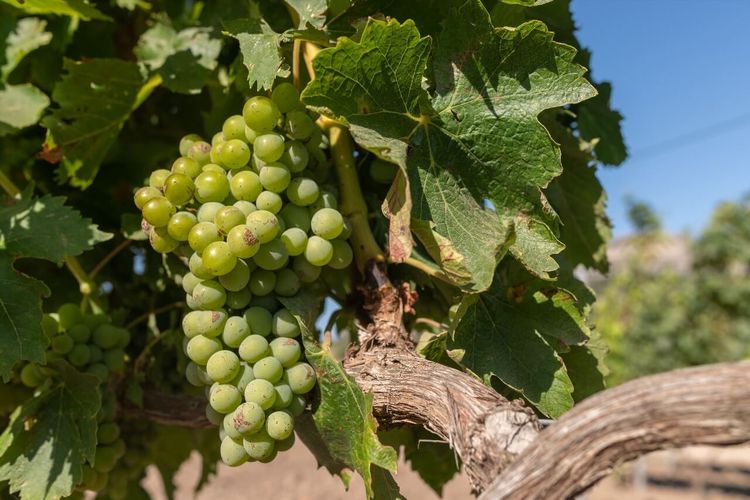
Patrimonio (Village de Patrimonio (Route du Village, 20253 Patrimonio, rated 4.7/5 on Google from 630 reviews), 20253 Patrimonio, rated 4.6/5 on Google from 1,100 reviews) is a welcome anomaly: from a tiny terroir, it earned Corsica's first AOC designation, officially granted in 1968, ahead even of Ajaccio. The Nielluccio vines — the local grape, a cousin of the Tuscan Sangiovese — grow on calcareous marl soils of geological rarity in Corsica, an island whose terrain is predominantly granite. This exceptional terroir alone explains why Patrimonio wines have a texture and depth that other Corsican wines do not reach.
The village of Patrimonio is just 7 kilometres from Saint-Florent, along the road that winds up from the gulf into the heart of the Nebbio. The wine route is signposted and passes around ten estates open for visits. Allow half a day to visit two or three cellars, taste their cuvées and understand the difference between a Vermentino white aged in tank and a Nielluccio red matured in barrel.
Among the Nebbio appellations, Patrimonio whites are often cited as the most distinctive — fresh, mineral, with notes of citrus and dry herbs that echo the surrounding scrubland. The rosés are highly popular in summer. The reds, rarer in export markets, develop a spiced and tannic complexity with age that is quite remarkable.
Practical tip: most estates welcome visitors without an appointment from May to October, but a call the day before is recommended outside July and August. Some winemakers offer guided vineyard tours with tasting and direct sales at prices lower than those of coastal wine merchants. If you want to take bottles home, leave room in your luggage — Patrimonio wines are rarely found in Paris or Lyon at this quality-to-price ratio.
The Patrimonio music festival, held each summer among the vines, blends traditional Corsican music with national artists. It is one of the most memorable evenings you can experience in the region.
12. Browsing the Saint-Florent Market
The Saint-Florent market (Place des Portes, 20217 Saint-Florent, rated 4.2/5 on Google from 82 reviews) is held in the morning, in summer, on the central square and the surrounding streets. It is less a strict producers' market — you will also find bric-a-brac, handmade jewellery and herbal teas from scrubland plants — than a moment of collective life that says a great deal about the local pace.
The best stalls are those run by Corsican producers selling direct: nustrale pork charcuterie, raw-milk cheeses (seasonal brocciu, aged Nebbio tommes), chestnut or maquis honeys, and the indispensable chestnut flour with which you can make pancakes or a sweet polenta that same evening. These producers arrive early and sometimes leave before noon — be there before 9:30am to have the best selection.
The market is also a good place to spot local craftspeople who work with myrtle wood or leather. Prices are unsurprisingly higher than in the interior, but quality is generally there. Be wary of 'typical Corsican' products manufactured industrially outside the island — genuine Corsican artisans are often discreet about their place of production, but do not hesitate to ask.
13. Tasting Corsican Gastronomy
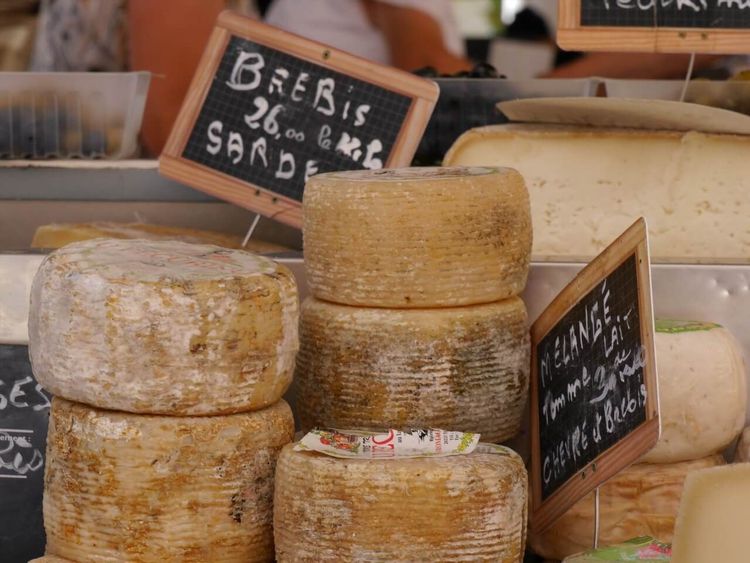
Corsican gastronomy is to Saint-Florent what the sun is to summer: unavoidable, generous and sometimes overwhelming. The restaurants along the harbour and the surrounding streets all offer much the same essentials — and yet the difference between a standard charcuterie plate and a plate of prisuttu (long-aged Corsican ham) from a nustrale pig raised in chestnut forests is as great as that between a table wine and a Patrimonio grand cru.
Start with the charcuterie. Lonzu (dried loin), coppa (cured neck), figatellu (smoked pork liver sausage) and prisuttu are the four pillars of the Corsican aperitif. All are worth buying from a producer rather than a supermarket. The difference in flavour — smokiness, salt, texture — is immediately noticeable.
Saint-Florent's restaurants also feature specialities made with fresh brocciu: brocciu fritters, brocciu and lemon tart, veal stuffed with brocciu and Corsican herbs. Corsican veal, raised under the mother in the scrubland, has a flavour that intensively farmed veal cannot approach. If you see 'veau corse élevé sous la mère' on the menu, that is a serious indicator of quality.
For fish, favour restaurants that clearly state their local sourcing — red mullet, common pandora, sea bream — over those whose generic menus carefully avoid this detail. Tielle de langouste is a traditional dish that is hard to find but exceptional when made with freshly caught Mediterranean spiny lobster.
For dessert, canistrelli (Corsican biscuits flavoured with anise or hazelnut), torta di castagna (chestnut flour tart) and fiadone (fresh brocciu and lemon cake) round off a Corsican meal as it should be.
Practical note: the best tables in Saint-Florent fill up quickly in season. Book the day before, or even two days ahead for harbour restaurants on a July or August weekend. Outside July and August, most restaurants close on Mondays and Tuesdays.
14. Exploring the Waterfalls of the Nebbio
The Nebbio is the immediate hinterland of Saint-Florent, and its gorges conceal several waterfalls reachable on foot from the inland villages. The best known is the Ficaghju waterfall, on the commune of Oletta, less than 20 minutes by car from Saint-Florent.
The walk to the Ficaghju takes about 45 minutes one way from the waymarked path. The route follows a stream through woodland of holm oaks and chestnut trees before opening onto a natural pool. The water stays cool throughout the season, making it a valuable alternative to the crowded beaches in the height of summer.
Other less signposted waterfalls hide in the Nebbio gorges. The locals know several that you will not find in standard tourist guides. If you have a chance to chat with a resident of Oletta or Poggio-d'Oletta, just ask — the chances of getting a concrete tip are far better than anything in an official brochure.
A word of caution in high season: the Nebbio streams can run dry in August after several rainless weeks. If you are coming specifically for the waterfalls, aim for May, June or September, when flow is guaranteed.
15. Discovering the Village of Patrimonio
Patrimonio deserves a mention separate from the wines that made its reputation (section 11). The village itself, perched on the first slopes of the Cap Corse, offers an unrivalled viewpoint over the gulf of Saint-Florent and the Agriates. The view in the late afternoon, when the sun starts to skim the scrubland hills, is one of the finest photographs you can bring back from the region.
The church of Saint-Martin de Patrimonio, whose ochre silhouette dominates the village, is a landmark visible from far across the wine plain. Its immediate surroundings — terraced vines and ancient fig trees — make it one of the most pleasant stops in the Nebbio, particularly at the golden hour.
From Patrimonio, the road continues towards the Col de Teghime and offers, within minutes by car, landscapes of Corsican interior completely unlike the coast. Olive groves give way to vines, then to a denser and taller scrubland. It is this diversity of landscapes compressed into a few kilometres that makes the Nebbio so captivating for travellers who take the time to venture into it.
16. Venturing Towards the Cap Corse from Saint-Florent
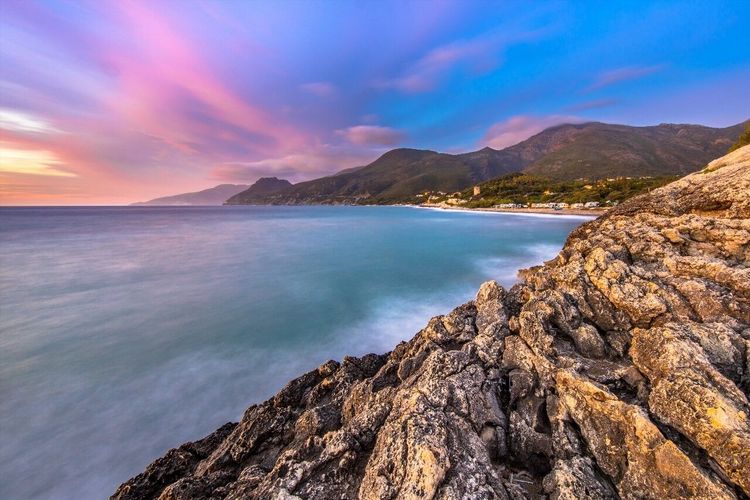
Saint-Florent is the natural starting point for exploring the Cap Corse (Cap Corse, 20200 Haute-Corse, rated 4.8/5 on Google from 5,200 reviews), that 40-kilometre strip of land thrusting northward like an index finger pointing towards Tuscany. The road that rounds the cape — the D80 — is one of the finest coastal roads in France, a succession of hairpin bends, abandoned shepherds' huts, Genoese towers perched on cliffs and tiny fishing harbours (marine) that seem frozen in the 1970s.
From Saint-Florent, you could set off in the morning and complete the full circuit of the cape in a day (around 130 km, not counting stops). But that would mean missing the point. Better to choose the west coast or the east coast according to your priorities: the west coast is wilder, taking in the villages of Centuri and Pino; the east coast is more tourist-oriented but offers better beaches and more hotels and restaurants.
The Genoese towers of the Cap Corse are a subject in their own right. Several dozen of these towers dot the coastline of the Isle of Beauty, with an exceptional concentration on the cape. The tower of Agnellu, the tower of Santa Maria and the tower of l'Osse are among the most photogenic. Some can be reached on foot from the road in ten to twenty minutes.
The marine de Centuri, at the north-western tip of the cape, is the place to dine if you do the full circuit. This tiny fishing harbour is reputed to be Corsica's leading lobster producer, a fact the local restaurants are never slow to mention. Lobster at Centuri is not a tourist luxury — it is the everyday reality of an active fishing port.
17. Exploring the Villages of the Nebbio
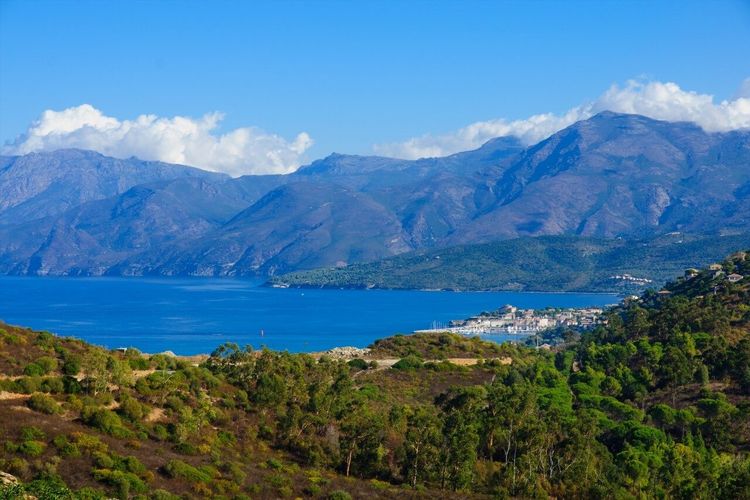
The Nebbio — 'the mist' in old Corsican, a reference to the clouds that cling to the hills in winter — is the natural region surrounding Saint-Florent. Its hilltop villages, corniche roads and landscapes of olive groves and vineyards form a Corsica radically different from the coastline. They are worth half a day of unhurried wandering, without GPS and without an agenda.
Oletta (Village d'Oletta, 20232 Oletta, rated 4.4/5 on Google from 380 reviews) (about ten kilometres south of Saint-Florent) is one of the first villages you encounter as you head inland. Its schist houses built into the hillside, its Baroque church and a handful of village cafés make it a pleasant stop. The artisan market in Oletta, held on certain summer Saturdays, is more low-key than the one in Saint-Florent but often more authentic.
Poggio-d'Oletta and Santo-Pietro-di-Tenda complete a Nebbio village circuit that takes around three hours by car, with stops. From Santo-Pietro, the aerial view over the Nebbio plain and the gulf of Saint-Florent gives a striking panoramic perspective on the entire region you have been exploring on foot and by boat. This is where the geography of the place truly falls into place.
These villages are virtually empty outside July and August. In June and September, you will encounter mainly locals. Bakeries and grocery shops close early — plan your stops accordingly.
18. Watching the Sunset from the Citadel
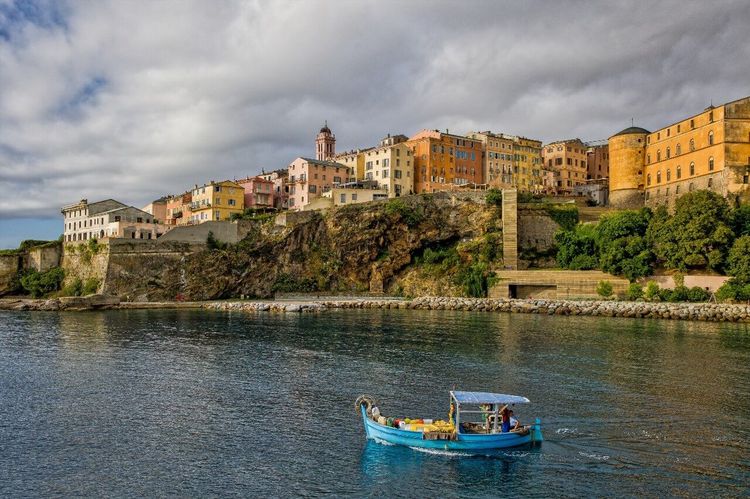
Sunset in Saint-Florent is a local institution. From 7pm in summer, the area around the citadel gradually fills with amateur photographers, couples and families waiting for the sun to disappear behind the Agriates hills.
The end-of-day light transforms the gulf. The water shifts from turquoise to bronze, the facades of the old town blush red, and the profile of the Cap Corse to the north is silhouetted in shades of orange and violet. Arrive thirty minutes before the official sunset to claim your spot — latecomers often end up photographing other people's heads. The spectacle lasts around twenty minutes. Afterwards, head back down for an aperitif on the harbour.
19. What to Do in Saint-Florent When It Rains?
Saint-Florent sees little rain in season — the gulf benefits from a dry microclimate favoured by the Nebbio hills that block clouds coming from the interior. But a libecciu squall or an overcast day can occasionally upset plans. Here are the alternatives.
Monuments and heritage: the Genoese citadel and the old town can be explored even in grey weather, and the covered alleyways of the historic centre retain their charm in the drizzle. It is also a good time to push open the doors of the local specialty food shops.
Gastronomy and cellars: a rainy day is the perfect excuse to linger over a tasting. Patrimonio winemakers are often more available out of season or in bad weather, and conversations around their cuvées tend to run deeper.
The villages of the Nebbio: Oletta, Murato and the church of San Michele are perfectly pleasant in the drizzle. The diffuse light of an overcast sky actually makes the schist facades more expressive than in direct sunlight.
The covered market of Bastia: 25 kilometres from Saint-Florent, Bastia has a historic indoor market and several Corsican specialty shops where you can spend a productive morning out of the rain. The Ryo audio guide to Bastia also covers the city's main landmarks in 1h30. A good combination for a grey day.
20. Taking a Day Trip to Bastia
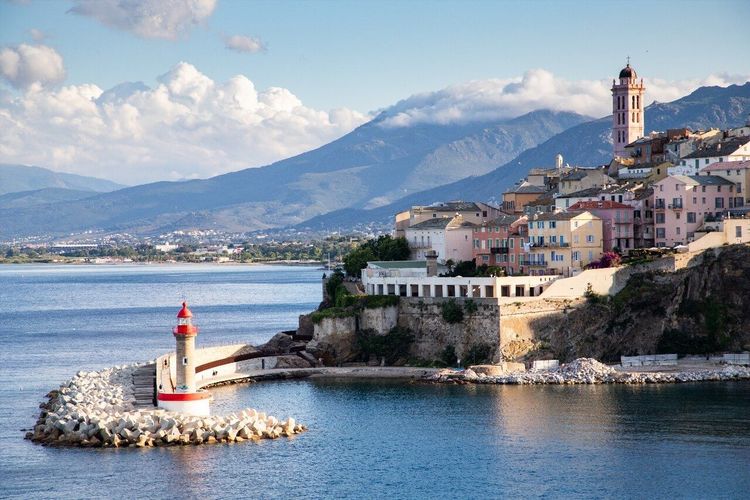
Bastia is the economic capital of Haute-Corse and the island's second city, with around 40,000 inhabitants in the commune. It lies 25 kilometres from Saint-Florent along the D81, around thirty minutes by road without traffic. It easily justifies a full day, especially if you have never visited before.
Bastia is not a tourist city in the conventional sense. Its historic centre — the Terra Vecchia (old town) and the Terra Nova (citadel and former Genoese governors' palace) — is easily explored on foot. The commercial and pleasure harbours give a sense of the economic vitality of a city that operates year-round, unlike Saint-Florent, which lives primarily on the summer season.
The covered market in Bastia, on the Place de l'Hôtel-de-Ville, is one of the liveliest markets in Corsica. On Saturday and Sunday mornings, producers from Haute-Corse sell charcuterie, cheeses, garden vegetables and fresh fish. This is where the city's restaurateurs do their shopping. Arrive early to see the market at its most vibrant.
The citadel of Bastia (Terra Nova) has dominated the city since the 15th century. Inside, the Musée de Bastia traces the history of Corsica from prehistory to the contemporary era, with a section dedicated to the Second World War and the liberation of Corsica in 1943 — Corsica was the first French department to be liberated. The old harbour at the foot of the citadel, with its tall, narrow coloured houses reflected in the basin, is the most photogenic image of the city.
To explore Bastia in the best conditions, the Ryo audio guide to Bastia offers 21 audio stops over 3.5 km, with commentary on architecture, Genoese history and local anecdotes that tourist signage never mentions. It is the most efficient way to understand the city in a morning before heading back to Saint-Florent for lunch.
FAQ
What is there to do in Saint-Florent, Corsica, beyond the beach?
Saint-Florent offers far more than its beaches. The old town and the Genoese citadel can be explored in two hours. The Patrimonio wine route, 7 km away, is one of the most scenic wine trails in Corsica. The villages of the Nebbio — Oletta, Murato, Poggio-d'Oletta — offer an authentic side of Corsica less than 20 minutes by road. And the customs officers' trail lets you hike the Agriates coastline without setting foot on a single road.
What are the market days in Saint-Florent, Corsica?
The Saint-Florent market is held several times a week in summer, mainly in the morning on the Place des Portes and the surrounding streets. Days vary by year and season — check with the local tourist office upon arrival. Outside the summer season (June to September), the market is more sporadic. The artisan market in Oletta, 8 km away, is a lesser-known but often more authentic alternative.
How do you get to the beaches of Saleccia and Lotu from Saint-Florent?
Two main options: the boat shuttle from the harbour (25 to 35 euros return, daily crossings in summer) or hiking the customs officers' trail (about 3 hours from Saint-Florent to Lotu, 3h30 to Saleccia). A dirt track from Casta does lead to Saleccia by 4x4, but it is not recommended without a suitable vehicle. The shuttle remains the most accessible option. In July and August, book your seats the day before.
What is the Agriates Desert?
The Agriates Desert is a vast natural territory of roughly 15,000 hectares between Saint-Florent and the Ostriconi, made up of dense scrubland of cistus, myrtle and lentisk. No road or village crosses it. It is one of the most preserved natural spaces in France, with a wide coastal strip protected by the Conservatoire du Littoral. It is home to the beaches of Saleccia and Lotu, accessible only on foot, by boat or by kayak.
What is the best time to visit Saint-Florent?
June and September are the ideal months. The heat is pleasant without being overwhelming (25–28°C), the sea is at a good temperature, the beaches are less crowded and accommodation prices are more affordable. July and August offer the most local life and events, but with packed beaches and queues for the shuttles. In May, the Agriates are in bloom and the customs officers' trail is almost deserted — perfect for hikers.
Can you hike the customs officers' trail with children?
The first two to three kilometres from Saint-Florent, leading to the first coves, are suitable for families with children aged 7–8 and older. The full trail to Saleccia (10 km) requires 3 to 4 hours of hiking on sometimes rugged terrain and is better suited to children aged 10 and over in good physical condition. For families with young children, the boat shuttle to Saleccia remains the most practical option.
In Summary: Why Saint-Florent Deserves Your Time
You now know what to do in Saint-Florent, Corsica — and you have understood: this village deserves far more than the quick detour most Corsican itineraries allow it. It is a place to live at local pace. Rise early for the market, take the 9am shuttle to Saleccia, return by boat at 5pm, dine on the harbour with a glass of Patrimonio and gaze at the stars from the heights of the citadel: that is the ideal day that captures the spirit of the place.
If you are extending your stay in Corsica towards Bastia or Ajaccio, the Ryo audio guide to Ajaccio takes you through the imperial city with 18 audio stops over 6 km, headphones on and at your own pace. Whether you come for a day or a week, Saint-Florent is not just a dot on a map: it is a different tempo, a way of slowing down that the Corsicans simply call pianu pianu — slowly, slowly. You will understand exactly what that means from your very first morning on the harbour.