© Shutterstock
 Votre guide Ryo
Parc Naturel Régional des Alpilles: The Complete Guide to Visiting in 2026
The Alpilles regional park is, first and foremost, a landscape that looks like a painting: white limestone ridges rising out of Provence like a backbone of stone, streaked with century-old olive trees and garrigue fragrant with thyme. This protected territory covers nearly 50,000 hectares between Arles and Avignon, and it harbours a concentration of perched villages, Roman archaeological sites and hiking trails that is almost unmatched in the region. In this guide you will find everything you need to organise your visit: walking and cycling routes, villages not to be missed, historical heritage, the best addresses and practical advice for every season.
What Is the Parc Naturel Régional des Alpilles?
Created in 2007, the park is one of the youngest regional nature parks in France. It brings together 16 communes, including Saint-Rémy-de-Provence, Les Baux-de-Provence (Rue du Château, 13520 Les Baux-de-Provence, rated 4.6/5 on Google from 16,823 reviews), Eygalières, Maussane-les-Alpilles and Fontvieille, covering a total of around 51,000 hectares of protected land.
The Alpilles massif is a limestone anticline — a fold in the terrain pushed upward by tectonic movements — that reaches its highest point at the Opies at 496 metres above sea level. These are not the Alps, but the flatness of the nearby Camargue makes these white ridges all the more striking. The pale rock, steep cliffs, pine forests and kermes oaks give the landscape a particular quality of light, very different from the neighbouring Luberon.
The territory has a dual purpose: to preserve Mediterranean ecosystems (notably populations of Egyptian vultures and Eurasian eagle-owls) and to support the local economy built on AOC Vallée des Baux olive oil, Baux-de-Provence wines and agritourism. Around 46,000 inhabitants live across the 16 communes, making it a "living" park very different from a traditional nature reserve.
The Most Beautiful Villages of the Alpilles
This is undoubtedly what visitors look for first: the villages. And the Alpilles has plenty of them. Check out our article on the 3 beautiful villages not to miss during your stay in the Alpilles for detailed highlights; here is a broader overview.
Les Baux-de-Provence is the most famous village in the massif, and arguably one of the most visited in France with over one and a half million visitors per year. The medieval village clings to a white limestone ridge at 245 metres above sea level, with a 360° view over the Alpilles and the Crau plain. The Carrières de Lumières, a former bauxite quarry converted into an immersive museum, is the highlight of the visit. Allow an hour and a half.
Saint-Rémy-de-Provence is the park's "capital". This is where the Maison du Parc is located, where Van Gogh spent a year voluntarily admitted to the Saint-Paul-de-Mausole asylum (1889–1890), and where the famous astrologer and apothecary Nostradamus was born in 1503. The Place de la République, with its century-old plane trees and café terraces, epitomises the very best of Provence.
Eygalières is more discreet. This perched village of 2,000 inhabitants is known for its medieval lanes, its Chapelle des Pénitents and its Sunday market. The atmosphere is more authentic than at Les Baux: fewer organised tour groups, more Parisian second homes kept quietly to themselves. If you are looking for the more unspoiled side of the territory, this is the place.
Maussane-les-Alpilles deserves a stop for its olive oil producers: the Maussane olive oil cooperative (Avenue de la Vallée des Baux, 13520 Maussane-les-Alpilles, rated 4.4/5 on Google from 274 reviews) produces one of the most renowned olive oils in Provence, under the AOC Vallée des Baux designation. The mill is open to the public from November to March during the pressing season.
Must-Do Hikes in the Alpilles Massif
The Alpilles massif has more than 300 kilometres of marked trails. Most are accessible from October through to the end of June; in July and August, trails in the massif are subject to restrictions or even total closures in the event of a fire alert (fire risk is very high in this area). Always check conditions before setting out.
The Alpilles ridge from the Col de la Vayède (D5, 13210 Saint-Rémy-de-Provence) is the park's signature route. Starting from the pass (accessible from Saint-Rémy-de-Provence), this ridge walk offers panoramic views over both sides of the massif: to the north, vineyards and villages; to the south, the Crau plain stretching as far as the Étang de Berre. Allow 12 km round trip, approximately 3h30 of walking with 350 metres of elevation gain. Intermediate level.
Les Caisses de Jean-Jean form one of the park's most spectacular geological sites. These isolated limestone pinnacles rising from the plain north of Aureille look like rock teeth appearing from nowhere. The discovery trail is 8 km long for a pleasant half-day outing with little elevation gain, perfect for families with children used to walking.
The Saint-Gabriel loop starting from Tarascon offers a 10 km circular route combining heritage and nature. The path passes in front of the Chapelle Saint-Gabriel, a gem of 12th-century Provençal Romanesque architecture often overlooked by mainstream tourist circuits, then climbs into the wooded hills before descending through orchards.
Le Défens d'Eyguières (Village d'Eyguières, 13430 Eyguières, rated 4.3/5 on Google from 190 reviews) is the ideal hike for lovers of solitude. This little-frequented forest plateau is reached by a 6 km round-trip path from the village of Eyguières. The Aleppo pine forest gives way to limestone grasslands where wild orchids bloom in spring. The trail ends at a viewpoint overlooking the Crau and, on a clear day, as far as Saintes-Maries-de-la-Mer.
Les Tours du Castillon in Paradou make for a lovely family walk of 5 km, with a climb up to the ruins of the medieval Castillon château. The castle, blown up in the 17th century, nonetheless offers a striking panorama over the olive groves and vineyards below.
The Badon Arboretum and the Calans Loops at Eygalières
The Badon Arboretum (Chemin de Badon, 13810 Eygalières, rated 4.8/5 on Google from 14 reviews) is one of the park's least known yet most beautiful sites. Located in the commune of Eygalières, this space planted with a variety of Mediterranean species — downy oaks, cedars, stone pines — was laid out in the 19th century by a botany-enthusiast landowner. Entry is free.
From the arboretum, two hiking loops head out towards the Petits and Gros Calans, accumulations of limestone rocks eroded by wind and rain over millions of years, forming natural sculptures reminiscent of calanques on a more intimate scale. The Petits Calans loop is 4 km (1h15); the Gros Calans loop is 6.5 km (2h). Both are easy, well-marked and suitable for children. The garrigue vegetation — rosemary, cistus, aromatic herbs — perfumes the trails from spring onwards.
Mountain Biking and Cycling in the Alpilles
The Alpilles massif is a prime playground for cyclists. The varied terrain, never excessive, suits both experienced mountain bikers and e-bike tourers alike.
The Alpilles-Roquemartine route is the most popular for mountain biking. This 32 km loop starting from Saint-Rémy-de-Provence (Tourist Office, Avenue Jean Moulin, 13210 Saint-Rémy-de-Provence, rated 4.4/5 on Google from 499 reviews) combines forest tracks, garrigue paths and a few technical sections along the limestone ridges. The cumulative elevation gain is around 650 metres. Intermediate to experienced level.
For less sporty cyclists, the Via Alpina and the minor roads between villages offer marked circuits accessible to all. The D78 between Fontvieille and Maussane-les-Alpilles, almost flat and lined with olive groves as far as the eye can see, is ideal early in the morning. Several bicycle and e-bike rental shops are based in Saint-Rémy-de-Provence and Les Baux-de-Provence.
Note: in July and August, forest tracks may be closed when the fire risk is high. The Bouches-du-Rhône prefecture website publishes the affected zones daily.
Cultural Heritage: from the Antiques to Les Baux
The Alpilles are not only a nature reserve — they are also a territory of remarkable historical density, continuously inhabited since Antiquity.
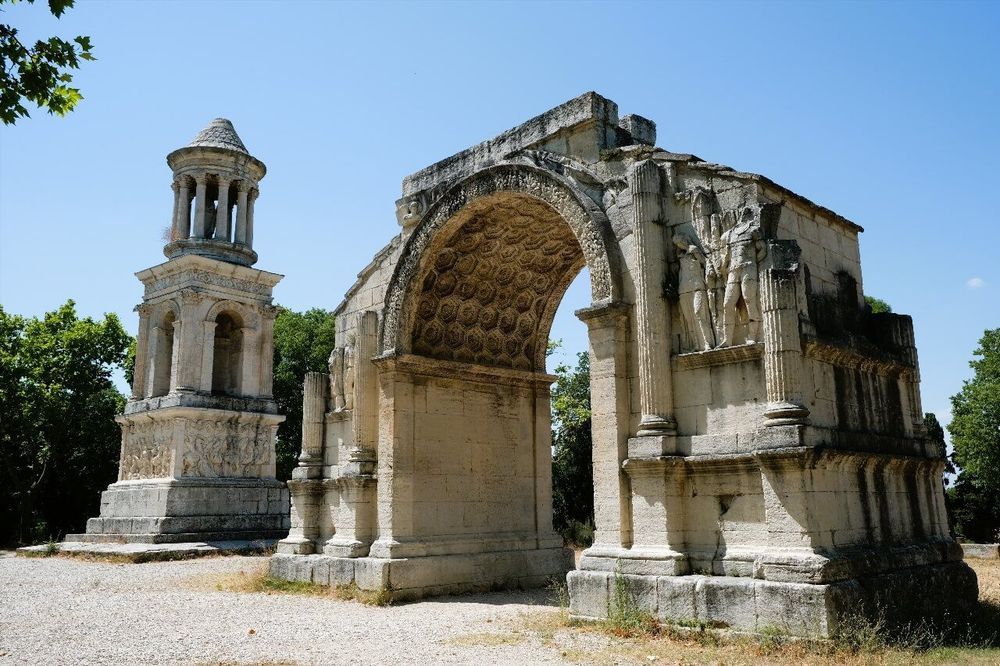
Glanum, to the south of Saint-Rémy-de-Provence, is the park's most important archaeological site. This former Greco-Roman city was occupied from the 2nd century BC to the 3rd century AD. Excavations have uncovered thermal baths, a forum, temples and a Hellenistic sanctuary. Entry is paid (around €8). A few metres from the site entrance stand the Antiques, a municipal arch and a mausoleum from the Augustan era, perfectly preserved and visible for free from the road.
The château des Baux has dominated the medieval village of the same name since the 11th century. The citadel, listed as a historic monument, is one of the largest medieval fortresses in Provence, covering 7 hectares of ruins. Medieval demonstrations (trebuchet, crossbow, craft shows) are offered in season. Admission: €12 adult.
The Saint-Paul-de-Mausole asylum in Saint-Rémy-de-Provence is inseparable from Van Gogh, who voluntarily stayed there from 8 May 1889 to 16 May 1890. During that year, he painted more than 150 canvases, including The Starry Night. His room and studio have been faithfully reconstructed. The visit, brief but moving, lasts around 45 minutes.
The Musée Urgonia in Orgon deserves special mention for geology enthusiasts. This museum, unique in Europe, is dedicated to Early Cretaceous fossils (the "Urgonians") extracted from the massif's limestone. The collections trace 130 million years of geological history of the Alpilles. Admission: €5.
The Chapelle Notre-Dame du Château (Saint-Étienne-du-Grès, 13103 Saint-Étienne-du-Grès, rated 4.8/5 on Google from 6 reviews) in Saint-Étienne-du-Grès is reached by a 2 km footpath from the village. This 12th-century Romanesque chapel, perched on a rocky spur, offers a panoramic view over the Rhône plain. The access path is easy and the view from the top more than rewards the effort.
Wildlife and Flora of the Alpilles Massif
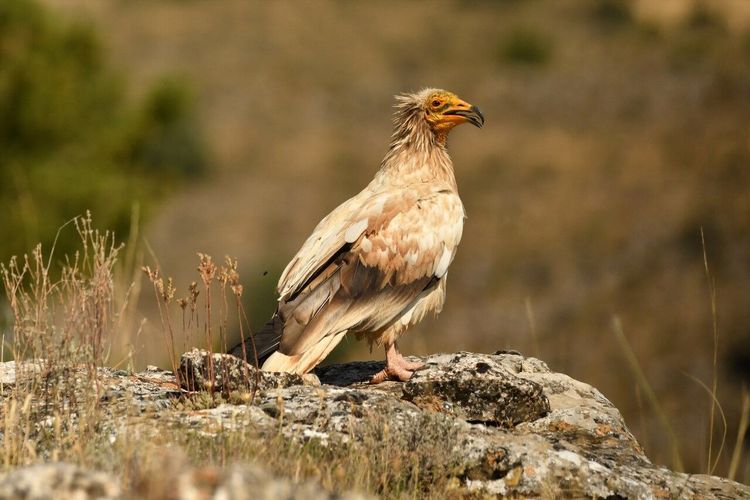
The park is one of the few territories in France where the Egyptian vulture still nests regularly. This migratory raptor, the smallest of Europe's four vulture species, returns each spring from sub-Saharan Africa to nest on the massif's limestone cliffs. Since 2000, the park has run a monitoring and protection programme for the species, whose French population does not exceed 80 breeding pairs.
On the ground, the Alpilles garrigue hosts characteristic Mediterranean flora: rosemary, thyme, Montpellier cistus, wild lavender and, more rarely, several species of wild orchid (ophrys, limodore) that flower from April to June. Almond trees in bloom in February and March are one of the massif's most photographed sights, well ahead of lavender.
The Eurasian eagle-owl is present on the massif's cliff faces: with a wingspan that can exceed 1.80 metres, it is the largest nocturnal bird of prey in Europe. Night outings organised by the park (booking required) sometimes allow visitors to hear it calling at dusk.
Where to Stay in the Alpilles
The territory offers a wide range of accommodation, from family campsites to luxury farmhouses converted into guesthouses.
In Saint-Rémy-de-Provence, the concentration of hotels and bed-and-breakfasts is the highest in the area. The Hôtel de l'Image, set in a renovated former cinema with a pool and a garden planted with olive trees, is a solid mid-range option. Expect to pay €120–200 per night in high season.
On the campsite front, Camping Pégomas in Eygalières and Camping Les Romarins in Orgon offer shaded pitches under the pines from €20–30 per night in summer. Demand is high in July and August: book several months in advance.
For full immersion in the local agricultural heritage, self-catering farmhouses (gîtes ruraux) around Fontvieille and Maussane-les-Alpilles are ideal for family or group stays. Prices range from €800 to €3,000 per week depending on capacity and standard.
What to Eat in the Alpilles
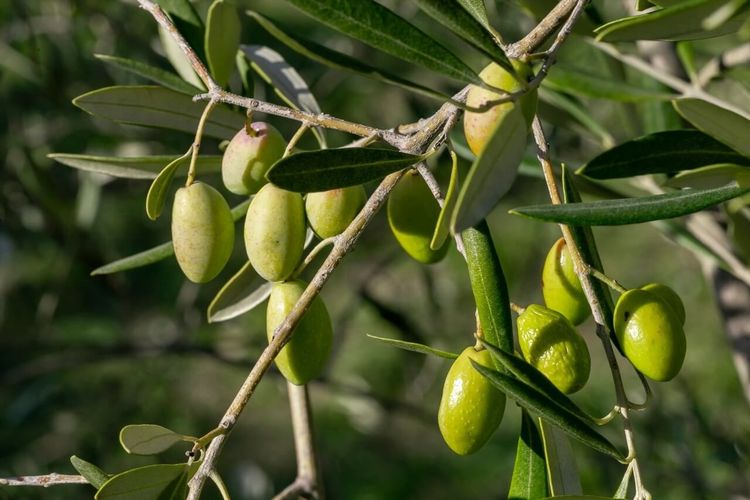
The gastronomy of the Alpilles revolves around three pillars: olive oil, wines and Provençal local produce.
The AOC Vallée des Baux olive oil is the pride of the territory. Produced exclusively in the massif's communes from local varieties (salonenque, aglandau, grossane), it received its AOC designation in 1997. You can buy it directly from the Maussane cooperative mill or from independent producers such as the Moulin du Mas des Barres in Maussane.
The Baux-de-Provence wines (AOP) are produced by a handful of estates scattered at the foot of the massif. The Domaine de Trévallon in Saint-Étienne-du-Grès is one of the most acclaimed, although it has been classified as a vin de pays (now IGP Alpilles) since 1993 for exceeding the permitted proportions of grape varieties — an anecdote that perfectly illustrates the character of the local winemakers.
For a quick lunch after a hike, the Saint-Rémy-de-Provence market (Wednesday morning) is a reliable choice: goat's cheese, tapenade, dried herbs and seasonal fruit.
How to Get to the Alpilles and Get Around
The park is poorly served by public transport — something worth knowing before you go. A car remains the most practical way to explore the territory.
By train, the nearest stations are Avignon TGV (30 km to the north) and Arles (20 km to the west). From both stations, regional buses serve Saint-Rémy-de-Provence, though frequencies are limited (2–3 services per day outside peak season).
By car, the A7 motorway (exit Cavaillon or Salon-de-Provence) brings you to the heart of the park in under 30 minutes from Avignon or Marseille. Parking is paid in Les Baux-de-Provence and Saint-Rémy in high season (July–August). Aim to arrive early in the morning.
By bike or e-bike, several cycling routes link the villages. A Ryo audio guide can enhance the discovery of sites along the way, without needing a human guide on the ground: the audio-guided tour tells you the history of each stop while you pedal.
Best Time to Visit the Park
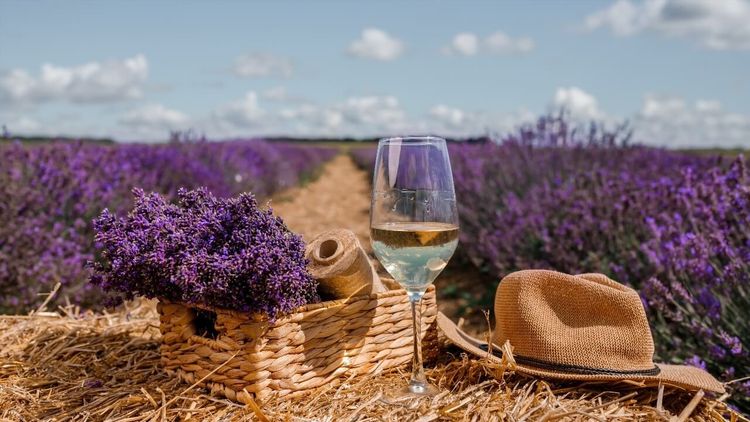
The question comes up often, and the answer is clear: spring (April–June) and autumn (September–October) are the two best periods to discover this corner of Provence.
In spring, the almond trees have blossomed, the garrigue is covered in orchids and temperatures remain mild (15–22°C). It is also the period when trails are clear and tourist numbers have not yet reached their peak. Autumn offers the same advantages: golden light, grape harvests and fewer crowds.
Summer (July–August) is best avoided if you are coming for hiking: the heatwaves (regularly 35–40°C), fire risk and crowds at Les Baux-de-Provence transform the experience. That said, village evenings and night markets have their own particular charm.
Winter (November–March) is quiet and low on tourist activity. Trails are walkable and the winter light on the white limestone ridges is exceptional. It is also olive oil season (pressing in November–December).
Maps and Navigation in the Alpilles Massif
The Maison du Parc in Saint-Rémy-de-Provence (boulevard Marceau) is the ideal starting point. It distributes free paper hiking maps and provides information on trail closures during fire alerts. Open Monday to Friday throughout the year, and at weekends during high season.
For digital mapping, the IGN Géoportail app covers the entire massif with hiking layers (GR, PR trails). The IGN 1:25,000 map (TOP25 3042OT Alpilles – Salon-de-Provence) remains essential for ridge hiking.
FAQ
What is there to do in the Parc Naturel Régional des Alpilles?
The park offers a wide variety of activities: hiking (over 300 km of trails), mountain biking, cycle touring, visits to historic sites (Glanum, the château des Baux, the Saint-Paul-de-Mausole asylum), discovery of local gastronomy (olive oil, AOP wines) and wildlife watching (Egyptian vulture, Eurasian eagle-owl). The Carrières de Lumières in Les Baux-de-Provence also offers highly popular immersive sound-and-light shows, great for families.
What are the most beautiful villages in the Alpilles?
The most visited and most beautiful villages in the massif are Les Baux-de-Provence (a perched medieval village listed among the Most Beautiful Villages of France), Saint-Rémy-de-Provence (the park's capital, rich in cultural life), Eygalières (an authentic and unspoiled village), Maussane-les-Alpilles (the olive oil capital) and Fontvieille (Daudet's village). Each one is worth at least half a day.
When should you visit the Parc Naturel Régional des Alpilles?
The best periods are spring (April–June) and autumn (September–October), when temperatures are mild, trails are open and tourist numbers are moderate. Summer is not recommended for hikers (extreme heat, fire risk, trail closures). Winter remains pleasant for short walks and discovering olive oil mills.
How do you get to the Alpilles without a car?
It's tricky but possible. Take the train to Avignon TGV or Arles, then a regional bus to Saint-Rémy-de-Provence (Zou! network lines in PACA). Once there, a bicycle or e-bike (several rental shops in Saint-Rémy) allows you to reach nearby villages and trails. Les Baux-de-Provence is accessible from Saint-Rémy in about an hour by bike along the D27.
Are the park's trails accessible year-round?
Not entirely. In summer (generally from mid-June to mid-September), many trails in the massif are subject to prefectural closure orders due to fire risk. These closures can be total on days of extreme risk. Check the Bouches-du-Rhône prefecture website or call the Maison du Parc before setting out.
Is there an entry fee to visit the park?
Access to the regional nature park itself is free: roads, paths and trails are freely accessible. However, certain sites within the park charge admission: the Glanum archaeological site (around €8), the château des Baux-de-Provence (€12 adult), the Carrières de Lumières (around €16 adult), the Saint-Paul-de-Mausole asylum (€4.50).
Exploring the Alpilles in a Different Way
Before you go, if you would like to plan your stay in Provence with an audio guide in your pocket, the Ryo audio guide covers several iconic sites in the region. You can also read our article on the beautiful villages not to miss in the Alpilles to refine your itinerary, or find out how to visit the Parc Naturel Régional du Luberon if you are extending your Provençal escape.
The Alpilles regional park rewards those who seek it out: sometimes you need to step away from the tourist trails, take time over a meal at the market, sit on a ridge rock and listen to the wind in the pines. A Ryo audio-guided tour can accompany you on certain stretches to learn more about the history and geology of the massif — a practical complement to the silence of the garrigue. These 50,000 hectares of protected Provence are waiting for one thing only: for you to explore them at your own pace.