© Shutterstock
 Votre guide Ryo
Festival of Lights Berlin 2026: Everything You Need to Know
For ten days in October, Berlin transforms into something quite hard to describe soberly: colorful beams envelop the Brandenburg Gate, the cathedral dome turns deep red, and the television tower disappears into a kaleidoscope of lights. The Festival of Lights Berlin is one of the rare urban events that makes the city unrecognizable — in the best possible way. Since 2005, this event has drawn over a million visitors each year to see the most iconic landmarks of the German capital dressed in XXL light projections. This practical guide covers everything you need for the 2026 edition: dates, must-see sites, the official map (Karte), organized tours, the mobile app, ticket prices, and photography tips. To explore Berlin beyond the festival, the Ryo audio guide for Berlin takes you on a 6.5 km journey through the places that have shaped the city's history.
A Light Festival on a Capital Scale
This event is not a simple sound-and-light show in a park. It is a total takeover of urban space: more than 70 sites (squares, bridges, facades, monuments) host video projections and light installations created by artists from around the world every year.
Founded in 2005 by Birgit Zander, the festival has established itself as one of the world's greatest light art events. Each edition adopts a unifying theme that guides the creations of invited artists: after "Colours of Joy" and "Colours of Compassion," the 2026 edition is held under the banner of "Colours of Love." The projections cover enormous surfaces: the Brandenburg Gate, 65 meters wide, becomes a monumental canvas on which meticulously synchronized animations unfold, changing from one night to the next.
The event is free for pedestrians. No ticketing, no access controls for moving around the city and admiring the illuminations on foot. The paid options are optional but offer a completely different relationship with the artworks: more comfortable, often better documented, sometimes unique.
Dates and Program for the 2026 Edition
The 2026 edition will be held from October 9 to 18, spanning ten consecutive evenings. The organizers confirm the full program throughout the summer; the theme chosen this year is "Colours of Love," for this 22nd edition.
Projections begin at dusk, around 7 pm in October in Berlin, and continue until 11 pm each evening. The opening weekend and closing weekend draw the largest crowds. If you prefer quieter conditions for photography, aim for a Tuesday or Wednesday mid-festival: the most visited sites finally become accessible without the crush.
Some sites see their animations evolve from one day to the next, giving you another reason to come back on multiple evenings. Check the final dates on the official website before booking your transport tickets.
Monuments Not to Miss During the Festival
This is the very essence of the event: every landmark in Berlin becomes a surface for artistic expression. Here are the sites that most deserve your attention.
The Brandenburg Gate remains the anchor point of every edition. The projection covers the entire 65-meter facade with animations that change every ten to fifteen minutes. It is also the most photographed site of the festival: plan to visit at least twice, at the start and end of the evening, to capture different compositions depending on the time.
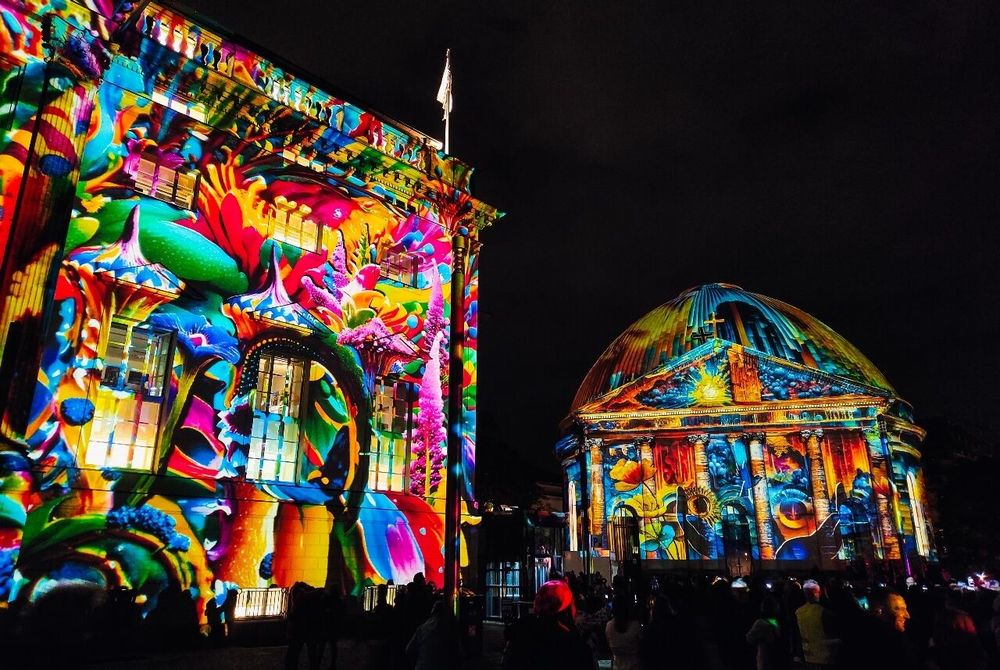
The Berliner Dom (Berlin Cathedral) transforms its classical dome into a giant luminous sphere. Its position facing the Museum Island creates a double mirror effect with the reflection on the Spree, particularly striking on windless nights. The animations play on the gilding and reliefs of the baroque architecture to reveal details normally invisible from the street.
The Fernsehturm (television tower) at Alexanderplatz is illuminated by upward beams that transform the iconic sphere into a colorful globe visible from several kilometers away. The square itself hosts ground-level installations as a complement, making it a site worth taking the time to explore from every angle.
The Gendarmenmarkt, with its two symmetrical cathedrals framing the Konzerthaus, offers one of the festival's most accomplished architectural compositions. The projections play on the symmetry of the facades with mirror effects and trompe-l'oeil perspectives that photographers come to seek from across Europe.
Potsdamer Platz takes a more contemporary approach: the glass buildings of the business district lend themselves to geometric projections and transparency effects impossible to achieve on stone. The Sony Center, with its circular glass roof, is particularly spectacular when viewed from inside the courtyard.
The Kaiser-Wilhelm-Gedächtniskirche (Memorial Church), whose gutted tower has been deliberately left in ruins since 1945, receives projections that engage with its history. The light effects on the shattered facade produce some of the most powerful images of each edition: a way of engaging with memory through light.
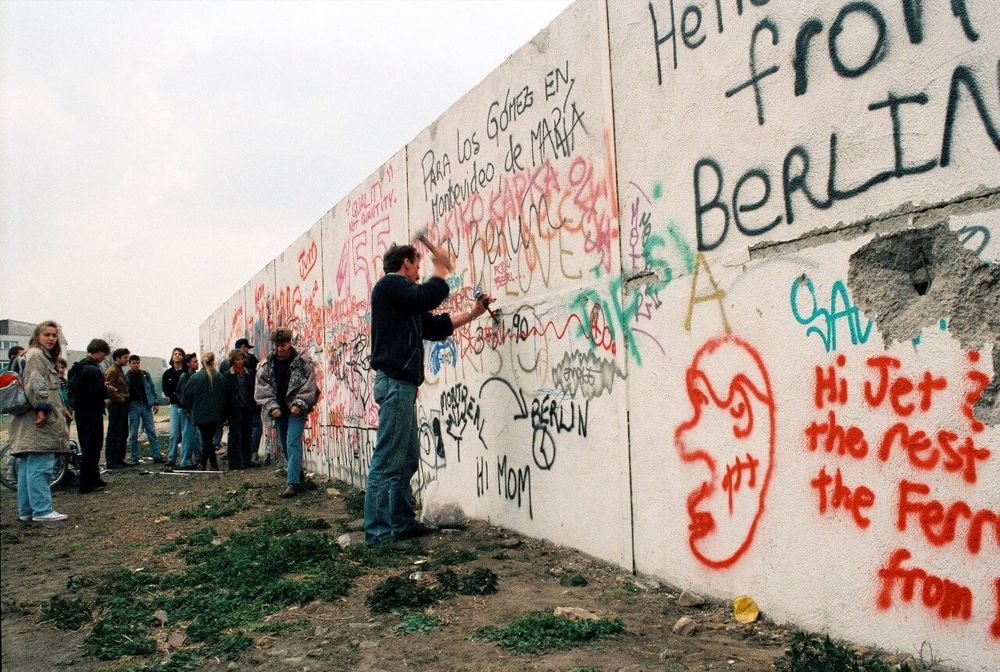
The East Side Gallery (Mühlenstraße 3-100, 10243 Berlin, rated 4.6/5 on Google with 64,925 reviews), a preserved section of the Berlin Wall stretching 1.3 km, hosts immersive projections overlaid on the existing murals. The combination of painted works from the 1990s and contemporary animations creates a visual palimpsest hard to find anywhere else in the city. To better understand the history of the Wall before seeing it illuminated, our Ryo article on the history of the Berlin Wall provides the essential context, and our On the other side of the wall audio tour picks up the same story from the banks of the Spree to Gendarmenmarkt.
The Festival Map (Karte): Navigating Illuminated Berlin
With more than 70 sites spread across the entire city, navigating without a map means flying blind. The organizers publish their official Karte every year: an interactive map available on the event website and in the mobile app.
The map distinguishes sites by category: monument projections, ground-level light installations, and indoor works. It indicates the specific hours for each location, as not all sites are illuminated during the same time slots.
For an efficient visit, group your evenings by neighborhood. Mitte concentrates around fifteen major sites within walking distance: Brandenburger Tor, Berliner Dom, Gendarmenmarkt, Friedrichstraße. Charlottenburg groups the Kaiser-Wilhelm-Gedächtniskirche and a few premium installations around Kurfürstendamm. Friedrichshain covers the East Side Gallery and the Simon-Dach-Straße neighborhood. Plan by thematic evening rather than trying to see everything in a single night.
Tours and Guided Visits: Organized Options
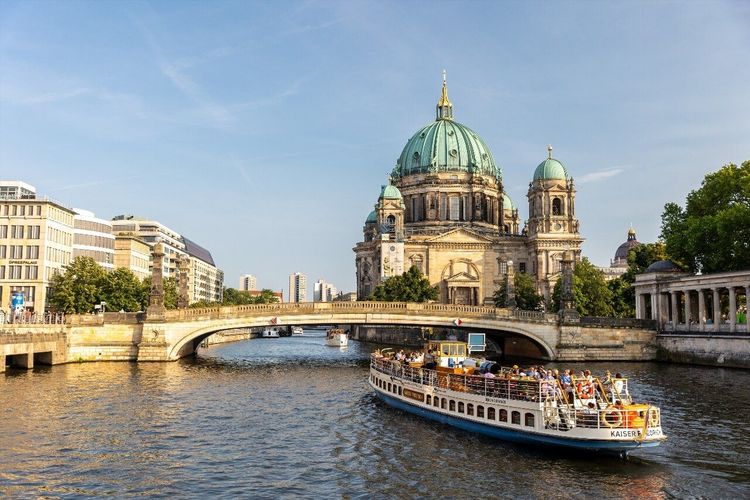
The Spree cruise is one of the best ways to see the riverside sites from the water: Berliner Dom, Museumsinsel, Nikolaiviertel. Boats typically depart from Treptower Park (Alt-Treptow 1, 12435 Berlin, rated 4.7/5 on Google with 25K reviews) or Nikolaiviertel and complete a loop of around 90 minutes. These cruises sell out from the first nights; book in advance.
Open-top double-decker buses follow a marked route past the main illuminated sites. The journey lasts about two hours with audio commentary. This is a comfortable option for visitors who do not want to walk several kilometers in the evening, or for families with children.
Local operators also offer guided walking tours in English and German, lasting 2.5 to 3 hours. These walking tours allow you to stop in front of each work, get explanations about the invited artists, and find the photographic angles that guides know by heart.
For cycling enthusiasts, several agencies offer nocturnal circuits during the festival. Allow around two hours to ride from Mitte to Friedrichshain at your own pace, with the freedom to stop that a bus does not allow.
Tickets and Prices: What Is Free, What Is Paid
Access to the outdoor illuminations is entirely free. You can walk around Berlin for ten days and admire every projection without spending a thing. This is one of the most remarkable features of the event.
The paid options apply to organized tours:
- Spree cruises: between €25 and €45 per person depending on the operator and duration
- Open-top bus tours: around €20 to €30 for the full circuit
- Guided walking tours: €15 to €25 depending on the agency
- Bike tours: €25 to €35 with bike provided
For special indoor events (concerts, evenings in venues normally closed to the public), tickets are sold separately through the official website. These events sell out quickly: check the ticketing several weeks before your visit.
The Festival Mobile App
The official app is available on iOS and Android under the name Festival of Lights Berlin. It includes the interactive map (Karte) of all sites, schedules updated in real time, descriptive sheets on each artwork and artist, and push notifications when special animations are added to the program.
The app works in offline mode once the map has been downloaded, which avoids using your mobile data in the streets of Berlin. A "Photo Guide" mode suggests the best shooting angles for each site.
The interface is available in German and English. If you would like a commented discovery of the history of the monuments you will pass through, the Ryo audio guide for Berlin effectively complements the app with its 27 audio tracks covering the capital's landmark sites.
The Best Spots to Photograph the Festival
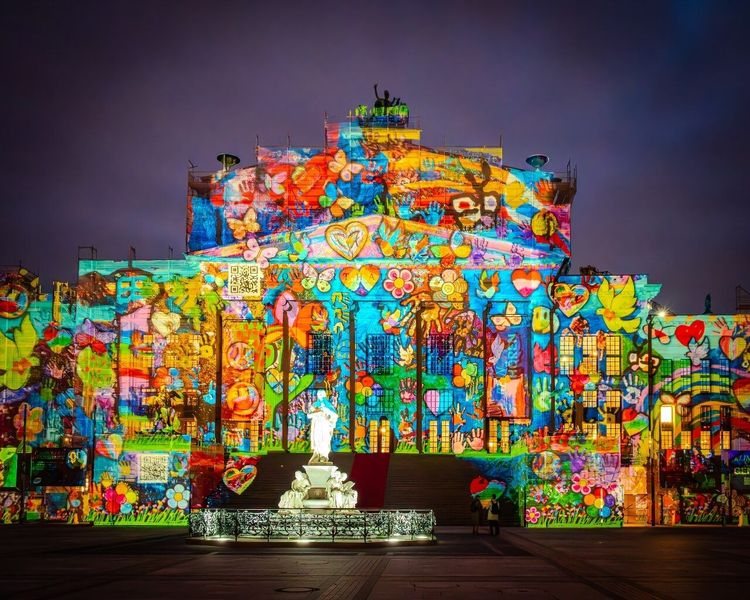
The festival is as much an event to experience as it is a terrain for photographic exploration. A few pointers to help you come back with images different from everyone else's.
For the Brandenburg Gate, the frontal angle from Pariser Platz is the most obvious but also the most crowded. Try the side view from Straße des 17. Juni: you will capture the columns in perspective with the projections spilling over onto the flanks. Around 10:30 pm, the crowd thins out noticeably.
The Berliner Dom is ideally photographed from the Schlossbrücke, with the dome in the background and its reflection in the water in the foreground. A tripod is highly recommended for long nocturnal exposures that capture the ripples of the reflection.
At Gendarmenmarkt, climb the steps of the Konzerthaus to frame both cathedrals simultaneously. The symmetry creates a natural framing that the projections animate in a very graphic way.
For the Fernsehturm, move away from Alexanderplatz. The streets around Rosa-Luxemburg-Platz offer open views where the tower stands out cleanly against the night sky, without being cut off by surrounding buildings.
At the East Side Gallery, arrive by 7 pm to find space before the surge of visitors. A long exposure taken while walking slowly along the wall produces a light trail effect over the murals.
The bridges over the Spree are all worth a detour. The Oberbaumbrücke (Oberbaumbrücke, 10243 Berlin, rated 4.7/5 on Google with 38K reviews), with its two neo-Gothic towers, is often illuminated itself and reflects in the water: a vantage point that combines architecture, light, and reflection in a single frame. By day, our Berlin audio walking tour lines up the same framings, from Pariser Platz to the Brandenburg Gate.
Program and Events: Beyond the Projections
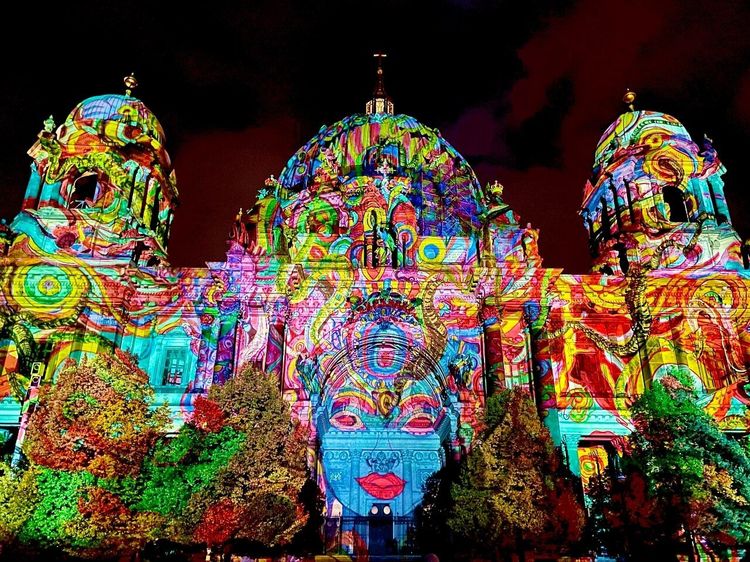
The event goes beyond the "facade projections" format with a parallel program well worth checking before you go.
Gallery exhibitions accompany the festival in several indoor venues across the city: photographs from previous editions and interactive light installations accessible during the day. These spaces are less crowded than the outdoor monuments and allow for a more relaxed immersion in the world of the event.
On certain nights, special events are scheduled at venues normally closed to the public: inner courtyards of palaces, private gardens, terraces with unseen panoramas over the illuminated city. These events appear in the app with their own ticketing and sell out fast.
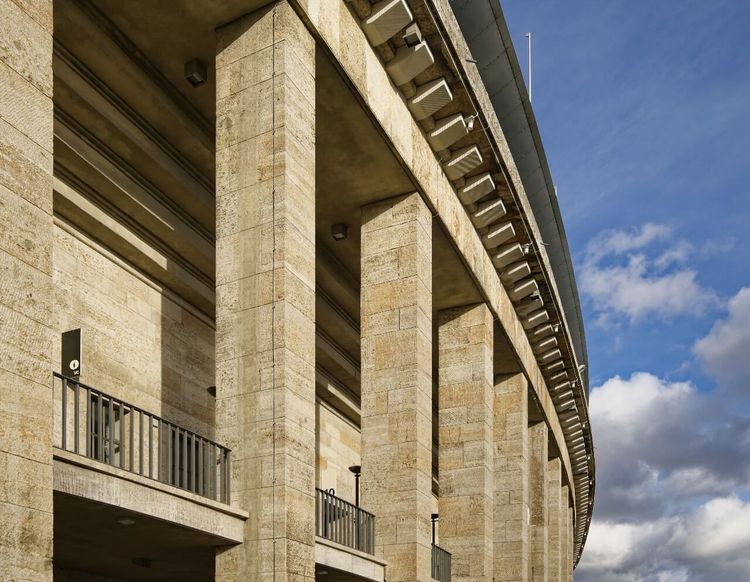
The musical program complements the projections with concerts synchronized with the illuminations and live performances in illuminated spaces. The Olympiastadion sometimes hosts special events during the festival period.
Practical Tips for Planning Your Visit
Clothing: October in Berlin means 8 to 12°C in the evening. Bring a warm coat and comfortable shoes — you will walk between 5 and 10 km per evening depending on your itinerary. Gloves are useful if you are holding a DSLR camera.
Transport: the BVG network (metro, bus, tram) efficiently connects all festival sites. The Berlin Welcome Card covers all public transport and represents a good investment over several days. Avoid driving: parking is scarce and some roads around the main sites are closed during the event.
Peak hours: Friday and Saturday evenings between 8 pm and 10 pm are the busiest times. The Brandenburg Gate can draw several thousand people simultaneously on those evenings. Weekday evenings offer a noticeably calmer experience, with more space for photography.
Bookings: if you plan a cruise or a guided tour, book two to three weeks in advance. Hotels around Mitte are snapped up during the festival; book several months ahead if you are coming specifically for the event.
To deepen your knowledge of Berlin, the Ryo article on Berlin's historic monuments and our Ryo guide to activities in Berlin give you a complete picture of the German capital outside the festival evenings.
FAQ
When does the Festival of Lights Berlin 2026 take place?
The festival will be held from October 9 to 18, 2026, spanning ten consecutive evenings. The illuminations take place every night from dusk (around 7 pm) until 11 pm. The theme of this 22nd edition is "Colours of Love." The dates and detailed program are confirmed on the official website throughout the summer.
Is the festival free?
Yes, access to the outdoor illuminations is entirely free. You can stroll freely around Berlin and admire the projections on all the monuments without spending a cent. The paid options (Spree cruises, open-top buses, walking tours, bike tours) are optional and have their own ticketing.
How do I use the event map (Karte)?
The official Karte is available on the festival website and in the mobile app (iOS and Android). It lists all illuminated sites with their schedules and categories. To use it effectively, group your visits by neighborhood: Mitte for historic monuments, Friedrichshain for the East Side Gallery, Charlottenburg for the Kaiser-Wilhelm-Gedächtniskirche. The map works offline once downloaded.
What tours are available during the festival?
Several types of tours are offered: Spree cruises (90 min, €25–45), open-top double-decker buses (2h, €20–30), guided walking tours in English and German (2h30–3h, €15–25), and nocturnal bike tours (2h, €25–35). Cruises are the most popular — book in advance, especially for weekend evenings.
Can you explore Berlin during the day while attending the festival?
The projections only take place in the evening, but Berlin offers hundreds of reasons to head out during the day. Our Berlin audio walking tour features 31 audio tracks to explore the city at your own pace over 6.5 km — a great way to discover the sites in daylight before seeing them illuminated that same evening.
One More Reason to Love the German Capital
Ten nights, more than 70 illuminated sites, no admission fee: the Festival of Lights Berlin is one of the most accessible and most spectacular urban events in Europe. Whether you come specifically for the occasion or happen to be passing through Berlin in October, the light projections turn every evening in the city into an unexpected visual experience.
To enrich your stay beyond the illuminations, the Ryo audio guide for Berlin accompanies you during the day through the 30 stops that define the history and character of the German capital. A different kind of light on Berlin — no need to wait for nightfall.
À lire également