© Shutterstock
 Votre guide Ryo
Discover Iceland by motorhome: tips, info and service areas.
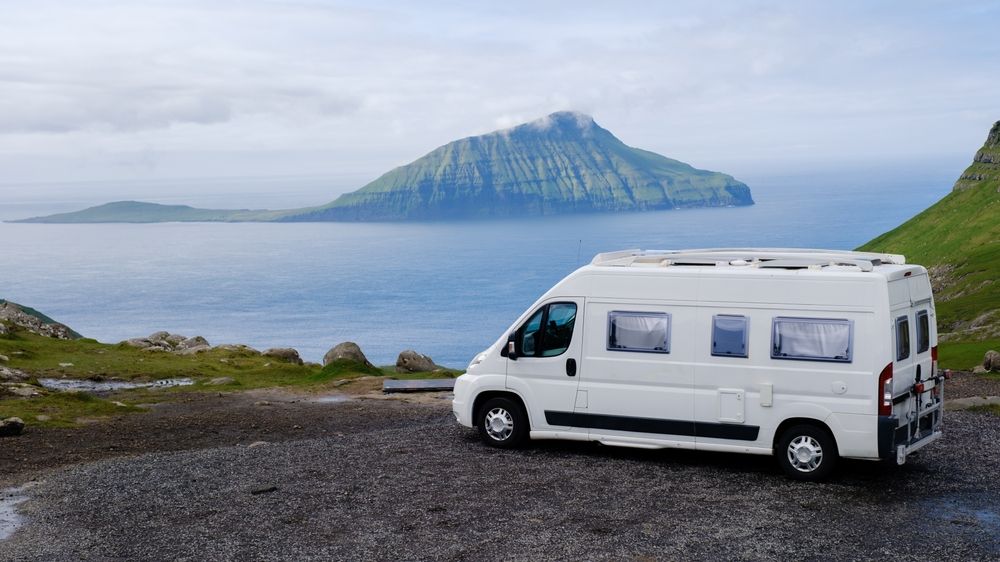
Setting out to conquer Iceland by motorhome represents one of the most fascinating experiences a traveler can have. This island of fire and ice, born from the encounter between intense volcanic activity and tectonic forces, offers breathtaking landscapes that are perfectly suited to adventure in a converted vehicle. With its famous Route 1 that makes a complete circle around the island over 1,332 kilometers, Iceland seems to have been designed for motorhome road trips. Traveling this way not only significantly reduces accommodation and dining costs in this notoriously expensive country, but also allows you to enjoy total freedom to explore the majestic fjords, spectacular waterfalls, black sand beaches, and natural hot springs at your own pace.
Why choose a motorhome to discover Iceland?
Iceland by motorhome stands out as the ideal travel mode for several essential reasons. First, the country's very geography favors this type of adventure: the Ring Road No. 1 forms a perfect loop around the island, greatly facilitating the planning of your itinerary. Then, with Iceland's cost of living being particularly high, especially for accommodation and dining, having a motorhome allows you to make substantial savings while maintaining great comfort. You can cook your own meals with local products bought in supermarkets, and sleep in your converted vehicle rather than in expensive hotels.
The motorhome also offers incomparable flexibility to adapt to Iceland's changing weather conditions. If a storm arises or conditions become difficult, you can easily modify your itinerary or stay longer in a place you particularly enjoy. This freedom of movement is precious in a country where the weather can change drastically in a few hours. Moreover, traveling by motorhome allows you to access more remote areas and admire the northern lights comfortably installed, without having to go out into the freezing cold of the Icelandic night.
Renting a motorhome in Iceland: everything you need to know
Renting a motorhome in Iceland requires careful planning, especially if you're traveling during the high summer season. It's strongly recommended to book your vehicle several months in advance, ideally as soon as your plane tickets are confirmed. Rates vary considerably depending on the period: expect between 200 and 350 euros per day in high season (June-August) for a standard converted van, and up to 600 euros for larger and better-equipped motorhomes. In low season (September to May), prices can drop by 30 to 50%.
Several rental agencies are located near Keflavík international airport, which greatly facilitates picking up your vehicle upon arrival. Carefully check what's included in your contract: unlimited mileage is generally offered, but insurance can vary. Gravel insurance (mandatory for taking certain F-roads) and sandstorm insurance are strongly recommended. Also ensure the vehicle has all necessary equipment: complete bedding, kitchen utensils, clean water and wastewater tanks, autonomous heating, and electrical outlets.
What type of motorhome to choose for Iceland?
The choice of vehicle depends mainly on your planned itinerary and the season of your trip. If you plan to stay on Route 1 and the main paved roads, a 2-wheel drive converted van is more than sufficient and will be more economical. These compact vehicles are also easier to maneuver and park in small campsites. For two people, a VW California type van or similar offers an excellent compromise between comfort and budget.
However, if you plan to explore the Highlands and take the F-roads, a 4×4 vehicle becomes essential. These unpaved roads, often crossed by fords, are forbidden to 2-wheel drive vehicles and insurance doesn't cover damage if you take them despite the prohibition. For families or groups of 3 to 4 people, a more spacious motorhome with integrated shower and toilet will provide appreciated comfort, especially during long driving days.
Iceland motorhome itineraries according to your stay duration
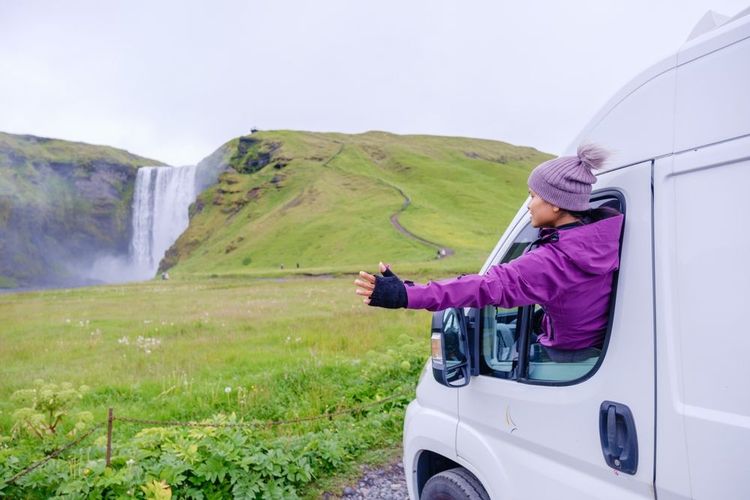
Iceland offers varied itinerary possibilities adapted to all stay durations. Whether you have one week, two weeks, or three full weeks, each formula allows you to discover the wonders of this Nordic land while enjoying the freedom offered by your motorhome.
1. One-week discovery circuit in Iceland by motorhome
For a one-week stay, focus on the south and west of the island, the most accessible regions rich in remarkable sites. Start with the Reykjanes peninsula as soon as you arrive at Keflavík, with its lunar landscapes and famous Blue Lagoon. Then devote a full day to the famous Golden Circle: Þingvellir National Park (site of the original Icelandic parliament and rift between two tectonic plates), the geysers of Geysir and Strokkur, and the majestic Gullfoss waterfall.
Continue towards the South Coast by visiting the iconic waterfalls of Seljalandsfoss (behind which you can walk) and Skógafoss, then the black sand beach of Reynisfjara with its impressive basalt columns. Don't miss the village of Vík and its marine rock formations. Then head up to the Snæfellsnes peninsula, nicknamed 'Iceland in miniature' for the diversity of its landscapes: Snæfellsjökull glacier, Lóndrangar cliffs, Djúpalónssandur beach, and the charming fishing village of Arnarstapi. This one-week loop will give you an excellent overview of Icelandic magic.
2. Complete tour of Iceland by motorhome in two weeks
With two weeks ahead of you, you can complete the full tour of the island via the Ring Road No. 1, 1,332 kilometers long. After covering the Golden Circle and South Coast as in the one-week itinerary, continue east by visiting Vatnajökull National Park, Europe's largest glacier. Explore the glacial lagoon of Jökulsárlón where impressive bluish icebergs float, and the neighboring Diamond Beach where stranded ice blocks sparkle on the black sand.
Then head up the east coast exploring the East Fjords, a less touristy region but of remarkable wild beauty. Continue north to Akureyri, the 'capital of the North', then visit Lake Mývatn and its extraordinary geothermal landscapes: Skútustaðir pseudo-craters, Hverir geothermal area with its fumaroles and boiling mud pools, and Grjótagjá cave. Don't miss Dettifoss falls, Europe's most powerful. Finish with the West Fjords if time permits, otherwise return to Reykjavík via the northwest. This two-week itinerary offers a complete and balanced discovery of the country.
3. In-depth exploration in three weeks
Three weeks represents the ideal duration to explore Iceland in depth without rushing. Take the two-week itinerary and add detours to less frequented but equally spectacular sites. Devote several days to the West Fjords (Westfjords), the country's most isolated and wild region, with its vertiginous Látrabjarg cliffs (Europe's largest nesting site), the magnificent red beach of Rauðasandur, and natural hot springs lost in the mountains.
With a 4×4 vehicle, venture into the Highlands to reach Askja volcano and its Víti crater filled with milky water, or explore the Landmannalaugar region with its multicolored rhyolitic mountains and natural hot springs. Also add an excursion to the Westman Islands by taking the ferry from Landeyjahöfn: there you'll discover Heimaey island, its Eldfell volcano that buried part of the village in 1973, and impressive colonies of puffins. A three-week duration really allows you to savor each region at your own pace and explore Iceland's hidden treasures.
Driving and parking rules in Iceland with a motorhome
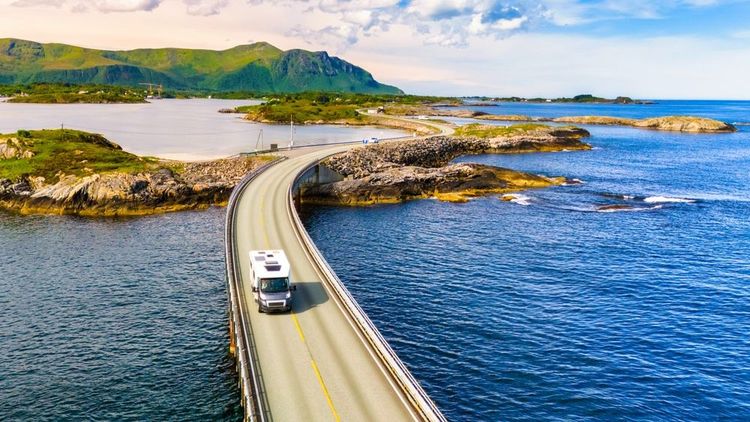
Driving in Iceland requires knowing some local particularities and strictly respecting certain safety rules. The first fundamental rule: your dipped headlights must be on permanently, 24 hours a day, even in broad daylight and good weather. This obligation aims to increase vehicle visibility in a country where weather conditions can change brutally.
Speed limits are clearly defined: 90 km/h on paved roads, 80 km/h on gravel roads, and 50 km/h (sometimes 30 km/h) in urban areas. Strictly respect these limits, as radars are frequent and fines very high. On gravel roads, slow down particularly when approaching another vehicle to avoid stone projections that can damage the windshield or bodywork. Also be vigilant with sheep that can suddenly appear on the road: they have priority and you are responsible in case of an accident with an animal.
Particularities of Icelandic roundabouts
Iceland has an unusual priority rule in roundabouts that often surprises foreign drivers: vehicles exiting the roundabout have priority over those wanting to enter, even if they're in the inner lane. This rule contrary to what's practiced in most European countries requires particular attention. Always slow down when approaching a roundabout and check carefully that the lane is clear before entering.
Wild camping and parking: what the law says
Crucial point to understand absolutely: wild camping has been strictly forbidden in Iceland since 2015 for motorhomes and converted vehicles. This ban aims to protect Iceland's fragile environment whose vegetation takes decades to regenerate. Offenders face heavy fines that can reach several hundred euros. You must obligatorily spend the night in an official equipped campsite or authorized motorhome parking area.
Free parking is however authorized in public parking lots and rest areas along roads, but only for short stops (breaks, picnics, visits). You cannot under any circumstances sleep there for the night, deploy your awnings, or use your leveling blocks. Parking lots near tourist sites are generally paid and often have public toilets. Always anticipate your overnight location by booking your camping spot in advance during high season, as campsites are often full during summer.
Best motorhome service areas and campsites in Iceland
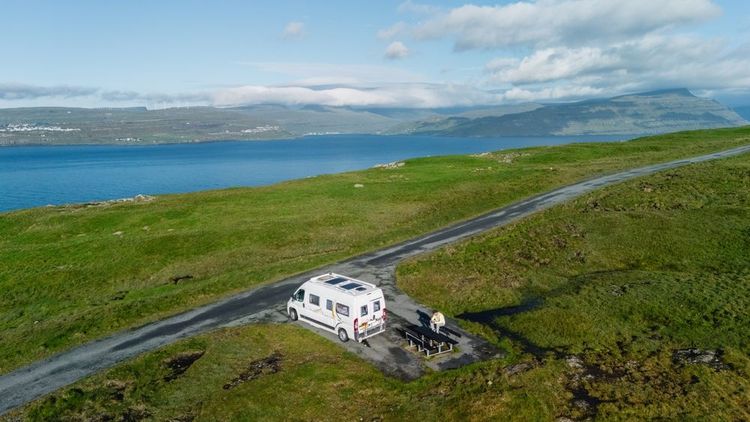
Iceland has a well-developed network of campsites spread across the entire territory, with very variable levels of comfort and services. The most basic campsites simply offer a pitch, sanitary facilities and sometimes paid showers, while the best equipped offer shared kitchens, relaxation rooms with Wi-Fi, washing machines, and even jacuzzis or geothermal pools. Most campsites are open only from May/June to August/September, only a few remain open year-round.
To facilitate your search for pitches, download the Park4Night app or consult Campercontact.com which list parking areas and campsites with their equipment, rates and user reviews. These tools are precious for planning your daily stops. Campsite rates generally vary between 15 and 25 euros per person per night, sometimes with additional fees for electricity, showers or Wi-Fi.
The Camping Card: a good deal for long stays
If you plan to stay in Iceland for two weeks or more, buying a Camping Card can be very profitable. This prepaid card, available online or in participating campsites, costs about 180 euros and gives access to 28 nights in more than 40 affiliated campsites spread throughout the country. The calculation is simple: if you pay an average of 20 euros per person per night, the card becomes profitable from 9 nights for two people. It includes access to sanitary facilities, showers and basic services, only electricity and Wi-Fi may require a supplement depending on the campsites.
Recommended campsites on Route 1
Among the best located and most appreciated campsites by travelers, Skaftafell Camping in the southeast offers direct access to Vatnajökull National Park with its glaciers and spectacular hikes. Höfn Camping is an excellent stop before or after visiting Jökulsárlón lagoon. Further north, Mývatn Camping allows exploration of the geothermal region and the lake with pseudo-craters. In Akureyri, several well-equipped campsites serve as a base for discovering the capital of the North. In the West Fjords, Ísafjörður Camping offers a comfortable stopover in this isolated region. Before hitting the road again, Reykjavik is best explored on foot, over 3.4 kilometres of audio-guided walking from Harpa to Thufa hill.
Budget and cost of a trip to Iceland by motorhome
Establishing a realistic budget for your Icelandic adventure by motorhome requires taking into account several important expense items. The motorhome itself represents the largest share: expect between 1,400 and 2,800 euros for a week's rental in high season depending on the type of vehicle, plus additional insurance (about 200-400 euros) and mileage excess if it's not unlimited.
Fuel constitutes the second major item: gasoline costs about 2.20 euros per liter in Iceland. To cover the complete Route 1 (1,332 km), expect at least 250 to 350 euros in fuel depending on vehicle type and your driving style. Campsites represent about 30 to 50 euros per night for two people (15-25 euros per person). For food, budget 50 to 80 euros per day for two people if you cook yourself, versus 100 to 150 euros if you eat regularly in restaurants.
Tolls and additional fees
Good news: all Icelandic roads are free, including Ring Road No. 1. Only one notable exception: the Vaðlaheiði tunnel near Akureyri, which costs 1,500 crowns (about 10 euros) for vehicles under 3.5 tonnes, and 2,500 crowns above. Important: this toll must be paid online at tunnel.is either before passing or within 3 hours after passing. Forgetting incurs an automatic 1,000 crown surcharge and the bill is sent to the rental company which may add handling fees.
Also budget for gas stations which operate self-service with credit card payment. Indicate the amount you want to pay on the terminal: if you don't consume everything, the surplus will be refunded, but this can impact your bank exchange fees. As an indication, 7,000 crowns (about 45 euros) allows filling 30 liters, and 9,000 crowns (60 euros) for 40 liters. For a two-week motorhome stay, budget a total between 3,000 and 5,000 euros for two people, depending on your comfort level and activities.
What is the best season to travel to Iceland by motorhome?
The summer period, from June to September, unquestionably represents the ideal season to discover Iceland by motorhome. During these months, all roads are open and passable, including those of the Highlands which generally open at the end of June. Days are extremely long or even infinite: in June-July, the sun practically never sets thanks to the midnight sun phenomenon, offering you up to 20-24 hours of daily light. This quasi-permanent luminosity considerably facilitates driving, camping installations and allows multiplying activities without time constraints.
Summer temperatures remain cool but pleasant, generally oscillating between 10 and 15°C, with peaks that can reach 20°C on beautiful days. The motorhome is easier to heat than in winter, and you'll appreciate being able to leave windows open without freezing. It's also the period when Icelandic fauna is most active: you can observe puffins (from mid-May to mid-August), whales in the northern fjords, and seals on the beaches. All campsites are open and tourist services operate at full capacity.
September: the best compromise?
September deserves particular attention as it combines several advantages: the high tourist season is over, resulting in a significant drop in motorhome rental prices (up to 30-40% cheaper than in July-August), and campsites are much less crowded, guaranteeing you space without reservation. Weather conditions remain relatively mild even if temperatures drop slightly. Above all, it's the beginning of northern lights season: from mid-September, nights become dark enough again to observe this magical spectacle, which isn't possible in June-July because of the midnight sun.
Why avoid winter by motorhome?
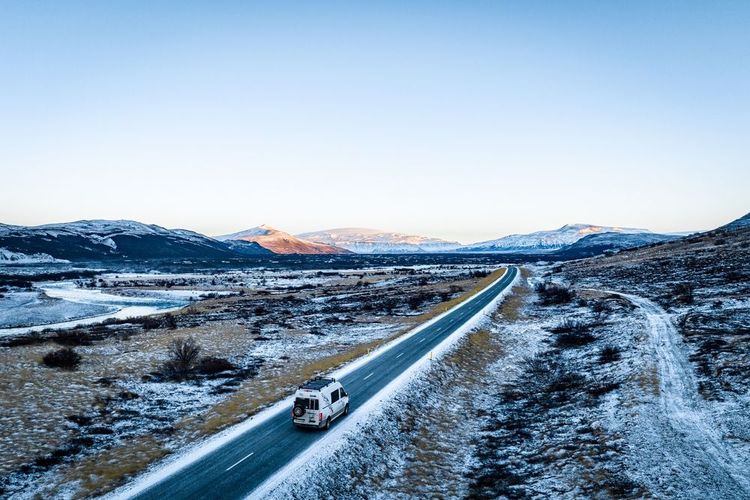
Traveling by motorhome in winter (November to March) presents numerous challenges that make it hardly recommendable, except for very experienced travelers. Extreme weather conditions cause numerous road closures, sometimes even including sections of Route 1. Snowstorms and violent winds can occur suddenly, making driving dangerous or even impossible. Many campsites close completely, drastically limiting your accommodation options.
The major challenge remains motorhome heating: maintaining comfortable temperature in the vehicle when it's -10°C or less outside consumes enormous amounts of fuel or electricity, and some autonomous heating systems may struggle to compensate for thermal losses. Water tanks can freeze, making sanitary installations unusable. However, if you're determined to brave the Icelandic winter, you'll be rewarded with fairy-tale landscapes covered in snow, few tourists, and the best chances to observe northern lights during long polar nights. In this case, opt imperatively for a 4×4 motorhome perfectly equipped for winter and have great experience driving on snow and ice.
Practical tips for succeeding your motorhome road trip in Iceland
Beyond logistical aspects, some practical tips will help you fully enjoy your Icelandic adventure. First, download the SafeTravel app from the Icelandic Civil Protection Agency: it provides real-time weather alerts, road condition warnings, and allows creating a travel plan that rescue services can consult in emergencies. Also consult road.is daily to check road conditions and any closures.
Never underestimate distances and travel time: even though Iceland appears small on a map, winding roads, terrain and frequent stops to admire landscapes mean you'll average 60-70 km/h. Always allow plenty of time in your daily schedule. Always fill up when your tank drops to half level, as gas stations can be spaced 100 km or more apart in some regions. Always have food and water reserves in the motorhome.
Respecting Iceland's fragile environment
Iceland has an exceptionally fragile ecosystem: vegetation, mainly consisting of moss and lichens, takes several decades to develop and can be destroyed in seconds by a simple tire or shoe passage. Stay imperatively on marked trails during your hikes, even if it seems like a detour. Never create new paths by walking off-trail. This fundamental 'Leave No Trace' rule is crucial to preserve this unique natural heritage.
Always take your waste with you and dispose of it in appropriate bins at campsites or gas stations. Selective sorting is practiced in Iceland. Never empty your wastewater anywhere other than designated areas at campsites. Don't pick any flowers or plants, don't take any rocks or natural souvenirs. Also respect fauna: always maintain a safe distance from wild animals, particularly nesting birds on cliffs. These simple but essential gestures will allow future generations to also enjoy Iceland's preserved beauty.
Managing Icelandic midges
While Iceland is practically mosquito-free (good news!), it harbors swarms of small black midges that can be particularly annoying, especially in July-August near lakes and wetlands. Unlike mosquitoes, they don't bite but have the annoying habit of wanting to get into your eyes, nose, ears and mouth. The simple and effective solution: get an anti-insect net that you attach to your cap or hat. These nets are sold in all Icelandic gas stations and supermarkets for just a few euros, and will save you much trouble during your outdoor walks.
In conclusion, setting out to discover Iceland by motorhome represents an extraordinary adventure accessible to all, provided you prepare well. This travel formula combines freedom, flexibility and savings, while allowing you to explore at your own pace the breathtaking landscapes of this unique island. Whether you opt for a week of discovery concentrated on the south and west, two weeks to make the complete tour via Route 1, or three weeks for in-depth exploration including the West Fjords and Highlands, Iceland reserves unforgettable memories for you. Strictly respect camping and traffic rules, protect the fragile environment, and let yourself be enchanted by the magic of volcanoes, glaciers, waterfalls and hot springs of this land of fire and ice. Have a great trip in Iceland!



FAQ: your questions about Iceland by motorhome
Can I sleep anywhere with my motorhome in Iceland?
No, wild camping has been strictly forbidden in Iceland since 2015 for motorhomes and converted vehicles. You must obligatorily spend the night in an official campsite or authorized area. Non-compliance with this rule exposes you to heavy fines.
Do you need a 4×4 vehicle to tour Iceland?
No, if you stay on Route 1 and main paved roads, a 2-wheel drive motorhome is more than sufficient. A 4×4 becomes essential only if you want to take the F-roads of the Highlands or certain unpaved secondary roads.
How much does renting a motorhome in Iceland cost?
Rates vary between 200 and 600 euros per day depending on season, vehicle type and insurance. In high season (June-August), expect 200-350 euros for a standard converted van. In low season, prices drop by 30 to 50%. Book several months in advance to get the best rates.
What is the best time to visit Iceland by motorhome?
The summer period from June to September is ideal: all roads are open, days are long, temperatures pleasant (10-15°C), and all campsites operate. September offers the best compromise with lower prices, fewer tourists, and the first northern lights.
How long does it take to tour Iceland?
Minimum one week for an overview of the south and west, two weeks to make the complete tour via Route 1 taking time to visit major sites, and three weeks for in-depth exploration including the West Fjords and Highlands.
Are Icelandic roads toll roads?
No, all roads are free in Iceland, including Ring Road No. 1. Only the Vaðlaheiði tunnel near Akureyri is toll (about 10 euros). The toll must be paid online at tunnel.is before or within 3 hours after passing.
À lire également