© Shutterstock
 Votre guide Ryo
Visit Morocco: Top 10 Must-See Attractions
Morocco fascinates with its cultural diversity, bewitching landscapes and millennial heritage. From labyrinthine medinas to the golden dunes of the Sahara, through the snow-capped peaks of the Atlas, visiting Morocco is offering yourself a journey at the crossroads of East and West. Between imperial cities steeped in history, authentic Berber villages and wild Atlantic coasts, the Sherifian kingdom reveals a thousand and one facets that seduce travelers from around the world. Here is a complete guide to the 10 must-dos and must-sees to make your Moroccan stay a success and discover the very essence of this fascinating country.
1. Marrakech, the pearl of southern Morocco
Impossible to visit Morocco without stopping in Marrakech, the famous "red city" that alone embodies all the magic of the kingdom. Founded in the 11th century by the Almoravids, this imperial city displays exceptional architectural heritage where sumptuous palaces, lush gardens and historic monuments blend together.
In the heart of the medina, Jemaa el-Fna square (Jamaa el Fna, avenue Mohammed V, 40000 Marrakech, rated 4.2/5 on Google for 63,290 reviews) comes alive day and night in a bewitching atmosphere. Snake charmers, storytellers, gnaoua musicians and fresh orange juice stalls compose a living tableau inscribed on UNESCO's intangible heritage list. The winding alleys of the surrounding souks are full of artisanal treasures: colorful babouches, chiseled lanterns, Berber carpets and perfumed spices.
Download the audio-guided circuit to discover Marrakech on foot and independently
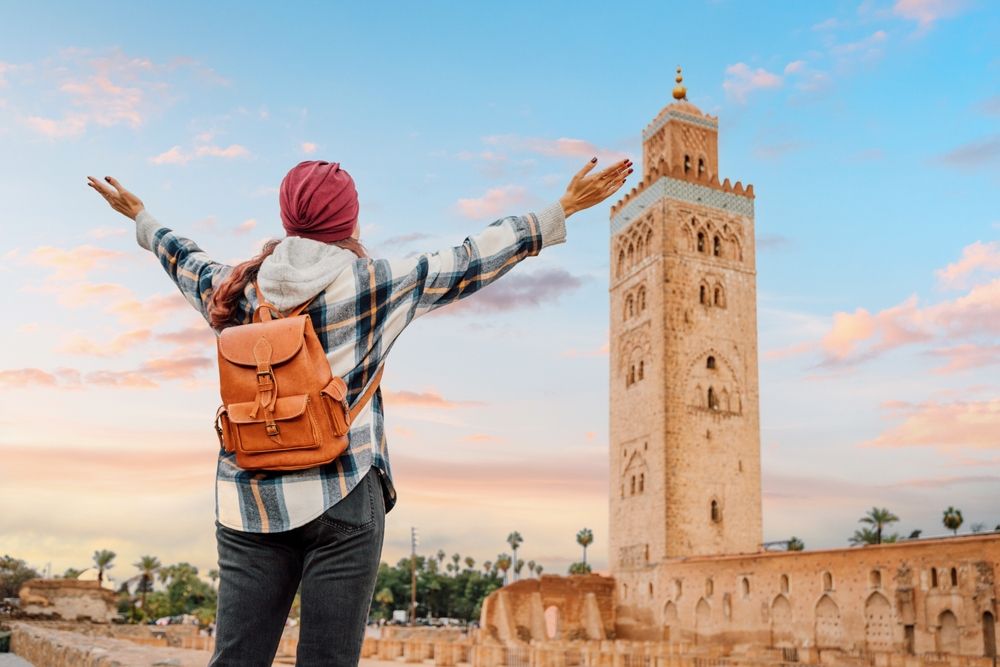
To explore Marrakech optimally, let yourself be guided by the Ryo visit itinerary which will take you through 21 major places of interest in the imperial city. This approximately 7-kilometer audio-guided route takes you through the hidden treasures of the medina, from the famous Jardin Majorelle (Rue Yves Saint Laurent, Marrakech, rated 4.3/5 on Google for 96,467 reviews) to sumptuous palaces like the Palais de la Bahia (5 Rue Riad Zitoun el Jdid, Marrakech, rated 4.2/5 on Google for 28,124 reviews), via the majestic Koutoubia mosque whose 77-meter minaret dominates the city.
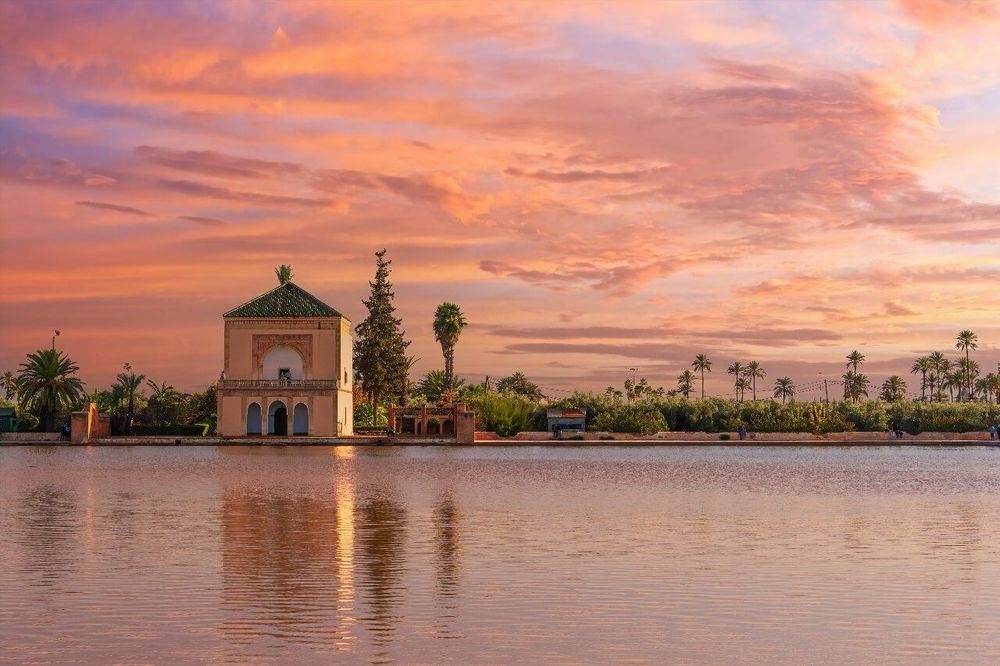
Don't miss the sumptuous Saadian Tombs (Rue de la Kasbah, Marrakech, rated 4.3/5 on Google for 9,876 reviews), jewels of Hispano-Moorish architecture discovered only in 1917. For a refreshing break, the Ménara gardens offer a haven of peace with their monumental basin and century-old olive groves. Visit Marrakech with the Ryo audioguide will allow you to miss nothing essential while enjoying fascinating anecdotes about each monument.
2. Fès, the spiritual and cultural capital
Visiting Morocco without discovering Fès would be missing the authentic soul of the country. The oldest of the imperial cities, Fès houses the best-preserved medieval medina in the Arab world, listed as a UNESCO World Heritage site. Founded at the end of the 8th century, Fès el-Bali constitutes a fascinating labyrinth of 9,000 alleys where time seems to have stood still.
The spiritual heart of the city beats to the rhythm of the Al Quaraouiyine mosque-university (Fès el Bali, Fès, rated 4.5/5 on Google for 1,876 reviews), founded in 859 and considered the oldest university in the world still in activity. Not far away, the Bou Inania medersa (Rue Talaa Sghira, Fès el Bali, rated 4.4/5 on Google for 4,523 reviews) dazzles with its sumptuous architecture, with its finely chiseled stucco, colorful zelliges and cedar woodwork.
Impossible to visit Fès without exploring the famous Chouara tanneries (Hay Lablida, Fès el Bali, rated 4.1/5 on Google for 8,234 reviews), where artisans have been perpetuating ancestral leather treatment techniques for centuries. The spectacle of multicolored basins and the animation of workers offers a striking tableau, even if the smell can surprise! The specialized souks of the medina are full of artisanal wonders: embossed leather, blue ceramics from Fès, embroidery and Berber jewelry testify to the legendary know-how of Fassi artisans.
3. Chefchaouen, the blue pearl of the Rif mountains
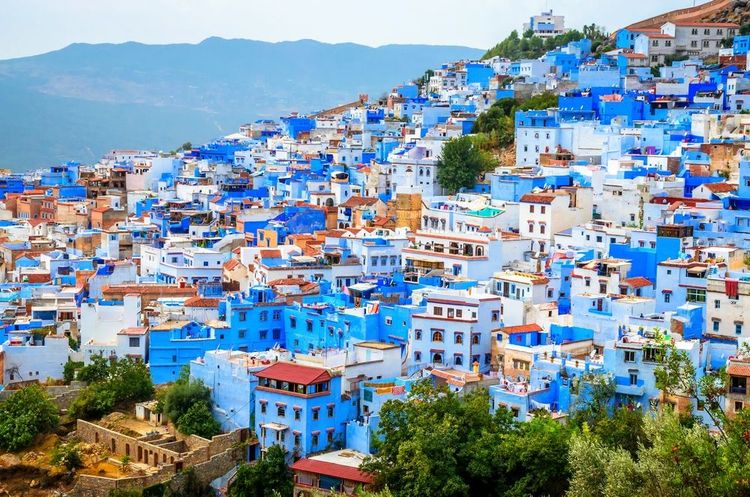
Nestled in the Rif mountains in northern Morocco, Chefchaouen immediately seduces with its unique architecture entirely painted in different shades of blue. This small city founded in 1471 offers a striking contrast with the ochres and pinks of other Moroccan cities. Its stepped paved alleys, carved doors and indigo blue walls compose a postcard decor that delights photographers.
To visit Morocco from a different angle, Chefchaouen constitutes a refreshing and soothing stop. Outa el Hammam square (Place Outa el Hammam, Chefchaouen, rated 4.6/5 on Google for 5,892 reviews) forms the nerve center of the medina, dominated by the 15th-century kasbah and its mosque with octagonal minaret. Terrace cafés invite contemplation facing the verdant peaks of the Rif.
Local crafts are distinguished by hand-woven carpets and blankets, painted pottery and hemp-derived products cultivated in the region. The souk also offers magnificent striped djellabas typical of the region. Beyond the medina, a hike to the Spanish mosque perched on the heights offers spectacular panoramic views of the blue city and surrounding mountains. Spring and autumn constitute the best periods to visit Chefchaouen and enjoy pleasant temperatures.
4. The Sahara desert and the dunes of Merzouga
Visiting Morocco without experiencing the magical experience of the desert would be incomplete. The dunes of Erg Chebbi near Merzouga offer the most accessible and spectacular Saharan immersion in the country. These sand mountains that can reach 150 meters in height are adorned with orange hues at sunrise and sunset, offering an unforgettable natural spectacle.
The classic excursion from Merzouga (Ksar Tanamouste, Merzouga, rated 4.4/5 on Google for 2,876 reviews) begins with a camel ride at dusk to reach a nomadic camp in the heart of the dunes. The night under the stars in a traditional Berber tent constitutes a suspended moment outside of time, where the silence of the desert is only troubled by the crackling of the campfire and the melodies of gnaoua musicians.
Several formulas are offered to travelers who wish to visit the Moroccan Sahara: from simple overnight excursions to multi-day circuits combining 4×4, camel trek and bivouac. Local agencies also offer activities like sandboarding on the dunes or nomad observation. The Ziz valley and its date palm oases, crossed on the road to Merzouga, add to the change of scenery with its fortified ksour and ochre villages.
5. Aït-Ben-Haddou, a millennial fortified village
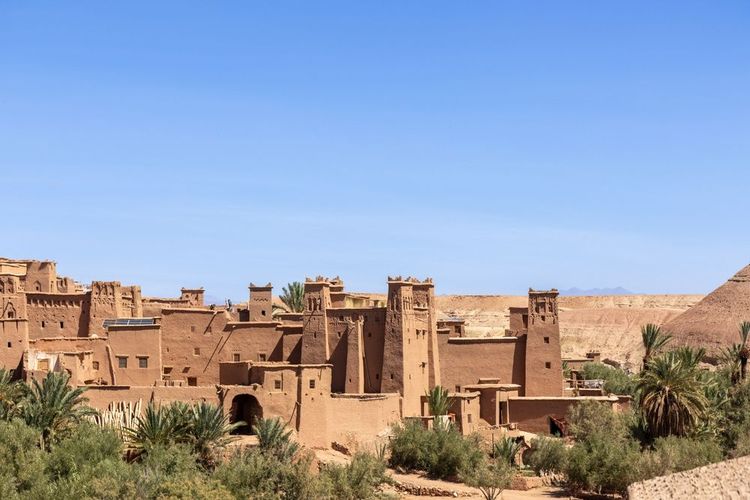
Listed as a UNESCO World Heritage site, the ksar of Aït-Ben-Haddou embodies traditional Berber architecture of southern Morocco. This spectacular fortified ensemble in adobe, dating from the 11th century, stands majestically on a hill overlooking the Ounila valley, about 30 kilometers from Ouarzazate.
To visit authentic Morocco, Aït-Ben-Haddou (Aït-Ben-Haddou, Province of Ouarzazate, rated 4.5/5 on Google for 12,456 reviews) offers a fascinating dive into raw earth architecture. The crenellated towers, stacked houses and narrow alleys of the ksar compose an oriental tale decor that has seduced many Hollywood directors. Lawrence of Arabia, Gladiator, Game of Thrones and many other productions have immortalized this exceptional site.
Access to the ksar is on foot by crossing the oued (dry river most of the year) by bridge or stepping stones. The ascent to the summit, where a few families remain, offers breathtaking panoramic views of the valley and Atlas mountains. Desert temperatures recommend preferring morning or late afternoon visits, particularly in spring and autumn. Small local craft shops line the route, offering carpets, pottery and Berber jewelry.
6. Casablanca and the Hassan II mosque
Economic capital of Morocco, Casablanca surprises with its resolutely modern face and Art Deco architecture inherited from the French protectorate. The city houses the most spectacular monument in the country: the Hassan II mosque (Boulevard Sidi Mohammed Ben Abdellah, Casablanca, rated 4.7/5 on Google for 87,543 reviews), contemporary masterpiece completed in 1993.
This extraordinary mosque is distinguished by its 210-meter minaret, the highest in the world, and its prayer hall that can accommodate 25,000 faithful. A rare particularity in Morocco, it is open to non-Muslims during guided tours that reveal the splendor of its halls decorated with mosaics, stucco, cedar wood and marble. Built partly on the Atlantic Ocean, it offers a unique situation with the sound of waves resonating under the glass floor of the prayer hall.
To visit Casablanca beyond its emblematic mosque, stroll along the Ain Diab corniche lined with restaurants and clubs, explore Mohammed V square with its Art Deco buildings, and get lost in the old medina near the port. The Habous quarter or new medina, built in the 1930s, harmoniously combines traditional architecture and modern urbanism. Contemporary history lovers will appreciate the villa des arts museum which presents 20th-century Moroccan art.
7. Essaouira, the city of trade winds
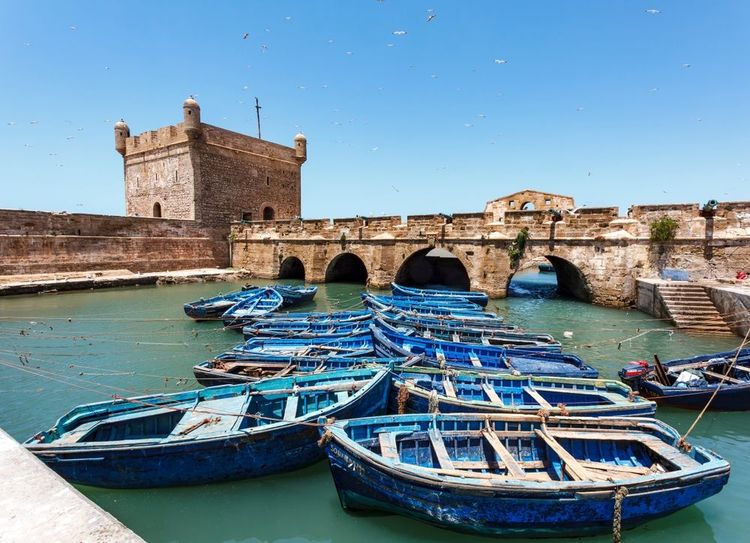
Former Portuguese Mogador, Essaouira seduces with its bohemian and relaxed atmosphere, very different from the effervescence of Marrakech. This fortified port city on the Atlantic coast offers a perfect balance between historical heritage and seaside atmosphere. Its 18th-century ramparts, designed by a French architect, and its white and blue medina are inscribed on the UNESCO World Heritage list.
To visit oceanic Morocco, Essaouira (Medina of Essaouira, Essaouira, rated 4.5/5 on Google for 15,234 reviews) constitutes a refreshing stop. The fishing port bustles with activity in the morning when boats return, offering a colorful spectacle with traditional blue boats and flocks of seagulls. Port restaurants serve freshly caught fish and seafood, notably grilled sardines typical of Essaouira.
The medina is full of thuya wood craftsmen's workshops, an endemic essence of the region transformed into magnificent decorative objects. Contemporary art galleries testify to the creative spirit that has animated the city since Jimi Hendrix stayed there in the 1960s. The immense and windy beach delights kitesurfers and windsurfers, making Essaouira the capital of water sports in Morocco. The annual Gnaoua and World Music Festival, organized every June, attracts artists and festival-goers from around the world in a unique festive atmosphere.
8. Ouzoud waterfalls, natural wonder of the Atlas
Located about 150 kilometers northeast of Marrakech in the province of Azilal, the Ouzoud waterfalls are among the highest and most spectacular in North Africa. These 110-meter high waterfalls cascade down several tiers into a setting of lush greenery, creating a striking contrast with the surrounding arid landscapes.
Visiting natural Morocco inevitably passes through this marvel of Ouzoud waterfalls (Cascades d'Ouzoud, Ouzoud 22576, rated 4.6/5 on Google for 9,876 reviews). Developed trails allow you to descend to the foot of the falls where the refreshing mist offers welcome relief in summer. Along the way, you will certainly encounter colonies of Barbary macaques, these endemic Berber macaques that live freely in the region and don't hesitate to approach visitors.
Several panoramic viewpoints line the route, offering different perspectives on the waterfalls. The most adventurous can take a boat to get closer to the foot of the falls and feel the power of the water. Small restaurants with terraces overlooking the waterfalls serve tagines and Berber omelets in an idyllic setting. Spring constitutes the ideal period to visit Ouzoud, when Atlas snowmelt swells the flow of the falls and vegetation glows with greenery. Plan good walking shoes and a swimsuit to fully enjoy this natural oasis.
9. The Todra and Dadès gorges, spectacular canyons
In southeastern Morocco, between the High Atlas and the Sahara, two spectacular canyons unfold that are among the most impressive natural sites in the country. The Todra and Dadès gorges offer breathtaking landscapes with their vertiginous cliffs sculpted by millennial erosion.
The Todra gorges (Todra River, Tinghir, rated 4.7/5 on Google for 8,234 reviews) form a narrow canyon with limestone walls rising up to 300 meters high, creating a spectacular corridor only a few meters wide in places. The light filtering between the cliffs constantly changes throughout the day, creating fascinating plays of shadow and light. This site attracts climbers from around the world for its internationally renowned climbing routes.
A few dozen kilometers away, the Dadès gorges (Dadès Gorges, Boumalne Dadès, rated 4.6/5 on Google for 5,678 reviews) unfold a more open but equally impressive landscape. The winding road that crosses the canyon for 25 kilometers offers vertiginous viewpoints, notably at the famous "monkey fingers," bizarre rock formations that seem to spring from the mountain. To visit mountainous Morocco, these gorges constitute essential stops, dotted with traditional Berber villages and adobe kasbahs. The verdant palm groves that border the oued contrast magnificently with the red rocks of the cliffs.
10. The High Atlas and the ascent of Toubkal
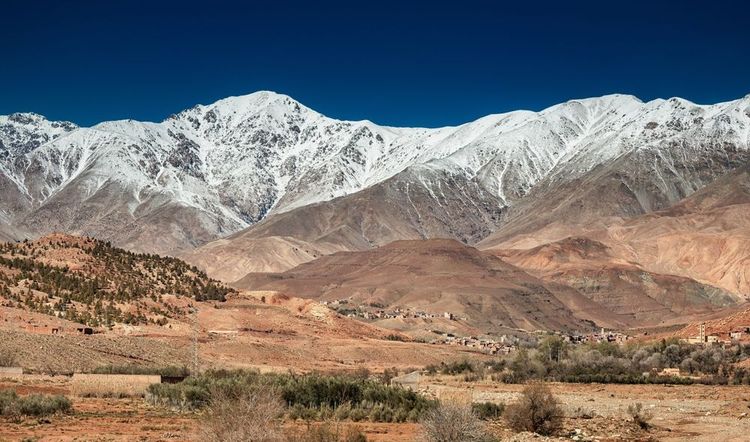
Backbone of Morocco, the High Atlas chain culminates at 4,167 meters at Jebel Toubkal, the highest peak in North Africa. Just 70 kilometers south of Marrakech, these majestic mountains offer total change of scenery and constitute a paradise for hikers of all levels.
Toubkal National Park (Parc National du Toubkal, Province of Al Haouz, rated 4.8/5 on Google for 3,456 reviews), created in 1942, protects remarkable biodiversity including the Barbary sheep, golden eagle and numerous endemic plant species. To visit mountainous Morocco, the village of Imlil (Imlil, Province of Al Haouz, rated 4.3/5 on Google for 1,234 reviews) constitutes the ideal starting point, perched at 1,740 meters altitude.
The classic ascent of Toubkal is done in two days with a night at the Mouflons refuge located at 3,207 meters. The trail crosses varied landscapes: verdant valleys, Berber villages clinging to mountainsides, rocky passes and finally the stony slopes leading to the summit. From the highest point, the 360-degree panorama embraces a sea of peaks extending to the desert in the south and the ocean in the north on clear days. The ascent presents no major technical difficulty in summer but requires good physical condition. Spring and autumn offer the most pleasant conditions, avoiding summer heat and winter snows. Many other hikes allow you to discover the Atlas without climbing Toubkal, from family walks in the Aït Bouguemez valley to multi-day itinerant treks.
FAQ for visiting Morocco
What is the best time to visit Morocco?
Spring (March to May) and autumn (September to November) constitute the ideal periods to visit Morocco. Temperatures are pleasant throughout the country, neither too hot in the south and desert, nor too cool in the mountains. Winter (December to February) is suitable for visiting imperial cities and the south, but can be cold in the mountains. Summer (June to August) is very hot in desert regions and in Marrakech, but pleasant on the Atlantic coast and in the Atlas mountains.
How many days are needed to visit Morocco?
To discover the main must-sees of Morocco, plan at least 10 to 15 days. A one-week stay allows you to focus on one region (for example Marrakech and surroundings, or the north with Fès, Chefchaouen and Tanger). For a complete circuit including imperial cities, desert and coast, count rather 2 to 3 weeks. Distances are important and it is preferable to take time to savor each stage rather than rush from one place to another.
What documents are needed to visit Morocco?
French, Belgian, Swiss and Canadian citizens can visit Morocco with simply a passport valid at least 6 months after the return date. No visa is necessary for a tourist stay of less than 3 months. Upon arrival, a police form will be given to you to keep carefully as it will be requested upon departure. Also remember to check that your travel insurance covers Morocco well.
How to get around to visit Morocco?
Several options are available to visit Morocco. Car rental with driver offers flexibility and comfort, ideal for a first trip. CTM or Supratours company buses connect major cities in good conditions. The ONCF train serves the Tanger-Casablanca-Marrakech axis comfortably and economically. For more autonomy, car rental allows you to explore at your own pace, but driving can be sporty in cities. Collective taxis (grand taxis) constitute an economical alternative between nearby cities.
Can you visit Morocco as a family with children?
Morocco lends itself very well to family travel. Moroccans adore children who are always well received. Favor family riads with pools, adapt the pace of visits, and alternate cultural discoveries with fun activities like camel rides in the desert, surfing in Essaouira or excursions in the Atlas. Health-wise, no vaccines are mandatory but be vigilant with water (drink only bottled water) and street food. In summer, protect children well from the particularly intense sun.
In conclusion, visiting Morocco is offering yourself an enchanting journey at the crossroads of cultures, where each region reveals its unique treasures. From millennial medinas to desert landscapes, from snow-capped Atlas peaks to Atlantic beaches, the Sherifian kingdom seduces with its incredible diversity. The 10 must-sees presented in this guide guarantee you a complete overview of Moroccan richness, but don't forget that Morocco conceals many other wonders to discover. Don't hesitate to let yourself be guided in your exploration with Ryo circuits that will enrich your discovery experience. Whether you opt for a short stay or a journey of several weeks, Morocco will mark you with its legendary hospitality, chatoyant colors and unique art of living. So, ready to set off to discover this fascinating country?