© Shutterstock
 Votre guide Ryo
The 15 Best Moroccan Dishes You Absolutely Must Try in 2026
Moroccan cuisine is not an exotic curiosity — it is a culinary heritage recognized by UNESCO, shaped over centuries at the crossroads of Africa, Andalusia, and the East. When you set foot in Marrakech or Fès, the scent of warm cumin and fresh coriander hits you before you've even put down your bags. The best Moroccan dishes are not limited to the tajine and couscous familiar in Europe; the list is far longer and far more surprising. Think of pastilla, a sweet-savory pigeon and almond pastry that sultans served at court celebrations, or rfissa, a festive dish of lentils and fenugreek that families still prepare on the first Thursday after a birth. This guide takes you through 15 unmissable dishes: their history, key ingredients, the regions where you can taste them, and the best addresses not to miss. To complete your discovery of Morocco, the riads of Marrakech make an ideal base — the 10 best riads to stay in Marrakech will help you choose.
Tajine, the Cooking Method That Perfumes All of Morocco
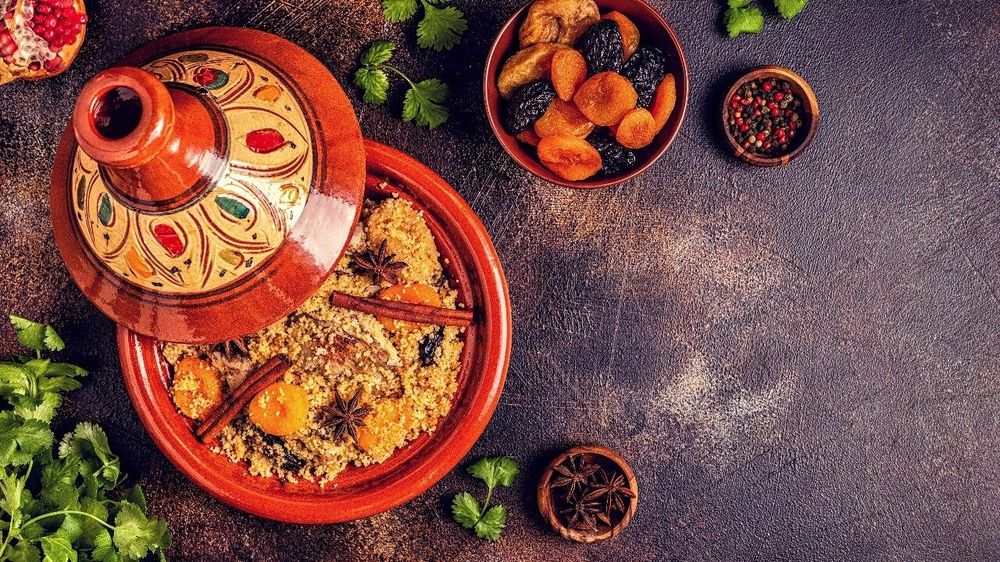
The tajine is both a dish and a piece of cookware: the conical earthenware lid creates a circulation of steam that tenderizes the meat and concentrates the spices without drying them out. This millennia-old cooking system is used from the Rif to the Sahara, with variations that differ from one region to the next.
The lamb tajine with prunes and almonds is the festive version, often served at weddings and special occasions. The candied prunes bring a sweetness that contrasts with the cumin and ginger, while the toasted almonds add crunch. The everyday version is simpler: chicken with preserved lemon and olives, with Taliouine saffron, a Moroccan saffron considered among the finest in the world.
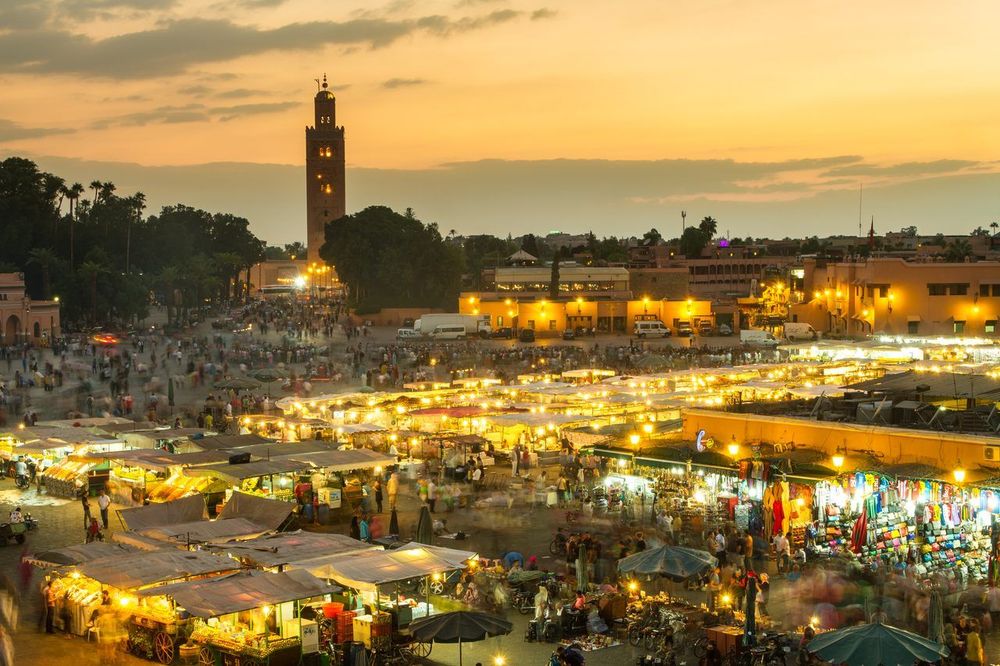
Every cook has their own combination of spices: ras el hanout, a blend that can contain up to 30 different spices, is the aromatic backbone of many tajines. In the souks of Fès, spice merchants still offer their own recipes, passed down from father to son. If you want to taste tajine in its authentic context, avoid the tourist restaurants on the Jemaa el-Fna square and seek out the derbs of the medina, where families have been running their eateries for generations.
Fish tajines are common along the Atlantic coast, particularly in Essaouira and Agadir: fresh sardines, chermoula, and seasonal vegetables, cooked directly over embers. A very different version from the inland tajine, but equally representative of the country's culinary diversity.
Friday Couscous, the National Dish and a Moment of Sharing
On Fridays, after the midday prayer, couscous is a fixture in almost every Moroccan family. It is the national dish, inscribed on the UNESCO Intangible Heritage list in 2020 (jointly with Algeria, Tunisia, and Mauritania). But Moroccan couscous is not the kind you buy in a packet: the semolina is hand-rolled, steamed multiple times in a couscoussier, and worked with butter until each grain is separate.
The garnish changes according to region and season. In Fès, it is served with dried legumes (chickpeas, raisins) and braised lamb. In the Souss, seven vegetables are the norm: turnip, carrot, zucchini, cabbage, onion, tomato, and pumpkin, cooked separately in the meat broth. In the north of the country, Berber families sometimes add curdled milk or aged butter (smen) for a more acidic and richer flavor.
The tasting protocol is also codified. Everyone eats from a large communal dish placed at the center of a low table. Each person eats by hand or with a spoon, from their own side of the dish, without encroaching on others. The meat is carved and distributed by the host — it is a gesture of hospitality, not merely a way of serving.
Harira, the Soup That Nourishes an Entire Country
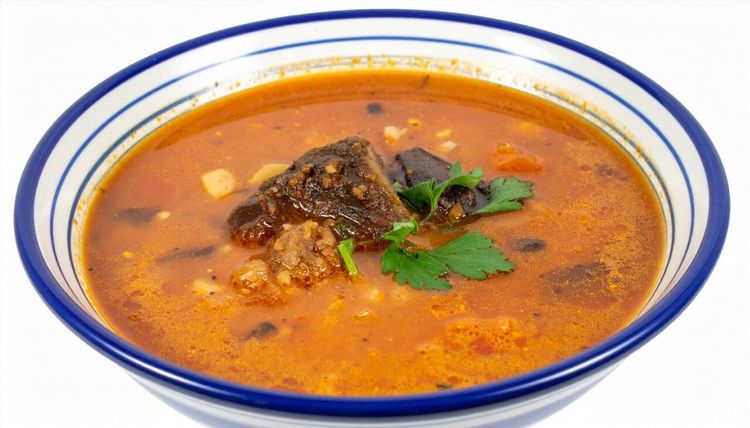
During the month of Ramadan, the breaking of the fast invariably begins with a bowl of harira. This thick soup of tomatoes, lentils, chickpeas, and coriander is sharpened with lemon juice and thickened with wheat flour. But harira is not reserved for Ramadan: it is served year-round, as a starter or main course, accompanied by dates and chebakia (a honey cake).
The basic recipe is simple, but regional variations are numerous. In Marrakech, celery and parsley are added. In Fès, the harira is thicker and more heavily seasoned with cumin. Some families incorporate minced meat, while others stick to the vegetarian version. A bowl of harira costs between 8 and 15 dirhams in medina canteens — one of the best ways to eat hot for less than 2 euros.
Don't necessarily look for a gastronomic restaurant to taste the best harira: women who sell their pots on the squares of small towns in the Middle Atlas often offer versions far superior to those found in tourist establishments.
Pastilla, the Sweet-Savory Pastry of the Sultans
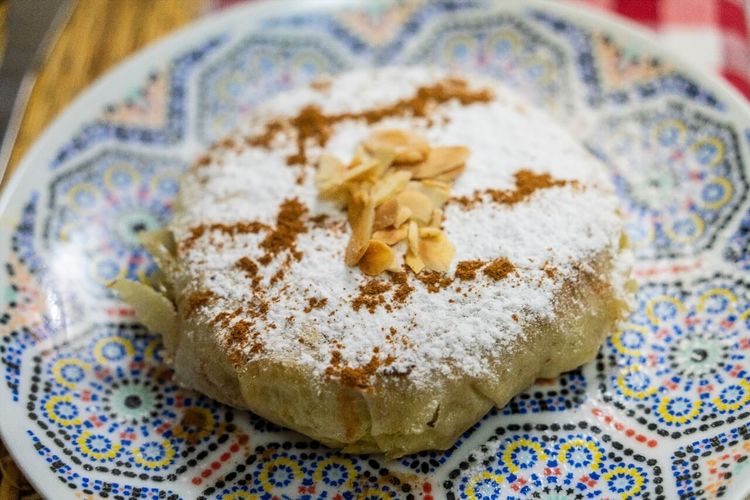
The pastilla (or bisteeya) is probably the most disorienting dish in Moroccan cuisine for a Western palate. A pastry of warka leaves (dough as thin as paper) filled with shredded pigeon (or chicken), toasted almonds, and spiced scrambled eggs, all dusted with powdered sugar and cinnamon. Sweet and savory, crispy and melting, warm and fragrant — pastilla concentrates several opposites in a single bite.
The origins of pastilla date back to Arab Andalusia and the Moorish migrations of the 17th century. The word itself derives from the Spanish pastilla. In Fès, the city that welcomed the greatest number of Andalusian refugees, pastilla is a ceremonial dish: it is prepared for weddings, circumcisions, and major religious celebrations. The warka leaf, so thin it tears at the slightest touch, is an art in itself — the women who produce it in traditional kitchens lay it on and lift it from a heated plate in less than a second.
Today, seafood pastillas can also be found in restaurants in Casablanca and Essaouira — a modern take that retains the sweet-savory pastry concept while replacing pigeon with shrimp or crab. An interesting evolution, but the original pigeon version remains the benchmark.
Mechoui, the Whole Lamb Roasted over Embers
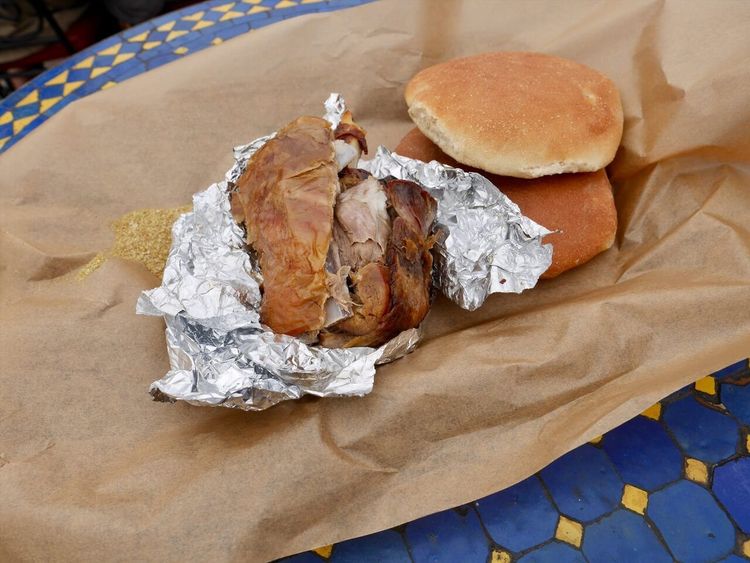
A whole lamb slowly cooked in a wood-fired oven, coated in clarified butter (smen) and cumin — this is mechoui, the dish of grand celebrations. It is prepared for Eid al-Adha, for weddings, for official visits. In Marrakech, the butchers of the Mechoui Square (Place Jemaa el-Fna, 40000 Marrakech, rated 4.3/5 on Google with 50,931 reviews) (just beside the Jemaa el-Fna square) offer their version daily: the lamb is cooked in earthenware pits from the previous evening and sold by the kilogram from midday.
The long, slow cooking — 5 to 6 hours over embers — yields meat that falls apart by hand, meltingly tender to the bone, with a golden crispy skin. The seasoning is minimal: salt, cumin, sometimes a little paprika. It is the quality of the lamb and the mastery of the fire that make the difference, not the complexity of the spices. In the Berber regions of the High Atlas, mechoui is prepared in pits dug into the ground, a technique even older than the earthenware oven.
Rfissa, the Dish of the First Weeks
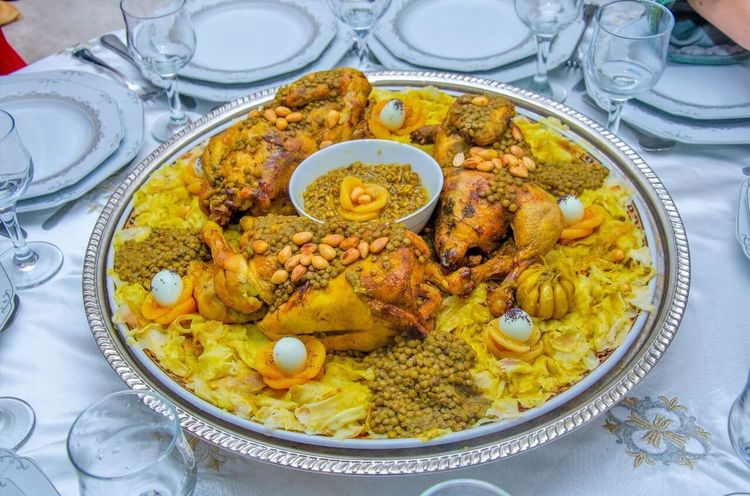
Less well known than tajine or couscous, rfissa is nonetheless one of the dishes most deeply rooted in Moroccan social life. It is prepared especially for women who have just given birth, on the first Thursday after the birth, and distributed to neighbors and family as a celebration. The dish combines chicken cooked with fenugreek (helba), lentils, and spices, laid over a bed of msemen (flaky flatbread) or trid (thin sheets of pastry dough).
Fenugreek is the key ingredient: this yellow-amber seed, slightly bitter, is reputed in traditional Moroccan medicine for promoting lactation and postpartum recovery. Its smell is strong and distinctive — you can recognize it immediately in the alleyways of the medinas on certain Thursday mornings. Finding rfissa in a restaurant is rare; tasting it generally requires an invitation into a family home. If you are staying in a riad in Marrakech, some owners offer cooking classes where this dish occasionally features on the program.
Chermoula and Grilled Fish of the Atlantic Coast
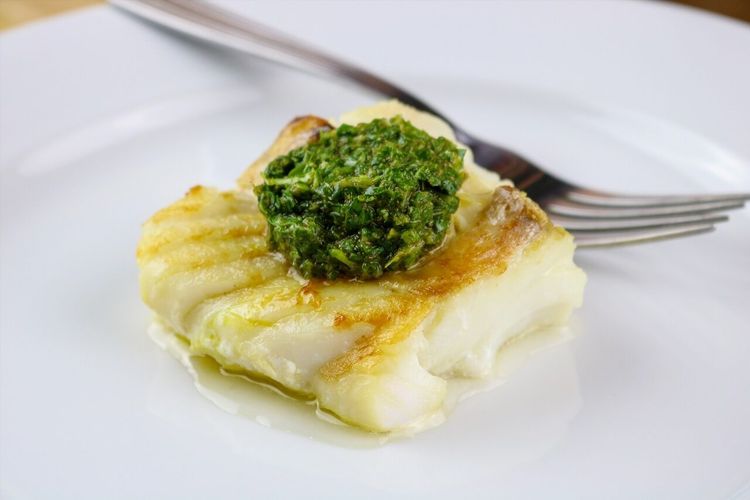
Along Morocco's 1,800 kilometers of Atlantic and Mediterranean coastline, fish reigns supreme. But it is chermoula that transforms a sardine or a sea bass into a memorable dish. This marinade-sauce, made from coriander, parsley, garlic, cumin, paprika, lemon, and olive oil, is used both to marinate the fish before cooking and as an accompaniment sauce afterward.
In Essaouira, the grilled fish stalls at the port are an institution: you choose your sardines or your sea bream directly from the ice, and they are grilled in front of you over embers. Chermoula is applied generously before and after cooking. A portion of 6 fresh sardines with chermoula costs between 20 and 35 dirhams — one of the best value-for-money meals in Mediterranean cuisine. Agadir and Dakhla offer variations with grouper, sole, or red porgy, depending on the season and daily catch.
Briouate, the Crispy Bite with a Thousand Fillings
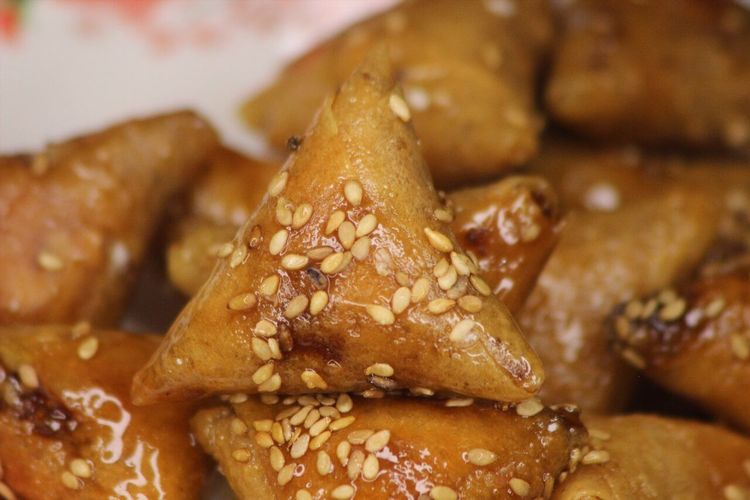
Briouates are warka pastry pockets, fried or baked, filled with a savory or sweet stuffing. The most classic savory version combines spiced minced meat (lamb or beef), egg, and fresh herbs. But there are dozens of variations: cheese and spinach, shrimp and ginger, mushrooms. In the sweet version, the almond and honey briouate is served as a dessert or at celebrations.
In the medinas, briouates are sold hot from communal bread ovens (farran) or from caterers who prepare orders for family celebrations. During Ramadan, they form part of the iftar tray alongside harira, chebakia, and dates. Expect to pay 3 to 5 dirhams per piece from an artisan — a filling snack for just a few cents.
Zaalouk and Cooked Salads, the Starters That Change Everything
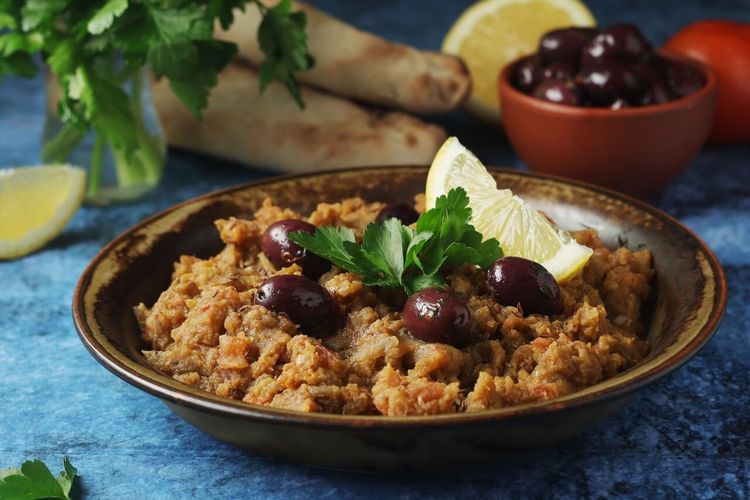
A traditional Moroccan meal rarely begins directly with the main course. Before the tajine or couscous, a series of cooked salads arrives at the table: zaalouk (eggplant purée with tomatoes and garlic), taktouka (grilled tomatoes and peppers), carrot salad with cumin, beet with parsley. These starters are served simultaneously in small bowls, and you dip warm khobz bread into them.
Zaalouk is the best known of these cooked salads. The eggplants are roasted directly over a flame until the skin blackens, then peeled and mixed with crushed tomatoes sautéed with garlic and coriander. The result is smoky, slightly spiced, with a creamy texture. In Spain, a similar preparation exists under the name escalivada, proof of the culinary exchanges between the two shores of the Mediterranean. These cooked salads alone constitute a light and complete meal, particularly appreciated in the summer heat.
Msemen and Baghrir, the Morning Breads
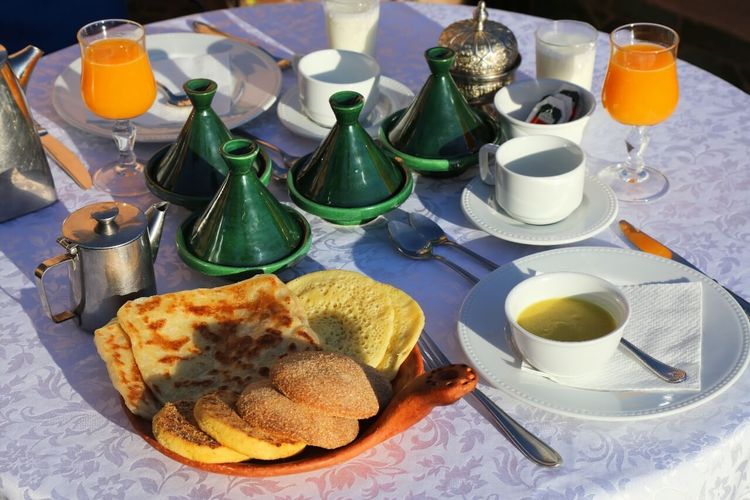
The Moroccan breakfast is a serious affair. Two breads dominate the morning table: msemen and baghrir. Msemen is a square, flaky flatbread, golden with butter and oil, crispy on the outside and soft on the inside. It is eaten dipped in argan oil and honey, or plain with fresh cheese.
Baghrir is different: known as the "thousand-hole pancake," it is made with semolina and yeast, cooked on one side only so that the surface is dotted with tiny holes that absorb melted butter and honey like a sponge. Its texture is soft and slightly tangy. Both breads can be found in every Moroccan pastry shop and in the morning souks, still warm at 7 a.m.
Sweets: Chebakia, Ghribia, and Gazelle Horns
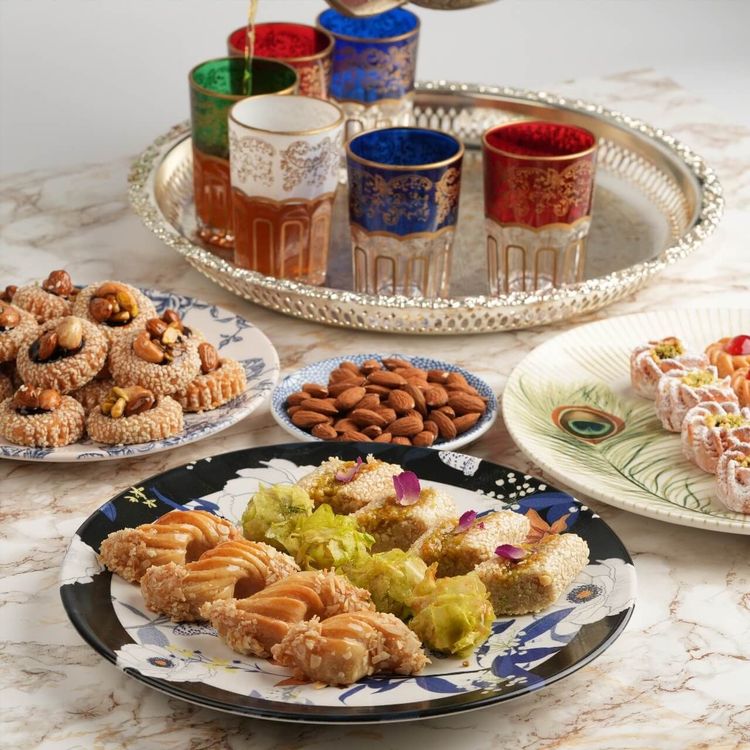
Moroccan pastry is a category unto itself, renowned throughout the Arab world for its refinement and generosity. Three sweets dominate artisanal production and deserve particular attention.
Chebakia is a flower-shaped pastry, fried then coated in warm honey and perfumed with orange blossom water, sprinkled with sesame seeds. It is inseparable from Ramadan — families prepare kilos of it from the start of the holy month, and the smell of honey-fried dough fills the alleyways of the medinas. Its texture is dense, sticky, intensely sweet, and absolutely addictive with a glass of mint tea.
Ghribia is a shortbread made from chickpea or almond flour, melting on the palate, lightly perfumed with orange blossom water. More understated than chebakia, it accompanies tea in homes when receiving guests. The gazelle horn (kaab el ghzal) is the international symbol of Moroccan pastry: a thin crescent-shaped dough filled with almond paste perfumed with orange blossom water and cinnamon. Its surface is sometimes lightly moistened with orange blossom water — a subtlety that only artisans who prepare it by hand know how to replicate.
Mint Tea and Dates, Far More Than Just Drinks
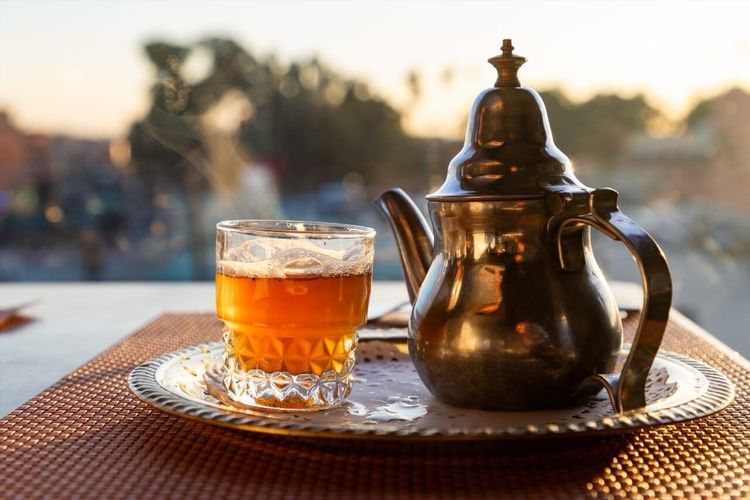
It would be reductive to classify mint tea as a mere beverage: it is a ritual of hospitality, a declaration of friendship, and an art of slowness. Gunpowder green tea, steeped with large bunches of fresh mint and generously sweetened, is poured from a height to create the characteristic froth. In Morocco, it is said that a good tea must be served "like love and bitterness" — strong, sweet, and poured with elegance.
Dates (tmar) complete the picture: Morocco produces several varieties of dates, including the Medjool from the Draa-Tafilalet region, considered one of the most flavorful in the world — fleshy, caramelized, with a thin skin that peels away easily. When traveling in Morocco, always accept the tea offered to you in a souk or a home: refusing would be impolite. However, three glasses is the implicit limit — accepting more may create the obligation of a long conversation.
Where to Eat These Dishes in Morocco: the Best Addresses and Pitfalls to Avoid
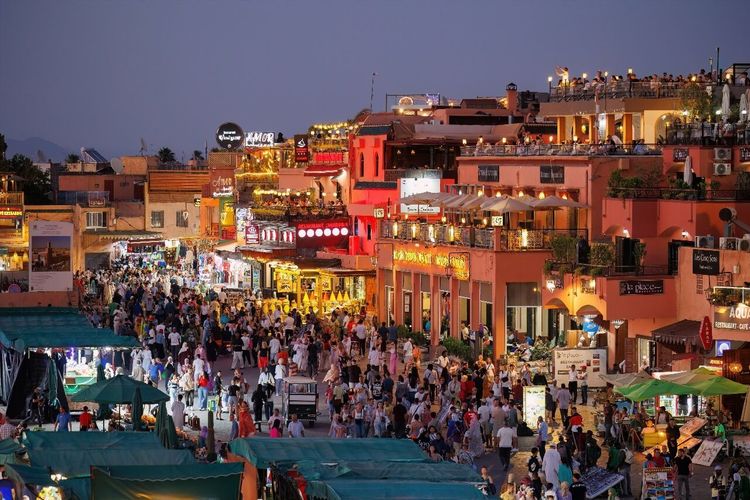
Finding the right address is crucial in Morocco, as quality varies enormously between tourist restaurants in the medinas and the places frequented by locals. Here is a simple method to avoid making the wrong choice.
For everyday dishes (harira, couscous, briouates), opt for popular restaurants (maâkla chaâbiya): undecorated rooms with formica tables, where families eat side by side. A full meal costs between 30 and 60 dirhams (3 to 6 euros). These establishments are not listed on online booking apps, but trusted hotels and riads will point you to them.
For celebratory dishes (pastilla, mechoui, rfissa), the large guesthouses (dars) that offer reservation-only dinners remain the best option. The gastronomic restaurants of Fès — Morocco's historic culinary capital — maintain a high standard at prices that are reasonable by European standards.
Avoid restaurants that display their menus in multiple languages at the entrance and employ touts at the door — a reliable indicator of standardized cooking and inflated prices. The morning food souks (between 7 a.m. and 10 a.m.) are, on the other hand, an inexhaustible source of fresh produce and authentic breakfasts: marinated olives, goat's cheese, msemen fresh from the oven, freshly squeezed orange juice.
If you are visiting Marrakech and wish to explore the city in depth, the Ryo audio guide tour of Marrakech passes through the medina neighborhoods where the best culinary addresses are concentrated — a way to discover the city while understanding the historical context of each street and each souk. The Ryo audio guide can be listened to at your own pace, between tastings.
When and How to Discover Moroccan Cuisine While Traveling
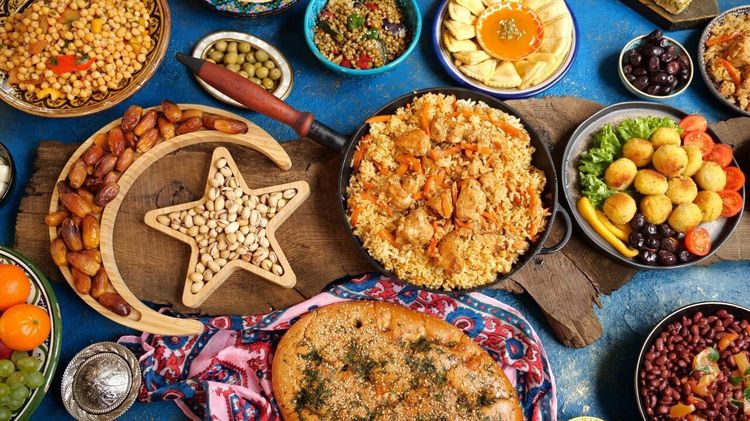
Moroccan cuisine is deeply seasonal and shaped by the religious calendar. Traveling to Morocco during Ramadan is a unique culinary experience: during the day, restaurants are closed or serve only tourists, but at the breaking of the fast (iftar), the squares come alive with a particular intensity and the dishes served are those of the purest tradition: harira, chebakia, briouates, dates, and fermented milk.
Outside of Ramadan, the Eid al-Adha celebrations (dates vary according to the lunar calendar) are an opportunity to taste mechoui in its most authentic context. The weekly markets of Berber villages, known as souqs, are another key: each village has its fixed market day (Monday in Rissani, Tuesday in Midelt, Thursday in Tinerhir for the Draa-Tafilalet), and producers sell dates, argan oil, saffron, and loose spices directly.
For travelers who wish to go beyond simple tasting, cooking classes have developed in almost every city. They generally last half a day (3 to 4 hours), often include a market visit to buy ingredients, and cost between 300 and 600 dirhams per person. The Ryo audio guide tours cover the best historic neighborhoods of Moroccan cities to visit, with commentary that contextualizes the spice souks and communal bread ovens you will encounter during your explorations.
FAQ
What is the most well-known Moroccan dish in the world?
The tajine is unquestionably the most internationally recognized Moroccan dish — its name refers to both the dish and the conical earthenware vessel that gives it its shape. Couscous rivals it for the top spot: inscribed on the UNESCO heritage list in 2020, it is just as well known as tajine, but its authentic preparation (hand-rolled semolina, steamed) remains little understood outside the Maghreb. In terms of global popularity, tajine and couscous are neck and neck.
What is the difference between a tajine and couscous?
They are two distinct cooking methods and two separate dishes. Tajine is a long, gentle braising in a conical earthenware vessel; the meat and vegetables cook together in their own juices with spices. Couscous is durum wheat semolina steamed in a couscoussier, served with a meat and vegetable broth. A tajine can be prepared in under an hour; a traditional couscous requires a minimum of 3 hours of preparation.
Where can I buy authentic Moroccan spices?
The covered souks of Fès (Quaraouiyine) and Marrakech (Rahba Kedima, the spice square) bring together the most reputable spice merchants. Look for shops that sell their spices loose in bulk bags rather than pre-packaged sachets aimed at tourists. Quality ras el hanout contains between 20 and 30 spices — beware of blends with only 5 or 6 ingredients. Taliouine saffron (Souss region) is the most prized; avoid saffron sold at bargain prices in tourist markets, which is often dyed turmeric.
Is Moroccan cuisine suitable for vegetarians?
Yes, more than one might expect. Cooked salads (zaalouk, taktouka, carrot with cumin), vegetarian harira, seven-vegetable couscous without meat, cheese and vegetable briouates, vegetable pastillas — Moroccan cuisine offers a wide range of meat-free dishes. In major cities, vegetarian restaurants have grown in number since 2020, particularly in Marrakech and Rabat. In rural areas, clearly stating your preferences (bla lahm = without meat) is essential, as the broth used to cook vegetables is often meat-based.
How do you recognize a quality Moroccan restaurant?
Three simple indicators: first, the presence of Moroccan customers rather than exclusively tourists. Second, a short menu with daily specials that change according to availability and season — a sign of fresh, non-standardized cooking. Third, the absence of touts at the door: good Moroccan establishments don't need them. Riads offering reservation-only dinners are also reliable for celebratory dishes such as pastilla or mechoui.
Conclusion
Moroccan cuisine is one of the richest and most nuanced in the Mediterranean, far beyond the classics familiar in Europe. From the everyday tajine to the festive pastilla, through the Ramadan harira and the almond sweets of traditional pastry, every dish tells a story, a territory, a season. To fully experience this culinary journey, you need to wander through the medinas, inhale the spices in the souks, and sit down in no-sign canteens. The Ryo audio guide accompanies you through this exploration, neighborhood by neighborhood, providing the historical and cultural context that transforms a simple stroll into a genuine discovery. Ready to come to the table?