© Shutterstock
 Votre guide Ryo
Visit Auschwitz-Birkenau: Complete Practical Guide to Prepare Your Visit in 2026
The Auschwitz-Birkenau memorial in Oświęcim, Poland, is now the most visited memorial site in the world: over 1.7 million people visit each year to honor the memory of Holocaust victims. If you wish to go to Auschwitz from Krakow, Warsaw or even from Paris, this guide brings together all the practical information you'll need, transport, tickets, schedules, visit duration and code of conduct, to prepare your trip with peace of mind.
The visit is divided into two distinct sites separated by 3 km: Auschwitz I, the original camp that became a museum, and Auschwitz II-Birkenau, the immense deportation and extermination complex. To cover everything properly, plan at least 3h30 to 5 hours on site. Entry to the memorial is free, but since March 1st, 2026, online booking of a time slot is mandatory for all visitors, year-round: no tickets are issued on site, and slots can be fully booked several weeks in advance in summer. From Krakow, options are numerous: direct train, regular bus, organized shuttle or car, each option has its advantages, and this guide helps you choose. To extend your stay in Poland, you can also explore the nearby city with the Ryo audio guide of Krakow.
Auschwitz-Birkenau: What the Memorial Is Today
The Auschwitz-Birkenau State Memorial and Museum (ul. Więźniów Oświęcimia 20, 32-603 Oświęcim, rated 4.8/5 on Google for 3,853 reviews) is a Polish public institution managed by the State. It occupies the former camps that operated between 1940 and 1945, and was inscribed on the UNESCO World Heritage List in 1979. The site brings together the authentic remains of the two main camps, permanent exhibitions in the blocks of Auschwitz I, as well as archives and a research library.
The memorial is not a theme park nor an ordinary museum: it's a place of mourning and testimony. Its role is to educate future generations about the reality of the Holocaust, through authentic objects, period documents and survivor testimonies. Each year, official delegations, school groups and visitors from around the world make this journey in a spirit of reflection.
Since March 1st, 2026, the site has tightened its visitor policy: online booking mandatory for all visitors, year-round, to control flows and guarantee the dignity of the visit. Booking is done exclusively on the official website visit.auschwitz.org. Entry remains free; only guided services are paid.
Tickets and Booking: Everything You Need to Know Before Going
One of the most frequently asked questions is about price: entry to the Auschwitz-Birkenau memorial is free. This applies to all visitors, without age or nationality conditions. However, online booking of a time slot is mandatory, and certain services are paid: they deserve to be anticipated.
Self-Guided vs Guided Visit
Two visit modes coexist:
The self-guided visit is free, but subject to online pass booking on the official website visit.auschwitz.org. Good to know: during busy periods, self-guided visit slots without a guide are only open at the end of the day, once guided tours are finished (for example from 4pm-5pm April to September, earlier in winter). If you want to visit mid-day in high season, you practically need to take a guided tour.
The official guided visit costs 150 PLN per person (about €35), with a reduced rate of 140 PLN (about €33) for under-26s, for a visit to both sites in 3h30. It's led by guides certified by the memorial, in Polish, English, German, French, Spanish, Italian, Hebrew and other languages. The French guided tour is offered at specific times: check the calendar on the official website, as French slots are less frequent than English or Polish and sell out quickly.
There are also study visits (in-depth visit of several hours) and evening visits available in high season, which allow exploring the site in particular calm. Their rates and availability are indicated on visit.auschwitz.org.
How to Book
- Go to the official website: visit.auschwitz.org
- Select the date, time and type of visit (self-guided or guided)
- Choose the guide's language if you opt for a guided visit
- Create an account or continue as a guest
- Confirm your booking by email (present it at the entrance)
Slots generally open 90 days in advance and close a few days before the date. In July and August, guided tours, especially in French, often sell out 4 to 6 weeks in advance. If you're planning a summer trip, book as soon as your dates are set.
School and Educational Groups
School groups (secondary and higher education) benefit from specific educational programs. Prior booking is mandatory for all groups of more than 10 people. The memorial recommends contacting its educational department directly several months in advance.
Audio Guides
Official audio guides are offered for rental on site, in several languages including French, for just a few zloty. They allow a self-guided visit at your own pace while benefiting from detailed commentary on each block and space. And to prepare the Krakow part of your stay, know that Ryo offers an audio guide of Krakow to explore at your own pace.
Opening Hours and Closure Days 2026
The memorial is open every day of the year, except for a few specific dates. The gates open early in the morning and closing varies according to season. As an indication (hours to confirm on visit.auschwitz.org, as they change each year):
| Period | Closing (indicative) | |---|---| | December | 2:00 PM | | January and November | 3:00 PM | | February | 4:00 PM | | March and October | 5:00 PM | | April, May and September | 6:00 PM | | June, July, August | 7:00 PM |
The gates open from 7:30-8:00 AM depending on the period, but the last entry slots are well before closing time (allow about 1h30 minimum visit after your entry). Check the last entry time corresponding to your date when booking.
Exceptional closure days: January 1st, Christmas Day (December 25th) and Easter Sunday. Apart from these dates, the site is open almost year-round.
Contrary to what one might think, the memorial is not closed on January 27th (International Holocaust Remembrance Day): it's actually one of the most significant days, with official ceremonies.
Arrive preferably at opening time: organized groups arrive from 9:30-10:00 AM, and the site can seem very crowded mid-morning during summer months.
When to Visit: Best Periods and Recommendations
The question of the "best time" to visit Auschwitz-Birkenau is particular: this place is visited more according to your possibilities and intention than according to tourist season. That said, certain periods are more suitable practically.
Spring (April-May): temperatures are mild (10-18°C), crowds still reasonable in April, and French guided tour slots easier to obtain. It's the period many European visitors favor.
Summer (June-August): this is high season. Slots are fully booked several weeks in advance, entrance queues can be long, and heat can make the visit (largely outdoors at Birkenau) exhausting. If you come in summer, book in advance and arrive at opening time.
Autumn (September-October): often cited as the ideal period. Tourist flow decreases significantly after mid-September, temperatures remain pleasant (8-16°C) and bookings are more easily available.
Winter (November-March): opening hours are reduced, but the winter atmosphere, sometimes with snow, frequent fog on the Silesian plain, gives the site a particularly striking dimension. Crowds are rare. Dress very warmly: the site is essentially outdoors at Birkenau, and temperatures can drop to -10°C or below.
Whatever the season, avoid Polish holiday weekends (May 3rd Constitution, All Saints, etc.) which generate heavy local attendance.
From Krakow by Train
The train is the most comfortable option to get to Auschwitz from Krakow. The departure station is Kraków Główny (central station), well served from the city center.
The exact destination is Oświęcim station, about 2.5 km from the memorial. PKP trains (Polish railways) serve this route several times a day.
Schedules and Duration
The journey takes between 1h20 and 1h50 depending on the type of train (direct or with connection). The first departures from Krakow start from 6:00 AM, with regular trains throughout the day.
Warning: not all trains are direct. Some require a connection at Trzebinia or Katowice. Check the route on the PKP journey planner (intercity.pl) before buying your ticket.
Fares
The one-way train ticket generally costs between 15 and 22 PLN (4-5 €), depending on the type of train and time of purchase. The round-trip therefore remains very affordable, around 8 to 10 €.
From Oświęcim Station to the Memorial
Oświęcim station is 2.5 km from the memorial. Three solutions to reach the entrance:
- On foot: 25-30 minutes walk, signposted route
- By local bus: municipal line serving the "Muzeum" stop in front of the site entrance. Ticket: a few zloty
- By taxi or local shuttle: 15-20 PLN for the journey, 5-8 minutes
The local bus also serves the Birkenau site ("Brzezinka" stop), which is convenient to reach the second site without returning on foot through the main entrance.
From Krakow by Bus
The bus is the most economical alternative to connect Krakow to Auschwitz, and often the most direct.
Bus to Oświęcim
Buses to Oświęcim depart from Krakow bus station (Dworzec MDA, next to Kraków Główny railway station). The journey takes about 1h30 depending on intermediate stops. Departures are regular throughout the day, with higher frequency in the morning (schedules to check on the operator's website, for example Lajkonik).
The destination stop is directly in front of the memorial: "Oświęcim: Muzeum". This is the major advantage of the bus over the train, no additional walk from the station.
Fares
The one-way ticket costs about 20 to 22 PLN (5 €). You can buy it directly from the driver or online via the operator's website. Advance purchase is recommended in summer.
Direct Tourist Buses
In high season, several private operators offer direct shuttles from central tourist points in Krakow (Market Square, Kazimierz) to the memorial. These services, often called "tourist buses", sometimes combine transport and tourist commentary. Count 25-40 PLN per person for the round trip.
Return from the Memorial
Return buses to Krakow also stop in front of the main entrance. Note the last departure of the day from Oświęcim to avoid getting stranded; in winter, the last buses often leave before 6 PM.
From Krakow by Shuttle or Organized Tour
The organized shuttle from Krakow is the most practical choice for those who want to avoid all logistics, and especially guarantee an entry slot without depending on places available on the official website. Many tour operators based in Krakow offer all-inclusive services.
What an Organized Tour Includes
Packages vary, but most include:
- Round-trip transport by minibus or bus from central Krakow (departure generally between 7:30 and 9:00 AM)
- Certified guide by the memorial, in French or English
- Guided entry ticket pre-booked (which saves you the risk of finding slots fully booked)
- Scheduled return late afternoon (generally 5-7 PM depending on the package)
Organized Tour Prices
Prices vary according to operator, guide language and group type:
- Group visit (10-35 people): from €55 to 90 per person for a full day including transport and guide
- Private visit (exclusive guide for your group): from €150-200 for a small group
- Combined package Auschwitz + Wieliczka salt mine: from €80 to 120 per person
Where to Book
Many hotels and accommodations in Krakow offer these excursions at reception. Specialized agencies and online booking platforms also allow advance booking. Always check that the guide is certified by the Auschwitz-Birkenau memorial: it's an official requirement for any guide operating on the site.
From Other Polish Cities
Organized shuttles also depart from Warsaw (about 3h30 by road), Katowice and Wrocław. These day trips are longer but remain popular with travelers who only make a short stay in Poland.
By Car from Krakow, Warsaw or Paris
If you're traveling by car, from Poland or from France, here are the routes and practical information to know.
From Krakow by Car
The distance is 70 km for a journey of about 1h to 1h20 depending on traffic. The standard route takes the A4 highway west then roads to Oświęcim. Signage to "Muzeum Auschwitz-Birkenau" is well indicated approaching the town.
Parking: the memorial has paid parking near the main entrance. In high season, the closest spaces are full by mid-morning: arrive early, or plan to park a little further away and walk to the entrance. Also remember that booking an entry slot remains mandatory even when coming by car.
From Warsaw by Car
The distance is 300 km for about 3h30 to 4h00 drive. The route passes via the A1 highway (Warsaw to Katowice) then A4 to Oświęcim. It's a long but entirely feasible day: leave before 7 AM to arrive before the big waves of visitors.
From Paris by Car
The distance Paris to Oświęcim is about 1,550 km, or 13h30 to 15h driving without counting breaks. This journey is generally done in two days, with a night in Prague (700 km from Paris), Dresden or Wrocław. The route passes through Germany then Poland. Tolls are to be expected in France and Poland (on certain highway sections); Germany has no highway tolls for passenger cars.
Recommended alternative: combine plane or train to Krakow, then car rental or shuttle for Auschwitz.
From Warsaw by Train
For travelers without a car leaving from Warsaw, the direct train Warsaw to Oświęcim takes about 2h30 to 3h00. Otherwise, a PKP Intercity train Warsaw to Krakow (2h30 high-speed) followed by a shuttle or local train is often faster.
Auschwitz I: What You'll See on the Main Site
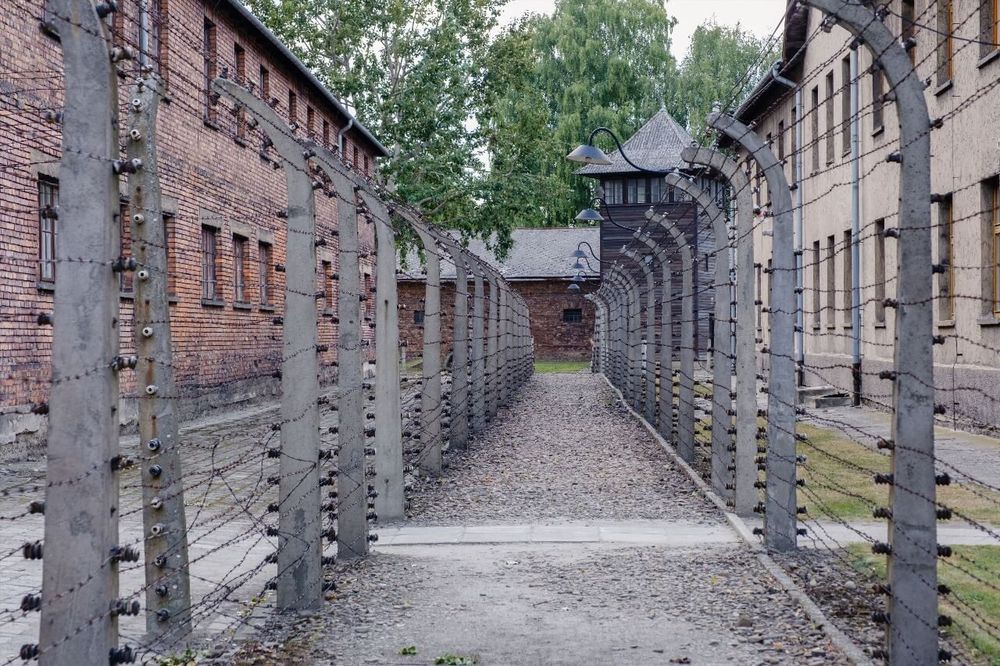
The Auschwitz I camp is the original camp, created in 1940 in a former Polish military barracks. This is where the brick buildings that constitute today's main museum are located, with its permanent exhibitions in the former detention blocks.
The main entrance is topped by the sadly famous gate with the inscription "Arbeit Macht Frei" ("Work Makes Free"). The gate visible today is a reconstruction: the original was stolen in 2009 and found fragmented, before being restored and preserved under cover. It's one of the most recognizable symbols of the place.
The Exhibition Blocks
The former blocks house permanent thematic exhibitions spread over two floors. They notably include:
Block 4, Extermination: presents the decision and mechanisms of implementing the Holocaust, victim statistics by nationality, and objects found on the site.
Block 5, Evidence of Crimes: contains display cases presenting personal belongings confiscated from deportees. These cases constitute one of the most sober and most striking testimonies of the museum. Photography is forbidden there.
Block 11, The Prison Within the Prison: this is the disciplinary block. Its punishment cells, the courtyard between blocks 10 and 11 and the execution wall have been preserved.
Block 6, Life of Prisoners: identity photographs, living conditions, classification system by colored triangle.
Gas chamber and crematorium I: located at the end of the camp, they are the only remains of this type surviving on the Auschwitz I site.
The Execution Wall
Between blocks 10 and 11 is the execution wall in front of which many prisoners were killed. Flowers and candles are permanently placed there by visitors. It's one of the places on the site that calls for the greatest reflection.
Birkenau (Auschwitz II): The Memorial and Its Remains
Located 3 km from the main site, Auschwitz II-Birkenau (ul. Ofiar Faszyzmu, 32-620 Brzezinka, rated 4.8/5 on Google for 19,669 reviews) is the largest area of the complex: 171 hectares, which housed tens of thousands of prisoners. This is where the vast majority of victims perished.
Free shuttles connect Auschwitz I and Birkenau during museum opening hours. Outside these times, you must reach the site on foot (3 km), by taxi or local bus ("Brzezinka" stop).
The Guard Tower and Entrance
The main entrance to Birkenau, with its central guard tower through which the railway line passed, has become the iconic image of the place. The rails penetrate to the middle of the camp: this is the "ramp" where deportees were sorted upon arrival.
The Ruins of the Crematoria
The crematoria were dynamited in January 1945 to attempt to erase the evidence. Their ruins are preserved as they were: the memorial decided not to rebuild them, to preserve the authenticity of the testimony. An international commemorative plaque, in about twenty languages, stands in front of the ruins.
The Barracks
Of the hundreds of original barracks, a portion survives, in brick and wood, the latter built from military stable modules. The interior of certain barracks is accessible: the wooden bunks and installations are preserved.
The International Monument
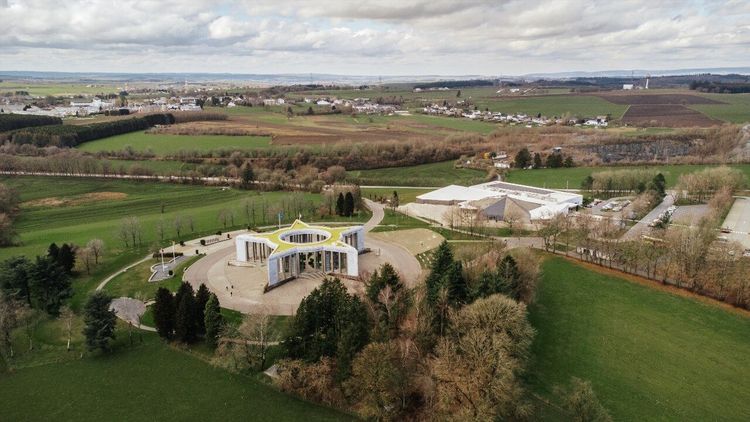
Erected in 1967, the International Monument to the Victims of Fascism and Genocide is located at the end of the railway line, between the ruins of crematoria II and III. It's the symbolic convergence point of the visit.
The Ash Ponds
At the back of the enclosure, beyond the Monument, stretch the meadows and ponds where victims' ashes were dumped. This reflection space is generally not included in short guided tours; you must seek it deliberately, at the far end of the site.
Duration, Itinerary and Practical Advice On Site
How Much Time to Plan
The memorial's recommendations:
- Standard guided visit (Auschwitz I + Birkenau): 3h30
- Self-guided visit of both sites: 4 to 5 hours minimum
- In-depth visit (with national blocks, ponds, archives): 6 to 8 hours
If your time is limited, choose the official guided visit: the guide structures the itinerary to cover the essential elements in both sites without dispersion.
Recommended Itinerary
The logic is to start with Auschwitz I (the main site with exhibitions in the blocks) then join Birkenau by shuttle or on foot. This is the order followed by the official guided visit.
If you visit autonomously, here's an indicative itinerary:
- Main entrance and gate "Arbeit Macht Frei", 15 min
- Block 4 and Block 5 (main exhibition, object display cases), 45 min
- Block 11 and the execution wall, 30 min
- Crematorium I, 20 min
- Shuttle to Birkenau, 15 min
- Guard tower and ramp, 30 min
- Barracks and ruins of crematoria, 45 min
- International monument, 15 min
Total: about 3h30 to 4h depending on your pace.
Food and Amenities
A catering area (café and snack) is available in the Auschwitz I visitor center. Shop, luggage storage (mandatory for large bags) and toilets are accessible at the main entrance.
At Birkenau, amenities are more limited: toilets only. Bring water, especially in summer, as the visit to the Birkenau site is almost entirely outdoors.
Access for People with Reduced Mobility
The Auschwitz I site is partially accessible to wheelchair users. The ground floor of the main blocks is accessible; the upper floors are not. At Birkenau, the main paths are passable but the ground is often gravel or dirt. Wheelchairs are available for rental at reception upon prior request.
Code of Conduct and Rules to Respect
The Auschwitz-Birkenau memorial is a place of burial and reflection. Respecting the rules established by the site is not just an administrative formality, it's a matter of dignity toward the victims.
Expected Behavior
Silence and reflection: loud conversations, laughter and festive behavior are prohibited throughout the site. This also applies to school groups.
Mobile phones: using the phone to make calls should be avoided. Photography is authorized in almost all of the site, Auschwitz I and Birkenau, except in Block 5 (personal object display cases) and in the gas chamber. No selfies in reflection spaces.
Clothing: there is no strict dress code in the religious sense, but sober and covered clothing is appropriate. In summer, light clothing is sufficient, but avoid very short shorts, tank tops or festive attire. In winter, dress very warmly, coat, gloves, hat, as much of the visit is outdoors.
Food: eating and drinking are authorized only in spaces designated for this purpose (café, outdoor terraces of the welcome center). Consuming food in the middle of exhibitions or in barracks is forbidden.
Monuments and artifacts: do not touch displayed objects, do not sit on historical structures (barracks, low walls), do not pick anything up from the ground.
Flags and political signs: any political or ideological demonstration is strictly forbidden within the memorial grounds.
For Children
The memorial recommends not bringing children under 14 years old to the site, due to the nature of the exhibitions (particularly the display cases at Auschwitz I). Specific educational programs are offered for teenagers aged 14 to 18, led by memorial educators.
What Is Prohibited
- Large backpacks and bulky luggage (beyond about 30 × 20 × 10 cm); storage lockers are available at the entrance
- Drones
- Pets (except service dogs)
- Picnics within the site grounds
- Alcohol
What to Do in Oświęcim Before or After the Visit
Oświęcim is a town of about 35,000 inhabitants, whose historical dimension is often reduced in the collective imagination to that of Auschwitz. Yet, the town deserves a look beyond the memorial.
The Jewish Museum of Oświęcim (Chevra Lomdei Mishnayot Family Jewish Center), located in the town's old synagogue, traces the history of the Jewish community of Oświęcim, flourishing before the war. It's an important memorial complement, which allows understanding life before destruction.
The Oświęcim Castle, located on a hill on the banks of the Soła, houses a municipal museum with medieval collections. Its panorama over the river contrasts with the rest of the day.
For most visitors on excursion from Krakow, the return is made in late afternoon. If you stay for the night, Oświęcim offers several modest but functional accommodations near the center. This allows extending the visit over two days, particularly for visitors who wish to attend a morning commemorative ceremony.
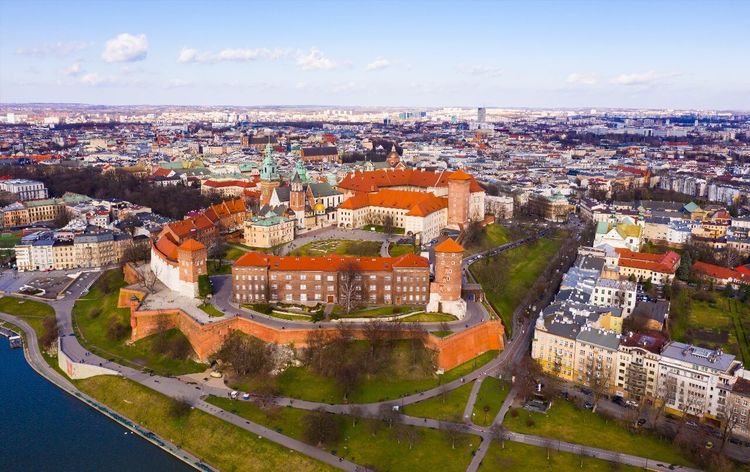
Krakow remains the natural logistical base for the region: the old town, the Kazimierz district and Wawel Castle deserve one to two additional days of discovery. To prepare this stage, the Ryo audio guide of Krakow's Jewish quarter naturally extends the memorial reflection begun at Auschwitz.
FAQ
Do You Need to Book in Advance to Visit Auschwitz?
Yes, and it's now mandatory year-round: since March 1st, 2026, no tickets are issued on-site. Even for the free self-guided visit, you must book a time slot online on the official website visit.auschwitz.org. During high season (June, July, August), guided tour slots, particularly in French, are often fully booked 4 to 6 weeks in advance. Bookings generally open 90 days before the date. In low season, it's often still possible to book just a few days in advance.
Is Entry to Auschwitz Really Free?
Yes, entry to the Auschwitz-Birkenau memorial is free for all visitors (online booking of a time slot is still mandatory). However, the official guided tour with a certified guide from the memorial is paid: 150 PLN per person (about €35), with a reduced rate of 140 PLN (about €33) for under-26s, for the standard visit to both sites (3h30). Shuttles between Auschwitz I and Birkenau are free.
How Long Does the Visit to Auschwitz-Birkenau Last?
The official guided tour lasts 3h30 and covers both sites (Auschwitz I and Birkenau). For a self-guided visit, plan 4 to 5 hours minimum to see both sites without rushing. If you want to explore Birkenau in detail (barracks, International Monument, ash ponds), count 6 hours total. An in-depth study visit can last up to 8 hours.
How to Get to Auschwitz from Krakow Without a Car?
Three options without a car from Krakow: PKP train from Kraków Główny to Oświęcim (1h20 to 1h50, 15-22 PLN) then local bus, taxi or 25-minute walk to the memorial; bus from Krakow bus station to "Oświęcim: Muzeum" stop directly in front of the entrance (about 1h30, 20-22 PLN); or an organized shuttle from central Krakow including transport and guide (55-90 €). The bus is the most direct option to arrive at the entrance, the train is often more punctual.
Can You Visit Auschwitz with Children?
The memorial recommends not bringing children under 14 years old to the site. The exhibitions, particularly the display cases of victims' personal belongings in Block 5, are particularly difficult for young children to comprehend. For teenagers aged 14 to 18, adapted educational programs are offered by the memorial's educational team. Contact the educational department in advance if you plan a visit with a group of high school students.
What to Wear When Visiting Auschwitz?
Wear comfortable shoes suitable for walking on cobblestones and gravel, as you'll walk several kilometers, especially at Birkenau. Clothing should be modest and covered, without being formal. In summer, bring sunscreen and water: Birkenau is entirely outdoors. In autumn and winter, dress warmly, as it can be very cold on the Silesian plain, with wind. In all seasons, a light windbreaker is useful.
Is It Possible to Do Auschwitz and Wieliczka Salt Mine on the Same Day?
Technically yes, but it's a very busy day. The Wieliczka salt mine is 30 km southeast of Krakow, Auschwitz is 70 km west. Some operators offer combined "Auschwitz + Wieliczka" packages in one day, with shuttle between the two sites. However, a proper visit to Auschwitz requires at least 3h30 to 4 hours on-site, combined with 2h30 visit to Wieliczka: that makes a very intense 12-hour day. Many visitors prefer to dedicate a full day to each site.
Before Leaving: Final Advice
The Auschwitz-Birkenau memorial is a place one does not visit lightly, but one that is prepared. Going to Auschwitz means engaging in an act of memory that begins well before arriving in Oświęcim, in prior reading, advance booking, choosing sober clothing and appropriate shoes.
For most travelers, the visit is part of a stay in Krakow, one of the most beautiful cities in Poland. The royal city, with its medieval Market Square, Wawel Castle, the Kazimierz district and its synagogues, offers a rich cultural counterpoint. If you're preparing your Krakow stay, the Ryo audio guide of Krakow will allow you to explore the old town at your own pace, audio in hand, a way to better understand the Polish context in which the history of Auschwitz is inscribed.
Keep in mind the essential points: book your time slot online as early as possible (it's now mandatory year-round), plan at least 3h30 to 4 hours on-site for both sites, bring water and comfortable shoes, and approach this visit with the solemnity it deserves. The duty of memory begins with preparation.