
Créé par Emilie, le 14 mai 2026
Votre guide Ryo
© Shutterstock
At exactly 5,280 feet above sea level, one foot for every yard on a football field, Denver has built an identity around that number. But the Mile High City is far more than a catchy altitude. It sits at the crease between the Great Plains and the Front Range of the Rockies, and that geography shapes everything: the clarity of the light, the ambition of the food scene, the sheer variety of what you can do on a single day. You can start the morning at a world-class natural history museum, eat tacos from a James Beard-nominated chef at lunch, and still catch sunset from a stage carved into ancient sandstone. To explore Denver's streets, history, and hidden architecture at your own pace, start with Ryo's audio-guided tour of Denver, it takes you from the gilded Capitol dome to the iconic Blue Bear sculpture with live audio commentary along the way.
This list covers 30 of the best things to do in Denver, from the obvious landmarks to the places that take most visitors by surprise. You'll find a concert venue built inside a 280-million-year-old geological formation, a museum dedicated entirely to the aftermath of a Denver socialite's survival of the Titanic, an immersive art experience where the walls themselves move, and a stretch of street art in a former industrial district that rivals anything in Brooklyn or Berlin. Whether you have a weekend or a full week, these are the experiences worth your time.
1. Colorado State Capitol
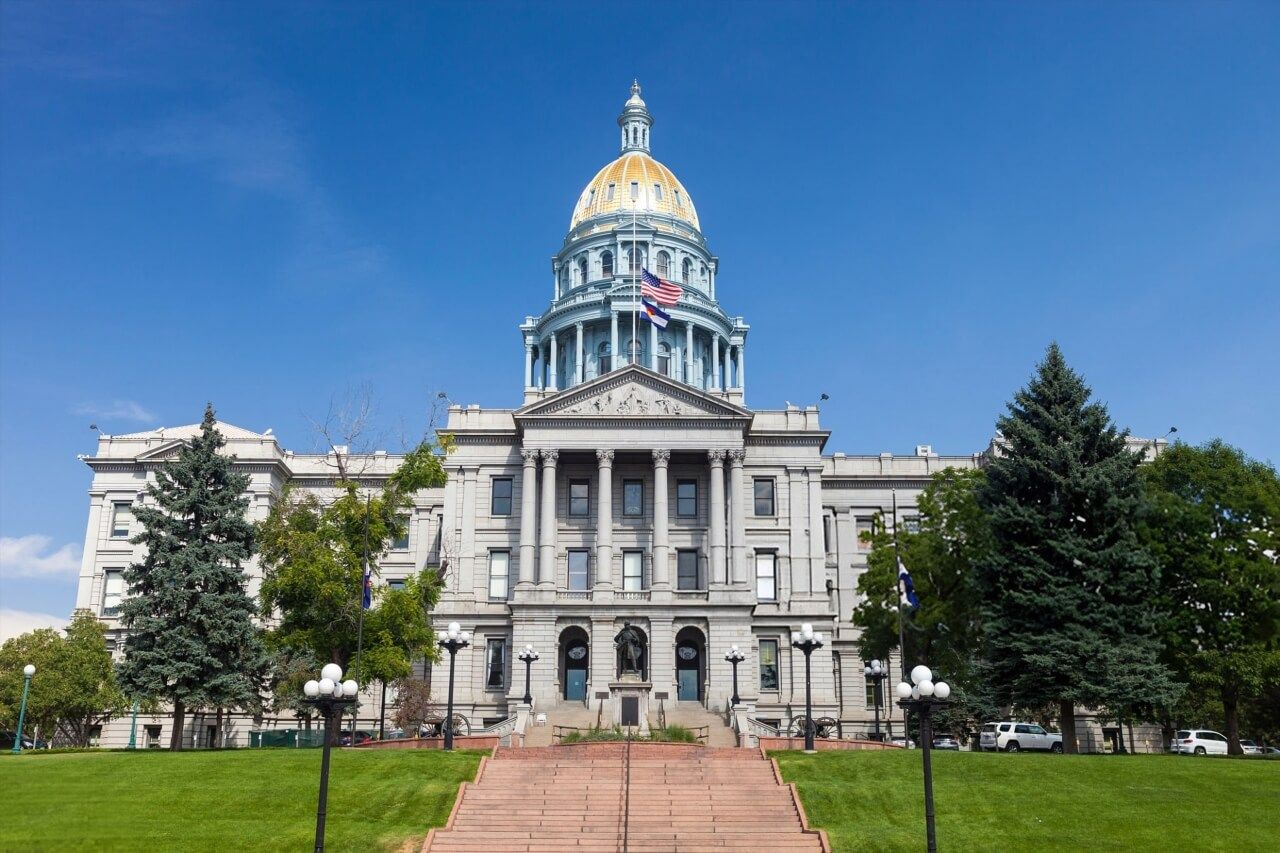
The Colorado State Capitol (200 E Colfax Ave, Denver, CO 80203, rated 4.6/5 on Google (890 avis)) is one of the more underrated free attractions in any American city. The building itself is an architectural statement: the dome is sheathed in 24-karat gold leaf, a nod to Colorado's gold rush history, and it was last regilded in 2013 using 65 ounces of pure Colorado gold donated by the Cripple Creek & Victor Gold Mining Company, refined in Utah and hammered into leaf in Florence, Italy.
Free tours run Monday through Friday, covering the legislative chambers, the stained glass portraits of Colorado pioneers, and the rose onyx wainscoting, a stone found only in a single quarry in Beulah, Colorado, which was entirely exhausted to finish this building. On the west steps, you'll find a marker on the 18th step, long believed to be exactly one mile above sea level. A more precise survey in 2003 revised the true mile-high point to the 13th step, and a brass benchmark was installed there to mark the corrected elevation. Both are now visible if you look carefully on your way up.
Go on a weekday morning when the rotunda is quiet. The light through the stained glass at 10 a.m. is something a photograph can't quite capture. If the Colorado General Assembly is in session (January through May), you can watch from the public galleries, no ticket, no reservation, just walk in. The Capitol is also stop one on the Ryocity Denver audio walk, worth queuing up before you climb the steps.
2. Denver Art Museum
The Denver Art Museum is one of the largest art museums between Chicago and the West Coast, holding a permanent collection of more than 70,000 works across twelve curatorial areas. The building itself is worth the trip: the original 1971 Gio Ponti tower, clad in one million iridescent gray tiles, faces the jagged titanium-paneled Frederic C. Hamilton Building designed by Daniel Libeskind and opened in 2006.
The Indigenous Arts of North America collection is internationally recognized, holding more than 18,000 objects from over 250 Indigenous nations, and is considered one of the strongest and most comprehensive collections of its kind in the world. Plan at least an hour there before moving on. The Western American Art galleries on the upper floors offer a very different lens: Frederic Remington bronzes, Thomas Moran landscapes of Yellowstone, and works by Georgia O'Keeffe acquired before she became a household name.
Admission is $25 for adults, with free entry on the first Saturday of each month for Colorado residents. The museum's café is legitimately good, worth a lunch stop even if you're only passing through the Golden Triangle neighborhood. Temporary exhibitions rotate frequently; check the calendar before you go, as blockbusters often require timed-entry tickets booked weeks in advance.
If you're traveling with children, the Martin Building's interactive spaces on the lower floors are designed for hands-on engagement, better than most children's museum annexes at comparable institutions.
3. Red Rocks Park & Amphitheatre
There is no music venue on earth quite like Red Rocks Amphitheatre (18300 W Alameda Pkwy, Morrison, CO 80465, rated 4.9/5 on Google (63 915 avis)). The sandstone formations that frame the stage, Ship Rock and Creation Rock, belong to the Fountain Formation deposited roughly 280 million years ago, and the natural acoustics they create have been studied and praised by acoustic engineers for decades: the rock faces function as a nearly perfect natural reflector, and very little artificial amplification modification is required. The Beatles played here in 1964. U2 recorded « Under a Blood Red Sky » here in 1983. Radiohead, Phish, Coltrane, and John Denver have all left recordings from this stage.
The park surrounding the venue is free to enter any day there isn't a performance. Most mornings you'll find Denver residents doing the infamous Red Rocks workout, climbing the 9,525-seat amphitheatre's stairs repeatedly as a training exercise. It's open to anyone. The Colorado Music Hall of Fame inside the venue complex is free and worth thirty minutes of your time even if you're not a music scholar.
Concert season runs roughly May through October. Tickets for headliners sell out within minutes of going on sale; sign up for the Denver Arts & Venues newsletter to get advance notice. If you can't get tickets to a show, the free yoga and fitness classes held on weekend mornings at the stage are a genuine experience, exercising inside an ancient geological amphitheatre at sunrise is not something you can replicate anywhere else in the country.
The drive from Denver takes about 30 minutes heading west on US-40. Arrive early on concert nights; the parking lot fills fast and traffic backing onto the highway can add 45 minutes to your exit.
4. Denver Museum of Nature & Science
The Denver Museum of Nature and Science (2001 Colorado Blvd, Denver, CO 80205, rated 4.7/5 on Google (17 971 avis)) sits at the eastern edge of City Park and draws more than 1.4 million visitors per year, making it one of the most visited natural history museums in the country. The fossil halls alone justify the admission price: a Triceratops skull the size of a small car, a Tyrannosaurus rex specimen with an exceptional bone-recovery rate, and a Stegosaurus skeleton found in the Morrison Formation, the same geological layer that produced many of the world's most famous dinosaur discoveries.
Beyond dinosaurs, the Gem and Mineral Hall contains specimens from Colorado's extraordinary mining heritage: a rhodochrosite crystal, Colorado's state mineral, the size of a grapefruit, alongside gold nuggets, silver ore, and fluorite formations from mines that operated just a century ago. The Space Odyssey exhibit, recently renovated, includes a full-scale Mars habitat model and a digital orrery showing the current position of every known body in the solar system.
Admission runs $16, $22 for adults depending on the day and any special exhibitions. Budget a full morning here; the museum is genuinely large and the temporary exhibitions (which have covered topics from mummies to dark matter) frequently require extra time. The IMAX theater and planetarium shows are sold separately but worth adding if you're visiting with children.
5. Union Station
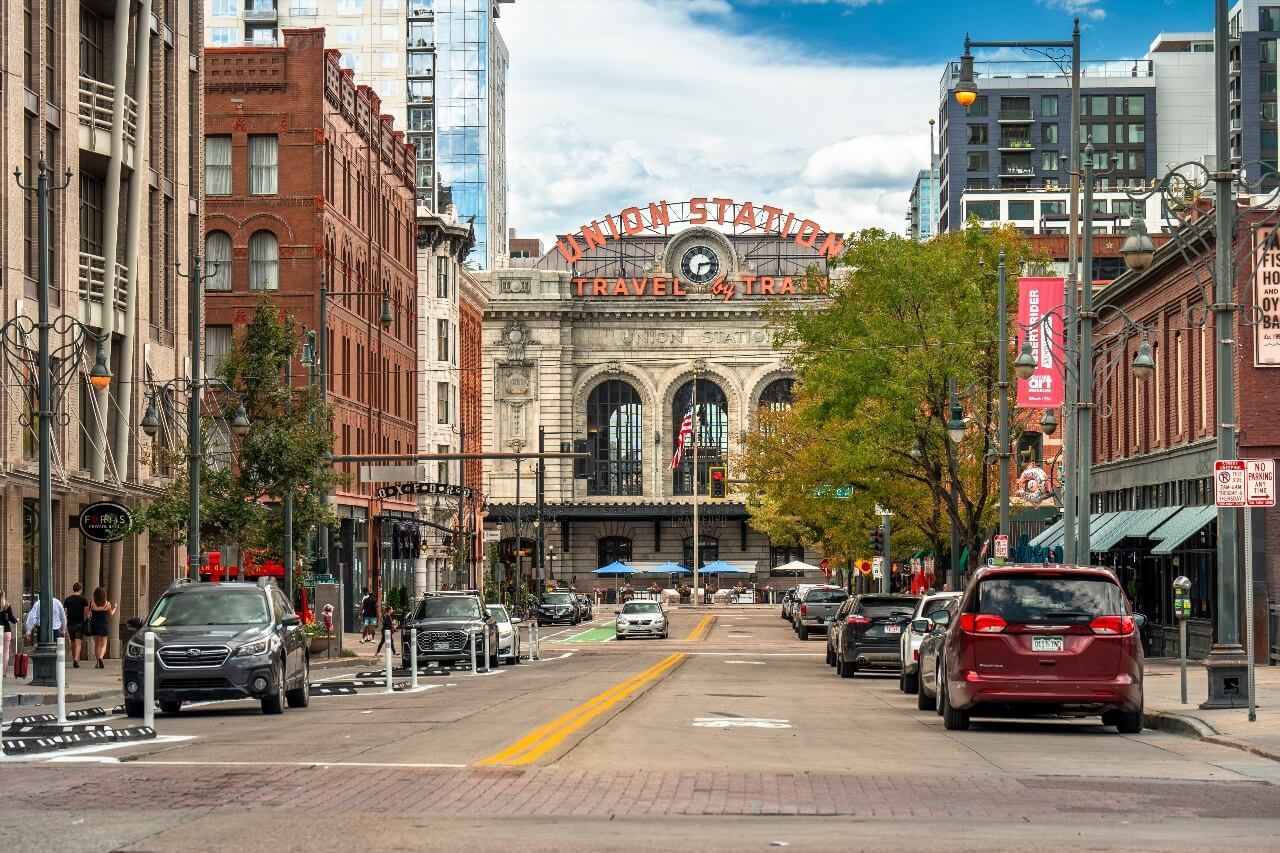
Denver Union Station (1701 Wynkoop St, Denver, CO 80202, rated 4.6/5 on Google (3 843 avis)) is the most beautifully restored train station in the American West. The main hall, anchored by neon signs that read Travel by Train in classic script, was converted in 2014 into a hotel lobby and food hall, but the building itself dates to 1914, and the Beaux-Arts facade on the 17th Street side has been preserved down to the brass fittings.
Even if you're not catching a train, the Terminal Bar and the Mercantile Dining & Provision restaurant are excellent reasons to visit. The station is the hub of the RTD light rail system, which connects downtown Denver to the airport (about 35 minutes, no taxi needed) and to several suburban areas. On summer evenings, the plaza in front of the station becomes an informal gathering spot, food trucks, occasional live music, and the kind of easy street life that downtown Denver has worked hard to cultivate over the past decade.
6. Larimer Square
Larimer Square is Denver's oldest commercial block, a single Victorian-era street that survived multiple waves of urban renewal largely because of one woman: Dana Crawford, who led the effort to save and restore it in the late 1960s when the city government wanted to demolish the whole block. Today it's a pedestrian-friendly stretch of boutiques, cocktail bars, and restaurants operating out of buildings that date to the 1870s, including the Crawford Building from 1875. Denver designated the block its first locally protected historic district in 1971.
The restaurants here have won more James Beard Awards than almost any comparable strip in the Mountain West: Rioja, Bistro Vendôme, and Corridor 44, a champagne bar in a former parking garage, are among the perennial favorites. The string lights strung above the street make it particularly atmospheric after dark, and on Friday and Saturday evenings the block fills with a crowd that skews local rather than tourist.
If you want the full effect, come for dinner and stay for a cocktail. The bar at Rioja serves a Pisco Sour that gets written about in national food publications for a reason. During December, the square runs a European-style holiday market that draws Denverites from every neighborhood.
7. City Park
City Park (York St & 17th Ave, Denver, CO 80206) is Denver's largest urban park, covering 330 acres in the eastern part of the city. It's also one of the more democratic spaces in Denver, on a Sunday afternoon you'll find multigenerational Mexican-American families grilling, young professionals playing tennis, kids feeding ducks at Ferril Lake, and joggers completing the 3.5-mile perimeter loop.
The park is home to both the Denver Zoo and the Denver Museum of Nature and Science (both covered separately in this list), so you can feasibly combine all three in a single day. The central pavilion on Ferril Lake hosts Jazz in the Park every Sunday evening from June through August, free concerts that have been a Denver summer tradition since 1969. The view from the pavilion toward downtown, with the Rockies framing the skyline on clear days, is one of the better photographs you'll take in the city. Go early on weekend mornings; parking along York Street fills by 9 a.m. in summer.
8. Denver Botanic Gardens
The Denver Botanic Gardens (1007 York St, Denver, CO 80206, rated 4.8/5 on Google (18 046 avis)) covers 23 acres in the Cheesman Park neighborhood and holds one of the premier collections of plants adapted to the Rocky Mountain climate in the country. The Japanese garden, called Sho-fu-en (Garden of the Pines and Wind), was dedicated in 1979 and designed to evoke the rugged landscapes of Gifu prefecture and Takayama, Denver's sister city since 1964. It remains one of the most serene spots in Denver: a karesansui dry garden, a teahouse, and specimen pines that turn the light particularly beautiful in October.
The xeriscape demonstration garden, showing how to achieve a lush, water-efficient landscape in a semi-arid climate, has influenced landscape design across the Mountain West region. Spring bloom season (April : May) draws large crowds for the tulip and daffodil displays; summer evenings feature the Concerts in the Garden series, a beloved local tradition with acts ranging from indie folk to salsa orchestras.
Admission is $15 for adults on weekdays, with higher pricing on weekends and concert nights. Children under 3 are always free. The gift shop carries a better-than-average selection of local plant guides and seeds native to the Colorado Plateau.
9. Coors Field
Coors Field (2001 Blake St, Denver, CO 80205, rated 4.7/5 on Google (31 859 avis)) has been the home of the Colorado Rockies since 1995, and it ranks consistently among the most beautiful ballparks in Major League Baseball, not for the stadium architecture alone, but for what sits behind the outfield wall: the Rocky Mountains, visible on clear days from every seat in the upper deck. At 5,280 feet, the thin air here has measurable effects on the game; balls travel roughly 10% farther at altitude, which is why the team installed a humidor in 2002 to store baseballs at consistent humidity (70°F, 50% humidity) and reduce the homer-happy conditions that defined the franchise's early years.
Tickets for regular-season games start around $15 for upper deck seats, and because the Rockies rarely contend for playoff berths, you can often walk up to the box office on game day. The Rockpile, the center-field bleacher section, offers $4 tickets on a first-come basis, and the atmosphere there is rowdy in the best way. The stadium tour (offered on non-game days) is surprisingly rich: you'll visit the dugout, the press box, the humidor room itself, and the club's archive of memorabilia stretching back to the original 1993 expansion season.
LoDo (Lower Downtown), the neighborhood surrounding the park, is Denver's most concentrated bar and restaurant district. Blake Street and Market Street fill quickly on game nights, but there are enough options that finding a spot before or after a game is never difficult.
10. RiNo Art District
The River North Art District (2800 Larimer St, Denver, CO 80205, rated 4.5/5 on Google (2.1K reviews)), universally called RiNo, is the kind of neighborhood that cities spend decades trying to manufacture and rarely achieve organically. What was an industrial wasteland of warehouses and rail yards north of downtown became, over roughly fifteen years of incremental investment, one of the densest concentrations of street art, galleries, breweries, and food halls on the West Coast of the United States.
The murals are the entry point for most visitors. Walk along Brighton Boulevard, Larimer Street, and the walls flanking the 40th and Colorado light rail station and you'll encounter pieces by internationally recognized artists, Eduardo Kobra, Tilt, and local legends like Detour, alongside work from Denver-based collectives that have been active here since the neighborhood's first galleries opened around 2005. The scale is what surprises people: some of these murals cover the entire face of a five-story building.
Beyond the art, RiNo holds some of Denver's best dining. Brutø and Quiero Arepas attract lines on weekend evenings. The Denver Central Market, a food hall in a converted warehouse on Larimer, houses eight vendors covering everything from raw oysters to Thai food to specialty coffee. If you're a craft beer tourist, this is your neighborhood: Great Divide, Ratio Beerworks, and Crooked Stave are all within walking distance of each other.
The Ryo audio guide for Denver covers several RiNo landmarks in detail, if you want the backstory on the murals and the neighborhood's industrial past before it became an arts district, the Ryocity Denver audio tour is worth downloading before you walk the neighborhood.
11. Denver Zoo
The Denver Zoo (2300 Steele St, Denver, CO 80205, rated 4.6/5 on Google (31 431 avis)) has been operating in City Park since 1896, making it one of the oldest zoos in the United States. The collection covers more than 4,000 animals representing 450 species, with recent facility improvements focusing on naturalistic habitats over traditional cage displays. The Toyota Elephant Passage, opened in June 2012, is a 10-acre, $50 million complex with more than two miles of interconnected trails, designed specifically to support behavioral research on bull elephants. You can observe the herd moving through forested terrain that approximates their natural range.
The Predator Ridge habitat houses African lions, African wild dogs, and spotted hyenas in a shared landscape separated by fence lines the animals can see and smell across, a behavioral enrichment approach that zoo scientists have documented producing measurably lower stress indicators in the animals. It's also considerably more interesting for visitors than separated cage exhibits.
Admission runs $20, $27 for adults depending on the season. Summer mornings before 10 a.m. are the best time to visit: the big cats and primates are most active in cool temperatures, and crowds are manageable before 11.
12. Confluence Park
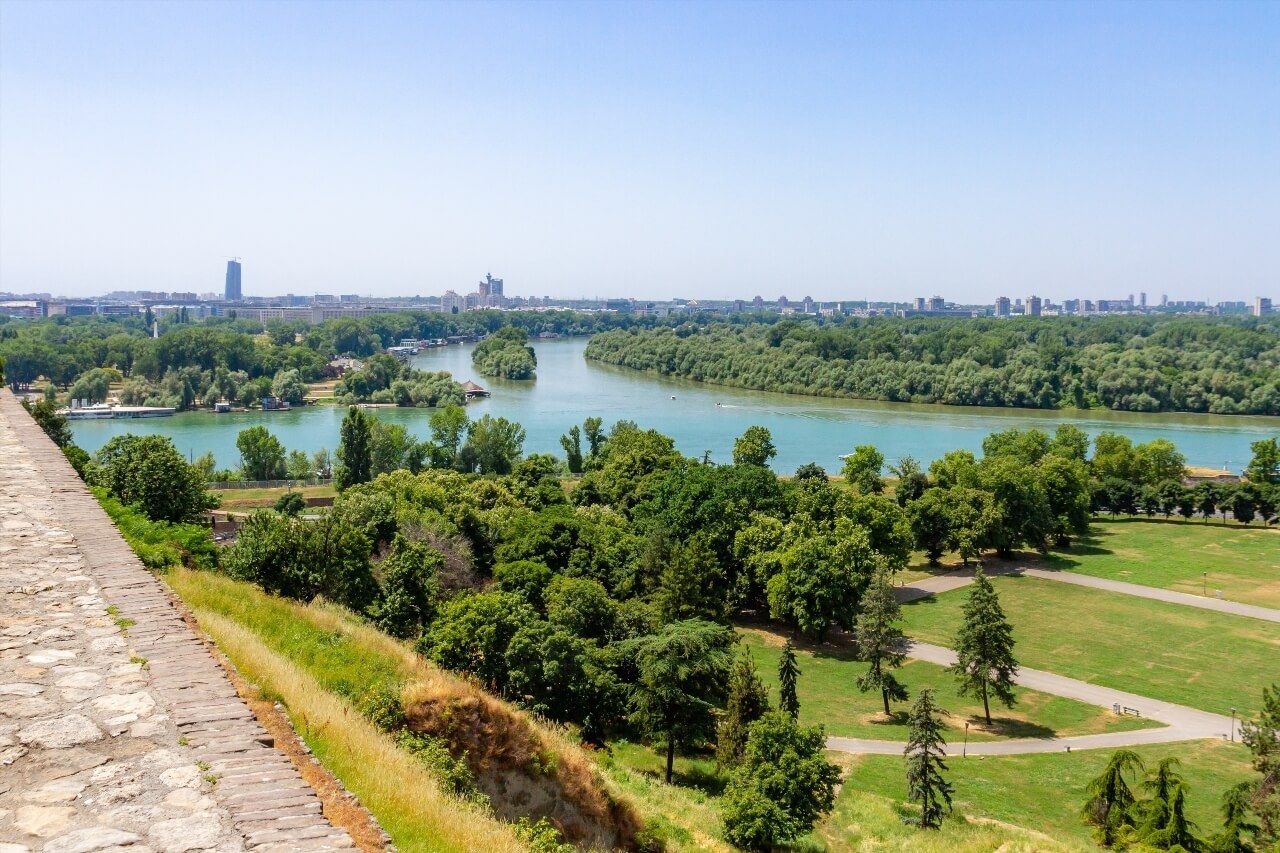
Confluence Park (2250 15th St, Denver, CO 80202) marks the spot where Cherry Creek meets the South Platte River, the same confluence that drew the first permanent Euro-American settlement to this location in 1858. Today it's a small but well-designed urban park with kayak and paddleboard launch points, a sand beach that fills with families on hot summer days, and a pedestrian bridge connecting the LoDo neighborhood to the Platte River trail system.
The park is free, open year-round, and the standing wave created by the whitewater features in the creek draws kayakers who loop the same stretch repeatedly. Nobody plans a downtown river surf session, yet here it is.
13. Molly Brown House Museum
The Molly Brown House Museum (1340 Pennsylvania St, Denver, CO 80203, rated 4.7/5 on Google (2 866 avis)) is one of the most underrated historic sites in Denver. Margaret « Molly » Brown, her actual nickname, not a Hollywood invention, was a Colorado mining heiress who survived the sinking of the RMS Titanic in April 1912 and spent the remainder of her life as a labor activist, suffragist, and philanthropist. The house she shared with her husband J.J. Brown, built in 1889, was the social center of Denver's Capitol Hill neighborhood during the Gilded Age.
The guided tours (offered on the hour, about 45 minutes long) are genuinely well-researched, the museum's curators have spent decades separating the mythology around Molly Brown from the documented historical record, and the result is a portrait of a woman considerably more interesting than the Broadway musical suggests. The interiors have been painstakingly restored using period photographs: the parlor's wallpaper pattern, the dining room's pressed tin ceiling, the servant quarters that tell a quieter story about labor in Gilded Age Denver.
Admission is $14 for adults. The house sits in the Wyman Historic District, a walkable neighborhood of Victorian-era mansions two blocks from the State Capitol. Worth combining with a visit to the Capitol and a walk down 14th Avenue.
14. The Source Hotel & Market Hall
The Source (3350 Brighton Blvd, Denver, CO 80216) is one of the better examples of adaptive reuse in a city that has done a lot of it. The main building is an 1880s ironworks foundry converted into a market hall housing about a dozen independent vendors: Crooked Stave brewery, a kombucha tap room, an artisan bread bakery, a butcher, and a Thai restaurant among them. A boutique hotel, The Source Hotel, was added to the complex in 2017 and has a rooftop bar with views toward the Rockies.
It's located on Brighton Boulevard in RiNo, adjacent to the neighborhood's main mural corridor. Weekend mornings at the market hall are relaxed and local-feeling, the bread lines at the bakery can run 20 minutes, but the sourdough and croissants justify the wait. The rooftop bar, Trigger, is one of the better spots in Denver for a late-afternoon drink before moving on to dinner.
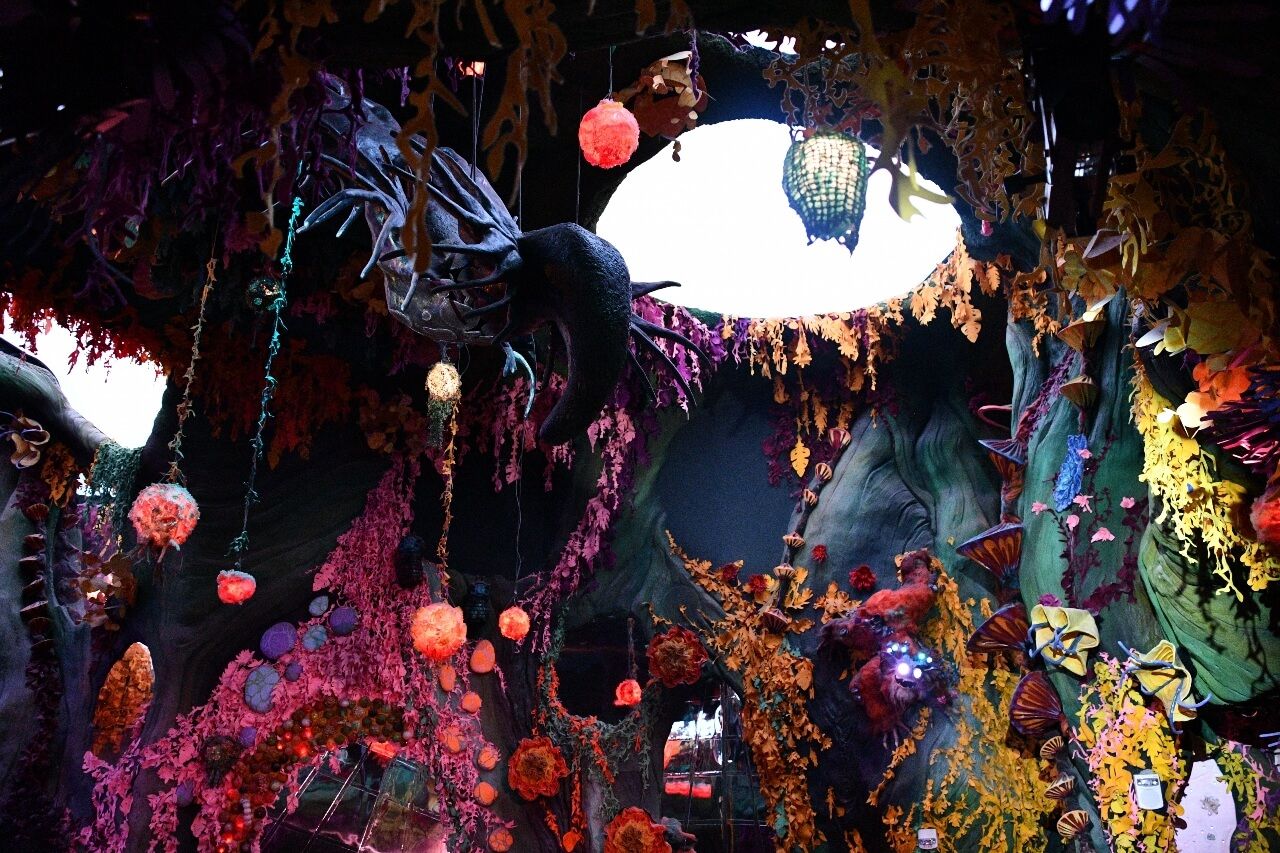
15. Meow Wolf Denver
Meow Wolf Denver (1338 1st St, Denver, CO 80204), the installation is officially titled Convergence Station, is one of three permanent locations from the Santa Fe-based art collective Meow Wolf, and it is the largest of the three, covering 90,000 square feet across four floors. Describing what it is requires accepting a certain amount of absurdity: it's an immersive narrative art installation where visitors walk through interconnected worlds, each designed by a different team of artists, following a fractured science fiction story about a transit hub where multiple dimensions intersect.
In practical terms, it means rooms where the furniture moves when you touch it, corridors that transform into alien forests, elevator shafts that become visual infinity chambers, and a research station where hidden documents advance the overarching narrative if you read carefully enough. The installation opened to the public on September 17, 2021 and has become one of the most-visited cultural attractions in Denver.
Tickets run $45, $55 for adults depending on the day and time of booking. A visit takes two to three hours minimum to cover the main floors; devoted puzzle-solvers spend five or six hours. Children love it with an intensity that borders on religious experience, plan accordingly. Book tickets online at least a week in advance during summer and holiday weekends; walk-in availability is limited.
The location is at the corner of 1st and Wewatta, a five-minute walk from Union Station and directly adjacent to the Empower Field light rail stop, no car needed if you're staying downtown.
16. Colfax Avenue
Colfax Avenue runs for 26 miles east to west through Denver and its suburbs, and Playboy once called it the longest, most wicked street in America. That reputation belongs mostly to the 1970s and '80s; today the stretch through Capitol Hill and Congress Park between Broadway and Colorado Boulevard is a lively mixed-use corridor of record shops, dive bars, late-night diners, bookstores, and a few genuinely odd businesses that defy easy categorization.
The Tattered Cover bookstore on Colfax has been a Denver institution since the 1970s. The Bluebird Theater (a 550-capacity music venue) and the Ogden Theatre (a 1,600-seat Art Deco hall dating to 1917) both sit on Colfax and book mid-tier touring acts that fill the gap between Red Rocks and arena concerts. Walking the corridor on a weekend afternoon is free, genuinely interesting, and a better way to understand Denver's character than any curated tourist route.
17. Denver Firefighters Museum
The Denver Firefighters Museum (1326 Tremont Pl, Denver, CO 80204, rated 4.6/5 on Google (600 avis)) occupies Firehouse No. 1, built in 1909 and operating as a working fire station until 1975.
The collection inside is more compelling than the building's exterior suggests: original horse-drawn steam pumpers, the city's first motor-driven fire apparatus (a 1913 American LaFrance), hand-drawn maps from the Great Denver Fire of 1863, the event that destroyed most of the original settlement and prompted the construction of the fireproof brick buildings that defined the city's second phase of development. The museum is small, a thorough visit takes about 45 minutes, but the quality of the archival photographs and interpretive writing is well above average for a local institution. Admission is $8 for adults. It's located two blocks from the Denver Art Museum, a natural stop on a Golden Triangle museum day.
18. Wings Over the Rockies Air & Space Museum
Wings Over the Rockies Air & Space Museum (7711 E Academy Blvd, Denver, CO 80230, rated 4.7/5 on Google (6 138 avis)) occupies Hangar 61 of the former Lowry Air Force Base, a massive WWII-era structure that functioned as a B-52 bomber maintenance hangar before the base closed in 1994. The collection of aircraft on the hangar floor is the main draw: a B-52D Stratofortress, an F-105 Thunderchief, an SR-71 Blackbird trainer variant, and a Douglas A-26 Invader among the 50+ aircraft on display.
For aviation enthusiasts, the quality of access here is exceptional: most aircraft are displayed at floor level with minimal barriers, and the hangar's industrial scale means you can walk around and underneath them in ways that enclosed museum galleries typically don't permit. The space exploration gallery features a realistic replica of the NASA Orion capsule crew module and a genuine Titan II missile, the same type that carried John Glenn to orbit, in vertical display.
Admission is $18 for adults. The museum sits in the Lowry neighborhood, about 20 minutes by car from downtown Denver, and makes a natural pairing with the Lowry Town Center's restaurants if you want to make a half-day of it.
19. Elitch Gardens
Elitch Gardens Theme & Water Park (2000 Elitch Cir, Denver, CO 80204, rated 4/5 on Google (14 693 avis)) is the only combined theme and water park in a downtown location in the United States, a geographical quirk that means you can ride a roller coaster with a direct view of the Denver skyline. The park traces its history to 1890, when John and Mary Elitch opened an orchard and performance venue that became one of the first amusement parks west of the Mississippi.
The modern park relocated to its current downtown site in 1995 and has expanded considerably since. The coaster lineup includes the Mind Eraser (an inverted looping coaster), the Twister II (a wooden coaster with an 80-foot first drop), and the Boomerang for family riders. The attached water park operates Memorial Day through Labor Day and is a genuine relief on Denver's hot July afternoons.
Admission runs $40, $65 for adults depending on the date and how far in advance you book online. Season passes offer good value if you're a Colorado resident.
20. Cherry Creek Trail
The Cherry Creek Trail is a paved multi-use path that runs roughly 40 miles from Confluence Park downtown all the way to Franktown, passing through the Cherry Creek shopping district and Cherry Creek State Park in Aurora. The downtown segment is one of the most popular urban cycling corridors in Colorado.
Bike rentals are available from BCycle stations distributed throughout downtown and Cherry Creek North. The trail is flat, well-maintained, and separated from vehicle traffic for most of its length. On weekend mornings the section through Cherry Creek North fills with rollerbladers, dog walkers, and cyclists doing laps. If you ride the full length to Cherry Creek Reservoir, budget three to four hours round trip.
21. History Colorado Center
The History Colorado Center opened in 2012 in a custom-built facility designed by Tryba Architects and has set a new standard for state history museums in the American West. The permanent galleries cover Colorado's story from its Ancestral Puebloan civilizations through the mining era, the cattle drives, the railroad expansion, and into the 20th century, but what distinguishes this museum from comparable institutions is the interpretive approach.
The centerpiece is the « Time Machine » exhibit: a full-scale recreation of Ludlow, Colorado, the site of the 1914 Ludlow Massacre, where Colorado National Guard troops and hired mine guards opened fire on a tent colony of striking miners and their families, killing roughly 20 people including 11 children. It's one of the most significant and least-discussed events in American labor history, and the museum's presentation is unflinching. You can walk through a recreated tent, examine replica artifacts from the colony, and listen to oral history recordings from descendants of survivors.
The exhibit on Denver itself, covering the city's transformation from a gold rush outpost to a modern metropolitan area, includes a simulated streetcar ride through the 1930s city, a mock-up of a 1960s Colorado mountain ski lodge, and a section on the Chicano civil rights movement in Denver that is more thorough than anything comparable in most national museums.
Admission is $14 for adults, with free admission on the first Saturday of every month. The museum is located directly across the street from the Denver Art Museum, the two together make for a full and worthwhile cultural day. The Ryocity Denver audio walk also passes the History Colorado Center, queue up that segment if you want context before you go in.
22. Denver Performing Arts Complex
The Denver Performing Arts Complex is the second-largest performing arts complex in the United States, after Lincoln Center in New York. The ten-venue complex, spread across 12 acres and connected by an enclosed glass skybridge across 14th Street, houses the Colorado Symphony, the Colorado Ballet, the Denver Center for the Performing Arts, Opera Colorado, and the Buell Theatre, among others, with more than 10,000 seats in total.
For visitors, the most accessible entry point is the Ellie Caulkins Opera House, which hosts touring Broadway productions on a regular schedule, and the Boettcher Concert Hall, a theater-in-the-round where every seat in the 2,634-seat house is within 85 feet of the conductor. Free lunchtime concerts in the atrium occur most Fridays from October through April. The complex is a five-minute walk from Union Station and the 16th Street Mall.
23. Stanley Marketplace
Stanley Marketplace (2501 Dallas St, Aurora, CO 80010, rated 4.6/5 on Google (7 921 avis)) is the best food hall and market complex in the Denver metro area, located in the former Stanley Aviation factory in Aurora, the company that manufactured airplane emergency ejection seat mechanisms for decades. The 100,000-square-foot building now holds more than 50 local businesses: restaurants, breweries, boutiques, a climbing gym, a dog groomer, a spa, and a theater company.
The food options are genuinely diverse and locally owned: a New Mexican red chile spot, a Japanese izakaya, a wood-fired pizza operation, and a dedicated ice cream shop using Colorado-sourced dairy. The atmosphere on a weekend afternoon is community-oriented in a way that curated food halls often fail to achieve, you see families from the surrounding Aurora neighborhoods alongside Denver food tourists, and the building's industrial scale absorbs it all without feeling crowded.
Stanley is about 20 minutes by car from downtown Denver, or accessible via the University of Colorado A Line light rail to Peoria Station (a short rideshare from there). The complex hosts seasonal events including a winter market and summer outdoor concerts.
24. Golden Triangle Creative District
The Golden Triangle Creative District stretches across the neighborhood between Broadway, Speer Boulevard, and Colfax Avenue, and holds the highest concentration of museums and galleries in Denver. Within a 12-block radius you'll find the Denver Art Museum, the Clyfford Still Museum, the History Colorado Center, the Denver Firefighters Museum, the Colorado State Capitol, and roughly 30 independent galleries.
The district hosts a First Friday Art Walk on the first Friday of each month, when galleries stay open until 9 p.m. and many offer free wine and artist talks. It's a good way to cover significant ground quickly and discover smaller galleries showing Denver artists who haven't yet crossed over to national recognition.
25. Cheesman Park
Cheesman Park (Franklin St & 8th Ave, Denver, CO 80218) occupies one of the stranger pieces of ground in the city: the site of a 19th-century city cemetery that was converted to a park in 1907 after the city relocated most of its graves, though not all. Local folklore, backed by some historical documentation, suggests that thousands of remains were never moved, which gives the park a particular edge as a curiosity.
Aside from its macabre history, Cheesman Park is a beautiful open-lawn park surrounded by some of Denver's most architecturally notable residential blocks. The Cheesman Park Pavilion, a Neoclassical structure completed in 1910, sits at the center of the park and frames views toward the mountains on clear days.
26. Clyfford Still Museum
The Clyfford Still Museum (1250 Bannock St, Denver, CO 80204, rated 4.7/5 on Google (847 avis)) holds one of the most remarkable single-artist collections in the world. Clyfford Still was a foundational figure of Abstract Expressionism, he preceded de Kooning and Pollock in developing the large-scale, emotionally charged painting style associated with the New York School of the 1940s, but he spent much of his career refusing to sell his work to dealers or galleries he didn't trust. When he died in 1980, he left roughly 93% of his total output to an unnamed American city willing to dedicate a permanent museum to his work.
Denver won the competition in 2004, and the Brad Cloepfil-designed museum opened in 2011 next to the Denver Art Museum. The collection of approximately 830 paintings and 2,300 works on paper represents the largest single-artist museum archive in the country. The building is designed around diffused natural light through translucent ceiling panels, the galleries never feel artificially lit, and Still's massive canvases (several exceed 15 feet in height) read very differently under natural light than under the artificial lighting of a conventional gallery.
Admission is $10 for adults. If you're combining it with the Denver Art Museum (directly across the plaza), both institutions offer a combined-admission discount. Plan 45 minutes to an hour; the collection is not large in number but dense in emotional weight.
27. Denver Skate Park
Denver Skate Park (2205 19th St, Denver, CO 80211) is one of the largest free public skate parks in the United States, covering 60,000 square feet of concrete along the South Platte River near Confluence Park. The park opened in July 2001 with an expansion in 2003, and is split evenly between bowls and pipes for vertical skaters and features for those who favor street skating.
Even if you don't skate, it's worth walking past on a summer afternoon. The level of skating on display, particularly in the deep concrete bowls on the western end, is consistently high. Open daily from dawn to dusk, directly connected to the Platte River trail system.
28. Buffalo Bill Museum & Grave
The Buffalo Bill Museum and Grave (987 1/2 Lookout Mountain Rd, Golden, CO 80401, rated 4.7/5 on Google (2 869 avis)) (987½ Lookout Mountain Rd, Golden, CO 80401) sits at the summit of Lookout Mountain, about 25 minutes west of Denver, and marks the burial site of William F. « Buffalo Bill » Cody, the frontier scout, Pony Express rider, and showman who ran the Buffalo Bill's Wild West touring production for three decades and introduced European audiences to the mythology of the American West.
The museum's collection of Wild West show artifacts is genuinely extensive: original Annie Oakley shooting targets, embroidered performance costumes worn by Native American performers, handbills and programs from shows that toured Germany, France, and Britain, and a sitting room reconstructed from Cody's personal belongings. The view from the grave site itself, looking east across the Front Range toward Denver and the plains beyond, is one of the better panoramas accessible by car in the Denver area.
Admission is $5 for adults. The drive up Lookout Mountain Road is steep and winding (not suitable for low-clearance vehicles in winter) but the road is paved and the summit area has a picnic ground. Combine with a stop in Golden, the original territorial capital of Colorado and home to the Coors Brewery, which offers free tours.
29. Hammonds Candy Factory
Hammond's Candies (5735 N Washington St, Denver, CO 80216, rated 4.5/5 on Google (902 avis)) has been producing handmade candy canes, lollipops, and ribbon candy in north Denver since 1920.
The factory offers free 30-minute tours most days of the week, during which you can watch the full production process: sugar being cooked to precise temperatures in copper kettles, pulled and twisted by hand on ancient machines, then cut and wrapped on a production floor that hasn't changed much since the 1950s. The candy canes are sold in stores across the United States, but the factory retail shop sells flavors and designs you won't find anywhere else: absinthe-flavored lollipops, jalapeño candy canes, and lavender ribbon candy among the more unusual options. Tours run every half hour from 9 a.m. to 3 p.m. Monday through Friday. Book online in advance during the holiday season (October through December), when demand far exceeds tour capacity.
30. Chatfield Farms, Denver Botanic Gardens
Chatfield Farms (8500 W Deer Creek Canyon Rd, Littleton, CO 80128) is the satellite property of the Denver Botanic Gardens, located about 30 minutes south of downtown in a river valley at the base of the Front Range foothills. The site covers 700 acres and operates as a working farm with heritage-breed livestock, an orchard, a community garden, and rotating seasonal programming.
The seasonal pumpkin festival (October) draws significant crowds, as does the spring tulip display. But the real appeal for non-festival visitors is the quiet: walking trails through wetland habitat along Deer Creek, views toward the Platte River canyon, and a sense of scale that the main York Street gardens, beautiful as they are, can't provide. Same admission pricing as the main Denver Botanic Gardens; the two sites use a shared membership.
FAQ
What is Denver best known for?
Denver is best known as the Mile High City, sitting at exactly 5,280 feet above sea level. It's a major gateway to Rocky Mountain skiing and hiking, home to a thriving craft beer scene with more breweries per capita than almost any US city, and the base for several world-class cultural institutions including the Denver Art Museum and the Denver Museum of Nature and Science.
How many days do you need in Denver?
Three days gives you enough time to cover the main cultural sites, explore one or two neighborhoods in depth, and take a day trip to Red Rocks or the mountains. A weekend (two nights) is workable if you focus. Many visitors find that Denver rewards a longer stay, the food and brewery scene alone could fill a week.
Is Denver worth visiting?
Yes, particularly if you're combining it with the Rockies. Denver has improved dramatically as a standalone destination since the mid-2000s: the food scene now draws national attention, the arts infrastructure is substantial, and neighborhoods like RiNo and Larimer Square offer genuine character. At altitude, you may feel mildly short of breath on the first day, drink more water than usual and take it easy until you acclimatize.
What is the best area to stay in Denver?
LoDo (Lower Downtown), the area around Union Station, and the Golden Triangle neighborhood are the most convenient bases for first-time visitors. LoDo puts you within walking distance of Coors Field, the 16th Street Mall, Union Station, Larimer Square, and Confluence Park. The Golden Triangle is walkable to the major museums. Capitol Hill offers a more residential, budget-friendly alternative with easy light rail access to downtown.
Is Denver expensive to visit?
Moderately. Hotel rates in LoDo and RiNo are comparable to other major US cities, expect to pay $150, $250 per night for a decent downtown hotel. Many of Denver's best attractions (Red Rocks Park, City Park, the Capitol building, the skate park, the Cherry Creek Trail) are free or low-cost. The biggest expenses are Meow Wolf ($45, $55), major sporting events, and dining in the city's better restaurants.
What is Denver's altitude and does it affect visitors?
Denver sits at 5,280 feet (1,609 meters) above sea level. Most visitors notice mild effects: slight shortness of breath on exertion, faster intoxication from alcohol, occasional light headaches on the first day. Drinking extra water, avoiding heavy alcohol consumption on day one, and taking the first morning slowly are the standard recommendations. Symptoms typically resolve within 24 to 48 hours. The surrounding mountains are significantly higher, Breckenridge sits at over 9,600 feet, so if you're planning day trips, the altitude adjustment becomes more relevant.
Plan Your Denver Visit with Ryo
Denver rewards the kind of slow, attentive walking that most tourist itineraries don't leave room for. The Capitol Hill neighborhood alone has more architectural history per block than most American cities have in an entire district, and the same is true of LoDo, the Golden Triangle, and the residential streets around Cheesman Park. Getting oriented before you walk pays dividends.
The Ryo audio guide for Denver takes you through the city's most layered neighborhoods with commentary that goes well beyond what a map can offer, the history behind the buildings, the stories of the people who shaped this city, the connections between places that make a walk feel like a narrative rather than a checklist. Download the Ryo app before you arrive, and let the city's own streets do the talking.