




RyoCity
The City of Contrasts
Shanghai, China
RyoCity
The City of Contrasts
Shanghai, China
180 km
Distance
7.1 min
Durée
23
Audios
Boucle
Parcours
Shutterstock
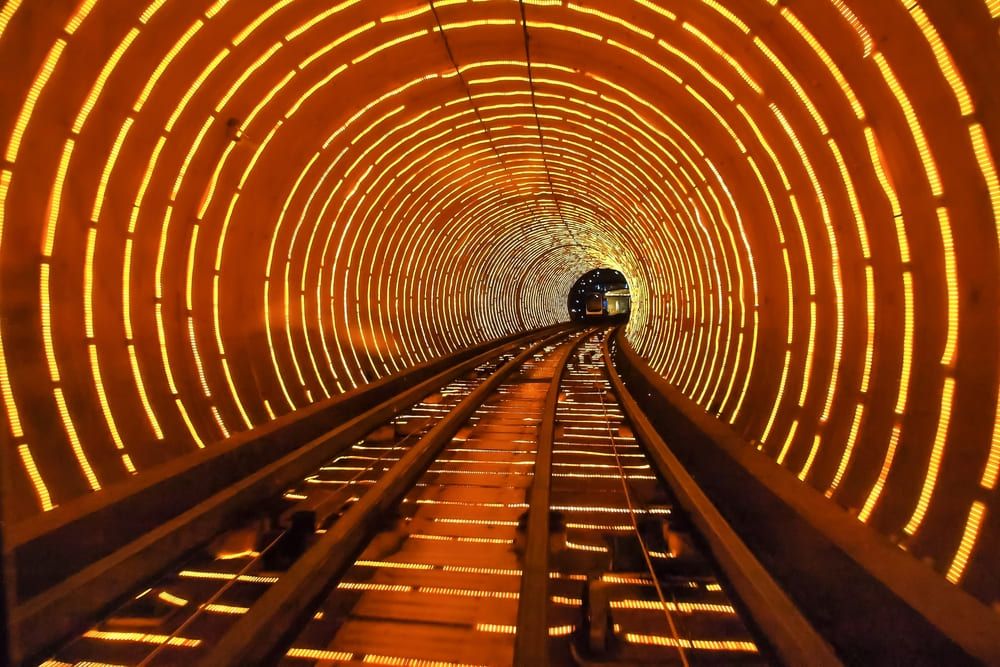
Beneath your feet lies one of Shanghai’s most unusual passageways, the Bund Sightseeing Tunnel, linking the two faces of the city: the Bund, a reminder of its colonial past, and Pudong, the futuristic skyline glittering across the Huangpu River. Opened in 2000, it was China’s first under-river pedestrian tunnel, though you don’t walk through it—you ride in small transparent, fully automated capsules that glide slowly through a show of lights and sounds; flashes of red, blue and gold, floating shapes and strange voices turn the ride into a nearly psychedelic trip, as if you were travelling through time and space. Created at the dawn of the new millennium, when Shanghai wanted to present itself as a science-fiction metropolis, the tunnel captures the technological optimism of China in the 2000s. It uses a rare French SK system, a driverless cable-pulled shuttle once found in a few European airports, and although the journey lasts only three to five minutes, it stays with you—a condensed version of Shanghai’s contrasts between spectacle and modernity, from the Bund’s neoclassical stone to Pudong’s shimmering towers. People often say it’s not the most practical way to cross the river, but certainly the most symbolic, a tunnel between two eras.
