





RyoCity
The City of Contrasts
Shanghai, China
RyoCity
The City of Contrasts
Shanghai, China
180 km
Distance
7.1 min
Durée
23
Audios
Boucle
Parcours
Shutterstock
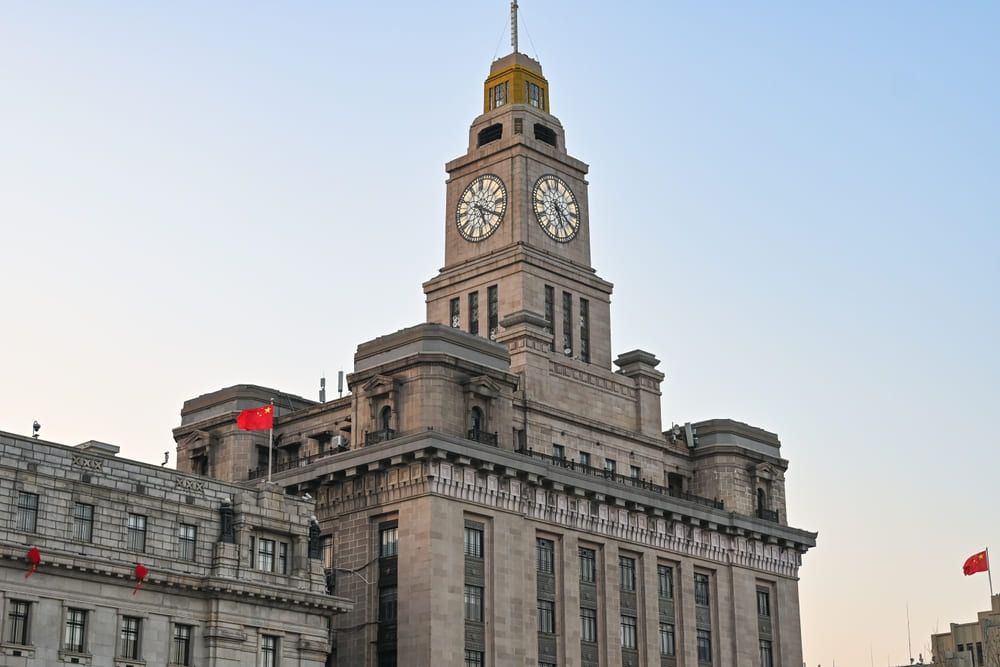
In front of you stands one of the Bund’s most recognisable landmarks, the Shanghai Customs House, its monumental façade and especially its clock tower often compared to London’s Big Ben, a powerful symbol of the city’s commercial strength and colonial prestige in the early twentieth century. Built in 1927 by the British firm Palmer and Turner in a neoclassical style inspired by ancient Greece, it was long one of the most imposing buildings in Asia, with a granite exterior, Doric columns and a grand hall decorated with marble and gold mosaics that reflected the wealth of the era. At the time China was experiencing major economic opening and strong foreign influence, which is why, in a curious twist, the country’s customs revenues were managed here by British inspectors. The great clock, rising ninety metres above the Bund, has marked daily life for almost a century, its mechanism imported from England and playing the Westminster Quarters—the same melody heard at the British Parliament. But its story also reflects China’s political upheavals, as during the Cultural Revolution the Big Ben chimes were replaced by The East Is Red, an anthem to Mao Zedong, and in 1986, during Queen Elizabeth II’s visit, the original tune was briefly restored before falling silent again in the early 2000s. Today only the hourly chimes continue to echo along the Bund, a quiet reminder of the past. Still in operation, the Customs House remains home to Shanghai’s customs administration, its silent clock and stately silhouette overlooking the Huangpu River and marking time in a city that never stops reinventing itself.
