





Walk
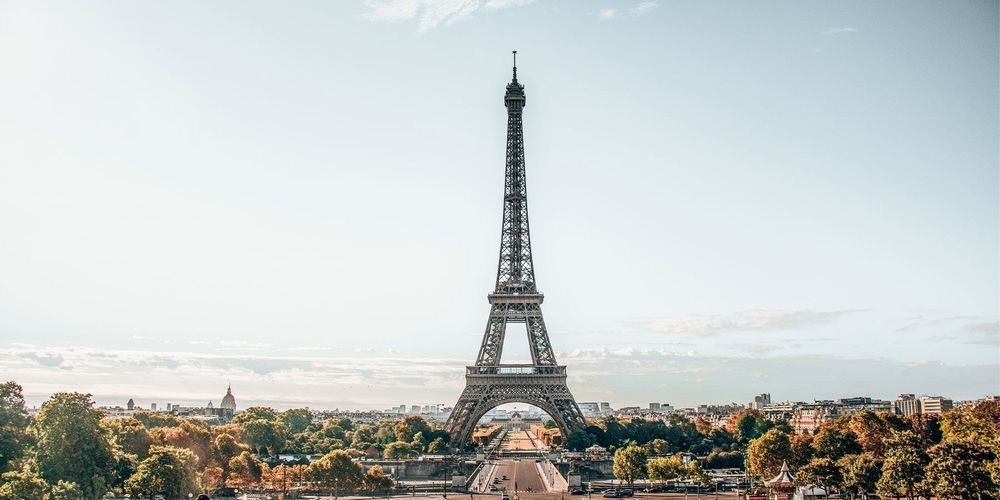
From the Concorde square to the Eiffel Tower
Paris, France
Walk
From the Concorde square to the Eiffel Tower
Paris, France
8.9 km
Distance
3h40
Durée
19
Audios
Loop
Parcours
Shutterstock
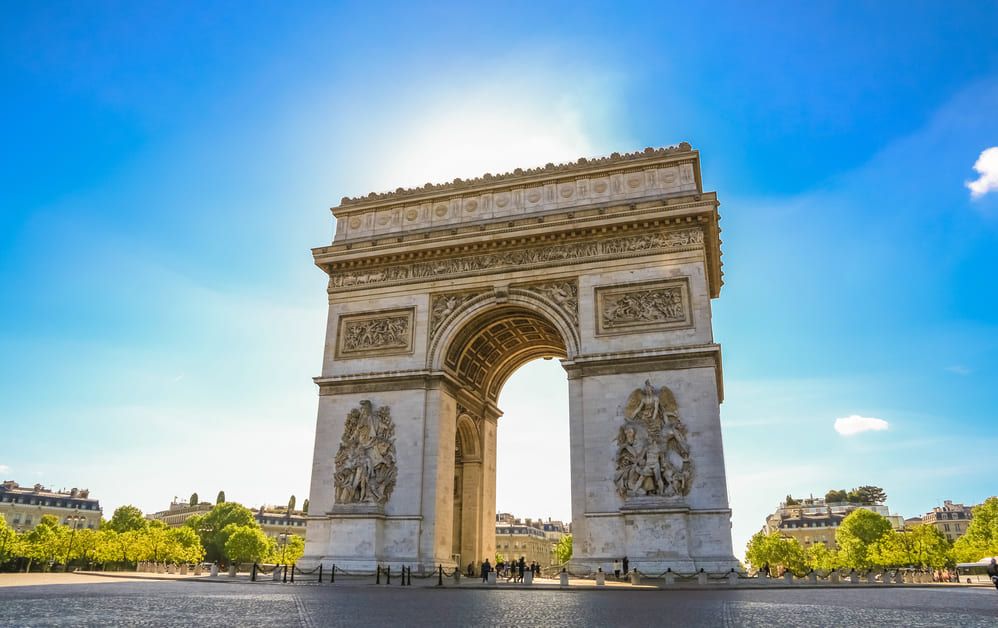
The Paris audio-guided tour leads you to the top of the Champs-Élysées, Place de l'Étoile, where stands the Arc de Triomphe, a colossal monument willed by Napoleon to the glory of the French armies.
In the aftermath of the battle of Austerlitz, Napoleon promises his soldiers to bring them home "under triumphal arches". A great admirer of Roman Antiquity, he entrusts the project to the architect Jean-François Chalgrin, who begins in 1806 an arch fifty metres high. The great battles, the scenes of the Revolution and the Empire adorn the monument, whose upper part bears the names of the greatest victories. Napoleon, who died in 1821, will not see the completion of the Arch in 1836, but his funeral carriage will pass under the vault. In 1920, the tomb of the Unknown Soldier was placed under the arch, in memory of the French combatants who died during the Great War; the flame of remembrance is rekindled there each day.
The Arch impresses with its high-reliefs, including the famous Departure of the Volunteers of 1792, which shows the people united to defend the homeland. Under the vault, the tomb of the Unknown Soldier and its flame call for contemplation. From the terrace, accessible by a staircase, the view embraces the twelve avenues that radiate in a star and the perspective as far as the Louvre. It is one of the most powerful symbols of Paris and of national memory.
The Arc de Triomphe stands on the Place Charles-de-Gaulle, formerly Place de l'Étoile, at the top of the Champs-Élysées. It is reached by an underground passage from the pavements. The panoramic terrace can be visited; the hours and conditions of access are to be checked on site.
To celebrate the glory of his armies after Austerlitz; inspired by Roman Antiquity, the Arch was begun in 1806 and completed in 1836.
The tomb of the Unknown Soldier, installed in 1920, honours the French combatants who died during the First World War; its flame is rekindled each day.
Aucun avis pour le moment
