





Walk
A Matter of Time
Besançon, France
Walk
A Matter of Time
Besançon, France
5.3 km
Distance
2h10
Durée
26
Audios
Loop
Parcours
Shutterstock
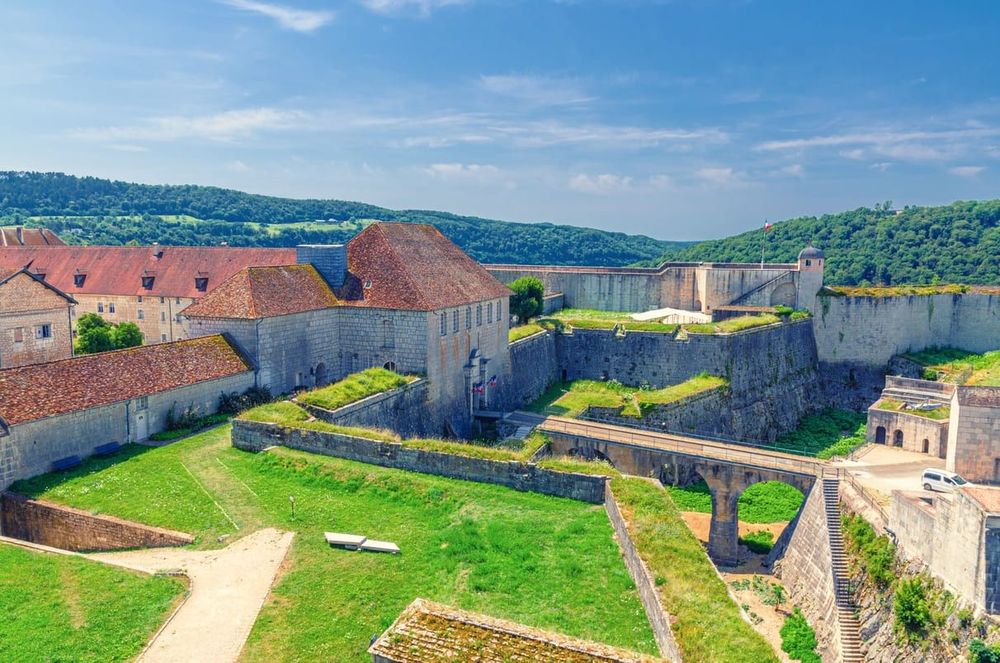
The citadel of Besançon is the masterpiece of Vauban that dominates the town, listed as world heritage. The Besançon audio-guided tour stops here to evoke this imposing fortress, a setting of museums and panoramas, a jewel of the heritage of the town.
The citadel of Besançon is one of the finest works of Vauban, the famous military engineer of Louis XIV. Built in the seventeenth century at the top of Mount Saint-Étienne, it closes the pass that locks the Boucle of the Doubs, completing the natural defence of the town. This powerful fortress, with impressive ramparts and multiple defensive works, is a masterpiece of military architecture, listed as UNESCO world heritage with other fortifications of Vauban. It today shelters several museums, including the Museum of the Resistance and the Deportation, the Comtois museum and a natural history museum with an animal park. From the top of its ramparts, it offers an exceptional panorama over Besançon. The citadel is the emblematic monument of the town.
You admire the powerful fortress of Vauban with impressive ramparts, listed as world heritage, its museums including the Museum of the Resistance and the Deportation, the Comtois museum and a natural history museum with an animal park, and the exceptional panorama over the town. The citadel is the emblematic monument of Besançon. It is a must-see stop, to be explored on foot.
The citadel of Besançon lies at the top of Mount Saint-Étienne, dominating the old town, reachable on foot by a climb or by road. The visit of the fortress and its museums follows its own hours and conditions, which vary with the season. It is best to check the arrangements before coming and to bring good shoes.
Vauban, the famous military engineer of Louis XIV, in the seventeenth century; this powerful fortress at the top of Mount Saint-Étienne is listed as UNESCO world heritage and today shelters several museums.
At the top of Mount Saint-Étienne, dominating the old town of Besançon, in France.
Aucun avis pour le moment
