





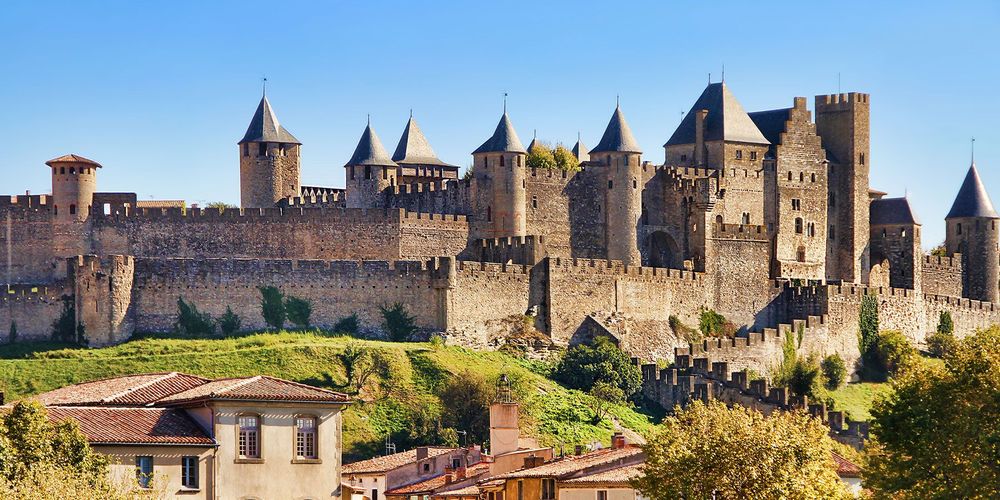
Walk
A Citadel among the Clouds
Carcassonne, France
Walk
A Citadel among the Clouds
Carcassonne, France
5.7 km
Distance
2h30
Durée
28
Audios
Loop
Parcours
Shutterstock
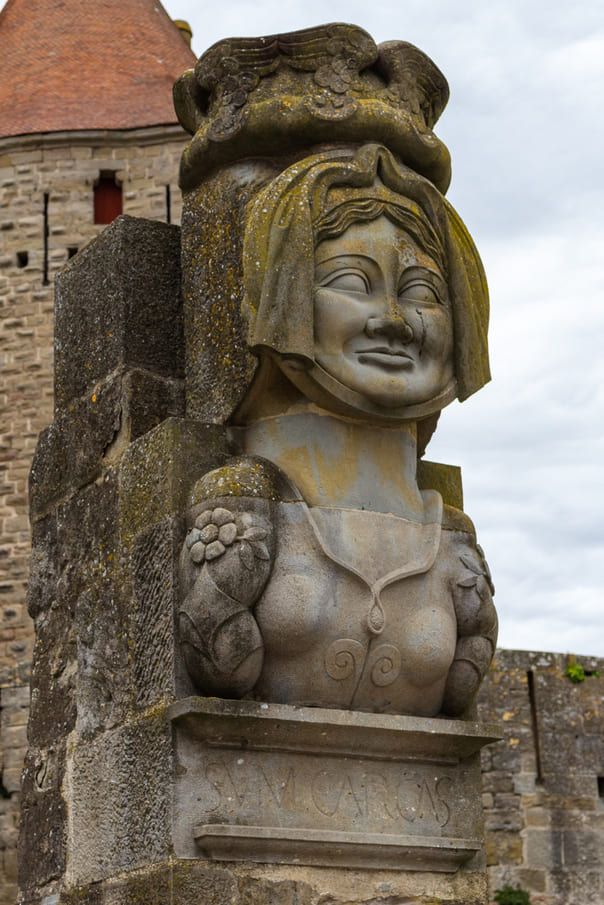
Following the Carcassonne audio-guided tour, here you are before a statue dear to the town: the bust of Dame Carcas, which heralds the entrance to the Medieval City. This figure, half-historical and half-legendary, has been associated with the identity of Carcassonne for centuries.
According to tradition, in the 8th century the town had been besieged for five years by Charlemagne's troops. Inside, the city was held by a population whose leader, Dame Carcas's husband, is said to have died in battle. Remaining in charge of the stronghold, she is said to have devised a ruse to save the starving inhabitants: placing straw dummies on the ramparts, then feeding the last sow with the last grain before throwing it over the walls. Seeing it burst open full of grain, the attacker is said to have believed the town still well supplied and lifted the siege.
The bust shown today is a copy; beneath the original is said to have appeared the Latin inscription Sum Carcas, translated as I am Carcas. The statue welcomes visitors at the entrance to the City and recalls, through this name, the link woven by legend between the heroine and that of the town. It is a symbolic starting point for the tour of the ramparts.
The bust can be seen freely, outdoors, at the entrance to the Medieval City, on the side of the Porte Narbonnaise. No fee is required. It is a quick stop, ideal for beginning the discovery of the walled town.
She is above all a legendary figure, whose story is handed down by tradition; nothing makes it possible to confirm her real existence.
This Latin phrase translates as I am Carcas and links, according to legend, the name of the heroine to that of the town.
Aucun avis pour le moment
