





Walk
Between Two Shores
Calais, France
Walk
Between Two Shores
Calais, France
5.6 km
Distance
2h15
Durée
25
Audios
Loop
Parcours
Shutterstock
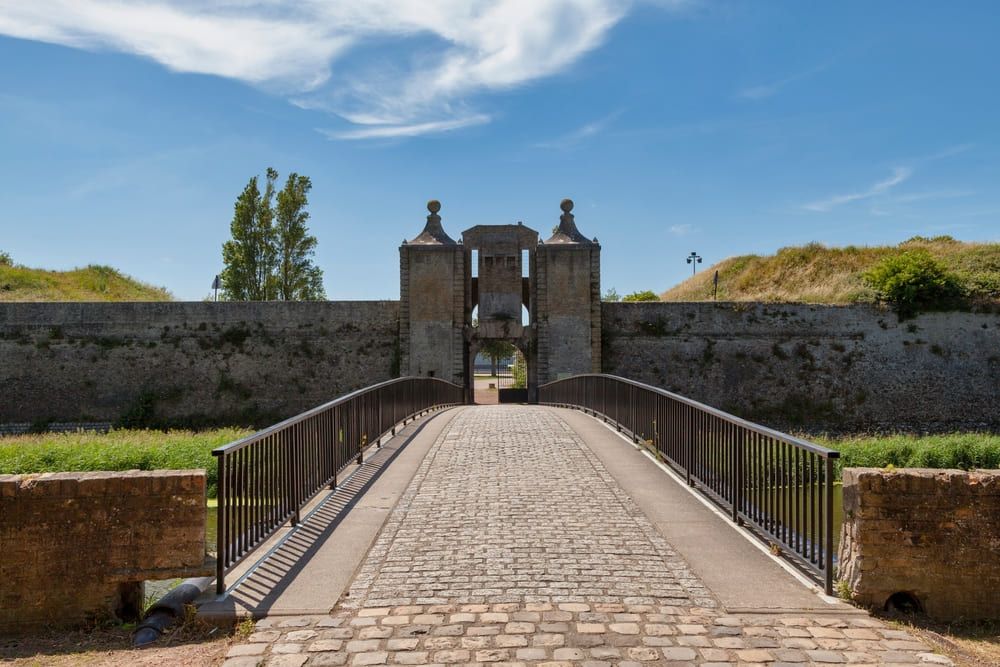
The Citadel of Calais is a former fortress that protected the town, heir to its military past. The Calais audio-guided tour stops here to evoke this defensive work, a witness of the strategic importance of the port city.
The Citadel of Calais was built in the modern era to reinforce the defences of the town, a strategic stronghold coveted because of its position facing England. Built on the site of a former castle, it is part of the vast system of fortifications that protected the city and its port. Its ramparts, bastions and moats testify to the military art of the past centuries and the role of Calais as a defensive lock of the kingdom. Reconverted over time, the citadel is today a witness of the rich military past of the town, to be discovered during a walk.
Here you discover the ramparts, bastions and moats of the former fortress built on the site of a castle, witnesses of the military art and the strategic role of Calais facing England. The citadel illustrates the defensive past of the town. It is a stop for those curious about history, to be explored on foot.
The Citadel of Calais lies in Calais-Nord, reachable on foot. It is a site whose access follows its own uses and hours, which vary. You discover its surroundings and its fortifications during a walk; it is best to enquire before coming.
To reinforce the defences of the town, a strategic stronghold coveted because of its position facing England; it was built on the site of a former castle.
In Calais-Nord, in France.
Aucun avis pour le moment
