





Walk
The gate to the South
Valence, France
Walk
The gate to the South
Valence, France
3 km
Distance
1h10
Durée
21
Audios
Loop
Parcours
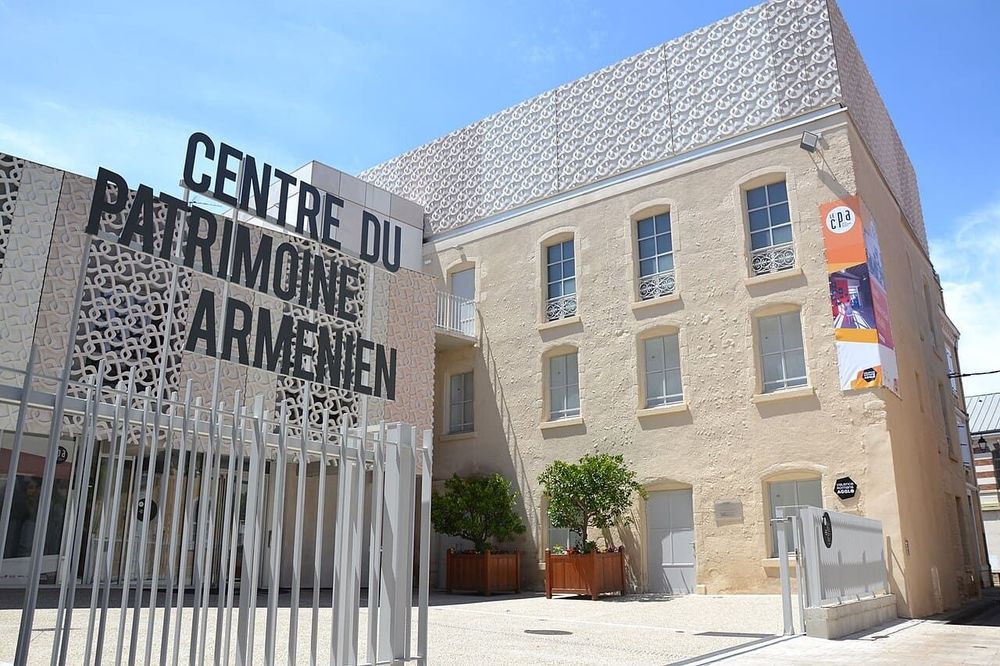
©Le Cpa CC BY-SA 3.0. <https://creativecommons.org/licenses/by-sa/3.0/deed.fr>via Wikipedia Commons
Set in the former law faculty, the Armenian Heritage Centre of Valence is a cultural venue opened in 2005. It offers an exhibition retracing the history of the Armenian genocide and the memory of a community very present in the city. The Valence audio-guided tour stops here to evoke this page of history and the strong link between Valence and Armenia.
Opened in 2005, the centre is devoted to the history and culture of the Armenian people, as well as to the memory of the genocide perpetrated in 1915 and 1916. Valence has long welcomed a large Armenian community, who arrived notably after these tragic events. The centre offers exhibitions, resources and cultural programming, bridging history, transmission and dialogue.
The exhibition route retraces Armenian history and the memory of the genocide, in an educational and moving setting. The centre also offers temporary exhibitions and cultural gatherings. It is an important stage to understand a part of Valence's identity, a city deeply marked by the contribution of its Armenian community.
The Armenian Heritage Centre lies on Rue Louis Gallet, in the centre of Valence, reachable on foot. It is a cultural venue that can be visited; it is generally open from Tuesday to Friday during the day, as well as at weekends depending on the period. As hours and conditions may vary, it is best to check them before visiting.
An exhibition retracing Armenian history and culture as well as the memory of the genocide of 1915 and 1916, in the former law faculty of Valence.
Because the city has long welcomed a large Armenian community; the centre, opened in 2005, perpetuates its memory and culture.
Aucun avis pour le moment
