





Walk
The Phoenix City of the Atlantic
Royan, France
Walk
The Phoenix City of the Atlantic
Royan, France
3.2 km
Distance
1h30
Durée
17
Audios
Loop
Parcours
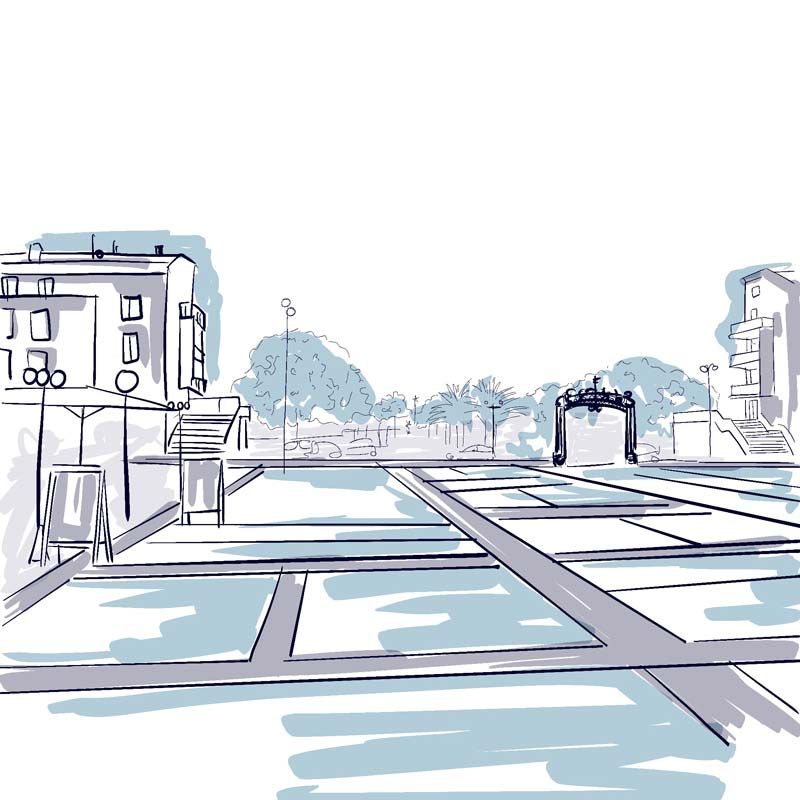
Place Charles de Gaulle carries within it all the tragic history and the rebirth of Royan. It is here that the first Notre-Dame church once stood, before the destruction of the war. The Royan audio-guided tour stops here to evoke this memory-laden place, in the heart of the rebuilt city.
On this square once stood the first Notre-Dame church of Royan, destroyed during the bombings of January 1945 that ravaged the city. Today, Place Charles de Gaulle testifies to the transition from the old city to the rebuilt one. It embodies both the memory of the destruction and the impulse of rebirth that animated Royan in the post-war period.
The square, vast and central, is surrounded by reconstruction buildings and invites you to imagine pre-war Royan. Its history, between tragedy and renewal, makes it a place full of emotion. It is an essential stop to understand the singular destiny of the city, destroyed then rebuilt, and the attachment of its inhabitants to their city.
Place Charles de Gaulle lies in the heart of Royan, reachable on foot. It is a public space open at all times, freely accessible and on the level. The shops around have their own hours; the square is a good landmark to explore the rebuilt city.
The first Notre-Dame church of Royan stood there, before being destroyed during the bombings of January 1945.
Because it carries the memory of the destruction and the rebirth of Royan, on the site of the first Notre-Dame church.
Aucun avis pour le moment
