





Walk
Capital of Porcelain
Limoges, France
Walk
Capital of Porcelain
Limoges, France
5.8 km
Distance
2h30
Durée
28
Audios
Loop
Parcours
Shutterstock
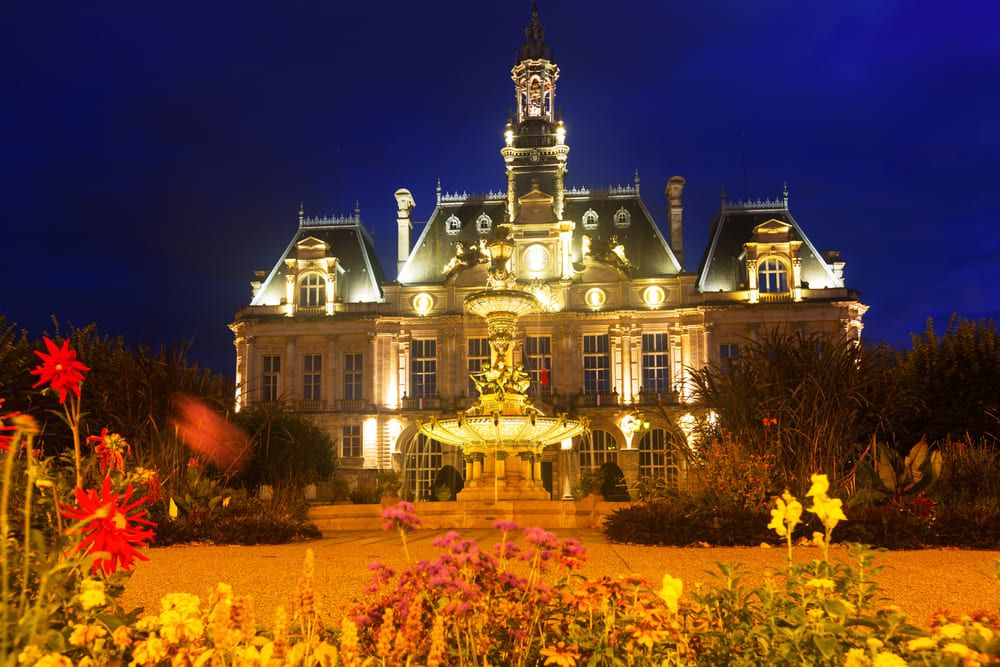
The town hall of Limoges is a majestic building of the end of the nineteenth century, inspired by the town hall of Paris, that borders the Square Jacques-Chirac. The Limoges audio-guided tour stops here to evoke this prestigious monument, work of the architect Charles-Alfred Leclerc, symbol of the municipal pride of the town.
Before us stands the town hall of Limoges, one of the finest public buildings of the town. Built at the end of the nineteenth century, it was designed by the architect Charles-Alfred Leclerc, who was for six years chief architect of the château of Versailles, which says a lot about the talent and the prestige of its author. To endow Limoges with a town hall up to its rank, the architect drew his inspiration directly from the town hall of Paris, in the neo-Renaissance taste then in vogue for the great official buildings. The result is a majestic and richly adorned building, with a façade rhythmed by sculptures, pavilions and a belfry, that affirms the pride and the prosperity of the town. The decoration celebrates the arts and the know-how that made the renown of Limoges, in particular the porcelain and the enamel, present in the decor. In front of the building extends the Square Jacques-Chirac, embellished with a monumental fountain, that offers a fine setting of greenery and water to the town hall. The whole forms one of the finest pictures of the centre of Limoges, where the official architecture of the Third Republic expresses itself with splendour. A municipal palace and a symbol of the town, the town hall of Limoges is a fine stop of the discovery of the town.
You admire the majestic building of the end of the nineteenth century, work of the architect Charles-Alfred Leclerc, who was for six years chief architect of the château of Versailles; inspired by the town hall of Paris, richly adorned with sculptures and a belfry, it celebrates in its decor the porcelain and the enamel of Limoges, and borders the Square Jacques-Chirac and its monumental fountain. The town hall is a symbol of Limoges. It is a fine stop, to be explored on foot.
The town hall of Limoges lies in the heart of the town, facing the Square Jacques-Chirac, reachable on foot. It is an administrative building in activity whose façade you admire from the square; the interior access follows the conditions and hours of the town hall, which vary. You discover its architecture during a walk in the centre.
The architect Charles-Alfred Leclerc, who was for six years chief architect of the château of Versailles, at the end of the nineteenth century; he drew his inspiration from the town hall of Paris for this majestic neo-Renaissance building, richly adorned with sculptures and a belfry, whose decor celebrates the porcelain and the enamel of Limoges.
In the heart of Limoges, facing the Square Jacques-Chirac, in France.
Aucun avis pour le moment
