





Walk
The Latin Quarter : Sorbonne University, Pantheon and Luxembourg Gardens
Paris, France
Walk
The Latin Quarter : Sorbonne University, Pantheon and Luxembourg Gardens
Paris, France
5.7 km
Distance
2h15
Durée
23
Audios
Loop
Parcours
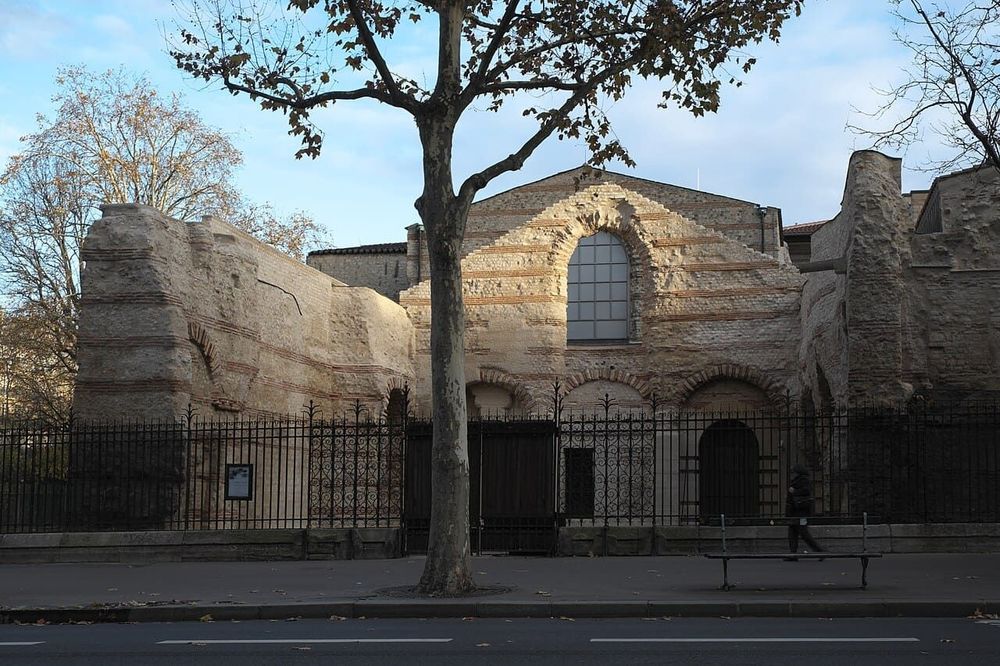
©GFreihalter CC BY-SA 3.0. <https://creativecommons.org/licenses/by-sa/3.0/deed.fr>via Wikipedia Commons
The Paris audio-guided tour leads you to the ruins of the Baths of Cluny, Roman remains in the heart of the city, dated to the first and second centuries AD. In Roman times, these baths covered about six thousand square metres; they are among the best-preserved ancient baths in northern France.
The Romans were true masters in the management of water. Nearly two thousand years ago, they managed to convey, heat and distribute it in these vast public baths, places of hygiene but also of sociability. The Baths of Cluny testify to the grandeur of Lutetia, the Roman ancestor of Paris, and to its urban refinement.
The frigidarium, a cold room with impressive vaults, is the most spectacular remnant. The baths are now integrated into the Cluny museum, the national museum of the Middle Ages, which presents a rich collection of medieval art. It is a striking journey from Antiquity to the Middle Ages, in the heart of the Latin Quarter.
The Baths of Cluny are integrated into the Cluny museum, whose entrance is on Rue Du Sommerard, in the 5th arrondissement of Paris. The site can be visited according to its own schedule; admission is charged and opening times may vary with the season. The remains are also partly visible from the street.
They date from the first and second centuries AD and are among the best-preserved ancient baths in northern France. They covered about six thousand square metres.
You see in particular the frigidarium, a cold room with impressive vaults. The baths are integrated into the Cluny museum, the national museum of the Middle Ages.
Aucun avis pour le moment
