





Walk
Among Stones and Great Wines
Beaune, France
Walk
Among Stones and Great Wines
Beaune, France
2.5 km
Distance
1h10
Durée
20
Audios
Loop
Parcours
©Eliott Brown CC BY-SA 2.0. <https://creativecommons.org/licenses/by-sa/2.0/deed.fr>via Wikipedia Commons
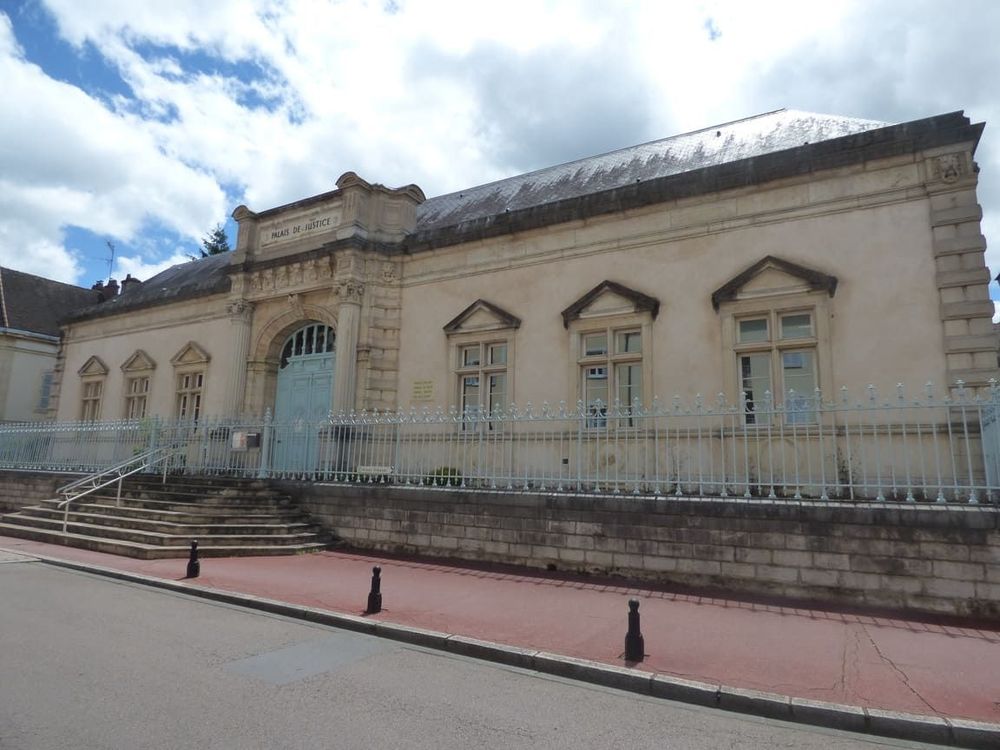
The Beaune audio-guided tour leads you before the courthouse, an imposing building that dominates the square with its plain facade and its Neoclassical-inspired columns. Built in the 19th century, it embodies the solemnity attached to the judicial institution.
In Beaune, the judicial tradition is not new. From the Middle Ages, the town had a bailiwick that dispensed justice in the name of the Duke of Burgundy, then of the King of France. Trials then took place in other buildings, sometimes even in the open air, before this palace was built in the 19th century to house the justice services in a suitable and solemn setting.
The Neoclassical facade of the palace, with its columns and symmetry, illustrates the architectural codes of the 19th century, intended to express the grandeur and seriousness of justice. The building bears witness to the continuity of this function in Beaune, from the medieval bailiwick to the modern court. It can be admired from Rue du Tribunal, during the walk.
The Courthouse of Beaune is on Rue du Tribunal, in the centre. Its facade can be seen freely from the street. As an active judicial building, interior access is subject to the conditions proper to this kind of establishment; it is not a tourist visit site.
From the Middle Ages, the town had a bailiwick that dispensed justice in the name of the Duke of Burgundy, then of the King of France.
It was built in the 19th century, in a Neoclassical style, to house the justice services in a solemn setting.
Aucun avis pour le moment
