
Créé par Romane, le 17 nov. 2026
Votre guide Ryo
Beaune, France
Among Stones and Great Wines
Parcours audioguidé pour visiter Beaune en 1 jour
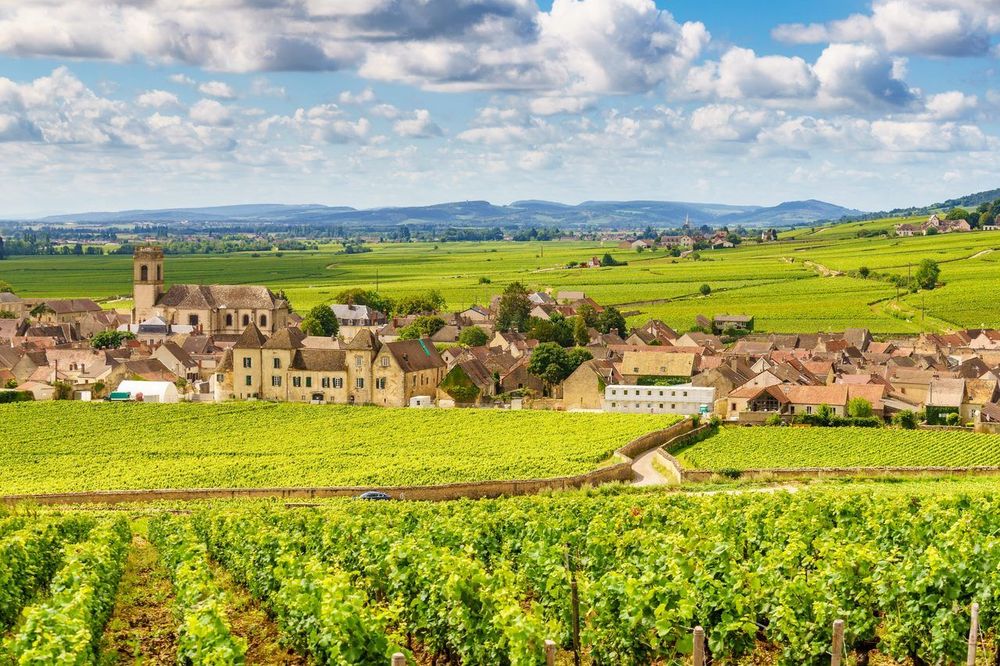
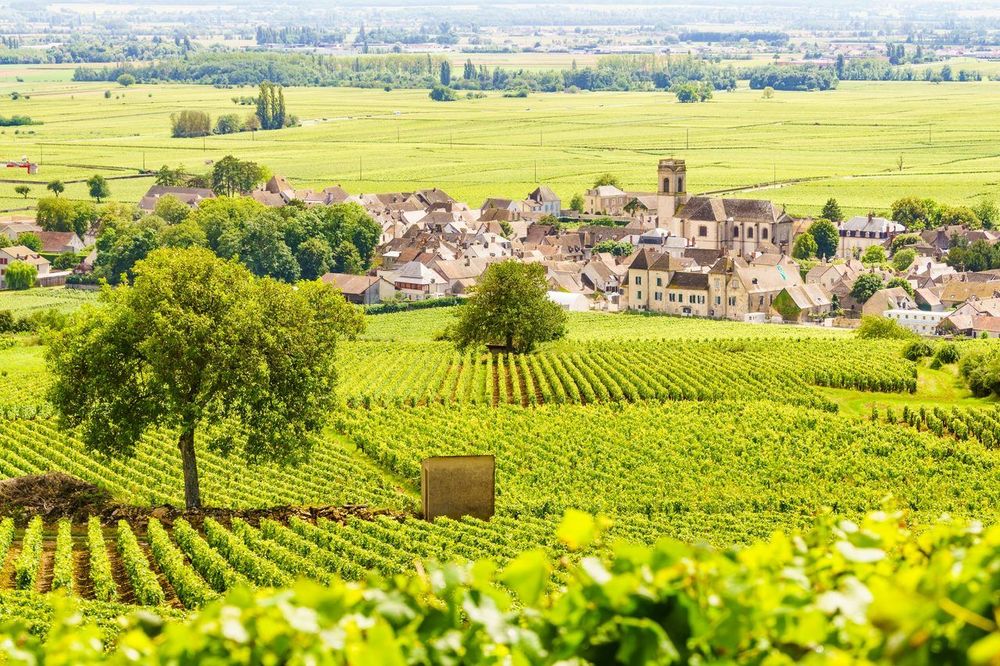
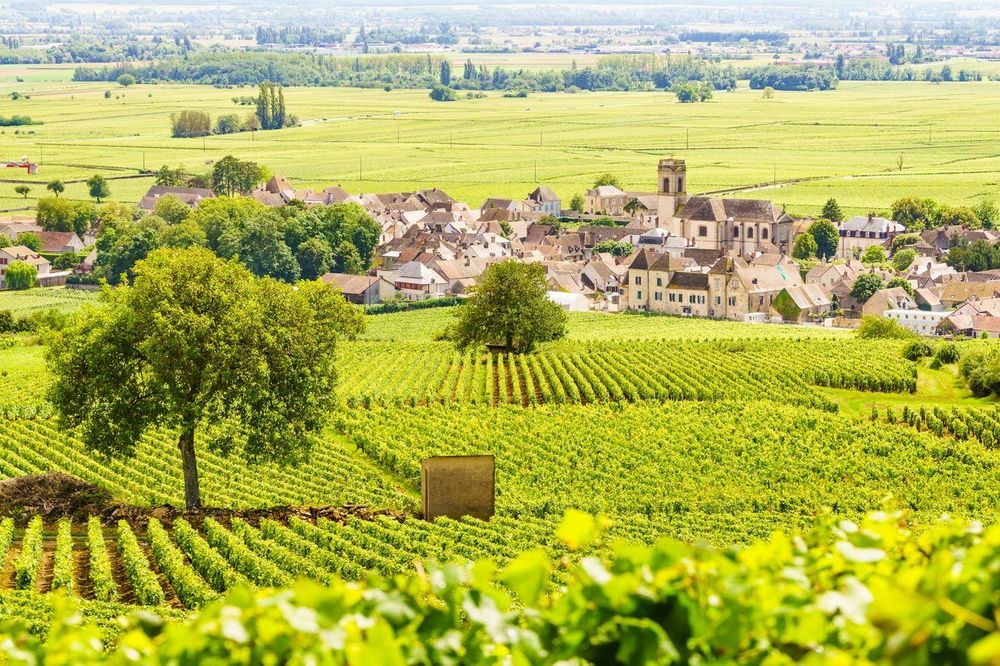
In the heart of the vineyards, Beaune is the capital of Burgundy wines and a town rich in medieval heritage. With its ramparts, wine cellars, and famous Hospices, it embodies a refined way of life, blending history with winemaking traditions.
Quand partir à Beaune ?
Jan.
3°
10
Feb.
5°
9
March
9°
10
April
12°
10
May
16°
11
June
20°
10
July
23°
9
Aug.
23°
9
Sept.
19°
9
Oct.
14°
10
Nov.
8°
10
Dec.
4°
10
The climate in Beaune is semi-continental, with cool winters, generally between 0 and 8°C, sometimes accompanied by frost, and hot summers, most often ranging from 25 to 32°C, with possible peaks during heatwaves; the best times to visit are typically from April to June and then from September to October, when temperatures are pleasant, the vineyard landscapes are particularly beautiful, and conditions are ideal for enjoying the historic center and the vineyards in a calmer atmosphere than at the height of summer.
Départ conseillé
No need to worry about where to begin! Our tours are designed as a loop, so you can jump in wherever you are. The navigation system and audioguide will automatically adjust to your location. However, if you happen to be nearby, we do have a preferred starting point: in front of the Marie de Bourgogne Gate
Parking à proximité
Parking des Tanneries (free), rue de la Colombière
In Beaune, you’ll find several parking options depending on the length of your visit. Around the town center, free car parks such as Tanneries or Jardin Anglais are ideal for reaching the main sights on foot. Closer to the center, several paid car parks make it easy to park just steps from the Hospices or Place Carnot, such as Chanceliers or Saint-Étienne. If you prefer street parking, note that it is organized by color zones: red for the historic center (limited time and higher rates), orange and green for streets a bit further out, with lower rates and longer durations. Finally, some areas are blue zones, free but limited to three hours with a parking disc.
À savoir
Take advantage of the combined ticket that lets you visit three of Beaune’s iconic sites at a special rate: the Museum of Fine Arts, the Burgundy Wine Museum, and a third cultural site of your choice. Valid from May to September, this ticket is a great opportunity to discover the best of Beaune with a single pass. You’ll find all the details on the Tourist Office website.
Découvrez 20 lieux d'intérêt pour visiter Beaune



What to see in Beaune on your 1h10 tour?
This 2.5 km loop takes about 1 hour 10 minutes and links 18 stops around Beaune. From the Marie of Burgundy Gate it passes the Hospices and Place de la Halle, skirts the Notre-Dame Basilica and the belfry, then crosses Place Monge and the Town Hall. It detours to the Théâtre de Verdure in Parc de la Bouzaize before looping back past the Castle to Place Carnot. With the Ryo app guiding your ears, every gate, chapel and façade reveals its story as you walk.
Information checked in November 2026 and subject to change.
1 - Marie of Burgundy Gate
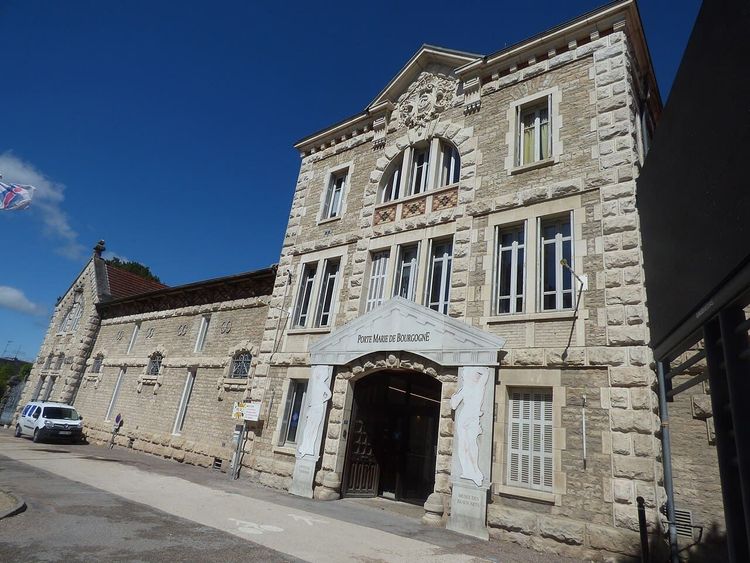
The walk opens at the Marie of Burgundy Gate, one of the few fortified gates still standing, its pointed roof clad in glazed tiles. Raised in the 15th century within the northern ramparts, it takes its name from a Burgundian heiress who died at 25 after a fall from her horse. The Tourist Office now sits at its foot, and the neighbouring Museum of Fine Arts occupies the former grain hall. Just behind, the 2025 bronze sculpture The Kiss echoes the embrace of the Lovers of Saint-Pancras.
Free entry
2 - Hospices de Beaune
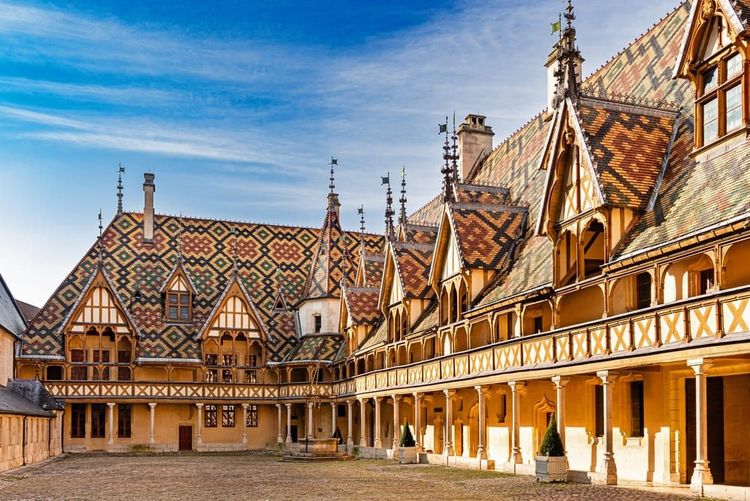
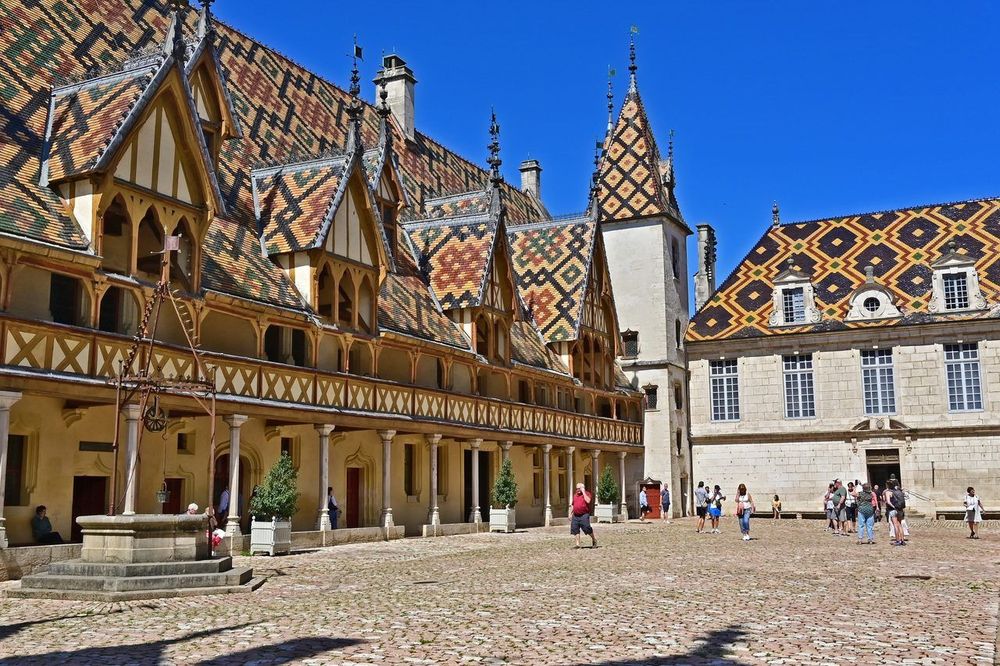
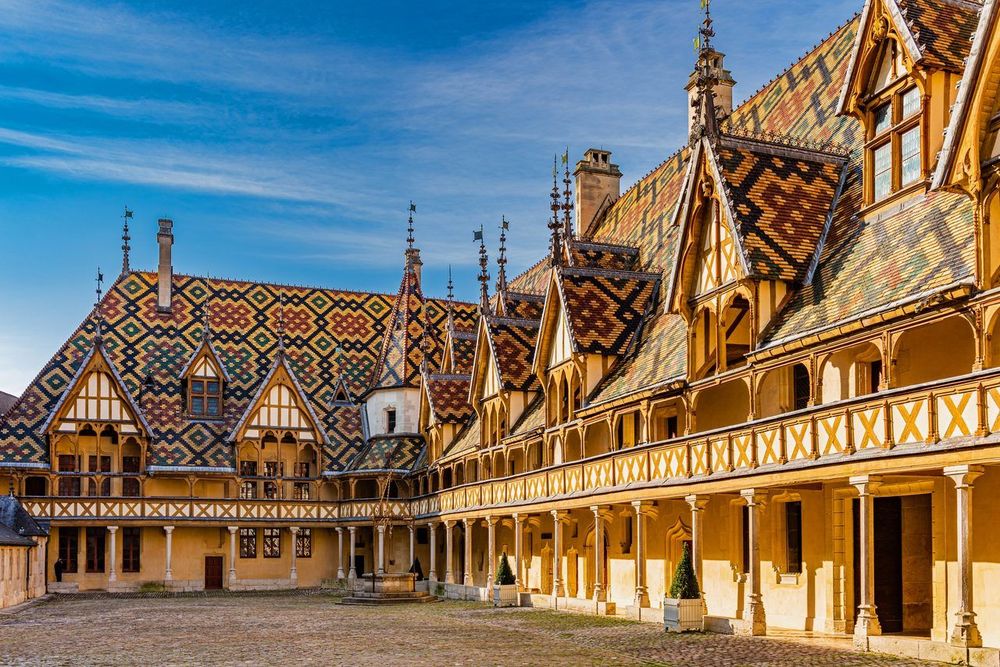
Behind a modest façade waits a true treasure: the Hospices de Beaune, people here simply call it the Hôtel-Dieu. Its diamond-patterned tiled roofs stay hidden from the street and only reveal themselves once you cross into the timber-galleried courtyard. Chancellor Nicolas Rolin founded the complex in 1443 to care for the poorest, just as the Hundred Years' War was ending. The Room of the Poor, under its upturned-hull wooden ceiling, treated patients until 1971. Vineyards donated back then still fund the famous yearly wine auction.
Paid entry (about €12) · Allow 1 h
3 - Place de la Halle
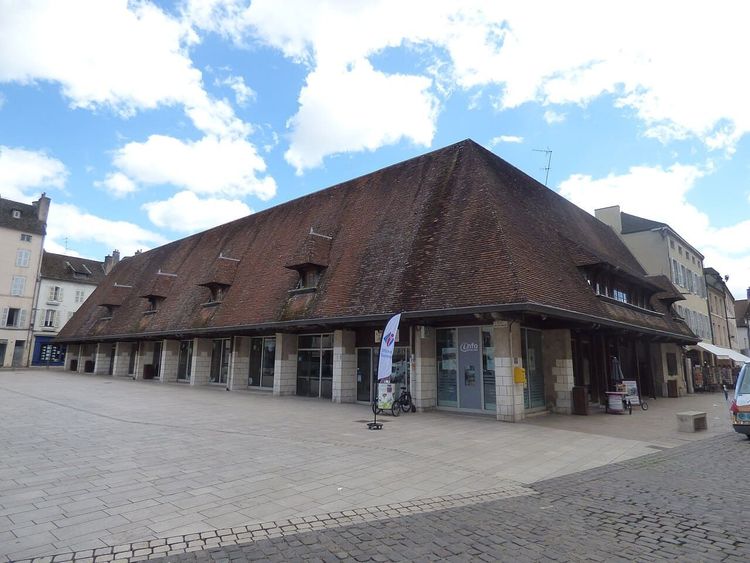
Place de la Halle takes its name from a covered market long gone, right in front of the Hospices' colourful roof. A lively market still fills the square every Saturday morning, loaded with Burgundian classics: slow-cooked beef in wine, poached eggs in red-wine sauce, garlic-butter snails. Nearby, the Fallot mustard mill keeps a 19th-century tradition alive, while cheesemongers offer Époisses or Brillat-Savarin. Around town, villages like Pommard, Meursault and Volnay remind you that wine runs beneath nearly every street, even into the desserts.
Free entry
4 - Place Général Leclerc
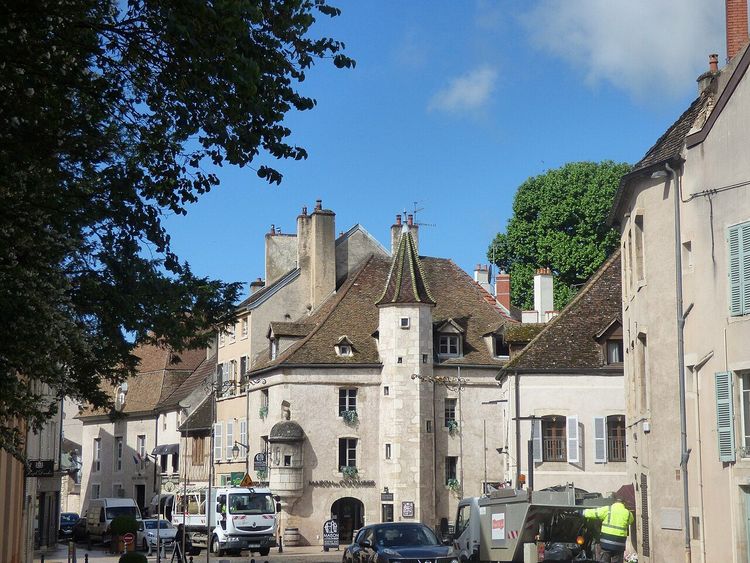
Place Général-Leclerc bridges the medieval lanes and the rest of town, right beside the basilica. It honours the general who helped reclaim French territory in 1944. Now pedestrian-only, it's lined with café terraces and overlooked by the Maison du Colombier, easy to spot thanks to its overhanging upper floor and steep roof, today home to a wine bar. From here, several streets lead into the centre, starting with Rue Notre-Dame.
Free entry
5 - Notre-Dame Basilica
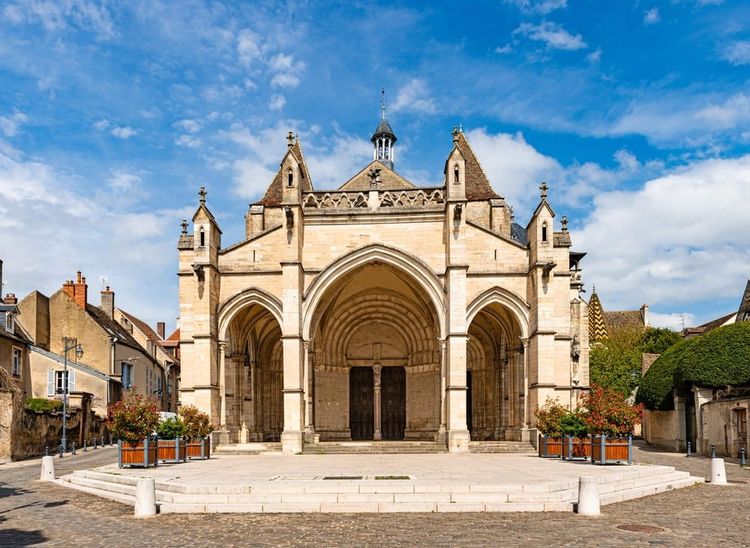
Looking like a small cathedral, the Basilica of Notre-Dame has watched over Beaune for more than eight centuries. Begun in the 12th century over an earlier Carolingian church, it blends Romanesque restraint with later Gothic touches. Its treasure: twelve 15th-century tapestries retracing the life of the Virgin, woven in Tournai and kept in the Rosary Chapel. Don't miss the carved capitals of the north portal. Just below, on Rue d'Enfer, a 14th-century mansion that once lodged the Dukes of Burgundy today holds the Wine Museum.
Free entry
6 - The Belfry of Beaune
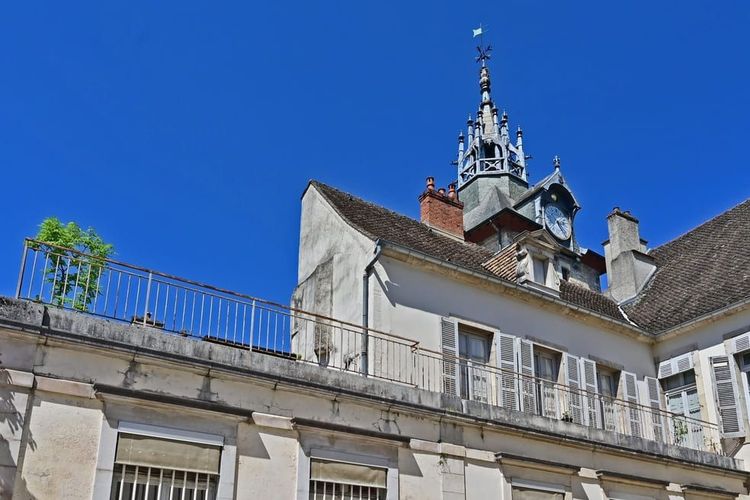
The belfry towers over Beaune's rooftops since the Middle Ages, and has nothing to do with a church: it stood for municipal power, the échevins who rang its bell to summon the town. Building began in the 13th century; the slender spire you see dates from the 17th. The clock once set the rhythm of daily life long before watches existed. Closed to visitors today, it rises beside the old grain hall, now turned into an exhibition venue.
Free to see from outside
7 - Place Monge
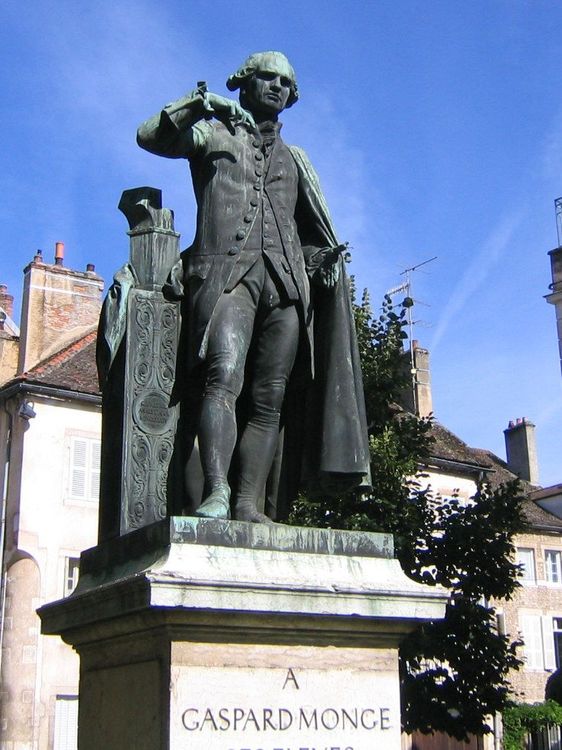
One of the town's oldest squares, Place Monge honours the mathematician Gaspard Monge, born here in 1746. Founder of descriptive geometry, he also helped create the École Polytechnique, backed the metric system, and joined Bonaparte's expedition to Egypt. His statue stands at the centre of a square often filled with local markets. Surrounding timber-framed and stone houses, some dating to the Renaissance, still show traces of old archways, vaulted cellars and wrought-iron shop signs.
Free entry
8 - Hospice of Charity
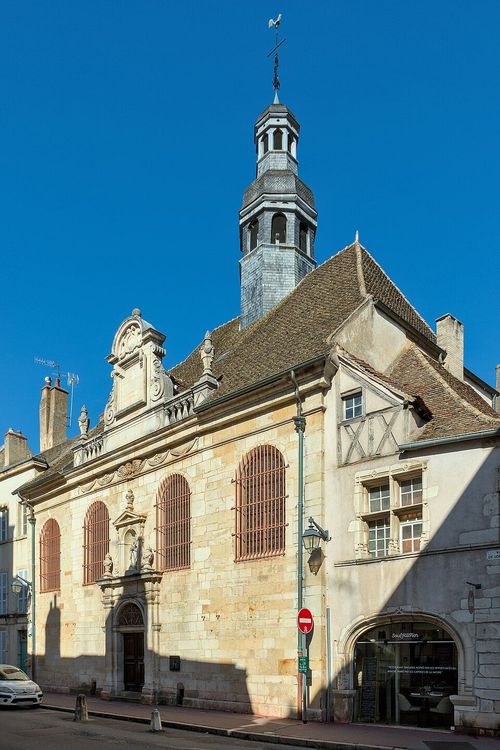
Tucked behind a quiet entrance, the Hospice de la Charité tells another side of Beaune's history of care. The institution owes its creation, in 1645, to Antoine Rousseau and his wife Barbe Deslandes; it took in the elderly, orphans and, above all, able-bodied women in need—unlike the Hôtel-Dieu, reserved for the sick. The Dames de la Charité, a lay order, ran the shared dormitories around its inner courtyard. It still serves as a care home for the elderly today, rarely open to visitors.
Free to see from outside
9 - Town Hall
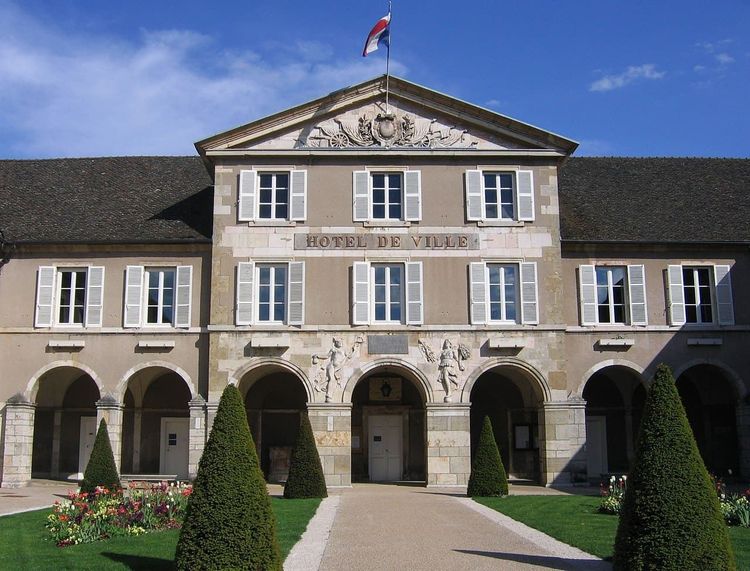
Beaune's Town Hall occupies a former 17th-century Ursuline convent, founded in 1626 to educate young girls. Seized during the Revolution, it became town property in 1793. A fire in 1815 damaged the roof, leading to the arcaded façade you see today, finished in the early 19th century; its 1818 pediment celebrates republican ideals. Part of the building once housed the Museum of Fine Arts. Listed since 1946, it still hosts council meetings and official ceremonies.
Free entry
10 - Saint-Nicolas Gate
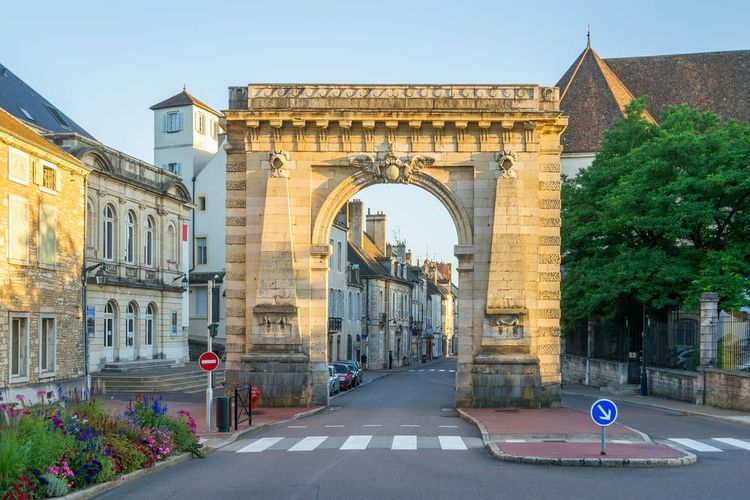
The Saint-Nicolas Gate marks the northern entrance to town, on the site of an access already noted in medieval times. Its classical look, with symmetrical pavilions and pediment, dates from the 18th century, designed by architect Nicolas Lenoir; a 1785 toll booth once taxed goods arriving from Dijon. Right next door, the late-19th-century Italian-style theatre shows off wrought-iron balconies and red velvet. Facing it, the 17th-century Oratory Chapel, built to train young clergy, now serves as an exhibition space.
Free entry
11 - Open-Air Theatre
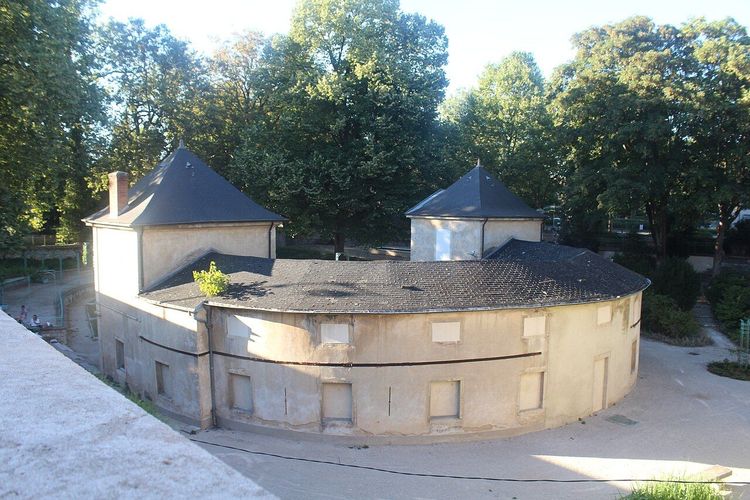
Tucked inside Parc de la Bouzaize, the Théâtre de Verdure owes its charm to an unexpected past: in the 19th century, this spot held the town's public baths, prized for the supposed healing powers of the water. In the 1950s, the town made the most of the land's natural slope, carving stone tiers and an open stage ringed by trees, with no walls or curtains. Concerts, plays and children's shows fill the calendar, peaking each summer with the Baroque Music Festival.
Free entry
12 - Former Jacobin Chapel
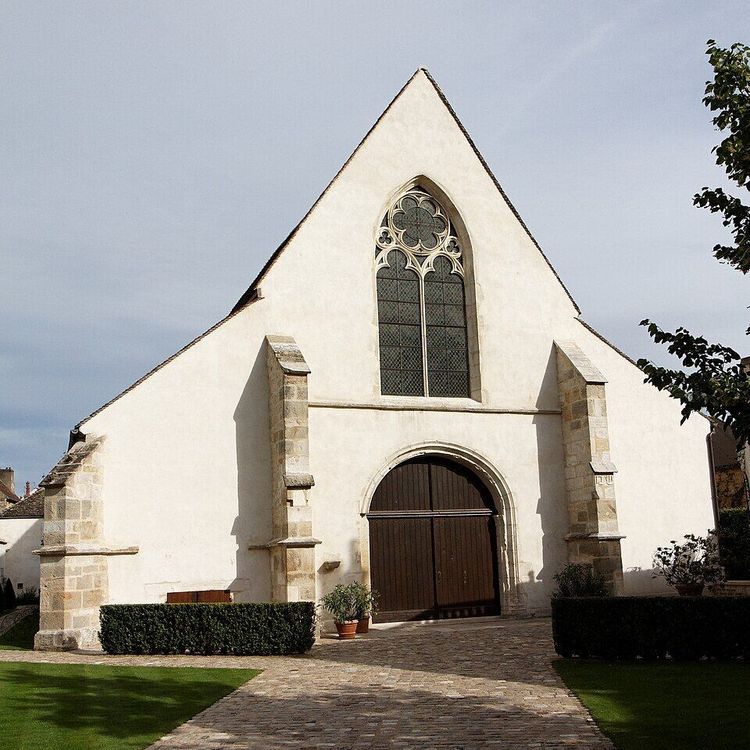
The only surviving piece of a Dominican convent founded in the 13th century, the former Jacobins Chapel takes its name from the order's first Paris convent, on Rue Saint-Jacques. The friars settled here just outside the ramparts to preach and teach. Seized during the Revolution, later used as a warehouse and then a military depot, it had to wait until the 20th century for its heritage value to be recognised. Its spare Gothic vaults now host contemporary art exhibitions.
13 - La Grande Vadrouille Mural
This colourful mural celebrates La Grande Vadrouille, the 1966 cult comedy partly filmed in Beaune. The famous scene where Louis de Funès, a furious orchestra conductor, abseils down a façade to escape German soldiers was shot nearby on Place du Docteur Jorrot, a street barely changed since. Painted in the 2010s in a bright, realistic style, the mural freezes that cinematic moment and keeps alive the town's pride in a shoot still fondly remembered.
Free entry
14 - Beaune Castle
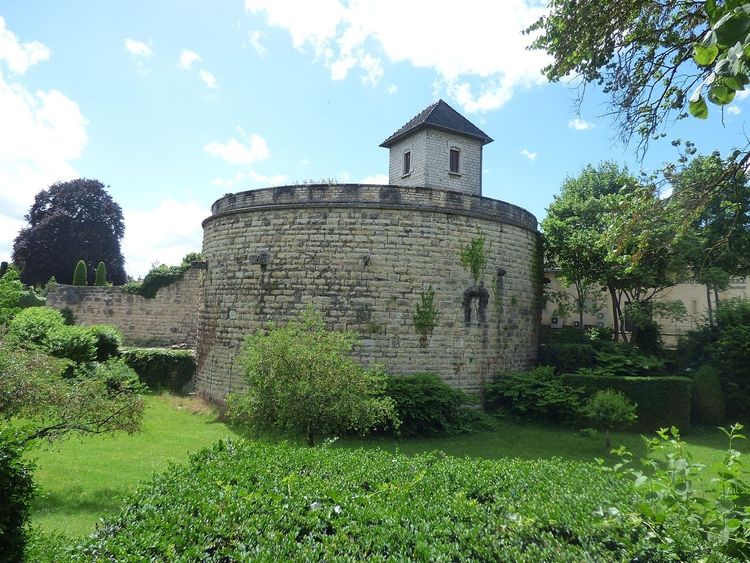
Nothing from the street gives it away, but this lane leads to Beaune's castle, whose oldest section waits at the far end: high stone walls and round towers raised in 1443, the very year the Hospices were founded, amid the Hundred Years' War. As warfare evolved, the fortress lost its purpose, passing between owners until 1820, when the wine house Bouchard Père & Fils moved in. Its old dungeons became cellars, where bottles two centuries old still rest underground.
Free to see from outside
15 - Renard Tower
The well-preserved Renard Tower formed part of the northern rampart back in the 15th century. Its round shape helped absorb projectiles while giving guards a clear view of the surroundings. The origin of its name stays uncertain, somewhere between a local family and pure legend. Long stripped of its military role, it now stands in a quiet garden, a rare reminder of Beaune's vanished fortifications.
Free entry
16 - Courthouse
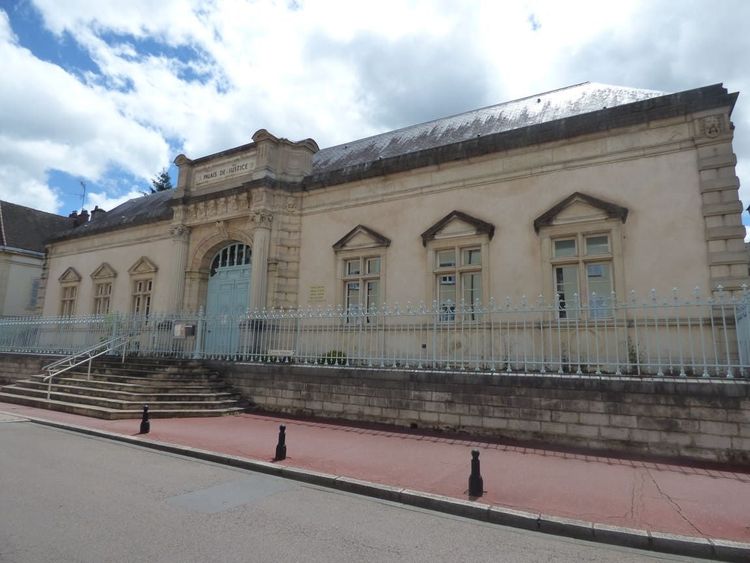
The Courthouse shows off a 19th-century neoclassical façade, all columns and symmetry, meant to underline the seriousness of justice. Yet Beaune dispensed justice long before that, from the Middle Ages onward, acting first for the Duke of Burgundy, then for the King, in makeshift or even outdoor settings. This building served over a century as the district court, handling everyday civil and family matters, before most proceedings moved to Dijon.
Free to see from outside
17 - Former Carmelite Convent of Beaune
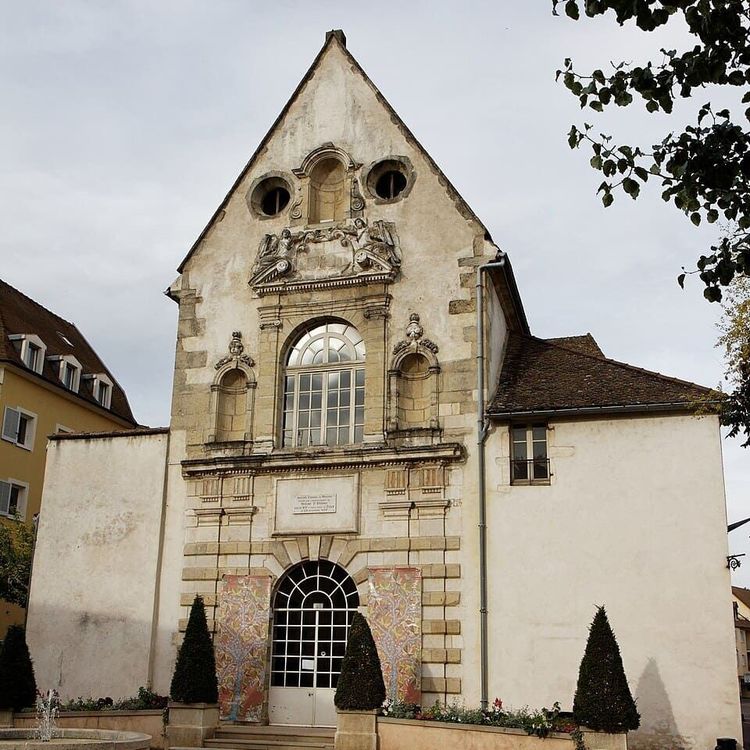
Behind this quiet façade, a convent took in cloistered Carmelite nuns from 1619 onward, for more than two centuries. True to the rule reformed by Saint Teresa of Ávila, the architecture stays deliberately bare: a cloister borders an enclosed garden, the quiet heart of the building. One name stands out above all: Sister Marguerite of the Blessed Sacrament, who entered at eleven and passed away in 1647, her visions turning the place into a pilgrimage site. Closed at the Revolution and later reopened, it now serves as a training centre.
Free to see from outside
18 - Place Carnot
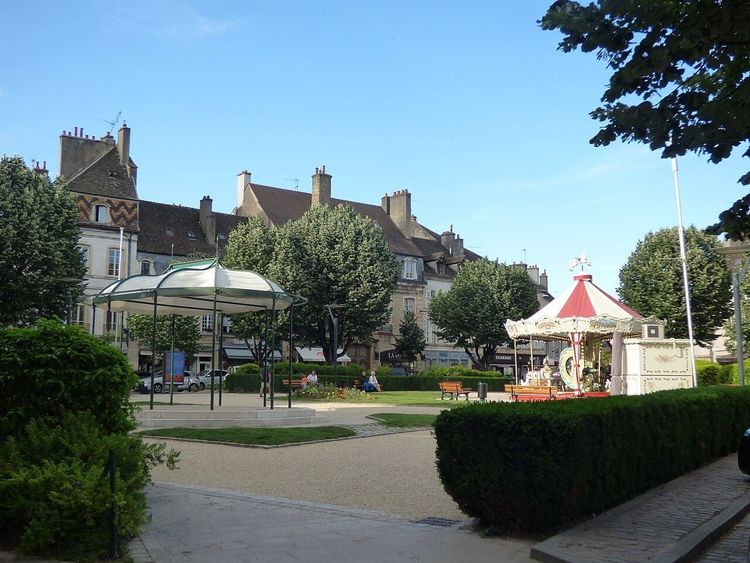
Place Carnot beats at the heart of Beaune, framed by lively terraces and 18th- and 19th-century façades, some hiding vaulted cellars. Named after Sadi Carnot, the president assassinated in 1894, the square is far older: since the Middle Ages it has hosted trade in grain, cloth and livestock, a tradition the Saturday market keeps alive. A central fountain and shaded terraces invite a pause, while summer brings concerts and open-air shows. Come November, the Hospices wine auction turns it into one of the busiest spots in town.
Free entry
What to do in Beaune in 2 or 3 days?
The loop links 18 stops in 1 hour 10 minutes, from the Marie of Burgundy Gate, a handy starting point, to Place Carnot. One morning covers its 2.5 km, but 2 or 3 days leave time to go down into the cellars, walk the ramparts and reach the vineyards.
The next day turns to the vines: the Cité des Climats et Vins de Bourgogne museum, opened in 2023, serves as the gateway before a choice between the Route des Grands Crus by car and a flat cycle path linking several villages away from heavy traffic. Our guide to visiting Beaune in 2 days also suggests where to stay and eat.
The third day offers a choice between ducal Dijon and a last relaxed loop around Beaune. Our guide to visiting Beaune in 3 days walks through both options step by step.
Which neighbourhoods does the tour cross?
As a loop, the walk stays almost entirely inside the Écusson, the shield-shaped historic centre traced by Beaune's ramparts.
It starts at the Marie of Burgundy Gate and runs past the Hospices before crossing Place de la Halle and Place Général-Leclerc, at the foot of the basilica (stops 1 to 4).
Next comes the civic and religious heart of the Écusson: the basilica, the belfry, Place Monge, the Hospice of Charity and then the Town Hall, housed in a former convent (stops 5 to 9).
Past the Saint-Nicolas Gate, a detour steps outside the ramparts to the Open-Air Theatre, in Parc de la Bouzaize, before returning past the Jacobin chapel and the castle to Place Carnot (stops 10 to 18).
How much does it cost to visit Beaune?
Of the 18 stops on the walk, only one needs a ticket: the Hospices de Beaune, at €12.50 for a visit of about 1 hour. Eleven others are open to all, five are seen from the street, and the former Jacobin chapel can be glimpsed behind its wall.
Information checked in November 2026 and subject to change.
Where to stop for a bite along the tour?
The Saturday morning market, on Place de la Halle, is the walk's food stop, right by the Hospices.
Around the square, Burgundy cooking is everywhere: beef simmered in pinot noir, eggs poached in red wine sauce, parsleyed ham, gougères and snails in butter, garlic and parsley. The family-run Fallot mustard mill, a few minutes away, has made its mustard since 1840 and opens its doors to visitors.
On the cheese side, Epoisses sits alongside Brillat-Savarin and Soumaintrain, while pear poached in spiced red wine or blackcurrant jam tart close the meal. For a simpler break, the terraces on Place Carnot, the walk's last stop, are always busy.
What to do in Beaune with children?
Beaune works well with children: the centre is easily covered on foot, and even its wine culture comes in alcohol-free versions for the youngest visitors.
At the Hospices de Beaune, an audioguide for ages 6 to 12 sets riddles room by room, for a visit of about 1 hour 15 to 1 hour 30. At the Fallot mustard mill, the tour, which ends with a workshop where everyone makes their own jar, lasts about 1 hour 15 and is free under 6. At the Marché aux Vins, the youngest get grape juice while parents taste local wines.
For a quieter break, Parc de la Bouzaize has a duck pond and a playground for ages 2 to 10, and a horse-drawn carriage takes families through the vines for 45 minutes to 1 hour.
What should you know before visiting Beaune?
Opening hours at the Hospices de Beaune change with the season, worth checking before building the rest of the plan.
Between April 1 and November 15, the Hôtel-Dieu stays open without a break from 9 am to 7:30 pm; the rest of the year, hours shrink, lunch break included. Book the ticket online between June and September to avoid the morning queue.
A combined ticket, valid only from May to September, covers the Museum of Fine Arts, the Burgundy Wine Museum and a third cultural site of choice. Parking follows a colour code: red, orange and green zones by duration, plus a free blue zone limited to 3 hours with a parking disc.
Every third Sunday of November, the Hospices wine auction fills hotels and restaurants from Friday onward: book early if the trip falls then. Winters stay cool, between 0 and 8°C, and summers hot, between 25 and 32°C; April to June and September to October bring the most pleasant conditions.
What to see around Beaune?
Beaune also suits day trips into the surrounding vineyard: a still-inhabited Cistercian château built in the 12th century, a museum recreating a 19th-century cellar in total darkness, a glazed-roof fortress perched on a rocky outcrop. The most obvious outing is the Route des Grands Crus, which follows an 800-metre-wide strip of vines between Dijon and Beaune; Vougeot is only 20 minutes' drive from Beaune.
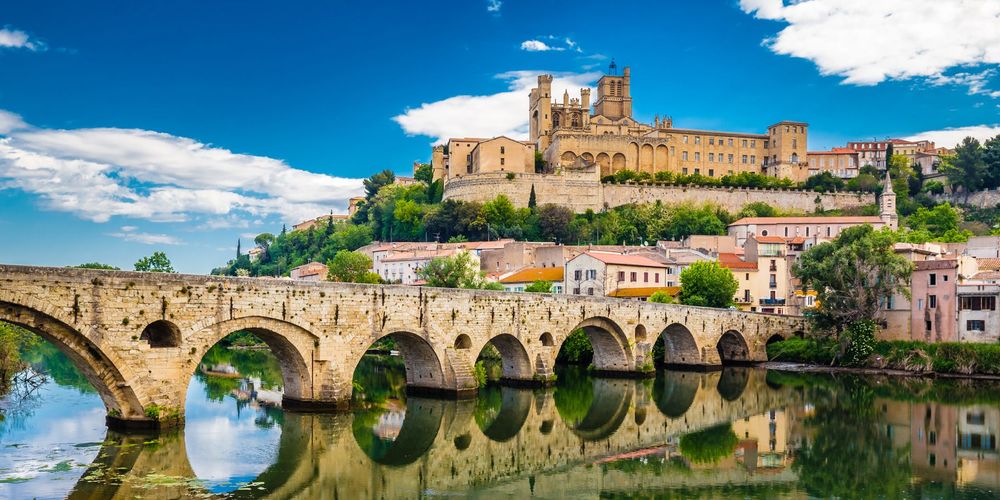
Several nearby towns also have their own audioguided walk. Dijon, 36 km away, unfolds the medieval streets of the former capital of the Dukes of Burgundy around the Ducal Palace. Dole, 50 km away, the birthplace of Louis Pasteur, shows off its canals and Renaissance heritage. Further on, Besançon, 93 km away, curls inside a river loop between cliffs and Chailluz stone façades.
Le plein d'inspirations
Explorez le monde en totale liberté, à pied au cœur des villes ou au fil des routes. Nos guides audios transforment chaque destination en une découverte culturelle immersive et unique.
FAQ for visiting Beaune
How many days do you need to visit Beaune?
To discover Beaune, ideally allow two to three days. One day lets you explore the historic centre, its ramparts and the famous Hospices. With two days, you can also visit a few cellars and taste the local wines without rushing. Three days give you the chance to deepen your discovery of the surrounding vineyards and fully enjoy the Burgundian art of living. If you have little time, a one-day visit is still possible by focusing on the main monuments. The Ryo audioguide helps you make the most of your route with a commented itinerary that covers the essentials of the city in just a few hours of walking.
When is the best time to visit Beaune?
The ideal times to visit Beaune run from April to June and then from September to October. During these months, the temperatures are pleasant and the vineyards are resplendent, offering magnificent landscapes. Spring sees the vines come back to life, while autumn reveals the harvest and the golden foliage. Summer can be hot, with temperatures sometimes exceeding 30°C, but it remains suitable for visits. Winter, cooler with temperatures ranging between 0 and 8°C, has its own charm with fewer tourists and a more intimate atmosphere. The cellars maintain a constant temperature all year round, making them pleasant to visit in any season.
How do you get around Beaune and how do you get there by public transport?
Beaune is easily accessible by train from Paris in about two hours, with regular connections via Dijon. The station is a fifteen-minute walk from the town centre. By car, the A6 motorway serves the town directly. Once there, the historic centre is easily explored on foot, its modest size allowing you to discover everything by walking. Bike rentals are available to explore the surrounding vineyards. An urban bus service serves the different neighbourhoods, though it is hardly necessary for tourists. To visit the more distant wine estates, a car is still handy, but organised minibus tours are an interesting alternative.
What are the must-see monuments in Beaune?
The Hospices de Beaune, with their multicoloured glazed roofs and their flamboyant Gothic architecture, are the jewel of the town. The Notre-Dame collegiate church, a remarkable Romanesque building, houses precious tapestries. The perfectly preserved medieval ramparts offer a historic walk around the old town. The belfry and the Town Hall bear witness to the city's prestigious past. The Fallot Mustard Mill perpetuates a centuries-old tradition. The many Renaissance private mansions punctuate the cobbled streets of the centre. The Ryo audioguide accompanies you on this discovery with detailed commentary on each monument, enriching your visit with fascinating historical and cultural anecdotes.
Where can you taste Burgundy wines in Beaune?
Beaune is full of places to taste the prestigious wines of Burgundy. The historic cellars in the town centre offer tours followed by tastings in authentic vaulted settings. The Marché aux Vins offers a complete experience with a route through former cellars. Many wine estates welcome visitors for guided tastings. Specialised wine bars let you sample different vintages by the glass in a convivial atmosphere. Some wine merchants organise tasting workshops to deepen your knowledge. Gourmet restaurants offer refined food-and-wine pairings. For a more intimate experience, book directly with the small producers, who happily share their passion.
What can you do in Beaune with children?
Beaune proves welcoming for families with children. The Bouzaize park offers play areas and green spaces to relax. The ramparts turn the historic visit into a playful adventure, with children loving to climb the towers. Some cellars offer visits adapted to the youngest with simplified explanations and grape juice. The little tourist train allows a tiring-free discovery of the town. The Hospices will captivate children with their colourful roofs and the apothecary with its strange vials. Mustard-making workshops at Fallot entertain young and old alike. The many terraces in the centre make for welcome gourmet breaks during your family explorations.
What are the best neighbourhoods to stay in Beaune?
The intramural historic centre remains the preferred choice for staying in Beaune, placing you in the heart of the action and in the immediate vicinity of the monuments. The streets around Place Carnot offer charm and conveniences. The Madeleine district, quieter while remaining central, suits travellers seeking tranquillity. Near the station, you will find more affordable accommodation, a fifteen-minute walk from the centre. The outskirts offer family options with gardens. For an authentic experience, some wine estates nearby offer guest rooms in the middle of the vines, though these require a vehicle to reach the town.
What can you visit around Beaune in the surrounding area?
The surroundings of Beaune are full of wonders to discover. The Route des Grands Crus crosses prestigious wine villages such as Pommard, Volnay or Meursault, each worth a tasting stop. The Château du Clos de Vougeot, seat of the Confrérie des Chevaliers du Tastevin, impresses with its Cistercian architecture. Châteauneuf-en-Auxois, classed among the most beautiful villages in France, majestically overlooks the valley. The Château de La Rochepot charms with its multicoloured roofs typical of Burgundy. The Comblanchien quarries reveal the origin of the local stone. Santenay offers spa treatments and vineyards. These excursions combine easily by car or on organised tours departing from Beaune.
What can you see at the Hospices de Beaune?
The Hôtel-Dieu, at the heart of the Hospices de Beaune, is a hospital for the poor founded in the fifteenth century by chancellor Nicolas Rolin and still in use for centuries afterwards. The visit takes in the great hall of the poor, with its red-curtained beds lined up beneath a timber roof shaped like an upturned hull, the apothecary and its earthenware jars, the kitchens, and then the famous inner courtyard with its glazed tile roofs forming geometric patterns, an image that has become the emblem of Burgundy. The Last Judgement polyptych by Rogier van der Weyden, shown in a room of its own, is its greatest treasure. The vineyards bequeathed to the institution feed a renowned charity auction every autumn. The Ryo audio guide offers a dedicated Beaune route that puts this monument back into the life of the town.
What should you eat in Beaune and what are the Burgundy specialities?
Burgundy cooking is everywhere in Beaune, starting with œufs en meurette, eggs poached in a red wine sauce, jambon persillé, garlic snails and slow-cooked beef bourguignon. Mustard is the other local emblem: the Fallot mustard mill, right in town, can be visited and explains how the seed becomes the condiment. As for cheese, Époisses and Soumaintrain go happily with a glass of wine from the Côte, and gingerbread travels home easily in a suitcase. The Saturday morning market around the covered halls brings together producers, cheesemongers and market gardeners and gives a good overview of the region. Do book your table in advance, as the centre gets very busy in high season.
How should you plan a two- or three-day stay in Beaune, between the Hospices, cellars and vineyards?
Spend the first day on foot: the Hôtel-Dieu founded in 1443 by Nicolas Rolin, with its glazed tiled roof and the Last Judgement polyptych, a walk along the ramparts, the collegiate church of Notre-Dame, then the cellars, such as those of Patriarche with their 5 kilometres of galleries.
The second day heads into the vineyards, starting with the Cité des Climats et Vins de Bourgogne, opened in 2023, then the Route des Grands Crus by car or the Voie des Vignes by bike. With three days, you can add Dijon or a final tour around Beaune.
Follow the plan day by day in our itineraries for visiting Beaune in 2 days and visiting Beaune in 3 days.
What can I do in Beaune when travelling solo, and how should I plan my day?
Beaune is easy to enjoy on your own: the town is compact, everything is walkable and the cellars offer individual tastings. In one day you can visit the Hospices from 9am (about 1.5 hours), the Collégiale Notre-Dame and the Écusson, then the Cité des Climats et vins de Bourgogne in the afternoon.
Finish with a tasting workshop booked for one person. The ramparts walk takes 30 to 45 minutes, and a day from 9am to 5–6pm is enough to cover the essentials.
A timed itinerary, cellars, good tables and practical tips: find it all in our guide to visiting Beaune solo.
What are the best free things to do in Beaune?
Beaune has plenty to offer without a ticket. Entry to the Collégiale Notre-Dame is free, and its 15th-century tapestries are displayed during the summer season. You can also step into hidden courtyards in the town centre, discover the Maison des Climats, climb to the viewpoint of the Cité des Climats, 21 metres up, or picnic in the Parc de la Bouzaize.
Walkers and cyclists can follow the 22 km of the Voie des Vignes. The Saturday morning market and the Grande Vadrouille mural round out the list.
Discover all twelve ideas, with what is free and what is paid, in our article 12 free things to do in Beaune.
What are the best things to do in Beaune as a couple for a romantic getaway?
For a romantic stay, start early, between 8 and 10 am, at the Hospices de Beaune and the Collégiale Notre-Dame, before the tour groups arrive. Then share a tasting: historic cellars such as Patriarche or Champy, or family estates by appointment, with wine classes or tasting lunches also available.
The next day, head out on the Grands Crus route by bike, horse-drawn carriage or hot-air balloon. Finish with a couples' spa session and dinner at a fine restaurant such as Loiseau des Vignes.
Find the addresses and the two-day itinerary in our guide to visiting Beaune as a couple.
Vos commentaires, idées et suggestions
Aucun avis pour le moment