





Walk
Among Stones and Great Wines
Beaune, France
Walk
Among Stones and Great Wines
Beaune, France
2.5 km
Distance
1h10
Durée
20
Audios
Loop
Parcours
Shutterstock
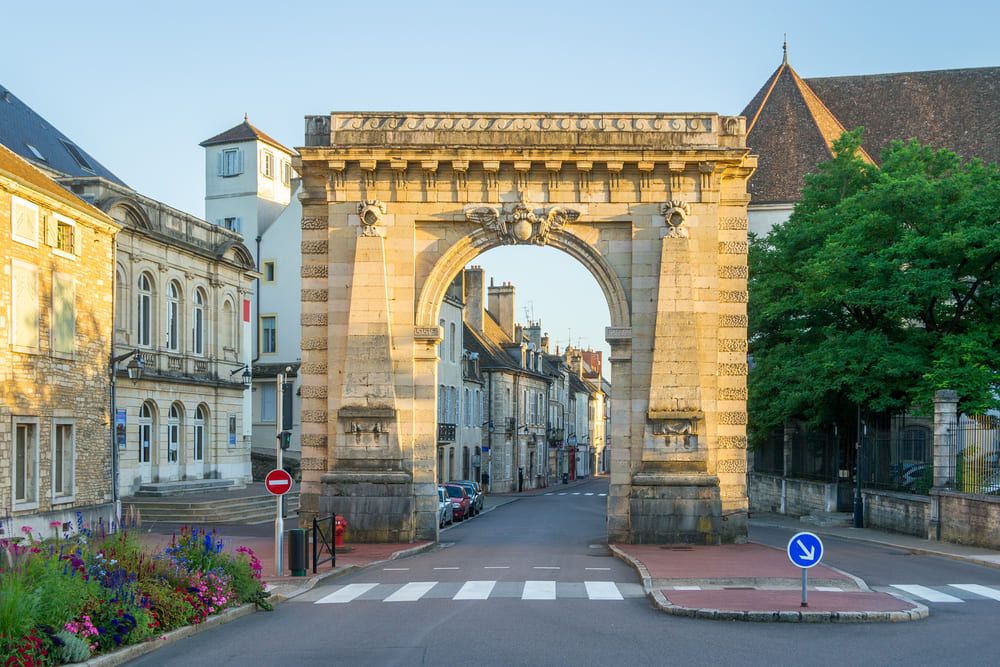
The Beaune audio-guided tour reveals the Saint-Nicolas Gate, a majestic northern entrance to the historic centre. Once an integral part of the ramparts, it opened the road to Dijon and welcomed visitors coming from the north.
What is seen today dates largely from the 18th century. The gate was built between 1762 and 1770, on classical lines designed by the architect Nicolas Lenoir, on the site of an older medieval access already mentioned in the Middle Ages. Topped by a classical pediment and flanked by two symmetrical pavilions, it illustrates the 18th-century taste for symmetry and grandeur.
The Saint-Nicolas Gate, by its classical architecture, contrasts with the town's medieval gates such as the Marie de Bourgogne Gate. It bears witness to the evolution of Beaune, which opened up and embellished itself in the Age of Enlightenment. It is one of the entry points of the historic centre, on the old road to Dijon, during the walk along the former ramparts.
The Saint-Nicolas Gate can be seen freely, in the open air, at the northern entrance to the historic centre of Beaune. It is accessible at any time and free of charge. It is a quick stop, ideal for a photo, during the walk around the ramparts.
It was built between 1762 and 1770 to plans by the architect Nicolas Lenoir, in a classical style.
It marked the northern entrance of Beaune, through which visitors coming from Dijon passed.
Aucun avis pour le moment
