© Shutterstock
 Votre guide Ryo
Visiting Beaune Solo in 2026: Itinerary, Tastings and Tips for Traveling Alone
In Beaune, you rarely come across a lost traveler, map in hand, searching for their way: the town is so compact that you can get your bearings in under an hour, a glass of wine in one hand and no schedule to negotiate with anyone. That is precisely what makes it an ideal place to visit Beaune solo: distances are measured in minutes on foot, the cellars accept single-person tastings, and the entire historic center fits inside its medieval ramparts. To frame your day without having to think about it, the Ryo audio-guided tour of Beaune delivers each stop in your ear, place after place, at your own pace.
In a single day, you can combine the glazed tiles of the Hospices, a lunch at the counter of a Beaune restaurant, a tasting workshop at a winemaker's who never asks "how many of you are there?", and a walk along ramparts blooming with roses. This guide details a timed itinerary, the best houses for tasting without feeling watched, where to stay and eat when traveling alone, how to spend your evening, and the practical tips for enjoying the Burgundian wine capital in complete peace.
A Sample Itinerary to Visit Beaune Solo in One Day
With no one to negotiate the order of visits with, a day in Beaune practically plans itself. Here is a sequence that works on a Tuesday in November as well as on a Saturday in July, with enough room to linger wherever you feel like it.
Morning: Hospices and Historic Center at Your Own Pace
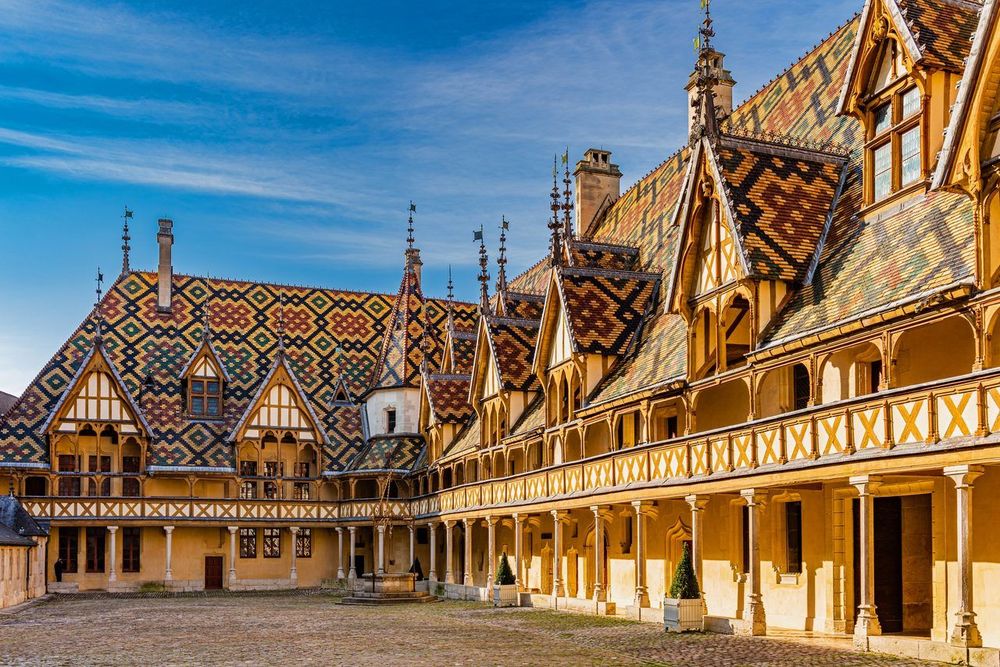
Start around 9 a.m. at the Hospices de Beaune, before the coaches arrive. Allow 1.5 hours for the courtyard and the halls, a tempo you can adjust freely when solo, without waiting for the last person in the group to finish their photo of the glazed tiles. Around 10:30 a.m., let yourself drift into the historic center: the Notre-Dame collegiate church, Place Carnot and the lanes of the Écusson are best discovered by strolling, with no fixed itinerary to follow.
Afternoon: Vineyards, Cellars and a Gourmet Break
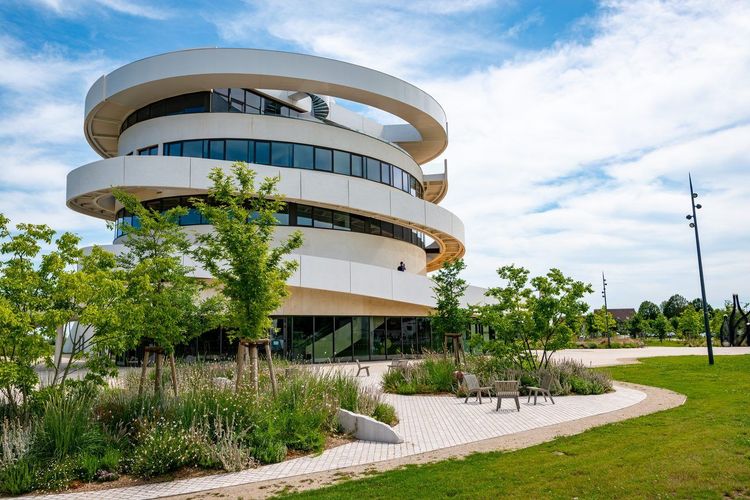
After a lunch break (details below), head to the Cité des Climats et vins de Bourgogne around 2 p.m. to understand what sets a climat apart from a simple terroir. Around 3:30 p.m., follow up with a tasting workshop: several cellars in town accept individual bookings, a format that changes everything when you travel without a companion. The sub-route between stones and grands crus lasts about 1 hour and features 19 audio stops over 2.5 km, enough to pace your day without a watch or a map to consult.
How much time should you plan in total? A full day, from 9 a.m. to 5-6 p.m., is enough to cover the essentials of the town center and one cellar. If you want to go deeper into the tastings or venture out along the Route des Grands Crus, plan a second day, and check out our guide to Beaune in 2 days to spread out the program.
The Must-Sees of Beaune's Historic Center
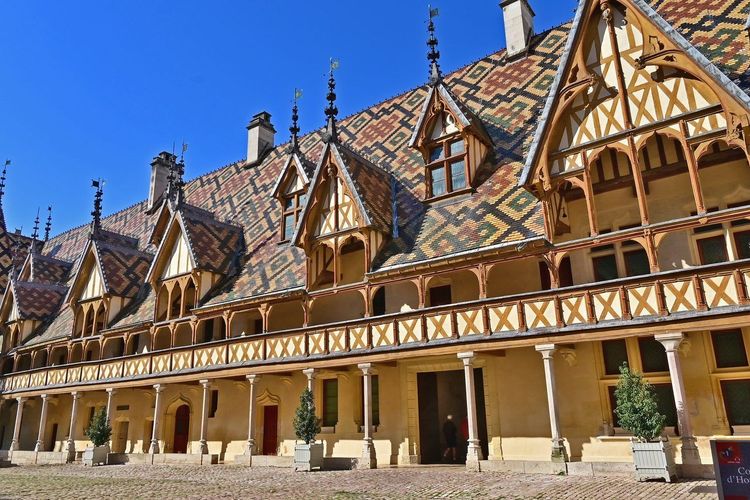
The Hospices de Beaune: History, Courtyard and Halls
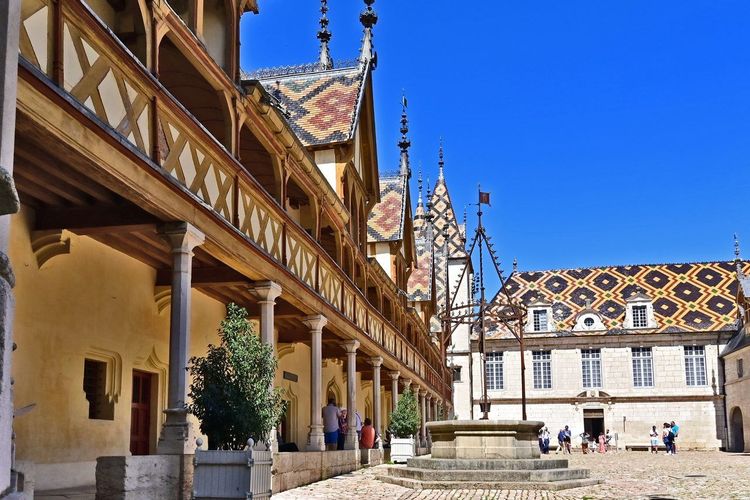
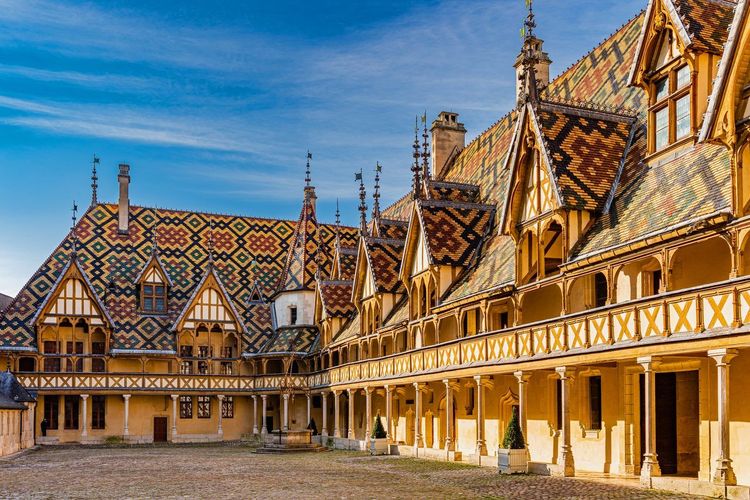
Founded in 1443 by Nicolas Rolin, chancellor of the Duke of Burgundy Philip the Good, and his wife Guigone de Salins to care for the poor, the Hôtel-Dieu of the Hospices de Beaune remains the most photographed monument in town, and for good reason: its courtyard surrounded by wooden galleries and its roof of glazed tiles make up the most recognizable image of Burgundy. The institution received patients until the 20th century before becoming a museum.
The self-guided visit passes through the great Hall of the Poor, where the red-and-white canopy beds lined up along the walls tell you more than any panel about what the hospital was like in the past. You will also discover the kitchen with its monumental fireplace, the apothecary and, in a separate room, the famous Last Judgment polyptych by Rogier van der Weyden. Allow 1.5 hours for a full visit, longer if you like to stop in front of every detail. The audio guide provided at reception (available in several languages) is enough to visit alone: the Hospices are open every day, with hours that vary by season, and a full price of around €12 to €13.
A tip if you come in autumn: on the third weekend of November, the famous Hospices wine auction turns the town into a giant celebration. The atmosphere is guaranteed, but accommodation is snapped up months in advance.
The Notre-Dame Collegiate Church, Place Carnot and the Écusson
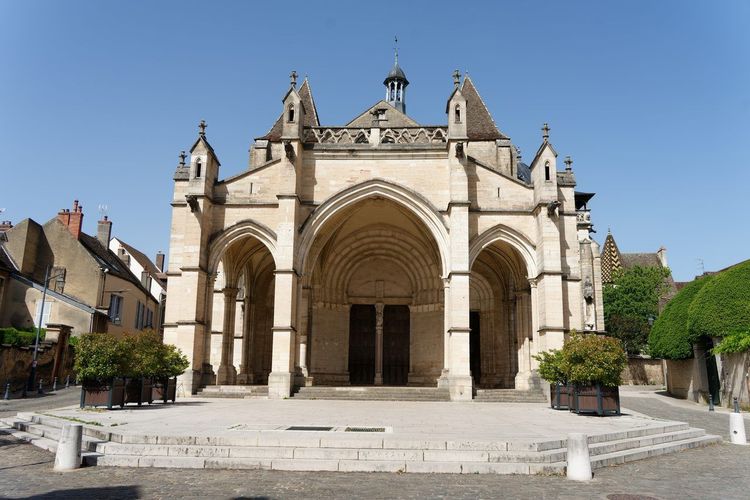
Five minutes on foot from the Hospices, the Notre-Dame Collegiate Church, begun in the 12th century, illustrates Burgundian Romanesque art, with a cloister open free of charge and 15th-century tapestries devoted to the life of the Virgin, displayed for part of the year.
Continuing toward the heart of town, Place Carnot serves as a natural meeting point: cafe terraces, a Saturday morning market, and an ideal starting point for exploring the Écusson, the name given to the shield-shaped fortified historic center. Its cobbled, often pedestrian lanes lend themselves to wandering with no map or particular goal, one of the small pleasures of solo travel: you stop when a shop window or a half-timbered facade catches your eye, without having to consult anyone.
The Ramparts Walk and the Fallot Mustard Mill
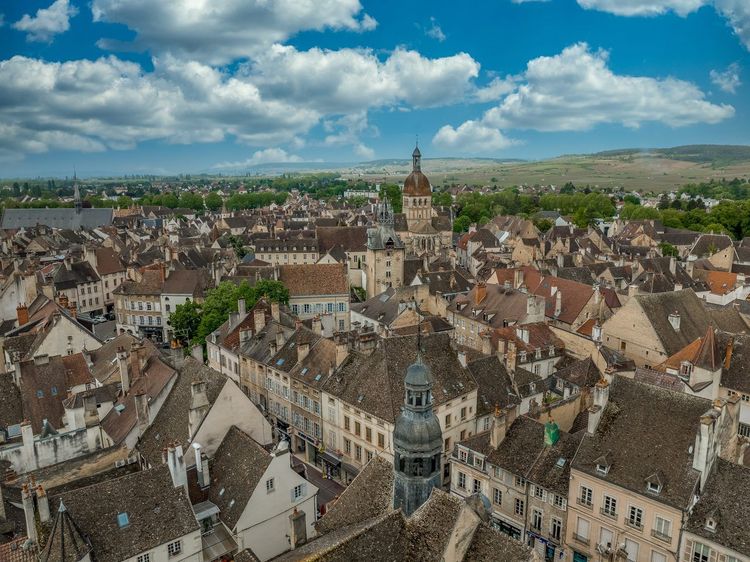
The Beaune ramparts, which still encircle a good part of the old town, can be followed along a landscaped, flower-lined path. The full walk takes 30 to 45 minutes at a leisurely pace and offers views of the bastions and the former moats, now turned into gardens. Several bastions also house the cellars of major wine houses.
Just a short distance away, the Fallot mustard mill (31 Faubourg Bretonnière, 21200 Beaune, rated 4.5/5 on Google from 3,868 reviews) has carried on a rare family know-how since 1840: it is one of the last independent mustard makers in Burgundy to grind its seeds with a stone mill. The guided tour (by reservation, about 1 hour) explains the production process and ends with a tasting of several varieties, a convivial moment that is just as enjoyable alone.
The Ryo audio-guided tour of Beaune links the Hospices, the collegiate church and the ramparts with an anecdote slipped in at each stop, handy for visiting without a human guide and without losing track of the neighborhood.
A detail that is easier to notice when alone, with no conversation to distract the eye: the glazed roof patterns are not limited to the Hôtel-Dieu. Look up as you cross the Écusson, as several private mansions also sport these colorful diamonds in yellow, green, red and black, the visual signature of Burgundy. The inner courtyards, often open during the day, hide spiral staircases and carved wells that hurried groups almost always miss.
The Cité des Climats et Vins de Bourgogne
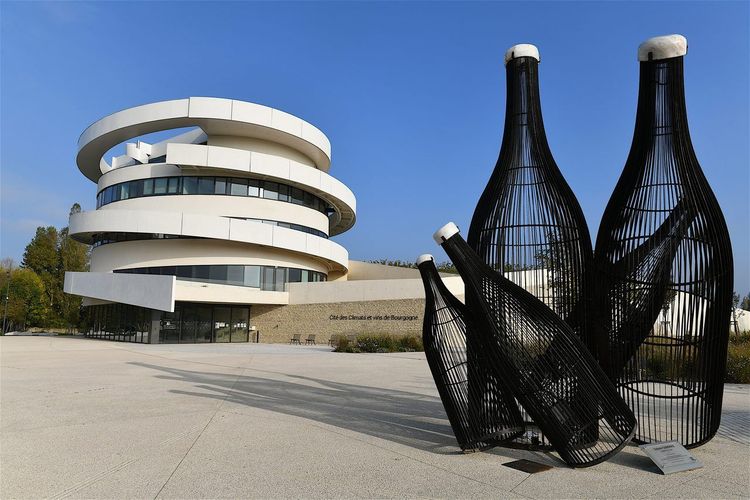
Understanding a Burgundy Climat
Before pushing open the door of a cellar, a detour to the Cité des Climats et vins de Bourgogne (Avenue Charles de Gaulle, 21200 Beaune, rated 4.4/5 on Google from 915 reviews), opened in 2023 at the entrance to town, sheds light on the rest of the day. The term "climat" here refers to a precise vineyard plot, delineated for centuries by its soil, exposure and microclimate characteristics: it is this division, unique to Burgundy, that explains why two neighboring vines produce such different wines. The Climats of the Burgundy vineyards have been listed as a UNESCO World Heritage Site since 2015.
One audio stop of the Ryo tour explains in two minutes what a Burgundy climat is before you enter the Cité, useful for not missing any of the explanations when visiting alone.
Opening Hours, Prices and Tasting Workshops
The site can be visited freely, with a scenographic route that mixes videos, models and a tasting included in the ticket (around €20). Open all year except a few public holidays, it remains pleasant even solo: the self-guided visit means you don't depend on a group's rhythm. To go further, a 45-minute workshop around five Burgundy wines takes place every day at 2:30 p.m. (€29 per person), and individual registrations are the norm. The venue is also easy to visit with children, thanks to playful spaces designed for the youngest.
If the history of wine fascinates you, the Musée du Vin de Bourgogne, housed in the former mansion of the Dukes of Burgundy in the heart of the Écusson, usefully completes the visit with its presses and winemaking tools; check that it is open before you go, as the museum has gone through long periods of renovation.
Tasting Wine Solo: Cellars and Houses to Visit
The Major Houses You Can't Miss: Patriarche, Champy, Jaffelin
Patriarche Père et Fils has the largest cellars in Burgundy: 5 km of galleries dug beneath the former Visitandines convent, where some three million bottles rest. The self-guided visit, tastevin in hand, lets you taste a series of wines at your own pace.
Maison Champy, founded in 1720, claims the title of the oldest wine merchant house in Burgundy still in operation. Its vaulted cellars host guided tastings in small groups, a format that naturally encourages exchanges between strangers.
A few streets away, Maison Jaffelin, housed in the former cellar of the collegiate church chapter, offers tastings by reservation, accessible even if you are alone.
More Intimate Estates: Chanson, Besancenot, Clos du Cèdre, Clos de la Belle Châtelaine, Veuve Ambal
For a more private experience, the Domaine Chanson (10 Rue Paul Chanson, 21200 Beaune, rated 4.8/5 on Google from 119 reviews), set in the Oratoire bastion of the old ramparts, offers tours of its historic cellars with a tasting of its classified climat cuvées. The Domaine Besancenot cultivates a family approach handed down over several generations, with tasting appointments that are easy to book solo, with a simple phone call.
The Clos du Cèdre and the Clos de la Belle Châtelaine round out the list of more discreet addresses around the town center, often recommended for their personalized welcome, away from the crowds of the big houses. Finally, Veuve Ambal, a Crémant de Bourgogne specialist based in Montagny-lès-Beaune, a few kilometers away, offers a tour of its cellars and a tasting of sparkling wines that is a change from the usual still wines.
The solo angle makes perfect sense here: most of these houses charge for tastings per person. You can book for one as easily as for ten.
Oenology Classes and Cellars Labeled "Vignobles & Découvertes"
To structure your knowledge, several Beaune cellars offer oenology classes of one to two hours, built around a comparative tasting of several appellations. Establishments with the "Vignobles & Découvertes" label guarantee a careful welcome, with deliberately accessible vocabulary for beginners. It is often in these small-group workshops, around a shared table, that the first conversations of the day with other travelers begin.
The Ryo sub-route between stones and grands crus passes in front of several of these historic houses, handy for linking culture and tasting without planning everything in advance.
Good Restaurants for a Solo Meal
Eating alone at a restaurant can sometimes feel intimidating, but Beaune makes things easy thanks to its many wine bars and counters. Loiseau des Vignes, a Michelin-starred restaurant, stands out for a by-the-glass wine list among the most extensive in the region: the lunch menu remains the most affordable way to enjoy it.
Le Cheval Noir serves generous, refined Burgundian cuisine in a setting where tables for two are the norm rather than the exception, which makes dinner alone perfectly natural.
L'Écrit'Vin (21200 Beaune, rated 4.5/5 on Google from 1,151 reviews), more low-key, focuses on a by-the-glass wine list that pairs well with a charcuterie and cheese board, a practical option for a light meal. In any case, book in late morning for lunch service: specifying "one person" is never a problem in these houses used to travelers passing through, and a spot at the counter often frees up faster than a table.
A Nature Break at the Parc de la Bouzaize
Ten minutes on foot from the center, the Parc de la Bouzaize (21200 Beaune, rated 4.5/5 on Google from 2,832 reviews) offers a free, shaded interlude between two visits. Its paths lined with tall trees and its pond make it a pleasant spot for an impromptu picnic, with bread, cheese and jambon persillé bought at the market hall or from a delicatessen in the center.
It is also the place ## What to Do Around Beaune: The Route des Grands Crus
The Route des Grands Crus de Bourgogne
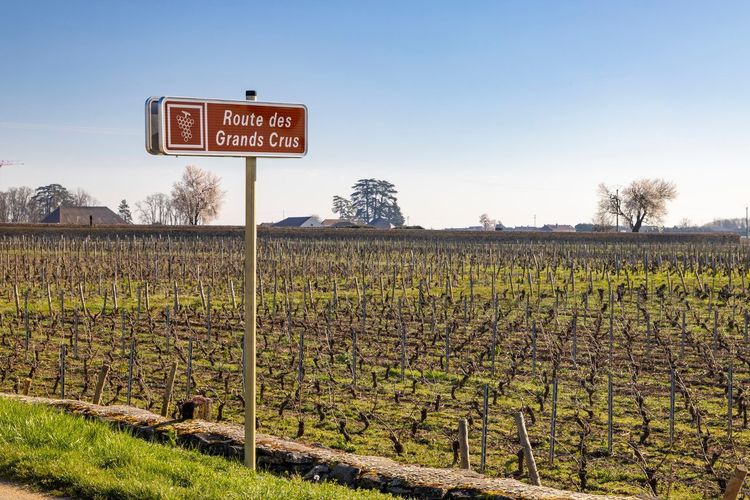
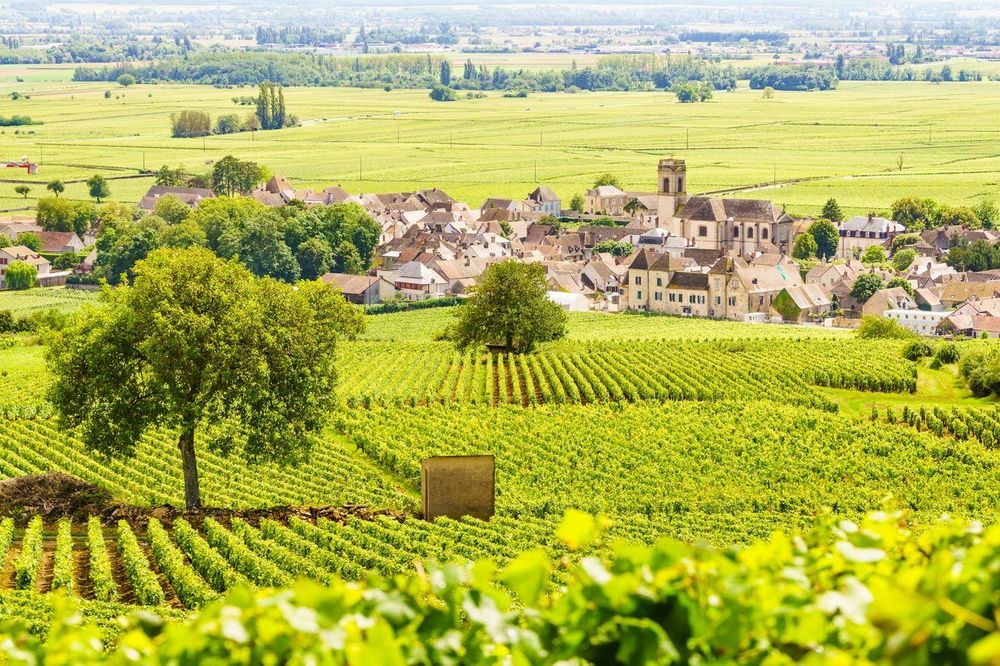
To the north and south of Beaune stretches the legendary Route des Grands Crus, some sixty kilometers between Dijon and Santenay that pass through villages with names revered by enthusiasts: Gevrey-Chambertin and Vosne-Romanée to the north, Pommard, Volnay and Meursault to the south. Stone walls and climat signs punctuate the landscape, bringing to life on the ground what you learned at the Cité des Climats.
Ideas for Day Trips Around Beaune
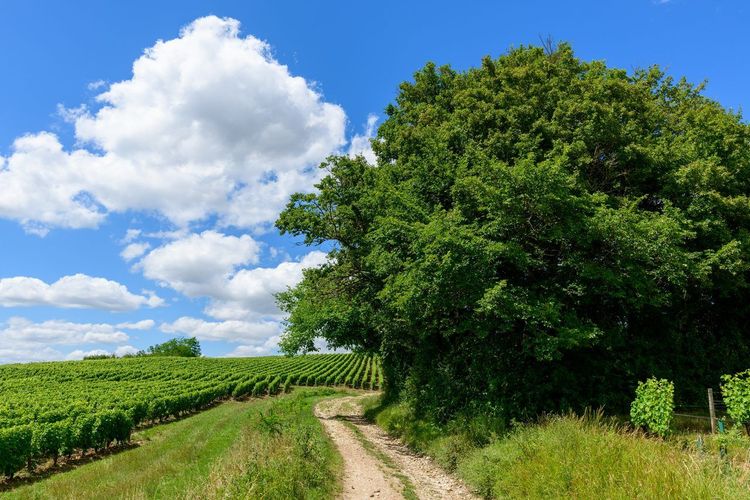
Without a car, the simplest option remains the bike: several rental shops in the town center will point you to the greenway linking Beaune to Santenay via Pommard, Meursault and Puligny-Montrachet, largely away from traffic. If you would rather be driven, small-group excursions leave Beaune every day and combine two or three wine estates, a format particularly suited to solo travelers since it doesn't require putting together your own group.
By bike, the loop toward Pommard and Volnay can be done in half a day, with a possible stop at the Château de Pommard or at a small producer in Meursault. Tastings in the villages, often more private than in town, are booked the day before by phone; simply say that you are coming alone and by bike, as the winemakers are used to it. Remember to bring water and to set out early in summer, as the slopes offer little shade. Our article what to see around Beaune details several half-day itineraries to extend your exploration of the region.
Traveling Solo in Beaune: Safety, Meeting People and Good Practices
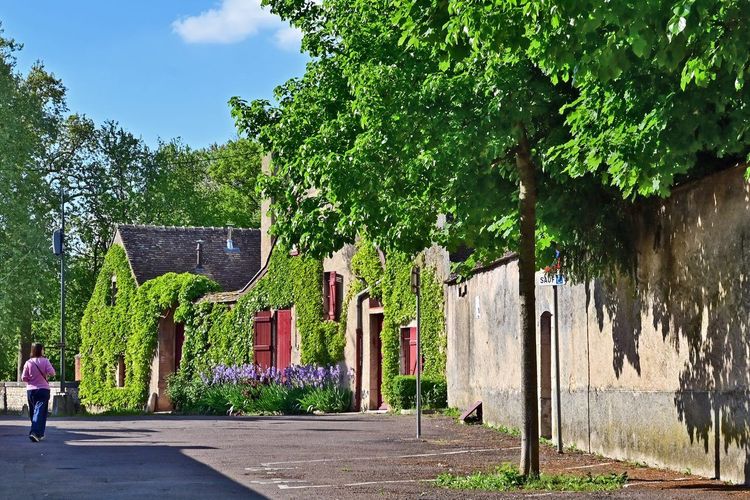
Beaune is among the calmest French destinations for solo travel: a modest-sized town (about 21,000 inhabitants), a largely pedestrianized historic center, and tourist crowds that are more relaxed than festive. In the evening, the streets of the Écusson stay lively until a reasonable hour around the wine bars, without the excesses you find in more nocturnal cities.
Small-group tastings are paradoxically the best opportunity to meet other travelers: around a table of six at a winemaker's, conversations start with wine before drifting toward everyone's itineraries. It is not uncommon to end the day having dinner with strangers you met that very morning at a workshop.
A few simple habits: keep your phone charged so you can call a taxi in the evening (the bus network stops early), favor accommodation in the Écusson or nearby to limit nighttime trips, and don't hesitate to ask cellar staff for advice on the quietest time slots. If you taste a lot, remember the spittoons too: nobody takes offense, and your afternoon will only be more enjoyable. Freedom of pace remains the number one asset of solo travel in Beaune: nobody is waiting for you, but nobody is rushing you either.
A Solo Evening in Beaune: Wine Bars and Atmosphere
Once the day is over, Beaune doesn't switch off. Around Place Carnot and in the neighboring streets, wine bars serve by the glass until late in the evening, and settling in at the counter remains the best way to strike up a conversation with the wine merchant or the regulars. Ask what he would open for himself: that is often where the best discoveries from small estates are hiding.
At sunset, one last loop along the ramparts offers golden light on the tiled roofs, with far fewer people than during the day. And if you prefer a quiet evening, the terraces of Place Carnot are perfect for a final glass of crémant while watching the town go about its life.
Practical Information: Getting There, Getting Around, Where to Stay and Budget
How to Get to and Around Beaune
Beaune is easily reached by train from Paris (allow 2 to 2.5 hours, often with a change at Dijon) or from Lyon (about 1 hour 45 minutes by TER regional train). The station is about ten minutes on foot from the historic center, which avoids any dependence on a car to discover the essentials of the town. Once there, everything is done on foot: the Écusson measures less than a kilometer across.
Where to Stay When Traveling Alone
For a solo stay, the small guesthouses and charming hotels of the historic center sometimes offer single rooms cheaper than doubles, and a personalized welcome that is valuable for last-minute advice. Budget hotels are mostly concentrated on the outskirts, a good compromise for tight budgets that can accept a few extra minutes of walking.
Which Season to Choose and What Budget to Plan
Spring (April-June) and early autumn (September-October, harvest season) offer the best compromise between pleasant weather and manageable crowds. Summer attracts more visitors but remains manageable thanks to the size of the town. As for budget, allow around €100 to €150 per day when solo for a single room, two meals and one or two tastings, an amount that climbs quickly if you multiply prestigious cellars. To spread out expenses over several days, our guide visiting Beaune in 2 days offers a more relaxed pace, just as suited to a solo trip.
What to Bring Back from Beaune: Souvenirs and Good Addresses
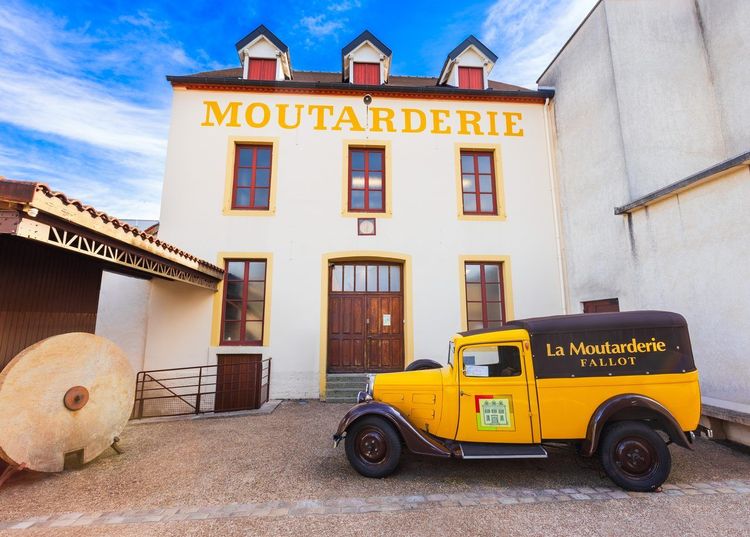
The Fallot mustard, sold directly at the mill's shop in several flavors (honey, blackcurrant, gingerbread), remains the easiest souvenir to carry and the one most universally appreciated by loved ones. A bottle bought directly from the winemaker, along with the story heard during the tasting, often has more value than a supermarket purchase.
For more original gifts, the shops around Place Carnot offer engraved tastevins, gingerbread and regional tableware. L'Écrit'Vin also sells a few take-away gift boxes, handy for prolonging the trip once you are back home.



FAQ
How long does it take to visit Beaune solo?
One full day is enough to cover the Hospices, the historic center and a wine cellar. To go deeper into the tastings or head out along the Route des Grands Crus, plan on two days.
Is it easy and enjoyable to visit Beaune alone?
Yes: the town is compact, the major sites can be visited independently with an audio guide, and the cellars accept individual bookings. It is one of the most comfortable French destinations for a first solo trip.
How do I get to Beaune without a car?
The train from Paris or Lyon drops you about ten minutes on foot from the historic center. Once there, everything can be covered on foot or by bike, with no need to rent a car.
Where should I stay in Beaune when traveling solo?
Guesthouses in the historic center offer a personal welcome and sometimes single rooms at a reduced rate. Budget hotels on the outskirts suit tighter budgets.
What is the best time of year to visit Beaune?
Spring and early autumn, during the grape harvest, offer the best balance between weather and crowds. Avoid the weekend of the Hospices wine auction in November if you are looking for quiet.
Can you do wine tastings alone in Beaune?
Yes, it is even one of the destination's strong points: most houses charge per person and accept individual bookings, from big names like Patriarche to more intimate estates.
What should I bring back from Beaune as a souvenir?
Fallot mustard and a bottle bought directly from a winemaker remain the most appreciated souvenirs, easy to carry and full of personal story.
Beaune, a Town Made for Solo Travel
At the end of this day, Beaune leaves the impression of a town designed for traveling alone: compact enough to find your way effortlessly, generous enough with individual tastings that you never feel left out. To pace your own visit without pulling out your phone at every crossroads, the Ryo audio-guided tour of Beaune remains the most discreet companion you can carry in your pocket.